Klippan and the Old Harbour Village: Gothenburg's Waterfront Time Capsule
Klippan is the quiet stretch of the Göta älv where Gothenburg's harbour past survives beneath the Älvsborg Bridge, a short hop from Röda Sten and the city centre.
Short answer
Klippan is an old harbour village area on the Hisingen bank of the Göta älv, directly beneath the Älvsborg Bridge and beside Röda Sten. It is reached by tram and a short walk, it is free to wander, and it pairs naturally with a canal cruise, an amphibious bus tour, or a boat out to the archipelago.
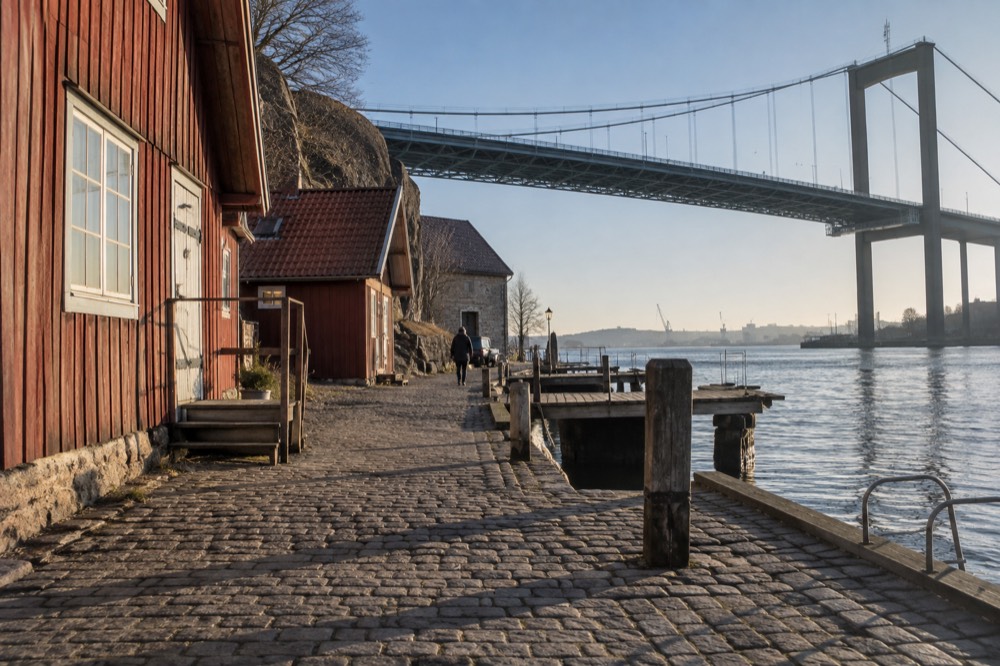
Klippan sits where the Göta älv widens toward the sea, on the Hisingen bank, with the Älvsborg Bridge passing directly overhead. This is the corner of Gothenburg where the city's working harbour history is still visible in weathered timber buildings rather than glass and steel. The bridge dominates the sky, the river carries ferries and cargo ships past at eye level, and the walk from the nearest tram stop is part of the experience rather than an inconvenience. This guide covers what Klippan actually is, how to reach it on ordinary Västtrafik tickets, what to look at once you are there, and how to bolt a boat tour onto the same afternoon.
What Is Klippan in Gothenburg?
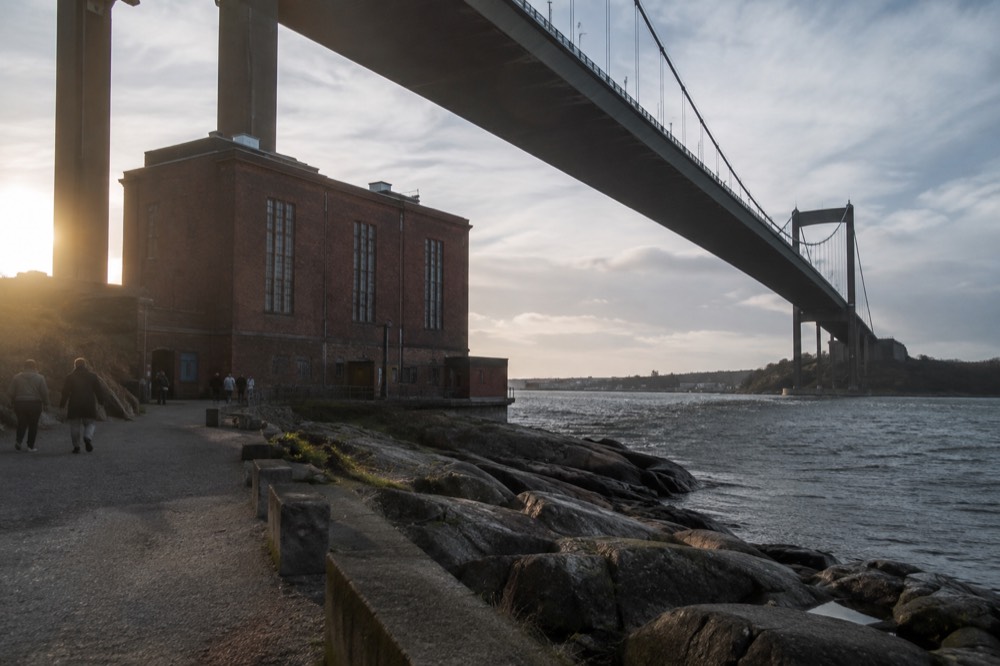
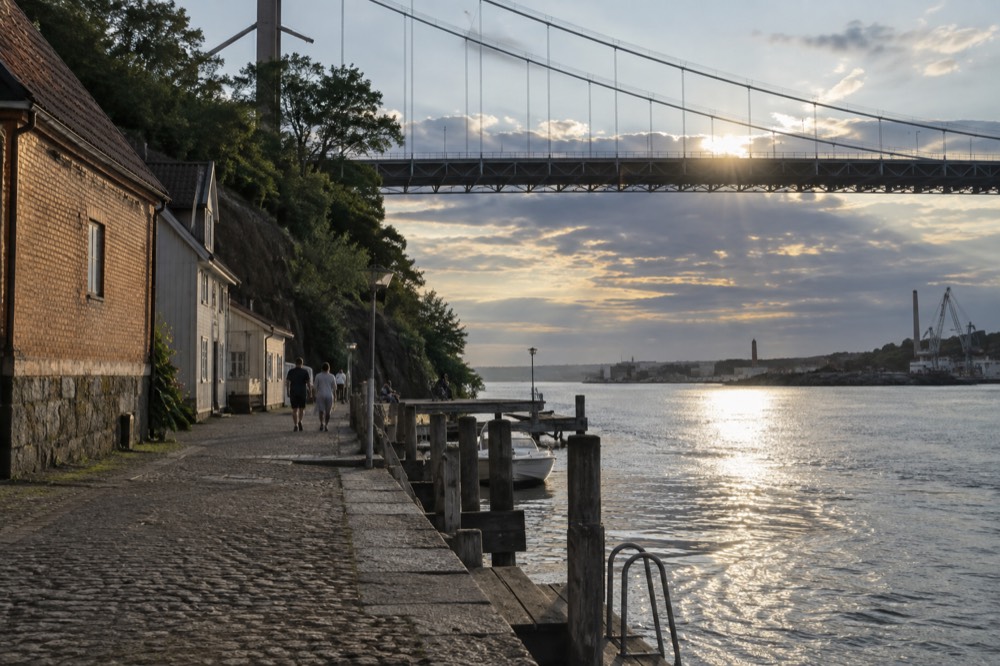
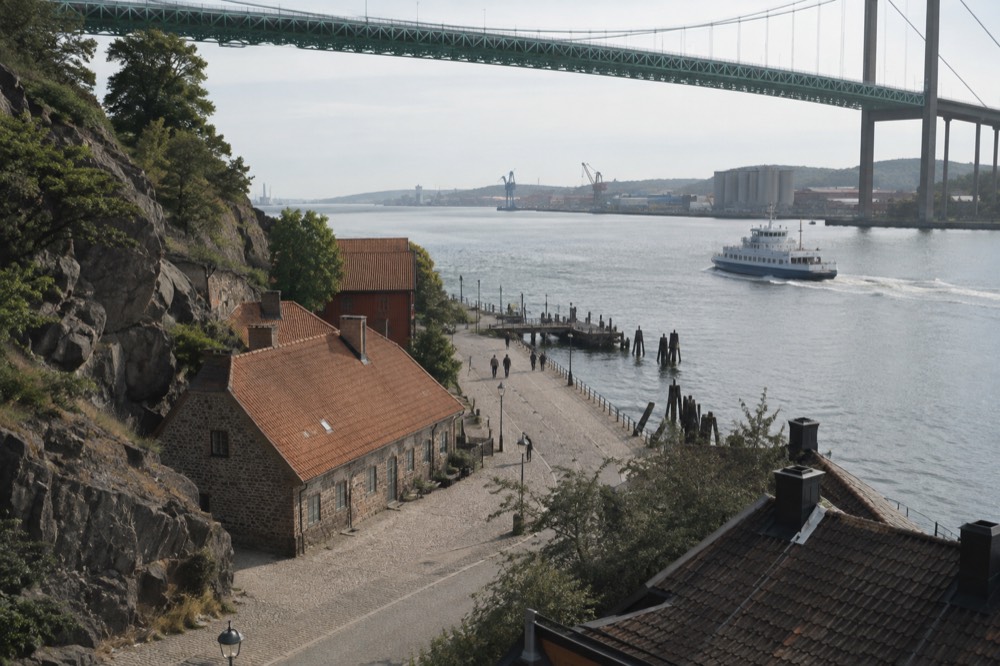
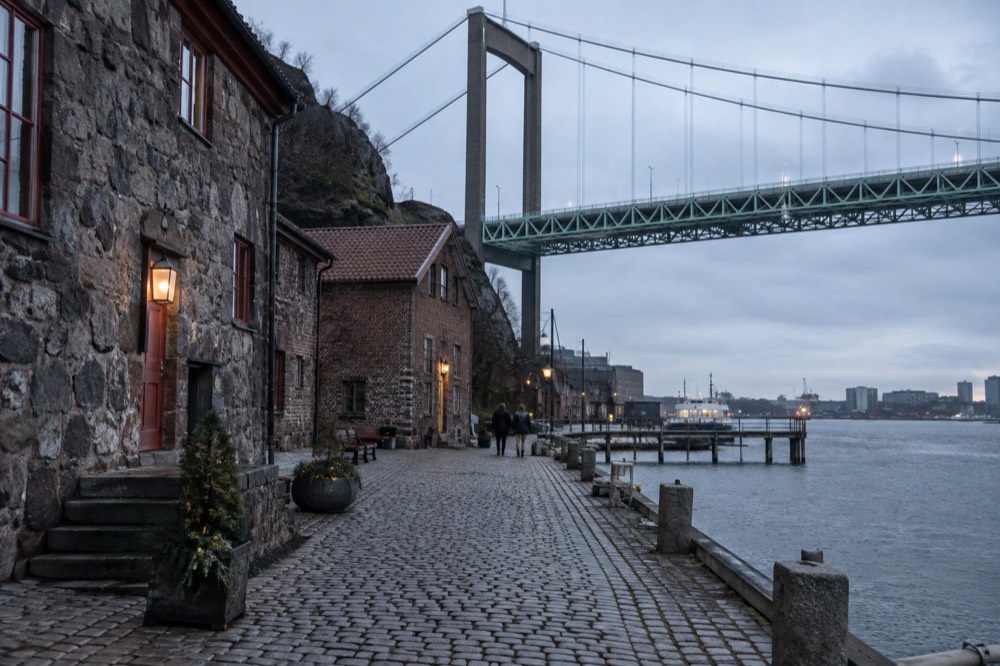
Klippan is an old harbour village district on the Hisingen side of the Göta älv, lying directly beneath the Älvsborg Bridge and immediately west of the Röda Sten arts centre. It is one of the few places in Gothenburg where the city's harbour-era buildings survive in a cluster, and it is free to walk around at any time. The area reads as industrial heritage rather than a polished attraction, which is exactly its appeal.
The name refers to the rocks along the riverbank, and the setting explains the rest. The Göta älv runs past on its way to the estuary, the bridge carries traffic from the city centre onto Hisingen overhead, and the whole stretch sits in the shadow of one of Gothenburg's most photographed structures. The contrast is the point: heavy infrastructure above, small-scale wooden buildings below, water in between.
Gothenburg grew as a harbour city, and most of its original waterfront has been rebuilt several times over. The Hisingen bank near Klippan kept more of its earlier character than the city-centre side, partly because industry and the bridge approaches left it alone for decades. For a visitor, that means the area offers something the polished centre does not: a sense of what the river working life looked like before the cranes moved upstream.
The area also works as a viewpoint. From the Klippan side you look back across the river toward the city centre and the mouth of the harbour, and upstream toward the bridge itself. Photographers tend to end up here for the bridge shots, and the light in the late afternoon, when the sun drops toward the estuary, is the reason. For a neighbourhood that pairs well with this end of the river, see our guide to Majorna, Gothenburg's second-hand quarter.
How Do You Get to Klippan and the Old Harbour Village?
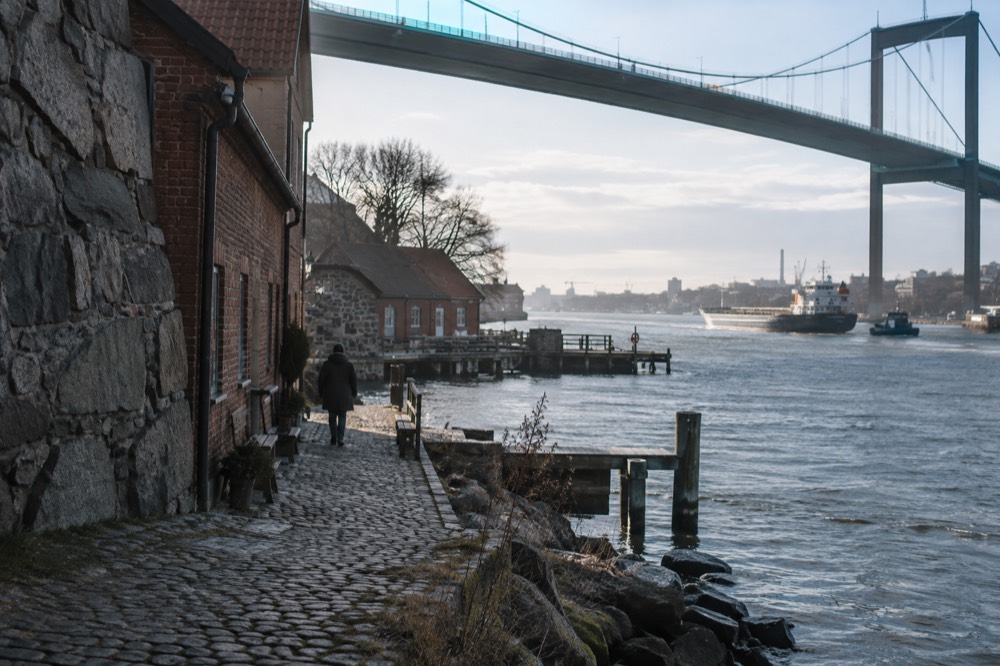
Klippan is reached by tram on an ordinary Västtrafik ticket, followed by a walk of roughly ten to fifteen minutes along the river from the Röda Sten end of the area. A single Zone A adult ticket costs 38 kr and a 24-hour Zone A ticket costs 125 kr, the same ticket that also covers the archipelago ferries from Saltholmen. There is no separate Klippan ticket and no entrance fee of any kind.
The tram network is the backbone of the city, and it is the sensible way in. Göteborgs Spårvägar's own annual report describes a network of twelve lines, 134 stops and 188 kilometres of single track, running from Mölndal in the south to Angered in the north and out to Saltholmen in the west. Klippan itself sits just beyond the western edge of the dense centre, on the Hisingen side, so the journey involves a tram toward the river followed by the walk along the bank. Full ticket and zone detail is in our guide to getting around Gothenburg by tram, and the Zone A ticket that covers the archipelago boats is described on Västtrafik's own Zone A day-ticket page.
One fare nuance is worth knowing before you buy. Västtrafik's 30-day period tickets are currently halved by a temporary state subsidy, but that discount does not apply to the 24-hour and 72-hour day tickets visitors actually buy. The 24-hour Zone A ticket remains 125 kr, bought in the app or at a shop at the same price. Do not build a plan around a half-price day ticket, because there is no such thing.
| Ticket | Adult price | What it covers | Source |
|---|---|---|---|
| Single, 1 zone | 38 kr | One tram or bus journey | Västtrafik fare table |
| 24-hour, Zone A | 125 kr | Trams, buses and archipelago ferries for 24 hours | Västtrafik fare table |
| 30-day, Zone A | 445 kr (temporarily halved from 890 kr) | All Zone A travel for a month | Västtrafik subsidy page |
If you are staying centrally, the walk is an alternative. The riverside path along the city side connects toward Röda Sten and the bridge, and many visitors combine the walk with a coffee stop rather than riding the tram both ways. Cyclists use the same paths, and the guided bike tours of the city pass along the river corridors on their way through the waterfront stretches.
For orientation, Klippan belongs to the same western riverbank world as Röda Sten, which has its own guide at Röda Sten and the Älvsborg Bridge, and to the wider Hisingen waterfront covered in Lindholmen and the Hisingen waterfront. If you are arriving from further afield, the airport transfer options are laid out in Gothenburg Landvetter Airport to the city centre.
What Can You Actually See and Do Around Klippan?
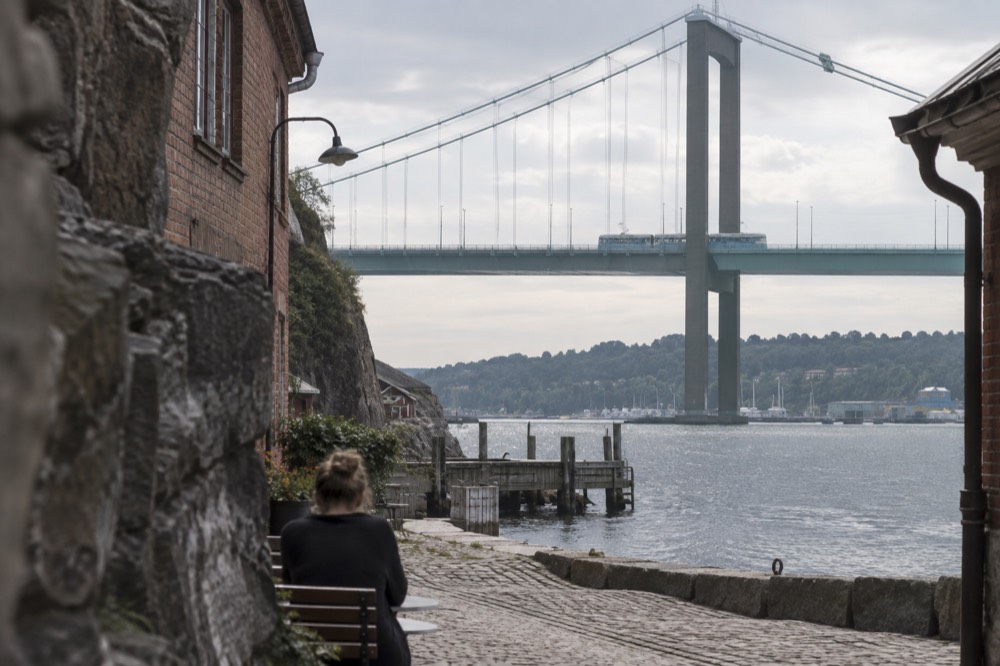
The main things to do around Klippan are walking the riverbank beneath the Älvsborg Bridge, photographing the old harbour buildings, visiting the Röda Sten arts centre next door, and watching the river traffic from the rocks. Everything is free except the arts centre exhibitions, and the whole visit takes most people between one and three hours depending on how long you linger at the water's edge.
The walk itself is the attraction. The path along the bank passes the old buildings, opens out at the bridge abutment, and continues toward Röda Sten, where the contemporary arts centre occupies the space under the bridge on the city side. The contrast between the two halves of a single afternoon, industrial timber on one side and contemporary art in a converted industrial space on the other, is a fair summary of how this end of the river works.
The bridge is the visual anchor. It is one of the city's defining structures, and from directly underneath it the scale is the thing you notice: the deck high overhead, the cables, the constant traffic hum. The bridge also frames the view back toward the city, which is why the area turns up in so many Gothenburg photographs.
River traffic gives the visit a soundtrack. The Göta älv is a working river, and from Klippan you watch ferries, small boats and larger vessels move between the harbour and the estuary. On a clear day the water and the sky do most of the work. SMHI's data for the area gives some planning anchors: October is the wettest month of the year at 102.9 mm of rain, April the driest at 51.3 mm, and the sea temperature at the Vinga station peaks in August at 18.6 C rather than July. September water, at 16.7 C, is warmer than June water at 16.2 C. The full seasonal picture is in the best time to visit Gothenburg.
The amphibious bus tour is the one product that ties this area together with the rest of the city, because it drives the streets and then enters the water. The listing shows a one-hour tour from 36 dollars per person, rated 4.7 from 4,326 reviews, and it is the most-reviewed sightseeing product in the city by a wide margin. Check availability if the land-and-water format appeals, since departures sell out on busy days.
How Does Klippan Connect to Röda Sten and the Älvsborg Bridge?
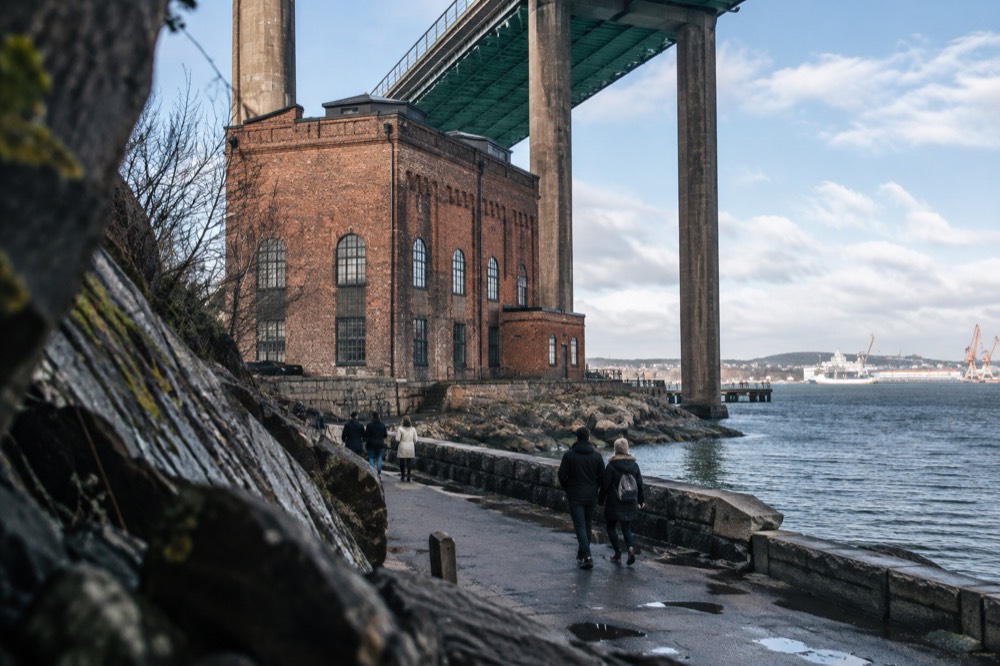
Klippan and Röda Sten sit on opposite sides of the same bridge abutment, close enough that every visit to one naturally includes the other. Röda Sten is the arts centre in the space beneath the Älvsborg Bridge on the city side, and Klippan is the old harbour village on the Hisingen side. Walking between them takes only a few minutes and there is no fee at either.
The pairing works because the two places answer different questions. Klippan answers the historical one: what did the harbour look like when it was built of timber and rope and small boats? Röda Sten answers the contemporary one: what does the city do with its industrial spaces now? Both sit in the shadow of the bridge, and the bridge is the third character in the scene, the structure that turned this quiet bank into one of the most recognisable views in western Sweden.
The bridge itself is a fixed part of any Gothenburg skyline photograph, and its pedestrian and cycle connections make it possible to cross the river on foot. Crossing gives you the view back toward the harbour mouth, then the Hisingen side, then the old buildings. It is a loop many visitors walk without planning to, because the paths join up.
For the wider neighbourhood context, the Hisingen bank continues north toward the modern waterfront district covered in Lindholmen and the Hisingen waterfront, while the city side climbs into the hillside streets described in Majorna, Gothenburg's second-hand quarter. Both are walkable extensions if the weather holds.
What Is the Best Time of Year to Visit Klippan?
The best months to visit Klippan are May through September, when the riverside path is dry enough to enjoy and the daylight lasts long into the evening. June 21 gives Gothenburg 18 hours and 6 minutes of daylight against just 6 hours and 32 minutes on 21 December, so the seasonal swing is enormous. April is statistically the driest month of the year and October the wettest, which makes spring a safer bet than autumn for a walk with no shelter.
The daylight numbers deserve emphasis because they change the visit completely. In late June the sun sets after 22:00 local time and civil twilight runs from around 03:00 to 23:30, so an evening walk beneath the bridge happens in full light. In December the grey light lasts barely eight hours and the bridge is lit rather than sunlit. Neither is wrong, but they are different trips, and the month-by-month detail is in our guide to Gothenburg in winter.
Rain planning matters here more than at most city sights, because Klippan is an outdoor area with limited shelter. SMHI's 1991-2020 normals for the Göteborg station put annual rainfall at 912 mm spread over about 127 days with at least 1 mm, roughly one day in three, and the monthly figures are published in SMHI's normals dataset for 1991-2020. That is wet, but it is not the permanent drizzle of the guidebook cliche, and SMHI's own data does not support calling Gothenburg Sweden's rainiest city. The national maxima are in the western highlands and the mountains, not the city. What the numbers do say is that October, at 102.9 mm, is the wettest month, so an October visit should carry a real rain plan.
| Month | Rainfall, mm | Wet days (≥1 mm) | Mean air temp, °C | What it means for Klippan |
|---|---|---|---|---|
| January | 83.0 | 11.5 | 0.8 | Cold, short days, bridge in low light |
| April | 51.3 | 8.2 | 7.7 | Driest month, good walking weather |
| July | 81.3 | 9.8 | 18.3 | Warmest month, busiest river traffic |
| August | 92.8 | 11.9 | 17.7 | Warm air, warmest sea (18.6 C at Vinga) |
| October | 102.9 | 12.6 | 9.0 | Wettest month, bring a proper rain layer |
Source for all figures: SMHI 1991-2020 normals, station Göteborg A, and SMHI sea temperature archive, station Vinga.
Can You Combine Klippan with a Boat Tour or the Archipelago?
Yes, and the combination is the best-value day out in the city. A 125 kr 24-hour Zone A ticket covers the tram to the river, the archipelago ferries from Saltholmen and every island in the southern archipelago, because the islands are inside Zone A on Västtrafik's own network. Add one paid boat tour, a canal cruise or an archipelago cruise, and you have the harbour, the river and the sea in a single day.
The ticket fact is the one to remember. Västtrafik's own network map shows the archipelago boats as part of the same system as the trams, and the islands served from Saltholmen, including Asperö, Brännö, Styrsö, Donsö, Vrångö and Köpstadsö, are car-free. Göteborgs Stad's own study of the southern archipelago states that the islands are protected from private car traffic, with exceptions only for taxi, transport services and emergency vehicles. You ride a tram to the boat, then the boat to the islands, on one ticket. The full detail is in how to get to the Gothenburg archipelago and in our guide to the southern archipelago islands.
For paid tours, the water-based options that fit a Klippan day are the canal cruises and the archipelago cruises. The 50-minute canal sightseeing cruise runs from 28 dollars per person and is rated 4.7 from 783 reviews, which makes it the shortest and cheapest way onto the water. The guided archipelago cruise, 2.5 hours from 44 dollars per person and rated 4.4 from 1,488 reviews, goes further out and is the most-reviewed boat product in the roster.
The canal cruise suits a tight schedule: it is under an hour, it departs from the city centre, and it gives you the moat-and-canal perspective of a city that Dutch engineers laid out inside water. Summer departures fill first, so book ahead if that order appeals.
The guided archipelago cruise is the one to pick if you want the sea rather than the city water, and it pairs well with a morning at Klippan followed by an afternoon on the water. For a fuller comparison of every boat option in the city, see our guide to Röda Sten and the Älvsborg Bridge.
How Does Klippan Fit Into a One, Two or Three Day Gothenburg Itinerary?
Klippan belongs on the afternoon of day one in almost any itinerary, because it is compact, free and close to the centre, and it sits naturally beside Röda Sten and the river walk. In a one-day visit it competes with the archipelago for your limited hours, so most travellers pick one or the other. With two or three days, you can do Klippan on day one and give the islands a full day of their own.
The logic is about time and transport. Klippan costs you an hour or two and a tram ticket. The archipelago costs you most of a day and rewards it, because the islands are the thing people remember. A two-day split looks like this: day one for the centre, Haga, the river and Klippan; day two for the tram to Saltholmen and the ferries. Our ready-made plans cover the sequencing in detail, at one day in Gothenburg and three days in Gothenburg.
| Time available | Where Klippan fits | What to pair it with | Suggested tour add-on |
|---|---|---|---|
| Half a day | Klippan and Röda Sten only | The river walk back to the centre | Canal cruise, 50 minutes |
| One full day | Morning at Klippan, afternoon on the water | Röda Sten, then the harbour | Archipelago cruise, 2.5 hours |
| Two days or more | Day one afternoon | Full archipelago day on day two | Amphibious bus tour plus ferries |
Where you sleep affects the plan less than you might think, because the tram network reaches Klippan's side of the river quickly from most districts. The neighbourhood-by-neighbourhood breakdown, including the western areas closest to this stretch of the river, is in where to stay in Gothenburg.
Where Does Klippan Sit Among Gothenburg's Other Old Quarters?
Klippan is the harbour-flavoured member of a set of old quarters that each preserve a different layer of the city: Haga keeps the wooden town houses, Majorna the workers' cottages and second-hand shops, and Vasastan the stone streets and student cafes. Klippan is the only one of these where the setting is industrial and maritime rather than residential, and it is the smallest and least developed of the four for visitors.
That difference is why it earns a place on a list. Haga, covered in Haga, Gothenburg's wooden old quarter, is the polished version of old Gothenburg, with cafes and crowds. Majorna, in Majorna, Gothenburg's second-hand quarter, is the lived-in version. Vasastan, in Vasastan, stone streets and student cafes, is the stone-built expansion. Klippan asks nothing of you and sells you nothing: it is a walk, a view and a piece of the harbour past, and it works precisely because it has not been turned into an attraction.
For food and coffee before or after, the practical options cluster back toward the centre, and the city's food scene is covered in where to eat in Gothenburg and fika in Gothenburg. The short version: eat before you come, because Klippan is a place for walking, not for sitting down.
Common Questions About Klippan and the Old Harbour Village
Is Klippan in Gothenburg free to visit?
Yes. There is no entrance fee, no ticket office and no gate. The area is a public riverbank, and the only things you pay for are your tram ticket and any optional tour or exhibition you add, such as the Röda Sten arts centre next door.
How do I get to Klippan from Gothenburg city centre?
Take a tram toward the western river and walk the last stretch along the bank from the Röda Sten end. A single Zone A adult ticket costs 38 kr and a 24-hour Zone A ticket costs 125 kr. Many visitors staying centrally simply walk the riverside path out and ride the tram back.
How long should I spend at Klippan?
Between one and three hours covers the walk, the bridge views and a look at Röda Sten. Photographers and anyone combining the area with a coffee stop or an arts centre visit should budget the longer end. It is a half-day addition to any itinerary, not a full day by itself.
Can you see the Älvsborg Bridge from Klippan?
Not just see it: the bridge passes directly overhead. Klippan sits beneath the Älvsborg Bridge on the Hisingen bank, and the view up at the deck from the riverbank is one of the most photographed angles in the city, especially in late-afternoon light.
Is Klippan worth combining with the archipelago?
Yes, and the two pair well because the same Zone A ticket covers both. A common pattern is a morning walk at Klippan and Röda Sten, then the tram out to Saltholmen for the ferries, or a paid archipelago cruise in the afternoon. The islands are car-free and inside the city's own transport zone.
When is the best time of day to photograph Klippan?
Late afternoon and evening, when the sun drops toward the estuary and lights the bridge and the old buildings from the west. In June the light lasts past 22:00 local time, so the window is enormous; in December, plan for the middle of the day, when the grey light is at its strongest.
Klippan will never top a first-time visitor's list, and it does not need to. It is the place you go when you have seen the centre and want the city to slow down for an hour: the bridge above, the river beside you, and the harbour past still standing in timber. Pair it with Röda Sten, walk it on the way to somewhere, or make it the quiet opening act of a day that ends on a boat. Gothenburg Travel Guide covers every corner of this river city, and this one rewards the small detour.