Best Time to Visit Gothenburg, Sweden: Weather, Daylight and Crowds by Month
Gothenburg's rain reputation is an autumn problem, not a summer one: SMHI's 1991-2020 normals show October as the wettest month and April as the driest. Here is what that means for planning a trip, month by month.
Short answer
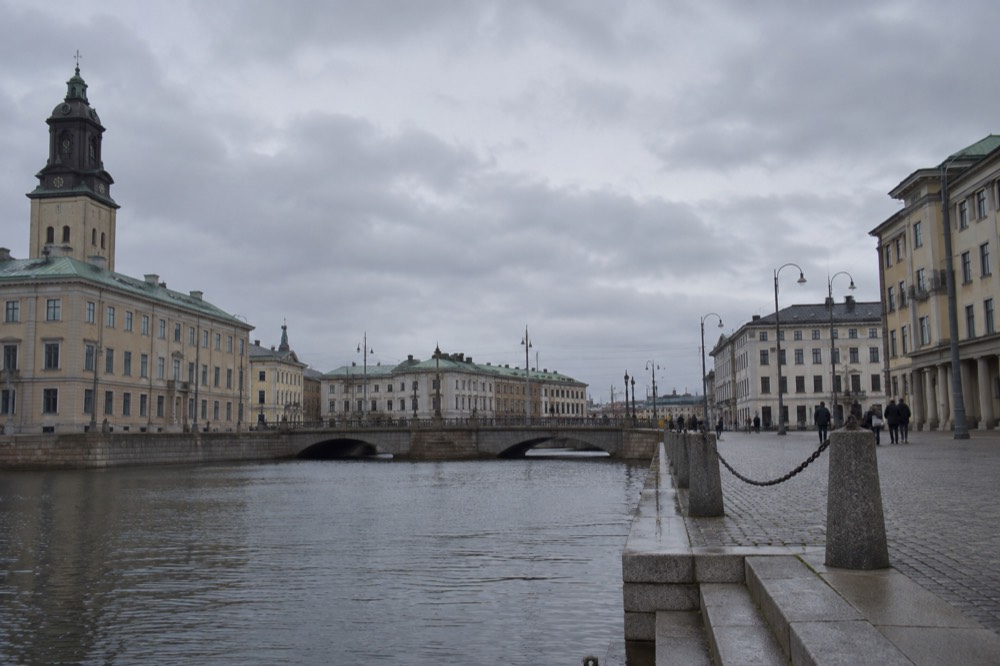
The best time to visit Gothenburg is May through early July for dry, bright weather, or September for warm sea swimming and thin crowds. October is the wettest month, Liseberg runs 18 April to 20 September in 2026, and December offers Christmas markets against just 6 hours 32 minutes of daylight.
Gothenburg, Sweden's second city, sits at 57.7 degrees north on the Kattegat coast, and that latitude does more to shape a visit than any festival calendar. The city gets 6 hours 32 minutes of daylight on 21 December and 18 hours 06 minutes on 21 June, a swing of 11 hours 34 minutes between the solstices, according to US Naval Observatory data. The rain, meanwhile, is not where most guidebooks put it.
SMHI's 1991-2020 climate normals for station Göteborg A (71420) record 912 mm of precipitation a year spread over 127 wet days. The wettest month is October, at 102.9 mm, and the driest is April, at 51.3 mm. The rain arrives after the tourists leave. This guide works through the real numbers, the sea temperature curve, Liseberg's irregular season calendar and the crowd patterns, so you can pick your weeks with data instead of cliches. For the wider picture of the city itself, start with Gothenburg Travel Guide and our first-timer orientation.
What Is the Best Time to Visit Gothenburg Overall?
The best time to visit Gothenburg is late May through early July, when the monthly normals show the driest stretch of summer, 18 hours of daylight and the full Liseberg season in swing. September is the strong runner-up: the sea at Vinga averages 16.7 C, warmer than June's 16.2 C, crowds thin after the school holidays, and the city still gets 14 C mean air temperature. Avoid late October for rain and late December for darkness, but not for price, because both are cheap.
May and June trade a couple of degrees of warmth for noticeably drier air. The normals put May at 54.3 mm of rain over 8.8 wet days and June at 73.7 mm, against August's 92.8 mm. July is the warmest month on paper, 18.3 C mean, but it is also when Swedish holidays empty the city of locals and fill the archipelago ferries. If you want Gothenburg at its most Gothenburg, the weeks either side of midsummer hit the balance.
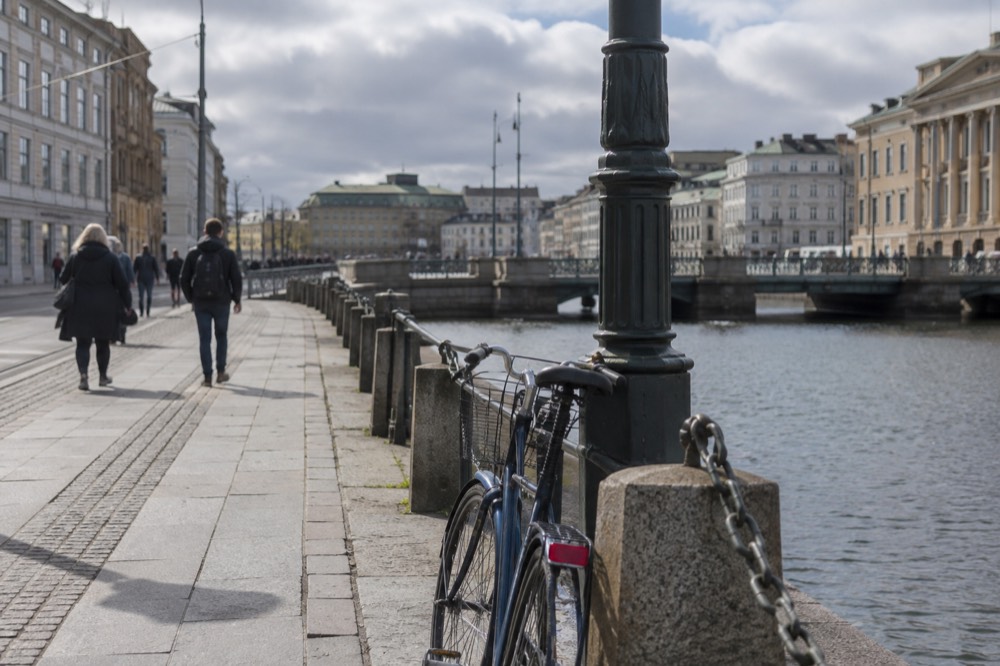
September deserves its own argument. The sea peaks in August at 18.6 C and only falls to 16.7 C in September, which is warmer than the June water most swimmers brave. Göteborg & Co reported over 6 million commercial guest nights in 2025, a record driven by international visitors, so the summer high season is real and growing. September sits just outside its busiest weeks. Our autumn guide covers the season in detail.
What Is Gothenburg Weather Really Like Month by Month?
Gothenburg's mean air temperature runs from 0.8 C in January to 18.3 C in July, with an annual mean of 8.9 C. Rain falls on 127 days a year, roughly one day in three, totalling 912 mm. The numbers come from SMHI's 1991-2020 normals at station Göteborg A, the official reference period, and they show a mild, damp maritime climate rather than a harsh one.
Here is the full monthly picture, straight from the SMHI normals spreadsheets:
| Month | Mean temp (C) | Precipitation (mm) | Wet days (>=1 mm) |
|---|---|---|---|
| January | 0.8 | 83.0 | 11.5 |
| February | 0.7 | 61.0 | 9.7 |
| March | 3.0 | 54.0 | 8.8 |
| April | 7.7 | 51.3 | 8.2 |
| May | 12.4 | 54.3 | 8.8 |
| June | 15.7 | 73.7 | 10.0 |
| July | 18.3 | 81.3 | 9.8 |
| August | 17.7 | 92.8 | 11.9 |
| September | 14.0 | 80.0 | 10.8 |
| October | 9.0 | 102.9 | 12.6 |
| November | 5.1 | 84.7 | 12.0 |
| December | 2.1 | 93.0 | 13.3 |
Two patterns matter for planning. First, the dry window is March through May, not summer: April's 51.3 mm over 8.2 wet days is the driest month of the year on both measures. Second, the wettest months are October through December, with October's 102.9 mm the peak. Summer rain, when it comes, is frontal and passing rather than all-day.
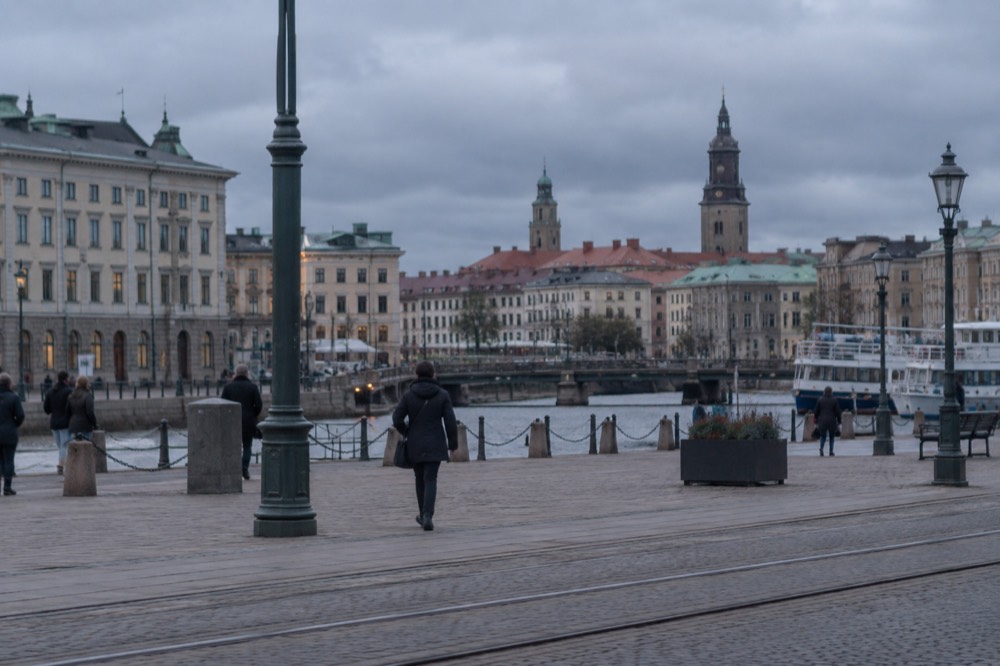
One claim you should not believe is that Gothenburg is Sweden's rainiest city. SMHI's own text on the 1991-2020 normals says annual precipitation varies from about 400-600 mm in eastern Götaland and Svealand to over 1000 mm in the mountains and western highlands. Gothenburg's 912 mm sits in the wet western band, but the national maxima are inland and at altitude, not in the city. If rain does catch you, our rainy-day guide lists the indoor options.
When Is Gothenburg's Rainiest Month?
October is Gothenburg's rainiest month, with 102.9 mm of precipitation over 12.6 wet days, according to SMHI's 1991-2020 normals for station Göteborg A. November and December follow at 84.7 and 93.0 mm. The summer months are not the problem: June records 73.7 mm, and April, at 51.3 mm, is the driest month of the entire year.
The practical consequence is that an autumn half-term trip faces the highest rain risk of the calendar, and a spring trip the lowest. October also shortens fast: by the end of the month the city is down to well under 10 hours of daylight, and the Liseberg summer season has closed (Halloween dates aside). None of this makes October a bad month to visit, it makes it a month to plan around, with museums, food halls and saunas carrying the itinerary. The museum guide and the Feskekôrka fish church guide cover the strongest indoor anchors.
Feskekôrka itself is worth naming in any wet-weather plan, because it changed shape in 2024. The 1874 fish-church building reopened that year, its 150th, as a food hall with five restaurants alongside the two fish counters, so a rainy lunch stop there is a fuller experience than older guides describe. Stora Saluhallen on Kungstorget is the other central market hall, and both sit within a short walk of the canal boats.
The amphibious bus deserves a word here precisely because of the rain question. It runs on land and water regardless of the sky, the listing shows a 4.7 rating from 4,326 reviews, and it takes about an hour, which makes it the one sightseeing booking that survives a wet October afternoon intact.
When Is the Sea Warm Enough to Swim in the Gothenburg Archipelago?
The sea around Gothenburg peaks in August at 18.6 C and stays swimmable through September at 16.7 C, which is warmer than June's 16.2 C. July averages 18.3 C. The figures come from SMHI's quality-controlled hourly observations at the Vinga lighthouse station in the archipelago, and they show the water running about six weeks behind the air.
August is the month for swimming, full stop. The record high at Vinga is 23.6 C in July and 22.2 C in August, so warm days push the water well past 20 C. February, not January, is the coldest month at 2.7 C, with a record low of -1.2 C, possible because brackish Kattegat water freezes below 0 C. Cold-water swimmers should see the cold water and sauna guide.
| Month | Mean sea temp (C) | Month | Mean sea temp (C) |
|---|---|---|---|
| January | 3.9 | July | 18.3 |
| February | 2.7 | August | 18.6 |
| March | 4.1 | September | 16.7 |
| April | 7.1 | October | 12.8 |
| May | 11.6 | November | 9.3 |
| June | 16.2 | December | 5.5 |

The swimming season overlaps with the ferry season, and the southern islands are part of the city's own transport zone, reached by tram and ferry from Saltholmen on an ordinary Västtrafik ticket. The southern archipelago guide covers the islands, and how to get to the archipelago covers the logistics. The islands are car-free by municipal rule, which is why the ferry-and-tram journey is not just the cheapest way out there but the only ordinary one.
How Does Daylight Change Through the Year in Gothenburg?
Gothenburg gets 18 hours 06 minutes of daylight on 21 June against 6 hours 32 minutes on 21 December, a swing of 11 hours 34 minutes. In June, civil twilight runs from 02:58 to 23:30 local time, leaving only about three and a half hours of true night. In December, even the twilight window is barely eight hours wide.
June days feel endless in a way the raw numbers understate. Sunset at 22:17 means dinner light at 21:00 and a golden hour that starts after most restaurants have seated their second sitting. December inverts it: sunrise at 08:54 and sunset at 15:26 compress sightseeing into a six-hour window, and the grey overcast of a west-coast winter can shorten the useful light further. The daylight month-by-month guide and the winter guide cover both extremes.

The shoulder months are the compromise. By late April the city has 15 hours of daylight; by mid-September, 12 and a half. If darkness is the thing you fear most about Sweden, book between the equinoxes and you never see the short end of the curve. Photographers should note the corollary: the best photo spots guide is at its most productive in May and September, when the sun stays low for hours instead of vanishing.
What Is on in Gothenburg by Season?
Liseberg, the city's biggest attraction, runs a split season: in 2026 the summer park is open 18 April to 20 September, Halloween 2 October to 1 November, and the Christmas market 14 November to 23 December. The park is closed from 24 December to mid-April, and roughly 21 September to 1 October and 2 to 13 November between seasons. Way Out West fills the city in August.
The Liseberg calendar is the single most trip-defining schedule in Gothenburg, and it is irregular by design. A visitor arriving in late January or early March finds the biggest attraction in the city shut, except Kaninlandet, which now opens on winter weekends and school holidays. Entry and rides are sold separately: a 95 kr entrance ticket buys zero rides, and the combined Entré + Åkpass starts at 365 kr online, per Liseberg's own price page. The Liseberg tickets and timing guide covers all of it.
| Season | 2026 dates | What it is |
|---|---|---|
| Liseberg summer | 18 Apr - 20 Sep | Full park, all rides, new attraction Stormvåg |
| Liseberg Halloween | 2 Oct - 1 Nov | Horror-themed evenings and decorations |
| Jul på Liseberg | 14 Nov - 23 Dec | Christmas market, lights, Rabbit Land |
| Way Out West | August | City-wide music festival in Slottsskogen and venues |
| Christmas city-wide | Late Nov - Dec | Markets across the city, see the Christmas guide |
Beyond Liseberg, August brings Way Out West, which books the city solid, and the archipelago and canal boats run their fullest schedules in July and August. The Christmas market guide covers the late-season option, and gothenburg with kids adapts the calendar for families. Liseberg reported about 2.5 million park guests in 2025 within 3 million destination visits overall, which is why July Saturdays at the gate move slowly.
Is Spring the Secret Best Time to Visit Gothenburg?
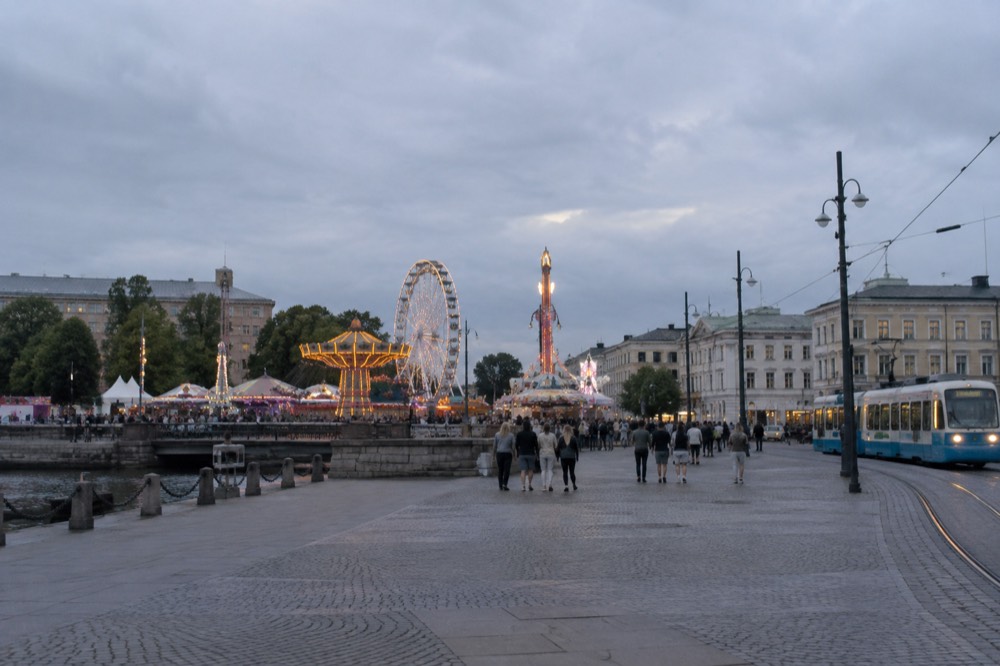
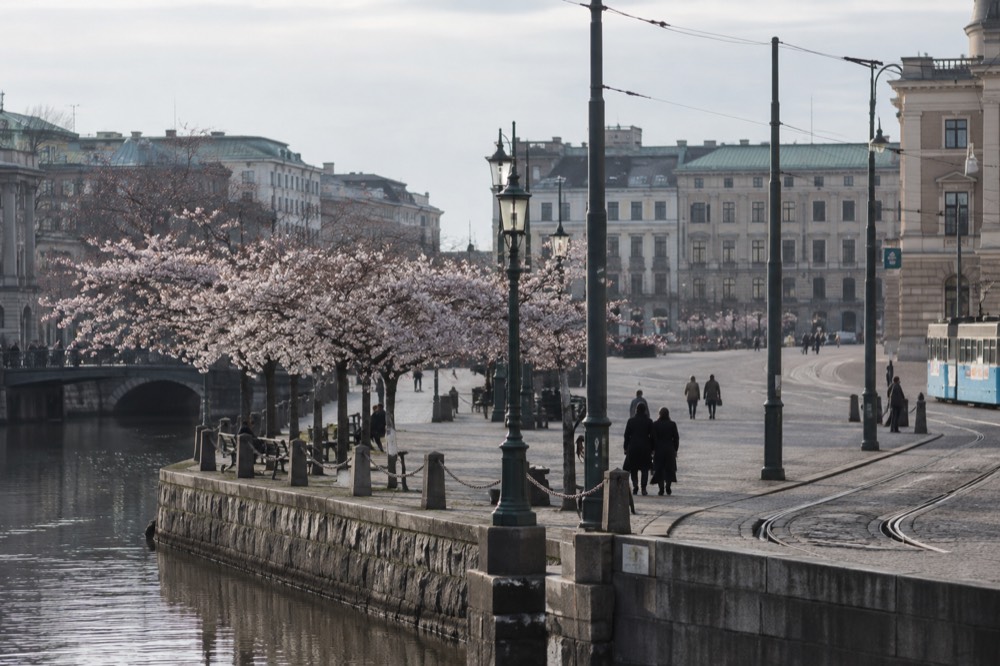
Spring, specifically April and May, is the driest time of year in Gothenburg: April records 51.3 mm of rain over 8.2 wet days and May 54.3 mm over 8.8, both better than any summer month. Temperatures climb from 7.7 C in April to 12.4 C in May, Liseberg opens on 18 April, and the tourist crowds have not yet arrived. The trade-off is a sea still at 7-11 C, too cold for most swimmers.
April is the statistical sweet spot if rain is your main enemy. It is the driest month on both total rainfall and number of wet days, the light is stretching fast toward 15 hours, and the city is in its pre-season lull. The spring guide covers what opens when, including the Trädgårdsföreningen garden society, which is at its best exactly in this window.
May adds warmth without adding much rain. The sea is still cold, but the archipelago ferries run, the café terraces open, and hotel rates sit below the July peak. For a first visit weighted toward walking, photography and fika rather than swimming, May is arguably the best month in the city, and the fika guide gives the café culture its own itinerary.
When Is Gothenburg Cheapest and Quietest?
Gothenburg is cheapest and quietest from November to mid-December, excluding the Christmas-market weekends, and again in January and February. These months carry the highest rain normals, 84.7 to 93.0 mm, and the shortest days, down to 6 hours 32 minutes, but the Liseberg Christmas market runs 14 November to 23 December and hotel rates drop outside peak weekends. The record 6 million guest nights of 2025 were concentrated in summer.
Winter pricing follows demand, and demand follows daylight. The weeks between the Christmas market's close on 23 December and the spring are the city's trough: attractions that stay open, and most museums do, are near-empty, and the free things to do guide stretches a low-season budget further. The cost guide breaks down what a trip actually runs by season.
For value with weather attached, late September and early June are the compromise slots: shoulder pricing, functioning boat schedules, and either warm water (September) or maximum daylight (June). Mid-July is the one window to book early, since Swedish holidays plus international visitors, up 15% year on year in 2025 per Göteborg & Co, compress availability. The where to stay guide covers the neighbourhood trade-offs in each season.
Which Month Should You Actually Pick for Gothenburg?
Pick May or June for the best mix of dry weather, daylight and open attractions, July for warmth and full schedules at the cost of crowds, September for warm sea and quiet streets, and December for Christmas markets if you accept 6 hours 32 minutes of daylight. Avoid late October on rain statistics alone, and avoid January to March if Liseberg matters to your trip, because the park is closed.
The decision tree is short. Travelling for the archipelago and swimming? August into September. Travelling for Liseberg? Any date between 18 April and 20 September, or the Halloween and Christmas windows. Travelling on a budget or for museums? November to February, with a rain jacket and low expectations for the sky. Travelling with children? The kids guide maps the family calendar, and the day trips guide extends any of these windows into Bohuslän and Lake Vänern country.
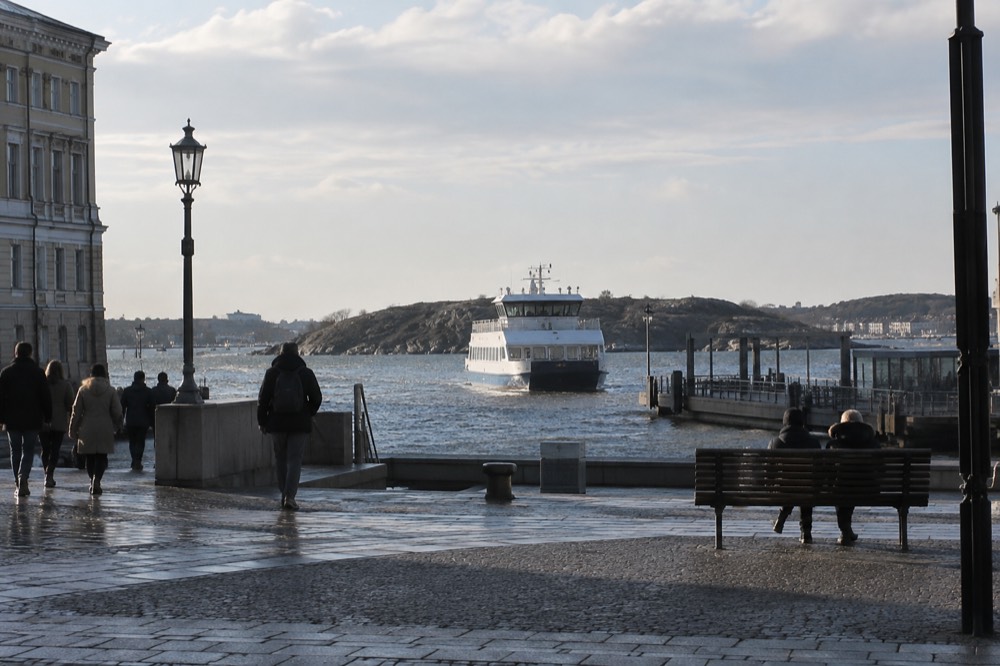
One planning note that saves real money: the archipelago ferries are part of the ordinary Västtrafik zone system, so a 24-hour Zone A ticket covers tram plus ferry plus every island, per Västtrafik's own zone documentation. The trams, tickets and zones guide explains the fare structure, including which temporary discounts apply to which tickets. The tram network itself, 12 lines and 188 km of single track as of the 2022 annual report, carried 126 million journeys in 2025, so the Saltholmen ferry terminal at its western end is never more than a ride away.
If the calendar lands you in the May-to-September window, the archipelago boats are the seasonal booking that matters most, because the best of the city's summer sits offshore. The guided archipelago cruise is the short version: the listing shows a 4.4 rating from 1,488 reviews over two and a half hours, which fits a morning and leaves the afternoon for the islands themselves.
Common Questions About the Best Time to Visit Gothenburg
What is the best month to visit Gothenburg?
May or June, on the numbers: May records 54.3 mm of rain and June 73.7 mm, both drier than August's 92.8 mm, with 16-18 hours of daylight and Liseberg in full season. September is the best-value alternative, with sea temperature at 16.7 C, warmer than June.
What is the rainiest month in Gothenburg?
October, at 102.9 mm across 12.6 wet days, per SMHI's 1991-2020 normals for station Göteborg A. November and December follow. The driest month is April at 51.3 mm.
Is Gothenburg Sweden's rainiest city?
No. SMHI's own description of the 1991-2020 normals places the national precipitation maxima in the mountains and the western highlands, above 1000 mm in places. Gothenburg's 912 mm sits in the wet western band but is not a national maximum, and SMHI does not call the city Sweden's rainiest.
When is it warm enough to swim in Gothenburg?
The sea peaks in August at 18.6 C and holds 16.7 C through September, warmer than June's 16.2 C, per SMHI's Vinga station data. July and August are the reliable swimming months; the record high is 23.6 C in July.
What months is Liseberg open?
In 2026, Liseberg's summer season runs 18 April to 20 September, Halloween 2 October to 1 November, and the Christmas market 14 November to 23 December. The park is otherwise closed, including the whole stretch from 24 December to mid-April, except Kaninlandet's winter weekend openings.
Is Gothenburg worth visiting in winter?
Yes, with expectations set: December offers the Christmas market and 6 hours 32 minutes of daylight on the solstice, January and February are quiet and cheap, and the sea is at its coldest, 2.7 C in February. Museums, food halls and saunas carry a winter itinerary.