Gothenburg in Winter: Weather, Daylight and What to Do
Winter in Gothenburg, Sweden is milder than most visitors expect, wetter than most guides admit, and darker than almost anywhere south of it. Here is what the official data says, and what is actually open between December and March.
Short answer
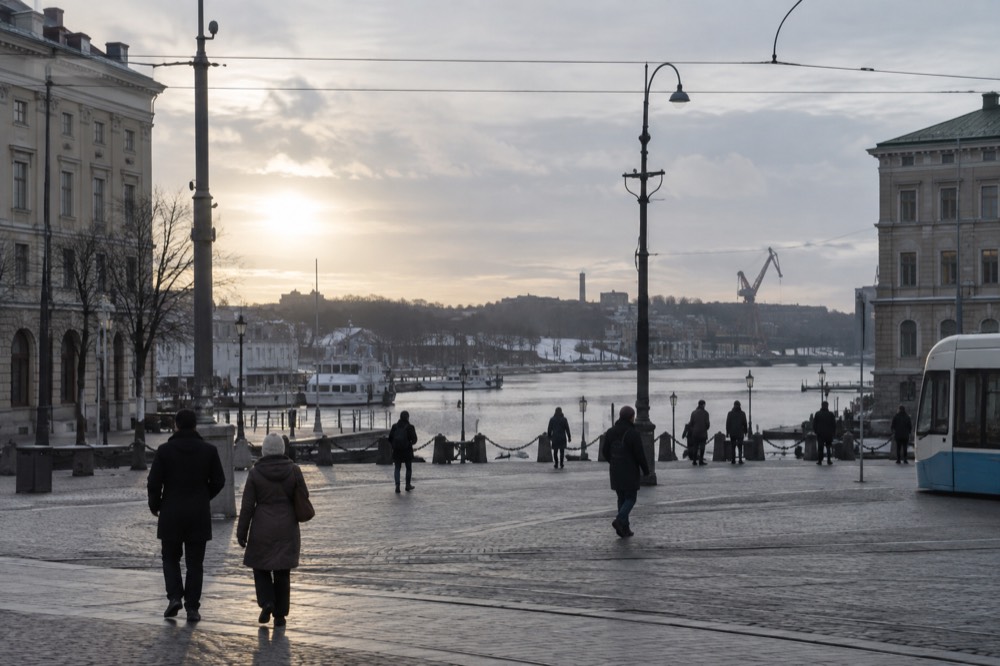
Gothenburg's winter is a coastal one: mean air temperatures hover between 0.7 and 2.1 C from December to February, rain is more common than snow, and daylight shrinks to 6 h 32 m on 21 December. Liseberg closes after 23 December, but Universeum, the museums and the archipelago ferries all keep running.
Gothenburg, Sweden sits at 57.7 degrees north on the Kattegat coast, which means winter arrives as a specific trade: the sea keeps the city warmer than inland Sweden, and the latitude takes the light away. On 21 December the sun rises at 08:54 and sets at 15:26, a day of 6 hours 32 minutes. The mean air temperature that month is 2.1 C. Neither of those numbers comes from a travel blog; both come from SMHI, the Swedish weather institute, and the US Naval Observatory. This guide works through what a winter visit actually involves: the real weather record, what closes and what does not, the Christmas market window, the archipelago in the cold, and how to plan around the dark.
How Cold Does Gothenburg Actually Get in Winter?
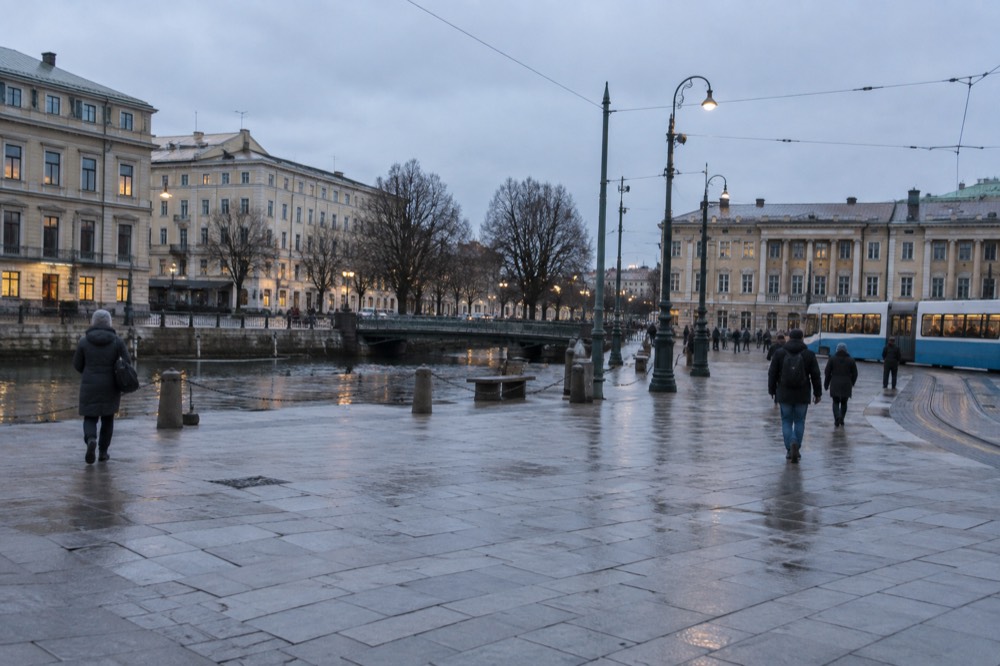
Gothenburg's winter is coastal and damp rather than Arctic. SMHI's 1991-2020 normals for station Göteborg A put the mean air temperature at 2.1 C in December, 0.8 C in January and 0.7 C in February, against 18.3 C in July. The sea, measured at the Vinga lighthouse station, bottoms out in February at 2.7 C, with a record low of -1.2 C, which is possible because brackish Kattegat water freezes below zero.
Those means hide the day-to-day pattern. Because the city sits at the mouth of the Göta älv, with open water to the west, winter days swing between a few degrees above zero with rain and a few degrees below with wind. SMHI's normals record 93.0 mm of precipitation in December and 84.7 mm in November, which is more than most Swedish cities see in those months. The wettest month of the whole year is October, at 102.9 mm, so the rain is already established before winter begins.
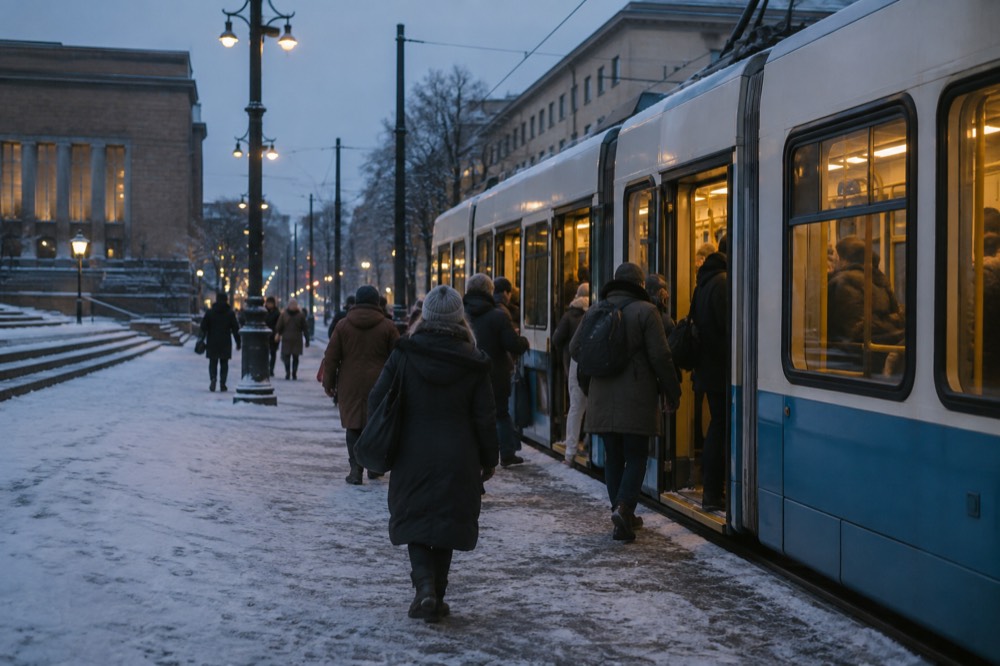
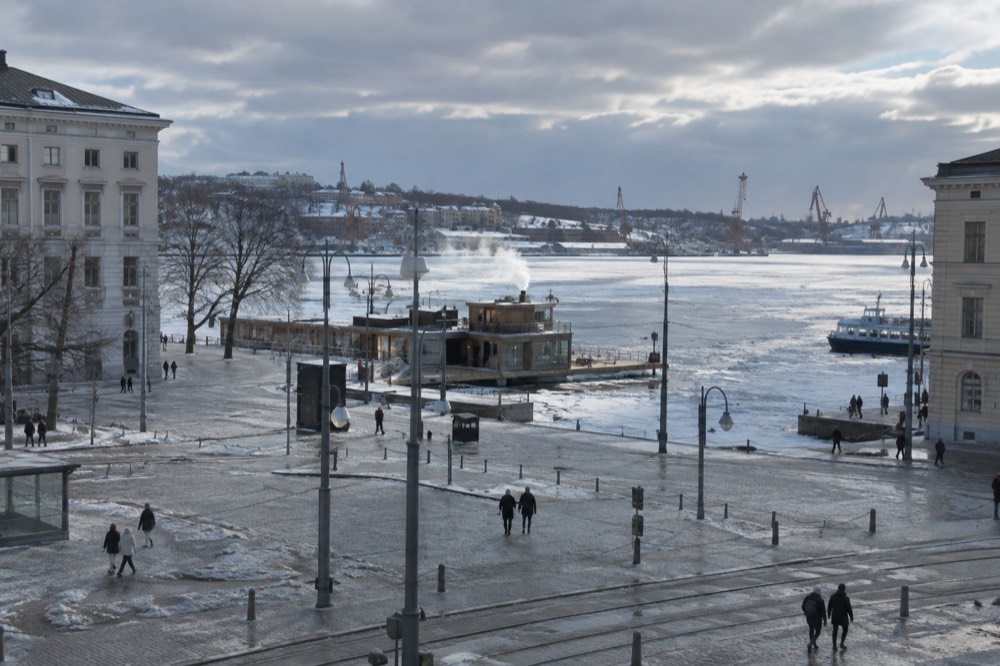
Snow is the exception, not the rule. When cold air does settle over the west coast, the city gets proper snow for a few days and the trams keep running through it, but a white Christmas is closer to a coin toss than a promise. What you can count on is wind, because the prevailing direction is onshore. The practical consequence: a waterproof shell matters more than a heavy parka, and layers you can shed inside overheated Swedish buildings matter more than either.
| Month | Mean air temp (C) | Precipitation (mm) | Wet days (>=1 mm) | Mean sea temp at Vinga (C) |
|---|---|---|---|---|
| November | 5.1 | 84.7 | 12.0 | 9.3 |
| December | 2.1 | 93.0 | 13.3 | 5.5 |
| January | 0.8 | 83.0 | 11.5 | 3.9 |
| February | 0.7 | 61.0 | 9.7 | 2.7 |
| March | 3.0 | 54.0 | 8.8 | 4.1 |
All figures are SMHI 1991-2020 normals for station Göteborg A (71420), except the sea temperature, which is computed from SMHI's quality-controlled hourly archive at station Vinga. If you want the full seasonal picture before committing, the best time to visit Gothenburg breaks down all twelve months.
Indoor sightseeing is the backbone of a winter itinerary, and a pass that bundles multiple attractions makes more sense in December than in July, when the islands and parks do the heavy lifting. These are the products a cold-weather visit leans on:
How Dark Is It Really, and When Does the Light Come Back?
On 21 December 2026 the sun rises at 08:54 and sets at 15:26, giving Gothenburg 6 hours 32 minutes of daylight, against 18 hours 06 minutes on 21 June, a swing of 11 hours 34 minutes. Civil twilight on the winter solstice runs 08:03 to 16:17, so even the grey usable light lasts barely eight hours. By late February the city gains more than four minutes of daylight per day.
The December number shocks visitors from southern Europe and North America, but it is not the whole story. Gothenburg's winter light is low and horizontal, and on clear days the low sun turns the granite and red brick of the old town gold for an hour or two. The mistake is planning a December itinerary around long outdoor walks. Plan it the other way: indoor stops during the short day, viewpoints and photography in the hour around noon when the sun is lowest and warmest in colour.
The compensation arrives fast. By mid-January the city has already clawed back an hour of daylight, and by the end of February the days feel normal to most visitors. Our month-by-month breakdown in daylight and darkness in Gothenburg carries the full table if you are choosing between a December and a February trip. February is the month the light comes back while the city is still quiet and cheap.
What Is Open in Gothenburg in Winter, and What Is Closed?
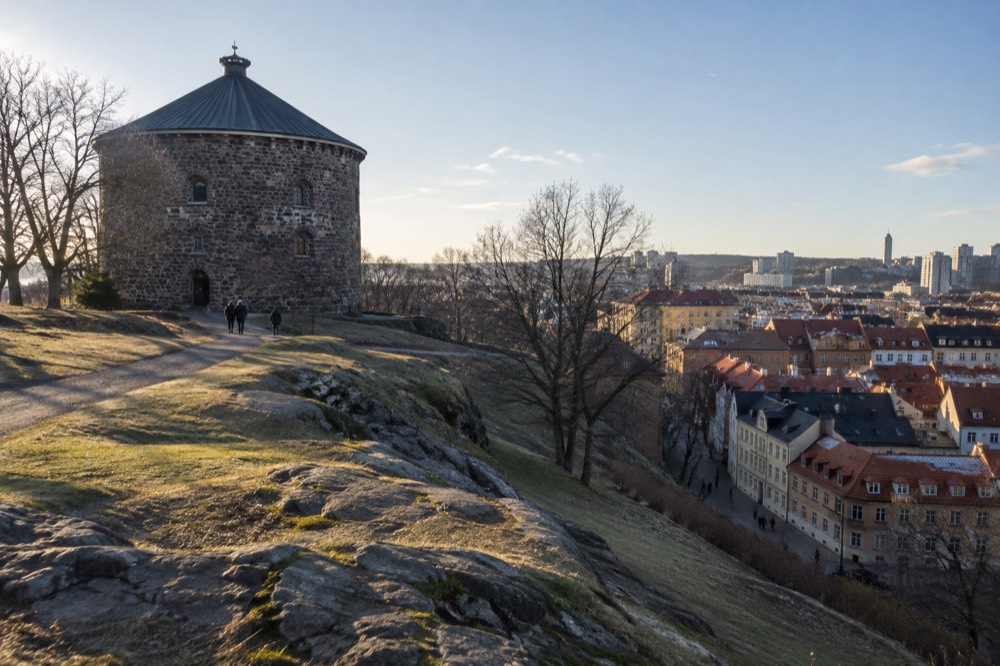
The single biggest closure is Liseberg: the Christmas market ends on 23 December and the park then stays shut until mid-April, though the Kaninlandet family area now opens on winter weekends and school holidays. Universeum, by contrast, is open every day of the year, 10:00 to 18:00. Göteborgs konstmuseum keeps full hours until a planned 2028 closure for rebuilding, and World of Volvo runs seven days a week.
That Liseberg gap ruins more mid-winter trips than the weather does. The park's own calendar, published on liseberg.se's tickets and prices page, gives summer 2026 as 18 April to 20 September, Halloween as 2 October to 1 November, and Jul på Liseberg as 14 November to 23 December. Arrive in late January and the biggest attraction in the city is a locked gate. The new winter Kaninlandet openings, announced for weekends and school holidays, are the partial exception, but they cover one zone, not the rides.
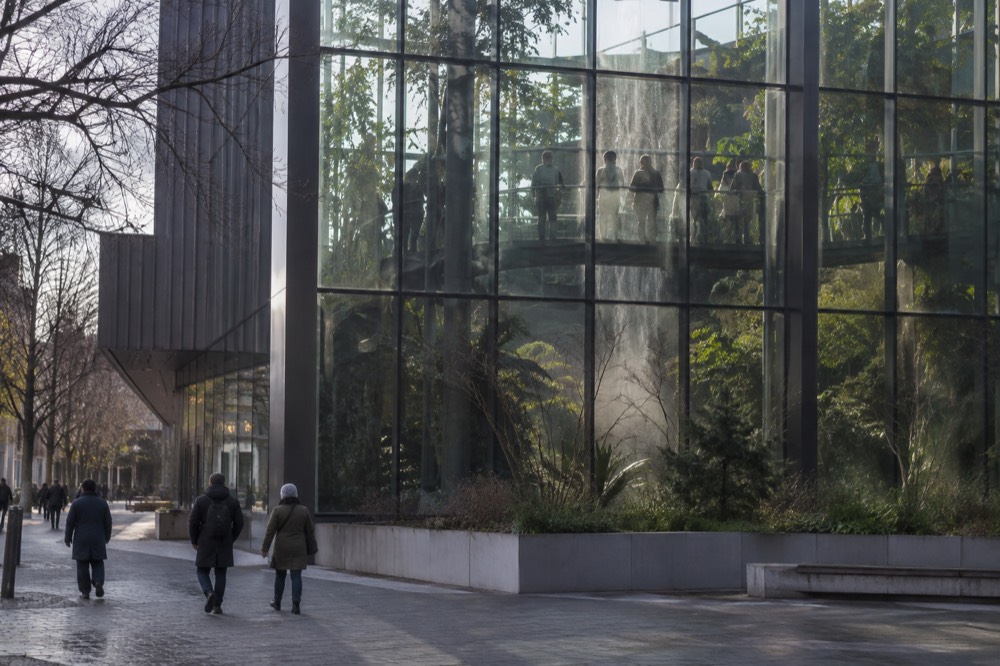
The indoor list is strong. Universeum's rainforest hall, aquarium and reptile house are included in admission, with a booked time slot and dynamic pricing. Göteborgs konstmuseum, on Götaplatsen, holds about 70,000 works and charges 75 kr for a day ticket, free for anyone under 20, and it is open Tuesday to Sunday with late opening on Wednesdays. The museum's own rebuild page states it closes in 2028 and reopens in 2032, so a winter 2026 or 2027 visit is safely inside the open window, though the museum warns of intermittent blasting near the building. Gothenburg's museums can fill three wet days on their own.
| Attraction | Winter status | Key detail |
|---|---|---|
| Liseberg | Closed 24 Dec to mid-April | Jul på Liseberg runs 14-23 Dec; Kaninlandet opens winter weekends |
| Universeum | Open daily 10:00-18:00 | Dynamic pricing, booked time slot; on-site price is online price + 30 kr |
| Göteborgs konstmuseum | Open Tue-Sun | 75 kr day ticket, free under 20; closes for rebuild in 2028 |
| World of Volvo | Open daily | Exhibition tickets from 120 SEK online; Thu until 19:00 |
| Feskekôrka food hall | Open | Five restaurants and two fish counters; Lilla Åstol is seasonal |
| Archipelago ferries | Running | Ordinary Västtrafik tickets apply; reduced winter timetables |
Feskekôrka, the fish-church-shaped market hall on Rosenlundsgatan, is worth a stop in any season now that it has reopened as a food hall with five restaurants rather than fish counters alone. Feskekôrka the fish church covers what is inside and what to eat there.
For a winter day that keeps everyone indoors but moving, the amphibious bus is the one sightseeing product built for bad weather, since it spends half its route on the water inside a covered vehicle:
The amphibious bus is also the rare city tour that works identically in a downpour and in clear weather, which is exactly the kind of certainty a Gothenburg December needs. If you are stringing several indoor stops together across two or three days, the bundled pass below is the arithmetic that makes the most sense.
Is the Gothenburg Archipelago Worth Visiting in Winter?
Yes, if you go for atmosphere rather than swimming. The southern archipelago islands, including Styrsö, Brännö, Vrångö and Donsö, are areas of Gothenburg reached by ordinary Västtrafik tickets, and the ferries run all winter on reduced timetables. The sea is at its coldest in February at 2.7 C, and private cars are banned on the islands, so you walk everywhere regardless of weather.
The ticket fact does not change with the season. Västtrafik's own zone material, including the official tram, bus and boat network map, puts the islands in Zone A, so a 125 kr 24-hour Zone A ticket covers the tram to Saltholmen and the ferry out to sea on one fare. Västtrafik's own wording on the boats is that you can ride "på samma biljett hela vägen från centrum ut på havet", on the same ticket all the way from the centre out onto the sea. Check the winter timetable before you commit, because sailings thin out after the summer season and some islands have gaps of an hour or more between boats.
What winter gives the islands is emptiness. The summer crowds are gone, the paths are yours, and the low light across the water is the version of the archipelago that appears in Nordic crime dramas. Bring proper shoes, because granite is slick when wet. If a boat day sounds too raw, a covered archipelago cruise with a guide is the winter compromise:
For the full picture, the Gothenburg archipelago covers the islands themselves, and the archipelago in winter covers this season specifically.
What About Christmas and New Year in Gothenburg?
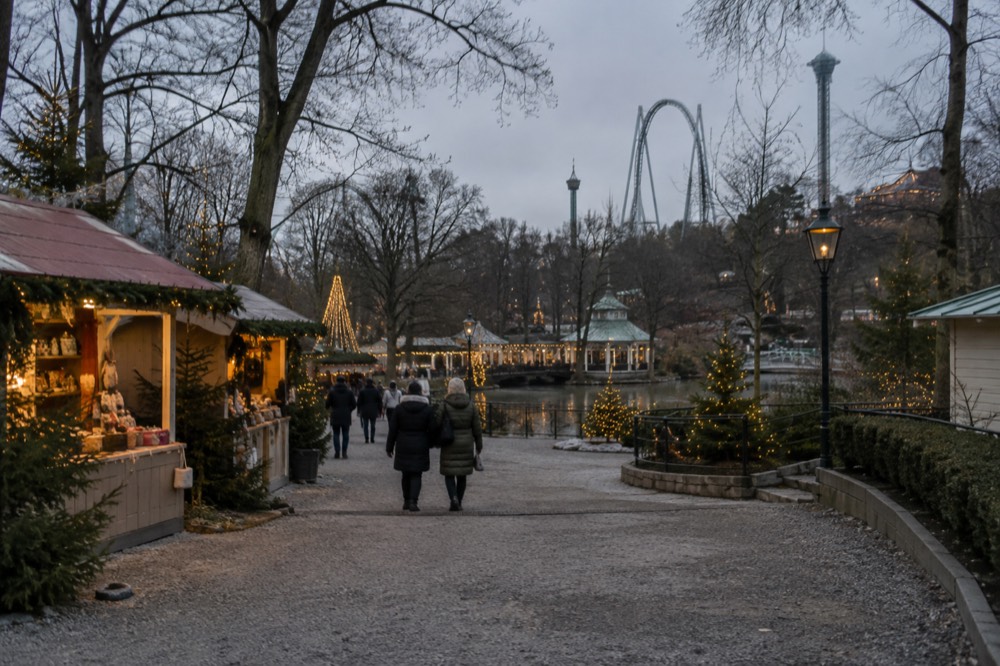
The Christmas window runs from mid-November to 23 December, and it is the best-organised part of the Gothenburg winter. Jul på Liseberg, the Christmas market inside the amusement park, runs 14 November to 23 December 2026, and the whole city centre adds lights, markets and a riverside atmosphere that the darkness paradoxically improves. From 24 December the city goes quiet: Liseberg shuts, many restaurants close for a few days, and the week between Christmas and New Year is thin on programming.
Gothenburg does Christmas well because the darkness gives the lights something to work with. The Liseberg market is the anchor, with entry from 95 kr, though note the park's own pricing structure: the entry ticket includes no rides, and the combined entry and ride pass starts at 365 kr online. For the market itself, entry is what you need. Gothenburg's Christmas market covers the full scene, including the markets beyond Liseberg.
New Year is a low-key affair by Swedish standards, with the main public focus on fireworks over the river rather than organised events. The practical advice for the days from Christmas Eve onwards is to book accommodation with breakfast included and plan around museum reopening days. Where to stay in Gothenburg helps if you are choosing a winter base, since walking distance matters more when it is around 1 C and raining.
How Do You Get Around Gothenburg in Winter?
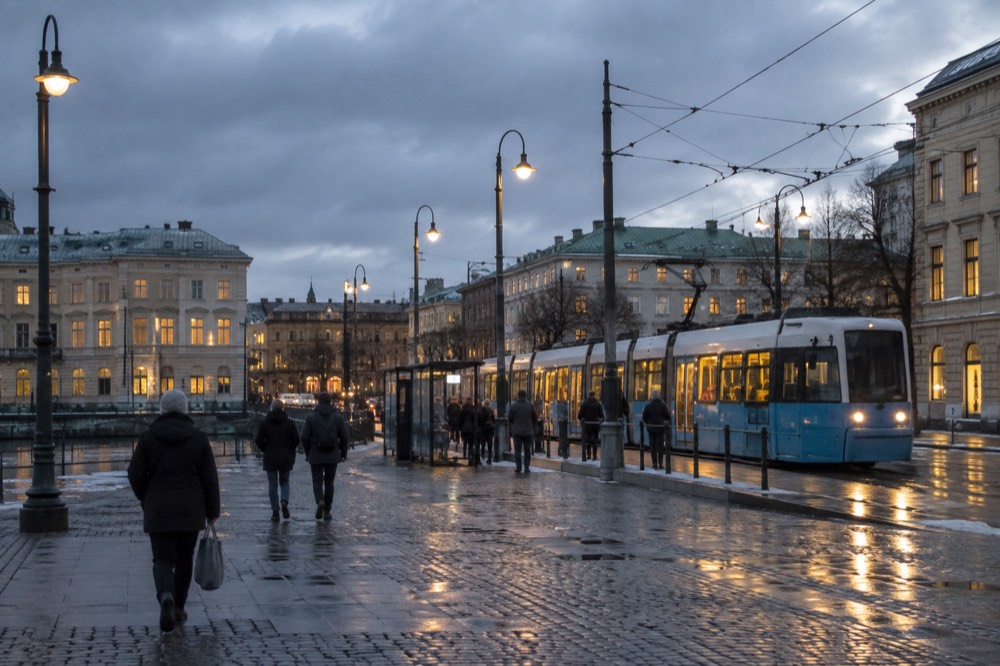
The tram network is the backbone of a winter trip, and it runs through snow and rain without interruption. A 24-hour Zone A ticket costs 125 kr for an adult and covers trams, buses and the archipelago ferries; a single one-zone trip is 38 kr. The 30-day period tickets are temporarily halved by a state subsidy, but that discount does not apply to the 24-hour and 72-hour tickets visitors actually buy.
That fare nuance matters, because headlines about half-price transport in Gothenburg are about monthly tickets, not visitor day passes. The 24-hour Zone A price is 125 kr whether you buy it in the app or at a shop, and Zone A covers Göteborg, Mölndal, Partille and Öckerö, which includes the southern archipelago. Getting around Gothenburg carries the full fare and zone breakdown.
Winter-specific transport notes are few but real. The trams are the reliable spine; Göteborgs Spårvägar recorded 126 million journeys in 2025, and the network runs 12 lines over 188 km of single track. Ice can briefly disrupt bicycle lanes, so winter is not the season for the city's bike tours. Taxis are metered and expensive, and there is no rail link from Landvetter Airport, only the Vy flygbussarna coach, which Swedavia states takes 20 minutes to the centre. Landvetter airport to the city centre covers the transfer options in detail.
What Should You Pack for a Gothenburg Winter?
Pack for wet cold, not dry cold: a waterproof shell with a hood, waterproof shoes with real grip, and layered midweights you can remove indoors, because Swedish buildings run warm. Gloves and a hat are not optional at around 1 C with onshore wind, and an umbrella is less useful than a hood, because the wind takes umbrellas apart. Swimwear earns its place if a sauna or bathhouse is on the list.
The packing error most first-time visitors make is treating Gothenburg like Lapland. Inland Swedish winters justify expedition parkas; a coastal winter at 0.7 to 2.1 C with 84.7 to 93.0 mm of monthly rain punishes anything that soaks through. The second error is packing only heavy layers. You will spend half your day inside museums, restaurants and trams that are heated to t-shirt temperature, so the base layer you can strip to matters as much as the coat.
The swimwear point is serious. Cold-water swimming and sauna culture run through the Gothenburg winter, from sauna boats in the archipelago to the bathhouse tradition, and February's 2.7 C sea is the local badge of honour. Cold water swimming and sauna in Gothenburg covers where to do it safely. For a fuller seasonal checklist, what to pack for Gothenburg has the item-by-item version.
| Item | Why | Priority |
|---|---|---|
| Waterproof shell with hood | 84.7-93.0 mm of rain per winter month; wind defeats umbrellas | Essential |
| Waterproof shoes with grip | Wet granite cobbles and slick island paths | Essential |
| Layered midweights | Overheated trams, museums and restaurants | Essential |
| Gloves and hat | 0.7-2.1 C means with onshore wind | Essential |
| Reflector or lights | Pedestrian reflectors are standard Swedish practice in the dark | Recommended |
| Swimwear | Sauna and cold-bath culture runs all winter | Optional |
Is Winter a Good Time to Visit Gothenburg?
Winter suits a particular kind of visitor: one who wants museums, food halls, Christmas markets and low-season prices, and who accepts 6 hours 32 minutes of December daylight as the cost. It does not suit a visitor whose Gothenburg list is Liseberg rides, island swims and long park days, because the park is shut from 24 December to mid-April and the sea sits near its February minimum until March.
The honest case for winter is density. The city's indoor attractions are unusually strong for a city of 613,274 people, the restaurant scene does not hibernate, and the guest-night record of over 6 million in 2025 was driven heavily by international visitors who are increasingly spreading beyond summer. Hotel rates drop outside the Christmas market window and the late-June peak. Is Gothenburg expensive, what a trip really costs breaks down what a winter week actually spends.
The honest case against is the light. If your trip falls across Christmas Eve itself, you get the Christmas market at its best and the shortest days of the year in the same parcel. Shift the same trip to mid-February and you trade the market for four extra hours of daylight and the coldest sea of the year, which is exactly when the sauna tradition makes sense.
A pass that bundles the indoor attractions is the winter traveller's arithmetic in one product, since the outdoor half of a Gothenburg itinerary shrinks in December and the museum half grows:
If you are weighing Gothenburg against the capital in the same season, Gothenburg or Stockholm, which to visit compares the two winters directly. And if the archipelago is your main reason for the trip, the warmer months covered in a weekend in Gothenburg may serve you better than any week between November and March. This page is part of the seasonal set at Gothenburg Travel Guide, where the spring, summer and autumn guides carry the other three quarters of the year.
For the final third of a winter plan, the products that hold up in cold and dark are the covered, water-based and indoor ones:
Common Questions About Gothenburg in Winter
How cold does Gothenburg get in winter?
Mean air temperatures run 2.1 C in December, 0.8 C in January and 0.7 C in February, per SMHI's 1991-2020 normals. It is a damp coastal cold with wind, not the deep dry cold of inland Sweden.
Does it snow in Gothenburg?
Sometimes, for short stretches, when cold air settles over the coast. Rain is far more common: December averages 93.0 mm of precipitation. A week of continuous snow cover is not the norm.
Is Liseberg open in winter?
Only for the Christmas market, 14 to 23 December, plus the new winter weekend and school-holiday openings for the Kaninlandet family zone. The main park closes after 23 December and reopens in mid-April.
How many hours of daylight does Gothenburg have in December?
6 hours 32 minutes on 21 December, with sunrise at 08:54 and sunset at 15:26. Civil twilight extends the usable grey light to roughly 08:03-16:17.
Do the archipelago ferries run in winter?
Yes, on reduced timetables, and an ordinary Västtrafik Zone A ticket covers them. The islands are car-free, so dress for walking in whatever weather arrives.
Is Gothenburg worth visiting in winter?
For museums, food and the Christmas market, yes, especially mid-November to 23 December. For rides, island swimming and long outdoor days, no; those belong to the April-to-September half of the year.