Daylight and Darkness in Gothenburg, Sweden: Month by Month
Gothenburg sits at 57.7 degrees north, far enough that the daylight swings by more than eleven hours between the solstices. Here is what that actually means, month by month.
Short answer
Gothenburg gets 18 h 06 m of daylight on 21 June and 6 h 32 m on 21 December, a swing of 11 h 34 m. The sea, not the air, is the surprise: water temperature peaks in August at 18.6 C, and September sea (16.7 C) is warmer than June sea (16.2 C).
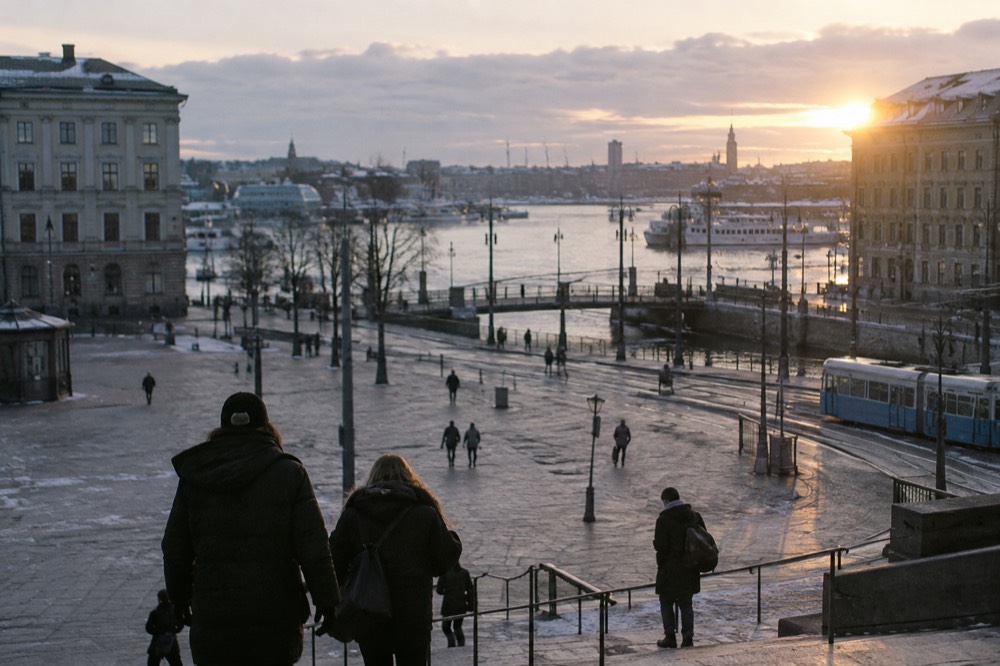
Gothenburg lies at 57.7 degrees north, on the same latitude as the northern tip of Scotland, and the daylight budget reflects it. The US Naval Observatory's own tables put the shortest day of 2026 at 6 hours 32 minutes and the longest at 18 hours 06 minutes. That is a swing of 11 hours 34 minutes, one of the widest in any major European city a visitor routinely flies to. But the raw numbers are only half the story. The other half is twilight: in June the sky never properly goes dark, and in December the grey light stretches the usable day well past the sunrise-to-sunset figure. This guide from Gothenburg Travel Guide walks through what the light actually does, month by month, and what it means for how you plan.
How Much Daylight Does Gothenburg Get Each Month?
Gothenburg's daylight runs from a low of 6 hours 32 minutes on 21 December to a high of 18 hours 06 minutes on 21 June, a swing of 11 hours 34 minutes between the solstices. The change is fastest in spring and autumn, when the day lengthens or shortens by roughly five to seven minutes per day, and slowest at the solstices themselves, when consecutive days differ by only seconds.
The two anchor points, computed by the US Naval Observatory for Gothenburg's coordinates, are exact: on 21 December 2026 the sun rises at 08:54 and sets at 15:26, giving 6 h 32 m. On 21 June 2026 it rises at 04:11 and sets at 22:17 local summer time, giving 18 h 06 m. Everything between those points is a curve, and it is a steep one. Around the equinoxes the day grows by about five to seven minutes every 24 hours, which means a week of March is worth roughly 40 minutes of light. Visitors who arrive in early April and leave two weeks later genuinely notice the difference.
The table below gives approximate mid-month figures for each month, interpolated between the verified solstice and equinox points. Treat them as planning numbers, not almanac precision.
| Month | Approx. daylight (mid-month) | Character of the light |
|---|---|---|
| January | ~7 h | Short days, long blue twilight mornings |
| February | ~9 h | Fastest lengthening of the year begins |
| March | ~12 h | Equinox, day and night equal |
| April | ~14 h | Long evenings, driest month (51.3 mm) |
| May | ~16 h | Bright until well past 21:00 |
| June | ~18 h | Peak: 18 h 06 m on the 21st |
| July | ~17 h | Air temperature peaks at 18.3 C |
| August | ~15 h | Sea temperature peaks at 18.6 C |
| September | ~12 h | Sea (16.7 C) warmer than June's |
| October | ~10 h | Wettest month, 102.9 mm of rain |
| November | ~8 h | Dark by late afternoon, lights on all day |
| December | ~6 h 45 m | Minimum: 6 h 32 m on the 21st |
One correction worth making early: the internet is full of claims that Gothenburg is Sweden's rainiest city. SMHI's own 1991-2020 normals do not support it. The national maxima sit in the western highlands and the mountains, while Gothenburg's 912 mm a year is simply the wet western Götaland band. The rain question is covered in detail in our guide to the best time to visit Gothenburg.
A second correction concerns the shape of the year rather than its extremes. Gothenburg's light does not fade gently from summer into winter. It holds high through July, drops sharply from August onward, and by November the city is living almost entirely on artificial light outside working hours. Anyone booking an autumn city break should understand that the difference between a September weekend and a November weekend is not just temperature. It is the difference between evening light on the river and darkness before you have finished your after-work coffee.
Why Are Gothenburg's Summer Nights So Short?
On 21 June in Gothenburg the sun sets at 22:17 and civil twilight runs from 02:58 to 23:30 local time, leaving only about three and a half hours of true night. The sky never reaches full darkness, and the hours either side of midnight read as a long, pale dusk rather than night, because at 57.7 degrees north the sun never drops far enough below the horizon in midsummer.
This is the fact that surprises visitors most. It is not the midnight sun, which belongs to the Arctic Circle far to the north, but it is close enough in effect that an evening walk along the river at 23:00 can happen without a torch. Photographers describe the midsummer light as a several-hour golden hour: the sun grazes the horizon instead of diving under it, so the low, warm light that other cities get for 20 minutes a day, Gothenburg gets for a large part of the night.
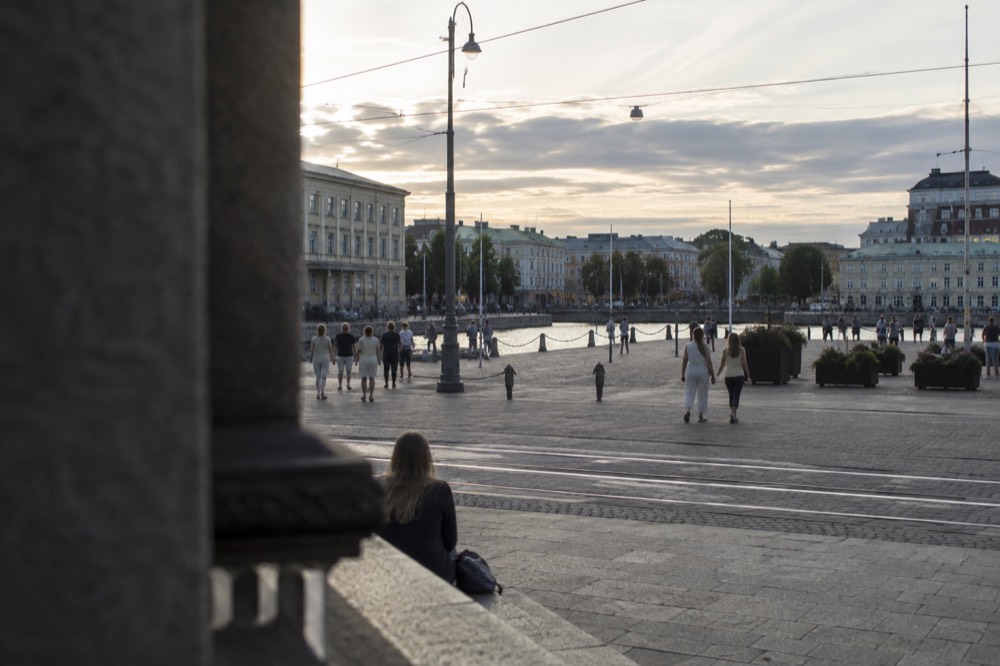
The practical consequences are real. Hotel rooms without blackout curtains are a genuine problem in June, and eye masks sell out in the airport shops. Restaurant terraces stay full past 22:00 because nobody feels the hour. And the archipelago ferries, covered by an ordinary Västtrafik ticket according to the operator's own fare pages, deliver you to islands where the evening light over the Kattegat lasts until the last departure. Our guide to the Gothenburg archipelago covers the crossings in detail.
June also carries a statistical quirk worth knowing. SMHI's oceanographic archive at the Vinga lighthouse station shows the sea at 16.2 C in June, cooler than September's 16.7 C. The air is warm, the water is not yet, and the light lasts almost long enough to forget that. The archive behind these figures is published directly by SMHI at its open oceanographic data portal, station 35144 Vinga, with tens of thousands of quality-controlled hourly observations behind each monthly mean.
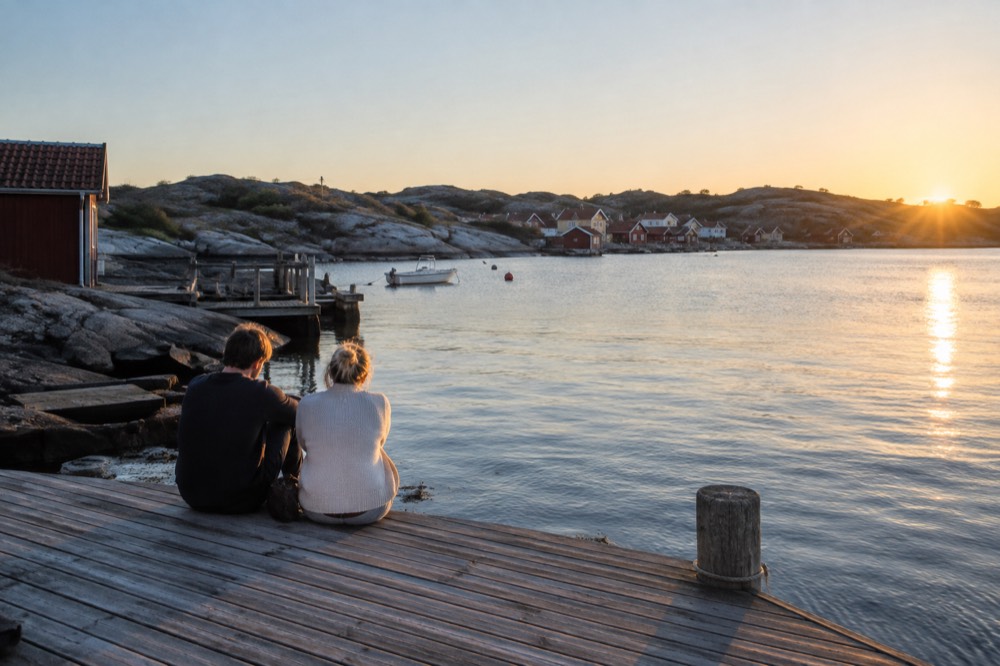
There is a planning upside to the short nights that first-time visitors routinely miss. Because the evening stays light, the effective sightseeing day in June is enormous. You can put museums and indoor attractions in the middle of the day, when the light is at its flattest and harshest, and save the outdoor city, the waterfront, the viewpoints and the islands, for the hours after 18:00, when the light turns golden and the crowds thin. In most European cities that strategy would cost you the evening. In Gothenburg in June it costs you nothing.
How Dark Does Gothenburg Actually Get in December?
On 21 December Gothenburg gets 6 hours 32 minutes of daylight, with the sun rising at 08:54 and setting at 15:26, and civil twilight running only from 08:03 to 16:17. The practical day, the stretch where there is usable grey light, is barely eight hours, and lunchtime is effectively the middle of the light window.
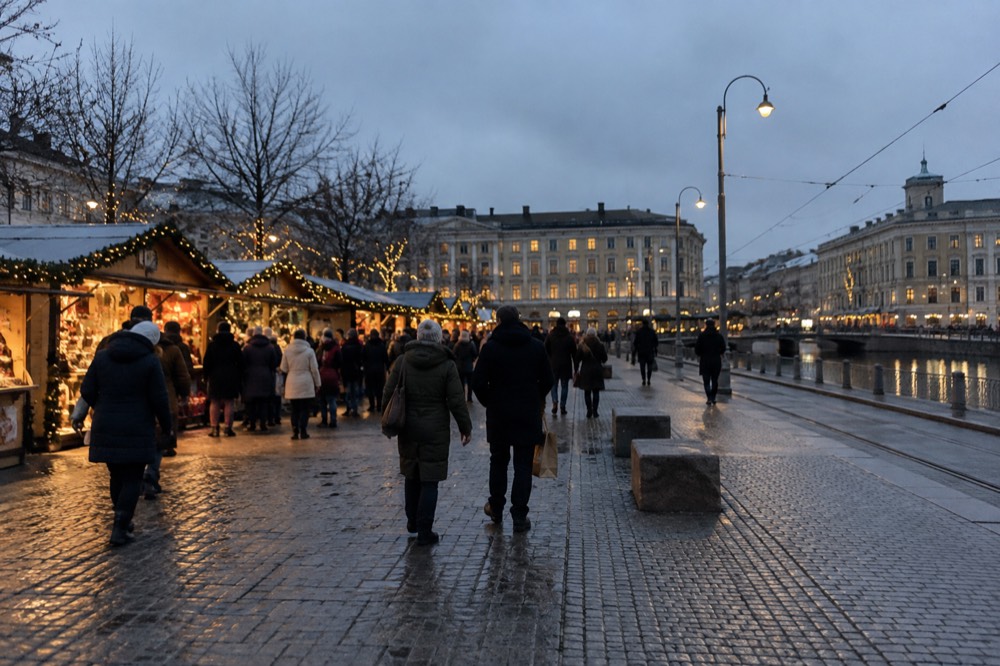
December in Gothenburg is not the polar night, but it compresses the day in ways that reshape a trip. The light, when it comes, is low and slanted, and the city's response is part of its character: candles in every café window, the Liseberg Christmas market lit from mid-afternoon, and a café culture built around sitting indoors. Fika, the Swedish coffee break, is in part a light-substitute, and our guide to fika in Gothenburg explains how it works and where to do it.
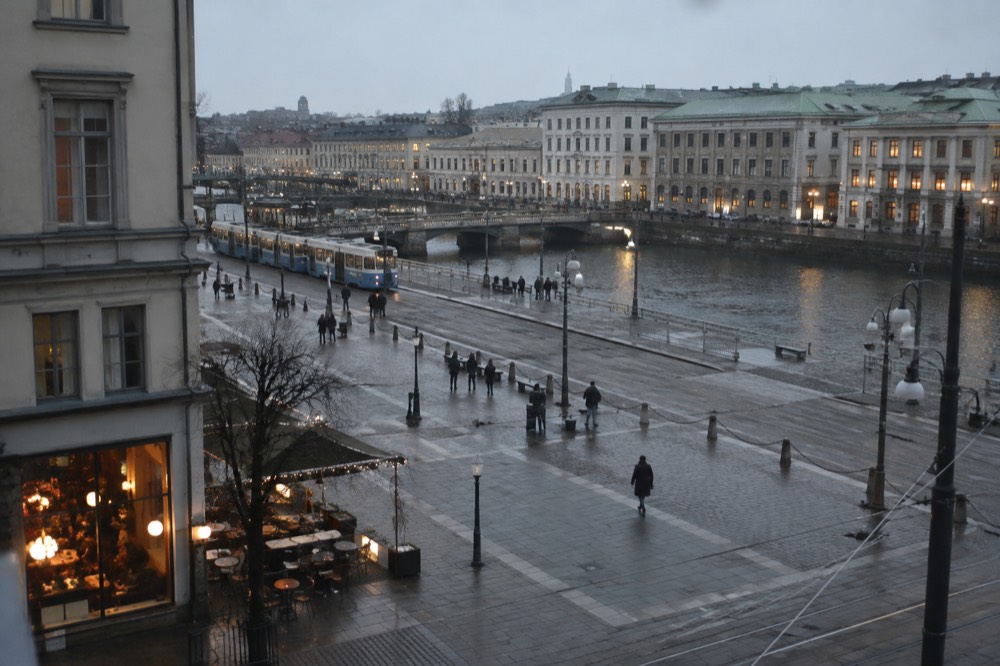
The Christmas market at Liseberg runs 14 to 23 December in the 2026 season, per the park's own calendar, which means the darkest stretch of the year coincides with the city's brightest event. The market's lights switch on while the sky is still fading, and by 16:00 the park glows against full darkness. Our Gothenburg Christmas market guide covers dates, stalls and how the season fits into a short-break plan. The park's own season pages, at liseberg.se/jul, carry the current calendar, and the dates shift a little every year, so check them against your travel window before you book anything non-refundable.
If you are scheduling a December day around the light, the arithmetic is simple and unforgiving. Usable daylight sits between roughly 09:00 and 16:00, and anything you want to see outdoors, the Haga wooden houses, the harbour, the viewpoints, has to fit inside that box. The compensation is that the low sun makes those few hours unusually beautiful: shadows stretch across the granite, the painted wooden facades glow, and the blue hour, when the sky turns deep blue against the lit windows, arrives early enough to enjoy before dinner rather than after it.
Which Gothenburg Months Have the Best Light for Sightseeing?
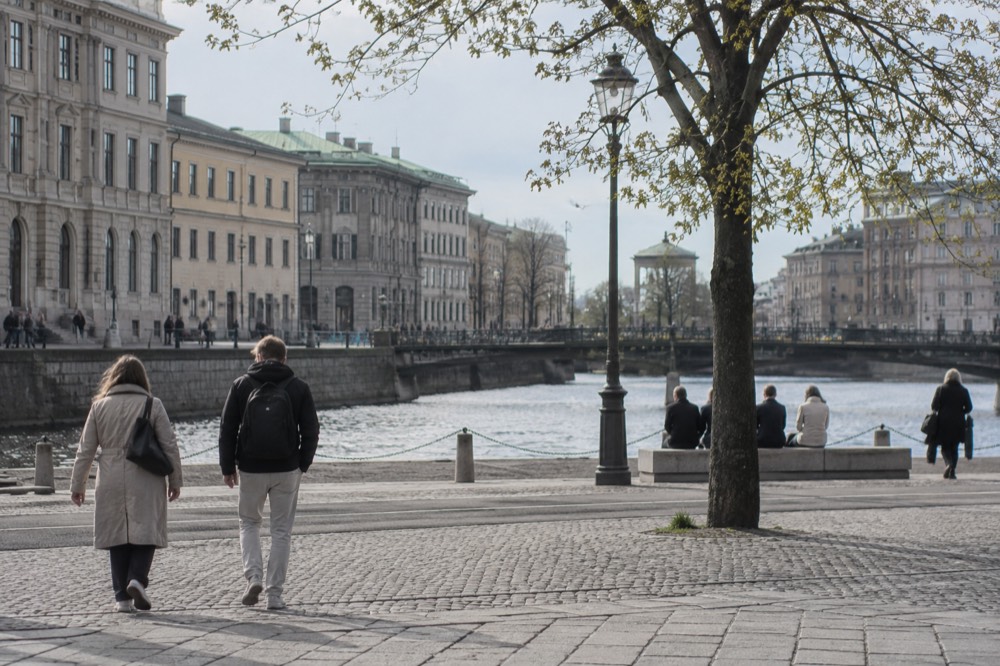
For pure daylight quantity, May through August is the window, with 16 to 18 hours of light and evenings that stay usable past 21:00. For light quality combined with dry weather, April is the strongest single month: it is the driest of the year at 51.3 mm of rain across only 8.2 wet days, with long daylight by mid-month.
April is Gothenburg's quiet statistical win. SMHI's 1991-2020 normals for station Göteborg A put it at 51.3 mm of precipitation, the lowest of any month, on the fewest wet days. The daylight is already long, the tourist crowds have not arrived, and the city's parks, including the free zoo at Slottsskogen, are coming into leaf. September is the other underpriced month: long light, sea water warmer than June's, and the main summer rush gone.
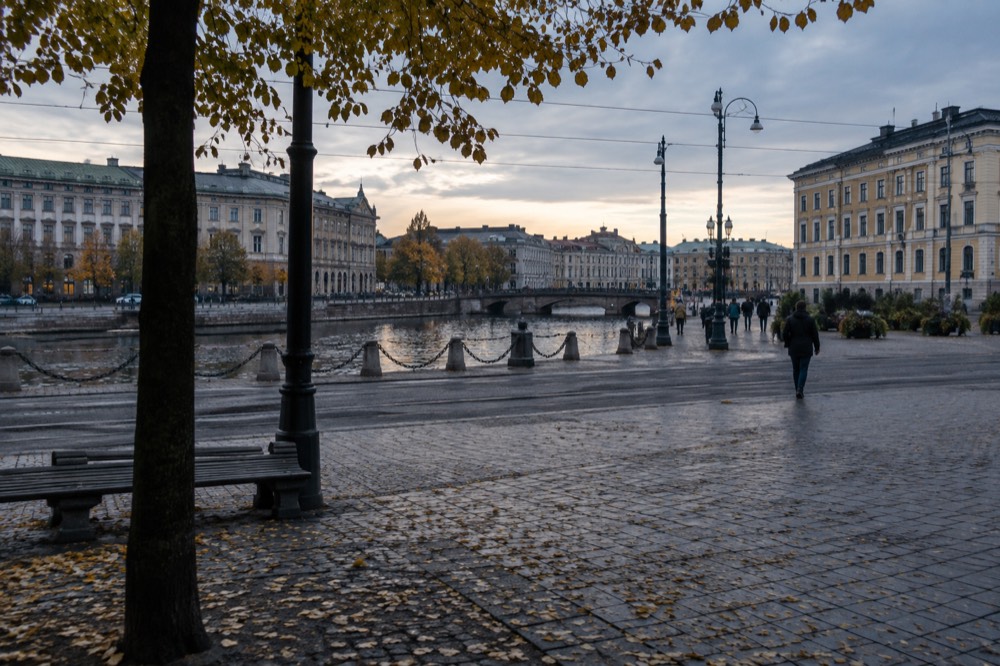
October is the month to plan around rather than for. It is the wettest month of the year at 102.9 mm, and the light is dropping fast, from about 11 hours at the start to under 10 by the end. That combination, short days and the year's peak rainfall, is why October reads as the true start of the Gothenburg winter arc even though the calendar says autumn. The Gothenburg on a rainy day guide exists precisely for this stretch.
| Month | Rainfall (mm) | Wet days (≥1 mm) | Mean air temp (°C) | Daylight verdict |
|---|---|---|---|---|
| January | 83.0 | 11.5 | 0.8 | Short and grey |
| February | 61.0 | 9.7 | 0.7 | Coldest sea month (2.7 C) |
| March | 54.0 | 8.8 | 3.0 | Light returns fast |
| April | 51.3 | 8.2 | 7.7 | Driest, bright, best value |
| May | 54.3 | 8.8 | 12.4 | Long bright evenings |
| June | 73.7 | 10.0 | 15.7 | Near-white nights |
| July | 81.3 | 9.8 | 18.3 | Warmest air |
| August | 92.8 | 11.9 | 17.7 | Warmest sea (18.6 C) |
| September | 80.0 | 10.8 | 14.0 | Warm sea, soft light |
| October | 102.9 | 12.6 | 9.0 | Wettest, dark by 17:00 |
| November | 84.7 | 12.0 | 5.1 | Candles and museums |
| December | 93.0 | 13.3 | 2.1 | 6 h 32 m on the 21st |
All rainfall, wet-day and temperature figures are SMHI 1991-2020 normals for station Göteborg A (71420), published at SMHI's normals page.
How Does the Light Change Week to Week in Spring and Autumn?
Around the March and September equinoxes Gothenburg's day length changes by roughly five to seven minutes per day, the fastest rate of the year, so a fortnight is worth over an hour of daylight. In late March the day passes through 12 hours, and by late April it exceeds 15 hours, while in mid-October the reverse happens and the city loses an hour of light every nine to ten days.
This is the part of the daylight story that guidebooks skip. The solstices are fixed points, but the weeks around the equinoxes are when the change is felt. A visitor who arrives in Gothenburg on 1 March and leaves three weeks later has gained well over an hour of evening light. The same visitor in October loses it. The practical rule: in spring, plan outdoor things for the second half of your trip; in autumn, front-load them.
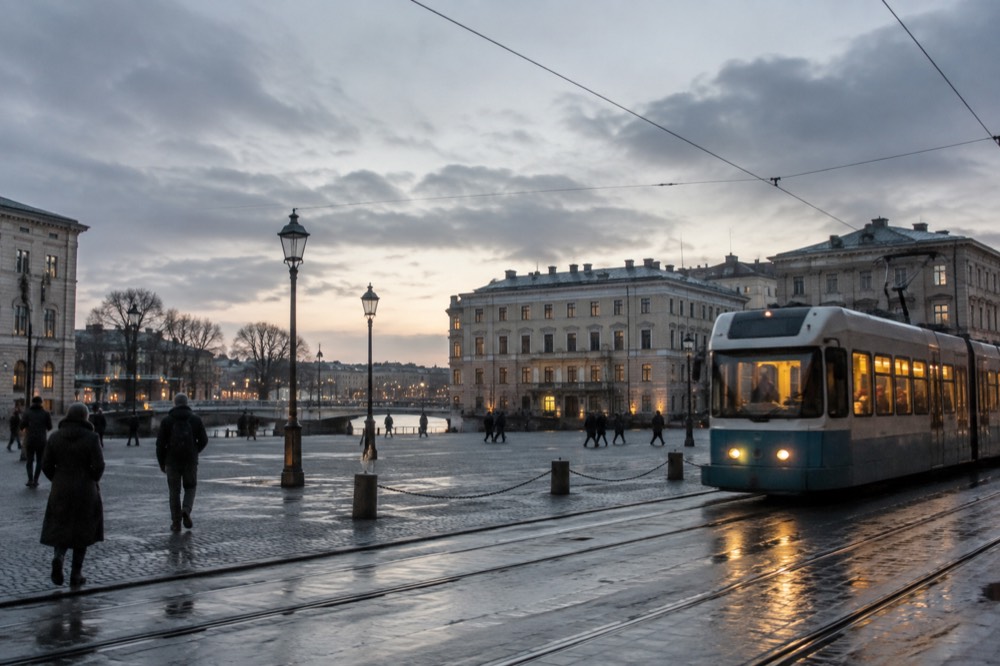
The tram network, 12 lines and 188 km of single track as of Göteborgs Spårvägar's 2022 annual report, keeps the city usable in the dark months in a way car-dependent cities are not. You are never far from a lit, warm, frequent tram, and the 24-hour Zone A ticket at 125 kr covers the ferries too. Our getting around Gothenburg guide has the full fare picture, and Västtrafik's own Zone A ticket page, at vasttrafik.se, states the current price and what the ticket covers.
Twilight deserves a word of its own, because it is what softens both extremes. Civil twilight is the period when the sun sits just below the horizon and there is still enough light to walk around without artificial help. In December that adds only about half an hour at each end of the day, which is why the dark feels total. In June it adds hours, and it is why the "night" never goes properly black. Nautical and astronomical twilight, the darker bands, effectively vanish from the Gothenburg sky in the weeks around midsummer and dominate it in the weeks around midwinter. The city's light year is really a story about how much of each twilight band you get.
When Should You Plan Around the Light in Gothenburg?
Plan museum-heavy and indoor days for November through January, when daylight is 7 to 8 hours and the light is flat; plan archipelago, kayaking and long evening walks for May through September, when daylight runs 15 to 18 hours; and put the shoulder months, April and September, in the middle, since April is the driest month and September's sea is warmer than June's.
The honest framing is that Gothenburg has two planning seasons, not four. The bright half, roughly April to September, rewards being outside late: the archipelago islands, the Slottsskogen park, the Haga old quarter's wooden houses, evening light on the Göta älv. The dark half, November to February, rewards the indoor city: Göteborgs konstmuseum (75 kr, free under 20, though it closes in 2028 for a four-year rebuild), Universeum's rainforest hall, the Feskekôrka food hall, and the candlelit café culture. Note the konstmuseum's own site currently warns of intermittent blasting near the building, flagged for sensitive visitors.
| Trip type | Best months | Why the light matters |
|---|---|---|
| Archipelago islands and swimming | August, September | Sea peaks at 18.6 C in August; long light |
| Photography and long walks | May, June, September | Low golden light, near-white June nights |
| Christmas market trip | Late November, December | Dark by 16:00, market lights carry the evening |
| Museum and café city break | November to February | 7-8 h of daylight suits indoor pacing |
| Budget city break | April | Driest month, long light, pre-season prices |
If the dark months sound bleak, they are not, exactly. The city's response to six-hour days is one of its most distinctive features, and our Gothenburg in winter guide makes the case. For a trip that splits the difference, the two days in Gothenburg itinerary flexes between bright and dark seasons.
Nordens Ark, the wildlife park on the Bohuslän side of the region, is one of the few big attractions whose appeal is completely indifferent to the season. The animals are more active in cold weather, the site is open year-round, and the listing shows entry from $29 per person with a 4.5 rating from a small review base. On a February day with seven hours of grey light, that is a better use of the afternoon than a viewpoint walk.
Common Questions About Daylight in Gothenburg
How many hours of daylight does Gothenburg get in December?
On 21 December, the shortest day, Gothenburg gets 6 hours 32 minutes of daylight, with sunrise at 08:54 and sunset at 15:26. Civil twilight extends the usable light only from 08:03 to 16:17.
Does it ever get fully dark in Gothenburg in June?
Barely. On 21 June civil twilight runs from 02:58 to 23:30 local time, leaving only about three and a half hours of true night. The sky stays pale rather than black through the middle of the night.
Is Gothenburg the rainiest city in Sweden?
No. SMHI's own 1991-2020 normals do not identify Gothenburg as Sweden's rainiest city; the national precipitation maxima are in the western highlands and the mountains. Gothenburg's 912 mm a year sits in the wet western Götaland band, and its wettest month is October at 102.9 mm.
When is the best light for swimming in the Gothenburg archipelago?
August and September. The sea peaks at 18.6 C in August, and September's water at 16.7 C is warmer than June's 16.2 C, so early autumn beats early summer for swimming.
How fast does Gothenburg's daylight change?
Fastest around the equinoxes, when the day lengthens or shortens by roughly five to seven minutes per day, and slowest at the solstices, when consecutive days differ by only seconds.
Does Gothenburg have the midnight sun?
No. The midnight sun belongs above the Arctic Circle, far north of Gothenburg's 57.7 degrees. But midsummer nights stay light enough to read outdoors, with sunset at 22:17 on 21 June.
The daylight swing is the single biggest structural fact about visiting Gothenburg, Sweden, and it rewards planning more than luck. Come in June and the light is a resource you can spend until midnight. Come in December and the city compensates with candles, markets and trams that arrive lit and warm every few minutes. Either way, the numbers above are the real ones, straight from the astronomical and meteorological sources, not the clichés.
If you only take one scheduling rule from all of this, take this one: match your activity to the light, not the clock. The amphibious bus sightseeing tour, rated 4.7 from more than 4,300 reviews on its listing, runs the same route at 15:00 in July and at 15:00 in December, but in December that departure finishes in the dark. Book the earlier slot in the dark half of the year and the later one in the bright half, and the same ticket buys a completely different experience.
The archipelago cruise with guide is the other light-sensitive booking worth thinking through. The listing shows a 2.5-hour guided trip from $44 per person, rated 4.4 from a large review base, and the same water is a different spectacle under a midnight-pale June sky than under a November dusk. In the bright months the evening departures are the ones to chase.