Getting Around Gothenburg: Trams, Tickets and Zones Explained
Gothenburg runs on one of Europe's most used tram networks, and a single Västtrafik ticket covers the trams, the buses and the ferries out to the car-free islands of the southern archipelago. Here is how the zones, fares and tickets actually work.

Short answer
Buy a Västtrafik Zone A ticket in the Västtrafik To Go app: a single costs 38 kr and a 24-hour ticket 125 kr, and both cover trams, buses and the archipelago ferries from Saltholmen. There is no train to Landvetter Airport; the Vy flygbussarna coach takes 20 minutes.
Gothenburg's tram network carried 126 million journeys in 2025, according to Göteborgs Spårvägar, the municipal tram company, which makes it one of the most heavily used systems of its kind anywhere in Europe for a city of 613,274 people. The trams are not a heritage extra: they are the working backbone of the city, running from Mölndal in the south to Angered in the north, and out to Saltholmen in the west, where the tram line literally ends at a ferry quay. One ticket, bought from the transport authority Västtrafik, covers the whole chain.
This guide explains the system the way a visitor actually meets it: the zones, the fares, the app, the airport transfer, and the single best-value fact in the city, that an ordinary Zone A ticket includes the ferries to the car-free southern archipelago. If you are planning the shape of your trip first, start with how many days you need in Gothenburg and where to stay in Gothenburg, then come back here for the mechanics.
How Do Gothenburg Trams, Buses and Zones Work?
Gothenburg's public transport is run by Västtrafik and divided into three fare zones, A, B and C. Zone A covers Göteborg, Mölndal, Partille and the Öckerö islands, and it contains almost everything a visitor needs. A single adult ticket for one zone costs 38 kr, and the same ticket is valid on trams, buses and the archipelago ferries, with a 90-minute transfer window on singles. You buy tickets in the Västtrafik To Go app, at ticket machines, or loaded onto a Västtrafikkort.
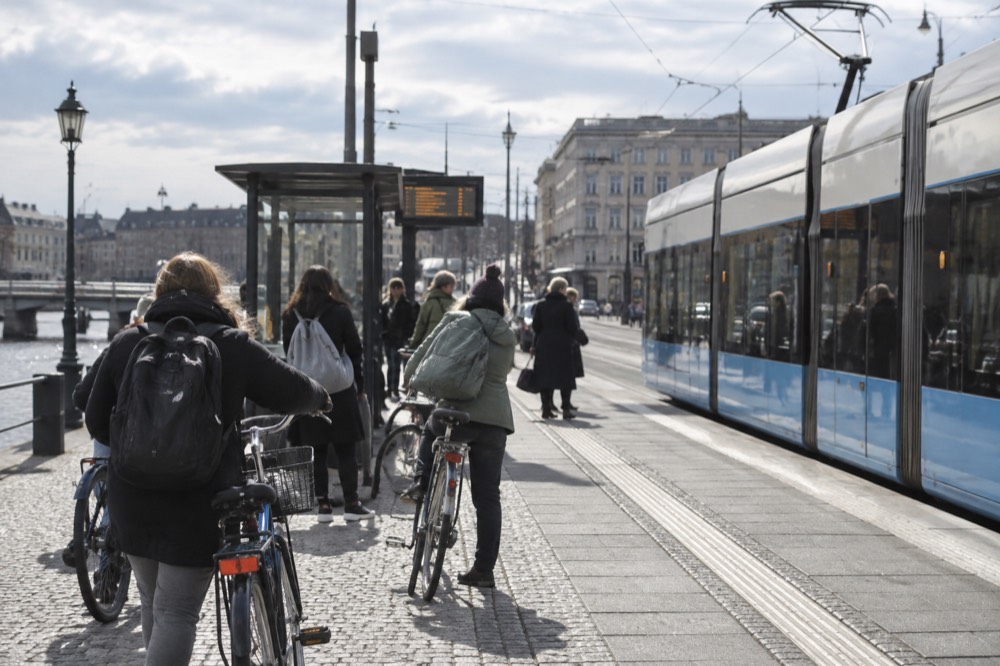
The network is genuinely integrated. Göteborgs Spårvägar's annual report describes 12 tram lines, 134 stops and 188 kilometres of single track, figures the report dates to 2022, so treat the route count as approximate today. What matters to a visitor is simpler: trams run every few minutes on the central corridors during the day, the network shuts down overnight and replaces itself with night buses on weekends, and every tram stop has a live departure screen.
Zones only bite when you leave the city. A trip within Göteborg is one zone. Cross into Kungsbacka or Alingsås and you are into two or three zones, with the single fare rising to 76 kr and 114 kr respectively, per Västtrafik's fare page. Day tickets exist for 24 and 72 hours, and the 24-hour Zone A version costs 125 kr whether you buy it in the app or at a shop.
| Ticket | Adult price | Youth (7-19) | Where it works |
|---|---|---|---|
| Single, 1 zone | 38 kr | 29 kr | Trams, buses, ferries, 90 min |
| Single, 2 zones | 76 kr | 58 kr | Adds the first ring of municipalities |
| Single, 3 zones | 114 kr | 87 kr | The wider region |
| 24-hour, Zone A | 125 kr | - | Everything in Zone A for a day |
| 72-hour, Zone A | Price on Västtrafik's ticket page | - | Everything in Zone A for three days |
Västtrafik's own pages carry the current prices, and the 72-hour figure sits behind a selector on their site, so check the live page rather than any secondhand number. One rule saves confusion at the airport: there is no rail link to Landvetter at all, which is covered in detail in Gothenburg Landvetter Airport to the city centre.
What Is the Cheapest Way to Get Around Gothenburg?
For most visitors the 24-hour Zone A ticket at 125 kr is the best buy, because it covers the trams, the buses and, unusually, the ferries to the southern archipelago islands of Asperö, Brännö, Styrsö, Donsö, Vrångö and Köpstadsö. Västtrafik states you can ride on the same ticket all the way from the centre out to sea, and the islands sit inside Zone A. That makes a tram-plus-ferry-plus-island day the cheapest big day out in the city.
The arithmetic is hard to beat. A return ferry ticket bought separately would cost more than the day ticket that includes it, and the ferry terminals at Saltholmen sit at the western end of a tram line, so you never need a car. In fact you cannot use one on the islands: Göteborgs Stad's own planning study states the southern archipelago islands are protected from car traffic, with only taxis, transport services and emergency vehicles on the roads.
There is a discount in the news that does not apply to you. A temporary state subsidy currently halves every 30-day period ticket, Zone A adult dropping from 890 kr to 445 kr, valid for travel through the end of the year. Västtrafik's own announcement is clear that the cut covers monthly tickets only. The 24-hour and 72-hour tickets a visitor buys are not discounted, so do not budget on half-price transport.
If your day is museum-heavy rather than island-heavy, the calculus changes. An attraction ticket booked ahead, like the Universeum Entry Ticket, pairs well with a day ticket since the science centre sits right beside the Korsvägen tram hub.
Do You Need a Car in Gothenburg?
No, and for the southern archipelago a car is actively useless, because private cars are banned on the islands and the ferry terminals are reached by tram. Inside the city, parking is expensive and the tram network reaches every district a visitor goes to, from Haga to Liseberg to Saltholmen. A car only earns its keep for day trips along the Bohuslän coast or to smaller towns with thin bus service.
The city centre itself is compact and walkable, with the old town inside the moat, Avenyn, and the harbour all within reasonable walking distance of each other. For the districts further out, the tram arrives faster than a car during rush hour. Göteborgs Spårvägar's figures show the network running 126 million journeys in 2025, and the record year of 2019 saw 141 million, so capacity is built for heavy use.
The exception is the wider region. Day trips from Gothenburg along the coast to Marstrand, Smögen or Fjällbacka are far easier with a hire car, and the same applies to Tjolöholm and some of the smaller countryside destinations. If your itinerary is city-plus-archipelago only, skip the car entirely and put the money toward the Gothenburg archipelago instead.
| Where you are going | Best option | Why |
|---|---|---|
| City centre and museums | Walking plus tram | Compact core, trams every few minutes |
| Southern archipelago islands | Tram to Saltholmen, then ferry | Cars banned; one ticket covers both |
| Liseberg and Universeum | Tram to Korsvägen | Direct lines, high frequency |
| Landvetter Airport | Vy flygbussarna coach | No rail link exists |
| Bohuslän coast day trips | Hire car | Bus service is thin outside summer |
How Do You Get from Landvetter Airport to the City?
The airport coach branded Vy flygbussarna runs from Landvetter Airport via Korsvägen to Göteborg Centralstation's Nils Ericson Terminal, and Swedavia states the journey takes 20 minutes. There is no rail link to Landvetter, so the coach, Västtrafik bus 612 or a taxi are the only options. FlixBus line 691 also serves the airport on a similar central route.
The rebrand matters if you are following older instructions: the coach was called Flygbussarna for years, and many guides still use the old name. Swedavia, the airport operator, now lists it as Vy flygbussarna. Landvetter is Sweden's second-largest airport and handled 5,435,850 passengers in 2025, so the coach runs frequently through the day.

Västtrafik bus 612 is the budget alternative, but note its 14-minute run connects the airport with Landvetter the town, not the city, so it involves a transfer. For most arrivals the coach is the straightforward choice. The full comparison, including taxis and what each option costs, is in Gothenburg Landvetter Airport to the city centre.
How Do You Pay for the Tram in Gothenburg?
You pay before you board: in the Västtrafik To Go app, at platform ticket machines, or at kiosks and shops selling Västtrafik tickets onto a Västtrafikkort. There is no cash payment on the tram and no ticket bought from the driver, so a visitor arriving without the app or a card cannot board legally. Contactless bank card payment is not a substitute for a ticket on the trams.
The app is the practical choice. Download Västtrafik To Go before you arrive, add a card, and buy singles or day tickets as you need them. The 24-hour Zone A ticket costs 125 kr in the app, the same as at a shop, so there is no penalty for buying digitally. Inspectors do check, and riding without a valid ticket carries a fine. The rest of the planning pages sit on Gothenburg Travel Guide.

One quirk worth knowing: you do not tap out. Unlike London or the Dutch systems, there is no exit reader, because the ticket is a flat zone fare rather than a distance charge. You activate a single when you board, or a day ticket when you first use it, and that is the whole interaction.
Is the Gothenburg City Card Worth It for Transport?
No city card includes public transport in Gothenburg today. The old Göteborg City Card, which did include transport, no longer exists, and the official tourism site sells no replacement card. The current Go City product covers attractions, and its own materials make no transport claim that could be verified, so budget transport separately at 125 kr for a 24-hour Zone A ticket.
This is the most outdated piece of advice still circulating about the city. The municipal card is gone, and repeating its transport inclusion for the current product would be a factual error. The honest framing: Go City's passes buy attraction entry, Västtrafik tickets buy rides, and the two do not mix. The full breakdown is in the Göteborg City Card, is it worth it.
Whether an attraction pass pays off at all depends on your pace. Two paid attractions a day and the pass usually wins; one a day and individual tickets do. Transport is cheap enough in every scenario that it should not drive the decision.
What About Taxis, Bikes and Walking?
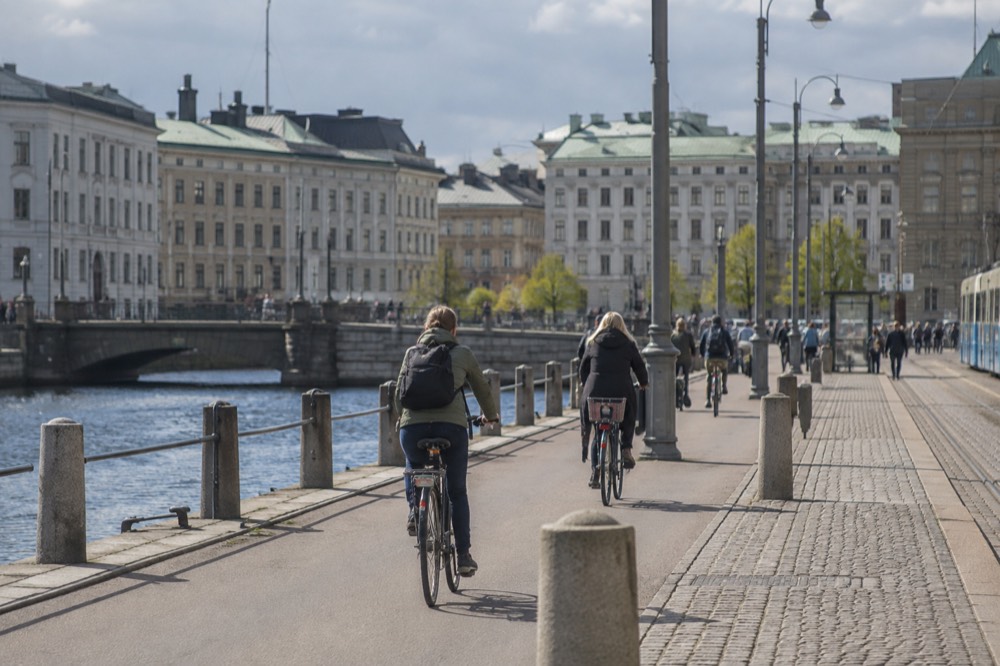
Taxis in Gothenburg are safe but expensive, with metered fares that quickly exceed a full day of tram travel on a single short ride. Bikes are a strong middle option, with hire available and a flat, separated-lane network in the centre. Walking covers the entire inner city, since the old town, Avenyn and the harbour sit within a compact rectangle that takes about 20 minutes to cross.
The centre is genuinely walkable. From Göteborg Centralstation to Avenyn is a straight 15-minute walk up Kungsgatan, and the canal-side districts of the old town are smaller than they look on the map. For anything beyond that, the tram takes over. The city's official tourism messaging leans on exactly this combination, and the 2025 record of over six million commercial guest nights, reported by Göteborg & Co, was absorbed without the city feeling crowded, partly because the trams spread people out.
Taxis have no fixed price by law in Sweden; fares are set by the operator and displayed in the car, so check the sticker before you set off. For airport runs at odd hours a taxi can make sense, but for everything else the tram wins on both cost and reliability.
Does One Ticket Really Cover the Archipelago Ferries?
Yes. Västtrafik's own network map shows the southern archipelago ferry lines from Saltholmen as part of the Zone A network, and the islands of Asperö, Brännö, Styrsö, Donsö, Vrångö and Köpstadsö are all inside Zone A. A 125 kr 24-hour ticket covers the tram to Saltholmen, the ferry out, and hops between islands, which is the best-value single day out in Gothenburg.
The ferries carry Västtrafik line numbers and appear on the official tram, bus and boat network map, so this is ordinary scheduled public transport, not a tourist cruise. The boats run year-round on core routes, with reduced winter timetables, and the crossing to Styrsö takes roughly half an hour. On the islands you walk or borrow a bike, because cars are banned.

A guided cruise is a different product: a commentary boat, fixed duration, no island hopping. The guided archipelago cruise is the most-reviewed option of that kind, while the land and water amphibious bus is a city sightseeing ride that drives into the harbour. Neither replaces the ferry for actually spending a day on an island.
Which Tram Lines Do Visitors Actually Use?
A handful of lines cover almost everything a visitor touches. Trams to Korsvägen serve Liseberg, Universeum and the museum district, trams along Avenyn reach Götaplatsen and the art museum, the lines to Saltholmen carry the archipelago traffic, and the stop at Brunnsparken is the central interchange where nearly every route crosses. Nordstan, beside Göteborg Centralstation, is the main hub for arriving and departing.
Brunnsparken is the place to memorise. Nearly every central line passes through it, so if you are lost, ride to Brunnsparken and start again. From there, Kungsportsplatsen serves the shopping streets, Grönsakstorget the northern old town, and the harbour-side stops at Lilla Bommen and Stenpiren serve the boats on the river side.
| Visitor destination | Nearest tram stop | Notes |
|---|---|---|
| Liseberg and Universeum | Korsvägen | Several lines, high frequency |
| Götaplatsen and the art museum | Valand or Vasaplatsen | Along Avenyn |
| Haga and the wooden quarter | Hagakyrkan or Järntorget | Short walk into the quarter |
| Saltholmen ferries | Saltholmen | Western terminus, change for boats |
| Central station and Nordstan | Centralstationen | All airport coaches arrive here |
| Slottsskogen park | Linnéplatsen or Botaniska | Southern edge of the city |
The night network is worth one sentence of planning. Weekend nights after the last trams, roughly one to four in the morning, Västtrafik runs night buses on the main corridors, and the same tickets apply. On a big night out, the practical advice in Gothenburg nightlife assumes you will use them.
Between the trams, the ferries and the airport coach, the only paid transport decisions left are the optional ones: sightseeing boats, guided rides and attraction tickets. The science centre ticket below is the one most visitors bundle with a Korsvägen tram day.
For a first-timer who wants the city laid out from the water instead, the amphibious bus covers the harbour and the streets in one loop, and it departs from a central stop that needs no extra ticket planning.
And for the classic archipelago afternoon without the ferry timetable, the guided cruise runs a fixed circuit with commentary and returns you to the city in time for dinner.
Common Questions About Getting Around Gothenburg
How do I pay for the tram in Gothenburg?
Before boarding, using the Västtrafik To Go app, a platform ticket machine, or a shop that loads tickets onto a Västtrafikkort. There is no cash on board and no driver sales.
Do you tap off Gothenburg trams?
No. Fares are flat zone prices, not distance charges, so there is no exit reader. You activate the ticket when you board and simply walk off at your stop.
Is the ferry in Gothenburg free?
The archipelago ferries are not free, but they are covered by an ordinary Västtrafik ticket, and the islands sit in Zone A, so a 125 kr 24-hour ticket includes them.
How much does a day pass cost in Gothenburg?
A 24-hour Zone A ticket costs 125 kr for an adult, the same price in the app and at shops, and it covers trams, buses and the southern archipelago ferries.
Are the trams free in Gothenburg?
No. Every ride needs a valid Västtrafik ticket, and inspectors check. A single adult fare in one zone is 38 kr.
Is public transport easy in Gothenburg?
Yes. One operator, one app, three zones, and a tram network that reaches every district a visitor needs, with the ferries to the car-free islands included on the same ticket.
The short version of all of this: download the app, buy a 24-hour Zone A ticket on any day you plan to move around, and ride the tram to Saltholmen for the boats. Gothenburg Travel Guide covers the rest of the city neighbourhood by neighbourhood, and the transport, once you understand the zones, is the easy part of the trip.