The Göteborg City Card Is Gone: What Replaced It and Whether Go City Is Worth It in Gothenburg
The Göteborg City Card was retired, and the pass that replaced it works differently, especially on transport. Here is what actually exists in 2026 and how to work out if it is worth buying for a Gothenburg trip.
Short answer
The Göteborg City Card no longer exists. It was replaced by the Go City pass in two tiers: an Essentials Pass covering three attractions over 30 days and an All-Inclusive Pass covering 20-plus attractions over one to five days. Neither replaces the old card's transport inclusion, so trams and archipelago ferries still need a separate Västtrafik ticket.
Gothenburg, Sweden's second city, spent decades selling visitors a simple promise: one card, one price, museums and rides and boats included. That product is gone. The official tourism company's own page for the Göteborg City Card returns a 404, and the URL that used to sell it now redirects elsewhere. What exists today is a different pass, sold by a different company, on different terms, and the difference most returning visitors trip over is transport. This guide sets out what the replacement actually covers, what it costs, and how to do the arithmetic for your own itinerary before you buy anything.
Does the Göteborg City Card Still Exist in Gothenburg?
No. The Göteborg City Card no longer exists, and no municipal city card replaced it. Göteborg & Co, the official destination company, sells no city card at all: its English sitemap contains no city-card page and the old address returns a 404. The successor product is the Go City pass, sold by an international pass operator in two tiers, and it is a commercial attraction bundle rather than the old municipal all-in-one card.
The history matters because the old card set expectations that the new one does not meet. Under the old scheme, one plastic card covered attractions and public transport together, which made the value calculation almost automatic: if you rode the trams a few times and saw two museums, it paid for itself. Gothenburg & Co withdrew it quietly rather than announcing a replacement, which is why so many third-party guides still describe a product that cannot be bought. Anyone arriving with a 2019 blog post open on their phone will be looking for something that has not existed for years.
The redirect tells the story. The old pass domain now points to the [Go City](https://gocity.tpk.ro/HQKyKKW4) Gothenburg pages, and Go City's own site describes the two products it sells there: an Essentials Pass built around a fixed shortlist of attractions, and an All-Inclusive Pass covering a longer list over a set number of days. Neither is sold by the city, and neither carries the old card's terms.
If you are planning the rest of a Swedish trip around this, our Gothenburg for first-time visitors overview covers how the city compares to the capital, and the getting around Gothenburg trams and tickets guide explains the transport system you will still need to pay for separately.
What Replaced the City Card in Gothenburg, Sweden?
The Go City pass replaced it, in two tiers. The Essentials Pass, from SEK 449, covers three attractions chosen from a shortlist of seven and stays valid for 30 days from activation. The All-Inclusive Pass, from SEK 499, covers more than 20 attractions and comes in one, two, three and five-day durations. Both are bought online and activated at your first attraction, and neither includes public transport.
That structure is standard Go City, the same template the operator uses in other cities. The Essentials tier is aimed at people who know roughly what they want: you pick three from a curated list, and the pass dies 30 days after you first use it, which suits a trip that might stretch over weeks. The All-Inclusive tier is aimed at the crash-course visitor: pay once, see as much as physically possible inside your chosen window of consecutive days.
The roster of products on our own site mirrors this split. The All-Inclusive Pass is listed at from $56 per person with a 3.8 rating from 238 reviews, and the Essentials Pass at from $47 with a 4.3 rating from 5 reviews. Those are the operator's live listings, and the small review count on the Essentials tier reflects how new the product is here rather than any verdict on quality.

What the pass list actually contains is a mix of museums, boat trips and sightseeing experiences rather than the big-ticket rides. The amphibious bus and canal cruise categories feature heavily, which tells you something about what the pass is really good at: covering the mid-priced, half-day experiences that individually cost 30 to 50 dollars each and add up fast if you do three of them.
Is the Go City Gothenburg Pass Worth the Money?
For a visitor doing three or more included attractions inside the pass window, the All-Inclusive tier usually pays for itself, because the individual listings it bundles run from roughly $16 to $92 each and the pass starts at $56. For a slow traveller doing one paid thing a day, or anyone whose itinerary is mostly free sights, it does not. The Essentials tier only wins if all three of your chosen attractions are at the expensive end of the list.
The honest way to decide is to price your own itinerary first and only then look at the pass. Gothenburg is unusually generous with free sights: Slottsskogen park with its free zoo, the archipelago islands on an ordinary tram-and-ferry ticket, the viewpoints at Masthuggskyrkan and Ramberget, and the Haga old quarter all cost nothing. A visitor building a trip around those does not have enough paid gaps for a pass to fill.
The pass earns its keep on the dense sightseeing days. Someone who takes the amphibious bus in the morning, a canal cruise in the afternoon and a museum the following day has already crossed the break-even line on the All-Inclusive tier. Someone who spends two days walking neighbourhoods and swimming off Brännö has not, and should not buy one on the assumption that passes always save money. They do not; they are a bet on your own pace.
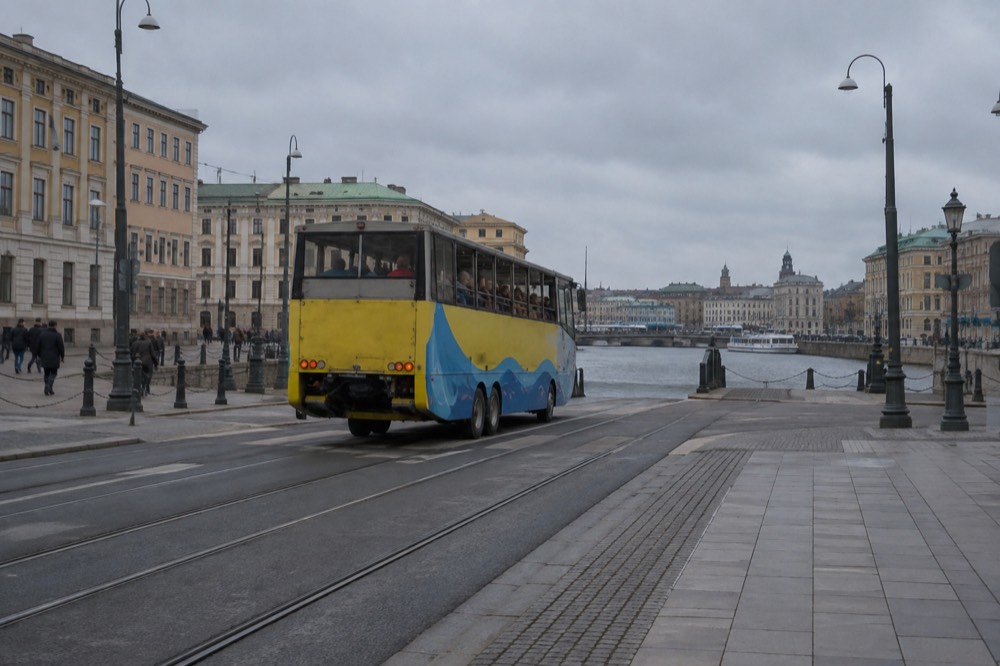
The single most-reviewed sightseeing product in the city is the Land and Water Amphibious Bus tour, rated 4.7 from 4,326 reviews and listed from $36 per person. It is the kind of anchor attraction that makes a pass calculation work, and it can also simply be booked on its own. Check availability if the amphibious bus is the one thing you already know you want. Our one day in Gothenburg itinerary shows how it slots into a tight schedule.
Because the amphibious bus is the anchor of nearly every pass calculation, it deserves its own look before you commit to a bundle. The listing carries by far the largest review base of any sightseeing product in the city, which makes it the least speculative line item in any itinerary.
Does the Gothenburg Pass Include Trams and Archipelago Ferries?
No. Unlike the retired city card, the Go City pass does not include public transport, and whether any transport perk exists at all could not be confirmed on the operator's own pages. Trams, buses and the southern archipelago ferries all run on Västtrafik tickets, which are bought separately: a single Zone A adult ticket is 38 kr and a 24-hour Zone A ticket is 125 kr.
This is the single most important paragraph on the page for anyone who remembers the old card. Transport inclusion was the old card's headline feature, and its absence changes the arithmetic completely. Under the old scheme, a pass buyer never thought about tram fares. Today, transport is a separate budget line, and it is a cheap one: the 24-hour Zone A ticket at 125 kr covers the entire city network, including the ferries to the car-free southern islands. Västtrafik's own Zone A ticket page confirms the 125 kr day price and lists what Zone A contains: Göteborg, Partille, Mölndal and Öckerö.

| Västtrafik ticket | Adult price | What it covers |
|---|---|---|
| Single, 1 zone | 38 kr | One journey, Zone A |
| Single, 2 zones | 76 kr | One journey across two zones |
| 24-hour, Zone A | 125 kr | Unlimited trams, buses and archipelago ferries for 24 hours |
| 30-day, Zone A | 445 kr during the temporary state subsidy | Unlimited travel, normally 890 kr |
Two things to note in that table. First, the archipelago ferries are ordinary Västtrafik services: the islands sit inside Zone A, so the same 125 kr day ticket that carries you across town carries you out onto the water. Second, the halved 30-day price is a temporary state subsidy on monthly tickets only. It does not apply to the 24-hour and 72-hour tickets visitors actually buy, so do not read a headline about half-price transport and expect it at the ticket machine. The full detail is in our how to get to the Gothenburg archipelago guide, and the southern archipelago island guide explains what you find once the ferry lands.
How Does the Pass Compare with Paying per Attraction in Gothenburg?
Paying individually costs roughly 17 to 92 dollars per attraction on the sightseeing and ticket listings, while the All-Inclusive pass starts at 56 dollars, so the pass wins once you visit three or more bundled attractions. Below three, individual tickets are cheaper. Two attractions that are never on any pass, Liseberg and Universeum, are also the two most visitors expect, so check the inclusions list before assuming coverage.
The comparison only works if you know the standalone prices, so here is the current picture from the venues' own sites and our verified listings.
| Attraction or tour | Standalone price | On a city pass? |
|---|---|---|
| Land and Water Amphibious Bus | from $36, rated 4.7 from 4,326 reviews | Yes, core pass item |
| City Canal Sightseeing Cruise, 50 minutes | from $28, rated 4.7 from 783 reviews | Yes, core pass item |
| Universeum science centre | dynamically priced, book a time slot | Sold as its own ticket listing |
| World of Volvo exhibition | from 120 SEK online | Sold as its own ticket listing |
| Göteborgs konstmuseum | 75 kr day ticket, free under 20 | Not a pass product |
| Liseberg entry | from 95 kr, rides sold separately | Not sold on any booking platform |

Two rows deserve expansion. Universeum prices admission dynamically against booked time slots, so there is no fixed adult price to quote; the venue's own ticket page is the only source, and buying on-site costs 30 kr more than booking online. Göteborgs konstmuseum charges just 75 kr, with free entry for everyone under 20 and for students, and it is worth knowing the museum plans to close in 2028 for a rebuild that keeps it shut until 2032. A pass that bundled it would be bundling one of the cheapest major attractions in the city.
Liseberg is the one that catches people out. Scandinavia's biggest amusement park sells its own tickets only, entry from 95 kr with rides sold separately, and it appears on no booking platform and no city pass. Liseberg's own tickets and prices page sets out the full structure. If your mental image of a Gothenburg pass includes Liseberg, adjust it now. Our Liseberg rides, tickets and when to go guide covers the full price structure.
For the attractions the pass does cover, the mid-tier sightseeing boats are where the value sits. The canal cruise alone, from $28, is half the All-Inclusive pass floor price, and the amphibious bus is nearly two-thirds of it. Add one museum or a hop-on hop-off day and the pass has already won.
The canal cruise is rated 4.7 from 783 reviews and runs 50 minutes through the moat that Dutch engineers built around the original seventeenth-century town. It is the kind of short, repeatable product that passes are built around.
Which Gothenburg Attractions Are Not Covered by Any Pass?
Liseberg, Universeum, World of Volvo single tickets, the archipelago ferries and everything run by Västtrafik sit outside the pass system, as do the free sights, which need no pass at all. Liseberg in particular is sold only through its own channels, and Universeum's dynamic time-slot pricing means it appears as a standalone ticket listing rather than inside a bundle.
The pattern is consistent: the pass bundles commercial sightseeing products, while the biggest single-visit attractions sell direct. That is not unique to Gothenburg, but here the gap is unusually large because the city's heavyweight draws are either free or self-sold. Slottsskogen costs nothing. The islands cost a tram ticket. Liseberg sells only its own tickets. Universeum manages its own dynamic pricing.

| Sight | Cost without any pass | Notes |
|---|---|---|
| Slottsskogen park and zoo | Free | Open parkland, free animal enclosures |
| Southern archipelago islands | 125 kr day ticket covers tram and ferry | Cars banned on the islands |
| Haga old quarter | Free | Wooden landshövdingehus streets, cafés |
| Masthuggskyrkan viewpoint | Free | Church tower view over the city and harbour |
| Universeum | Dynamic, time-slot pricing | Open every day of the year, 10:00 to 18:00 |
| Liseberg | Entry from 95 kr, rides separate | Summer season 18 April to 20 September 2026 |
A visitor who builds two days around the free and near-free rows of that table will get a fuller picture of Gothenburg than one who sprints through four bundled attractions, and will spend less than the price of any pass. The free things to do in Gothenburg guide expands that list, and Gothenburg on a budget prices a whole low-spend trip.
Who Should Buy a Gothenburg Pass, and Who Should Skip It?
Buy the All-Inclusive tier if you are in the city for two or three packed sightseeing days and want the amphibious bus, a canal cruise and two or three museums, because that combination exceeds the pass floor price on its own. Buy Essentials only if all three of your picks are expensive ones. Skip every pass if you are staying longer, moving slowly, or building your days around the islands, parks and free museums, because the pass then buys nothing you would not have paid less for individually.
The deciding variable is pace, not length of stay. A five-day visitor who does one paid attraction a day loses money on a pass that expires in three. A weekend visitor who stacks four attractions into 48 hours wins clearly. The pass is a speed product.

There is also a planning-value argument that has nothing to do with arithmetic. A pass converts decisions into a done deal: you have already paid, so you go. Some travellers see more with a pass purely because the sunk cost pushes them out of the hotel. If that is you, the All-Inclusive tier is a reasonable purchase even at a small paper loss.
For families the calculation shifts again. Several bundled products charge per person, and children's tickets on the standalone listings are cheaper, so a family of four may find that two adult pass-equivalent purchases plus children's tickets beat the pass. Run the numbers against your own list; the Gothenburg with kids guide has the family itinerary to price against.
Universeum is listed as a standalone entry ticket from $25, rated 4.2 from 611 reviews, and it is open every day of the year. Because admission is dynamically priced at the venue, the ticket listing is the place to compare against whatever the pass would have covered.
How the Pass Fits a First-time Gothenburg Itinerary
A first-time visitor doing the standard two-day circuit, old town and Haga, canal cruise, amphibious bus, one museum and an afternoon on the islands, breaks roughly even on the All-Inclusive tier and comes out ahead only if the weather pushes a boat day indoors. The islands leg is never covered, so budget the 125 kr Västtrafik day ticket regardless of what you decide about the pass.
That is the practical conclusion of every calculation above. The pass covers the compact city-centre sightseeing block well, and it covers nothing outside it. The archipelago, the single most distinctive thing about Gothenburg, is a public transport trip, and public transport is exactly what the old card included and the new one does not.
Season matters too. The best time to visit Gothenburg guide notes that April is the driest month of the year and October the wettest, and a pass loses value in wet October weather when boat decks are empty and you would rather be in a café. A rainy-day pass buyer should read Gothenburg on a rainy day first and check how many of its suggestions even need tickets.
For a longer West Sweden trip, the pass stops making sense almost immediately. Day trips to Marstrand, the Bohuslän coast or Läckö Castle are outside the bundle, and the day trips from Gothenburg guide prices those separately. This is one reason the Gothenburg Travel Guide desk generally recommends the pass only for the short, dense, city-centre visit.
If the trio above settles the bundle question, one decision remains for the fixed-list traveller: whether your three must-dos all sit on the Essentials tier's curated list. That tier only works when every one of your picks is on it, so check the list against your own itinerary before committing.
The Essentials Pass, from $47 and rated 4.3 from 5 reviews, is the tier to check if your list is exactly three attractions and all three sit on its curated list. It carries 30 days of validity from activation, which suits a trip with loose dates.
Common Questions About the Gothenburg City Pass
Does the Göteborg City Card still exist?
No. Göteborg & Co, the official destination company, sells no city card; the old page returns a 404 and the old domain redirects to the Go City pass. The municipal card has been retired.
What replaced the Göteborg City Card?
The Go City pass, in two tiers: an Essentials Pass covering three attractions from a shortlist, valid 30 days from activation, and an All-Inclusive Pass covering 20-plus attractions over one, two, three or five consecutive days.
Does the Go City Gothenburg pass include public transport?
No. Unlike the old city card, the Go City pass does not include trams, buses or archipelago ferries. Transport runs on separate Västtrafik tickets; a 24-hour Zone A ticket costs 125 kr and covers the ferries too.
Is the Go City pass worth it in Gothenburg?
It is worth it if you visit three or more bundled attractions inside the pass window, since individual listings run from roughly $16 to $92 each against a pass floor of $56. Below three attractions, individual tickets are cheaper.
Does any pass include Liseberg?
No. Liseberg sells its own tickets only, from 95 kr for entry with rides sold separately, and it appears on no booking platform and no city pass. It must be bought from the park directly.
Can I use a pass for the Gothenburg archipelago ferries?
No. The ferries from Saltholmen are ordinary Västtrafik services inside Zone A, covered by normal tickets such as the 125 kr 24-hour pass. No attraction pass covers them.