One Day in Gothenburg, Sweden: The Perfect 24-Hour Itinerary
One day is tight but doable in Gothenburg, Sweden: fika in Haga before 10, the canal by boat, tram 11 to Saltholmen and a ferry to the car-free islands, and dinner back in the city. Here is the hour-by-hour plan, with the 2026 facts that decide whether each stop works.
Short answer
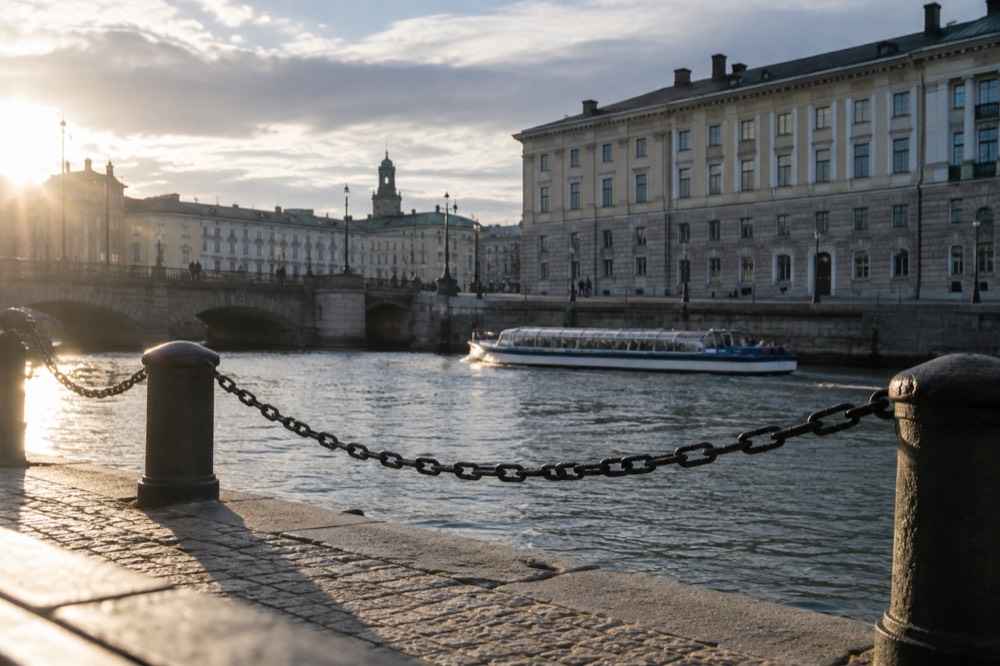
Start with fika in Haga at 9am, walk to Skansen Kronan for the view, ride the Paddan or canal cruise before lunch, take tram 11 to Saltholmen and a Västtrafik ferry to Styrsö or Brännö in the afternoon, and finish on Avenyn or at Liseberg if it is open. A 125 kr 24-hour Zone A ticket covers every tram and ferry all day.
Gothenburg, Sweden's second city, sits where the Göta älv river meets the Kattegat, and its whole layout rewards a single well-planned day. The city recorded over 6 million commercial guest nights in 2025, a record year with the strongest growth in Sweden, according to Göteborg & Co's January 2026 press release, yet the centre stays compact enough that a visitor on foot, tram and ferry can touch the old moat, a wooden 19th-century quarter, and a car-free island in the same afternoon. Göteborgs Spårvägar reports 126 million tram journeys in 2025, and the western terminus of that network is Saltholmen, the archipelago ferry pier, which is the fact this whole itinerary hangs on.
Before the hour-by-hour plan, one decision shapes everything: the season. Liseberg, the biggest attraction in the city, runs a summer season from 18 April to 20 September 2026, Halloween from 2 October to 1 November, and its Christmas market from 14 November to 23 December, per liseberg.se, and it is closed for the rest of the year. A visitor arriving in late January finds the park shut. The sea, meanwhile, peaks in August at 18.6 C, not July, and September water at 16.7 C is warmer than June water at 16.2 C, per SMHI's archive from the Vinga lighthouse station, so a September island swim beats a June one. This itinerary works year-round, but the evening options shift with the calendar, and the notes below flag each fork.
Can You Really See Gothenburg in One Day?
Yes, one day covers the essential Gothenburg: the Haga wooden quarter, the canal and old moat, one archipelago island reached on an ordinary tram-and-ferry ticket, and either Liseberg or the Avenyn strip in the evening. What one day cannot cover is the museum district, the Bohuslän coast, and the northern archipelago, so this plan trades depth for the city's three signature moves: wood, water and granite.
The geography makes it possible. Dutch engineers laid the old town inside a moat in the 17th century, and that moat is now the Paddan sightseeing canal. Haga sits just west of it, the tram network threads everywhere, and the southern archipelago islands are formally areas of the city, not day trips, because the same Västtrafik ticket covers the tram to Saltholmen and the ferry beyond it. Västtrafik's own zone map shows the archipelago boats inside Zone A.
The trade-offs are real. Göteborgs konstmuseum, with around 250,000 visitors a year and 70,000 works, deserves two hours on its own, and it closes in 2028 for a rebuild that lasts until 2032, so a visitor who cares about Nordic painting should come back before then. Universeum is open every day of the year, 10:00 to 18:00, but its admission is dynamically priced with booked time slots, so it eats half a day. This plan gives you the city's structure instead, and the internal links at the end show where to go deeper on a second visit.
If your day is a cruise-ship stop rather than a full 24 hours, the timings compress badly, and the cruise ship day itinerary handles that case separately. For a full day, read on.
What Should the Morning Look Like in Gothenburg?
Start in Haga at 9am with fika, the Swedish coffee-and-bun break, in the wooden old quarter, then climb to Skansen Kronan hilltop fort for the city view, and be down by the canal for a boat before noon. Haga is compact, the climb takes about ten minutes, and the whole morning fits inside two kilometres of walking on cobblestones and granite.
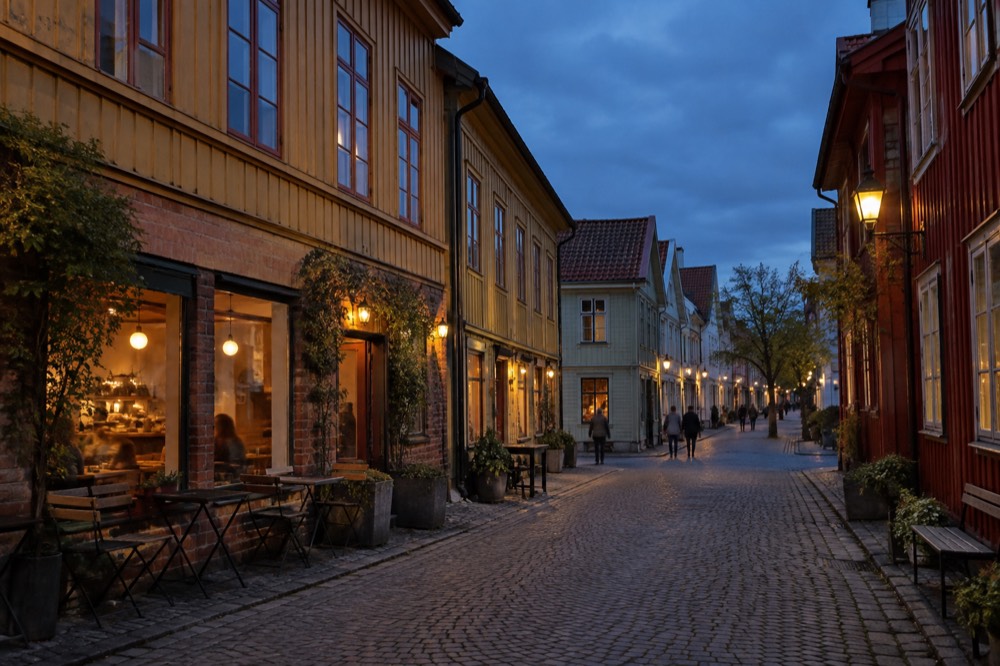
Haga is Gothenburg's oldest working-class suburb, known for its landshövdingehus, wooden-fronted houses built one storey in timber over one in stone because timber buildings were once taxed by height. The quarter's main drag, Linnégatan's neighbour Haga Nygata, is a pedestrian strip of bakeries and second-hand shops. The classic order is a cinnamon bun, here called a hagabulle, with filter coffee, and the fika tradition is deep enough that this site keeps a whole guide to how fika works in Gothenburg.
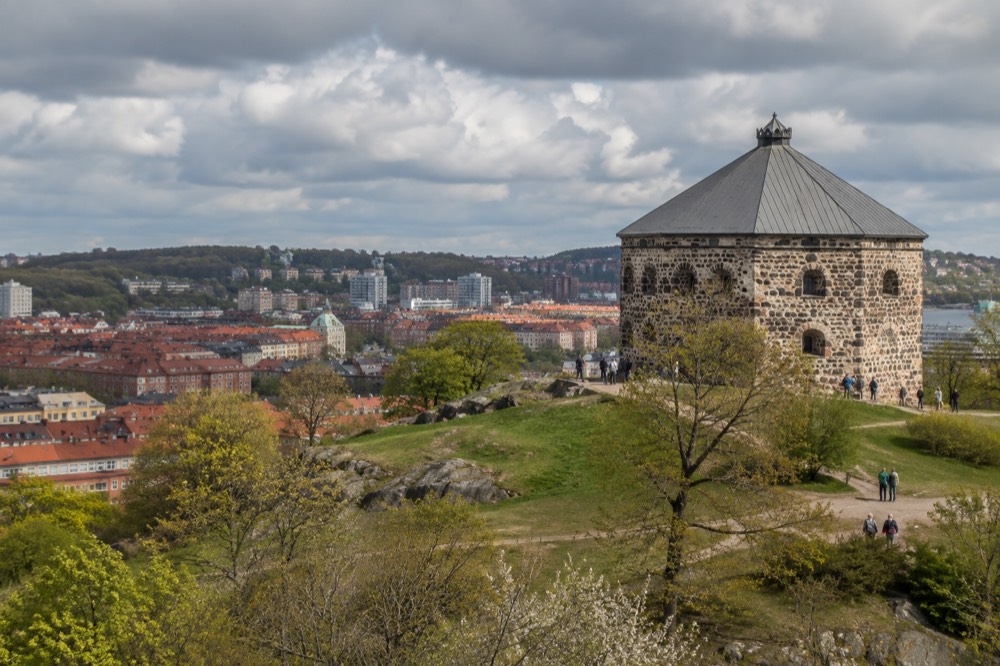
From Haga Nygata, walk uphill through Haga's southern blocks to Skansen Kronan, one of the city's two 17th-century hilltop forts. The view from the ramparts takes in the whole city grid, the harbour cranes, and on a clear day the archipelago. The climb is short but steep, so the 9am start matters: the morning light comes low off the Kattegat, and by noon the view flattens.
There is a walking tour option if you would rather have the quarter explained than discovered.
Descend the east side of the hill toward the canal. The old moat around Inom Vallgraven, the walled core, is where the Paddan boats run, and the Haga old quarter guide covers the neighbourhood's history in full if the morning leaves you curious.
Which Boat Should You Take Around Gothenburg's Canal?
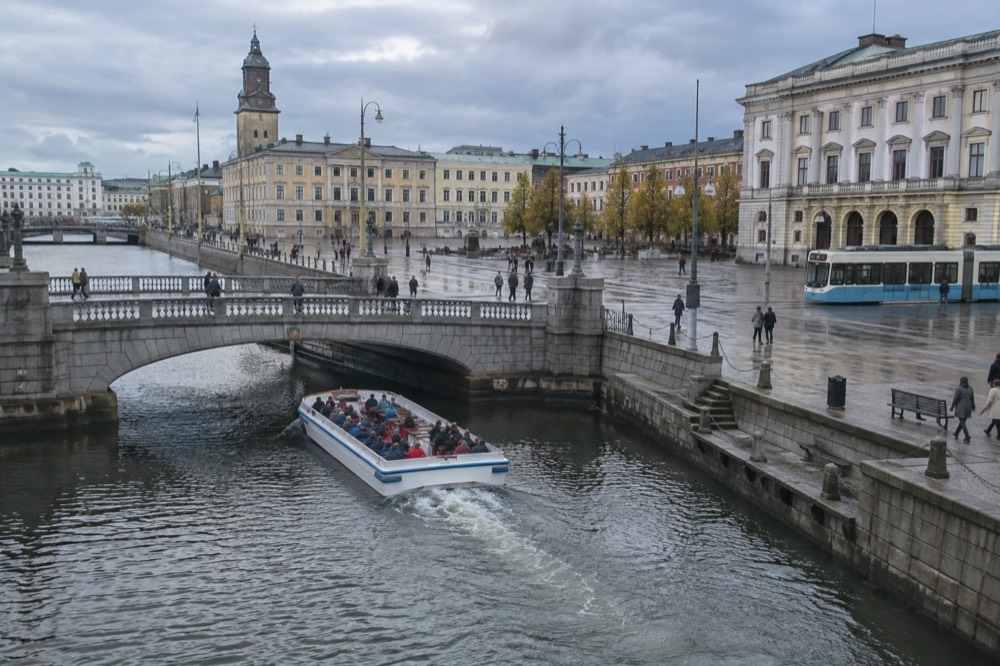
The 50-minute city canal sightseeing cruise is the best fit for a one-day visit: it covers the moat under the bridges in under an hour, runs from the centre, and leaves the afternoon free. The Paddan cruise on the River Säveån takes two hours and reaches further, and the amphibious bus splits the difference with a land-and-water hour.
The canal boat is the efficient choice. The listing for the city canal cruise shows a 50-minute loop rated 4.7 from 783 reviews, from $28 per person, and the route threads under the low stone bridges of the 17th-century moat, which is the part of Gothenburg you cannot see from the pavement. The Paddan, the classic open boat, runs a two-hour trip on the Säveån rated 4.6 from 105 reviews, from $40, and it is the better pick only if your day has slack.
Here is the honest comparison, with every figure from the tour listings:
| Boat tour | Duration | From (per person) | Rating | Best for |
|---|---|---|---|---|
| City Canal Sightseeing Cruise | 50 minutes | $28 | 4.7 (783 reviews) | The moat, tight schedule |
| Paddan on the River Säveån | 2 hours | $40 | 4.6 (105 reviews) | The full canal and river |
| Amphibious bus tour | 1 hour | $36 | 4.7 (4,326 reviews) | Families, one-stop overview |
| Electric self-drive boat | 1 hour | $92 per group up to 12 | 4.3 (80 reviews) | Driving it yourself |
One warning about lunch: do not let the boat eat into it. Feskekôrka, the "fish church" fish market hall on Rosenlundsgatan, reopened in 2024 as a food hall with two fish counters and five restaurants, per the property owner Higab, and it is a ten-minute walk from the canal dock. A shrimp sandwich there is the classic Gothenburg lunch, and the where to eat guide maps the alternatives if the hall is mobbed.
How Do You Reach the Gothenburg Archipelago in an Afternoon?
Take tram 11 to Saltholmen, the western terminus of the tram network, and board any Västtrafik archipelago ferry: the same ticket covers both, and the islands are inside Zone A, so a 125 kr 24-hour ticket buys tram, ferry and island in one purchase. The crossing to Styrsö takes about half an hour, and the islands ban private cars entirely.
This is the best-value single move in the city. Västtrafik's zone map shows the archipelago boats as part of the network, and Göteborgs Stad's own study states the islands are "fredade från biltrafik", protected from car traffic, with only taxis and emergency vehicles allowed. Ferries from Saltholmen serve Asperö, Brännö, Styrsö, Donsö, Vrångö and Köpstadsö, and they run on ordinary line numbers, not private schedules.
Which island for two hours? Styrsö has the most to see, with a small village and walking paths. Brännö is flatter and quieter, with a classic island chapel. Vrångö is the most remote feeling. All three are covered in the site's comparison of which archipelago island to visit, and the full logistics, ferry lines and seasonal timetables are laid out in the site's archipelago access guide.
If you would rather have the archipelago narrated than self-navigated, the guided cruise option is worth a look.
Timing matters more than island choice. The last ferries back run in the late afternoon or early evening depending on season and line, and a missed boat means a long island wait, so check the return times at the Saltholmen pier before you board out. In September the water is 16.7 C on average, warmer than June's 16.2 C, per SMHI's Vinga station data, so a swim off the rocks is a better bet than visitors expect.
What About Liseberg, Universeum and the Museum District?
Liseberg is only worth slotting in if your one day falls inside its season: summer 18 April to 20 September 2026, Halloween 2 October to 1 November, and the Christmas market 14 November to 23 December. Entry from 95 kr buys zero rides, an Åkpass ride pass starts at 310 kr online, and the park is closed the rest of the year, so a winter visitor should substitute the museums or Slottsskogen instead.
The entry-and-rides split is the fact visitors trip over. Liseberg's own price page states that the Entré ticket includes no rides, and that the Åkpass is sold separately or combined. The Liseberg tickets and timing guide has the full price table. Liseberg is not sold on any booking platform, so buy from liseberg.se directly.
Universeum, the science centre, is the all-weather alternative: open every day of the year, 10:00 to 18:00, with rainforest and aquarium halls included in admission. Its pricing is dynamic, so the site publishes no fixed adult price; you book a time slot and pay what the calendar says. The Universeum guide explains the slot system.
One trap to flag: the old Volvo Museum at Arendal closed permanently in December 2023, and its successor, World of Volvo at Lyckholms Torg, is the only Volvo attraction that exists now. Anyone planning a Volvo stop from an older guide is heading to a shut building. The World of Volvo guide covers what replaced it.
Where Should the Evening Go in Gothenburg?
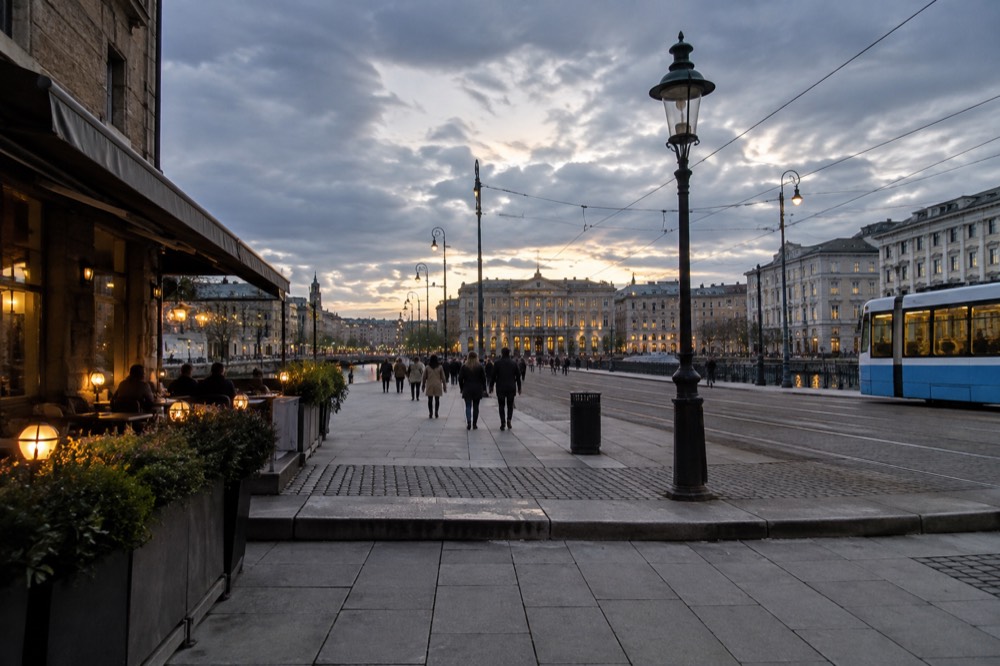
The evening splits three ways: Liseberg if it is open, the Avenyn and Linné strip for bars and dinner, or the harbour viewpoints at Masthuggskyrkan for the sunset over the Älvsborg bridge. In June the sun sets at 22:17, so plan a late dinner; in December it sets before 15:30, so the viewpoint comes first and the bar second.
Avenyn, the wide avenue running up to Götaplatsen and Göteborgs konstmuseum, is the city's main going-out street, with the Linnégatan and Långgatorna strip a more local alternative. The Avenyn guide covers the square and the museum's closure timeline, and the site's nightlife guide covers the bars. One legal note that surprises visitors: beer above 3.5% ABV, plus all wine and spirits, is sold only by Systembolaget, the state monopoly, under Sweden's alcohol act, so supermarket beer maxes out at the folköl strength.
For a quieter finish, Masthuggskyrkan church on the Hisingen side of the river gives the classic skyline view, and the site's viewpoints guide lists the alternatives. The daylight math is stark: 21 June gives 18 hours 6 minutes of light, while 21 December gives 6 hours 32 minutes, per US Naval Observatory data for the city's coordinates, so the December version of this evening starts two hours earlier.
If the day is a Friday or Saturday, the guided walking-and-fika or food tours run into the evening, and the craft beer walk is an option for a group.
What Does One Day in Gothenburg Cost?
A one-day budget splits into fixed transport and variable food: the 24-hour Zone A ticket is exactly 125 kr, a single one-zone tram ticket 38 kr, the canal boat from $28 per person, and Liseberg from 95 kr entry or 365 kr with rides if the park is open. Food is the variable part, restaurant prices swing widely, so check menus before sitting down, and the state subsidy on 30-day tickets does not touch any of the day tickets a visitor buys.
The transport figure is exact: Västtrafik's fare page lists the 24-hour Zone A ticket at 125 kr, and a single one-zone adult ticket at 38 kr. The subsidy currently halving 30-day tickets does not touch day tickets, so do not budget for a discount that does not apply to you.
| Item | Figure | Where it comes from |
|---|---|---|
| 24-hour Zone A ticket | 125 kr | Västtrafik fare page |
| Single tram ticket, 1 zone | 38 kr | Västtrafik fare page |
| City canal sightseeing cruise | from $28 | Tour listing |
| Liseberg entry only | from 95 kr | liseberg.se |
| Liseberg entry + rides | from 365 kr | liseberg.se |
| Fika: bun and coffee | check the counter | Haga bakery prices vary by shop |
| Lunch and dinner mains | check the menu | Restaurant prices vary widely |
The full cost picture, including accommodation ranges and what a beer actually costs, is in the site's is Gothenburg expensive guide.
What If You Have More Than One Day in Gothenburg?
Two days adds the museum district and the northern archipelago, three days adds a Bohuslän coast day trip, and five days covers Marstrand, Tjolöholm and the lake country, so the one-day plan is the first third of a route that scales cleanly.
The site's longer itineraries build directly on this one: two days in Gothenburg adds Universeum and the museums, the three-day plan adds a coast day, and the five-day West Sweden route stretches to Marstrand and beyond. If rain hits your one day, the rainy day itinerary reroutes the whole plan indoors, which matters in October, the wettest month at 102.9 mm per SMHI's 1991-2020 normals. April, at 51.3 mm, is the driest month, and the site's best-time-to-visit guide has the month-by-month detail.
The season you land in changes the plan more than the number of days does, so here is the quick reference, all figures from SMHI's Vinga sea-temperature archive and the US Naval Observatory daylight data:
| If your day falls in | Mean sea temp | Daylight note | Best evening finish |
|---|---|---|---|
| June | 16.2 C | Sunset 22:17 on 21 June | Late dinner on Avenyn |
| July | 18.3 C | Long evenings | Liseberg, open until 20 Sep |
| August | 18.6 C, the annual peak | Still long | Island swim, then Liseberg |
| September | 16.7 C, warmer than June | Shortening fast | Liseberg closes 20 Sep |
| October | 12.8 C | Sunset before 18:00 | Halloween Liseberg, 2 Oct to 1 Nov |
| February | 2.7 C, the coldest month | Sunset 15:26 on 21 Dec | Museums, bars, sauna boats |
Common Questions About One Day in Gothenburg
Is one day enough for Gothenburg?
One day covers the core: Haga, the canal, one archipelago island and an evening at Liseberg or on Avenyn. It does not cover the museums in depth, Universeum, or the northern archipelago, so treat it as the city's greatest hits rather than a complete visit.
Can you visit the Gothenburg archipelago on a day trip?
The southern islands are not a day trip at all, they are areas of the city, reached on an ordinary Västtrafik ticket. Tram 11 to Saltholmen, then the ferry, all inside Zone A. Marstrand and the Bohuslän coast are the real day trips.
What is the best month for one day in Gothenburg?
April is the driest month of the year at 51.3 mm, per SMHI's 1991-2020 normals, and September sea water at 16.7 C is warmer than June's 16.2 C. Liseberg's summer season runs 18 April to 20 September 2026, so late April through September covers both the park and the islands.
Do you need a car in Gothenburg for one day?
No. The tram network runs 12 lines across 188 km of single track as of Göteborgs Spårvägar's 2022 annual report, the archipelago ferries take ordinary tickets, and the southern islands ban private cars anyway. A 24-hour Zone A ticket at 125 kr covers everything this itinerary needs.
Is Liseberg open every day?
No. Liseberg runs seasons, not a year-round calendar: summer 18 April to 20 September 2026, Halloween 2 October to 1 November, and the Christmas market 14 November to 23 December. Outside those windows the park is closed, so check liseberg.se before planning an evening there.
Where do you eat in one day in Gothenburg?
Fika in Haga in the morning, a shrimp sandwich at Feskekôrka, which reopened in 2024 as a food hall with five restaurants, at lunch, and dinner on Avenyn or the Linné strip in the evening. The site's where-to-eat guide has the full restaurant map.
Whatever the season, the spine of this day holds: wood in Haga, water in the moat and the archipelago, and granite underfoot throughout. More on the city's structure, seasons and transport is across Gothenburg Travel Guide, starting with the getting around guide if your day begins at Göteborg Centralstation.