Which Gothenburg Archipelago Island Should You Visit?
Six car-free islands sit inside Gothenburg's own transport zone, reached by tram and ferry on one ordinary ticket. The only hard question is which one to get off at.
Short answer
Styrsö is the best first island for most visitors: it is the largest of the southern islands with the most to see and walk. Brännö suits a slow afternoon, Vrångö suits swimmers, and Donsö, Asperö and Köpstadsö stay quiet. All six are areas of Gothenburg, not day trips, and all are covered by a normal Västtrafik Zone A ticket.
Which Gothenburg Archipelago Island Should You Visit?
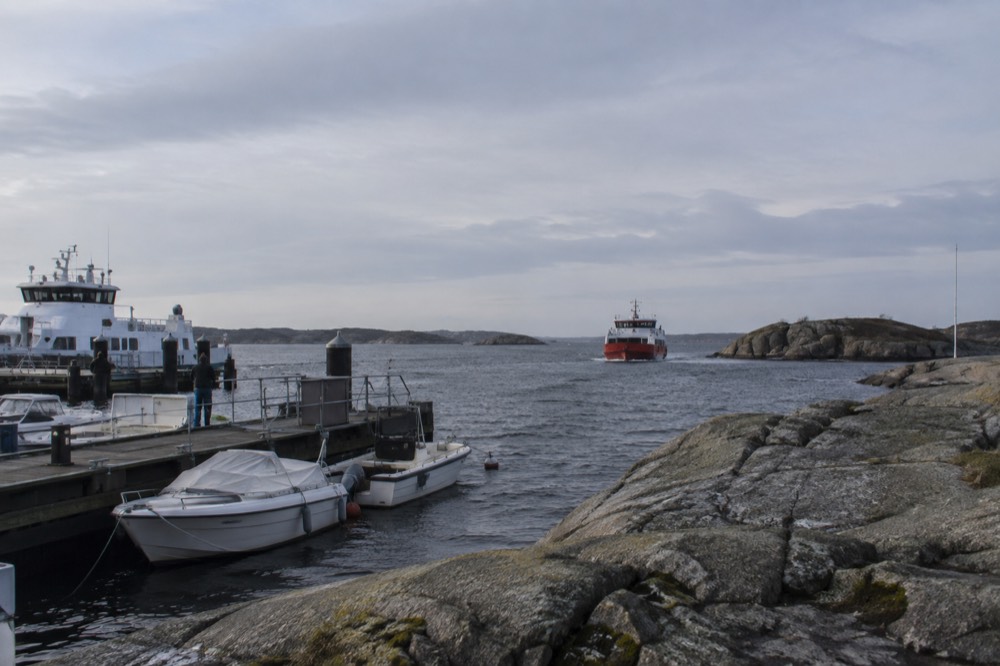
Gothenburg's southern archipelago is not a boat trip you book, an excursion you drive to, or a day trip you plan around. It is a set of six inhabited, car-free islands, Asperö, Brännö, Styrsö, Donsö, Vrångö and Köpstadsö, that are administrative areas of the city itself, sitting in the Kattegat off the west coast of Sweden. You reach them the way a local does: tram to Saltholmen, the western terminus of the tram network, then ferry, all on one ordinary Västtrafik ticket. Göteborgs Stad's own study of the islands states it plainly: "Öarna inom Södra skärgården är fredade från biltrafik", the islands of the southern archipelago are protected from car traffic. What that means in practice is granite, wooden houses, footpaths and sea light, with no engine noise except the ferry that brought you.
The question this page answers is the one the ferry map makes you ask at the Saltholmen quay: which island, and does the choice even matter. It matters less than you fear and more than the tourist brochures suggest. The islands are close together, the ferries connect them, and a 24-hour ticket lets you hop between them. But each has a character, and picking the wrong one for a short visit is a real way to waste a good afternoon. This guide from Gothenburg Travel Guide compares them island by island, using transport and climate data from Västtrafik and SMHI rather than brochure copy.
What Exactly Is the Gothenburg Archipelago?
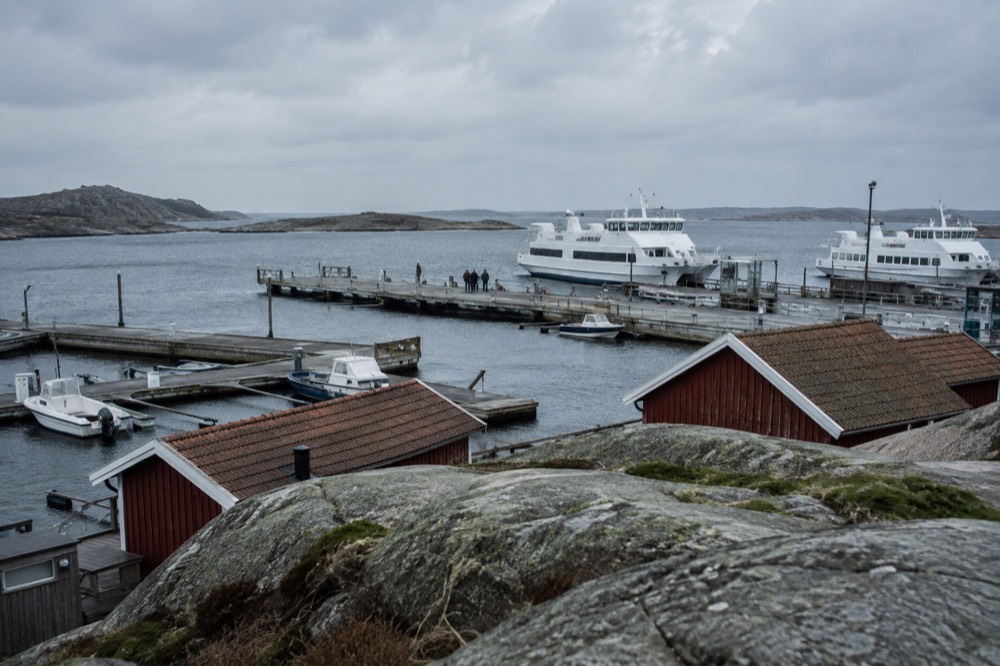
The Gothenburg archipelago is a chain of islands in the Kattegat that belongs to the city of Gothenburg, Sweden, split into a southern group of six car-free islands reached from Saltholmen and a northern group around Öckerö and Hönö where cars are allowed. The southern islands, Styrsö, Brännö, Vrångö, Donsö, Asperö and Köpstadsö, are ordinary districts of the city, inside Västtrafik Zone A, and are reached by tram and then ferry on a single ticket. They are not day trips in any sense.
That last point is worth insisting on, because almost every foreign guide gets it wrong. Marstrand, the Bohuslän coast, Tjolöholm, Gunnebo, Trollhättan, Borås, Varberg and Läckö are day trips from Gothenburg. The southern archipelago is not. Västtrafik's own zone material confirms the islands sit in Zone A, the same zone as the city centre, and Göteborgs Stad's planning documents treat them as city districts with year-round residents, schools and services. A visitor who writes off the islands as "too far" has misread what they are.
The northern archipelago, around Öckerö, Hönö and Björkö, is a different animal: also part of Greater Gothenburg, also in Zone A, but connected by a different ferry line from Lilla Varholmen and open to cars. This page focuses on the southern islands, where the car-free rule shapes everything. The northern islands are covered in their own guide, Öckerö, Hönö and the northern islands, and the overall picture is in the Gothenburg archipelago guide.
How Do You Get to the Islands, and What Does It Cost?
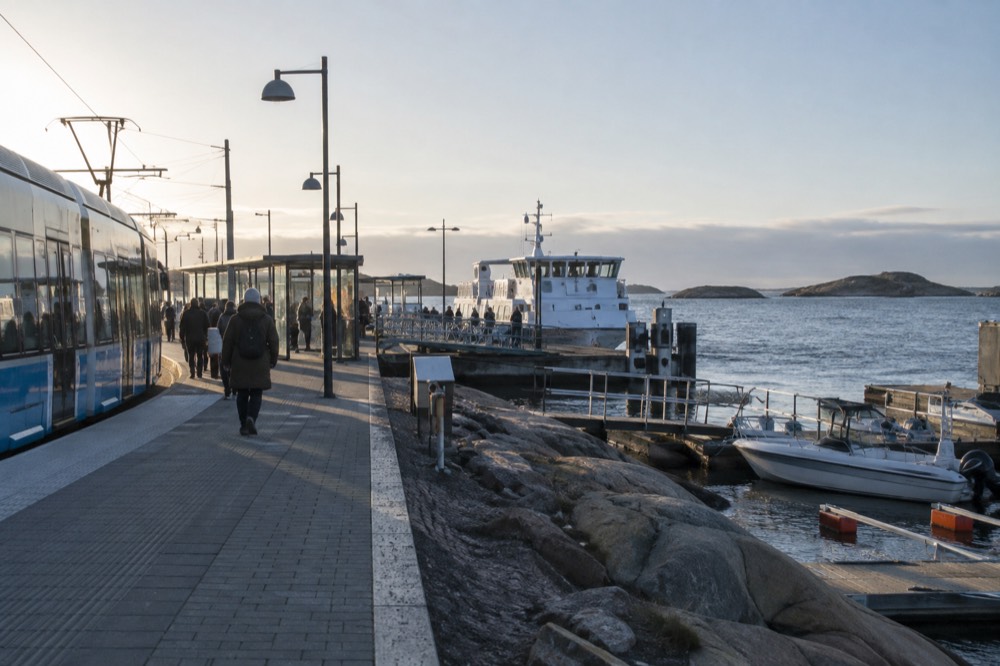
You take any tram to Saltholmen, the western terminus of the network, then a Västtrafik archipelago ferry, and one ticket covers the whole journey: a single Zone A ticket costs 38 kr and a 24-hour Zone A ticket costs 125 kr, both valid on tram and ferry alike. The islands are in Zone A, so there is no extra fare, no island supplement and no separate ferry ticket. A 24-hour ticket covers the tram out, every ferry between islands, and the tram back.
Västtrafik's own wording on the boats is unambiguous: "Du kan åka på samma biljett hela vägen från centrum ut på havet", you ride on the same ticket all the way from the centre out onto the sea. The ferries carry Västtrafik line numbers and appear on the authority's own combined tram, bus and boat network map, published at vasttrafik.se. This is the single best-value transport fact in Gothenburg: a full day of trams, ferries and islands for 125 kr.
Two practical warnings. First, do not confuse the temporary fare cut you may have read about: a state subsidy currently halves 30-day period tickets, Zone A adult 890 kr down to 445 kr, but it does not apply to the 24-hour and 72-hour tickets a visitor actually buys. Your day ticket is still 125 kr. Second, Saltholmen parking is the known bottleneck for anyone who drives to the terminal, and the terminal is a tram terminus by design. Arrive by tram. The full fare and zone picture, including how to pay, is in getting around Gothenburg: trams, tickets and zones.
| Ticket | Adult price | What it covers |
|---|---|---|
| Single, 1 zone | 38 kr | One tram or ferry journey in Zone A |
| 24-hour, Zone A | 125 kr | Unlimited tram, bus and archipelago ferry for 24 hours |
| 72-hour, Zone A | Price on Västtrafik's ticket page | Same coverage over 72 hours |
| 30-day, Zone A | 445 kr during the temporary state subsidy (normally 890 kr) | Not relevant to most visitors |
If you would rather have someone else handle the boats and the routing, guided options exist. A guided archipelago cruise is the low-commitment introduction, and for a day with real movement there is the island-hopping end of the scale.
Which Island Is the Best First Visit for Most People?
Styrsö is the strongest first island for most visitors: it is the largest of the southern islands, it has the most varied walking, a small village core around the harbour, and enough paths and coastline that two or three hours disappear without effort. Because it is a hub of the ferry network, you can visit Styrsö first and hop to a second island on the same ticket without backtracking to Saltholmen. For a single-island day with the lowest risk of a wasted afternoon, it is the default pick.
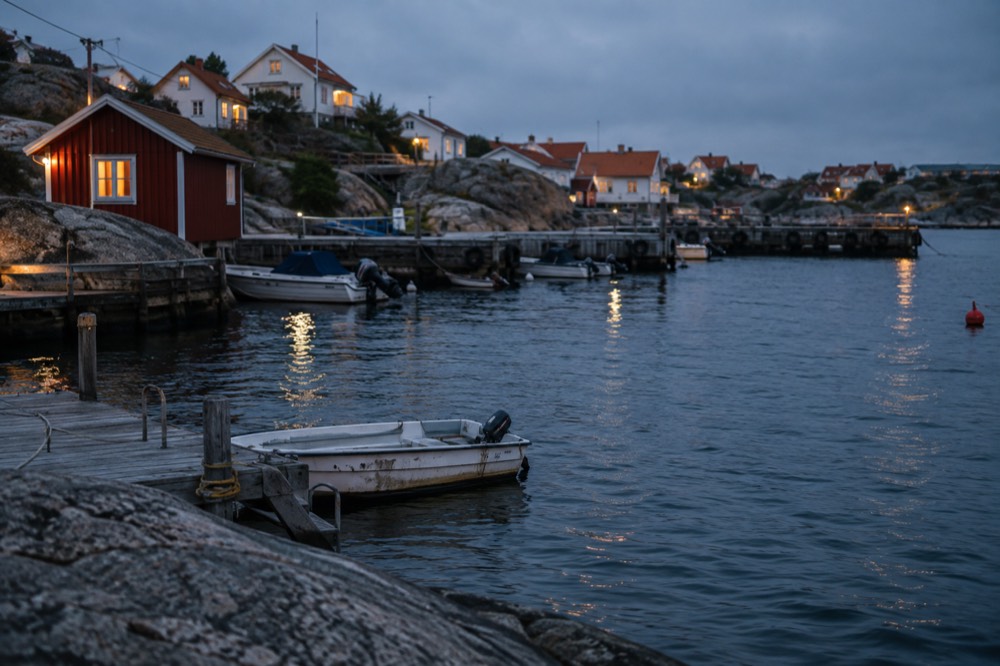
The honest caveat is that "largest" here is relative. These are small islands. What Styrsö offers is density of interest: harbour, woodland paths, open granite shoreline and views back toward the city and out toward Vinga, the lighthouse station whose waters SMHI uses for its Gothenburg sea-temperature records. The ferry crossing itself is part of the attraction, threading past islets and channel markers with the city skyline behind you.
If your day is short, or the weather is mixed, Styrsö plus the crossing is enough. If your day is long, Styrsö plus Brännö is the classic pairing, and the ferry between them takes minutes. Families should also read Gothenburg with kids for how an island stop fits a wider itinerary.
Why Do Locals Rate Brännö?
Brännö is the island locals rate for a slow, cheap afternoon: it is compact, flat enough for an easy loop walk, and its ferry stop puts you straight into the village, so nothing needs planning beyond stepping off the boat. Its reputation in Gothenburg is as the low-effort island, the one you visit for a walk, a swim off the rocks and a coffee, rather than for sights. There are no sights in the guidebook sense, and that is precisely the point of the place.
Brännö rewards the visitor who has stopped touring. The island's scale means a circuit of its paths and shoreline is a stroll rather than a hike, and the car-free rule means the walk is quiet in a way the mainland never manages. In summer the rocks along the shore double as swimming spots, and the sea is warmer than most visitors expect: SMHI's quality-controlled observations at Vinga put August's mean sea temperature at 18.6 °C, the annual peak, and September at 16.7 °C, which is warmer than June at 16.2 °C. A September swim off Brännö is, on the data, warmer than a June one.
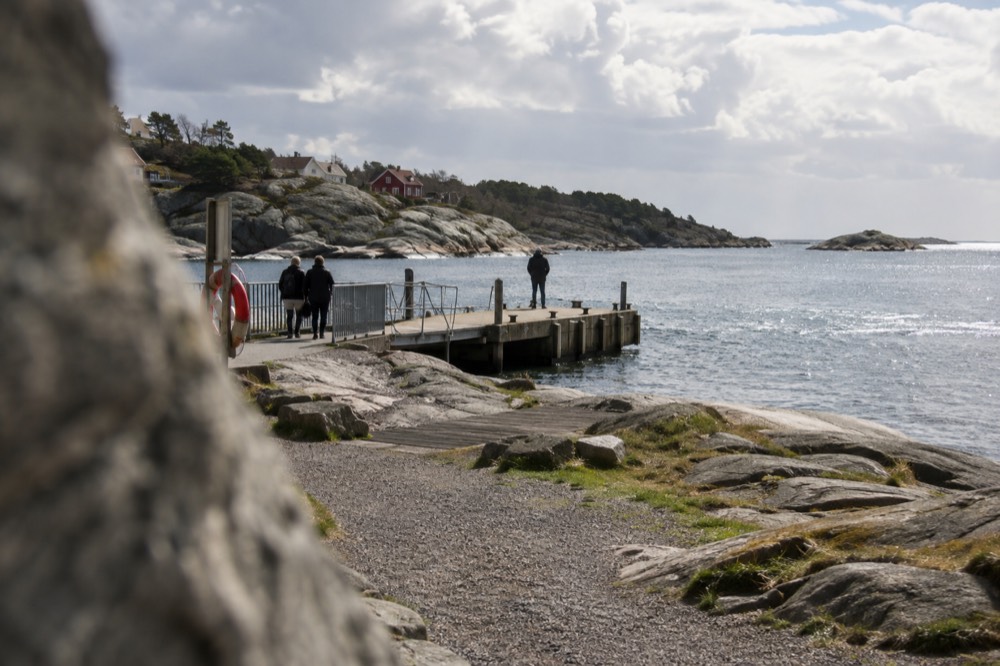
The island also anchors one of the more distinctive guided products on the roster: the Brännö and Galterö hiking tour, an eight-hour guided walk with fika included, which crosses the neighbouring islet of Galterö. The listing has no reviews yet, which is real information about a new product rather than a warning about it. For the fika tradition itself, see how fika works in Gothenburg.
Is Vrångö the Best Island for Swimming?
Vrångö is the southern islands' swimming pick, and the sea data supports the choice: the water around the archipelago peaks at 18.6 °C in August, holds 16.7 °C through September, and only drops below the June figure from October, so a late-summer or early-autumn visit gets the warmest water of the year. Vrångö sits furthest out toward the open sea of the six southern islands, which means clearer water and more exposed, swimmable rock than the harbour islands closer in.
The counterweight is exposure. Furthest out means first in line for wind, and a Vrångö afternoon in a blow is a different experience from the sheltered harbour at Styrsö. Check the forecast, not the calendar: SMHI's normals show October is actually the wettest month of the Gothenburg year at 102.9 mm, while April is the driest at 51.3 mm, so the assumption that summer is the dry, reliable window is not what the data says. Rain falls on about 127 days a year in Gothenburg, roughly one day in three, and it is spread more evenly than the city's reputation suggests. The underlying normals are published by SMHI for station Göteborg A.
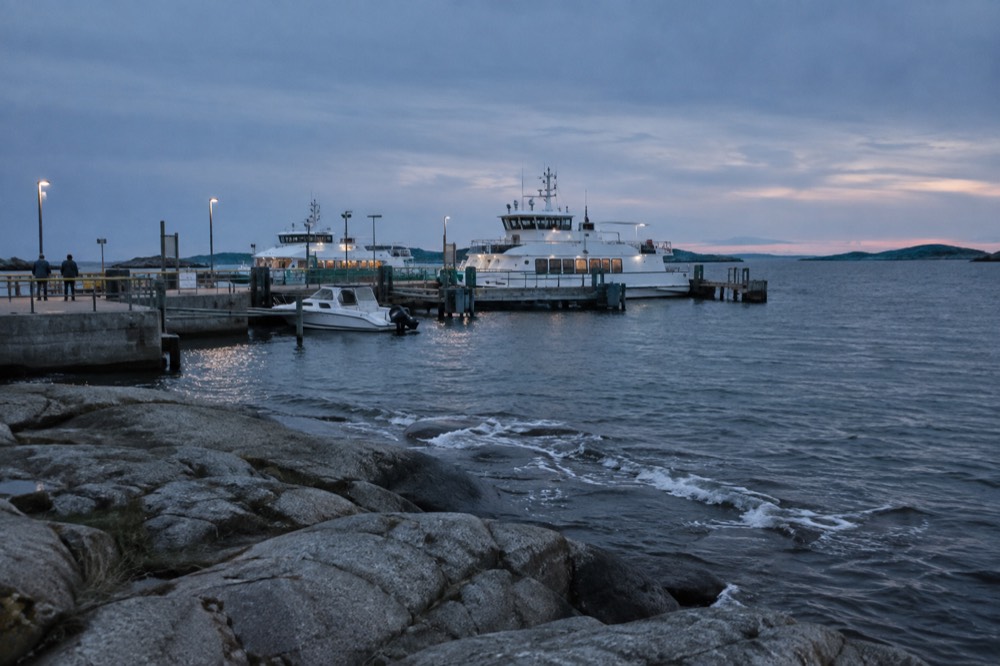
For a fuller treatment of where else in and around the city the swimming is good, and how the water behaves month by month, see the archipelago swimming coverage in the Gothenburg archipelago guide. For planning around the weather rather than against it, the best time to visit Gothenburg breaks the year down properly.
What About Donsö, Asperö and Köpstadsö?
Donsö, Asperö and Köpstadsö are the quiet third of the southern archipelago: working, residential islands with small harbours, fewer visitors than Styrsö or Brännö, and the same granite-and-wood character, but fewer services aimed at tourists and fewer reasons to plan a whole day around any one of them. They suit a visitor on a second or third archipelago trip, or anyone hopping on a 24-hour ticket who wants to see the islands as they actually are rather than as a destination.
Donsö has a working harbour identity tied to the islands' fishing and shipping past, and its ferry stop connects it into the same network as its neighbours. Asperö and Köpstadsö are smaller and quieter still. None of the three is a sightseeing destination, and that is their use: on a day ticket, they are the islands you drop into between the headline stops, and where you are most likely to be the only visitor on the path.
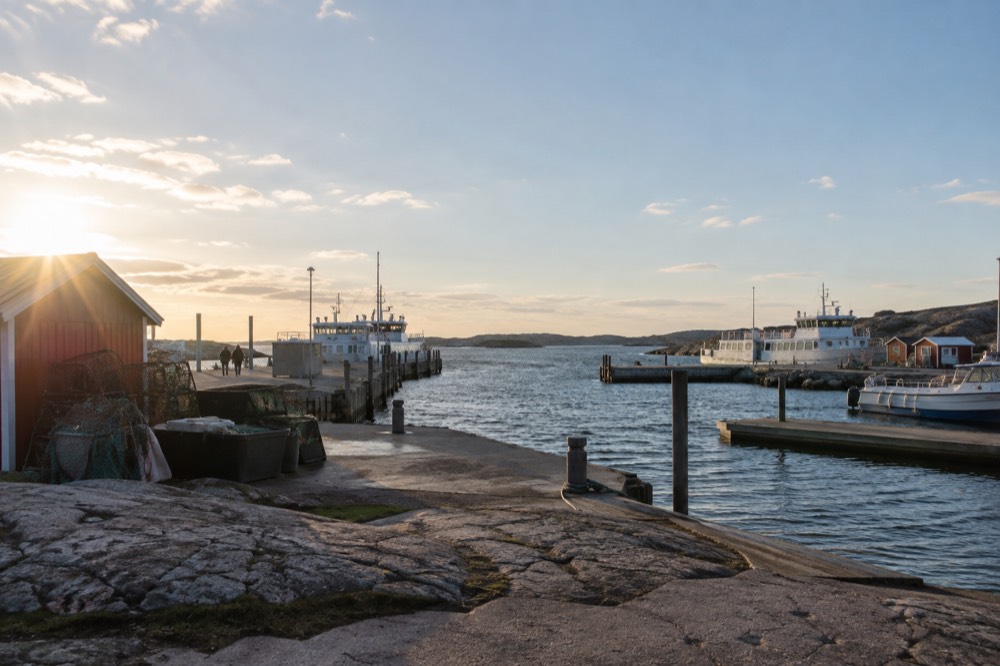
A practical way to use them: buy the 24-hour ticket, take the first ferry to whichever island the timetable serves first, and work your way back toward Saltholmen through the network. The ferries between islands are the same Västtrafik boats, on the same ticket, and the timetable at each stop shows the next sailing. There is no booking, no island fee and no guide needed for this kind of day. It is also close to free by the standards of what a Gothenburg trip costs, and pairs well with the ideas in free things to do in Gothenburg.
When Is the Best Time of Year to Visit the Islands?
The best time to visit the Gothenburg archipelago is August for the warmest sea, 18.6 °C on SMHI's Vinga record, or September for a quieter version of nearly the same water at 16.7 °C, which is still warmer than June. April is the driest month of the Gothenburg year at 51.3 mm of rain, but the sea is only 7.1 °C then, so spring suits walkers rather than swimmers. Midsummer brings 18 hours of daylight, midwinter barely six and a half.
The daylight swing is the other planning variable, and it is extreme at 57.7° N. On 21 June the sun is up from 04:11 to 22:17, 18 hours 6 minutes, and civil twilight stretches from 02:58 to 23:30, leaving only about three and a half hours of true night. On 21 December the day runs 08:54 to 15:26, 6 hours 32 minutes. A June island evening and a December island afternoon are different worlds: one has ferries running late under a sky that never fully darkens, the other has a low grey light that makes the granite look its most dramatic.
| Month | Mean sea temp (Vinga) | Mean air temp (Göteborg A) | Notes for island visits |
|---|---|---|---|
| February | 2.7 °C (coldest month) | 0.7 °C | Winter ferry rides, no swimming |
| April | 7.1 °C | 7.7 °C | Driest month of the year, 51.3 mm |
| June | 16.2 °C | 15.7 °C | Longest days, 18 h 06 m of daylight |
| August | 18.6 °C (peak) | 17.7 °C | Warmest water of the year |
| September | 16.7 °C | 14.0 °C | Warmer water than June, fewer visitors |
| October | 12.8 °C | 9.0 °C | Wettest month, 102.9 mm |
For the winter version of the islands, when the ferries still run and the light does its strange low thing, see Gothenburg in winter. The month-by-month daylight breakdown lives in the best-time guide linked above.
So Which Gothenburg Island Should You Actually Pick?
Pick Styrsö for a first visit or a single-island day, Brännö for a slow cheap afternoon, Vrångö for swimming in August or September, and Donsö, Asperö or Köpstadsö for a second trip or a hop-on day ticket circuit. If you cannot choose, buy the 125 kr 24-hour Zone A ticket, ride the tram to Saltholmen, take the first ferry, and let the timetable decide: the islands are minutes apart on the same ticket.
The one mistake that actually costs you a day is treating the archipelago as a day trip that needs booking, driving and planning. It needs none of those. It needs a tram, a ticket and a ferry timetable, and the rest of the effort can go into a thermos. The wrong island, for the record, is still a car-free granite island in the sea, which is why this decision carries less risk than it looks.
| Island | Best for | Character | Effort level |
|---|---|---|---|
| Styrsö | First visit, half or full day | Largest southern island, village harbour, varied walking | Low |
| Brännö | A slow afternoon, easy walking | Compact and flat, swimming rocks, no sights by design | Very low |
| Vrångö | Swimming, late summer | Furthest out, clearest water, most exposed to wind | Low to moderate |
| Donsö | Working-harbour atmosphere | Residential island, fewest tourist services | Low |
| Asperö | Quiet escapes | Small, residential, very quiet | Very low |
| Köpstadsö | Quiet escapes | Smallest and quietest of the six | Very low |
And if a day of self-navigation sounds like work rather than freedom, the guided alternatives cover the same water with the logistics handled, from a cruise with commentary to a hot rod island tour that reaches several islands in one outing.
For a longer archipelago day with a meal built in, the Vinga Island sailing trip with buffet and fika is priced per group of up to eight, which changes the arithmetic for families and friend groups compared with per-person tours. The sauna boat cruise sits at the other end of the scale, a four-hour floating sauna with swims off the stern, and it is priced per person. Between them, the trio below covers the full range of ways to see these islands without studying a single timetable.
If a full day on the water is more than you want, the short guided archipelago cruise is the two-and-a-half-hour version, and it carries the largest review count of any archipelago product on the roster, which says something about how most visitors first meet these islands.
Common Questions About the Gothenburg Archipelago
Are the Gothenburg archipelago islands part of the city?
Yes. The southern islands, Styrsö, Brännö, Vrångö, Donsö, Asperö and Köpstadsö, are districts of Gothenburg inside Västtrafik Zone A, with year-round residents. They are areas of the city, not day trips.
Can you take a day trip to the Gothenburg archipelago?
You can spend a day there, but calling it a day trip misdescribes it: the islands are inside the city's own transport zone and cost nothing beyond an ordinary Västtrafik ticket. A 24-hour Zone A ticket at 125 kr covers the tram to Saltholmen and every ferry.
Are cars allowed on the southern archipelago islands?
No. Göteborgs Stad's own study states the islands are protected from car traffic, with exceptions only for taxi, färdtjänst (accessible transport) and emergency services. Visitors arrive on foot by ferry.
When is the sea warmest for swimming?
August, at a mean of 18.6 °C on SMHI's Vinga record, not July. September water, at 16.7 °C, is warmer than June water at 16.2 °C. February is the coldest month at 2.7 °C.
Which Gothenburg island is best for a first visit?
Styrsö, for most visitors: the largest of the southern islands, with a village harbour, varied walking and ferry connections that let you add a second island on the same ticket.
Do you need to book anything to visit the islands?
No. The ferries are ordinary Västtrafik services on ordinary tickets, boarded like a bus or tram. Timetables are posted at the Saltholmen terminal and at each island stop.