Gothenburg in Autumn: Weather, Liseberg, the Archipelago and What to Pack
Autumn is the season Gothenburg locals defend hardest: the crowds thin, the sea is at its warmest in September, and the rain peaks in October, not when most visitors expect it.

Short answer
Autumn in Gothenburg runs warm and wet: October is the wettest month at 102.9 mm, September sea water (16.7 C) is warmer than June's, and Liseberg switches from summer season to Halloween in early October.
Gothenburg's tourist summer ends on 20 September, and that is not a metaphor. It is the closing date of Liseberg's summer season, printed on the park's own ticket page, and it marks the moment the city changes character. The guest-night statistics that Göteborg & Co publishes show the record crowds of summer ebbing just as the sea around the archipelago reaches its yearly warmth. Autumn here is a season of hard numbers: 102.9 mm of rain in October, 16.7-degree water in September, and a daylight swing that strips five hours out of the afternoons between the equinox and late November.
This guide covers what the autumn months actually do in Gothenburg, Sweden, and what to do about them. The short version: September is the city's best-kept secret, October is its wettest month, and November is when you plan indoors and let the Christmas market save the trip. If you want the full year-by-month picture instead, start with when to visit Gothenburg; if you are already committed to autumn, read on.
What Is Autumn Weather Really Like in Gothenburg?
Autumn in Gothenburg is mild, wet and windy, with mean air temperatures falling from 14.0 C in September to 9.0 C in October and 5.1 C in November, while rain climbs from 80.0 mm in September to a yearly peak of 102.9 mm in October. SMHI's 1991-2020 normals for station Göteborg A put annual rainfall at 912 mm across 127 wet days, roughly one day in three, and October alone accounts for more than a tenth of it.
September behaves like a good summer month that arrived late. The air holds at a mean of 14.0 C, the sea is warmer than it was in June, and the rain count, 10.8 days with at least 1 mm, is lower than either July or August. October is where the season turns. The mean air temperature drops five degrees in a month, the wet-day count rises to 12.6, and the 102.9 mm that falls makes it the wettest month of the year, wetter than any winter month. All of these figures come from SMHI's own 1991-2020 normals datasets, which the institute publishes as per-station spreadsheets.
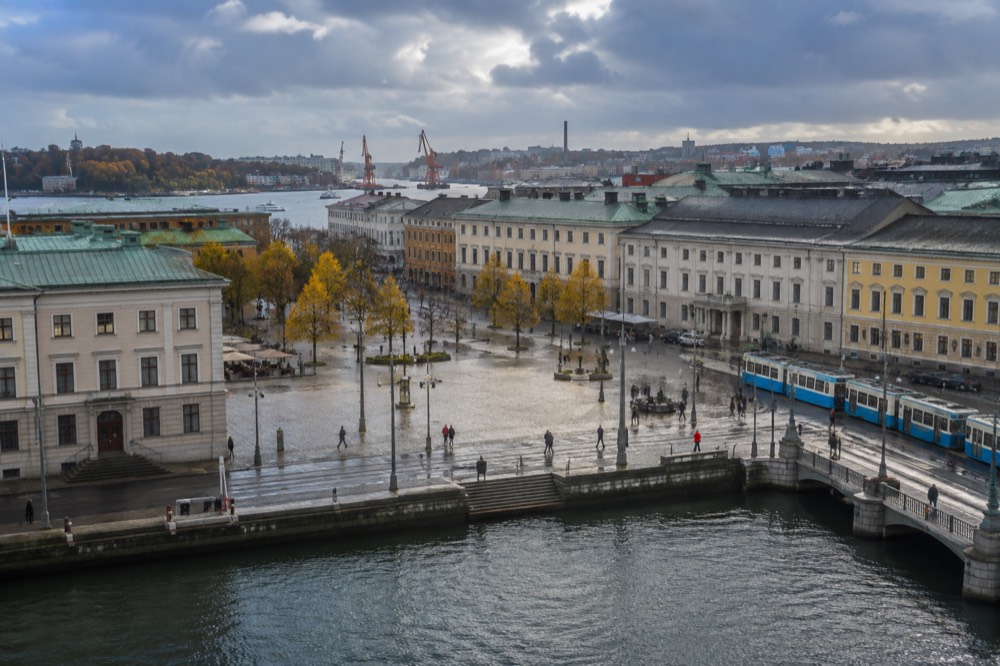
November is grey rather than dramatic. Temperatures slide to a mean of 5.1 C, rain eases slightly to 84.7 mm, and the real change is the light: by the end of the month the sun is setting before half past three. The table below is the full autumn picture from SMHI's own normals spreadsheets.
| Month | Mean air temp | Precipitation | Days with ≥1 mm rain |
|---|---|---|---|
| September | 14.0 C | 80.0 mm | 10.8 |
| October | 9.0 C | 102.9 mm | 12.6 |
| November | 5.1 C | 84.7 mm | 12.0 |
One cliché needs killing while we are here. Gothenburg is routinely called Sweden's rainiest city, and SMHI's own data does not support it. The institute's description of the 1991-2020 normals places the national precipitation maxima in the western highlands and the mountain fjälltrakter, with annual means over 1000 mm, while Gothenburg's 912 mm sits inside the wet western Götaland band but below the record areas. The city is wet. It is not the wettest.
Is October Really the Wettest Month in Gothenburg?
Yes. October is the wettest month of the year in Gothenburg at 102.9 mm of precipitation across 12.6 rain days, ahead of December at 93.0 mm and August at 92.8 mm, according to SMHI's 1991-2020 normals for station Göteborg A. The driest month of the year is April, at 51.3 mm, which means the dry window is spring and the wet one is precisely when the autumn leaves arrive.
The timing matters for planning. Summer visitors experience Gothenburg's relatively gentle July and August rain and leave with the wrong impression. The heavy weather arrives after the tourist season ends, in October and November, when 12 or 13 days a month carry measurable rain. If your trip falls in October, plan for rain on roughly two days in five, and treat any dry October afternoon as a bonus to spend outdoors.
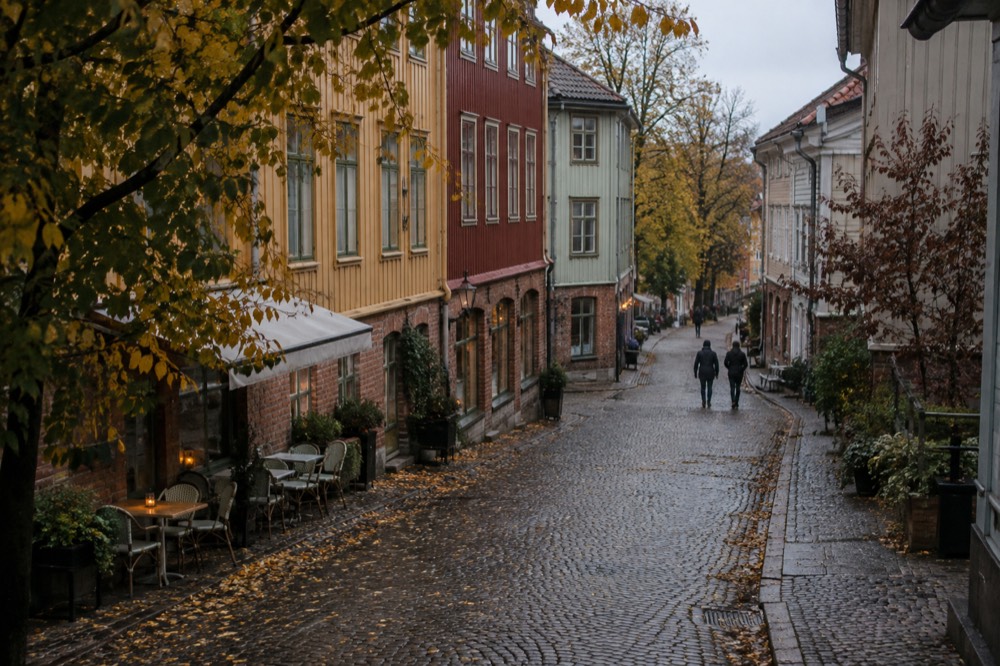
The practical response is not to stay in. The tram network runs in all weather, the museums are strong, and the rain is more often steady than violent. Our rainy day guide to Gothenburg is built exactly for this season, and the free things to do in Gothenburg list is heavier on indoor attractions than it looks. For transport in the wet, the tram and ticket guide explains the 125 kr 24-hour Zone A ticket, which covers the trams and, usefully, the archipelago ferries.
If you are building an autumn itinerary around guided experiences rather than self-direction, these are the three that suit the season best: the amphibious bus covers sightseeing without a long walk in the drizzle, the [Go City](https://gocity.tpk.ro/HQKyKKW4) pass absorbs a lot of indoor attractions on a wet weekend, and the archipelago cruise gets you out on the water in the calm September window.
What Should You Actually Do in Gothenburg in Autumn?
The autumn anchors are Liseberg's Halloween season from 2 October to 1 November, the Christmas market from 14 to 23 December, the southern archipelago while the September water is still at 16.7 C, and the indoor circuit of Universeum, Göteborgs konstmuseum and Feskekôrka's food hall for the wet October weeks. Way Out West closes the festival summer in August, and the museum quarter around Götaplatsen carries November.
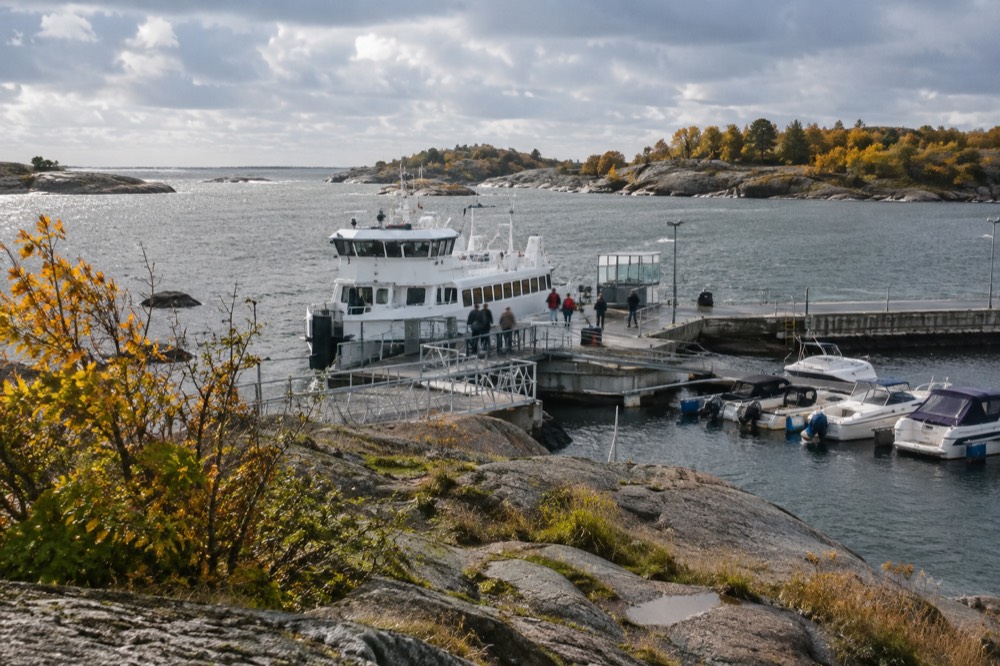
September is the month to be outside. The archipelago islands, Styrsö, Brännö, Vrångö, Donsö and the rest, are still on full ferry schedules, the sea is at its post-peak warmth, and the crowds that fill the boats in July are gone. The southern archipelago guide covers the islands in detail, and the swimming and beaches guide explains why the water behaves the way it does. Everything out there is an ordinary Västtrafik Zone A journey: tram to Saltholmen, ferry to the island, one ticket.
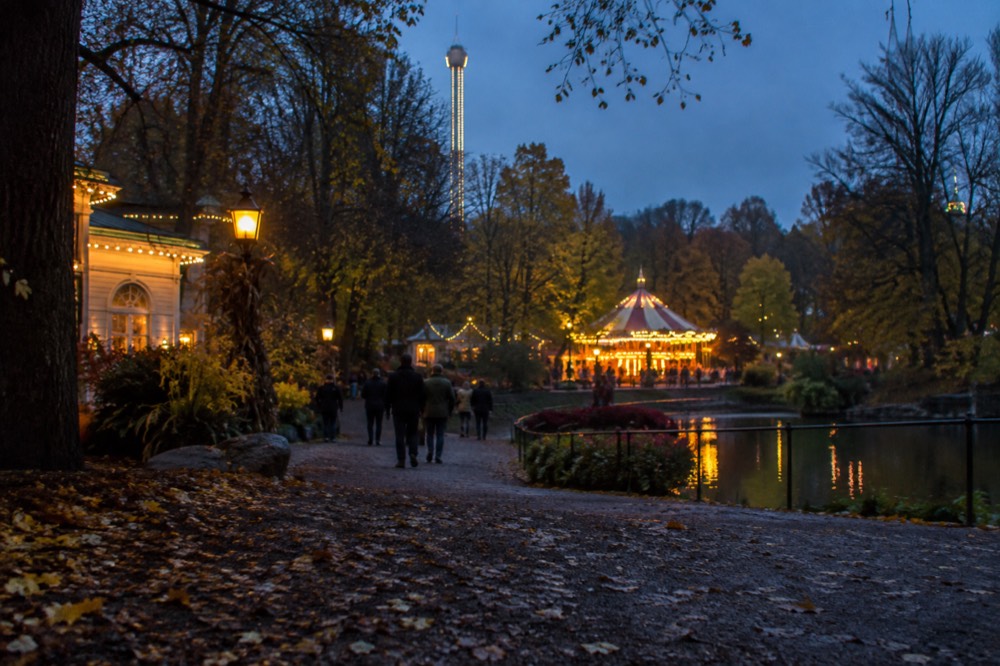
October belongs to Liseberg's Halloween season, which in 2026 runs 2 October to 1 November, with the autumn version of Kaninlandet premiering 26 September. The park's summer season ends 20 September, so there is a short gap in late September when the main park is closed and only the rabbit-land area operates. The Liseberg ticket and price page publishes the season calendar and the ticket structure, including the detail that trips up most visitors: a 95 kr entry ticket includes zero rides.
November is museums and food. Göteborgs konstmuseum holds roughly 250,000 visitors a year across 70,000 works, and it is open through the autumn, though note its published plan to close in 2028 for a rebuild running to 2032. Feskekôrka, the fish church on Rosenlundsgatan, reopened in 2024 as a food hall with two fish counters and five restaurants, which makes it a lunch stop rather than a photo stop now. The Feskekôrka guide covers what is actually inside.
For a one-hour overview of the city that works in any weather, the amphibious bus tour drives the centre and then drives into the harbour, which is the point of it. The listing rates it 4.7 from 4,326 reviews.
When Does Liseberg Close in Autumn, and What Replaces It?
Liseberg's summer season ends on 20 September, Halloween runs 2 October to 1 November, and the Christmas market runs 14 to 23 December, so the park is fully closed from 24 December until mid-April apart from Kaninlandet's winter openings. Between 21 September and 1 October the main park is shut, with the Höst i Kaninlandet autumn season premiering 26 September for the family area only.
The gaps are the trap. A visitor arriving in late September or the first days of November finds the biggest attraction in the city shut, and the Halloween and Christmas seasons are what fill the gap in between. The 2026 calendar, read directly from Liseberg's own pages, looks like this. The full index of guides sits on Gothenburg Travel Guide.
| Season | 2026 dates | Notes |
|---|---|---|
| Summer (Lisebergsparken) | 18 April – 20 September | Full park, all rides |
| Höst i Kaninlandet | from 26 September | Family area only, autumn programme |
| Halloween | 2 October – 1 November | Decorations, horror zones, selected rides |
| Jul på Liseberg | 14 – 23 November (market to 23 Dec) | Christmas market season |
Ticket structure does not change with the seasons. Entry is sold separately from rides: an Entré from 95 kr gets you through the gate and onto nothing, an Åkpass from 310 kr covers rides but not entry, and the combined ticket starts at 365 kr online. Children under 110 cm enter free. Liseberg is not sold on any booking platform; tickets come from the park's own site, and online prices are lower than on-site ones. The Liseberg tickets guide unpacks all of it.
Is September Really Warmer for Swimming Than June?
Yes, and it is not close. SMHI's quality-controlled archive from the Vinga lighthouse station shows mean sea temperature peaking in August at 18.6 C, with September at 16.7 C against June's 16.2 C. The sea runs about six weeks behind the air, so the water you swim in during early autumn was heated by the summer that already ended.
The station is Vinga, the lighthouse island at the mouth of the archipelago, and the figures come from 61,749 quality-controlled hourly observations in SMHI's open oceanographic archive. The air temperature peaks in July at 18.3 C; the water peaks a month later. That lag is why a September dip off Brännö or Vrångö is measurably warmer than a June one, which is the opposite of what most visitors book for.
| Month | Mean sea temp off Vinga | Record low | Record high |
|---|---|---|---|
| June | 16.2 C | 12.9 C | 21.5 C |
| July | 18.3 C | 13.5 C | 23.6 C |
| August | 18.6 C | 15.6 C | 22.2 C |
| September | 16.7 C | 13.6 C | 19.5 C |
| October | 12.8 C | 8.6 C | 16.5 C |
By October the window has closed: the mean drops to 12.8 C, which is cold-water territory, and the cold water swimming and sauna guide covers that properly. For September, though, the practical advice is simple: if you are choosing between a June trip and a September trip and swimming matters, September wins on the data. The kayaking and island-hopping options are covered in how to get to the archipelago.
The guided archipelago cruise is the low-effort version of the same trip: a 2.5-hour boat run through the southern islands with commentary, rated 4.4 from 1,488 reviews on the operator's listing.
How Bad Is the Daylight Loss in Gothenburg in Autumn?
Gothenburg loses daylight fast in autumn: the city runs 18 h 06 m of daylight on 21 June but 6 h 32 m on 21 December, a swing of 11 h 34 m, and most of that loss lands between late September and late November. By 21 December the sun rises at 08:54 and sets at 15:26, and even the grey light of civil twilight only lasts from 08:03 to 16:17.
The autumn equinox is roughly the halfway point, and the rate of loss accelerates after it. The practical consequences are about scheduling. In September you can still sit outside at eight in the evening. By mid-October the light is going before six. By late November the afternoon is over before many attractions close, and the Christmas lights, on Avenyn, at Liseberg's Jul market and along the main shopping streets, become the point of the city rather than a decoration on it.

Photographers should plan around this rather than fight it. The best photo spots guide lists where the low autumn light lands well, and the golden hours are short, but the low sun angle in September and early October is genuinely good over the harbour and the northern archipelago granite. The daylight and darkness guide has the full month-by-month table.
What Should You Pack for Gothenburg in Autumn?
Pack for rain on a third of your days and a temperature range from about 5 C to 15 C: a proper waterproof shell rather than an umbrella, layered midweights, and shoes that survive wet cobblestones. October averages 12.6 rain days and a 9 C mean, November 12.0 rain days and 5.1 C, so the umbrella-vs-shell question answers itself on the first windy day on the harbour.
Gothenburg's rain is coastal and horizontal when the wind comes up the Göta älv, and umbrellas fail on the exposed waterfront faster than anywhere else in the city. A hooded shell over a fleece or midlayer covers almost every autumn day. Waterproof shoes matter more than most visitors expect, because the nicest walking surfaces in the city, the cobbles of Haga and the stone of the old town, hold water for hours after rain.
| Item | Why | Which months |
|---|---|---|
| Waterproof shell with hood | 102.9 mm of rain in October; wind off the harbour | All three months |
| Layered midweights | Mean temps 14.0 to 5.1 C across the season | All three months |
| Water-resistant shoes | Wet cobbles in Haga and the old town | All three months |
| Swimwear | September sea at 16.7 C, saunas all season | September, early October |
| Eye mask | Sunset after 21:00 gone by late September, but hotel blackout varies | Late September |
The full season-by-season version, including the winter escalation, is in what to pack for Gothenburg. One note on costs: autumn is the cheapest of the shoulder seasons for hotels, and the trip cost guide breaks down what a September or October visit actually runs compared with July.
Where Should You Eat and Stay in Gothenburg in Autumn?
Autumn eating in Gothenburg leans into the season's produce: the shrimp and salmon boats, the reopened Feskekôrka food hall with its two fish counters and five restaurants, and the fika culture that shifts from outdoor terraces to candlelit café interiors as October arrives. For accommodation, the shoulder season drops hotel prices from their summer peak, and the districts that suit autumn best are the compact central ones where you can walk between indoor stops in the rain.
Fika is the autumn ritual that carries the season. The fika guide explains the institution, and the where to eat guide covers the full restaurant picture, from the seafood the west coast is known for to the Michelin-starred rooms that book out for the pre-Christmas weeks. The seafood guide is the deep dive on what the autumn boats bring in.

For a guided version of the food side, the walking and fika tour pairs a city walk with the ritual itself, and the west coast food walking tour runs a longer three-hour version. Both operate through the autumn; the listings carry current prices and availability.
For a longer read on the whole year and where autumn sits in it, Gothenburg Travel Guide's winter guide picks up the story in December, and the Christmas market guide covers the season autumn turns into.
Is a Go City Pass Worth It for an Autumn Trip?
For a wet-October weekend, a pass can pay off, because autumn itineraries lean heavily on exactly the indoor attractions passes cover, Universeum, World of Volvo, the museums and the sightseeing boats. The Go City All-Inclusive Pass is listed from $56 per person for 1 to 5 days and covers 20-plus attractions, rated 3.8 from 238 reviews on the operator's listing, but it does not replace the old Göteborg City Card, which no longer exists and which included public transport.
The distinction matters because older guides still describe a card that included trams and ferries. That product is gone. The current Go City passes cover attractions only, and transport is a separate Västtrafik purchase, a 125 kr 24-hour Zone A ticket being the visitor standard, as shown on the Västtrafik Zone A day-ticket page. The city pass guide runs the full comparison, including the Essentials Pass option for shorter trips.

The pass question is really a weather question. In September, when the archipelago is free, warm and covered by an ordinary tram ticket, a pass adds little. In October and November, when the rain count is above 12 days a month and the itinerary moves indoors, the arithmetic changes. Price the pass against the individual entries on your own list before buying; the pass wins when the list is long and the weather is bad.
If the autumn trip is a short one and you are weighing the pass against a couple of individual tours, this is the comparison that matters for the standard wet-weekend plan.
For the pass itself as a standalone purchase, the listing carries the current price and the full attraction terms.
Common Questions About Gothenburg in Autumn
What is the wettest month in Gothenburg?
October, at 102.9 mm of precipitation across 12.6 rain days, per SMHI's 1991-2020 normals for station Göteborg A. It is wetter than any winter month.
Is Gothenburg Sweden's rainiest city?
No. SMHI's own description of the 1991-2020 normals places the national precipitation maxima in the western highlands and the mountains, with annual means over 1000 mm. Gothenburg's 912 mm is wet but not the national maximum.
Can you swim in Gothenburg in September?
Yes, and the water is warmer than in June. September's mean sea temperature off the Vinga station is 16.7 C against June's 16.2 C, because the sea peaks in August at 18.6 C, about six weeks behind the air.
Is Liseberg open in autumn?
Partly. The summer season ends 20 September, the family area's autumn programme starts 26 September, Halloween runs 2 October to 1 November, and the Christmas market runs 14 to 23 December. The main park is closed in the gaps between those seasons.
How cold is Gothenburg in October and November?
October's mean air temperature is 9.0 C and November's is 5.1 C, per SMHI's 1991-2020 normals. Expect daytime highs a few degrees above those means and nights below them.
Does a Go City pass include transport in Gothenburg?
The current Go City passes cover attractions only. The old Göteborg City Card, which included public transport, no longer exists. Trams and ferries are bought separately from Västtrafik, with a 24-hour Zone A ticket at 125 kr.