Trädgårdsföreningen: The Garden Society of Gothenburg, Sweden
Trädgårdsföreningen is a walled park squeezed between the 17th-century moat and the city's grand avenue, and it is the green heart of Gothenburg, Sweden: a rose garden, a palm house, lawns and a playground, all a few minutes from the train station.
Short answer
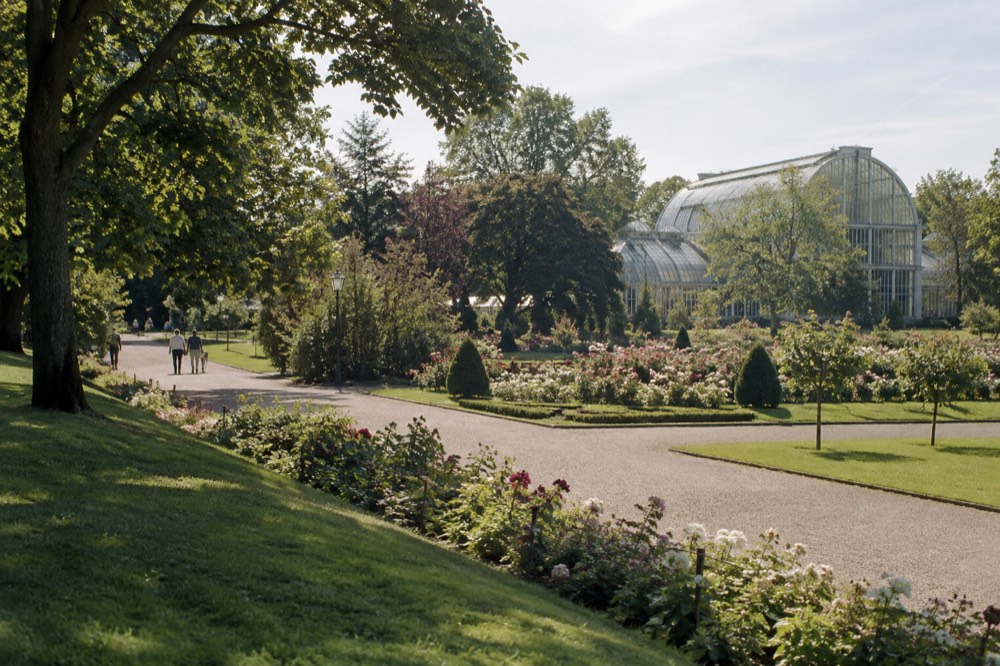
Trädgårdsföreningen is a free public park in central Gothenburg, Sweden, between Kungsportsavenyn and the canal, with a rose garden, a historic palm house, lawns and a children's playground. The park grounds cost nothing to enter; the palm house charges a small admission.
Trädgårdsföreningen, the Garden Society of Gothenburg, sits inside the city's old fortifications, wedged between the moat that once defended the 17th-century town and Kungsportsavenyn, the avenue that Gothenburg built as its front room. The park's own name is the honest description: it began as a horticultural society, a place where the citizens of a young port city grew plants, showed flowers and walked among beds that were laid out for pleasure as much as produce. That dual character survives. One gate opens onto rose gardens and lawns, another onto the amusement-park noise of Liseberg across the water, and the whole thing is close enough to Göteborg Centralstation that a visitor with a spare hour between trains can walk in, sit under a chestnut tree and walk out again.
The park is one of the reasons Gothenburg, Sweden reads differently from other Nordic cities. Most Scandinavian second cities have a green space; this one has a walled garden society in the middle of the street grid, a sort of green room inside the city rather than a park bolted onto its edge. This guide from Gothenburg Travel Guide covers what is actually inside, what it costs, when the flowers are at their best, and how the park fits into a day of walking the city.
What Is Trädgårdsföreningen in Gothenburg?
Trädgårdsföreningen is a walled public park in central Gothenburg, Sweden, run as a garden society park between the old moat and Kungsportsavenyn. It holds a rose garden, a palm house, ornamental beds, broad lawns, a café and a large playground, and entry to the grounds is free. It is one of the city's most central green spaces, a short walk from Göteborg Centralstation, Avenyn and the canal boat dock.
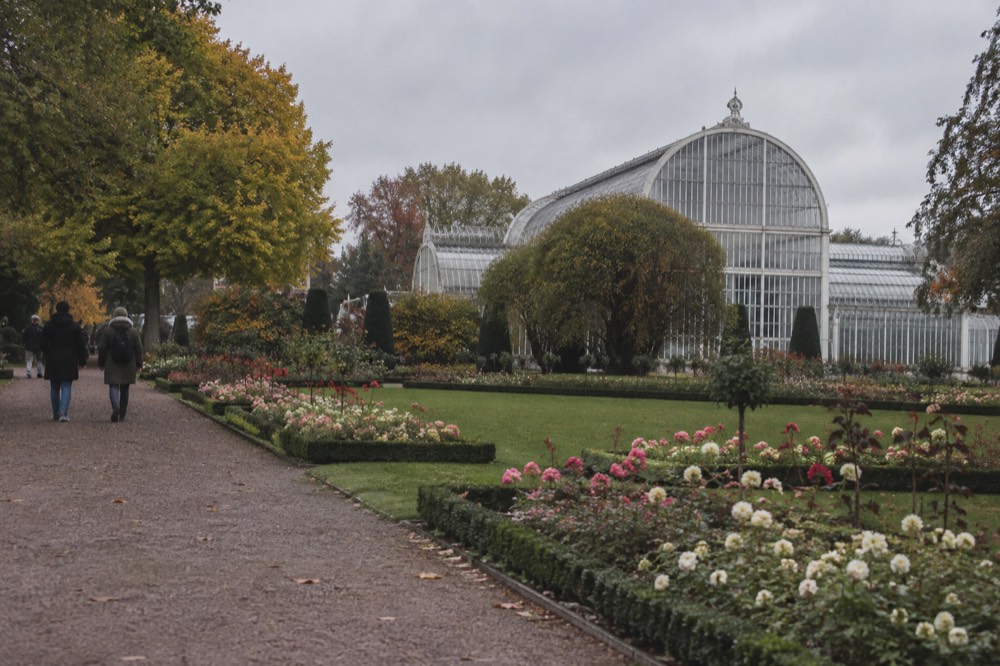
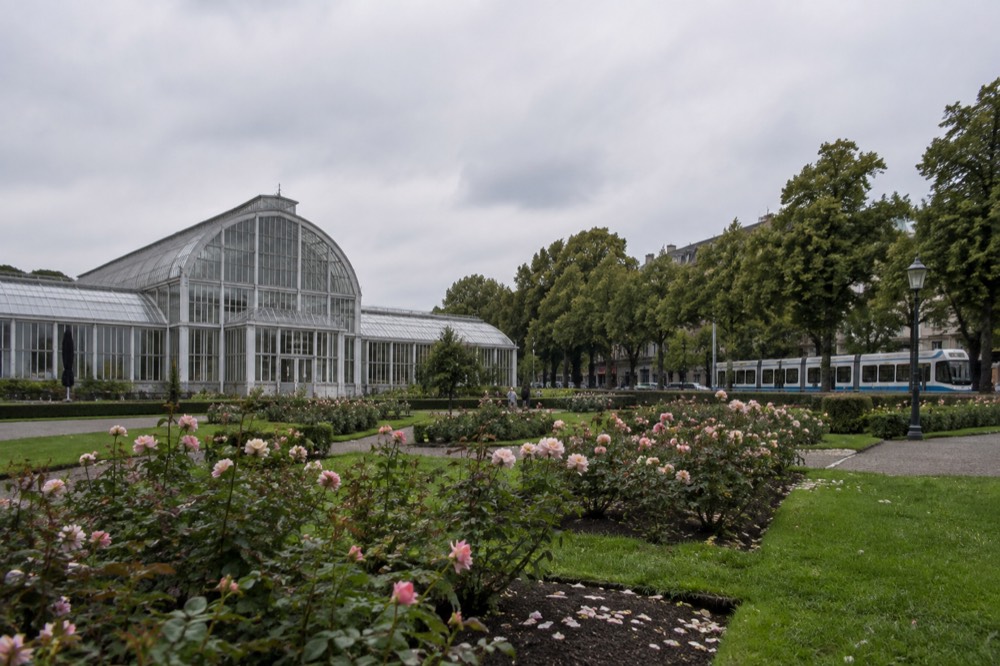
The park's layout still reflects its origins as a horticultural society rather than a municipal park. The beds are arranged in the formal, showy style of a 19th-century pleasure garden: symmetrical, planted for display, meant to be walked through slowly rather than crossed quickly. The walls matter too. Gothenburg's old town was laid out inside a moat by Dutch engineers, and the park sits in the green band that the fortifications left behind, which is why the park feels enclosed even though the modern city hums on every side of it.
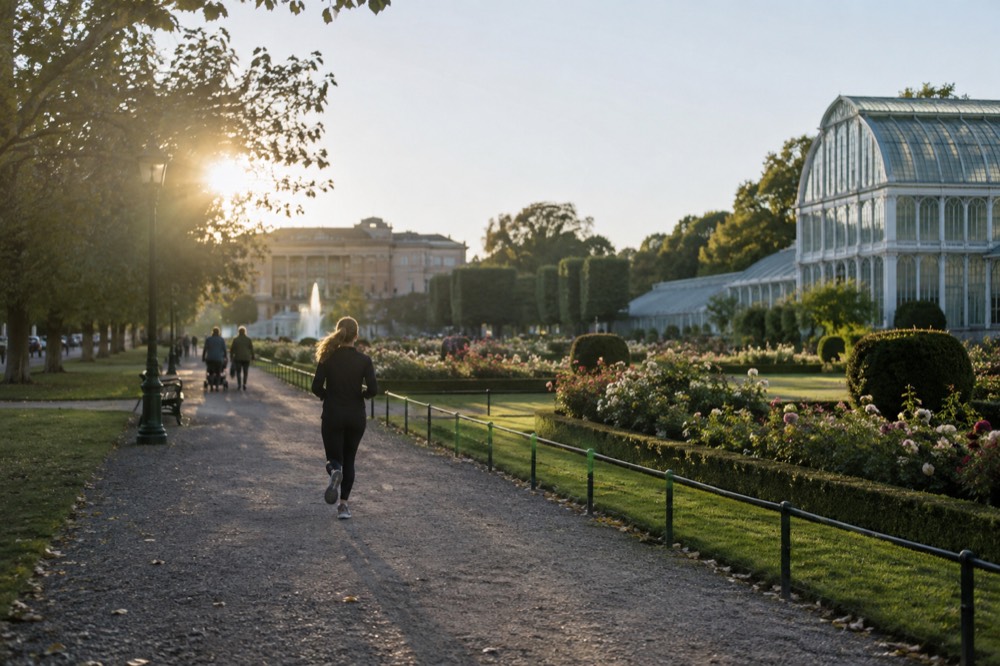
For a visitor, the practical translation is this: Trädgårdsföreningen is the most convenient "sit down in a garden" option in Gothenburg. Slottsskogen is bigger and wilder, but it sits further west; the Botanical Garden is a serious horticultural collection, but it is a tram ride away. Trädgårdsföreningen is the one you can reach on foot from almost anywhere central, and the one you will pass anyway, because it lies between the station, the avenue and the museums. Our overview of getting around Gothenburg explains how the rest of the city connects to it.
What Is Inside the Park: Roses, the Palm House and the Playground?
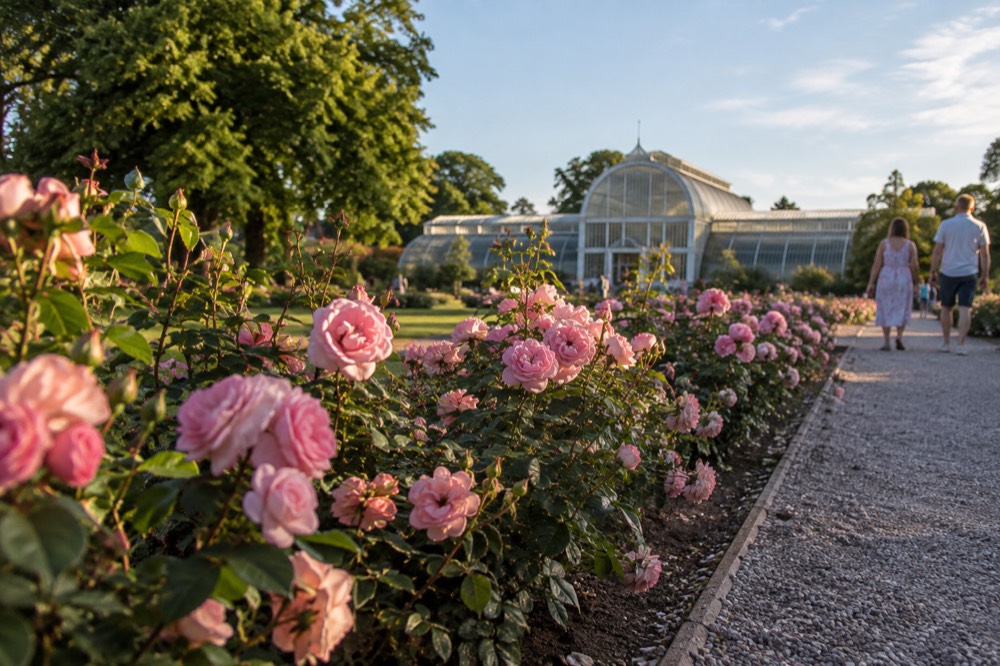
The park's core is a large rose garden with thousands of rose bushes in formal beds, plus a historic glass palm house with subtropical plants, ornamental flowerbeds, broad lawns, a café, and one of the city's biggest and best-loved children's playgrounds. The grounds are free to enter; the palm house charges a small separate admission, and the rose garden peaks in high summer.
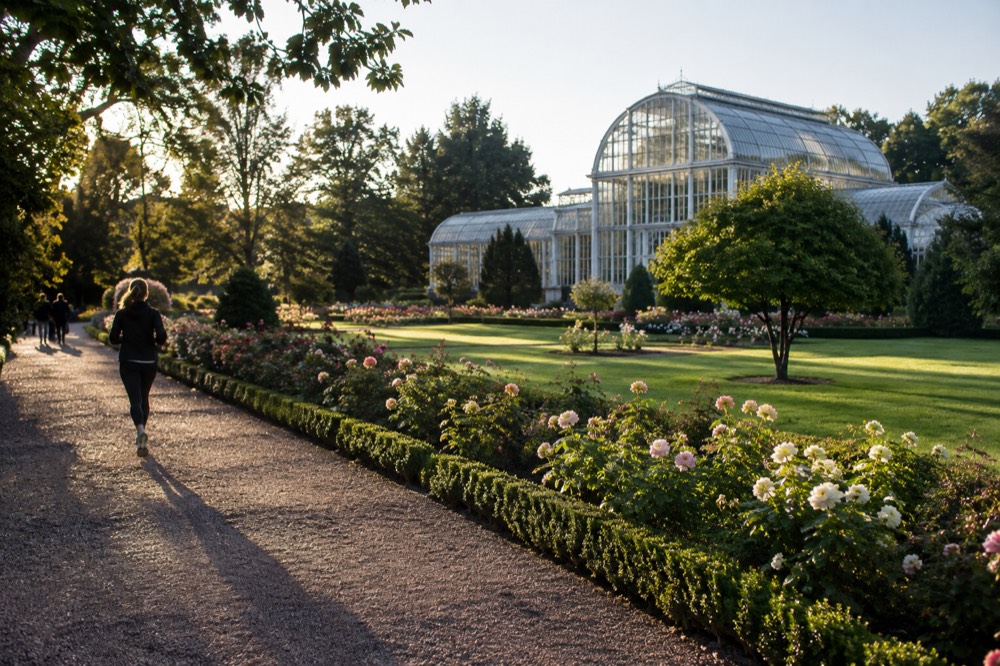
The rose garden is the park's signature. It is the kind of planting that rewards a slow circuit: named varieties, massed colour, and a scent that carries across the whole lawn on a warm evening. The palm house is the park's second landmark, a glasshouse of the type that European cities built in the 19th century for the plants their climates could not grow, and it functions today as a warm, green room with palms and subtropical planting, open year-round against the Swedish winter outside.
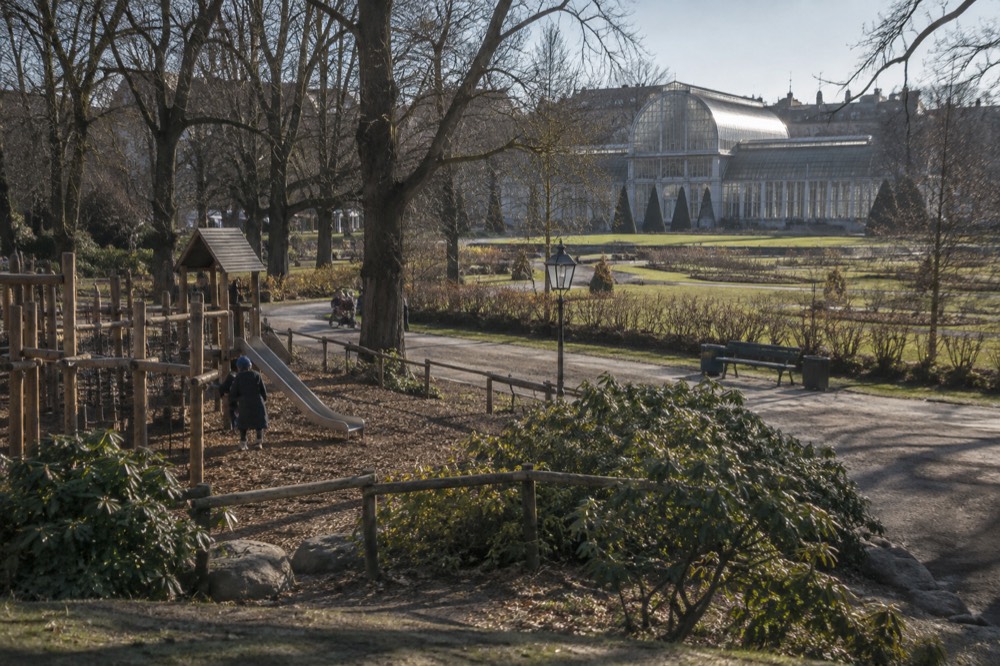
The playground deserves more attention than guidebooks give it. It is large, wooden and adventurous by Scandinavian standards, and it makes the park the default stop for families with small children in central Gothenburg, a fact worth knowing even for travellers without children, because it explains why the lawns fill with strollers and picnic blankets on any dry weekend. Families planning a longer stay should also read our guide to Liseberg tickets, rides and seasons, which sits across the water and pairs naturally with a garden hour.
Here is how the park's main elements stack up for a visitor:
| Area of the park | What it is | Best time | Cost |
|---|---|---|---|
| Rose garden | Formal beds with massed rose varieties | June to August bloom | Free |
| Palm house | Historic glasshouse with palms and subtropical plants | Any season, best on a cold day | Small admission, check at the door |
| Ornamental beds | Seasonal flower displays in the show-garden style | Late spring to early autumn | Free |
| Lawns | Open grass for picnics and resting | Dry days, May to September | Free |
| Playground | Large wooden adventure playground | Daily | Free |
| Café | Coffee, fika and light food in the park | Daily in season, check hours | Pay as you go |
If you want the full garden-and-water version of the city, these sightseeing options run through or past the same central neighbourhood:
Does Trädgårdsföreningen Cost Anything to Visit?
Entry to the park grounds is free: the lawns, rose garden, ornamental beds and playground all cost nothing, and no ticket is needed at the gates. The palm house charges a small separate admission, priced on the low end of Gothenburg's museum scale, and the café is pay as you go. That makes the park one of the best free things to do in central Gothenburg, Sweden.
The free-entry point matters more here than in most cities, because Gothenburg's paid attractions add up quickly. Liseberg's entry ticket starts at 95 kr online and buys zero rides, Universeum prices admission dynamically with a booked time slot, and the Museum of Art charges 75 kr for a day ticket. Against that backdrop, a large, beautiful, central garden that costs nothing is a genuinely useful line in a daily budget. Our piece on free things to do in Gothenburg collects the others.
For the palm house, treat the admission as a decision you make at the door rather than a figure you plan around: the price is modest and posted on site, and the experience is short, a warm half hour among palms rather than a half-day museum.
If you are building a paid day instead of a free one, the amphibious bus tour is the single sightseeing product that covers the park's neighbourhood and the harbour in one ticket, and it is the one most visitors who want a structured overview end up choosing.
When Is the Best Time to Visit the Garden Society Park?
The best time to visit Trädgårdsföreningen is June through August, when the rose garden is in full bloom and Gothenburg's daylight runs to over 18 hours at midsummer. Late spring is the driest window, October is the wettest month of the year, and the palm house is the one corner of the park that works well in winter, because it is warm, green and indoors.
The weather data behind that advice is worth seeing plainly, because Gothenburg's rain reputation is exaggerated. SMHI's 1991-2020 normals for station Göteborg A record 912 mm of precipitation a year across about 127 days with at least 1 mm, which is roughly one day in three, and the wettest month is October at 102.9 mm, not a summer month. April is the driest, at 51.3 mm. SMHI does not call Gothenburg Sweden's rainiest city; the national maxima sit in the western highlands and the mountains, per SMHI's own normals page.
| Month | Rainfall, mm | Days with ≥1 mm | Mean air temp, °C | Garden verdict |
|---|---|---|---|---|
| January | 83.0 | 11.5 | 0.8 | Bare, cold; palm house only |
| February | 61.0 | 9.7 | 0.7 | Coldest air month; palm house |
| March | 54.0 | 8.8 | 3.0 | First bulbs, mud |
| April | 51.3 | 8.2 | 7.7 | Driest month; spring beds |
| May | 54.3 | 8.8 | 12.4 | Fresh green, roses budding |
| June | 73.7 | 10.0 | 15.7 | Roses begin; long evenings |
| July | 81.3 | 9.8 | 18.3 | Warmest month; peak garden |
| August | 92.8 | 11.9 | 17.7 | Roses still strong; sea at 18.6 C |
| September | 80.0 | 10.8 | 14.0 | Mellow, quiet, still green |
| October | 102.9 | 12.6 | 9.0 | Wettest month; go anyway, briskly |
| November | 84.7 | 12.0 | 5.1 | Bare beds, short days |
| December | 93.0 | 13.3 | 2.1 | Palm house and Christmas lights nearby |
Source for all figures: SMHI 1991-2020 normals, station Göteborg A (71420).
Two seasonal notes that most first-time visitors miss. First, daylight: the US Naval Observatory's tables give Gothenburg 18 hours 06 minutes of daylight on 21 June against 6 hours 32 minutes on 21 December, a swing of over 11 hours, so a June evening in the rose garden can run late into bright air while a December visit is over by mid-afternoon. Second, December has its own compensation: the park sits within easy walking distance of the Liseberg Christmas market, which runs 14 to 23 December, and our Gothenburg Christmas market guide covers how to chain the two together.
How Do You Get to Trädgårdsföreningen?
Trädgårdsföreningen is reached on foot from most of central Gothenburg, Sweden: it is a short walk from Göteborg Centralstation, Kungsportsplatsen and the Avenyn boulevard, and no tram is needed from the city core. From further out, any tram stopping at Kungsportsplatsen or nearby central stops puts you at the park's gates, and a single Zone A ticket costs 38 kr, with a 24-hour Zone A ticket at 125 kr covering trams all day.
The park's position is its best transport feature. It lies between the canal and the avenue, so the walking routes from the station, from Avenyn and from the museum district at Götaplatsen all pass its gates naturally. Västtrafik's fare table, published at vasttrafik.se, prices a single adult one-zone ticket at 38 kr and a 24-hour Zone A ticket at 125 kr, and Zone A covers all of Gothenburg, Partille, Mölndal and Öckerö.
| Ticket (Västtrafik, Zone A) | Adult price | Notes |
|---|---|---|
| Single, 1 zone | 38 kr | 90 minutes of travel |
| 24-hour ticket | 125 kr | Same price in app or shop |
| 30-day adult | 445 kr, halved by a temporary state subsidy | Subsidy runs through year end |
| 30-day youth | 335 kr | Also halved |
One warning about that table: the halved 30-day prices are a temporary state subsidy on monthly tickets, and they do not apply to the 24-hour and 72-hour day tickets a visitor actually buys. The 24-hour ticket is still 125 kr. Do not plan around "half-price transport" in Gothenburg, because that is not what the discount does.
What Is Near the Park Worth Pairing with It?
The park's neighbourhood is the densest sightseeing cluster in Gothenburg, Sweden: the Museum of Art and Götaplatsen lie at the top of the avenue, the canal boat dock sits at the bottom, Liseberg and Universeum are across the water to the east, and the old town of Inom Vallgraven is a few minutes west. A visitor can build a full walking day around the park without ever taking a tram.
The single most useful pairing is the Götaplatsen end of the avenue. Göteborgs konstmuseum, with around 70,000 works and the Hasselblad Center included in its 75 kr day ticket, stands at the top of Kungsportsavenyn, and the walk down the avenue to the park is the city's most classic promenade. One planning note that most guides omit: the museum's own rebuild page states it closes in 2028 and reopens in 2032, and it currently warns of intermittent blasting near the building, so check its status before counting on a visit. Our Gothenburg Museum of Art guide keeps the details.
The second pairing is water. The canal sightseeing boats leave from the moat at Kungsportsplatsen, effectively at the park's doorstep, and the amphibious bus tour splashes into the harbour a short walk away. The Paddan boats and the canal route are the classic version; the guided archipelago cruise is the bigger water day, running out past the car-free islands. Both work as a morning-boat, afternoon-garden combination, or the reverse on a warm evening when the rose garden is at its scented best.
For a fuller comparison of the city's green spaces, the Gothenburg Botanical Garden is the serious horticultural counterpart to the park's show-garden style, and Slottsskogen and its free zoo is the big, free, wild option further west. Trädgårdsföreningen is the smallest of the three but the most central, and the only one with a palm house to hide in when the October rain arrives.
Can You Eat or Have Fika in the Park?
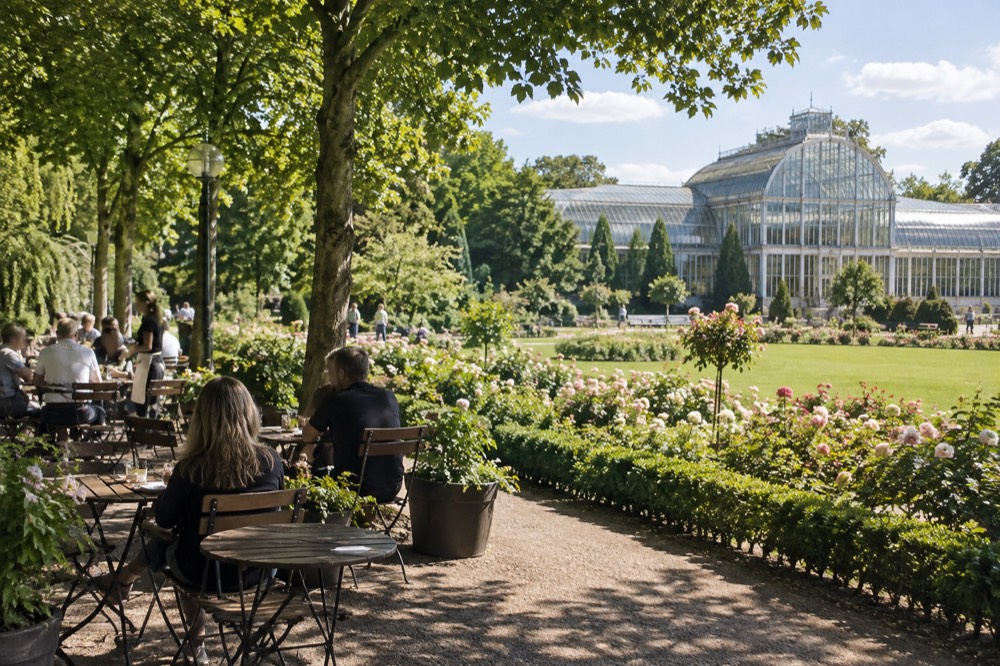
Yes, the park has its own café serving coffee and fika, and the surrounding blocks are among the best eating streets in Gothenburg, Sweden, with the avenue, the moat-side walks and the food halls of the old town all within a few minutes on foot. The classic local move is a garden walk followed by coffee and a cinnamon bun, and the park's lawns are also a picnic ground on dry days.
Fika, the Swedish coffee-and-bun pause, is the natural companion to a garden visit, and the park is one of the most pleasant places in the city to take it. The café inside the park keeps the ritual close to the roses; the streets just outside offer everything from bakery counters to full restaurants. Our fika guide explains the custom, and where to eat in Gothenburg covers the neighbourhoods around the park for proper meals.
One alcohol note that catches visitors: beer above 3.5% ABV, all wine and all spirits are sold only by Systembolaget, the state monopoly, under Alkohollag (2010:1622). A supermarket picnic will therefore be a 3.5%-or-under affair, and if you want a stronger bottle for the lawn, plan a Systembolaget stop and expect it to be closed on Sundays.
Is Trädgårdsföreningen Good for Children?
Yes, the park is one of the most child-friendly places in central Gothenburg, Sweden: it has a large wooden adventure playground, safe car-free lawns, a palm house that fascinates small children, and a café for parents, all free to enter except the palm house. It is the default green stop for families staying centrally, and it pairs with Liseberg and Universeum across the water for a full children's day.
The playground is the anchor. It is the kind of wooden structure that Scandinavian cities build well: climbing frames, slides and sand designed for actual risk-taking rather than wrapped safety, shaded by the park's mature trees. For families assembling a day, the geography is generous: Liseberg's summer season runs 18 April to 20 September, Universeum is open every day of the year from 10:00 to 18:00, and both sit within an easy walk or short tram hop of the garden. Our Gothenburg with kids guide assembles the full day.
A note for parents of very small children: Liseberg's entry structure is worth knowing in advance. Entry from 95 kr online includes no rides, children under 110 cm enter free, and ride passes are sold separately, so the garden's free playground is a genuine budget alternative to the amusement park for the under-fives, who cannot ride most things anyway.
Common Questions About Trädgårdsföreningen in Gothenburg
Is Trädgårdsföreningen free?
Yes, entry to the park grounds is free, including the rose garden, lawns, ornamental beds and playground. Only the palm house charges admission, a small fee posted at the door.
How do I get to Trädgårdsföreningen?
Walk. The park sits between Kungsportsavenyn and the old moat, a few minutes from Göteborg Centralstation, Kungsportsplatsen and the canal boat dock. From further out, take any tram to a central stop; a single Zone A ticket costs 38 kr and a 24-hour Zone A ticket 125 kr.
When is the rose garden in bloom?
Roses peak in June, July and August. July is the warmest month of the year in Gothenburg at a mean of 18.3 C, and August still holds the garden in strong bloom while the sea off the archipelago reaches its annual peak of 18.6 C.
Is Trädgårdsföreningen worth visiting in winter?
The outdoor garden is bare from November to March, but the palm house is warm, green and open, and the park's central position makes it a pleasant short stop en route to the Liseberg Christmas market, which runs 14 to 23 December.
Can you picnic in the park?
Yes, the lawns are used for picnics on dry days, and the park has its own café for fika. Remember that supermarket beer in Sweden stops at 3.5% ABV; anything stronger is sold only at Systembolaget, which closes on Sundays.
How long should I spend at Trädgårdsföreningen?
An hour or two covers the rose garden, palm house and playground at a stroll. The park works best as a pause inside a walking day that takes in the Museum of Art at the top of the avenue and the canal boats at the bottom.
The Garden Society in One Paragraph
Trädgårdsföreningen is the quiet centre of a loud city, and the one attraction in Gothenburg, Sweden that improves a day simply by being crossed on the way somewhere else: a free, walled pleasure garden of roses, lawns and a palm house, planted by a horticultural society inside the old fortifications, blooming through 18-hour summer evenings and sheltering families through the October rain.
It costs nothing, it sits on the walking route between the station, the avenue and the museums, and it rewards an unhurried hour better than any paid ticket nearby.
Gothenburg built its identity around shipyard cranes, granite and grey sea light, and then planted this garden in the middle of the street grid, where the roses bloom through the long midsummer evenings and the playground fills with the city's children. If the October rain arrives on schedule, step into the palm house and wait it out; the garden has been doing that job for the city for a very long time.
For visitors who want the bigger water version of the same city, the guided archipelago cruise runs out past the car-free islands on the same ticket family, and it makes a natural second day after the garden and the canal.