Paddan Boats and the Gothenburg Canal Sightseeing Route
The Paddan boats run the old Dutch moat in the middle of Gothenburg, and the canal route they follow is the oldest street plan in the city. Here is how the trips work, what they cost, and how they compare with the other boat tours on the waterfront.
Short answer
Paddan sightseeing boats run guided tours along Gothenburg's historic canal moat, with a listed cruise on the River Säveån from $40 per person rated 4.6 from 105 reviews, plus a 50-minute city canal cruise from $28 rated 4.7 from 783 reviews.
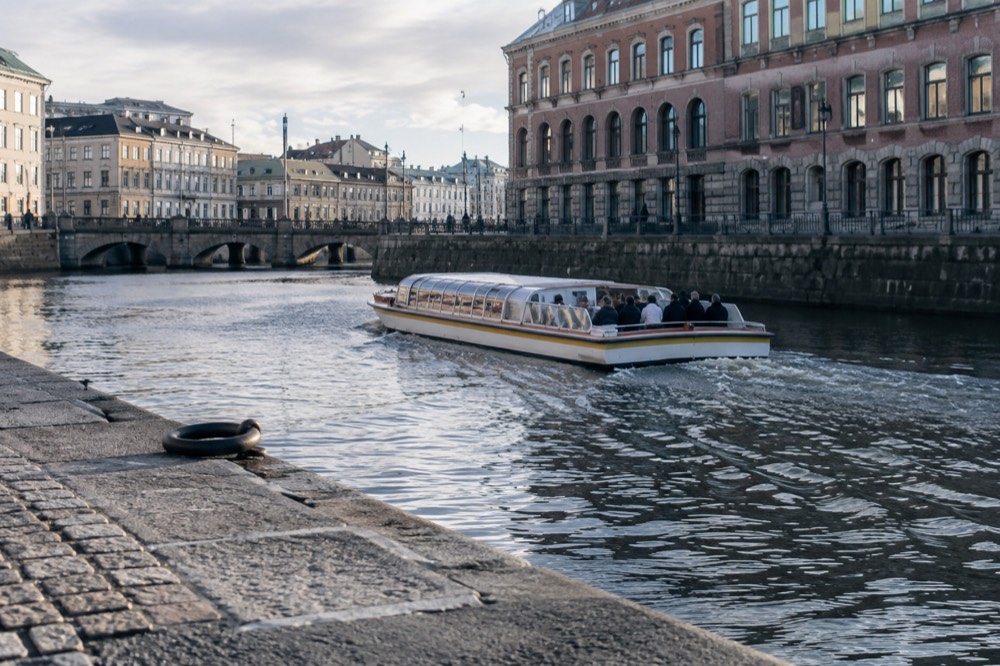
The Paddan boats are flat, open tour vessels that sit low in the water, and that shape is the whole point. Gothenburg's oldest streets were laid out by Dutch engineers inside a defensive moat, and the moat is still there: a ring of water called Vallgraven that wraps the old town, joined to the Göta älv river and threaded under a set of bridges built so low that an ordinary boat would take its roof off on the first one. The Paddan design exists because of those bridges. Passengers duck, the canopy comes down, and the boat keeps going.
That moat is the reason this page exists. Most European canal tours run through industrial cuts or renovated docklands. The Paddan route runs through the seventeenth-century street plan itself, past the Feskekôrka fish market hall, under the Haga bridges, and out onto the river for a look at the shipyard cranes that still line the north bank. This guide covers how the trips work, what the listings actually charge, which tour suits which kind of visitor, and what the route looks like month by month, because a canal tour in April and one in October are two different experiences.
What Is the Paddan Boat Tour in Gothenburg?
The Paddan tour is a guided sightseeing cruise along Gothenburg's historic canal moat and out onto the Göta älv, run in low open boats designed to slip under the old town's low bridges. The listing currently sold is a 2-hour guided cruise on the River Säveån from $40 per person, rated 4.6 from 105 reviews, and a separate 50-minute city canal sightseeing cruise runs from $28 per person, rated 4.7 from 783 reviews.
The name comes from the Swedish word for a duck. A padda is a toad, and paddor is the plural, and the boats have carried the joke for decades: squat, flat-bottomed, and happy in shallow water. The tour operator's live listing describes the route as the classic canal trip through the heart of the city, with a live guide pointing out the moat, the fish church, and the harbour as the boat leaves the calm of the canal for the wider river.
Two distinct products are sold, and mixing them up is the most common planning mistake. The longer trip, sold as the Paddan Sightseeing Cruise on the River Säveån, runs about 2 hours and extends beyond the moat ring into the Säveån, the river that enters the city from the north-east. The shorter city canal sightseeing cruise is a 50-minute loop that stays inside the central canal system and the inner harbour. Families with small children and cruise passengers on a tight clock usually fit the 50-minute version; visitors with a free afternoon get more from the full route.
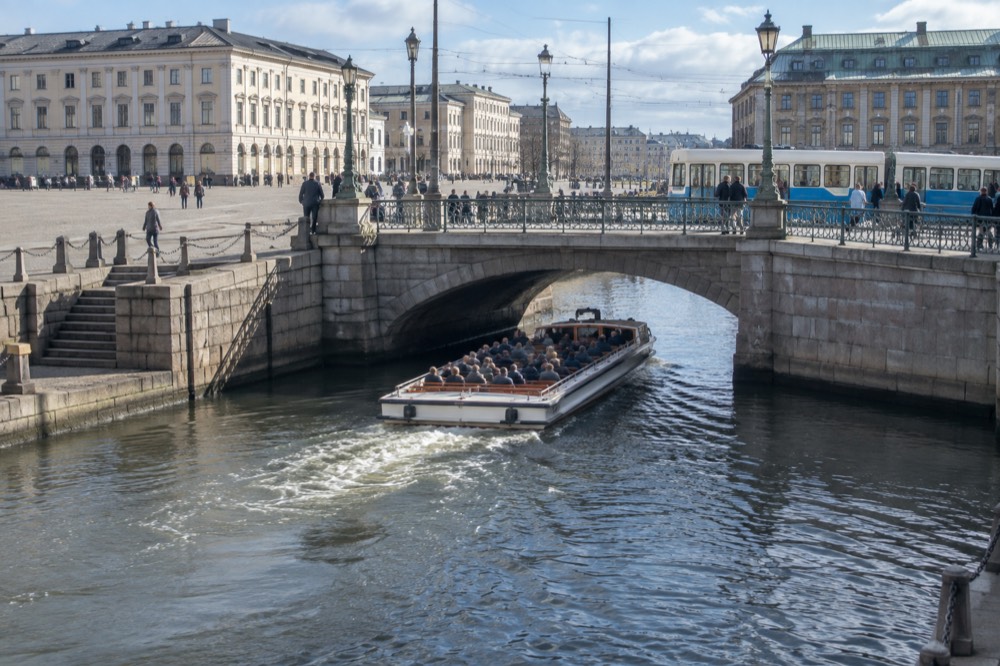
The departure point sits at Kungsportsplatsen, the square at the top of the main boulevard, which is also a tram stop served by several lines. That matters because the trams are the backbone of the city, and Gothenburg Travel Guide covers how the network fits together, but the short version is: you do not need a taxi to reach the boats. The Västtrafik fare table shows a single Zone A ticket at 38 kr and a 24-hour Zone A ticket at 125 kr, and the 24-hour ticket also covers the archipelago ferries from Saltholmen, which makes a canal cruise plus an island ferry the single best-value day in the city. The full transport picture is in getting around Gothenburg by tram.
How Much Do Paddan and Canal Boat Tickets Cost in Gothenburg?
The 2-hour Paddan cruise on the River Säveån is listed from $40 per person, the 50-minute city canal sightseeing cruise from $28 per person, and a self-drive electric boat for up to 12 people from $92 per group. A land-and-water amphibious bus tour, which drives into the river mid-trip, is listed from $36 per person rated 4.7 from 4,326 reviews.
Those figures come from the operators' live listings, and the word "from" is doing real work in each sentence. Boat tours in Gothenburg price dynamically by date and time slot, the same way the Liseberg ticket calendar prices by day, so the number you see when you check availability is the number that applies to your date. The listings also shift with the season: the canal boats run a reduced winter schedule, and some departure times disappear entirely between November and March.
| Boat tour | Listed from | Basis | Rating | Duration |
|---|---|---|---|---|
| Paddan cruise on the River Säveån | $40 | per person | 4.6 from 105 reviews | 2 hours |
| City canal sightseeing cruise | $28 | per person | 4.7 from 783 reviews | 50 minutes |
| Land and water amphibious bus | $36 | per person | 4.7 from 4,326 reviews | 1 hour |
| Electric self-drive boat | $92 | per group, up to 12 | 4.3 from 80 reviews | 1 hour |
| Guided archipelago cruise | $44 | per person | 4.4 from 1,488 reviews | 2.5 hours |
The self-drive boat deserves a line of explanation because its price basis is different. It is charged per boat, not per seat, so a group of eight splits $92 between them and it becomes the cheapest ticket on the water per head. You drive it yourself, there is no guide, and the route stays inside the central canal ring where the speed limit keeps everything slow.
What Route Does the Canal Sightseeing Cruise Actually Take?
The canal route starts at Kungsportsplatsen, loops the old moat ring through Vallgraven past the Feskekôrka fish market hall and under the Haga bridges, then exits onto the Göta älv for a harbour stretch past the shipyard cranes before returning. The 50-minute version covers the moat loop and inner harbour; the 2-hour Säveån cruise extends the trip up the second river that enters the city from the north-east.
The moat is the star, and it is not a reconstruction. Dutch engineers laid out the old town inside a defensive water ring in the seventeenth century, and Göteborgs Stad still maintains the canal as a working part of the city's drainage and street plan. The boat passes Rosenlund, where the Feskekôrka food hall reopened in 2024 with five restaurants and two fish counters after its renovation, a change most older guidebooks still get wrong. The building turned 150 the same year it reopened, and the Feskekôrka guide covers what is actually inside now.
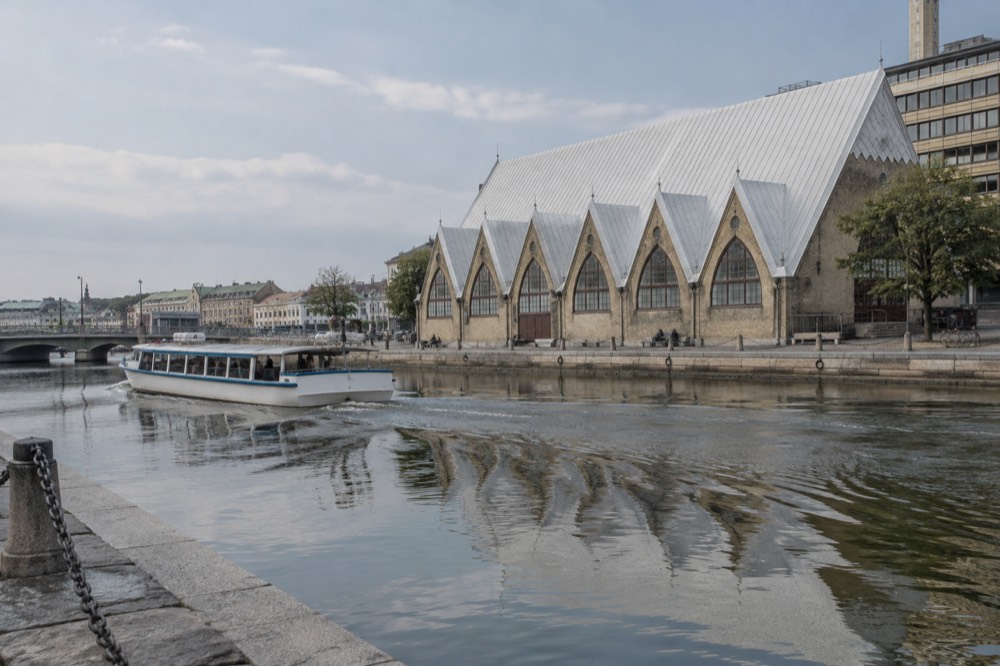
The bridge sequence is the part people remember. Several of the crossings over Vallgraven were built for foot traffic and carts, not for tour boats with canopies, so the crew drops the top and asks everyone to duck. It happens three or four times on the moat loop, and it is genuinely the moment the tour earns its design: you are passing under the city rather than looking at it from a distance.
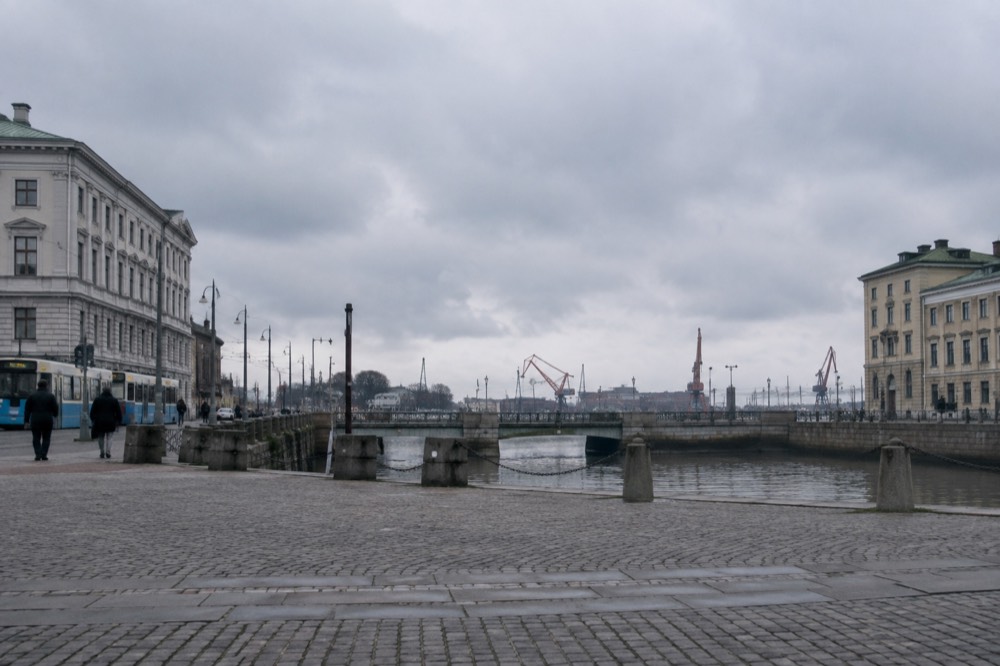
Out on the river the route opens up. The north bank still carries the gantry cranes of the old shipyards, and the guide usually points out the Opera House, the Maritiman floating museum, and the Älvsborg Bridge further west. The harbour stretch is where the amphibious bus tour makes its splash landing, driving off a slipway into the same water the Paddan boats cruise, which is why the two products compete for the same hour of your itinerary.
Paddan vs the Amphibious Bus vs the Archipelago Cruise: Which Boat Tour?
The Paddan cruise suits visitors who want the historic moat and a calm guided commentary, the amphibious bus suits families who want the novelty of a bus entering the river, and the archipelago cruise suits anyone who wants open sea and islands rather than city water. They cost from $40, $36 and $44 per person respectively, and they overlap so little that picking two of the three is usually the right call.
The amphibious bus is the loudest competitor. It is a proper coach that spends its first half on streets around Avenyn and Götaplatsen, then drives down a ramp and floats. At 4.7 from 4,326 reviews it is the most-reviewed tour of any kind in the city, and its one-hour length fits a cruise-ship day almost exactly. What it does not do is enter the low bridges of the moat ring: it is far too tall. The Paddan boats and the amphibious bus are, in a real sense, complementary, one under the city and one into the harbour.
The archipelago cruise is a different proposition altogether. It leaves the city water entirely and heads out past the Älvsborg fortress toward the islands, and the southern archipelago it sails toward is not a day trip but part of the city itself, reached on ordinary Västtrafik tickets. The southern archipelago guide covers the islands on foot; the cruise covers them from the water with a guide on the microphone.
| Choice | Best for | Runs from | Water type |
|---|---|---|---|
| Paddan canal cruise | History, moat, bridges | $40 per person | Canal and river |
| Amphibious bus tour | Families, short visits | $36 per person | Street then river |
| Archipelago cruise | Islands, open water | $44 per person | Sea |
| Self-drive electric boat | Groups, DIY pace | $92 per boat | Canal only |
When Is the Best Time of Year for a Canal Tour in Gothenburg?
The best months for a canal tour are May through September, when the boats run their full schedule and the weather cooperates, but the data says April is the driest month of the year at 51.3 mm of rain, and October is the wettest at 102.9 mm, so the shoulder season is drier than the reputation suggests and late autumn is when the rain actually arrives.
Those rainfall figures come from SMHI's 1991-2020 normals for station Göteborg A, and they overturn the city's most repeated cliche. SMHI does not call Gothenburg Sweden's rainiest city; the national maxima sit in the western highlands and the mountains, and the city's 912 mm a year over 127 wet days is roughly one day in three, not permanent drizzle. The rain myth and the month-by-month numbers are covered properly in the best time to visit Gothenburg.
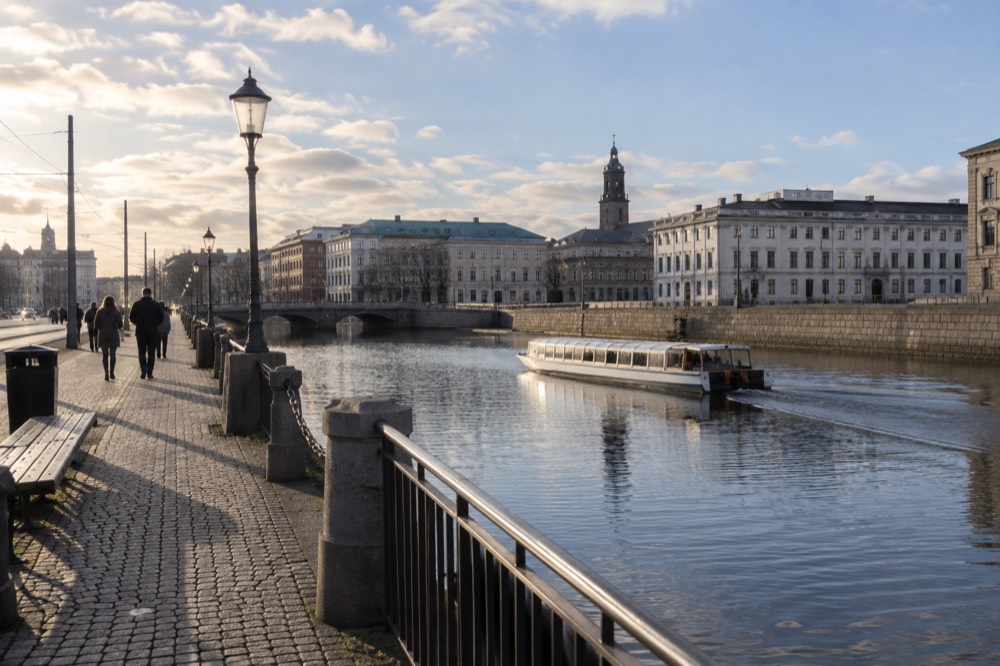
Daylight matters as much as rain for a boat tour. The US Naval Observatory tables for Gothenburg show 18 hours 6 minutes of daylight on 21 June against 6 hours 32 minutes on 21 December, a swing of over eleven and a half hours. A June evening cruise runs in full light until nearly ten at night. A December cruise, if a departure exists at all, happens in the dark, and the moat under lamplight is atmospheric but it is a different product. The month-by-month breakdown lives in daylight and darkness in Gothenburg.
Sea temperature is the sleeper fact for anyone combining a canal tour with a swim. SMHI's Vinga station data shows the water peaks in August at 18.6 C, not July, and September water at 16.7 C is warmer than June water at 16.2 C. The air peaks in July at 18.3 C. The sea runs about six weeks behind the air, which is why a September archipelago swim beats a June one, a fact most visitors book in exactly the wrong direction.
Can You Take a Paddan Tour with Kids or in Winter?
Yes, with caveats. The 50-minute canal cruise is short enough for small children and the amphibious bus is the most kid-proofed option at 4.7 from 4,326 reviews, but in winter the canal boats run a reduced schedule and the December daylight window of 6 h 32 m means departures are limited and the moat is cold. Families visiting in the Christmas season usually do better with the Christmas market at Liseberg, which runs 14 to 23 November dates and onward through December.
The winter schedule is the honest limit. Gothenburg in winter is a real city, not a closed one, but the canal tour is a fair-weather product at heart, and the Gothenburg with kids and Gothenburg in winter guides both cover what actually fills a cold day: Universeum, which is open every day of the year from 10:00 to 18:00 with dynamically priced entry, and Slottsskogen's free zoo. If a canal departure does run in the colder months, the boat is open with a canopy, so dress for the air temperature, not the cabin temperature, because there is no cabin.

For summer family visits the arithmetic is friendlier. The electric self-drive boat at $92 for up to 12 people works out cheapest per head for a family group, and children under 110 cm enter Liseberg free, which pairs an afternoon boat trip with an evening at the park. The [Gothenburg Christmas market](/guides/gothenburg-christmas-market/) guide covers the November-December window if your trip lands there instead.
Where Does a Canal Tour Fit in a Gothenburg Itinerary?
The canal cruise fits best as a first-morning orientation, because the route passes most of the old town's landmarks in under an hour and the guide's commentary doubles as a walking-tour preview. Pair it with the archipelago ferry in the afternoon, since one 125 kr 24-hour Västtrafik ticket covers the tram to Saltholmen and the boat to the islands, and you have the city and the sea in a single day.
The itinerary logic is simple. A boat tour shows you the map from the water; a walking tour lets you act on it. The one day in Gothenburg and three days in Gothenburg planning guides both put a canal cruise early in the visit for exactly this reason, and the free walking tours on GuruWalk cover the same streets on foot at no upfront cost, tip-based, with the English-language walks listed at 4.77 to 5 from 234, 24 and 63 reviews respectively.
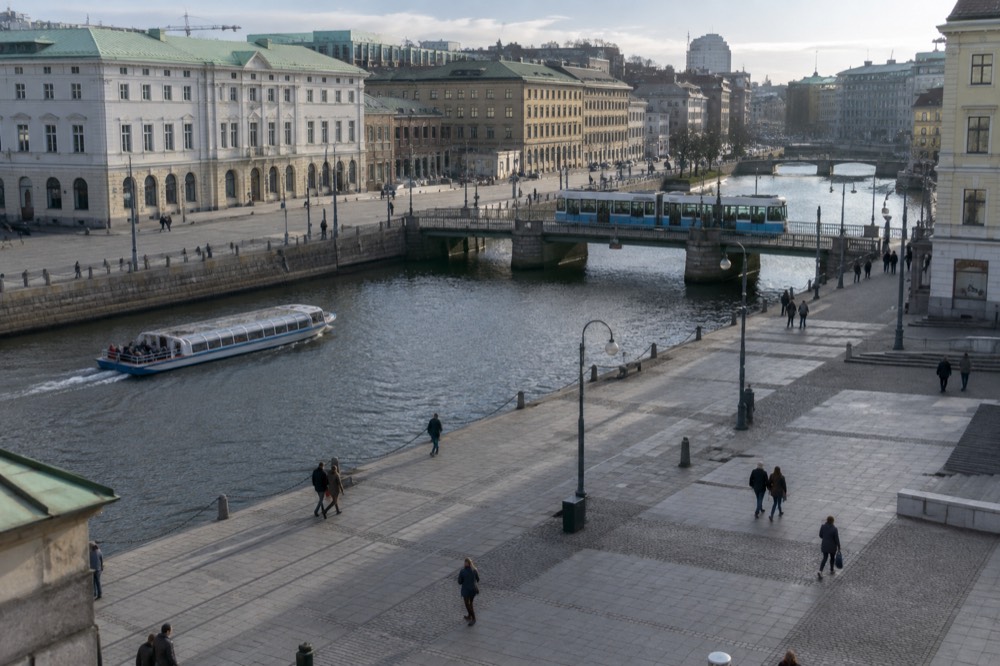
Food slots around the route are easy. The moat loop finishes near Rosenlund, steps from the Feskekôrka food hall and the Saluhallen market, and the where to eat in Gothenburg guide covers both. A mid-afternoon fika stop is not optional in this city, and the fika guide explains the custom and the best rooms for it.
| Itinerary slot | Activity | Cost anchor |
|---|---|---|
| Morning | 50-minute canal cruise | from $28 per person |
| Lunch | Feskekôrka food hall | pay as you eat |
| Afternoon | Tram to Saltholmen, ferry to Styrsö or Brännö | 125 kr 24-hour ticket |
| Evening | Fika or dinner in Haga | pay as you eat |
Common Questions About Paddan Boats and Gothenburg Canal Tours
How much does a Paddan boat tour in Gothenburg cost?
The 2-hour Paddan cruise on the River Säveån is listed from $40 per person, rated 4.6 from 105 reviews, and the 50-minute city canal sightseeing cruise is listed from $28 per person, rated 4.7 from 783 reviews. Prices are dynamic by date, so check the operator's live listing for your specific day.
Where do the Paddan boats depart from?
The canal tours depart from the quay at Kungsportsplatsen, the square at the top of the main boulevard, which is also a tram stop. The operator's listing states the meeting point for the specific tour you book, so confirm it there before you travel.
Do the Paddan boats go into the archipelago?
No. The Paddan and canal cruises stay on the city's canal moat, the Göta älv and, on the longer trip, the River Säveån. The archipelago is a separate product: the guided archipelago cruise runs 2.5 hours from $44 per person, or you can ride the ordinary Västtrafik ferries from Saltholmen on a 125 kr 24-hour Zone A ticket.
Is the amphibious bus better than the Paddan boat?
They serve different purposes. The amphibious bus, from $36 per person rated 4.7 from 4,326 reviews, covers city streets and then drives into the river, but it is too tall for the moat's low bridges. The Paddan boats go under those bridges and through the historic canal ring, which the bus cannot do. Many visitors do one or the other, not both.
Do the canal boats run all year?
The schedule is reduced in winter and daylight is the constraint: Gothenburg has 6 hours 32 minutes of daylight on 21 December against 18 hours 6 minutes on 21 June. Departures are plentiful from May to September and limited in the colder months. Check the operator's live listing for winter availability before planning around it.
Can you drive your own boat in Gothenburg's canals?
Yes. A self-drive electric boat tour for up to 12 people is listed from $92 per group, rated 4.3 from 80 reviews, and it runs inside the central canal ring at low speed with no guide. Split across a group it is the cheapest way onto the water per person.
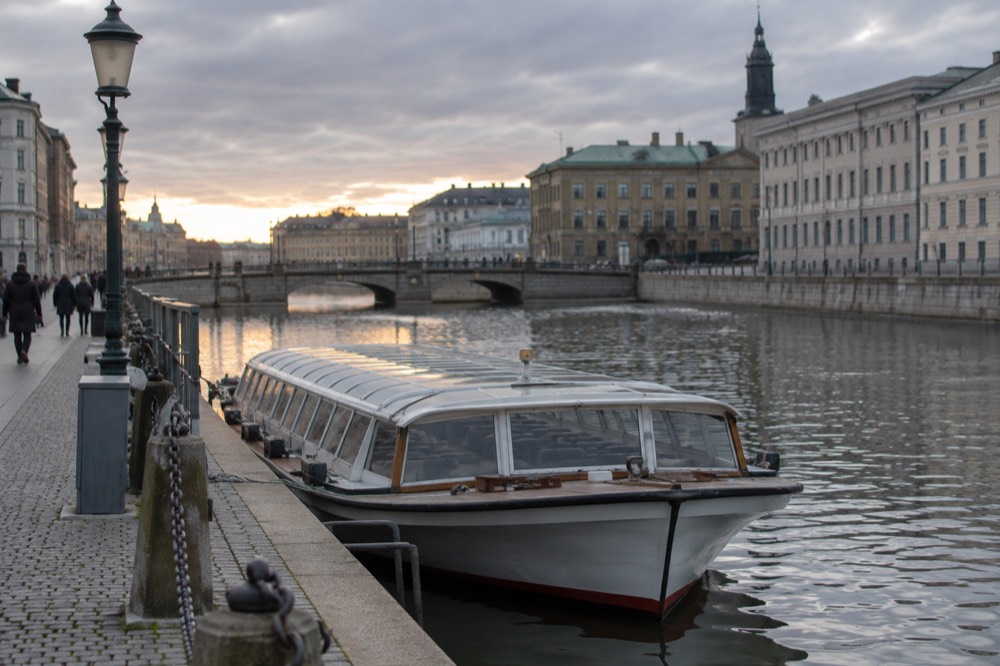
The moat has been in continuous use since the Dutch engineers drew it, which is more than most city attractions can say. The Paddan boats are simply the newest way to read it. Book a time slot, duck when the crew says duck, and let the oldest street plan in Gothenburg do the talking.