Gothenburg Botanical Garden: What to See, Tickets and the Best Time to Go
The Gothenburg Botanical Garden is one of the city's most-loved green spaces, a short tram ride from the centre and within reach of the Slottsskogen parkland. This guide covers how to get there on a Västtrafik ticket, what the climate does to the flower calendar, and what to combine with a visit.
Short answer
The Gothenburg Botanical Garden sits in the city's south-west green belt, reached by tram on an ordinary Zone A ticket. Check the garden's own site for current opening hours and any admission charge for special exhibitions, and aim for late spring, when SMHI's data shows April is the driest month of the year.
The Gothenburg Botanical Garden is the quiet half of the city's green south-west, the half that locals keep to themselves while the guidebooks send everyone to Avenyn. Sweden's second city runs on trams, granite and grey sea light, and its botanical garden fits that temperament: a working scientific collection rather than a flower show, planted across gently sloping ground on the edge of the Slottsskogen parkland. Göteborgs Stad counts 613,274 residents at the end of 2025, and a good share of them know the garden's seasons by heart.
This page pulls together what a visitor actually needs: how the Västtrafik ticket system covers the trip, what SMHI's climate normals mean for when things bloom, and how the garden slots into a day that might also take in Slottsskogen or a harbour cruise. Where a figure matters, it comes from the authority that publishes it. Where the garden's own arrangements change, such as opening hours and guided tour fees, the garden's own website is the source to check before you set out, because those details shift seasonally and this guide does not print numbers it cannot verify.
Is the Gothenburg Botanical Garden Worth Visiting?
Yes, for most travellers it earns at least half a day, and it earns it differently depending on the season. The garden is a scientific collection with themed plantings, glasshouses and open parkland on the Slottsskogen side of the city, it sits inside the ordinary Västtrafik zone system so a standard tram ticket covers the journey, and it pairs naturally with the free zoo and parkland next door, which makes it one of the better-value halves of a Gothenburg itinerary.
The honest case for the garden is that it is a place Gothenburg residents actually use, not a ticketed attraction built for visitors. That shows in what it is: plantings arranged by habitat and origin, a nursery and research function behind the public face, and open lawns that fill with picnics on the rare hot afternoons this coast produces. The city's tourism body, Göteborg & Co, reported over 6 million commercial guest nights in 2025, a record, with international guests up around 15% in the first ten months of the year, and the garden is one of the places that growth spills into on sunny weekends.
What it is not, is a Liseberg-style day out. There is no ride, no queue and no soundtrack. Visitors comparing it with the city's headline attractions should read our guide to Liseberg rides, tickets and when to go to see the other end of the spectrum. The garden rewards slow walking, and it rewards visitors who arrive knowing roughly what flowers when, which is where the climate record becomes genuinely useful planning information.
The garden also suits the city's weather reality better than most attractions. Gothenburg gets 912 mm of precipitation across 127 days a year, per SMHI's 1991-2020 normals for station Göteborg A, which is about one wet day in three, not the permanent drizzle of the guidebook cliche. A garden visit absorbs that. Trees, greenhouses and gravel paths work in light rain in a way Avenyn's cafe terraces do not, and our page on Gothenburg on a rainy day has more on that trade.
How Much Does It Cost to Visit the Gothenburg Botanical Garden?
The garden's public grounds have historically been one of Gothenburg's free green spaces, with any charges limited to special exhibitions, guided tours and events, but the garden's own website is the only reliable source for the current arrangement, so check it before you plan the budget. What is verified and stable is the transport side: a Västtrafik single ticket in Zone A costs 38 kr for an adult, and a 24-hour Zone A ticket costs 125 kr, which also covers the archipelago ferries.
The reason this page does not print a garden admission figure is simple: the facts pack behind this site, which is limited to primary sources, does not contain a current one. An acknowledged gap beats a confident wrong number. The garden's own visitor pages list current opening hours, any seasonal exhibitions and their prices, and the terms for group visits, and those are the pages to trust.
What can be said with sources is that Gothenburg is a city where the best things are cheap or free. Slottsskogen's zoo is free, the archipelago ferries ride on an ordinary tram ticket, and the sea air at Saltholmen costs nothing at all. Our guide to free things to do in Gothenburg and our page on Slottsskogen park and its free zoo cover that side of the city in detail.
For visitors who want the paid-attraction layer of the city on top, a [sightseeing pass](https://gocity.tpk.ro/HQKyKKW4) is the tool that exists. The listing for the Gothenburg Go City All-Inclusive Pass describes access to 20 or more attractions over one to five days, priced from $56 per person and rated 3.8 from 238 reviews. Whether the botanical garden itself counts among a pass's included attractions is a question the pass operator's live listing answers, and it should be checked there before buying, because inclusion lists change. The old municipal Göteborg City Card no longer exists under that name, and the replacement is a different product under different terms.
How Do You Get to the Gothenburg Botanical Garden by Tram?
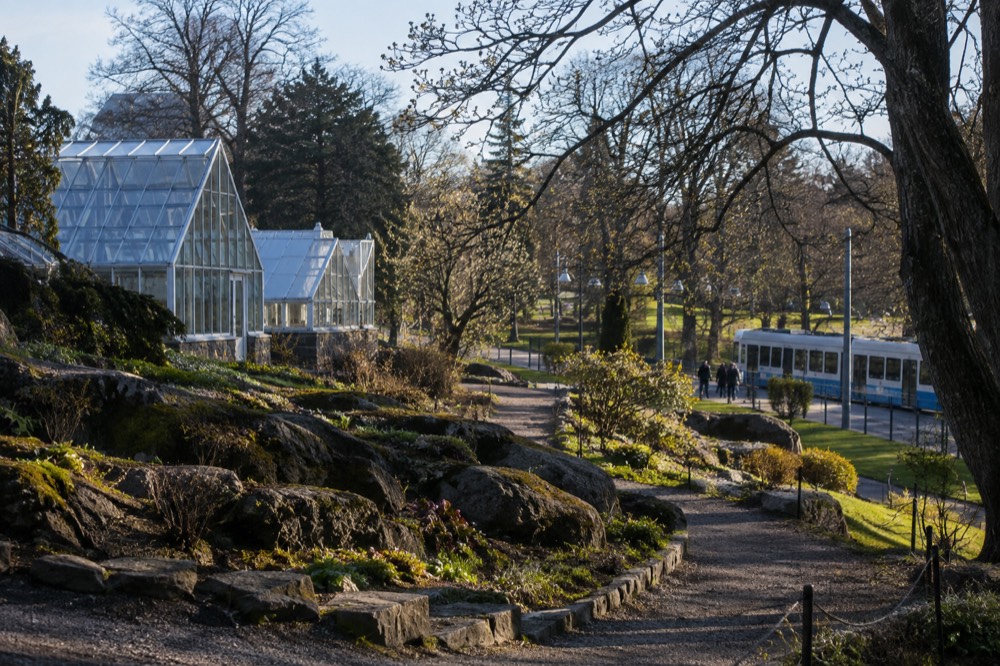
The garden is reached on the city's tram network, the backbone of Gothenburg transport, on an ordinary Västtrafik ticket: a single in Zone A costs 38 kr for an adult and 29 kr for a youth, a 24-hour Zone A ticket costs 125 kr, and the same ticket also covers buses and the southern archipelago ferries, so the garden trip can be folded into a day that ends on an island.
The tram network is the thing that makes Gothenburg easy. Göteborgs Spårvägar's own annual report describes 12 lines, 134 stops and 188 km of single track, running from Mölndal in the south to Angered in the north, from Saltholmen in the west to Kålltorp in the east and across the bridge to Hisingen, figures the report states as of 2022. In 2025 the network carried 126 million journeys, the operator publishes, against a pre-pandemic record of 141 million. A visitor does not need to know any of that to ride, but it explains why the tram is the default answer to almost every "how do I get to" question in this city.
One fare fact deserves care because it is being reported wrongly all over the internet right now. Västtrafik's 30-day period tickets are temporarily halved by a state subsidy, Zone A adult dropping from 890 kr to 445 kr, valid for travel through the end of the year. That subsidy does not cover the 24-hour and 72-hour day tickets a visitor actually buys. The 24-hour Zone A ticket is still 125 kr, in the app or at a shop at the same price. Anyone who writes "transport in Gothenburg is half price" is describing the wrong product.
| Ticket | Adult price | Notes |
|---|---|---|
| Single, 1 zone | 38 kr | Youth 29 kr |
| Single, 2 zones | 76 kr | For trips beyond Zone A |
| 24-hour, Zone A | 125 kr | Same price in app or shop |
| 30-day, Zone A | 445 kr during the temporary subsidy | Normally 890 kr; subsidy runs to year end |
| 30-day youth, Zone A | 335 kr during the subsidy | Normally 670 kr |
Prices are from Västtrafik's own ticket pages at vasttrafik.se. Zone A covers Göteborg, Partille, Mölndal and Öckerö, which means the same ticket that takes you to the garden also takes you to the tram terminus at Saltholmen and onto the archipelago boats, a fact Västtrafik states plainly: you can ride the same ticket all the way from the centre out to sea. Our guide to getting around Gothenburg covers the zone system in full.
When Is the Best Time of Year to Visit the Gothenburg Botanical Garden?
Late April through June is the best window for flowers and the driest weather, and SMHI's own normals show why: April is the driest month of the year in Gothenburg at 51.3 mm of rain across 8.2 wet days, May and June stay comparatively dry, and July peaks at a mean air temperature of 18.3 C, while October, the wettest month at 102.9 mm, is when the rain arrives after the main flowering season has finished.
The flower calendar and the rain calendar are the same calendar here, so it is worth reading the numbers. SMHI's 1991-2020 normals for station Göteborg A give the city 912 mm of precipitation a year spread over 127 days, with a mean annual air temperature of 8.9 C. July is the warmest month at 18.3 C, June sits at 15.7 C, and September at 14.0 C is still pleasant. The wettest month is October at 102.9 mm, and the driest is April at 51.3 mm, which is the opposite of what most visitors assume when they book a Nordic summer trip.
| Month | Mean air temp | Rainfall | Wet days (≥1 mm) | What it means for the garden |
|---|---|---|---|---|
| April | 7.7 C | 51.3 mm | 8.2 | Driest month; spring bulbs and early shrubs |
| May | 12.4 C | 54.3 mm | 8.8 | Peak late-spring planting season |
| June | 15.7 C | 73.7 mm | 10.0 | Longest days; roses beginning |
| July | 18.3 C | 81.3 mm | 9.8 | Warmest month; full summer borders |
| August | 17.7 C | 92.8 mm | 11.9 | High summer colour, more rain |
| September | 14.0 C | 80.0 mm | 10.8 | Late-season interest, quieter paths |
| October | 9.0 C | 102.9 mm | 12.6 | Wettest month; autumn colour begins |
Figures are SMHI 1991-2020 normals, station Göteborg A (71420), published at smhi.se. One myth to kill while we are here: SMHI does not call Gothenburg Sweden's rainiest city. Its own description of the national pattern puts the highest annual precipitation in the western highlands and the mountains, with the wet western Götaland band, where Gothenburg's 912 mm sits, below the true maxima. The cliche is repeated everywhere and the primary source does not support it.
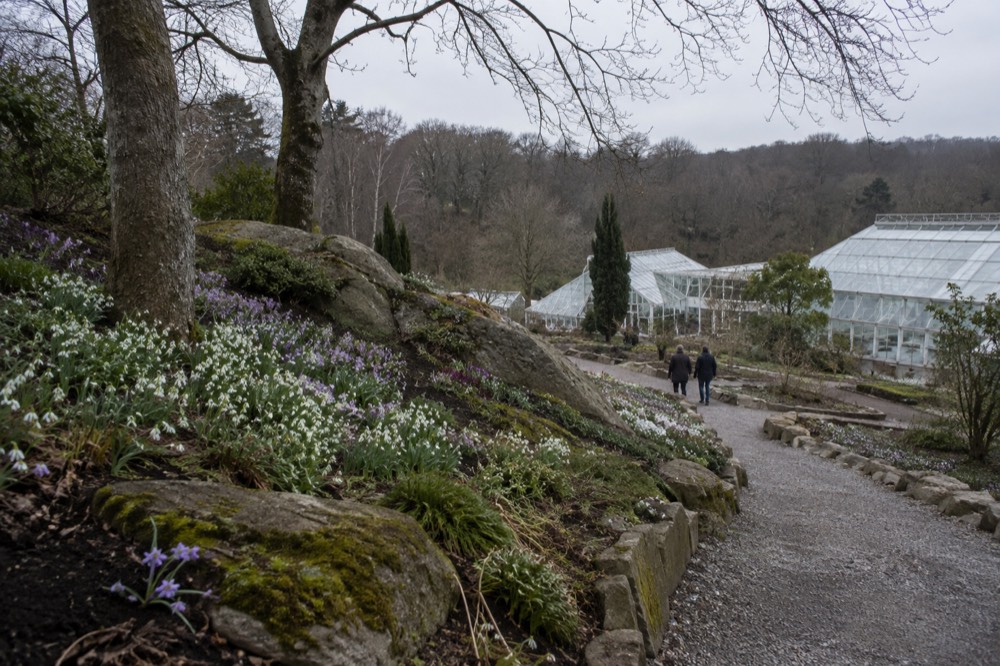
Daylight matters as much as rain for a garden visit, because it sets how long the visit feels. On 21 June, Gothenburg gets 18 hours 6 minutes of daylight, sunrise 04:11 and sunset 22:17, with civil twilight from 02:58 to 23:30, leaving roughly three and a half hours of true night. On 21 December the day shrinks to 6 hours 32 minutes. A June garden visit can start after dinner and still happen in full light; a December one has a narrow grey window between about 08:54 and 15:26. Our guide to daylight and darkness in Gothenburg works through the whole year.
What Can You See Inside the Gothenburg Botanical Garden?
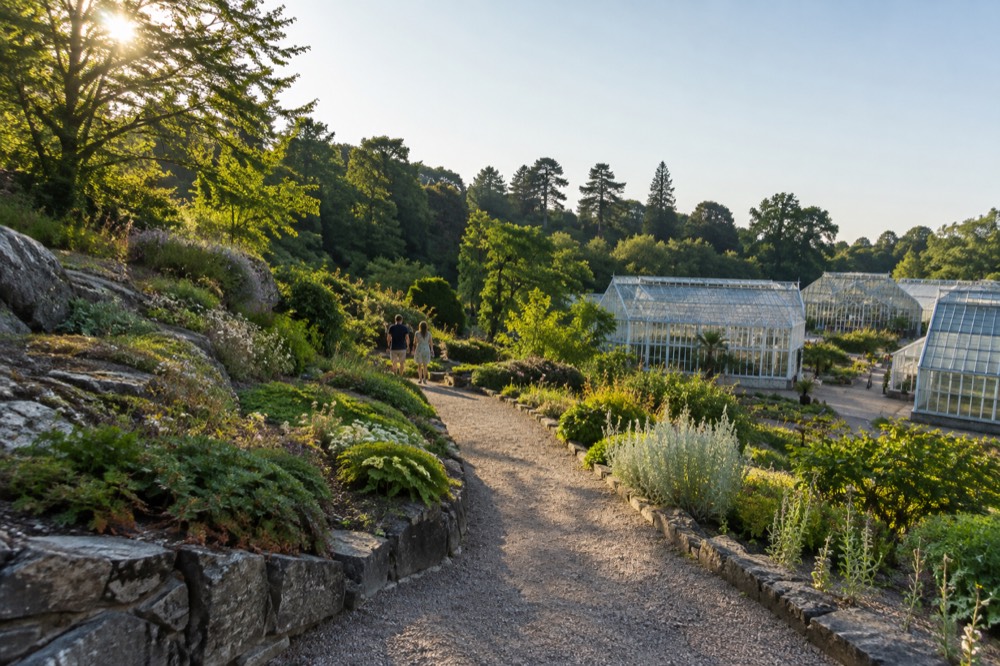
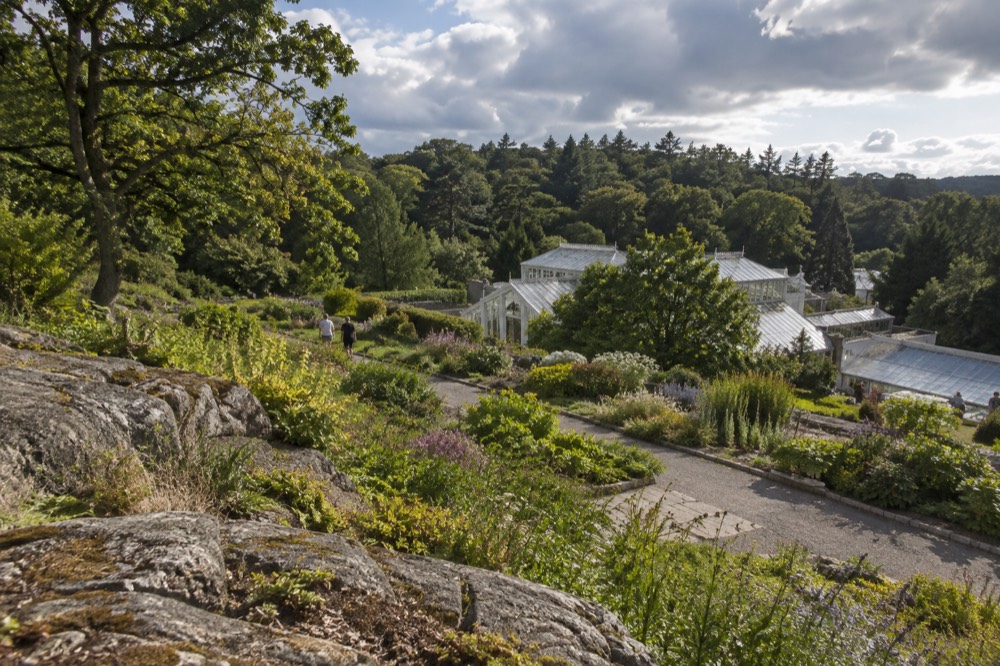
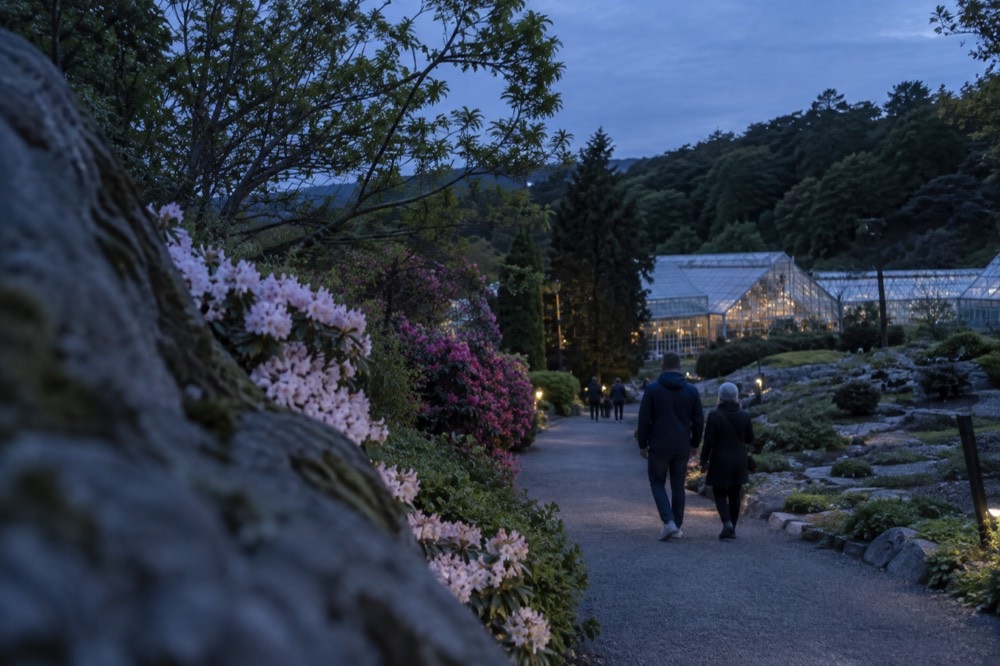
The garden's public grounds combine themed plantings arranged by habitat and region, glasshouse collections for the tender species this latitude cannot keep outdoors, open lawns and a landscape that rolls toward the Slottsskogen parkland, and the garden's own website and on-site signage are the authoritative guides to what is flowering in any given week, because the planting programme changes from year to year.
The structure of a botanical garden, as opposed to a park, is that the collection is the point. Plants are grouped, labelled and recorded, and the visitor experience follows the science. In Gothenburg's case that means the garden works across the whole calendar in a way a flower garden does not: there is structural interest in winter, early bulbs in spring, the full summer display, and autumn colour before the October rains close the season down. The garden's own seasonal pages tell you what is at its best right now, and they are more reliable than any guide, including this one, can be.
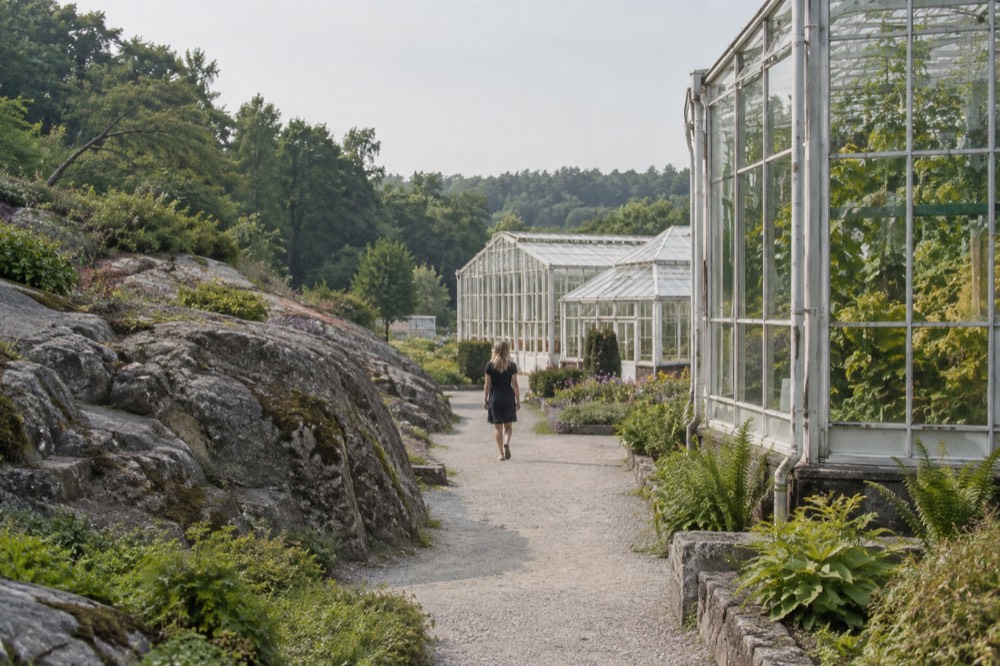
The latitude explains a lot of what you see. At 57.7 N, per SMHI's station record, Gothenburg is level with the northern tip of the British mainland, and the growing season is compressed and intense. The sea nearby runs about six weeks behind the air: SMHI's quality-controlled observations at the Vinga lighthouse station show the water peaking in August at 18.6 C, not July, and September water at 16.7 C is warmer than June water at 16.2 C. That maritime lag keeps the coast mild into autumn, which is one reason the garden holds its late-season interest longer than inland Swedish gardens at the same latitude.
For visitors planning a whole green day, the garden pairs with two other horticultural landmarks in the city. The Garden Society of Gothenburg, Trädgårdsföreningen, is the historic garden in the very centre, a different proposition entirely and walkable from Avenyn. Slottsskogen, next to the botanical garden, adds free animal enclosures and wide parkland. Between them they cover the full range of what Gothenburg does with plants, from the scientific collection to the pleasure garden to the public park.
Is the Gothenburg Botanical Garden Good for Kids and for Slow Travel?
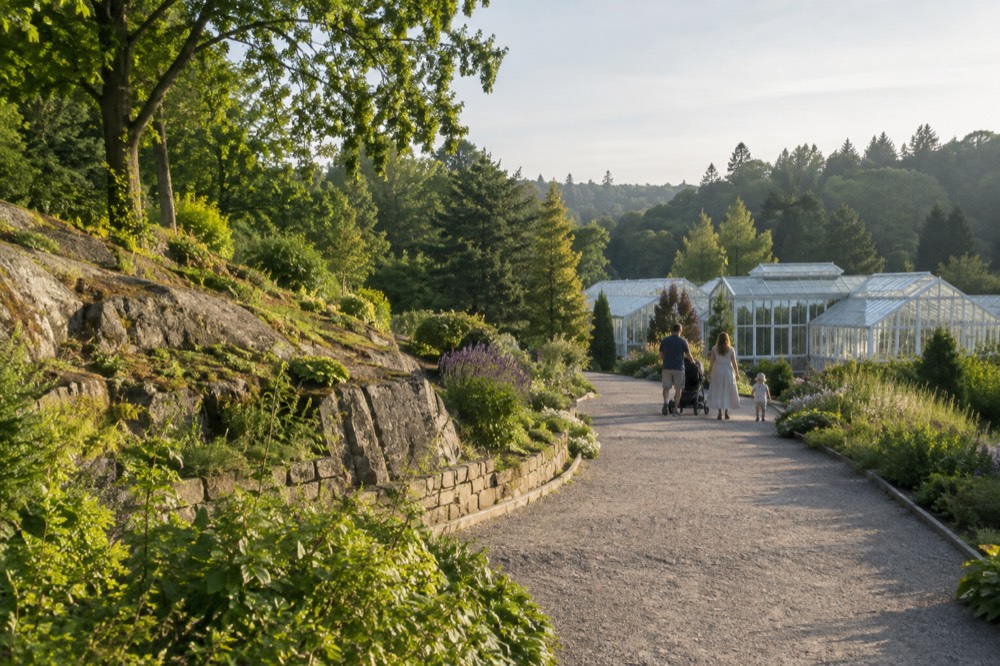
It works well for both, with the caveat that it is a garden rather than a playground: children get space, glasshouses, ducks and picnics rather than rides, and the ground is a mix of gravel paths and lawns that suits prams and slow walking, while the Slottsskogen parkland next door adds a free zoo that does the heavy lifting for younger visitors.
The realistic family itinerary in this corner of the city is a double act. The garden provides the calm hour or two; Slottsskogen provides the animals, the playgrounds and the space to run. Families weighing the garden against the city's headline kid attractions should read our Gothenburg with kids planning page and the Universeum science centre guide, because Universeum is open every day of the year, 10:00 to 18:00 per its own site, and is the obvious rainy-day counterweight to a garden morning.
For visitors who prefer their sightseeing guided, the city has a deep bench. The listing for the Land and Water Amphibious Bus Sightseeing Tour, rated 4.7 from 4,326 reviews and priced from $36 per person, is the one that covers the most ground per hour, driving and floating through the harbour in a single vehicle. It suits the first day of a trip, when the geography is still unmapped in your head, and the garden suits the second or third, once you want to slow down.
Accessibility is worth checking rather than assuming. The garden's own visitor information is the source for current details on path surfaces, wheelchair access to the glasshouses and accessible toilets, and those arrangements change with seasons and works. The city as a whole is covered in our accessible Gothenburg guide, including how the trams handle step-free boarding.
What Else Should You Combine with a Gothenburg Botanical Garden Visit?
The strongest pairing is Slottsskogen itself, immediately adjacent and free, followed by a tram ride to the southern archipelago on the same Zone A ticket, with the city's museum quarter around Götaplatsen as the bad-weather alternative, and the whole set can be planned around a two-day itinerary that puts the garden on the greener of the two days.
Geography makes this easy. The garden and Slottsskogen sit together in the south-west, so one tram trip serves both. From there the same 125 kr 24-hour ticket continues west to Saltholmen, the western terminus of the tram network, where the archipelago ferries leave for Asperö, Brännö, Styrsö, Donsö, Vrångö and Köpstadsö, islands where private cars are banned, per Göteborgs Stad's own study of the southern archipelago. A garden morning and an island afternoon is a genuinely Gothenburg day, and it costs almost nothing beyond the ticket.
| Pairing | Distance and effort | Why it works |
|---|---|---|
| Slottsskogen park and free zoo | Adjacent, walkable | Free animal enclosures and parkland, same tram trip |
| Southern archipelago ferry | Tram to Saltholmen, then boat | Same Zone A ticket; car-free islands |
| Trädgårdsföreningen | Central, near Avenyn | The historic garden, for contrast with the scientific collection |
| Götaplatsen museums | Central | Rainy-day fallback, including the Gothenburg Museum of Art |
| Universeum | Central, near Korsvägen | Every day of the year, 10:00-18:00 |
Two planning notes that save real disappointment. First, if Liseberg is on the list, check the season calendar before you build a day around it: the park runs 18 April to 20 September for summer 2026, then Halloween 2 October to 1 November and Christmas 14 November to 23 December, and it is closed in the gaps, including the whole late-winter stretch. Second, the Gothenburg Museum of Art has a scheduled closure coming: the museum's own rebuild page states it closes in 2028 and reopens in 2032, so visitors planning far ahead should factor that in.
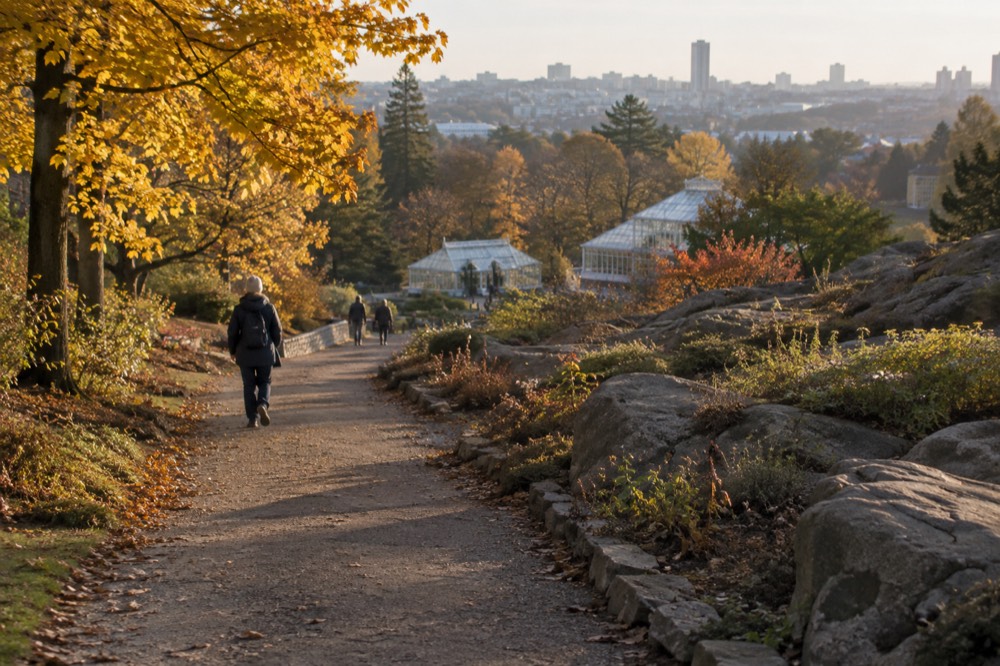
The archipelago option deserves its own paragraph because it is the city's best-value fact. An ordinary Västtrafik ticket covers the ferries, and the islands are in Zone A, so a 24-hour ticket at 125 kr covers tram, ferry and every island in one price. Västtrafik's own network map shows the boats as part of the system alongside trams and buses. Our guide to the Gothenburg archipelago covers the islands in detail, and the guided option, an archipelago cruise with a guide rated 4.4 from 1,488 reviews and priced from $44 per person, suits visitors who want the commentary without the timetable work.
For a full plan, our two days in Gothenburg itinerary puts the green south-west on one day and the harbour and old town on the other, and this site's Gothenburg Travel Guide home page carries the full index of neighbourhood, transport and day-trip pages.
Common Questions About the Gothenburg Botanical Garden
Is the Gothenburg Botanical Garden free?
The garden's public grounds have historically been free to enter, with charges only for special exhibitions, guided tours and events. The garden's own website is the authoritative source for the current arrangement, and this guide does not print an admission figure it cannot verify against a primary source.
How do I get to the Gothenburg Botanical Garden by public transport?
By tram, on an ordinary Västtrafik ticket. A single in Zone A costs 38 kr for an adult, and a 24-hour Zone A ticket costs 125 kr and also covers buses and the southern archipelago ferries. Check the Västtrafik journey planner for the stop that serves the garden entrance on the day you travel.
When is the best month to visit the Gothenburg Botanical Garden?
Late April through June. SMHI's normals show April as the driest month of the year at 51.3 mm of rain, with May and June comparatively dry and July the warmest month at a mean of 18.3 C. October, the wettest month at 102.9 mm, is when the rain returns after the main flowering season.
How long should I spend at the Gothenburg Botanical Garden?
Plan for one to three hours for the garden itself, longer if you add the adjacent Slottsskogen parkland and its free zoo. Visitors combining the garden with an archipelago ferry afternoon can do the whole south-west loop on a single 24-hour Zone A ticket.
Is the Gothenburg Botanical Garden worth visiting in winter?
It is quieter and more limited, but not pointless: the glasshouses hold the tender collections, and the structural plantings and daylight, 6 hours 32 minutes at the winter solstice, set a very Nordic mood. Check the garden's own site for winter opening hours before going.
Can I combine the Gothenburg Botanical Garden with the archipelago?
Yes, easily. The garden, Slottsskogen and the Saltholmen ferry terminal all sit inside Västtrafik Zone A, so one 24-hour ticket at 125 kr covers the tram to the garden, the tram on to Saltholmen and the ferry out to the car-free islands.