Vasastan in Gothenburg: Stone Streets, Squares and Student Cafés
Vasastan is the stone-faced district immediately north of Gothenburg's old town moat, a grid of late 19th-century apartment blocks, leafy squares and the cafés that keep the city's students and office workers caffeinated.
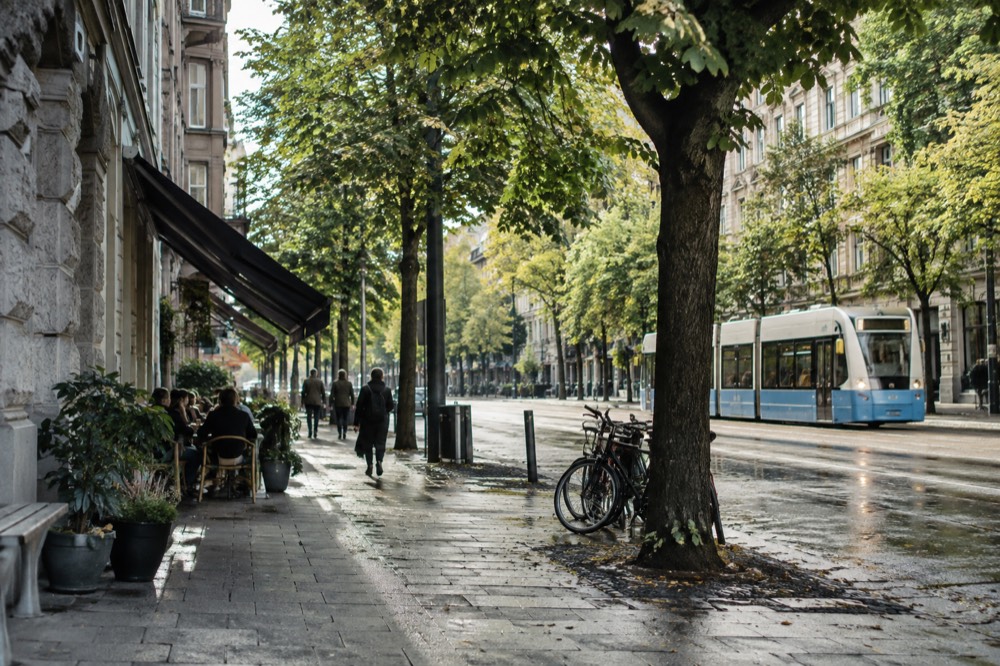
Short answer
Vasastan is Gothenburg's dense stone district north of the Vallgraven moat, centred on Vasagatan and its squares. It is where much of the city's everyday life happens: students from the nearby university buildings fill the cafés, tram lines 2 and 3 run along Vasagatan, and the whole area sits within Västtrafik Zone A, a single 38 kr ticket from anywhere in the centre.
Vasastan is the district that most Gothenburgers actually live in, even if visitors rarely name it. North of the old moat that rings the inner city, the wooden houses of Haga give way to six and seven storey stone blocks, long straight avenues, plane trees and a string of squares: Vasaplatsen, Olivedalsgatan, Linnéplatsen at the western edge. The district takes its name from Vasagatan, the wide avenue that runs east from the moat toward the university and the hospital, and it is the address of a large share of the city's students, which is why the café density here is among the highest in Gothenburg. This guide from Gothenburg Travel Guide covers what the district is, how to get there on the tram network, where the fika culture actually happens, and how the weather shapes a visit.
What Is Vasastan in Gothenburg?
Vasastan is Gothenburg's stone district immediately north of the Vallgraven moat, a late 19th-century grid of tall apartment blocks running from the edge of the old town up toward Linnéplatsen and the university area. Its centre of gravity is Vasagatan, the avenue that gives the district its name, and its daily life runs on cafés, squares and the tram lines that connect it to the rest of the city.
The contrast with its neighbours is the first thing that strikes anyone walking the boundary. To the south and west lies Haga, Gothenburg's wooden old quarter, all low painted timber houses and cobbled lanes. Vasastan is the opposite construction: heavy stone facades, shopfronts at street level, bay windows above, and a rhythm of blocks broken every few hundred metres by a planted square. The district reads as a Nordic version of a central European apartment city, which is exactly what it was built to be when Gothenburg expanded northward in the decades after the old fortified town outgrew its moat.
The residents are the story as much as the architecture. Vasastan sits next to the University of Gothenburg's main cluster of buildings and within easy reach of Chalmers' Johanneberg campus, so the district's cafés, second-hand shops and cheap eateries are shaped by student demand. On a weekday morning the queue at any given bakery on Vasagatan is as likely to be undergraduates as pensioners. Göteborgs Stad's own population reporting puts the city at 613,274 residents at the end of 2025, and a disproportionate share of the young end of that number lives in exactly this kind of inner stone district.
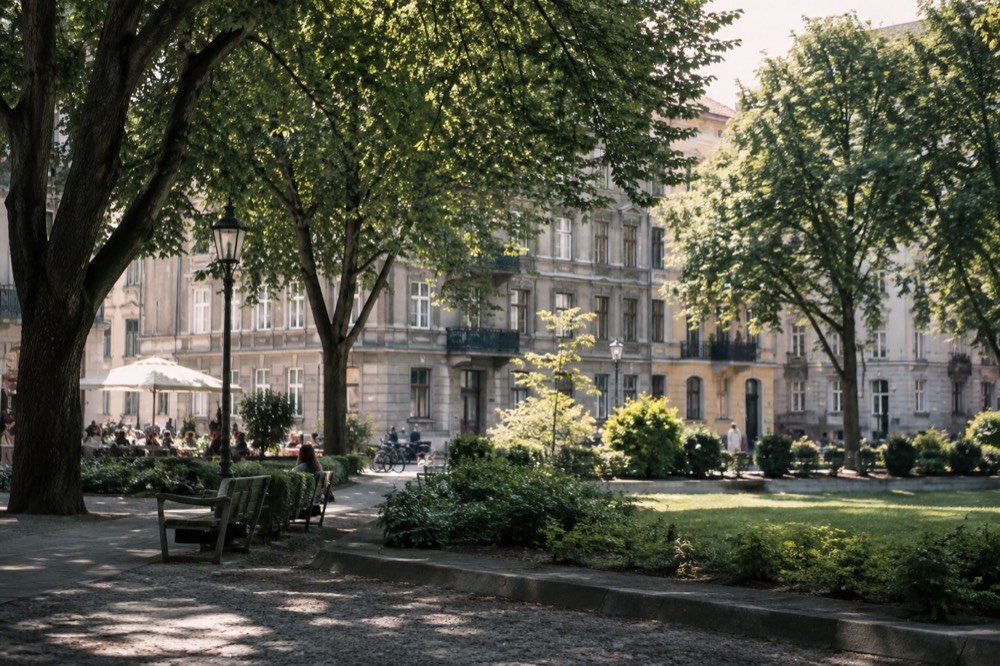
It is also a genuinely central district, not a suburb with a nice name. The walk from Vasaplatsen down Vasagatan to the moat, and across into the old town, takes minutes on foot. The Avenyn and Götaplatsen boulevard begins at the district's eastern edge. That centrality is why Vasastan works as a base: you are inside the walkable city but one street back from the tourist traffic.
How Do You Get to Vasastan and Around It?
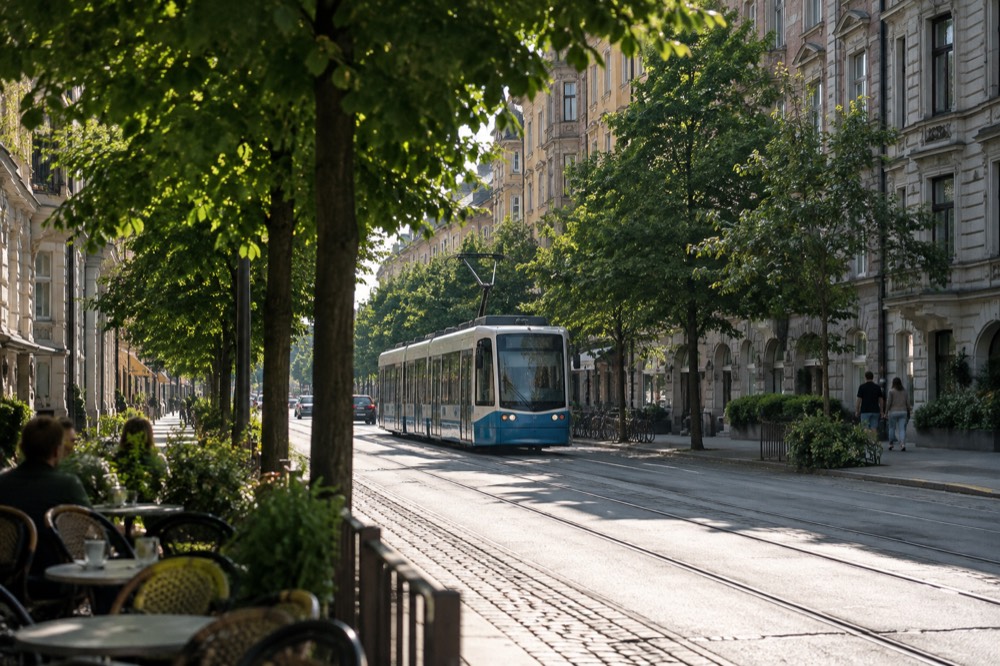
Vasastan sits inside Västtrafik Zone A, the same fare zone as the entire city centre, so a single adult ticket at 38 kr covers a tram ride in, and a 24-hour Zone A ticket at 125 kr covers unlimited trams plus the archipelago ferries from Saltholmen for a full day. Tram stops along Vasagatan and at Vasaplatsen connect the district directly to Göteborg Centralstation, Liseberg and the harbour.
The tram is the backbone of the whole city, and Vasastan is served by it like everywhere else. Göteborgs Spårvägar's own reporting counts 126 million journeys in 2025 across a network that its 2022 annual report describes as twelve lines, 134 stops and 188 kilometres of single track, running from Mölndal in the south to Angered in the north and from Saltholmen in the west to Kålltorp in the east. There is no separate Vasastan ticket or special arrangement: the district is simply part of the ordinary grid, which Västtrafik's own ticket pages lay out zone by zone. If you want the fare detail, our guide to getting around Gothenburg by tram breaks down every ticket type.
One fare fact worth knowing before you buy: Västtrafik's 30-day period tickets are currently halved by a temporary state subsidy, with a Zone A adult monthly falling from 890 kr to 445 kr through the end of the year. That discount does not apply to the 24-hour and 72-hour tickets visitors actually buy. The 24-hour Zone A ticket remains 125 kr, in the app or at a shop at the same price.
| Ticket | Adult price | What it covers | Where it is useful for Vasastan |
|---|---|---|---|
| Single, 1 zone | 38 kr | One journey, Zone A | One-off trips into the centre |
| 24-hour, Zone A | 125 kr | 24 hours of trams, buses and archipelago ferries | A day combining Vasastan with the islands |
| 30-day, Zone A | 445 kr (temporarily halved from 890 kr) | A month of unlimited Zone A travel | Long stays; the cut runs through year end |
If you are arriving from the airport, the district is a short hop from the coach terminus. The Vy flygbussarna airport coach runs Landvetter to Korsvägen and Göteborg C in a stated 20 minutes, and there is no rail link to Landvetter at all, a fact that surprises visitors who assume Sweden's second city has an airport train. Our Landvetter airport transfer guide covers the full comparison.
For seeing the district in context with the rest of the city, a sightseeing tour that passes through the stone streets is a reasonable first-day move, and the three below are the ones that fit Vasastan best.
The amphibious bus tour is the one that actually drives the inner stone districts, including the Vasagatan corridor, before launching into the harbour, which makes it a useful orientation device for a district that is easy to walk but hard to place on a map the first time.
What Are the Best Things to Do in Vasastan?
The main things to do in Vasastan are walking its squares and avenues, taking fika in its student cafés, browsing the second-hand and design shops along its main streets, and using it as a base for the rest of central Gothenburg. Vasaplatsen and the tree-lined cross streets are the district's everyday stage, and everything from the old town to Liseberg sits within one tram ride or a short walk.
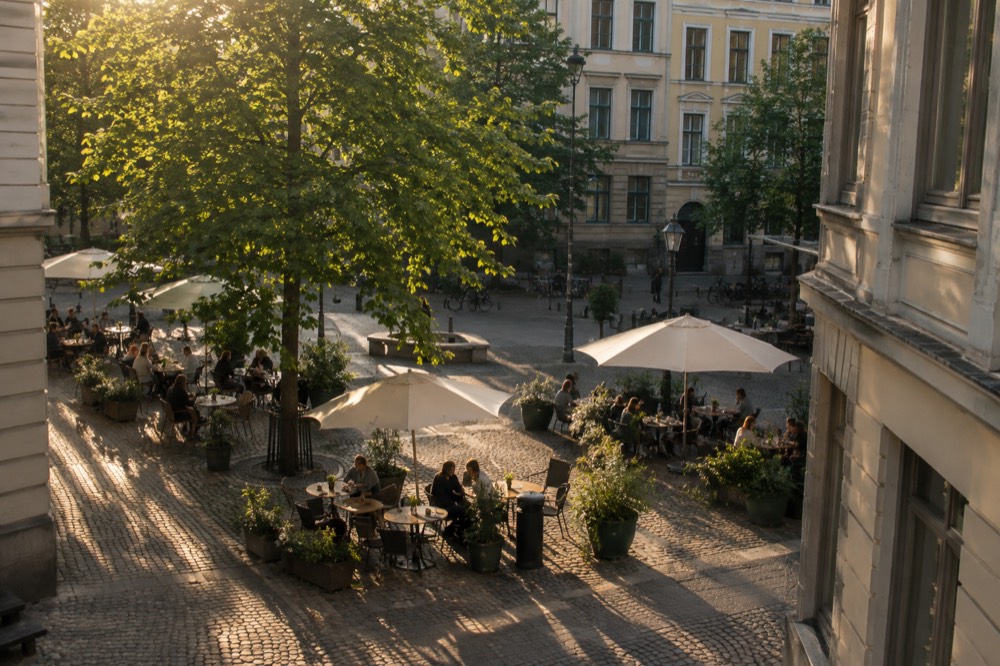
Start with the squares. Vasaplatsen, at the western end of Vasagatan, is the district's most photographed open space, a planted square ringed by café terraces and stone facades, and in warm months it functions as an outdoor living room for the neighbourhood. From there the avenues run in a straight grid, which makes Vasastan one of the easiest parts of Gothenburg to navigate on foot: the streets are numbered, the blocks are regular, and the district's edges are all walkable boundaries, the moat to the south, Linnéplatsen and the Linné and Långgatorna strip to the west, and the hospital and university grounds to the east.
The shopping is low-key and local. Vasastan's shopfronts lean toward second-hand books, small design stores, hairdressers and record shops rather than international chains, a profile that puts it closer in spirit to Majorna's second-hand quarter than to the department-store district around Nordstan. Nothing here is a headline attraction, and that is the point: the district's appeal is density of ordinary life, the thing guidebooks struggle to sell and visitors remember anyway.
From Vasastan the rest of the city opens up quickly. Slottsskogen, the huge free park with its free zoo, begins a walk away beyond Linnéplatsen. The old town and the canal lie across the moat to the south. The southern archipelago ferries are a tram ride west to Saltholmen, covered by the same Zone A ticket you are already holding, which is the single best-value fact in Gothenburg transport: Västtrafik's own network map shows the boats as part of the tram and bus grid, and the islands of Styrsö, Brännö, Vrångö and Donsö are formally areas of the city, not day trips.
If you would rather see the streets from the water than the pavement, the canal cruise is the natural companion to a Vasastan stay.
Where Do Students and Locals Take Fika in Vasastan?
Fika in Vasastan is not a coffee run, it is a seated social ritual with its own grammar: you stop, you sit down, you order something sweet alongside the coffee, and you do it in company. The district's cafés, clustered around Vasaplatsen and the avenues near the university buildings, are among the most natural places in Gothenburg to see the habit practised as locals practise it rather than performed for tourists.
This deserves emphasis because it is the most common mistake English-language guides make. Fika is not "Swedish for coffee break." It is a fixed social institution: the stopping is the point, the pastry is non-negotiable, and doing it alone at a counter with a phone is a different activity entirely. In Haga, visitors do it with giant cinnamon buns, and that neighbourhood is the famous version. Vasastan is the everyday version, the one where the people at the next table are arguing about an exam rather than photographing a bun. Our longer guide to fika in Gothenburg covers the custom, the vocabulary and the etiquette in full.
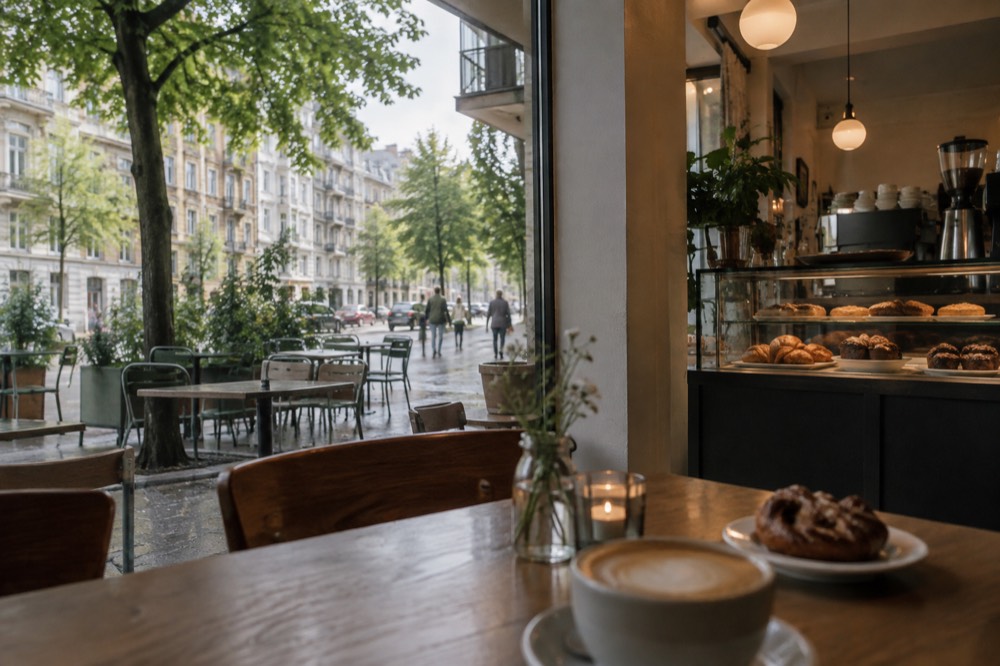
| Fika element | What it actually means in practice | Where it shows up in Vasastan |
|---|---|---|
| The stop | You sit down; takeaway coffee defeats the purpose | Every café on Vasagatan and around Vasaplatsen |
| The sweet thing | A cinnamon bun, cardamom roll or seasonal pastry, ordered with the coffee | Bakery counters throughout the district |
| The company | Fika is social; solo fika exists but is not the default form | Students from the nearby university buildings |
| The timing | Mid-morning and mid-afternoon are the real fika windows | Terraces fill around 10am and again around 3pm |
Because the district borders the university's main buildings, the cafés here price and schedule for students, which in practice means all-day opening, generous seating and refill culture. Prices for a bun and coffee vary by café, so check the board rather than trusting a figure from a guide, but the range is generally lower than the tourist-facing cafés of Haga or the harbour.
What Does Vasastan Look Like Through the Year?
Vasastan's year is shaped by a 912 mm rainfall normal spread across 127 wet days, an October wet-season peak of 102.9 mm and a dry April window of 51.3 mm, plus a daylight swing from 6 hours 32 minutes in December to 18 hours 6 minutes in June. The stone grid is at its best in the dry spring and the long-light summer, and at its most atmospheric, if wettest, in October.
The weather data matters more here than in most districts because Vasastan is an outdoor life district: its squares, terraces and café pavements are the point, and they change character completely with the season. SMHI's 1991-2020 normals for station Göteborg A put the city at 912 mm of precipitation a year across 127 days with at least a millimetre, roughly one day in three, and SMHI's open climate data publishes the full monthly series behind those figures. The wettest month is October at 102.9 mm and the driest is April at 51.3 mm, which is the opposite of what most visitors assume: spring, not summer, is the dry window, and the serious rain arrives after the tourist season ends.
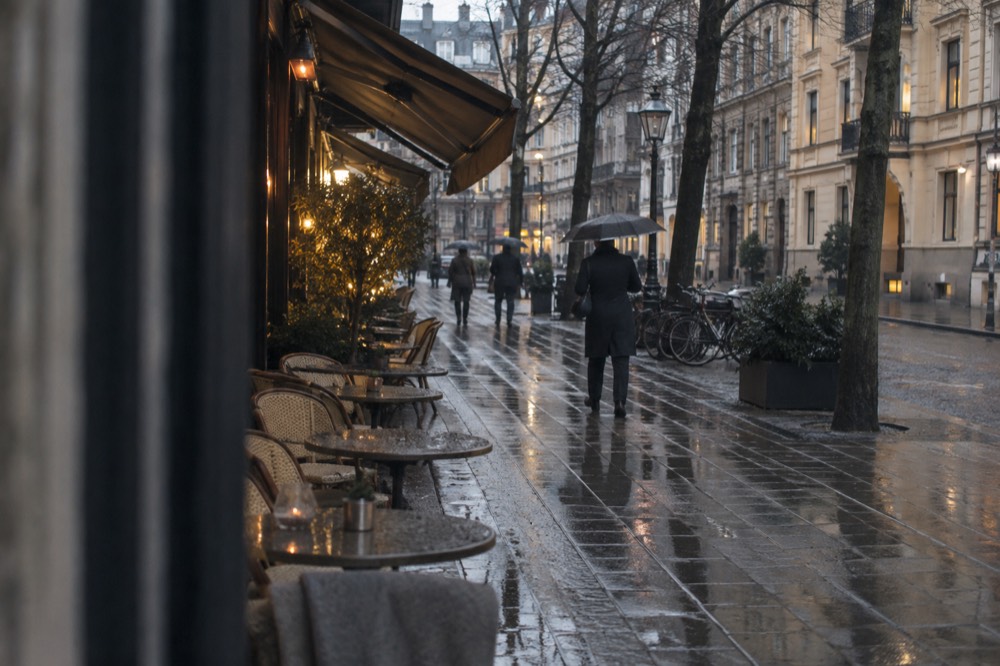
One myth to kill while we are here: Gothenburg is not Sweden's rainiest city, and SMHI's own climate pages do not say so. The national precipitation maxima are in the western highlands and the mountain areas, which run above 1,000 mm a year; Gothenburg's 912 mm sits inside the wet western Götaland band but is nowhere near the top. The city's rainy reputation is a cliché that the data does not support.
| Month | Rainfall (mm) | Wet days (≥1 mm) | Mean air temp (°C) | What Vasastan feels like |
|---|---|---|---|---|
| January | 83.0 | 11.5 | 0.8 | Grey light, café interiors |
| April | 51.3 | 8.2 | 7.7 | The driest month; terraces opening |
| July | 81.3 | 9.8 | 18.3 | Peak warmth; squares in full use |
| October | 102.9 | 12.6 | 9.0 | The wettest month; indoor fika |
| December | 93.0 | 13.3 | 2.1 | 6 h 32 m of daylight; candle-lit cafés |
Daylight is the other seasonal fact that changes the district beyond recognition. On 21 June the sun is up from 04:11 to 22:17, 18 hours 6 minutes, and civil twilight extends that so only about three and a half hours of true night exist. On 21 December the day runs 08:54 to 15:26, six hours 32 minutes. A June evening on Vasaplatsen and a December afternoon on the same square are effectively different places. Our guide to the best time to visit Gothenburg works through the trade-offs month by month.
Where Should You Eat and Drink in and Around Vasastan?
Vasastan's food scene runs on inexpensive, student-priced everyday eating, café bakeries, and a spread of small restaurants along the avenues between Vasaplatsen and the moat, with the heavier concentration of destination dining sitting just outside the district's edges around Linnégatan and the old town. Inside the district the reliable bets are the bakeries and the neighbourhood bistros; the famous food halls are a short walk away.
The district's own strength is the everyday tier. Because the customer base is students and residents rather than visitors, the food along Vasagatan skews toward value: pizza places, noodle bars, kebab joints, bagel cafés and the bakeries that supply the fika habit. For anything specific, treat prices as check-the-board facts, since café and restaurant pricing in Gothenburg moves with the season and no guide figure stays true for long.
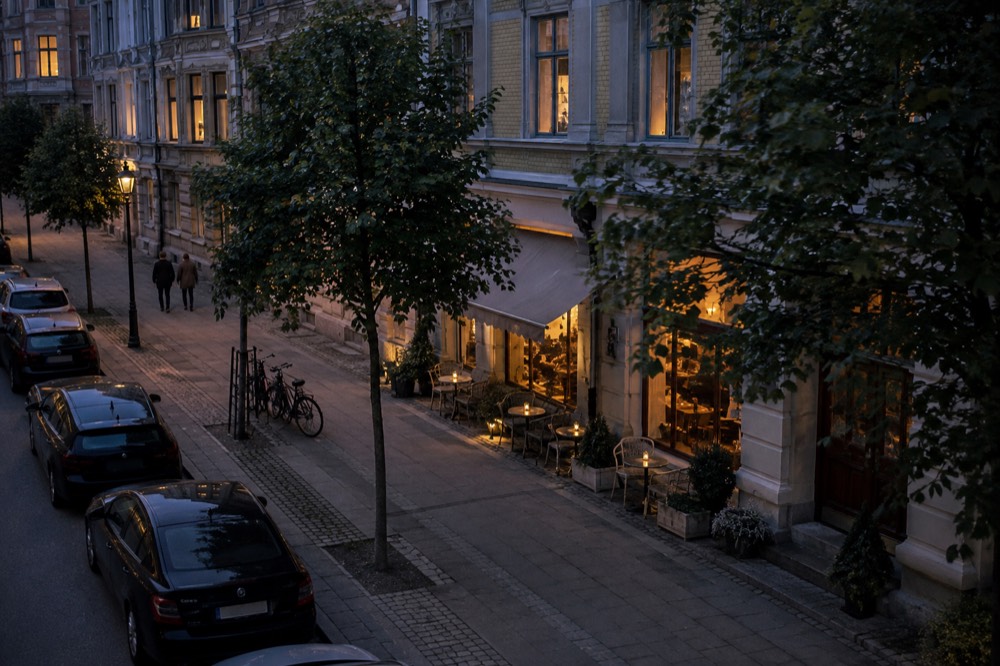
Two verified rules shape drinking here. Beer at or below 3.5% ABV, the category Swedish law calls folköl, is sold in ordinary supermarkets; anything stronger, along with all wine and spirits, is sold only by Systembolaget, the state monopoly, under Alkohollag (2010:1622), the statute published in full on the Riksdag's law database. So the corner shop on a Vasastan block can legally sell you a 3.5% can and nothing stronger, and the supermarket version of a familiar beer brand is often a reformulated 3.5% variant of the same beer. That is why the shelf tastes weaker than the label suggests. Systembolaget's exact hours vary by store, so check the specific branch rather than a general figure.
For the destination tier, walk. The Linnégatan and Långgatorna restaurant strip at the district's western edge is one of the city's densest bar and restaurant runs, and the old town across the moat holds the seafood weight, including Feskekôrka, the fish church, which reopened in 2024 as a food hall with five restaurants alongside its two fish counters rather than the fish-counter-only market of older guidebooks. Our where to eat in Gothenburg guide maps the full picture.
A food walk is also a structured way to eat your way outward from the district, and the guided options below cover the city's food and neighbourhood culture.
Is Vasastan a Good Base for a Gothenburg Trip?
Vasastan is one of the strongest bases in Gothenburg for a first or repeat visit, because it places you inside the walkable inner city within Zone A, one tram ride or a short walk from the old town, Slottsskogen, Liseberg and the archipelago ferries, at hotel and apartment prices generally below the harbourfront and Avenyn. The trade-off is that it is a residential district: the atmosphere is everyday rather than scenic.
The arithmetic is simple. From a Vasastan address, the old town is across the moat, the botanical and park belt begins at Linnéplatsen, and the tram that stops on your street is the same tram that serves the whole city on the same ticket. A 24-hour Zone A ticket at 125 kr covers the trams and, on the same ticket, the ferries from Saltholmen out to the car-free southern islands, where private cars are banned under the city's own protection rules. Few districts in any Nordic city put that much within a single fare zone of the front door.
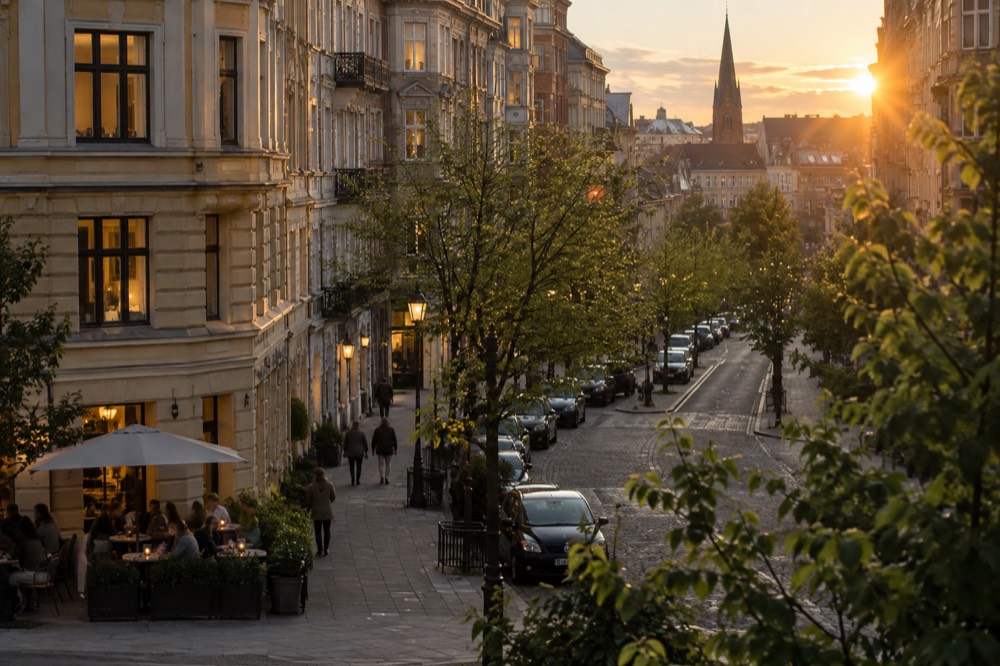
For choosing between districts, the honest comparison is with Haga for atmosphere, Avenyn for hotels and nightlife, and Lindholmen and the Hisingen waterfront for a quieter, more modern base across the river. Our where to stay in Gothenburg guide does that comparison properly. If you are building an itinerary around a Vasastan base, the two days in Gothenburg and three days in Gothenburg plans both assume this kind of central starting point.
One last orientation option: the amphibious bus tour remains the fastest way to see how Vasastan connects to the moat, the harbour and the islands in a single loop, and it is the tour we would point a first-time visitor staying in this district toward.
And if you want the district's street-level texture explained by someone who lives in the city, a walk with a native Gothenburger covers the stone quarters on foot.
Common Questions About Vasastan in Gothenburg
What is Vasastan in Gothenburg?
Vasastan is the stone district immediately north of the old town moat, a grid of late 19th-century apartment blocks centred on Vasagatan and its squares, notably Vasaplatsen. It is a residential, student-heavy area full of cafés rather than a sightseeing district.
How do I get to Vasastan on public transport?
Vasastan is inside Västtrafik Zone A. Trams run along and across Vasagatan, and a single adult ticket costs 38 kr. A 24-hour Zone A ticket at 125 kr also covers the southern archipelago ferries from Saltholmen.
Is Vasastan walkable from Gothenburg city centre?
Yes. The district begins directly across the Vallgraven moat from the old town, and the walk from Vasaplatsen to the central station area is short. The whole inner city, including Vasastan, is one of the most walkable urban cores in Scandinavia.
Where is the best fika in Vasastan?
The cafés around Vasaplatsen and along Vasagatan are the district's fika core, and they serve a mostly local, student crowd. Fika itself is a seated social ritual with a pastry, not a takeaway coffee, so pick a café with tables and give it half an hour.
Does it rain a lot in Vasastan?
Gothenburg records 912 mm of rain a year across about 127 wet days, per SMHI's 1991-2020 normals. October is the wettest month at 102.9 mm and April the driest at 51.3 mm. The city is not, despite its reputation, Sweden's rainiest.
Is Vasastan a good place to stay in Gothenburg?
Yes, for most visitors. It is central, inside Zone A, within walking distance of the old town and Slottsskogen, and generally cheaper than the harbourfront. The trade-off is a residential, everyday atmosphere rather than postcard scenery.