Gothenburg Cathedral and Inom Vallgraven: The Old Town Inside the Moat
Inom Vallgraven is the quarter inside the old city moat, the grid the Dutch engineers drew in the seventeenth century, and Gothenburg Cathedral, the Gustavi domkyrka, stands at its heart. This is the compact, walkable core most visitors cross without realising it has a name.
Short answer
Inom Vallgraven is Gothenburg's old town, the area inside the former defensive moat, laid out on a grid by Dutch engineers in the 1600s. Gothenburg Cathedral, properly the Gustavi domkyrka, is the Church of Sweden cathedral on the quarter's main square. Both sit inside Västtrafik Zone A, a few minutes' walk from Göteborg Centralstation, and the whole quarter takes about an hour to walk.
Gothenburg began as a fortified trading town at the mouth of the Göta älv, and the shape of that first town still dictates how the city centre feels today. Dutch engineers, hired for their experience with water and low-lying ground, laid the streets out inside a moat on a regular grid, with the cathedral lot reserved on the main square from the very first plan. The moat survives on three sides as the canal you now see along Vallgraven, and the quarter inside it, Inom Vallgraven, remains the tight, walkable core where almost every visitor ends up within an hour of arriving.
This guide covers the quarter and the cathedral together, because you cannot really do one without the other. The Gustavi domkyrka is the anchor at the centre of the grid, and everything else in Inom Vallgraven, the saluhall, the department stores, the surviving older houses, the canal boats, sits within a ten-minute walk of its steps. Practical detail on tickets, tours and transport is drawn from Västtrafik's published fare pages and the operators' own listings, and where a figure is not published, this page says so rather than guessing it.
What Is Inom Vallgraven in Gothenburg?
Inom Vallgraven is Gothenburg's original town, the grid of streets laid out inside a defensive moat by Dutch engineers in the seventeenth century, on the north bank of the Göta älv. The name simply means "inside the moat," and the moat still exists as the canal that loops around the quarter's north and east sides. It is the smallest of the central districts and the one that contains the cathedral, the main shopping streets and the oldest surviving building fabric in the city.
The plan was rational in a way that still shows. Streets run on a grid between the river and the moat, sized for a walled town rather than a modern city, which is why the blocks feel compact and the walking distances short. Göteborgs Stad's own heritage pages describe the quarter as the city's historic core, and the surviving fortifications at either end of the moat, Skansen Kronan on the hill and the Kronhuset block in the north of the quarter, mark the footprint of the original defences. The hilltop forts are covered in their own guide on this site.
What surprises many first-time visitors is how much of Inom Vallgraven is not picturesque. The quarter took heavy rebuilding over the centuries, and large parts of it are now department stores, banks and offices around Nordstan and Kungsgatan. The genuinely old fabric survives in pockets: the Kronhuset area around the cannon foundry, the cathedral block, and stretches of Köpmansgatan and Västra Hamngatan. The reward of walking the quarter is finding those pockets rather than expecting a uniform old town like Stockholm's Gamla Stan.
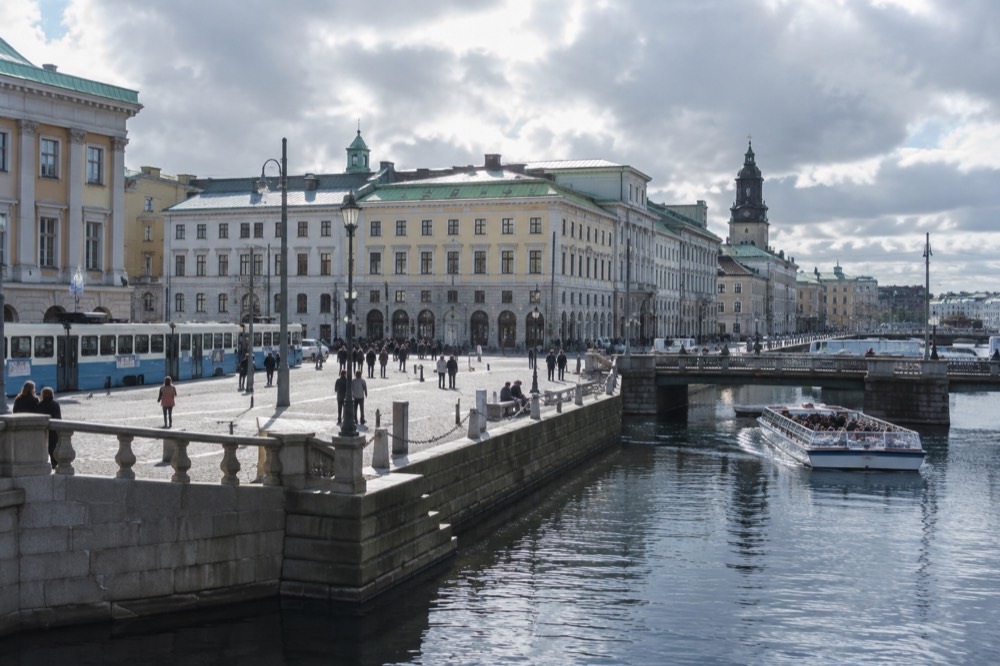
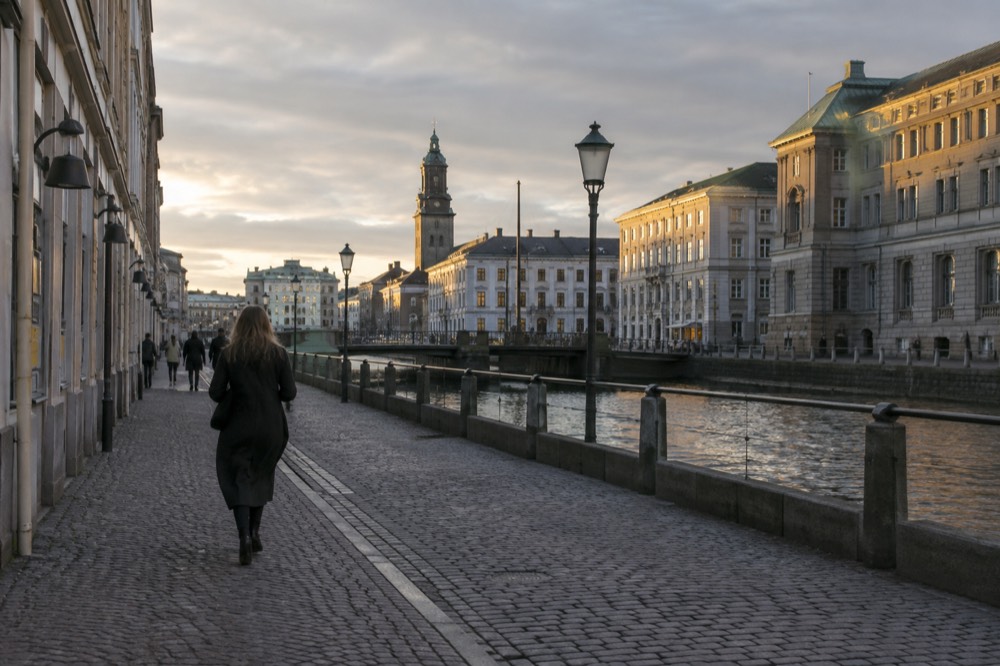
The moat itself has become an attraction in its own right. The Paddan sightseeing boats run through it, and the canal route is one of the most popular ways to see the quarter's outline from the water. You can also just walk the canal path, which takes about half an hour end to end and connects the quarter to Trädgårdsföreningen, the Garden Society park, on the far side.
| Part of Inom Vallgraven | What you find there | Time to allow |
|---|---|---|
| Cathedral block and Domkyrkoplan | Gustavi domkyrka, the cathedral square | About half an hour |
| Kronhuset block | The city's oldest surviving building cluster, craft shops, café | About an hour |
| Kungsgatan and Nordstan | Main shopping street and indoor mall | As long as you like |
| Köpmansgatan | Older commercial buildings, the saluhall nearby | About half an hour |
| The moat canal and Rosenlund | Canal-side walk, Paddan boat departure point | About an hour |
What Is Gothenburg Cathedral and When Can You Visit?
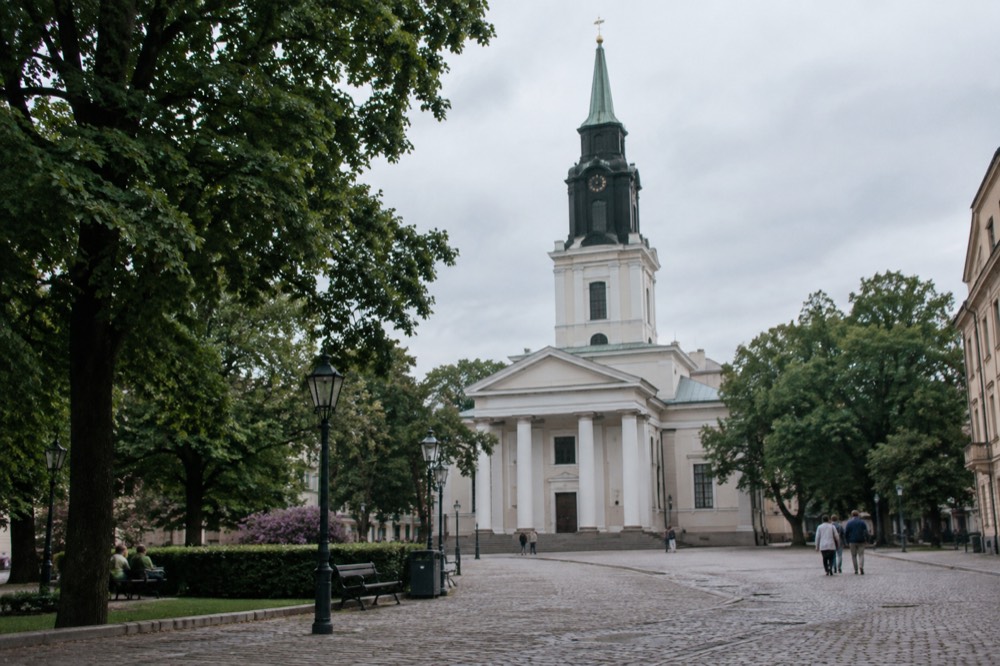
Gothenburg Cathedral, properly named the Gustavi domkyrka, is the Church of Sweden cathedral on the main square in Inom Vallgraven, a tall classical stone building with a stepped tower and a bright, columned interior. It is the seat of the Gothenburg diocese and one of the few buildings in the quarter that has stood on its current site since the original town plan. It is free to enter, open daily around midday hours, and it functions as a working parish church rather than a ticketed attraction.
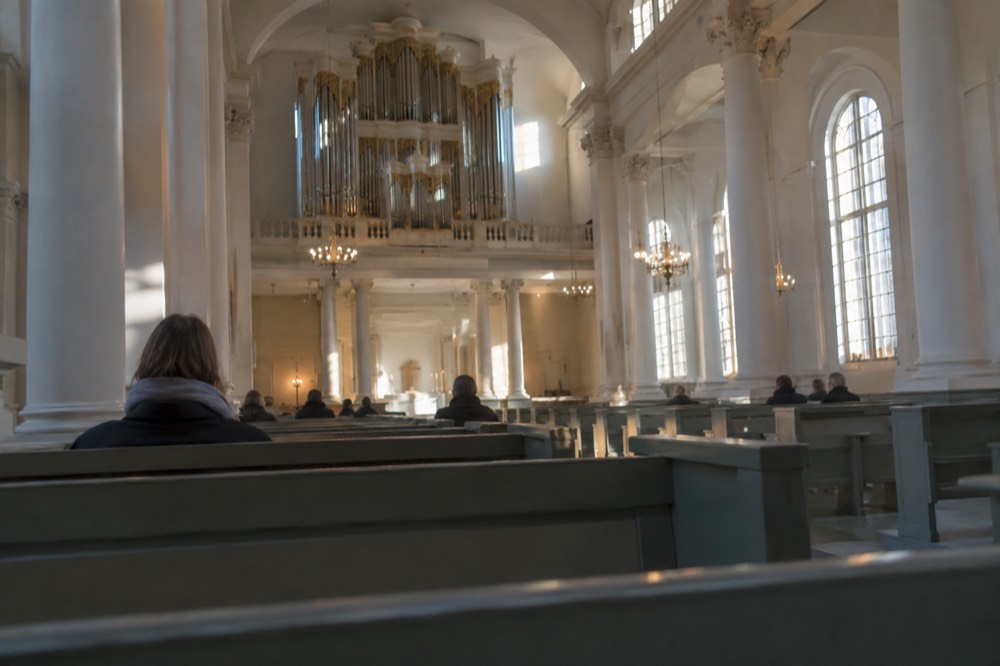
The building you see is the third church on the site. Two earlier cathedrals burned, a familiar story in a town once built largely of timber, and the present building was completed after the great fire of the early nineteenth century. Because this site does not publish a confirmed architect or a single verified completion date in its facts pack, this guide will not print one; the cathedral's own pages at svenskaakyrkan.se carry the full history for readers who want it. What matters for a visit is simpler: it is big, white, classically proportioned, and the interior is a wide, light hall with a gallery and a large organ rather than the medieval gloom many visitors expect from "cathedral."
Opening hours follow the typical Swedish church pattern: generally open daily with a midday window, and often extended for concerts and services. Because hours shift with the church calendar, treat any window as approximate and check the cathedral's own site before a dedicated trip. Entry is free, as it is in the Church of Sweden's city churches, and photography is generally permitted outside services. The square outside, Domkyrkoplan, is one of the few open spaces in the grid and a good place to pause.
The cathedral sits within easy reach of several of the city's major museums, which makes it a natural first stop on a museum day. The Gothenburg City Museum is a short walk away across the canal, the museum of art is up the avenue at Götaplatsen, and the floating ship museum Maritiman sits by the harbour. None of these are more than fifteen minutes on foot or one tram stop.
If you would rather have someone walk the old core with you, the guided options are among the best-value in the city. The Haga Old Town Walking Tour is the closest fit for this area: the listing describes a 1.5-hour guided walk rated 4.6 from 248 reviews, starting from $52 per person, covering the wooden quarter immediately uphill from the moat. Check availability to see current departure times.
The listing below gathers the three tours that fit this quarter best, from the Haga walk to a short old-town circuit and the amphibious bus that drives the streets and then floats the moat.
How Long Does It Take to Walk Inom Vallgraven?
The full circuit of Inom Vallgraven, from the cathedral square to Kronhuset, down Köpmansgatan to the moat and back along the canal, takes about an hour of steady walking, or half a day if you stop at the saluhall, the cathedral and the craft shops around Kronhuset. The quarter is only a few blocks from corner to corner, so nothing inside it is more than ten minutes from anything else. Add a Paddan canal boat, an hour, and you have a complete morning.
The natural route starts at Brunnsparken, the tram hub on the moat's east corner, and works inward. From there, Södra Hamngatan runs straight to the cathedral square, passing the saluhall, the indoor market hall, on the way. After the cathedral, the route continues north through the Kronhuset block, where the city's oldest surviving buildings cluster around the old cannon foundry, now craft workshops and a café. The return leg follows the moat canal west and south to Rosenlund and the Feskekôrka fish church, which reopened in 2024 as a food hall with five restaurants alongside its two fish counters, a change most older guides have not caught up with.
For orientation, a guided walk does the same ground with the stories attached. The Old Town Sightseeing Tour is a 40-minute guided tour from $16 per person, rated 4.6 from 200 reviews, and the amphibious bus tour, which drives the streets and then enters the water along the moat route, runs an hour from $36 per person and carries a 4.7 rating from 4,326 reviews, one of the most-reviewed listings in the city.
What Is Near the Cathedral in Gothenburg?
Within ten minutes' walk of the cathedral you reach the City Museum, the saluhall market hall, the Kronhuset craft block, the Feskekôrka food hall, the Paddan boat departure point at Rosenlund, and the main shopping streets around Kungsgatan and Nordstan. The avenue district and Götaplatsen begin at the moat's south-east corner, and Haga's wooden houses start a short climb uphill to the west. The cathedral is effectively the centre point of every walkable thing in central Gothenburg.
This density is the argument for basing yourself near the quarter. The where to stay in Gothenburg guide on this site breaks the districts down, but the short version is that hotels around the moat put the cathedral, the museums and the tram interchange all within a few blocks, and the two-day itinerary on this site routes day one almost entirely through Inom Vallgraven and its edges.
| Attraction | Direction from the cathedral | Realistic walk |
|---|---|---|
| Gothenburg City Museum | Across the moat, north-east | 6 min |
| Saluhallen market hall | South along Södra Hamngatan | 4 min |
| Kronhuset block | North through the grid | 5 min |
| Feskekôrka food hall | South-west at Rosenlund | 8 min |
| Paddan boat departure | At Rosenlund, on the moat | 8 min |
| Haga wooden quarter | Uphill to the west | 10 min |
| Trädgårdsföreningen park | Across the moat, east | 10 min |
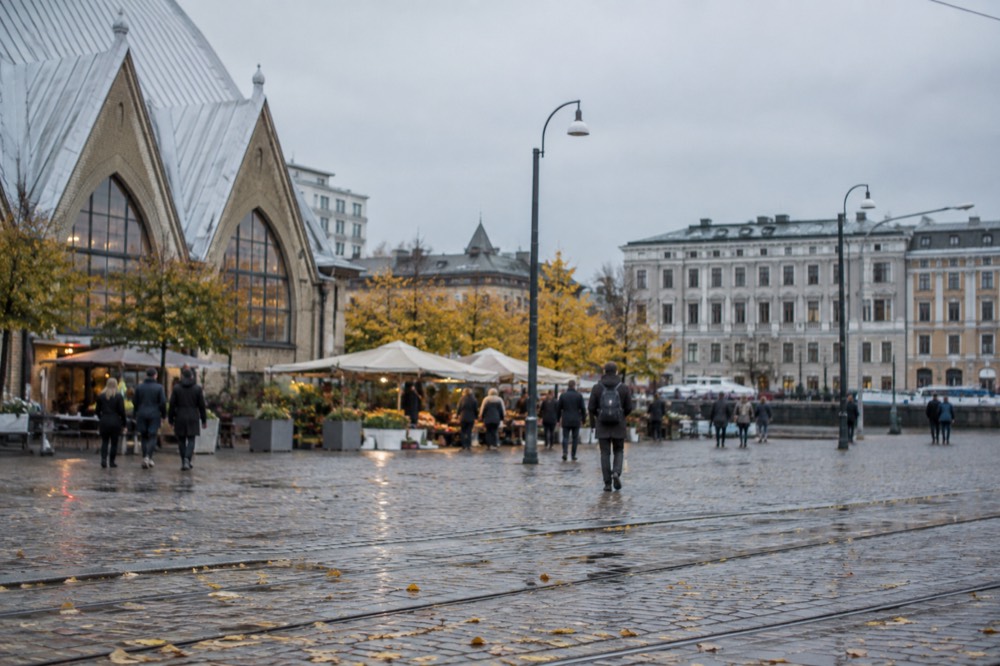
Food in and around the quarter deserves a paragraph of its own. The where to eat and fika guides cover the city in depth, but inside the moat itself the options cluster around the saluhall, the cathedral square's cafés, and the food halls at either end of Köpmansgatan. Feskekôrka's restaurant line-up changes seasonally, and one of its five restaurants, Lilla Åstol, closes over winter by its own notice, so treat the food hall as a daytime-to-evening option that thins out in the cold months.
When Is the Best Time to Visit the Old Town?
April and May are the driest months to walk Inom Vallgraven, with SMHI's 1991-2020 normals showing April as the year's driest month at 51.3 mm of rain across just 8.2 wet days, while October is the wettest at 102.9 mm. Summer brings the crowds and the longest days, up to 18 hours 06 minutes of daylight on 21 June, but December's 6 hours 32 minutes and the Christmas market season give the quarter a completely different, darker character.
The rainfall numbers matter more here than in most cities because the quarter's main attractions are outdoors. Gothenburg records 912 mm of precipitation across 127 wet days a year, roughly one day in three, at station Göteborg A per SMHI's published normals. That is wet, but it is not the permanent drizzle of the city's reputation, and SMHI's own national summary does not identify Gothenburg as Sweden's rainiest city; the national maxima sit in the western highlands and the mountains. The rainy-day fallbacks are unusually well supplied here: the saluhall, the City Museum, the Nordstan mall and the cathedral are all indoor, and the best time to visit guide ranks the months in full.
| Month | Rain, mm | Wet days (≥1 mm) | Daylight feel |
|---|---|---|---|
| January | 83.0 | 11.5 | Short days, 6-7 h light |
| April | 51.3 | 8.2 | Driest month, lengthening fast |
| July | 81.3 | 9.8 | Warmest air, 18.3 C mean |
| September | 80.0 | 10.8 | Sea still 16.7 C, quiet |
| October | 102.9 | 12.6 | Wettest month |
| December | 93.0 | 13.3 | 6 h 32 m on the solstice |
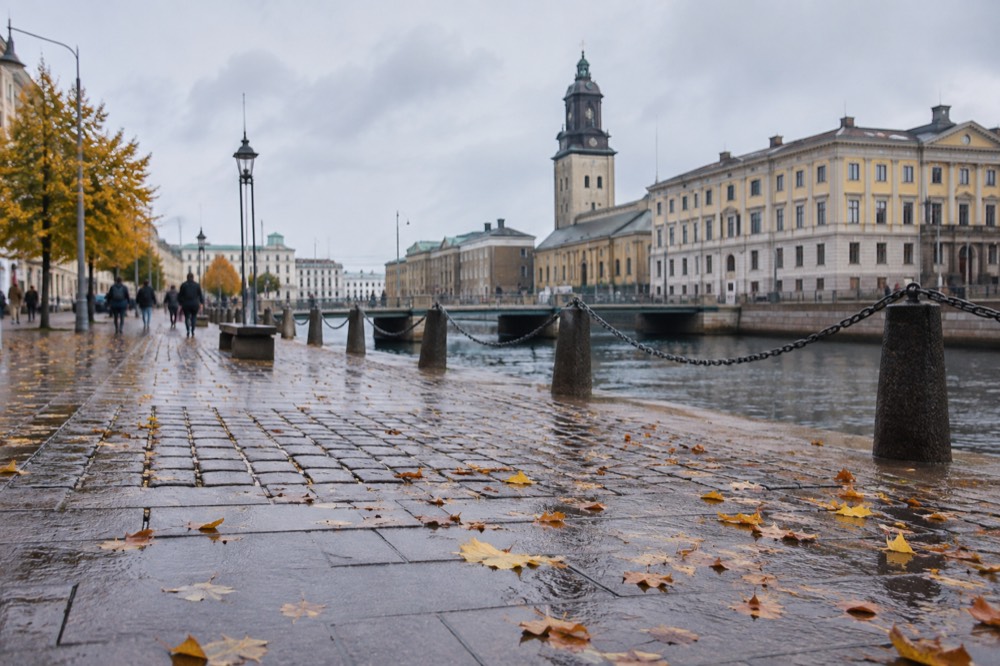
One seasonal note that catches visitors out: Gothenburg's biggest attraction, Liseberg, keeps an irregular calendar, and the Liseberg season dates show the park closed for long stretches outside summer, Halloween and Christmas. If your trip is built around the amusement park as well as the old town, check those dates before booking, because a late-January visitor finds Liseberg shut and the cathedral one of the few major buildings open.
How Do You Get to the Cathedral by Tram?
The cathedral is a five-minute walk from Brunnsparken, the busiest tram interchange in the city centre, and about ten minutes from Göteborg Centralstation on foot, all inside Västtrafik Zone A where a single adult ticket costs 38 kr and a 24-hour ticket 125 kr. The trams that stop at Brunnsparken and Drottningtorget serve the whole network, and the central station connects to the airport coach at the Nils Ericson Terminal. No ticket is checked on board, you buy before boarding in the app or a shop.
Payment is the thing visitors most often get wrong. Västtrafik tickets are bought in advance, in the Västtrafik To Go app, at ticket machines or at retailers, and validators on the tram stamp the ticket when you board. There is no tapping out. The trams, tickets and zones guide on this site covers the system in full, including the temporary state subsidy that currently halves 30-day period tickets, a cut that does not apply to the 24-hour and 72-hour tickets visitors actually buy. The 125 kr day-ticket price is published on Västtrafik's own Zone A ticket page.
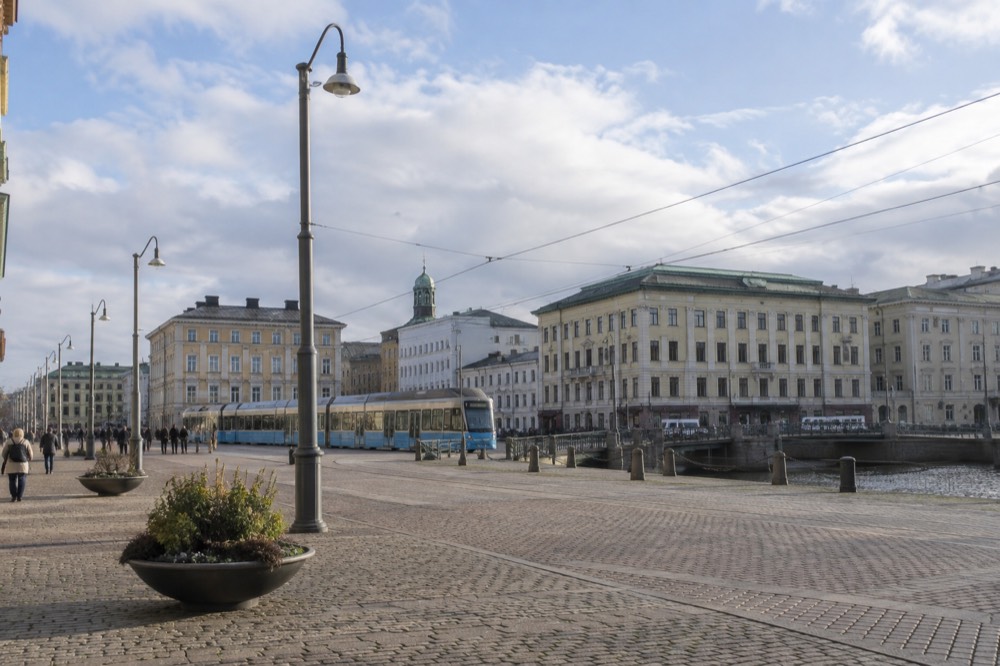
From the airport, the route is simple. Landvetter has no rail link, and the airport coach, now branded Vy flygbussarna, runs Landvetter to Korsvägen to Göteborg C in a journey Swedavia states takes 20 minutes. From the Nils Ericson Terminal it is a straight walk down to the moat and into the quarter. The airport to city centre guide compares the coach, bus and taxi options with current prices.
| Route | How | Time | Ticket |
|---|---|---|---|
| Göteborg C to the cathedral | Walk along the moat | 10 min | None needed |
| Brunnsparken to the cathedral | Walk | 5 min | None needed |
| Landvetter Airport to Göteborg C | Vy flygbussarna coach | 20 min | Coach ticket, price on the operator's site |
| Anywhere in Zone A to Brunnsparken | Tram | Varies | 38 kr single, 125 kr 24-hour |
| Saltholmen islands to the quarter | Tram + ferry | ~1 h | Same Zone A ticket |
Is the Cathedral and Old Town Area Worth a Guided Tour?
Yes, if you want the history rather than just the streets: the guided walks covering Inom Vallgraven and neighbouring Haga cost from $16 to $52 per person and run 40 minutes to 1.5 hours, and the amphibious bus tour adds the canal from the water for $36. The free GuruWalk tip-based tours also cover the central grid, in English, at no upfront cost. Doing the quarter unguided is perfectly viable, but the grid gives few clues about what you are walking past.
The paid listings in this city are unusually well reviewed. The amphibious bus tour's 4.7 rating from 4,326 reviews makes it one of the most-reviewed sightseeing products in Sweden's second city, and the Haga walk's 4.6 from 248 reviews covers the wooden quarter that sits directly uphill from the cathedral's west side. For a longer look at the whole city from the water, the guided archipelago cruises from the harbour are covered in the archipelago guide.
The free options deserve a specific mention because of how they work. The Majorna free walking tour on GuruWalk, rated 4.77 from 234 reviews, covers the district just south-west of the moat, the guide is tip-based, and GuruWalk is the operator that must be named because these are not this site's tours. Of the four free walks running in Gothenburg, three are in English and one is Spanish only, so check the language on the GuruWalk listing before you show up. Never treat a free walk as free in the sense of no payment expected: the tip is the guide's income.
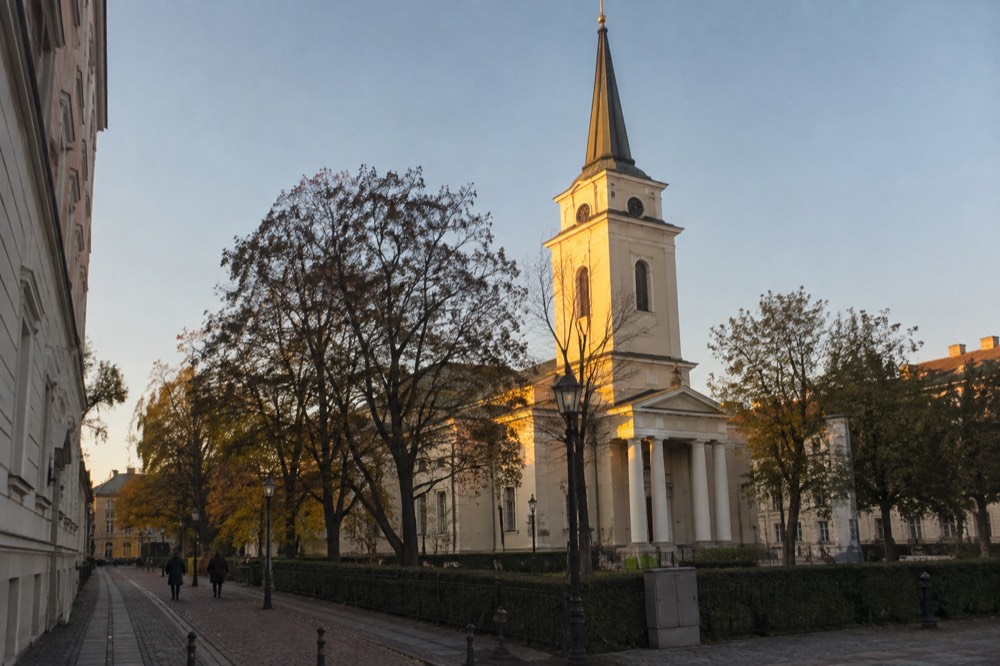
For combining the quarter with the rest of the city, the itineraries on this site are the practical next step. The two-day itinerary fits the cathedral, Haga and a canal boat into a single stretch, and the same ground can be stretched across a weekend. In December, the quarter's position next to the avenue makes it the natural base for the Christmas market season, when Liseberg's Jul på Liseberg runs 14 to 23 December and the old town's cafés fill from the afternoon darkness onward.
Common Questions About Gothenburg Cathedral and Inom Vallgraven
Is Gothenburg Cathedral free to enter?
Yes. The Gustavi domkyrka is a working Church of Sweden parish church and cathedral, and entry is free during open hours. Donations are welcome, and special concerts may be separately ticketed. Hours vary with the church calendar, so check the cathedral's own pages before a dedicated visit.
How long does it take to walk Inom Vallgraven?
About an hour of steady walking for the full circuit, or half a day with stops at the cathedral, the saluhall and the Kronhuset craft block. Nothing inside the quarter is more than ten minutes from anything else.
What does Inom Vallgraven mean?
It means "inside the moat." The name refers to the original fortified town the Dutch engineers laid out on a grid in the seventeenth century, and the moat survives today as the canal that loops the quarter's north and east sides.
Which Gothenburg tram goes to the cathedral?
Several. Brunnsparken, a five-minute walk from the cathedral square, is the central interchange served by most of the network's 12 lines, and Drottningtorget by the central station is closer still. Any tram through the city centre reaches it; a single Zone A ticket costs 38 kr.
Is Inom Vallgraven the same as Gothenburg's old town?
It is the original town, but it is not a uniform historic quarter like Stockholm's Gamla Stan. Much of the grid is modern retail and offices around Nordstan, and the old fabric survives in pockets: the cathedral block, Kronhuset and stretches of Köpmansgatan. Haga, just uphill to the west, has the city's best-preserved wooden houses.
Can you take a boat from Inom Vallgraven?
Yes. The Paddan canal sightseeing boats depart from Rosenlund on the moat and run a route through the old defensive canal, a 2-hour trip from $40 per person rated 4.6 from 105 reviews on the listing. The amphibious bus tour covers the same water by road and then canal.
If you are planning the rest of the city around the old quarter, Gothenburg Travel Guide has a full set of district, museum and transport guides, including the cathedral's neighbours at the City Museum, the art museum and the Garden Society park across the moat.