Gothenburg City Museum (Göteborgs Stadsmuseum): What to See and How to Visit
The Gothenburg City Museum, Göteborgs Stadsmuseum, tells the story of the city from its Dutch-engineered moat to its shipyard cranes. This guide covers what the museum is, how to get there, what it costs, and what to pair it with on the same day.
Short answer
The Gothenburg City Museum is the city's own history museum, centrally placed near the canal at the edge of the old town, and it is the natural first stop for understanding how a fortified Dutch-style trading town on the Göta älv became Sweden's second city. Check the museum's own visit page for current admission and hours before you go.
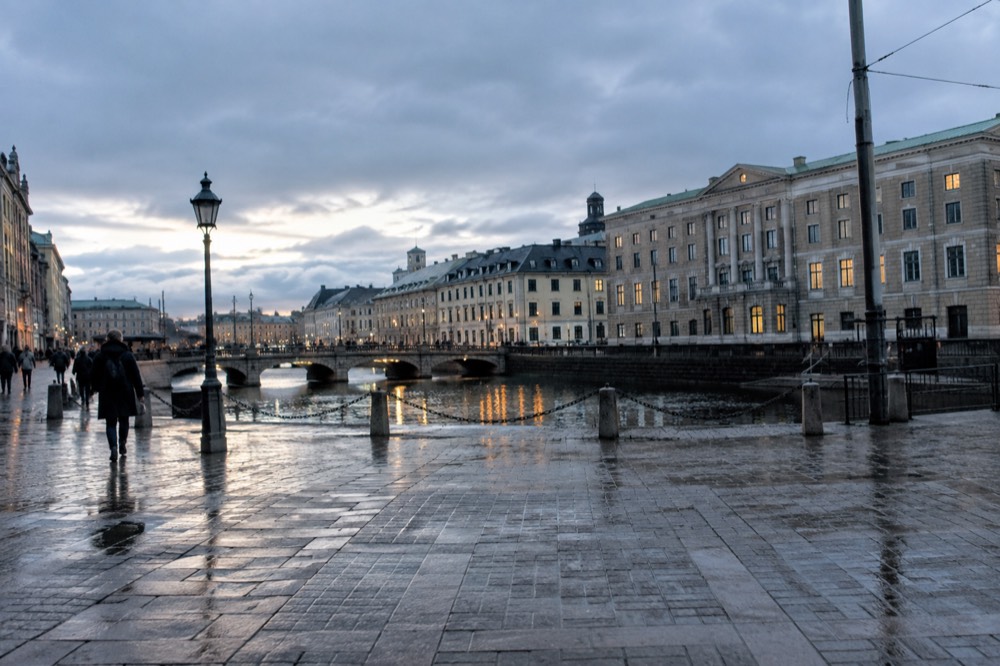
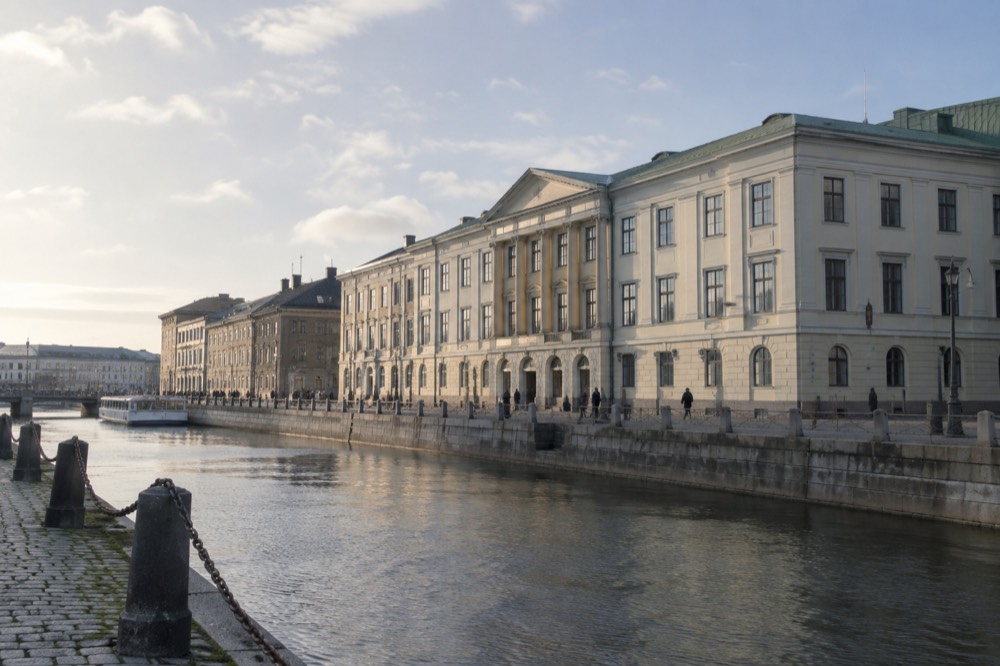
Gothenburg is a city that explains itself badly from the street. The moat that survives as the canal ringing the old town, the granite and red brick, the painted wooden landshövdingehus in Majorna, the shipyard cranes still standing along the Göta älv: all of it is evidence of a specific and unusual history, and almost none of it comes with a label. Dutch engineers laid out the original town inside a moat in the seventeenth century, and the street plan they drew still dictates where the water runs today. The Gothenburg City Museum, Göteborgs Stadsmuseum, is the institution that holds the labels. It is the city's own museum, run by the city, telling the story of the city, and it sits close enough to the canal that you can walk out of the exhibition rooms and see the water the whole story depends on.
This guide is a planning page, not a review. Nobody at this desk has walked the galleries, and the museum's own visit pages are the authority on current admission, hours and what is temporarily closed. What this page does is put the museum in context: what the city's history actually is, how the museum fits into a day, what it costs compared with the other museums you might be choosing between, and what surrounds it within a ten minute walk. The city around the museum is half the attraction, and it is the part most visitors underuse.
What Is the Gothenburg City Museum and Why Does It Matter?
The Gothenburg City Museum is the municipal history museum of Gothenburg, Sweden, and it is the single place in the city where the whole arc of the city's past is collected and interpreted, from the fortified Dutch-style trading post at the mouth of the Göta älv, through the era of the trading companies and the shipyards, to the modern city of 613,274 people that recorded over six million commercial guest nights in 2025.
That population figure comes from the city's own reporting, and the guest-night record from Göteborg & Co's January 2026 press release, which also noted that international guest nights grew about 15 percent in the first ten months of 2025. The city is having a moment, in other words, and a museum that explains what the moment is built on has rarely been more useful.
The history it explains is genuinely odd by Swedish standards. Stockholm is a medieval city. Gothenburg is not. It was founded as a planned, fortified trading town on marshy ground at the river mouth, designed by Dutch engineers who knew how to build on water, and its early prosperity ran through trade rather than royal power. The moat they dug is the reason the Paddan boats and the canal sightseeing route exist as a tourist activity today: the sightseeing industry literally floats on seventeenth century military engineering. The shipyard century that followed, when the cranes along the Göta älv built vessels for the world, is the reason the city looks and feels industrial even in its prettiest quarters. A visitor who understands those two facts, the engineered town and the shipyard town, reads every street in Gothenburg differently.
The museum matters for a second reason that is less obvious: it is the reliable one. Several of Gothenburg's major cultural institutions are in flux right now, and a trip planned around the wrong assumptions can collapse. Göteborgs konstmuseum closes in 2028 and reopens in 2032 for a rebuild and extension, with intermittent blasting already happening near the building, as its own site warns. The old Volvo Museum at Arendal closed permanently in December 2023 and only World of Volvo, the 2024 experience centre, exists now. Against that backdrop, the city museum is a stable, central, year-round institution, which makes it a good anchor for a day's planning rather than an afterthought.
What Can You Actually See Inside the Gothenburg City Museum?
The Gothenburg City Museum's collections cover the city's development from its fortified beginnings to the present day, with the strongest material in the maritime and urban history of the trading and shipbuilding eras, plus archaeological finds from the city centre digs that happen whenever Gothenburg breaks ground inside the old town.
The museum's own pages are the source for what is on display right now, because galleries rotate and individual exhibitions open and close on schedules no guide can responsibly predict. What does not change is the underlying logic of the collection. Gothenburg's archaeology is unusually rich precisely because the original town was small, dense and moated: every construction project inside the old ring of walls and water, and there are many, from the ongoing Västlänken rail tunnel works to ordinary basement conversions, turns up material from the earliest settlement layers. The museum is where that material lands.
The maritime side follows naturally. The city's wealth for three centuries came off the water: the trading companies, the harbour, and then the yards that made Gothenburg one of the shipbuilding capitals of the world before that industry contracted late in the twentieth century. The social history of that collapse, and of the working districts like Majorna that grew around the yards, is part of the city's self-understanding, and it is the kind of context that makes a walk through the second-hand quarter of Majorna, or a visit to Röda Sten at the harbour mouth beneath the Älvsborg bridge, far more than a pleasant stroll.
For families, the museum is a reasonable half of a day rather than a whole one, and it pairs well with the more kinetic attractions nearby. Universeum science centre, open every day of the year from 10:00 to 18:00, is the high-energy option, though note its admission is dynamically priced with a booked time slot and there is no fixed published adult price, so book online rather than turning up and paying the on-site premium of 30 kr. If you are building a museum-and-attractions day and want someone else to handle the arithmetic, these are the three sightseeing and pass options our tour roster covers in this category:
How Do You Get to the Gothenburg City Museum?
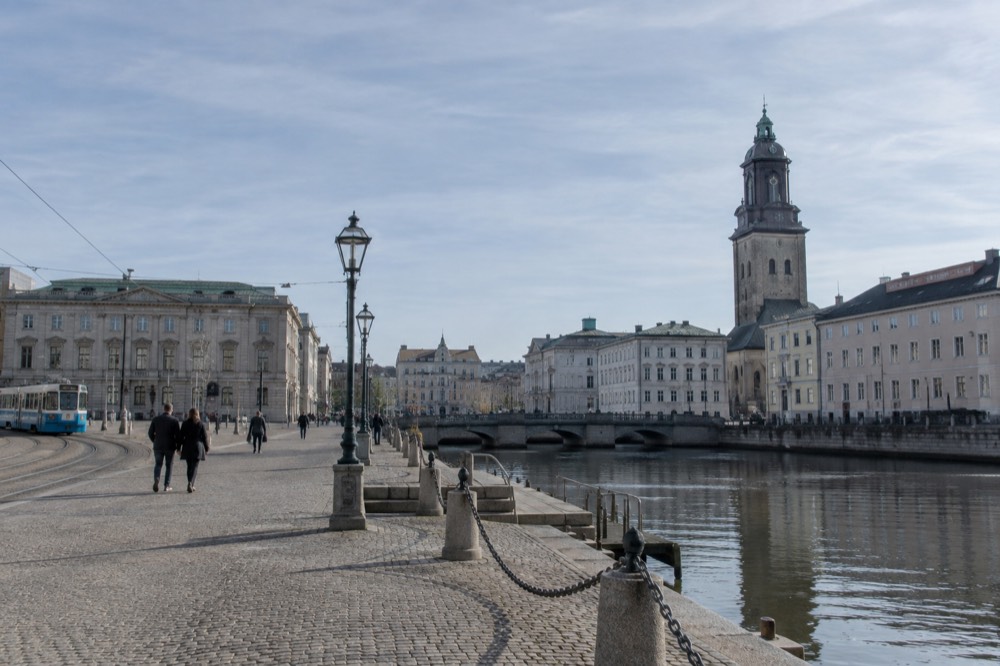
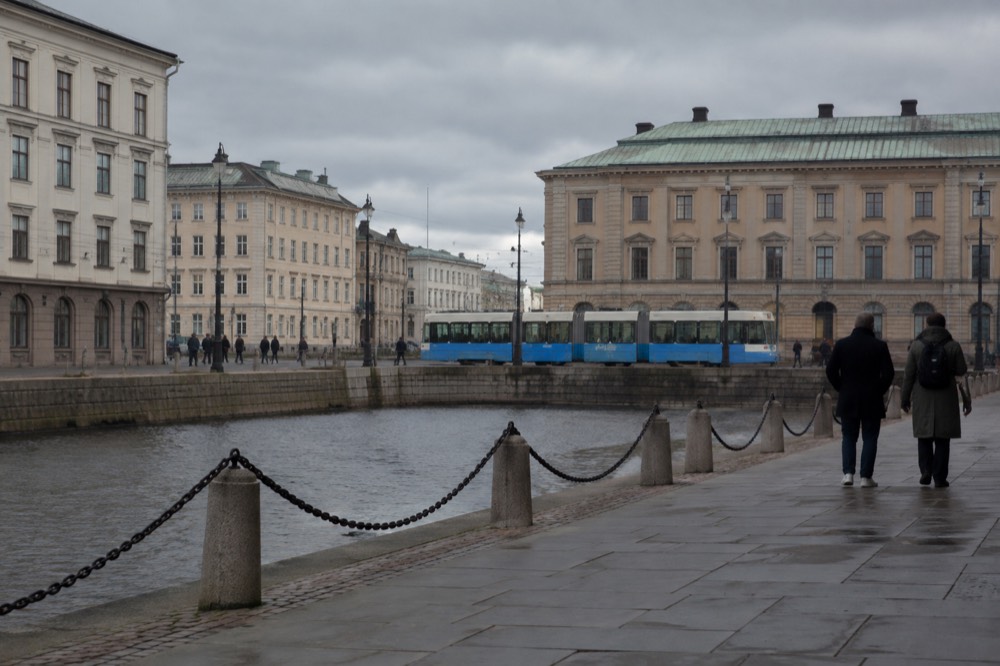
The Gothenburg City Museum is in the central old town area near the canal, and the tram is the right way to reach it: the network runs 12 lines across 134 stops and 188 kilometres of single track as of the 2022 network report, and a single adult one-zone ticket costs 38 kr, with a 24-hour Zone A ticket at 125 kr that also covers the archipelago ferries.
Those fare figures come straight from Västtrafik's own ticket pages, and the Zone A 24-hour price from the dygnbiljett page. Zone A covers Gothenburg, Partille, Mölndal and Öckerö, which means the same 125 kr day ticket takes you from the museum to a car-free island in the southern archipelago if the afternoon turns sunny. Västtrafik's own wording on the archipelago boats is that you can ride "på samma biljett hela vägen från centrum ut på havet", on the same ticket all the way from the centre out onto the sea. For a museum visit that is a genuinely useful fact, because the classic Gothenburg day is exactly that: city culture in the morning, tram and ferry to the southern archipelago in the afternoon.
One fare warning that trips up visitors. There is a temporary state subsidy running that halves every 30-day period ticket, cutting the Zone A adult monthly from 890 kr to 445 kr, but it does not apply to the 24-hour and 72-hour day tickets a visitor actually buys. Do not plan around a half-price transport claim. Your 24-hour ticket is 125 kr regardless.
If you are arriving from [Landvetter Airport](/guides/gothenburg-landvetter-airport-to-the-city-centre/), the airport coach is now branded Vy flygbussarna, running Landvetter to Korsvägen to Göteborg Centralstation in a stated 20 minutes, and there is no rail link to the airport at all, Swedavia's own transport pages list only coach and bus. From the Centralstation side of the city centre, the museum area is a short tram ride or a walk through the old town.
For orientation before or after the museum, the amphibious bus tour is the one product that literally connects the two halves of the city's story, the street plan and the harbour, by driving on both:
The listing shows it rated 4.7 from 4,326 reviews, an hour long, from $36 per person. It is the most-reviewed sightseeing tour in our Gothenburg roster, which for a first visit is a reasonable signal that it delivers the overview it promises.
How Much Time and Money Should You Budget for the Gothenburg City Museum?
Plan on roughly two hours inside the Gothenburg City Museum for a real visit rather than a walk-through, and treat admission as a figure to check on the museum's own visit page before you go, because this guide does not print a price the facts pack does not verify; what can be said is that the city's museums cluster in a wide price band, from free parks to a 75 kr art museum ticket and dynamically priced attractions.
The honest position on the city museum's own admission is that we do not publish a number here that has not been verified against the museum's own site, and neither should any guide you read. Prices at Swedish museums change, concession structures change, and a confidently wrong figure is worse than a direction to the source. The museum's own visit page is the authority; check it the morning you go.
What the verified facts do allow is a comparison table of the institutions you are probably choosing between, using only figures confirmed on the venues' own sites:
| Attraction | Admission basis | Verified figure | Source note |
|---|---|---|---|
| Göteborgs konstmuseum | Day ticket | 75 kr; free under 20; free for students | Museum's own visit page; closes 2028, reopens 2032 |
| World of Volvo | Exhibition ticket, online "from" price | From 120 SEK online | Venue's own tickets page |
| Universeum | Dynamic pricing, booked time slot | No fixed published price; on-site = online + 30 kr | Venue's own tickets page |
| Liseberg | Entry only, rides sold separately | From 95 kr entry; under 110 cm free | liseberg.se; entry buys zero rides |
| Slottsskogen park and zoo | Free entry | Free | City park, no ticket |
Two of those rows carry traps worth spelling out. Liseberg's 95 kr ticket is entrance only; rides are a separate Åkpass from 310 kr, or a combined ticket from 365 kr, and the park is closed entirely between roughly 21 September and 1 October, 2 to 13 November, and from 24 December to mid-April, per the season calendar on liseberg.se. And Göteborgs konstmuseum's 75 kr ticket is on a clock: the museum's own rebuild page states the closure for 2028 and reopening for 2032, and warns of intermittent blasting near the building right now. If seeing the art museum matters to you, the coming window matters too.
The city museum, by contrast, is a modest-budget, modest-time commitment, which is exactly why it earns its place in a packed day. Two hours there leaves the bulk of a day for the waterfront, and Gothenburg is a city where the waterfront is free.
What Else Is Within Walking Distance of the Gothenburg City Museum?
The Gothenburg City Museum sits in one of the densest walkable clusters in Sweden: within roughly ten to fifteen minutes on foot you can reach the canal boat departure point, the cathedral and the old town inside the moat, the Feskekôrka fish church food hall, the Göteborgs konstmuseum at Götaplatsen up Avenyn, and the Tradgårdsföreningen garden society, all without boarding a vehicle.
The canal itself is the spine of that walk. The Paddan boats run sightseeing trips along the water, including a route on the River Säveån, and the 50-minute canal sightseeing cruise in our roster is rated 4.7 from 783 reviews from $28 per person, an easy add-on to a museum morning. The old town inside the moat, Inom Vallgraven, is small enough that you will cross it without noticing, and the cathedral sits right in it.
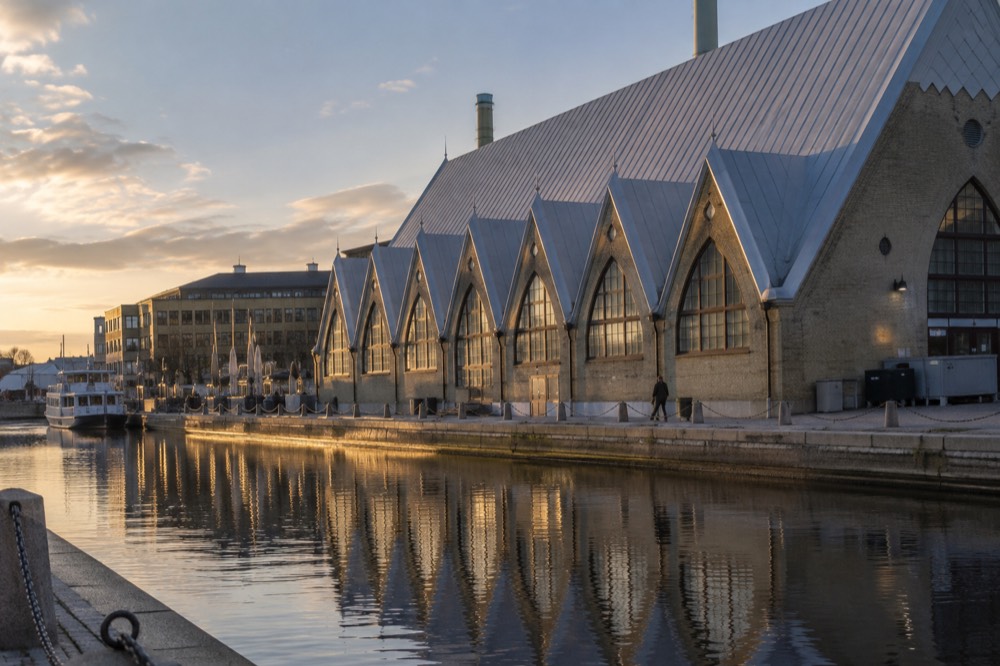
Feskekôrka deserves a specific correction, because most guides in the wild have it wrong. The fish church reopened in 2024 after renovation, the same year the building turned 150, and it is no longer only fish counters. Its own site now lists two fish counters, Ebbes Fångst and Flåtens Fiskhandel, and five restaurants: Haldis Kök, Pråmenaden, Victor von G, Lilla Åstol and Ekmans. Lilla Åstol is seasonal and reopens in spring. If your image of Feskekôrka is a wet fish market, update it to a food hall. The practical lunch move on a museum day is obvious.
The listing shows the 50-minute canal cruise from $28 per person, rated 4.7 from 783 reviews, which makes it the cheapest way onto the water in the roster apart from the ordinary Västtrafik ferries.
Here is the verified walking-distance cluster, with what each one is and what it costs:
| Site | What it is | Cost position |
|---|---|---|
| Feskekôrka | 1874 fish-market building, reopened 2024 as a food hall with two fish counters and five restaurants | Pay for what you eat |
| Göteborgs konstmuseum | City art museum, Hasselblad Center included in admission | 75 kr day ticket; free under 20 and for students |
| Tradgårdsföreningen | The Garden Society park and greenhouse park in the city centre | Park entry modest; check the garden's own pages |
| The canal and Paddan departure point | Sightseeing boats on the seventeenth century moat | Tours from $28 in our roster |
| Slottsskogen | Large park with a free zoo, south of the centre | Free entry |
| Skansen Kronan | Hilltop fort above Haga with city views | Free to walk up |
If the day stretches, the Garden Society park and the walk up to the hilltop fort of Skansen Kronan above the wooden quarter of Haga fill an afternoon without spending much. Haga itself costs nothing to walk, and the café culture there is built around fika, the Swedish coffee break with something sweet alongside. If fika is new to you, our guide to how fika works and where to do it covers the custom, and the food guide covers everything beyond the cinnamon buns.
When Is the Best Time to Visit the Gothenburg City Museum?
The best time to visit the Gothenburg City Museum is whenever the weather gives you a reason to be indoors, which the climate data says is most reliably October, the wettest month of the year at 102.9 mm of rain, and least reliably April, the driest month at 51.3 mm, making spring the season to keep museum days light and flexible.
Those numbers are SMHI's own 1991-2020 normals for station Göteborg A, read from the institute's normals data. The full picture is more interesting than the city's damp reputation, which, for the record, SMHI's own texts do not support: the national precipitation maxima are the western highlands and the mountains, not Gothenburg, and the city's 912 mm a year over 127 wet days is roughly one day in three, not permanent drizzle.
| Season | Rain position | Air temperature | What it means for a museum visit |
|---|---|---|---|
| Spring (Mar-May) | April is the driest month of the year, 51.3 mm | March mean 3.0 C rising to 12.4 C in May | Keep museum time short; the streets are at their best |
| Summer (Jun-Aug) | Moderate, 73.7 to 92.8 mm monthly | July mean 18.3 C, the annual peak | Museums are the rainy-day fallback, and evenings are endless |
| Autumn (Sep-Nov) | October is the wettest month, 102.9 mm | 14.0 C falling to 5.1 C | The strongest indoor season; sea still swimmable in September |
| Winter (Dec-Feb) | 93.0 mm in December, wet days frequent | 0.8 C in January, 0.7 C in February | Full museum days; Liseberg closed until spring |
Two seasonal facts from the data are worth more than the averages. First, the sea temperature at the Vinga lighthouse station peaks in August at 18.6 C, not July, and September water at 16.7 C is warmer than June water at 16.2 C, so an autumn trip is not a compromise on the swimming front. Second, the daylight swing is extreme: 18 hours 06 minutes of daylight on 21 June against 6 hours 32 minutes on 21 December, a difference of 11 hours 34 minutes. A December museum visit happens in genuine darkness at both ends of the day, which changes how you plan the walk there. The best time to visit Gothenburg guide unpacks the seasons in more depth.
One more planning note for the indoor season: if your rainy-day plan involves buying wine or strong beer for afterwards, the rule is statutory. Beer above 3.5 percent ABV, and all wine and spirits, are sold only by Systembolaget, the state monopoly, under Alkohollag (2010:1622). Supermarkets carry only folköl at up to 3.5 percent. Store hours vary and Sunday closing is common, so check the specific store's page rather than assuming an evening run will work.
Is the Gothenburg City Museum Worth It Compared with Gothenburg's Other Museums?
For a first-time visitor with time for one or two museums, the Gothenburg City Museum is worth it if you want the city's story rather than a collection of objects, and it is the right choice over the art museum if your trip falls near or after 2028, when Göteborgs konstmuseum closes for its four-year rebuild; for design lovers the Rohsska museum, and for families the Universeum, serve different purposes entirely.
The honest comparison is about what each institution is for. The city museum is context. The Rohsska museum of design and craft is objects. The Museum of World Culture is ideas. Maritiman, the floating ship museum, is the harbour you can climb on, and it overlaps most with the city museum's maritime story in a complementary way: the museum explains the shipyard century, Maritiman lets you stand on what that century built. Families with children under about ten will get more from Universeum in pure engagement terms, and the Botanical Garden asks a voluntary entry contribution rather than a fixed ticket, so it is neither simply free nor simply paid.
If you are trying to see many of these in a short trip, the pass question comes up. The old Göteborg City Card no longer exists under that name; the official tourism body sells no city card at all, and the product that replaced it is [Go City](https://gocity.tpk.ro/HQKyKKW4)'s, which our roster lists as an all-inclusive pass covering 20-plus attractions, rated 3.8 from 238 reviews, from $56 per person. What the pass does not do is include public transport, and that was true of the old municipal card but is not a claim you can make about this one, so price the pass against the specific attractions you actually want, at their door prices, before buying.
The listing shows the all-inclusive pass from $56 per person, rated 3.8 from 238 reviews, valid one to five days. Whether it beats buying individual tickets depends entirely on your itinerary density: a two-museum, one-boat, one-park trip probably does not clear the bar, while a packed family week might.
And if the museum day has fired you up to see the city the exhibitions describe, these are the same three sightseeing and pass options again, for the decision moment at the end of the planning:
The broader verdict for this desk: Gothenburg rewards visitors who understand it, and punishes those who arrive with Stockholm's picture in their head. The city museum is the cheapest possible correction to that mistake. Pair it with a canal boat, a walk through Haga, and a tram out to Saltholmen, and you have the city's whole argument, moat to sea, inside one day. For a fuller framework, the two days in Gothenburg itinerary builds exactly that kind of day, and Gothenburg Travel Guide carries the rest of the city's attractions, seasons and day trips.
Common Questions About the Gothenburg City Museum
Is the Gothenburg City Museum in Sweden or Nebraska?
The Gothenburg City Museum, Göteborgs Stadsmuseum, is in Gothenburg, Sweden, the country's second city at the mouth of the Göta älv. There is a real and much smaller town called Gothenburg in Nebraska in the United States, which shares the name and confuses search results, but the Stadsmuseum exists only in the Swedish city.
How long should I spend at the Gothenburg City Museum?
Roughly two hours covers the permanent story of the city for most visitors. If you are reading everything and the temporary exhibitions are strong, budget half a day. The museum's own visit page lists current exhibitions and any gallery closures.
How do I get to the Gothenburg City Museum by tram?
The tram is the backbone of Gothenburg transport, 12 lines and 134 stops as of the 2022 network report, and the museum area is central enough that several lines serve stops within a short walk. A single one-zone adult ticket is 38 kr and a 24-hour Zone A ticket is 125 kr, per Västtrafik's own fare pages.
Does the Go City pass include the Gothenburg City Museum?
The Go City all-inclusive pass in our roster covers 20-plus attractions in Gothenburg, and whether the city museum is among the included list is stated on the operator's live listing. What the pass does not include is public transport, so do not plan on it covering your trams.
Is the Gothenburg City Museum good for children?
It is a history museum, so it suits curious children from roughly primary-school age up better than toddlers. Families with younger children tend to get more from Universeum science centre, which is open every day of the year from 10:00 to 18:00, or from a free run around Slottsskogen park and its free zoo.
What is near the Gothenburg City Museum?
The canal and the Paddan boat departures, the old town inside the moat, Feskekôrka food hall, the Göteborgs konstmuseum up at Götaplatsen, and the Tradgårdsföreningen garden society are all within roughly a ten to fifteen minute walk. The konstmuseum closes in 2028 for a rebuild until 2032, so check its status before planning it into a future trip.