Copenhagen to Gothenburg by Train: The Full Rail Route from Denmark to Sweden's West Coast
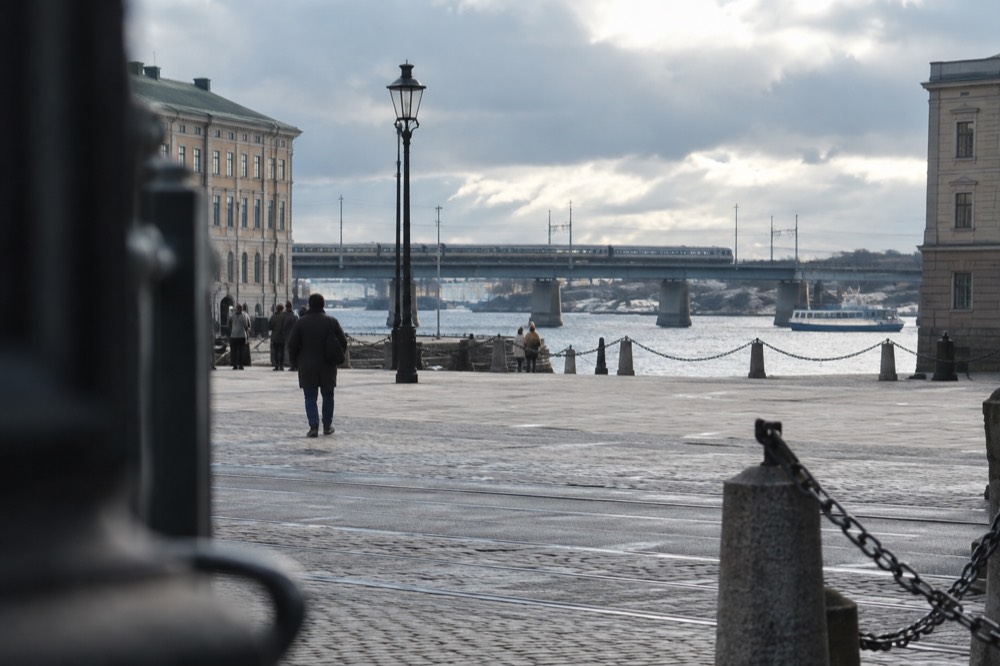
The rail line from Copenhagen to Gothenburg crosses the Öresund and runs up Sweden's west coast to Göteborg Centralstation, and the arrival is a tram ride from almost everything in the city.
Short answer
The Copenhagen to Gothenburg train route runs north from Copenhagen across the Öresund Bridge into Sweden and along the Kattegat coast to Göteborg Centralstation, where the city's tram network takes over. There is no rail link onward to Landvetter Airport, and the archipelago ferries from Saltholmen are covered by an ordinary Västtrafik ticket.
The rail route from Copenhagen to Gothenburg is one of the most useful connections in Scandinavia: it links the Danish capital to Sweden's second city, crosses the Öresund Bridge in the first hour, and then follows the Kattegat coast north before finishing at Göteborg Centralstation, the tram hub at the centre of everything. This guide explains how the route works, what to sort out before you board, and what actually matters once you step off the train in Gothenburg, Sweden.
How Does the Copenhagen to Gothenburg Train Route Work?
The route runs from Copenhagen's main station across the Öresund Bridge to Malmö in Sweden, then north along the west coast through Helsingborg, Halmstad and Varberg to Göteborg Centralstation, which is Gothenburg's main rail terminus and sits directly on the city's tram network. You clear the Swedish border on the bridge itself, so the rest of the journey is domestic rail through the Skåne and Halland countryside.
The crossing of the Öresund is the structural fact of the whole route. The bridge and tunnel combination between Copenhagen and Malmö carries rail traffic as well as road traffic, and every Copenhagen to Gothenburg train passes over it. Once the train is in Sweden the line settles into a coastal run: the Kattegat appears and disappears on the left side of the train for much of the way north, and the towns the line passes through, Helsingborg, Halmstad, Varberg, are the same names that appear in our day trips from Gothenburg guide, because they sit on the same coast in the opposite direction.
Göteborg Centralstation is the end of the line in every practical sense. It is the city's main station, it is attached to the Nils Ericson Terminal for long-distance coaches, and the tram stops outside it connect to the entire network. For a fuller picture of the station itself, read Gothenburg Central Station: What You Need to Know, and for the onward question that most visitors ask next, our getting around Gothenburg guide covers trams, tickets and zones in detail.
How Do You Book Copenhagen to Gothenburg Train Tickets?
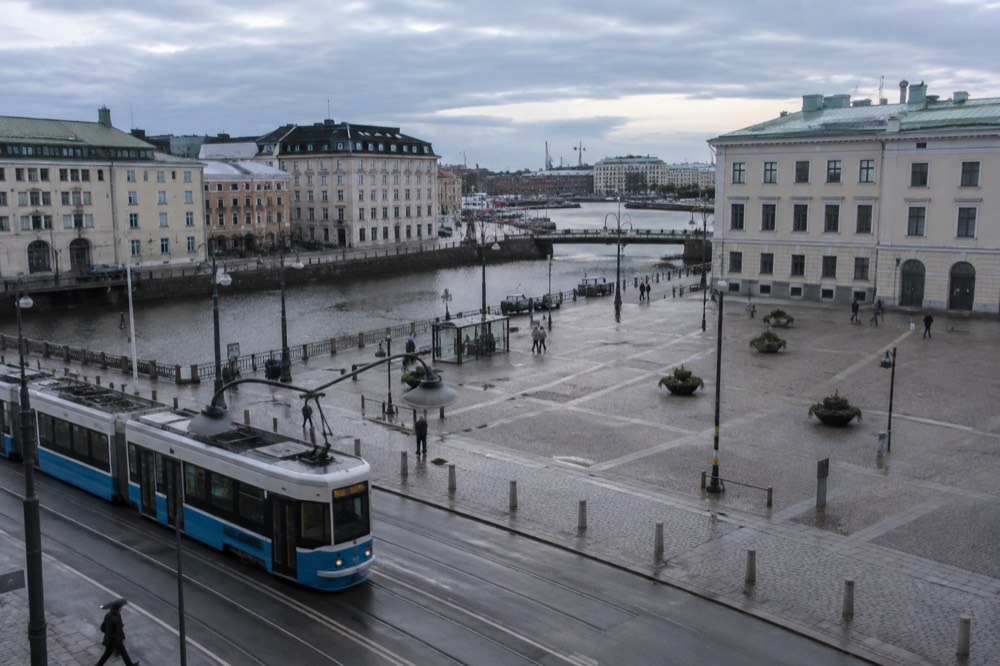
You book Copenhagen to Gothenburg tickets through the national rail operators' own sites and apps, SJ in Sweden and DSB in Denmark, and prices move with demand the way airline fares do, so the cheapest tickets are usually found by booking early and travelling outside the busiest departures. Seat reservations are part of the ticket on cross-border trains between Denmark and Sweden rather than an optional extra.
The practical advice is boring but reliable. Book on the operator's own website rather than through a reseller, because that is where refunds and changes are handled. Cross-border trains between Copenhagen and Sweden carry mandatory seat reservations, which means a ticket and a reserved seat arrive together, and you do not need to hunt for a free seat once on board. Fares rise as the departure fills, so a ticket bought weeks ahead is usually cheaper than one bought at the station on the day. If your dates are flexible, the best time to visit Gothenburg guide explains which months reward a west coast visit most.
One thing worth checking before you travel: rail engineering works in Sweden are commonly scheduled for weekends and holiday periods, and they can replace part of a route with a bus. The operator's journey planner is the place to confirm your specific departure, not a general search result.
What Is the Journey Like on Board?
The journey from Copenhagen to Gothenburg is a single-seat ride for most of the day on cross-border trains, with the Öresund crossing in the first stretch, the Swedish coast for the middle section, and a flat, agricultural landscape giving way to Gothenburg's river and granite at the northern end. On board you get the standard Scandinavian intercity setup: reserved seating, a bistro or trolley service, and power sockets at most seats.
Sit on the left side of the train after Malmö if you want the sea. The Kattegat comes and goes along the Halland coast, and on a clear day the water is visible for long stretches between Helsingborg and Varberg. The last half hour changes character completely: the train approaches Gothenburg along the Göta älv, the river that defines the city, and the shipyard and harbour landscape that appears is the real announcement that you have arrived on Sweden's west coast rather than in another version of the flat south.
If you are travelling with children, the on-board time is the part of the day that needs the most management. Our Gothenburg with kids guide has the arrival-city side covered, including Universeum, which is open every day of the year from 10:00 to 18:00 according to its own visit pages, with dynamically priced entry and booked time slots.
What Should You Do in the First Hours After Arriving in Gothenburg?
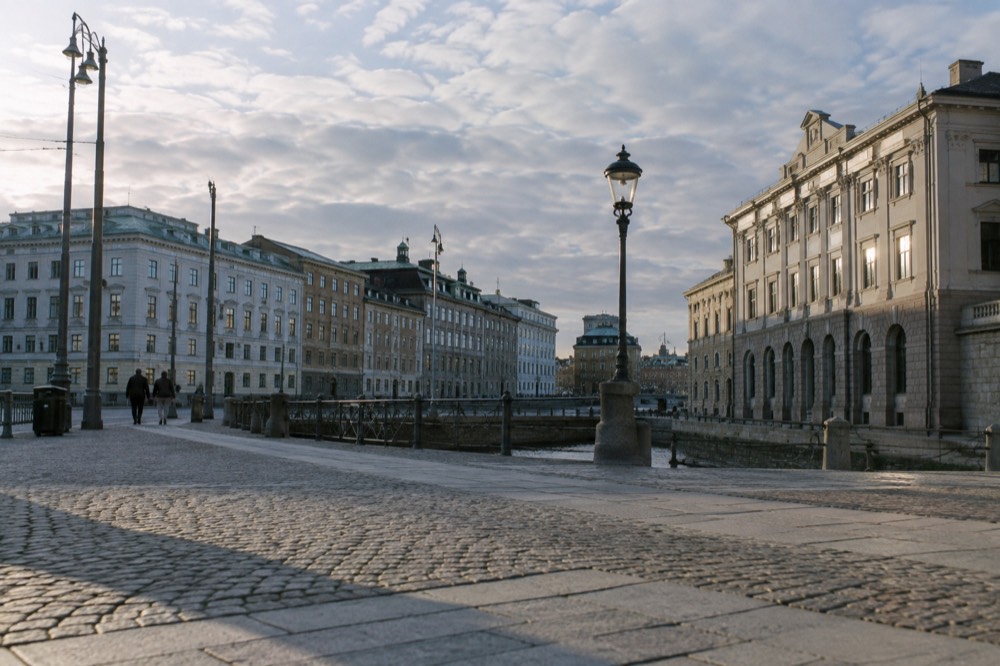
From Göteborg Centralstation the whole city opens up by tram: a single Västtrafik ticket covers the trams, and the same ticket covers the archipelago ferries from Saltholmen, because the southern islands sit inside Zone A, the same fare zone as the city centre. Drottninggatan and the old town are within walking distance of the station, and the main hotel districts are a short tram ride away.
The tram is the arrival answer. Västtrafik's fare table shows a single adult one-zone ticket at 38 kr and a 24-hour Zone A ticket at 125 kr, the same price in the app or at a shop, and that day ticket covers trams, buses and the archipelago boats. That last part is the fact most visitors never discover: Västtrafik's own zone map includes the southern archipelago ferries, and the islands, Styrsö, Brännö, Vrångö, Donsö, Asperö and Köpstadsö, are car-free areas of Gothenburg rather than separate destinations. Our Gothenburg archipelago guide covers the islands, and the southern archipelago page goes island by island.
Be careful with one currently circulating claim about transport prices. A temporary state subsidy has halved Västtrafik's 30-day period tickets, Zone A adult 890 kr down to 445 kr, but the 24-hour and 72-hour tickets a visitor actually buys are not discounted. The day ticket is still 125 kr. Do not plan around a half-price fare that does not apply to you.
For the first evening, the where to eat in Gothenburg guide is the place to start, and Feskekôrka, the fish-market building locals call the Fish Church, reopened in 2024 as a food hall with two fish counters and five restaurants, so it is no longer the fish-counter-only venue older guides describe.
Should You Stop Along the Copenhagen to Gothenburg Route?
Yes, the route passes three Swedish coast towns worth a stop: Malmö at the Swedish end of the Öresund crossing, Helsingborg with its view across the sound to Denmark, and Varberg, whose fortress and cold-bath house are among the best-known sights on the Halland coast. Each is on the same rail line, so a stopover is a ticketing decision rather than a detour.
Varberg is the most rewarding of the three for a half-day. Our Varberg and the Halland coast guide covers the fortress and the coastline, and the town is directly on the Copenhagen to Gothenburg line, so breaking the journey there costs you nothing in routing. Halmstad, further north, is a smaller stop with a river mouth and a long beach, though it is more of a summer town than a year-round one.
A different kind of stopover is possible at the northern end: if your trip is longer than a weekend, our how many days do you need in Gothenburg guide makes the case for three days as the comfortable minimum, and the two days in Gothenburg and three days in Gothenburg itineraries show what those days look like in practice.
How Does the Weather Differ Between Copenhagen and Gothenburg?
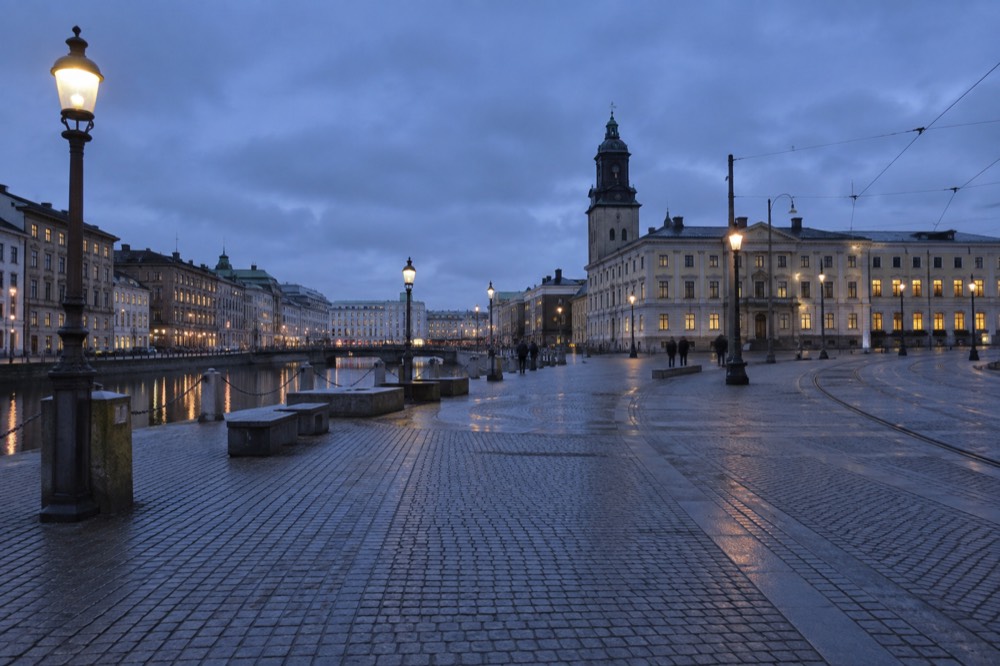
Gothenburg is cooler and wetter than Copenhagen on average, with 912 mm of rain a year spread across 127 wet days, and its wettest month is October at 102.9 mm while its driest is April at 51.3 mm, according to SMHI's 1991-2020 normals for station Göteborg A. The rain is an autumn problem, not a summer one, and April is the driest month of the year.
That last sentence is the one worth repeating, because almost everyone gets it backwards. Visitors arrive expecting a summer drenching and instead find that the rain arrives after the tourists leave: October averages 102.9 mm against July's 81.3 mm. April, at 51.3 mm over just 8.2 wet days, is the statistically driest window on the calendar. The sea temperature data tells a similar counterintuitive story: SMHI's quality-controlled observations at the Vinga lighthouse station show the water peaks in August at 18.6 C, not July, and September water at 16.7 C is warmer than June water at 16.2 C.
One cliche to ignore completely: Gothenburg is not Sweden's rainiest city, and SMHI's own data does not support the claim. The national precipitation maxima are in the western highlands and the mountains. Gothenburg's 912 mm sits inside the wet western Götaland band, but the city does not hold any rain record.
| Month | Rain, mm | Wet days (≥1 mm) | Mean air temp, C |
|---|---|---|---|
| January | 83.0 | 11.5 | 0.8 |
| February | 61.0 | 9.7 | 0.7 |
| March | 54.0 | 8.8 | 3.0 |
| April | 51.3 | 8.2 | 7.7 |
| May | 54.3 | 8.8 | 12.4 |
| June | 73.7 | 10.0 | 15.7 |
| July | 81.3 | 9.8 | 18.3 |
| August | 92.8 | 11.9 | 17.7 |
| September | 80.0 | 10.8 | 14.0 |
| October | 102.9 | 12.6 | 9.0 |
| November | 84.7 | 12.0 | 5.1 |
| December | 93.0 | 13.3 | 2.1 |
Source: SMHI 1991-2020 normals, station Göteborg A (71420). Pack for the month you are actually travelling in with the what to pack for Gothenburg guide.
How Much Daylight Will You Have in Gothenburg?
Gothenburg gets 18 hours 6 minutes of daylight on 21 June against 6 hours 32 minutes on 21 December, a swing of 11 hours 34 minutes between the solstices, and in June civil twilight leaves only about three and a half hours of true night. In December the grey light lasts barely eight hours even counting twilight, so the season you travel in changes the shape of every day.
This matters more on a Copenhagen to Gothenburg trip than on most routes, because the two cities sit far enough apart in latitude that the December days feel different. Copenhagen loses a couple of hours of light going into midwinter too, but Gothenburg at 57.7 N takes the short-day extreme further. The practical planning consequences: in summer you can arrive in the evening and still have hours of usable light for a first walk, while in December an afternoon arrival means you see the city centre lit up rather than lit by the sun. The daylight and darkness in Gothenburg guide has the month-by-month numbers, and Gothenburg in winter covers what to do in the dark months, including the Christmas market at Liseberg, which in 2026 runs 14 November to 23 December.
Where Should You Stay After the Train Arrives?
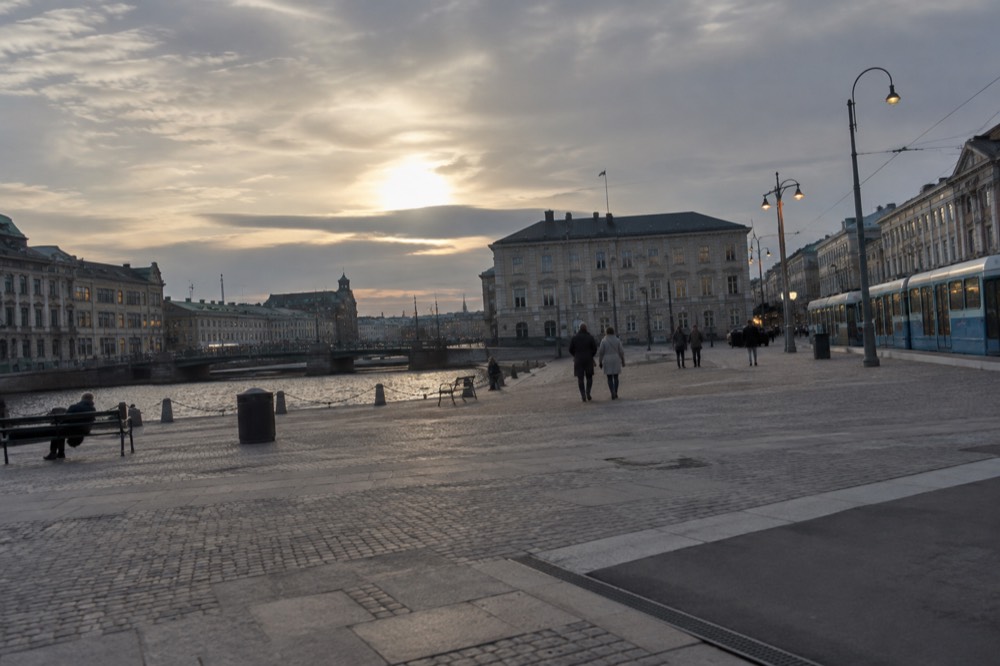
Most visitors arriving by train should stay within a tram zone or two of Göteborg Centralstation: the area around Avenyn and Götaplatsen puts you on the main boulevard near the Museum of Art, the Vasastan district offers stone streets and cafes a short walk from the centre, and the waterfront around Lilla Bommen keeps you close to the harbour. All three are inside Västtrafik Zone A, so no extra fare logic applies.
The where to stay in Gothenburg guide breaks the districts down properly, but the rail-arrival version is simple. Because the tram network spreads out from the station in every direction, almost anywhere in the central city is a painless arrival. The trade-offs are the usual ones: the Avenyn end is louder and closer to the nightlife described in our Gothenburg nightlife guide, while Vasastan and Linné, covered in Linné and the Långgatorna strip, are quieter and better for morning cafes.
If your trip has a festival at the centre of it, book early. Way Out West in Slottsskogen park fills the city's hotels in August, and the Christmas market period in late November and December does the same at a gentler scale.
What Are the Best First-Day Activities in Gothenburg?
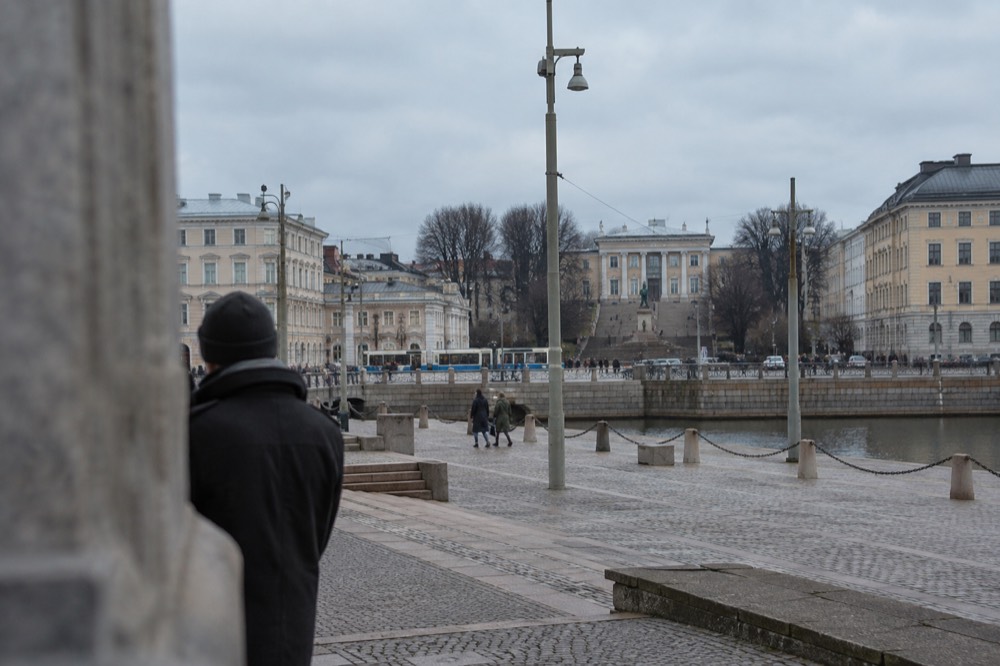
The best first-day plan in Gothenburg combines one water-based overview with one district walk: the amphibious bus tour drives the streets and then enters the harbour, the archipelago cruise from Lilla Bommen shows the islands from the water, and the Haga old quarter gives you the wooden architecture and the fika culture in a walkable package. All three are reachable by tram or on foot from the station.
The water overview is genuinely the efficient choice, because Gothenburg is a harbour city that reads best from the water. The Paddan boats and the canal sightseeing route guide explains the classic canal option, and the archipelago cruise with a guide, rated 4.4 from 1,488 reviews on the operator's listing, covers the open-water version. For the walk, Haga, Gothenburg's wooden old quarter is the standard first stroll, and the fika in Gothenburg guide explains the coffee-and-cinnamon-bun ritual you will be participating in whether you planned to or not.
If the weather turns, and on 127 days a year it will, the Gothenburg on a rainy day guide has the indoor list, and the Gothenburg museums roundup covers the art museum, which charges 75 kr for a day ticket with free entry for everyone under 20. Note one planning fact that matters for art lovers: Göteborgs konstmuseum closes in 2028 for a rebuild and reopens in 2032, so a visit in the next two years is on the current building.
Is the Copenhagen to Gothenburg Train Better Than Flying?
For a city-centre to city-centre journey the train is usually the better choice: it arrives at Göteborg Centralstation inside the tram network rather than at Landvetter Airport, which has no rail link at all and is served by the Vy flygbussarna airport coach, a 20-minute run to the city centre according to Swedavia. The flight only wins on paper, because the airport transfer adds time and cost that the rail arrival does not have.
The airport fact is the decisive one. Swedavia's own pages for Landvetter list coach and bus options only, there is no train, and the coach journey to central Gothenburg is stated at 20 minutes. That is a manageable transfer, but it is a second ticket, a second wait and a second leg after the flight itself, while the train delivers you directly to the tram stops. Our Gothenburg Landvetter airport to the city centre guide covers the airport side in full, and is there more than one Gothenburg airport answers the question the shared city name raises.
| Arrival option | Where you land | Onward connection | Notes |
|---|---|---|---|
| Train from Copenhagen | Göteborg Centralstation | Tram stops at the door, Västtrafik Zone A | City-centre arrival, no transfer leg |
| Flight to Landvetter (GOT) | Landvetter Airport | Vy flygbussarna coach, 20 minutes to Göteborg C | No rail link to the airport |
| Flight plus coach | Nils Ericson Terminalen | Adjacent to Centralstation | Coach and train termini share the site |
For the wider Scandinavian rail picture, the Gothenburg to Stockholm by train route is covered on its own page, and if you are weighing the two biggest Swedish cities against each other, Gothenburg or Stockholm, which to visit makes the comparison honestly.
What About Money, Passes and Budgeting in Gothenburg?
Gothenburg is close to cashless: trams take card or app payment, museums take card or Swish, and Universeum states it is a card-only venue, so you will rarely need kronor in coins or notes. For attractions, the old Göteborg City Card no longer exists, the official tourism site sells no city card, and the current product is the Go City pass, which does not include public transport.
The pass situation is the fact most likely to trip up a returning visitor. The municipal Göteborg City Card is gone, and the [Go City](https://gocity.tpk.ro/HQKyKKW4) replacement is a different product under different terms. Our Göteborg City Card, is it worth it guide works through the maths, and the is Gothenburg expensive page covers the rest of the budget, from meals to the beer prices that surprise every first-time visitor.
One Swedish rule that affects a night out: beer at or below 3.5% ABV is sold in ordinary supermarkets, while anything stronger, plus all wine and spirits, is sold only through Systembolaget, the state monopoly, under Alkohollag (2010:1622). The shelf version of a familiar beer brand in a Swedish supermarket is often a 3.5% reformulation, which is why it tastes weaker than the label suggests.
| First-day cost | Price | Source |
|---|---|---|
| Västtrafik single, 1 zone, adult | 38 kr | Västtrafik fare table |
| Västtrafik 24-hour, Zone A | 125 kr | Västtrafik fare table, app or shop |
| Göteborgs konstmuseum day ticket | 75 kr | Museum's own visit page, free under 20 |
| Liseberg entry (rides not included) | from 95 kr online | liseberg.se price page |
| World of Volvo exhibition ticket | from 120 SEK online | worldofvolvo.com |

Common Questions About the Copenhagen to Gothenburg Train
How do I get from Copenhagen to Gothenburg by train?
The route runs from Copenhagen's main station across the Öresund Bridge to Malmö, then north along the Swedish west coast through Helsingborg, Halmstad and Varberg to Göteborg Centralstation. Tickets are sold through the national rail operators' own sites, with mandatory seat reservations on cross-border departures.
Is there a direct train from Copenhagen to Gothenburg?
Direct cross-border departures between Copenhagen and Gothenburg run on this route, but frequency varies by day and season, so check the operator's journey planner for your specific date. Where a direct departure is not available, the route connects through Malmö Central, which is the same line north.
Is the train better than flying from Copenhagen to Gothenburg?
For city-centre to city-centre travel, usually yes. The train arrives at Göteborg Centralstation on the tram network, while Landvetter Airport has no rail link and relies on the Vy flygbussarna coach, a 20-minute run to the centre according to Swedavia. The flight only wins when the transfer time is ignored.
Where does the Copenhagen to Gothenburg train arrive?
At Göteborg Centralstation, Gothenburg's main rail terminus, which is attached to the Nils Ericson coach terminal and served directly by the city's tram network. The old town is walkable from the station, and the rest of the city is a short tram ride away.
Do I need to book Copenhagen to Gothenburg train tickets in advance?
Booking early is usually cheaper because fares rise with demand, and busy departures can sell out their reserved seating. Book through the rail operator's own site rather than a reseller so that any changes or refunds are handled directly.
Can I use my Västtrafik ticket on the archipelago ferries after I arrive?
Yes. The southern archipelago ferries from Saltholmen are part of the Västtrafik network and the islands sit in Zone A, so a 125 kr 24-hour Zone A ticket covers the tram to Saltholmen and the ferry out to Styrsö, Brännö, Vrångö, Donsö, Asperö and Köpstadsö.

The Copenhagen to Gothenburg train route is the calm way to reach Sweden's west coast: one seat across the Öresund, a coastal run up through Halland, and an arrival in the middle of a tram city where the same ticket that brought you from the airport alternative also carries you out onto the sea. More on the city itself is across Gothenburg Travel Guide, from the free things to do in Gothenburg to the viewpoints from Masthuggskyrkan and the best city viewpoints.