Gothenburg Central Station: What You Need to Know (Göteborg Centralstation, Sweden)
Gothenburg Central Station is where almost every visitor to Sweden's second city arrives, and it is also a construction site, a tram hub, a coach terminal and the gateway to the archipelago. Here is what actually works there right now.
Short answer
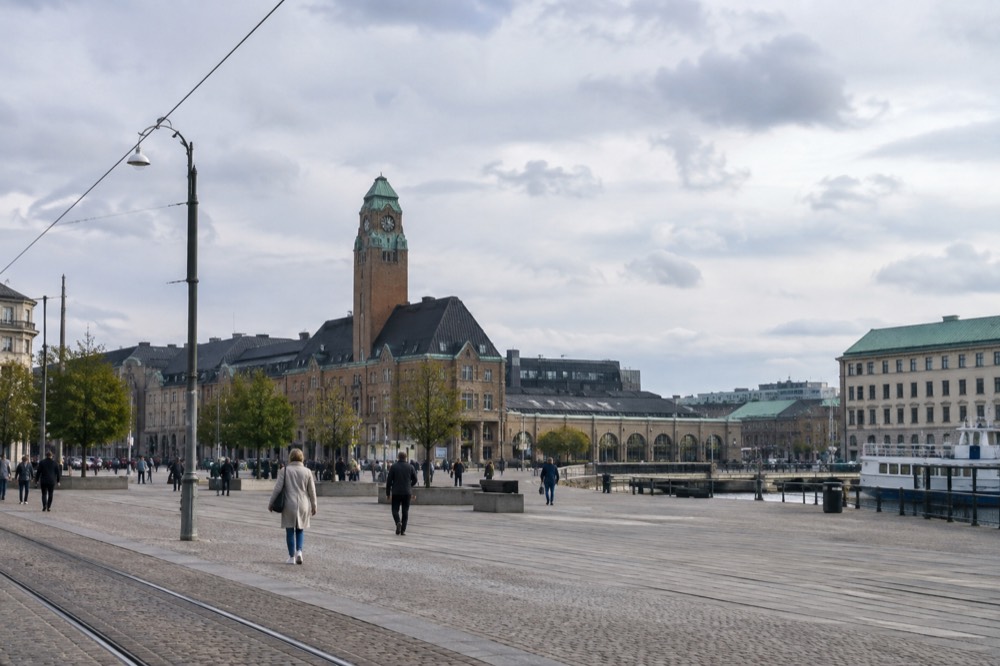
Gothenburg Central Station sits at the northern edge of the city centre, with trams outside, the Nils Ericson Terminalen for coaches next door, and the Vy flygbussarna airport coach to Landvetter taking 20 minutes. There is no train to the airport. Västlänken construction runs until around 2030, but the station stays open throughout.
Gothenburg Central Station, in Swedish Göteborg Centralstation, is the busiest railway building in western Sweden and the place where nearly every arrival into the city begins. Swedavia's figures for Göteborg Landvetter Airport show 5,435,850 passengers in 2025, and every one of them who takes the airport coach ends up at the Nils Ericson Terminalen, the coach terminal attached to the station. Long-distance trains from Stockholm and Oslo stop here, regional trains from Bohuslän and Borås stop here, and twelve tram lines run within a few hundred metres of the main entrance. The station is also a building site: the Västlänken rail tunnel is being dug underneath it, with the first underground section due to open in December 2026 and the full project around 2030. None of that stops the station working. It just changes what you should expect when you step off the train, and this page covers all of it, from ticket prices to where the food halls are.
What Is Gothenburg Central Station and Where Exactly Is It?
Gothenburg Central Station is the city's main railway terminus, a listed brick building named after Nils Ericson, the engineer brother of John Ericsson, sitting directly north of the old moat at the edge of the Inom Vallgraven district. Its coach annex, the Nils Ericson Terminalen, handles long-distance buses and the airport coach. The whole complex sits within Västtrafik Zone A, so a single ordinary ticket covers the trams outside and the archipelago ferries from Saltholmen.
The station building faces south, towards the city centre. Walk out of the main entrance and you are looking at Nordstan, one of Scandinavia's largest shopping centres, across the canal. Behind the station to the north is Hisingen territory across the river, and the Älvstranden waterfront development runs along the Göta älv a short walk east. The Inom Vallgraven old town, the moat laid out by Dutch engineers when the city was founded, begins one bridge south. Practically everything a first-time visitor wants is inside a fifteen-minute walk, which is why Gothenburg Travel Guide treats the station forecourt as the natural starting point for every itinerary on the site.
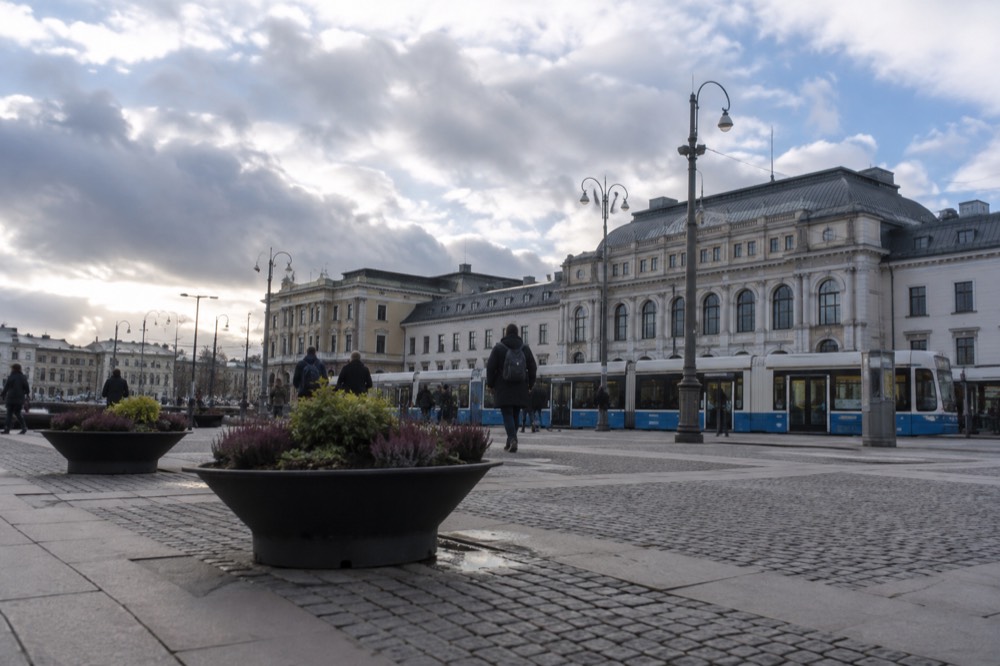
The station's own scale is worth registering before you arrive. Göteborgs Spårvägar, the city's tram operator, reports 126 million journeys in 2025 across a network it described in its 2022 annual report as twelve lines, 134 stops and 188 kilometres of single track, running from Mölndal in the south to Angered in the north and from Saltholmen in the west to Kålltorp in the east. Most of those lines touch the station area. The building itself is a listed brick structure with a long glass-roofed platform hall, and during the Västlänken years you will pass fenced construction zones on the approach, which is normal and signposted.
For orientation, the three exits that matter are the main southern exit towards Nordstan and the trams, the western exit towards the Nils Ericson Terminalen for coaches, and the northern exit towards the Älvstranden waterfront. If you are arriving by train from Stockholm and connecting to a tram, follow the "Spårvagn" signs to the southern side. The full lowdown on the network is in our guide to getting around Gothenburg: trams, tickets and zones.
How Do You Get from Gothenburg Central Station to Landvetter Airport?
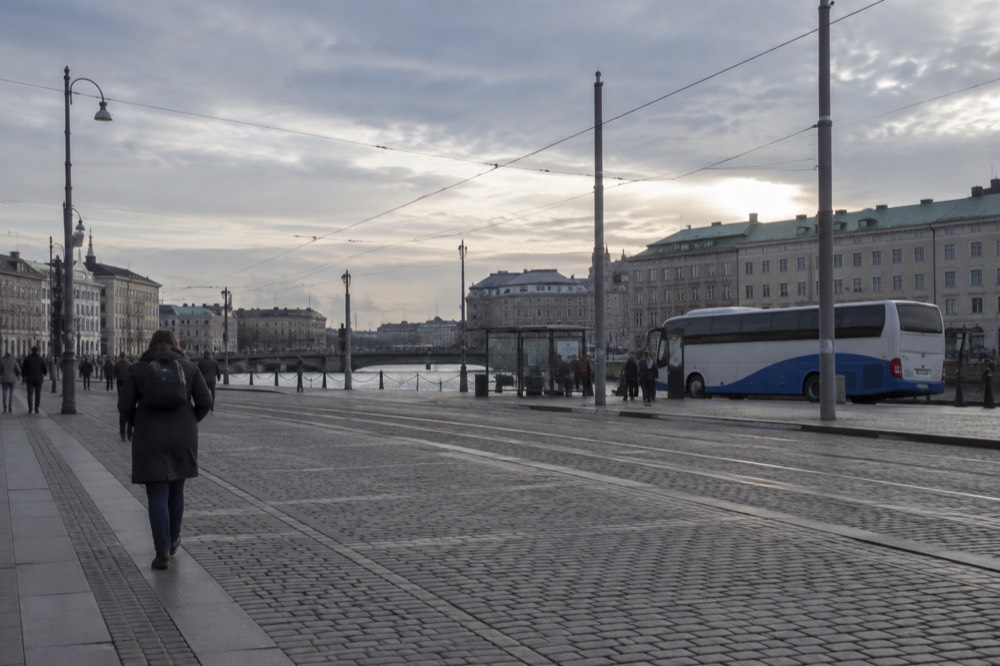
There is no train to Landvetter, and Swedavia's own transport pages list only road options. The airport coach, now branded Vy flygbussarna, runs from the Nils Ericson Terminalen via Korsvägen to Landvetter in 20 minutes. Västtrafik bus 612 also serves the airport, reaching Landvetter resecentrum in 14 minutes, and FlixBus line 691 runs the airport-city route as well.
The rebranding matters more than you would think. Older guides still tell you to catch "Flygbussarna", and while the vehicle is the same, the operator's name changed to Vy flygbussarna, so the signs, the app and the tickets all say Vy now. Swedavia's airport bus page states the 20-minute journey time in both directions, and the coach stops at Korsvägen, next to Liseberg, before reaching the terminal. If your hotel is near Korsvägen you can board there instead of hauling luggage from the station.
| Option | Route | Journey time | Notes |
|---|---|---|---|
| Vy flygbussarna coach | Landvetter - Korsvägen - Göteborg C (Nils Ericson Terminalen) | 20 minutes | The main airport link; fare on the operator's live listing |
| Västtrafik bus 612 | Landvetter airport - Landvetter resecentrum | 14 minutes | Goes to the town of Landvetter, not the city centre |
| FlixBus line 691 | Landvetter - Korsvägen - Kungsportsplatsen - Göteborg C | Stops en route | Also runs a daily Landvetter-Arlanda coach |
| Train | None | - | Swedavia lists no rail link; there is no train to Landvetter |
The absence of a rail link is the single most useful negative fact about the station. Visitors routinely arrive expecting a Stockholm-Arlanda-style express train and there is not one, nor is one under construction: Västlänken, the tunnel being built under the station, is a city-centre rail project, not an airport line. Our full comparison of every airport option, including taxis and costs, is in Gothenburg Landvetter Airport to the city centre, and the question of whether the airport has a rail connection is covered there in detail.
If you are arriving rather than departing, the same logic runs in reverse. The coach drops you at the Nils Ericson Terminalen, which is attached to the station's western side, and from there it is a two-minute walk to the tram stops. That makes the station the sensible place to sort yourself out before heading to your hotel, and our where to stay in Gothenburg guide groups the neighbourhoods by how easy they are to reach from these very platforms.
Which Trams and Tickets Work from Gothenburg Central Station?
The trams outside the station run on ordinary Västtrafik tickets: a single Zone A adult ticket costs 38 kr, and a 24-hour Zone A ticket costs 125 kr and covers trams, buses and the southern archipelago ferries from Saltholmen. You buy in the Västtrafik To Go app, at machines or at the customer shop, and you never tap out, because fares are bought in advance rather than charged at the end of the ride.
The ticket model confuses people who have used London or Berlin systems. There is no tap-in-tap-out charging and no barrier at the station or on the trams. You buy a ticket before boarding, the app or machine date-stamps it, and inspectors check it on board. Västtrafik's fare pages show the single Zone A adult ticket at 38 kr and youth at 29 kr, with two and three-zone singles at 76 kr and 114 kr, and the 24-hour Zone A ticket at 125 kr whether bought in the app or the shop. Zone A covers all of Gothenburg, plus Partille, Mölndal and Öckerö, which means the car-free southern islands are inside the same zone as the station.
| Ticket | Adult | Youth (7-19) | Where stated |
|---|---|---|---|
| Single, 1 zone | 38 kr | 29 kr | Västtrafik fare pages |
| Single, 2 zones | 76 kr | 58 kr | Västtrafik fare pages |
| Single, 3 zones | 114 kr | 87 kr | Västtrafik fare pages |
| 24-hour, Zone A | 125 kr | - | Västtrafik dygnsbiljetter page |
One caveat that matters if you read Swedish news headlines: a temporary state subsidy currently halves every 30-day period ticket, Zone A adult 890 kr down to 445 kr, but it does not apply to the 24-hour and 72-hour day tickets visitors actually buy. The day tickets cost the same as they always did. Our getting around Gothenburg guide carries the full fare breakdown, and the question of how you pay, app versus card versus cash, is answered there too.
The tram stop cluster outside the southern exit is where you make your connection. Lines towards Avenyn and Korsvägen, lines towards Majorna and Saltholmen, and lines towards Haga and Linné all depart from stops within sight of the main doors. Two destinations deserve special mention because they are unusual: Saltholmen, the western terminus of the tram network, where you transfer to the archipelago ferries on the same ticket, and Sahlgrenska and beyond for anyone visiting the hospital area. The how to get to the Gothenburg archipelago guide covers the Saltholmen connection in full, including which islands you can reach.

What Is Västlänken and How Does Construction Affect the Station?
Västlänken is a rail tunnel under central Gothenburg with three new underground stations, Centralen, Haga and Korsvägen. The first section, underground tracks at Centralen, opens in December 2026, with the full project completing around 2030. During the works the existing station stays open, but approaches are fenced, bus and tram stops have shifted, and the walking routes around the north side have changed.
Västtrafik's own project pages describe the opening plan: the first trains to use the new underground platforms at Centralen will be regional services such as Göteborg-Alingsås and Göteborg-Älvängen from December 2026, with the full three-station tunnel finishing around 2030. For a visitor this mostly means one thing: do not trust your memory of the station layout from a previous trip, and follow the signs rather than habit. The construction fences move.
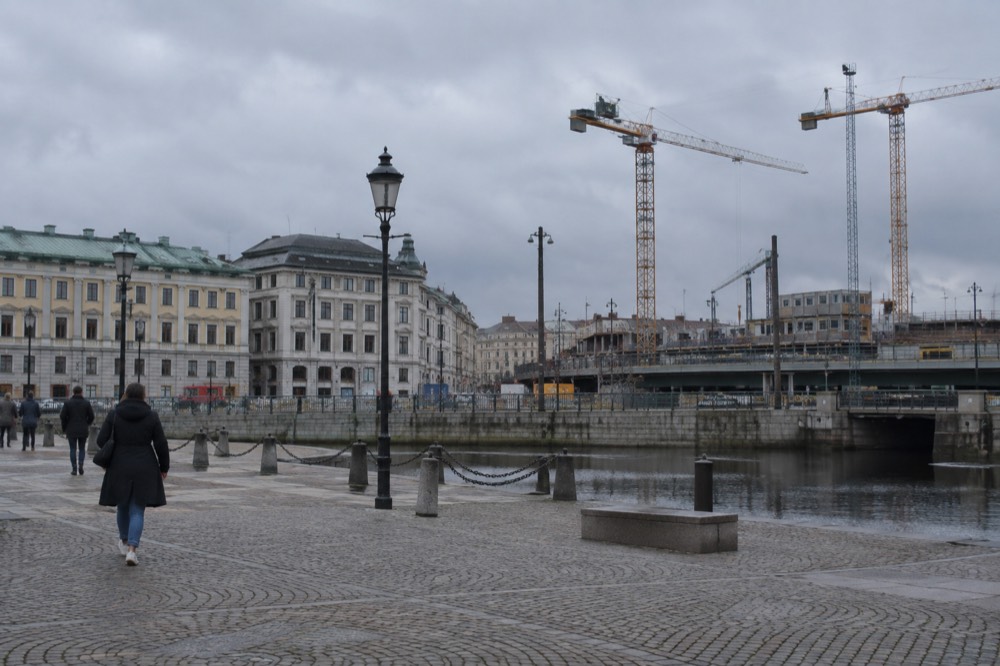
The practical effects are concentrated on the northern and eastern approaches, where the new station boxes are being dug. The southern side, facing Nordstan and the tram stops, is the stable side, which is convenient because that is the side visitors need anyway. If you are staying in Haga or at Korsvägen, both future Västlänken station sites, expect scaffolding, noise and rerouted footpaths near the digging, and budget a few extra minutes. Our Gothenburg in winter guide notes that the dark months make construction detours harder to read, so screenshot your walking route before December visits.
Where Can You Eat and Shop Near Gothenburg Central Station?
Nordstan, directly across the canal from the main entrance, is one of Scandinavia's largest shopping centres, and the station concourse itself has kiosks and cafés. For real food, Saluhallen, the city's 19th-century market hall, and Feskekôrka, the fish-church-turned-food-hall that reopened in 2024 with five restaurants, are both within a short walk south of the station.
The eating options immediately inside the station are functional: kiosks, coffee chains and grab-and-go counters, the usual railway fare. The interesting food is outside. Feskekôrka, the fish hall on Rosenlundsgatan that Higab, the municipal property owner, reopened in 2024 after renovation, now holds two fish counters, Ebbes Fångst and Flåtens Fiskhandel, and five restaurants, Haldis Kök, Pråmenaden, Victor von G, Lilla Åstol and Ekmans, according to its own site. Our Feskekôrka guide covers what to eat there, and the wider food landscape is in where to eat in Gothenburg.
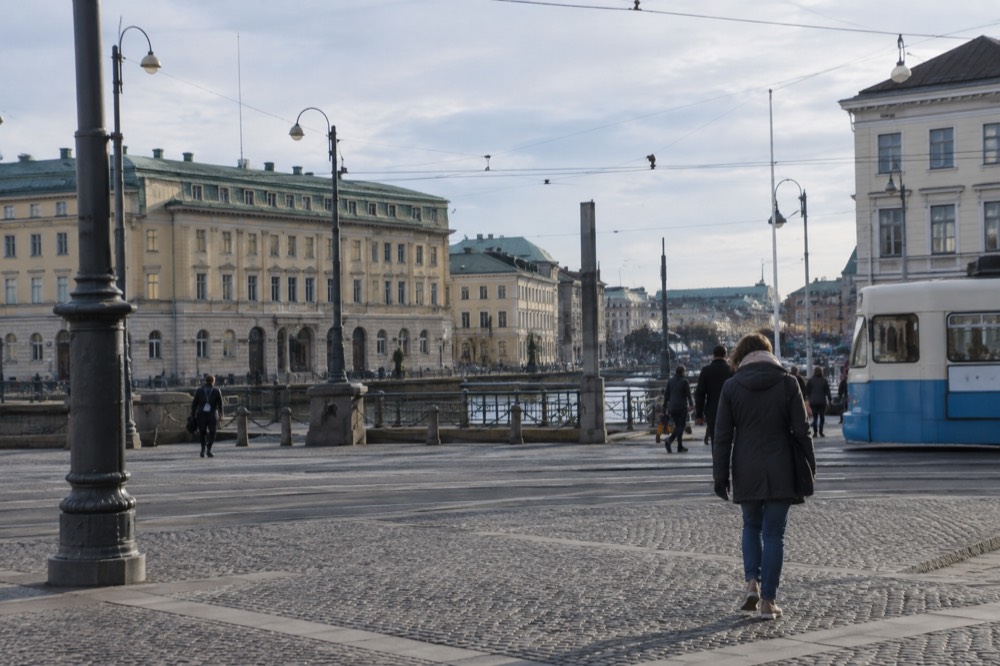
| Place | What it is | Walk from the station |
|---|---|---|
| Nordstan | Large shopping centre, 200+ shops | 2 minutes, across the canal |
| Saluhallen | 19th-century market hall, food stalls | About 8 minutes south |
| Feskekôrka | Fish-church food hall, 2 counters and 5 restaurants | About 10 minutes south |
| Inom Vallgraven | Old-town cafés and fika spots | 5-10 minutes south |
One Swedish rule shapes any beer stop near the station, and it is statutory rather than customary. Under Alkohollag (2010:1622), chapter 1 section 8, beer above 2.25 but not above 3.5 per cent ABV is folköl and sold in supermarkets, while anything above 3.5 per cent, plus all wine and spirits, is retail-sold only by Systembolaget, the state monopoly. So the convenience store in Nordstan sells a weaker shelf version of brands you may know, and the Systembolaget branch is the only place for the full-strength one. Our fika in Gothenburg guide explains the coffee-and-bun tradition that fills the gap in the afternoon.
Where Should You Go First from Gothenburg Central Station?
With a 125 kr 24-hour Zone A ticket you can reach the Haga old quarter, Avenyn and Götaplatsen, Liseberg, Slottsskogen and the Saltholmen ferry terminal for the car-free archipelago islands, all from stops within two minutes of the station doors. The single best-value first move is tram to Saltholmen and ferry to Styrsö or Brännö, because the same ticket covers the boat.
The logic of the city makes the station an unusually good launch pad. Everything in the table below is reachable without buying anything beyond that one day ticket, and the ferries are the part visitors do not believe until they are on one. Västtrafik's own zone material states you can ride the same ticket all the way from the centre out onto the sea, and the southern islands, Asperö, Brännö, Styrsö, Donsö, Vrångö and Köpstadsö, are car-free by municipal decree.
| Destination | How from the station | Why go |
|---|---|---|
| Haga | Tram towards Linné, short ride | Wooden old quarter, café culture |
| Avenyn and Götaplatsen | Tram towards Korsvägen | Main boulevard, art museum |
| Liseberg | Tram to Korsvägen | Amusement park, seasonal calendar |
| Slottsskogen | Tram towards Linné or Majorna | Free park and zoo |
| Saltholmen and the islands | Tram 9 or 11 west, then ferry | Car-free archipelago, same ticket |
Two timing warnings before you commit. Liseberg's 2026 calendar, published on its own site, runs summer 18 April to 20 September, Halloween 2 October to 1 November, and Christmas 14 November to 23 December, and the park is shut between those windows, so a February or March arrival finds it closed. And the sea is warmer than you expect late in the year: SMHI's quality-controlled observations at the Vinga lighthouse station show August water peaking at 18.6 C and September water at 16.7 C, warmer than June's 16.2 C, so an autumn dip is a real option. Our best time to visit Gothenburg guide lays out the seasons month by month.
If you would rather someone else handle the archipelago, the guided cruise option above runs 2.5 hours with a live guide, and the listing shows 4.4 from 1,488 reviews, from $44 per person. For a slower start, the one day in Gothenburg itinerary begins, naturally, at the station.
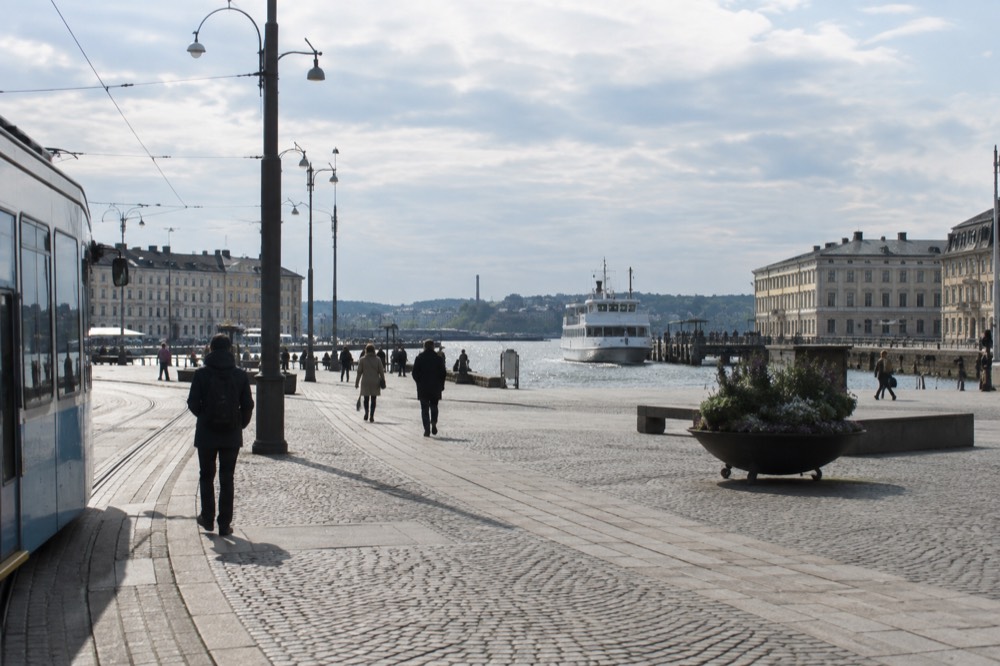
Can You Take Day Trips by Train from Gothenburg Central Station?
Yes, and the station is the western anchor of several of Sweden's most useful regional lines. Trains run from Göteborg C towards Alingsås and Stockholm, north along the Bohuslän coast towards Uddevalla and Strömstad, east to Borås, and south along the coast towards Varberg and Malmö, with the first Västlänken services to Alingsås moving underground from December 2026.
The regional network is genuinely good, and because the station is a terminus, the platforms are easy to read: you walk to the head of the train rather than guessing which end departs. The Stockholm run, about which we have a full Gothenburg to Stockholm by train guide, is the headline route, but the coastal lines are the ones regulars use. Our day trips from Gothenburg guide ranks the destinations, and day trips from Gothenburg by train covers the car-free options specifically.
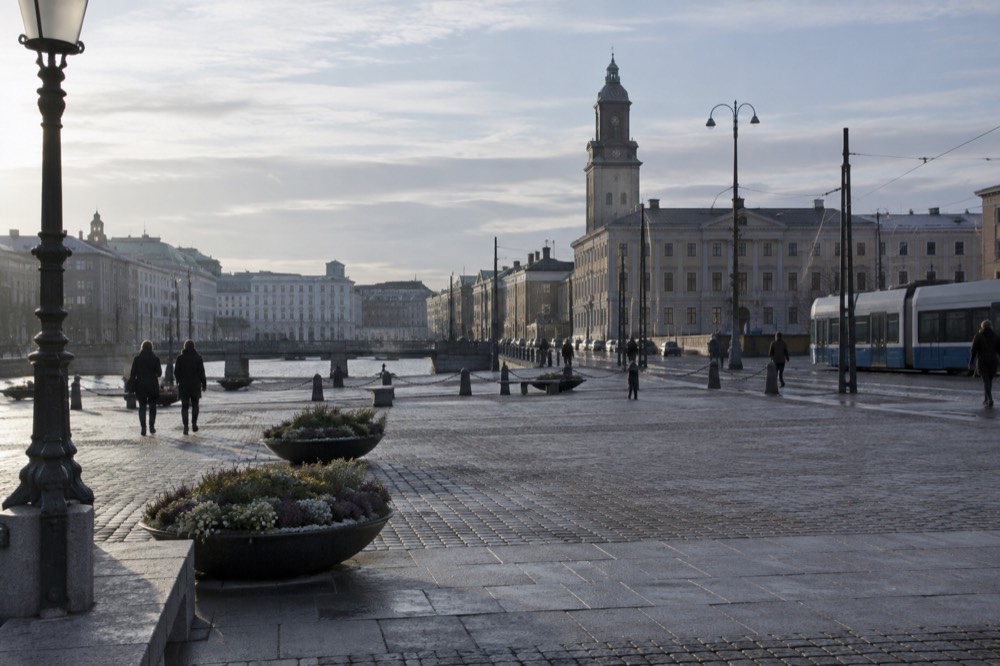
For planning, the table below pairs the main compass directions with what is at the end of them. Fares for regional trains are dynamic, so check the operator's live listing rather than any printed figure, and the same applies to the coach routes from the Nils Ericson Terminalen, which also serve Marstrand-adjacent Kungälv and the wider region.
Whichever direction you pick, the station is where the day starts and, more often than not, where it ends. Long-distance platforms close around 20 minutes before departure in practice, so arrive with margin, and note that the Västlänken works have shifted some of the outdoor waiting areas. The coach terminal side is calmer in the evenings, if you need somewhere to wait for a late bus.
The kayak option deserves its own word because it is the one people miss. The station sits by the moat, and a self-guided hire from the central put-in, from $31 per person with a 4.8 rating from 41 reviews on the listing, puts you on the canal that Dutch engineers dug as the city's defence when they laid out the old town. You paddle past the fish church and under the bridges most visitors only cross. It is the cheapest way to see the city from water level without a guide or a schedule, and it starts ten minutes from the platforms.
Common Questions About Gothenburg Central Station
Is there a train from Gothenburg Central Station to Landvetter Airport?
No. Swedavia's own transport pages list only road options: the Vy flygbussarna coach, which takes 20 minutes via Korsvägen, plus Västtrafik bus 612 and FlixBus line 691. There is no rail link and none under construction.
How much does a tram ticket from Gothenburg Central Station cost?
Västtrafik's fare pages show a single Zone A adult ticket at 38 kr and youth at 29 kr, with a 24-hour Zone A ticket at 125 kr. The 24-hour ticket also covers the southern archipelago ferries from Saltholmen.
What is the Nils Ericson Terminalen?
It is the coach terminal attached to the western side of Gothenburg Central Station, named after the engineer Nils Ericson. Long-distance buses and the Vy flygbussarna airport coach depart from here.
Is Gothenburg Central Station closed for the Västlänken works?
No. The station stays open throughout the tunnel construction. The first underground section at Centralen opens in December 2026 and the full project completes around 2030, with fenced works and shifted stops around the approaches in the meantime.
Can you leave luggage at Gothenburg Central Station?
The station has operated left-luggage facilities, but hours and availability shift with the Västlänken works, so check the station operator's current information before relying on it. Nordstan's customer service is the fallback many travellers use.
How far is the archipelago ferry from Gothenburg Central Station?
Saltholmen, the ferry terminal, is the western terminus of the tram network, roughly 30 minutes from the station by tram, and the same Västtrafik ticket covers both the tram and the ferry to the car-free islands.