Way Out West Festival in Gothenburg, Sweden: Music, Film and Food in Slottsskogen
Way Out West turns Slottsskogen, Gothenburg's biggest park, into the city's main music festival each August, with a film programme and a food strand running alongside the stages. This guide covers how the festival site works, how to reach it by tram, what August in Gothenburg really feels like, and where to stay and eat while it is all happening.
Short answer
Way Out West is Gothenburg's major summer music festival, held in Slottsskogen park in early August, with film screenings and a food programme alongside the music. The park sits inside Västtrafik Zone A, so an ordinary tram ticket gets you there, and the same Zone A ticket also covers the archipelago ferries from Saltholmen if you want a swim between shows.
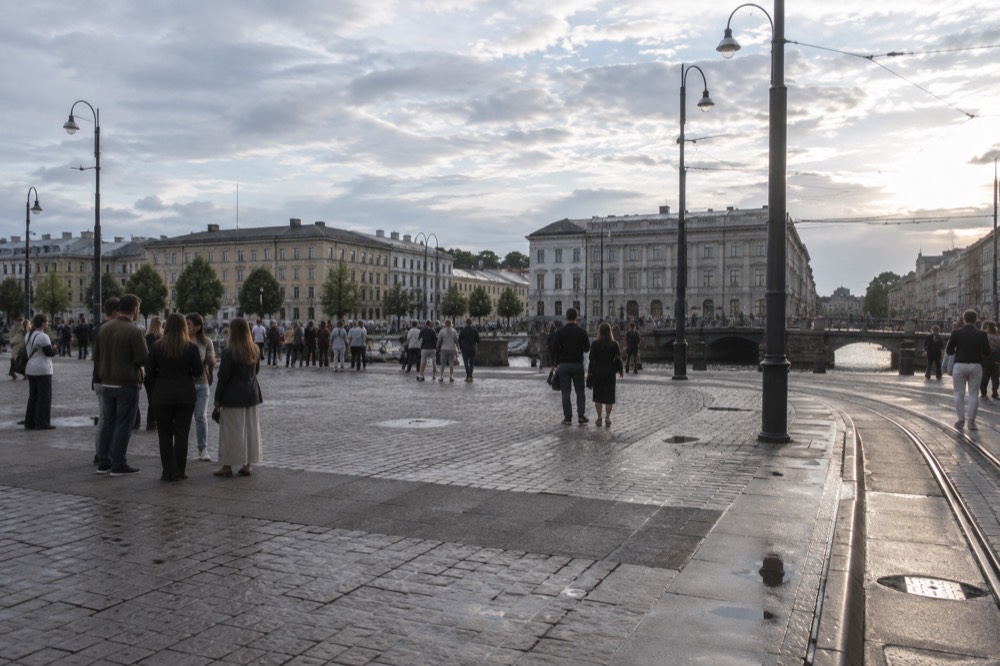
Way Out West is the weekend each summer when Slottsskogen, the huge park on the city's south side, fills with stages, film screens and food stalls, and much of Gothenburg's nightlife moves outdoors. The festival is the city's flagship music event, but it is also a good excuse to visit Gothenburg at all: the festival's own programme has long spread beyond the park, with club nights and screenings across town, so even people without a festival ticket find the city buzzing. This guide is written for someone planning that trip, with the transport, weather and accommodation facts you need from sources like Västtrafik's fare pages and SMHI's climate normals, rather than festival folklore.
What Is the Way Out West Festival in Gothenburg?
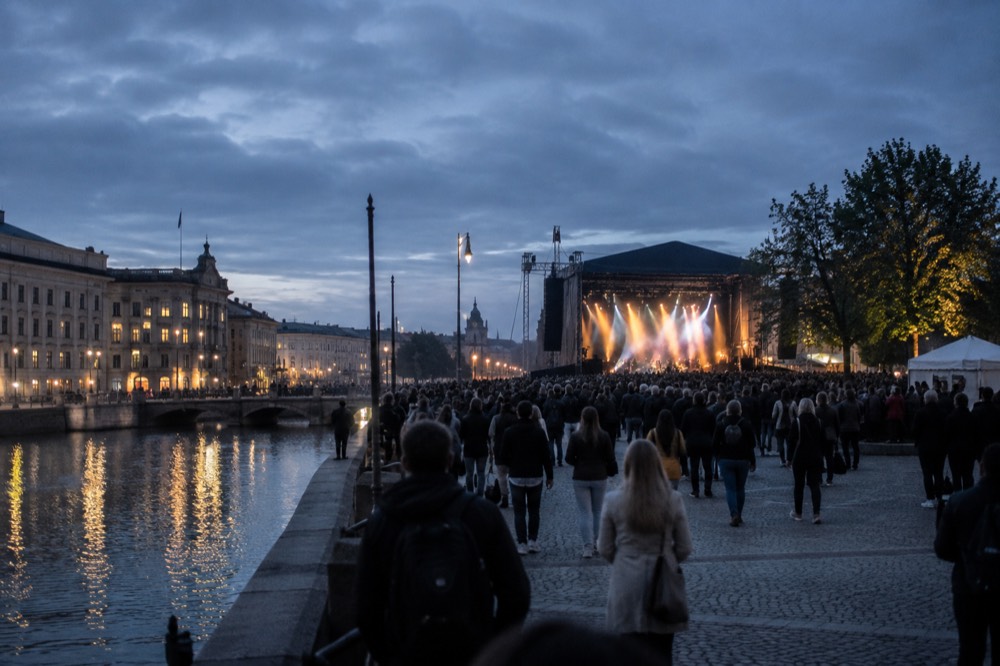
Way Out West is Gothenburg's largest music festival, an annual August weekend held mainly in Slottsskogen park, where international headliners play outdoor stages while a parallel film programme and a food strand, called Stay Out West for the club and late programme, spread the event across the city. The park setting is the defining feature: instead of a field miles from town, the main site is a working city park with a free zoo, ponds and old oak woodland, inside the tram network.
That park setting changes the festival experience more than first-time visitors expect. Slottsskogen is not a sealed site in the way a rural festival is; it is a public park in the middle of Gothenburg, and the festival builds its stages inside it. The park is also home to the free animal enclosures that locals use year round, and it sits between the neighbourhoods of Linné and Majorna, both dense with cafes and bars. The practical consequence is that a festival day can include a proper lunch outside the site, a tram ride back to a real hotel, and a swim in the archipelago the next morning, none of which requires a car.
The festival's own listings and the city's tourism material describe the event as a combined music, film and food festival, and that combination is worth taking seriously. The film strand screens in venues around the city rather than in the park, and the food programme has historically pushed Swedish and west-coast produce, which fits a city whose food scene runs from the reopened Feskekôrka food hall to Michelin-starred rooms. If you are the kind of visitor who plans trips around food and music in equal measure, this is the weekend Gothenburg schedules for you.
Where Does Way Out West Take Place and How Do You Get There?
Way Out West's main site is Slottsskogen park, in western central Gothenburg, reached on ordinary Västtrafik trams and buses; the park sits inside Zone A, so a single ticket at 38 kr or a 24-hour Zone A ticket at 125 kr covers the ride, and the film and club venues are all in the central area within the same zone. There is no need for any special festival transport.
Västtrafik's fare structure is zone-based, and everything a festival visitor touches is in Zone A: the city core, the airport coach terminus at Göteborg C, Slottsskogen itself, and even the southern archipelago ferries from Saltholmen. Västtrafik's own site says you can ride "på samma biljett hela vägen från centrum ut på havet", on the same ticket all the way from the centre out to sea, because the islands are in Zone A too, as its Zone A ticket page confirms. That makes a 125 kr 24-hour ticket the single most useful purchase of the weekend: trams to the park, buses back late, and a ferry to Brännö or Styrsö the day after, all on one fare. The full transport picture, including how the tram network of 12 lines and 188 km of track fits together, is in our guide to getting around Gothenburg.
| Västtrafik ticket | Adult price | What it covers for a festival visitor |
|---|---|---|
| Single, 1 zone | 38 kr | One tram or bus ride to or from Slottsskogen |
| 24-hour, Zone A | 125 kr | A full festival day of trams, buses and archipelago ferries |
| 72-hour, Zone A | Price on Västtrafik's site | A long weekend of the same |
| 30-day, Zone A | 445 kr during the state subsidy | Only worth it for very long stays |
One pricing note that matters if you read Swedish news: Västtrafik's 30-day period tickets are currently halved by a temporary state subsidy, with Zone A adult monthly tickets at 445 kr instead of 890 kr, but that cut does not apply to the 24-hour and 72-hour tickets visitors actually buy. The day tickets are not discounted.
Arriving from out of town, the airport coach, now branded Vy flygbussarna, runs from Landvetter Airport to Korsvägen and Göteborg C in about 20 minutes, and Swedavia's own pages confirm there is no rail link to Landvetter at all. Our Landvetter airport to the city centre guide covers the coach, the 612 bus and the FlixBus alternative in detail.
What Are Way Out West Tickets and How Should You Plan Around Them?
Way Out West sells weekend passes rather than single-day tickets in most years, with the main stages in Slottsskogen by day and the Stay Out West club programme in city venues by night, and the festival's own ticket pages are the only reliable source for prices and on-sale dates, so buy from the operator's live listing rather than a reseller, and book accommodation the moment the ticket is confirmed because August is Gothenburg's busiest hotel month.
The accommodation point is not a throwaway. Göteborg & Co reported a record of over 6 million commercial guest nights in 2025, with international guest nights up roughly 15 percent in the first ten months of the year, and a festival weekend concentrates that demand into a few dates. Waiting for the lineup announcement before booking a room is the classic Way Out West mistake; the rooms near Linné and Majorna go first because they are walkable to Slottsskogen. Our where to stay in Gothenburg guide maps the districts, and the short version for festival purposes is that Linné, Majorna and Andra Långgatan put you within walking distance of the park, while anything near a tram stop in Zone A is functionally close enough.
Ticket types and what they typically mean for planning:
| Ticket or element | What it is | Planning note |
|---|---|---|
| Weekend pass | Entry to the Slottsskogen stages | The core product; prices on the festival's own pages |
| Stay Out West | Club and late-night programme in city venues | Capacity-limited rooms, expect queues |
| Film programme | Screenings in venues around town | Often separately ticketed; check the festival site |
| Food strand | Restaurant and produce events | Some events bookable in advance |
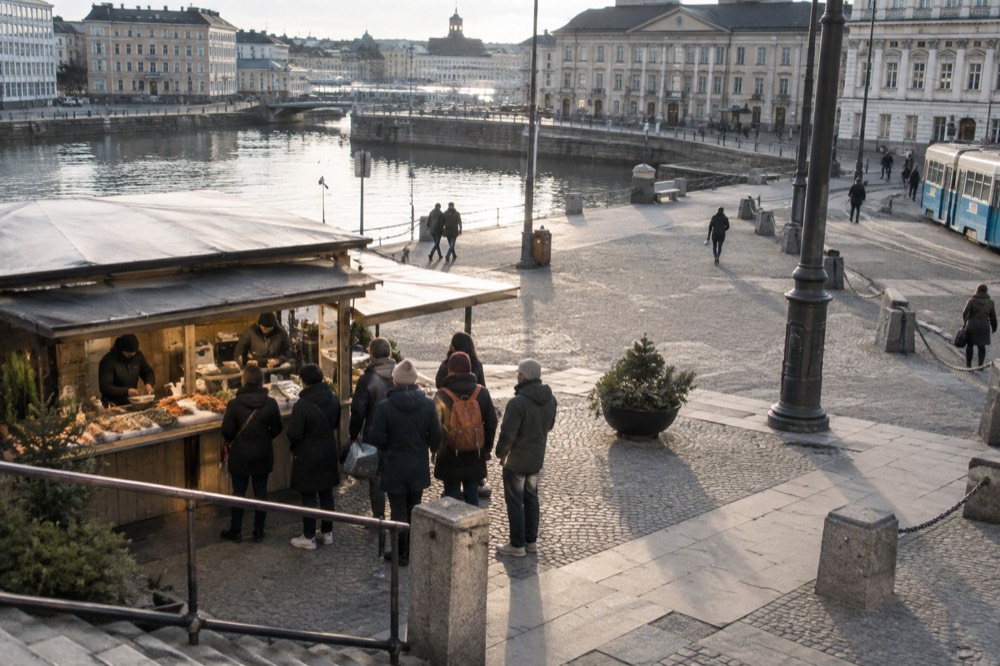
The festival's food programme deserves a mention of its own because it is one of the few festival food strands that reflects a real city food culture rather than a catering contract. Gothenburg's seafood reputation is genuine: the west coast supplies the shrimp sandwiches, oysters and langoustine that appear on menus across town, and Feskekôrka, the fish-church-shaped market hall on Rosenlundsgatan, reopened in 2024 as a full food hall with two fish counters and five restaurants after a renovation. Our Feskekôrka guide covers what is inside now, which is not what older guidebooks describe.
What Is August Weather Like in Gothenburg During the Festival?
August in Gothenburg averages 17.7 °C air temperature with 92.8 mm of rain across about 12 wet days, and the sea at the Vinga lighthouse station peaks at its annual maximum of 18.6 °C in August, so festival weather is mild and occasionally wet rather than hot, and the water for an after-festival swim is warmer than any other month, warmer even than the air on some days.
Those numbers come from SMHI's 1991-2020 normals for station Göteborg A and from SMHI's oceanographic archive at Vinga, and they carry two surprises worth planning around. First, the sea peaks in August, not July, and September water at 16.7 °C is warmer than June water at 16.2 °C, so the festival weekend is the best swimming window of the Gothenburg year. Second, October, not August, is the city's wettest month at 102.9 mm, and April is the driest at 51.3 mm; the rain reputation belongs to autumn, not the festival. It rains on about 127 days a year in Gothenburg, roughly one day in three, and SMHI's own climate pages do not call Gothenburg Sweden's rainiest city, a claim the institute's national maps do not support.
| August fact (SMHI, station Göteborg A / Vinga) | Figure |
|---|---|
| Mean air temperature | 17.7 °C |
| Precipitation | 92.8 mm |
| Days with 1 mm or more rain | 11.9 |
| Mean sea temperature at Vinga | 18.6 °C, the annual peak |
| Daylight on 21 June for comparison | 18 h 06 m |
For packing, that translates to layers and a rain shell rather than a parka or a sun hat as the primary item. A light waterproof, shoes that survive mud, and something warm for the evening, because the park is open and the sea breeze reaches it. Our what to pack for Gothenburg season by season page goes deeper on the same numbers.
Where Should You Eat and Drink Around the Festival Site?
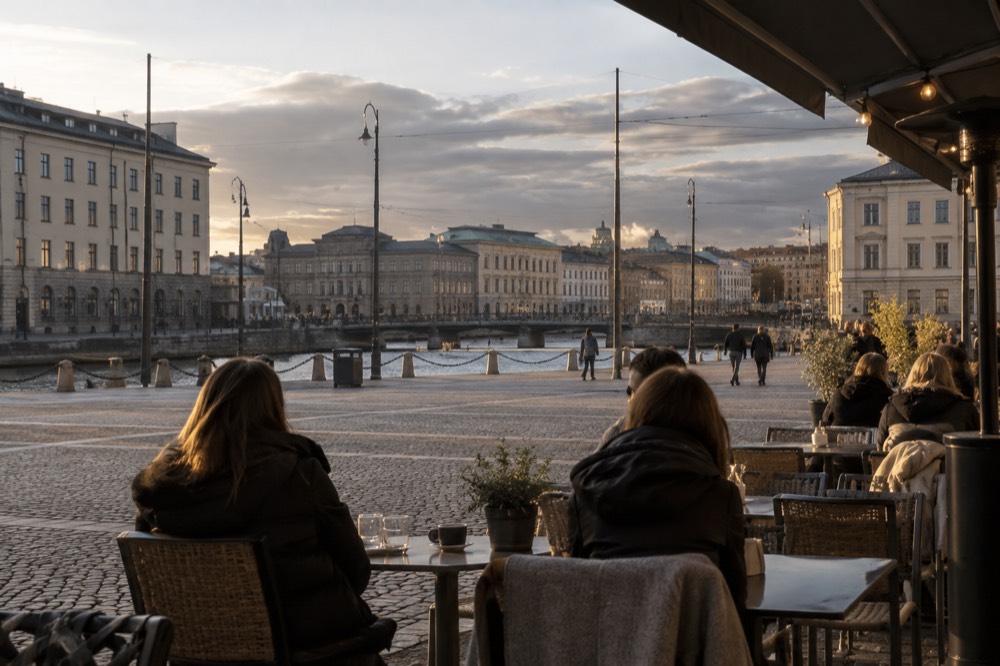
The streets around Slottsskogen, especially Linnégatan and the Andra Långgatan strip in Majorna, hold the bars, cafes and restaurants that do double duty during Way Out West, and the city's wider food scene, from the Saluhallen market to the seafood rooms along the canals, is reachable in minutes by tram, so eating well requires leaving the festival site rather than settling for it.
The geography works in the visitor's favour. Slottsskogen's main entrances sit at the top of Linnégatan, the wide cafe street that runs down toward the canal, and a short walk west puts you in Majorna, the second-hand and bar quarter where the atmosphere stays local even on festival weekend. The where to eat in Gothenburg guide covers the neighbourhoods plate by plate, and fika in Gothenburg explains the coffee-and-cinnamon-bun institution you will encounter in every one of those cafes, usually mid-afternoon, which doubles as a sensible festival-day energy strategy.
One legal quirk that catches foreign visitors: Swedish alcohol retail is a state monopoly. Beer at or below 3.5% ABV, called folköl, is sold in ordinary supermarkets, but anything stronger, plus all wine and spirits, is sold only by Systembolaget under the Swedish alcohol act. Bars and restaurants pour normally, so this only matters if you are planning a picnic in the park, where the supermarket shelf version of a familiar beer brand is often a 3.5% reformulation of the same label. The statute, Alkohollag (2010:1622), sets the thresholds exactly, and our craft beer and bars in Gothenburg coverage treats the bar side of the city in full.
Can You Swim or Visit the Archipelago During a Festival Trip?
Yes, and the festival weekend is statistically the best time of year to do it, because August is when the sea at the Vinga station hits its annual peak of 18.6 °C, and the southern archipelago islands, which are areas of Gothenburg rather than day trips, are covered by the same Zone A Västtrafik ticket that took you to the park, with ferries from Saltholmen reaching car-free islands like Styrsö, Brännö and Vrångö in under an hour.
This is the fact that makes a Way Out West trip better than a generic city festival trip. The islands are inside the city's own fare system, the ferries are ordinary Västtrafik services, and private cars are banned on the southern islands under a city ordinance that permits only taxis and emergency vehicles, so the islands arrive as the locals use them: tram to Saltholmen, boat out, granite and wooden houses and swimming spots. The Gothenburg archipelago guide covers the islands in detail, and the water temperature logic, August warmest, September warmer than June, is in our swimming and beaches in Gothenburg pages.
A realistic festival-morning plan looks like this:
| Time | Plan | Ticket |
|---|---|---|
| Morning | Tram 11 or similar to Saltholmen, ferry to Brännö or Styrsö | Zone A, same ticket |
| Midday | Swim, walk the island paths, eat | Bring cash-free card; islands are small |
| Afternoon | Ferry and tram back, lunch in Majorna | Still Zone A |
| Evening | Slottsskogen stages | Festival pass |

If you would rather see the archipelago from the deck with someone else handling the boat, a guided archipelago cruise runs about two and a half hours from the harbour, and the listing shows the current price and sailing times. It is a different experience from the Västtrafik ferries, which are transport, but it fits an afternoon slot between festival days.
What Else Should You See in Gothenburg Around the Festival?
Gothenburg packs a full city itinerary around Way Out West because the major attractions sit inside the same tram network: Universeum is open every day of the year from 10:00 to 18:00, World of Volvo has replaced the old Volvo Museum which closed permanently in December 2023, Liseberg runs its summer season from 18 April to 20 September with entry from 95 kr that includes no rides, and Göteborgs konstmuseum charges 75 kr.
Those four facts are the ones most likely to be wrong in older guides, so they are worth stating plainly. The Volvo Museum at Arendal is closed, permanently, since December 2023; its successor World of Volvo at Lyckholms Torg is the only Volvo attraction in the city now. Universeum prices dynamically with a booked time slot, so there is no fixed adult price to quote, and busy days sell out, which on a festival weekend means booking ahead. Liseberg's summer season ends 20 September, comfortably after the festival, and its 95 kr entry ticket buys no rides, a split that catches out visitors every year; the Liseberg rides, tickets and when to go guide explains the ticket structure, and Liseberg's own price page publishes the current figures.
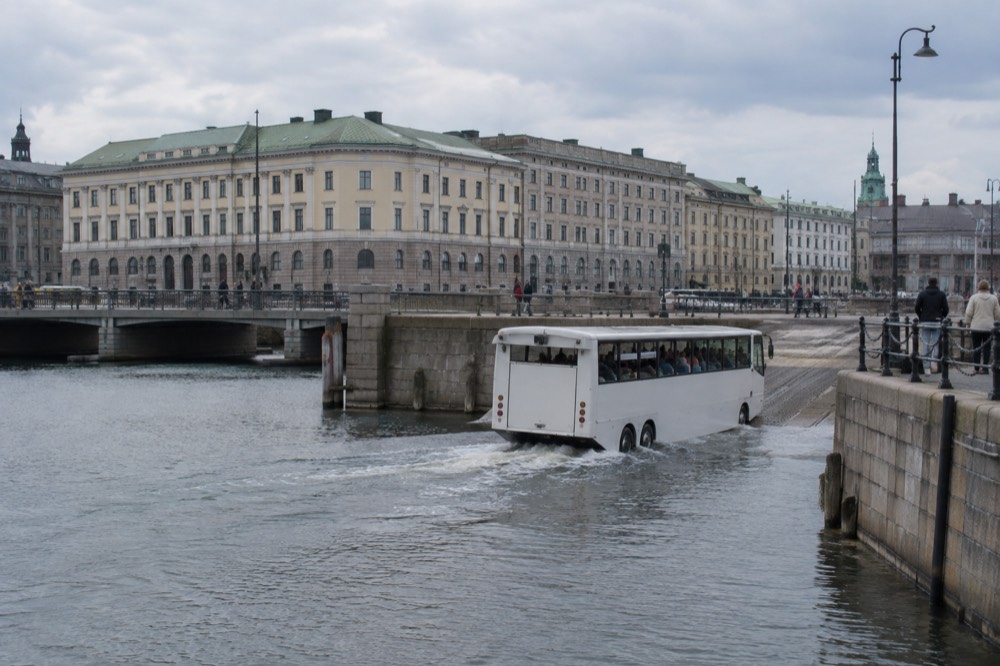
For filling a spare afternoon, the amphibious bus tour is the efficient option: it drives the streets, then enters the harbour and floats, covering in one hour what would otherwise take a bus tour plus a boat tour. It rates 4.7 from 4,326 reviews on the operator's listing and departs from the city centre.
If museums are more your speed, the Gothenburg museums guide ranks the full set, and the free options, including Slottsskogen's own animal park next to the festival site, are listed in free things to do in Gothenburg.
How Much Does a Way Out West Trip Cost?
A Way Out West weekend in Gothenburg costs the festival ticket price plus a hotel at August peak rates, then modest daily costs on top: a 24-hour transport ticket is 125 kr, a single tram fare 38 kr, Liseberg entry starts at 95 kr, Göteborgs konstmuseum is 75 kr, and a mid-range meal runs higher than most of Europe expects, because Sweden's prices apply to everything from coffee to hotel rooms, so budget on the expensive side and treat the city pass question separately.
The honest framing is that Gothenburg is not a cheap city, and festival weekend compounds it, but the costs are predictable. The transport layer is genuinely cheap by European festival standards because one Zone A day ticket covers everything including the ferries. The food layer ranges from supermarket picnic supplies to Michelin-starred tasting menus, and the is Gothenburg expensive guide breaks the numbers down by budget level. On the pass question: the old Göteborg City Card no longer exists, and the Go City product that replaced it does not include public transport, so do not buy a pass expecting it to cover your trams. The city card guide works out when the current pass pays off.
A walking tour with a Swedish fika stop, rated 4.4 from 71 reviews on the listing, is a good value way to get the city's layout and the fika habit explained in one two-hour block, often cheaper than a museum ticket plus a cafe visit done separately.
What Should Your Way Out West Itinerary Look Like?
A sensible Way Out West itinerary uses the festival's own rhythm: festival days in Slottsskogen, club nights in the city, and at least one recovery day on the archipelago ferries, with arrival and departure days given over to Slottsskogen's free zoo, the viewpoints at Masthuggskyrkan or Ramberget, and the food halls, because Gothenburg rewards slow days as much as festival nights and everything listed here sits inside one tram zone.
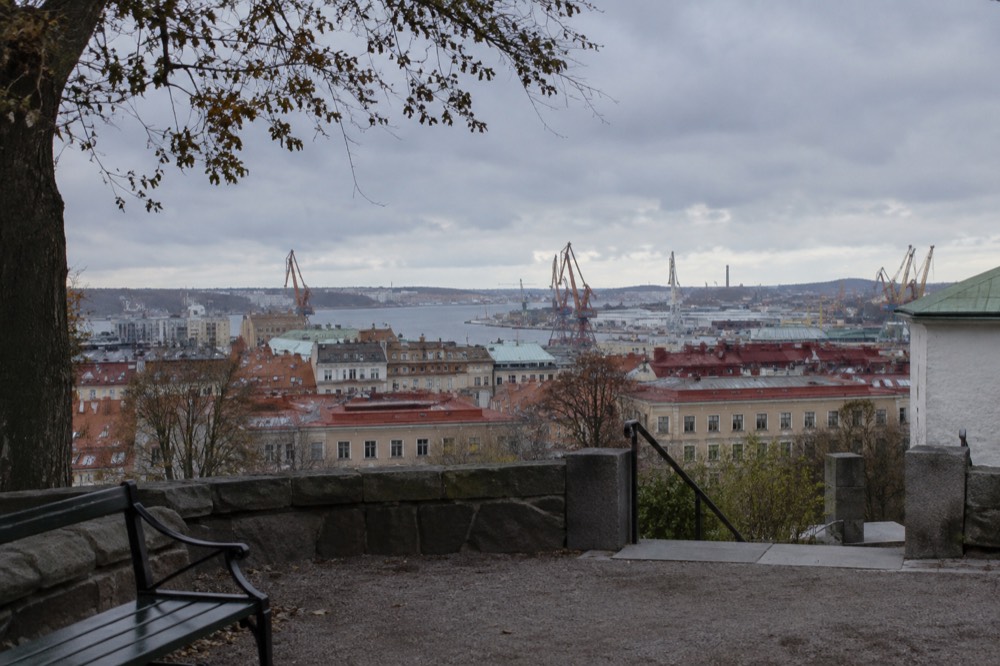
The recovery-day logic is not a luxury. Stay Out West club nights run late, and the ferries from Saltholmen run on ordinary daytime timetables, so the classic move is the late-morning boat to Vrångö or Donsö, a swim in 18-degree water, a simple lunch, and a return tram to Linnégatan in time for the evening's first Slottsskogen set. The viewpoints help too: Masthuggskyrkan's churchyard looks over the harbour and the Älvsborg bridge, and Ramberget on Hisingen gives the skyline panorama locals actually use, both reachable by tram and both free. Our Masthuggskyrkan and the best city viewpoints and Ramberget pages cover where to stand.
If the trip stretches beyond the weekend, the day-trip ring around Gothenburg is unusually strong: Marstrand's island fortress, the Bohuslän granite coast at Smögen and Fjällbacka, and the locks at Trollhättan are all covered in day trips from Gothenburg. But the islands south of the city are not day trips, they are the city itself, and on a festival weekend they are also the best hangover cure in Västra Götaland.
Whether Way Out West is your whole reason for coming or just the anchor for a wider trip, the festival works because Gothenburg does: a compact, tram-served city with a car-free archipelago attached, a food scene that punches above its size, and an August climate that is mild, green and, contrary to the reputation, not the wettest part of the year. Plan the ticket, book the room early, buy the Zone A day ticket, and let the rest flex around whatever the lineup turns out to be. More on the city's rhythm across the seasons is in our best time to visit Gothenburg coverage, and the site that pulled all of this together, Gothenburg Travel Guide, is updated as the facts change.
Common Questions About the Way Out West Festival in Gothenburg
Where is Way Out West held?
In Slottsskogen park in western central Gothenburg, with film and club events in venues around the city. The park is inside Västtrafik Zone A and is reached by ordinary tram.
When is Way Out West?
Each August, over a summer weekend. The festival's own site publishes the exact dates for the coming year; August is also the month the sea temperature at Vinga peaks at 18.6 °C, the warmest of the year.
Can I visit the Gothenburg archipelago during the festival?
Yes. The southern islands are areas of Gothenburg, not day trips, and the ferries from Saltholmen are covered by an ordinary Zone A Västtrafik ticket, the same ticket that takes you to the festival site.
Is the Volvo Museum open during a festival trip?
No. The Volvo Museum at Arendal closed permanently in December 2023. World of Volvo, at Lyckholms Torg, is the successor attraction and is open Monday to Sunday with hours published on its own site.
Does it rain during Way Out West?
Sometimes. August averages 92.8 mm of rain across about 12 wet days at the Göteborg A station, but October, not August, is the wettest month. Pack a light rain shell rather than expecting a washout.
Do I need a car for Way Out West?
No. The park, the club venues, the city centre and the archipelago ferries are all inside Zone A, and the southern islands ban private cars anyway. A 24-hour Zone A ticket at 125 kr covers trams, buses and boats.