Michelin-Starred Dining in Gothenburg, Sweden: A Practical Guide
Gothenburg has spent two decades building a reputation as Sweden's food city, and the Michelin Guide now reviews a cluster of restaurants here. This guide covers how to plan around a starred meal: what the city's food culture actually is, what to book, and what to eat in between.
Short answer
Gothenburg's fine-dining scene is built on west-coast seafood, short travel distances from the harbour, and a compact city centre. Book starred tables well ahead, anchor the trip around the fish church Feskekôrka and the archipelago, and use food walking tours to fill the gaps.
Gothenburg sits at the mouth of the Göta älv, where the river meets the Kattegat, and the city's cooks have never had to look far for their raw material. Shrimp, langoustine, salmon and mussels come off boats that dock minutes from the restaurants that serve them. That proximity is the engine behind the city's food reputation, and it is why the Michelin Guide's reviewers keep a standing interest in a city of 613,274 people on Sweden's west coast. This page is a planning guide: how the guide treats the city, how to book, and how to fill the days between the bookings.
What Does Michelin-Starred Dining in Gothenburg Actually Look Like?
Gothenburg's fine-dining identity is a harbour identity: small, chef-driven restaurants working with Kattegat shellfish and west-coast produce, reviewed by the Michelin Guide but rooted in the fish trade that built the city. The guide's own site carries the current Gothenburg selection, and because starred restaurants here are few and small, tables are scarce, so the practical work of a trip is booking early and building everything else around the meals.
The Michelin Guide does not publish its Gothenburg star decisions through any local channel. The selection lives on the guide's own Gothenburg page, and it changes with each annual round of announcements, so any printed list of names and star counts dates quickly. The honest way to plan is to read the current selection there and treat every secondary list, including this page, as context rather than a booking source. What does not change is the underlying food culture: a compact city, a working harbour, and a supply chain measured in hours rather than days.
The style of cooking you find here is Nordic and maritime at once. Chefs work with cold-water shellfish, preserved and fermented techniques, and a lot of restraint. Portions are typically tasting-menu shaped, service is formal but not stiff, and the dining rooms are small. That smallness matters for planning. A restaurant with twenty seats and one sitting a night cannot absorb a late decision the way a big-city scene can.
The city's broader food credibility is not only about starred tables. Gothenburg recorded over 6 million commercial guest nights in 2025, a record year with the strongest growth in Sweden, and international guest nights were up roughly 15% in the first ten months of the year. The restaurants, the market halls and the archipelago ferry trade all grew with that. A food trip here is easier now than it was five years ago, and busier.
How Do You Book a Starred Meal in Gothenburg?
Book directly with the restaurant as soon as your dates are fixed, expect tasting menus rather than à la carte at the top level, and plan for late seating times in the Swedish style. Gothenburg's top dining rooms are small, so weekend tables can go weeks ahead, and cancellation policies at set-menu restaurants are usually strict because an empty seat means unsold courses.
Sweden dines late by international standards, and Gothenburg follows. Evening sittings often start at 18:00 but the room fills through 19:00 and 20:00. Lunch service at the top level is rare; most starred kitchens run a single evening service. If you want two fine meals in one trip, plan them on separate evenings rather than stacking a lunch and a dinner.
Payment culture matters too. Sweden is close to cashless everywhere, and fine dining is no exception: card or Swish. Tipping is modest by American habit, typically rounding up rather than a percentage, which surprises visitors who budget for it. Our page on Swedish etiquette and tipping in Gothenburg covers the conventions in detail.
Alcohol is the other planning wrinkle. Anything above 3.5% ABV is sold only by Systembolaget, the state monopoly, under Alkohollag (2010:1622), and restaurants buy through licensed wholesale. That shapes wine lists and prices: expect pairing menus to be a significant line item, and expect non-alcoholic pairings to be offered seriously, because Swedish kitchens have invested in them.
If a starred table does not come together for your dates, the city has a deep second tier. The best restaurants in Gothenburg run from harbour shrimp counters to serious bistro cooking, and a trip built on that tier plus one starred meal is a perfectly good outcome.
Which Gothenburg Food Tours Fill the Gaps Between Bookings?
The strongest food tours in Gothenburg are a Swedish west-coast food walking tour from $144 per person rated 4.8 from 17 reviews, a guided walking and fika tour from $93 rated 4.4 from 71 reviews, and a shrimp and salmon cruise with live music from $95 rated 4.7 from 14 reviews. Each one covers a different layer of the food culture: produce, café tradition, and the harbour itself.
Those three come from the current tour roster, and the figures are the listing figures. A food tour is a useful calibration tool on a fine-dining trip: it shows you what the raw ingredients taste like before a starred kitchen works on them, and it fills a daytime slot without exhausting you before an evening tasting menu. More of these guides are collected on Gothenburg Travel Guide.
The table below sets out the food-and-drink tours currently bookable in the city, with the roster's own prices and ratings.
| Tour | Decision name | From | Rating | Duration |
|---|---|---|---|---|
| Swedish Westcoast Food Walking Tour | West Coast Food Walking Tour | $144 per person | 4.8 (17 reviews) | 3 hours |
| Guided Walking and Swedish Fika Tour | Walking Tour, Swedish Fika | $93 per person | 4.4 (71 reviews) | 2 hours |
| Shrimp & Salmon Cruise with Live Music | Shrimp Salmon Cruise, Live Music | $95 per person | 4.7 (14 reviews) | 3 hours |
| Distillery Tour and Guided Tasting | Distillery Tour with Tasting | $56 per person | 5 (3 reviews) | 1h 30m |
| Craft Beer Walking Tour with Tastings | Craft Beer Walk with Tastings | $112 per person | no reviews yet | 3 hours |
| Craft Distillery Tour and Gin-Making Workshop | Distillery Tour, Gin Workshop | $206 per person | no reviews yet | 2 hours |
Two of those listings have no reviews yet. That is real information about new products, not a red flag, but it is worth knowing before you book. The distillery tasting at $56 is the cheapest structured food-and-drink experience in the roster, and the gin-making workshop at $206 is the most involved.
The fika tour deserves a special word because fika is the city's daily food ritual, not a tourist invention. The fika tradition explained is its own topic, but in short: coffee plus a baked good, taken mid-morning or mid-afternoon, socially. A starred dinner tastes different once you understand the café culture underneath it.
Where Does the Seafood in a Gothenburg Starred Meal Come From?
The city's kitchens draw on the Kattegat and the west coast: shrimp, langoustine, salmon and mussels, sold through Feskekôrka, the fish church, which reopened in 2024 as a food hall with five restaurants and two fish counters, and through Stora Saluhallen on Kungstorget, the city's other great market hall. Feskekôrka is the one to see, and it is not what older guidebooks describe.
Feskekôrka, the 1874 building shaped like a church, closed for renovation while most of the internet's Gothenburg content was written, and reopened in 2024, the year it turned 150. It is a food hall now, not a row of fish counters. The current lineup, per the hall's own site, is fish counters Ebbes Fångst and Flåtens Fiskhandel plus five restaurants: Haldis Kök, Pråmenaden, Victor von G, Lilla Åstol and Ekmans. Lilla Åstol is seasonal and reopens in spring.
That matters for a food trip in two ways. First, you can eat a full seafood meal inside the building that supplies the city's cooks, which is the closest thing Gothenburg has to a ground-zero food experience. Second, the older "closed for renovation" claim is everywhere online, so if you read that Feskekôrka is shut, you are reading a stale page. Our Feskekôrka guide covers the hall as it is now.
Stora Saluhallen on Kungstorget is the second hall, a classic 19th-century market building with butchers, cheesemongers and delis. Between the two halls you can assemble a picnic that would cost triple in restaurant form. The saluhallen and food halls guide maps both.
The archipelago is the other half of the seafood story. The islands south of the city, Styrsö, Brännö, Vrångö, Donsö and the rest, are areas of Gothenburg, not day trips, reached by tram to Saltholmen and then ferry on an ordinary Västtrafik ticket. Fishing families still live out there, and the shrimp a starred kitchen serves may well have come off a boat you can watch come in. The southern archipelago guide explains the ferry system.
When Is the Best Time of Year for a Food-Focused Gothenburg Trip?
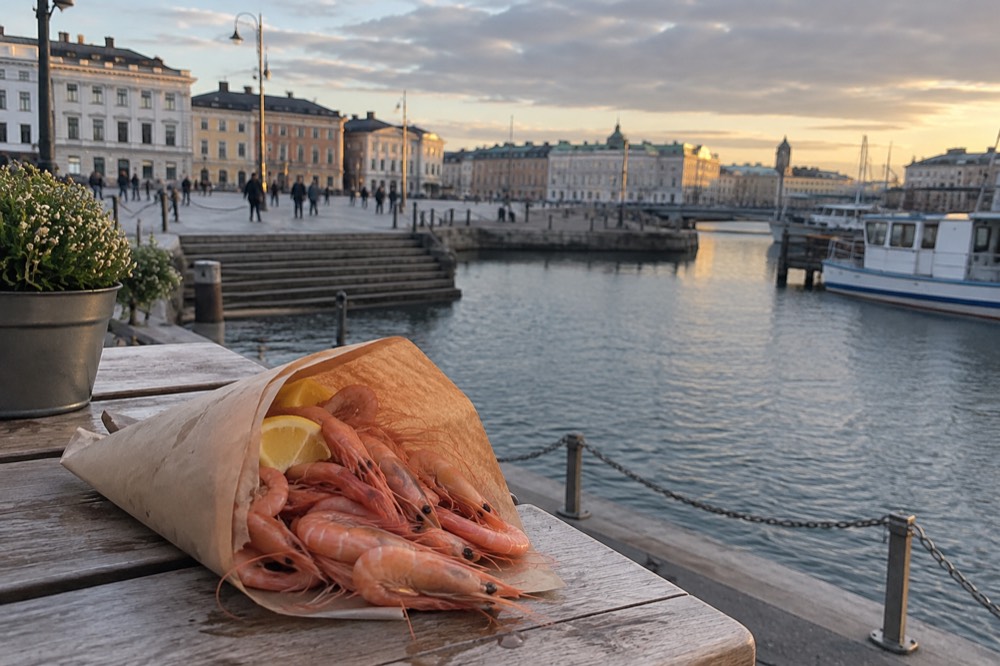
Late August through September is the sweet spot: the sea is at or near its warmest, the shellfish season is building, the tourist peak has passed, and October, the wettest month at 102.9 mm of rain, has not yet arrived. April is the driest month of the year at 51.3 mm if you want maximum daylight reliability, and December trades food for Christmas markets and six and a half hours of daylight.
The numbers come from SMHI, the Swedish Meteorological and Hydrological Institute, using its 1991-2020 normals for station Göteborg A and its quality-controlled oceanographic archive at Vinga. The surprise in the sea data is the calendar: water temperature peaks in August at 18.6 C, not July, and September water at 16.7 C is warmer than June water at 16.2 C. The sea runs about six weeks behind the air. For a diner, that means early autumn, not midsummer, is when cold-water shellfish and harbour life align best.
The monthly picture, from the verified climate and sea-temperature data:
| Month | Rain, mm | Wet days (≥1 mm) | Mean sea temp, C | Food-trip note |
|---|---|---|---|---|
| April | 51.3 | 8.2 | 7.1 | Driest month, spring menus |
| June | 73.7 | 10.0 | 16.2 | Longest days, peak crowds |
| July | 81.3 | 9.8 | 18.3 | Warmest air, busiest tables |
| August | 92.8 | 11.9 | 18.6 | Warmest sea of the year |
| September | 80.0 | 10.8 | 16.7 | Sea warmer than June, quieter city |
| October | 102.9 | 12.6 | 12.8 | Wettest month, game and autumn menus |
| December | 93.0 | 13.3 | 5.5 | Christmas market season, 6 h 32 m daylight |
Daylight is the other seasonal factor. On 21 June the city gets 18 hours 6 minutes of daylight; on 21 December, 6 hours 32 minutes. A December food trip is entirely viable, the Gothenburg Christmas market guide covers that season, but dinner at 18:00 will feel like night and lunch should be your daylight activity. The best time to visit guide works through the trade-offs month by month.
How Much Does a Michelin-Level Food Trip to Gothenburg Cost?
The tour floor for food experiences runs from $56 per person for a distillery tasting to $206 per person for a gin-making workshop, with walking food tours at $93 to $144, and those are the costs you can verify before you fly. Starred tasting menus themselves are priced by each restaurant and change, so treat any figure you read online, including a converted one, as unverified and check the restaurant's own booking page.
What can be planned from verified numbers is everything around the meal. Transport is the easiest: a 24-hour Zone A Västtrafik ticket costs 125 kr and covers trams, buses and the archipelago ferries, which means your harbour and island excursions are effectively bundled into one daily ticket. A single adult one-zone fare is 38 kr. The trams, tickets and zones guide has the full fare picture.
The planning ranges below are for orientation, not promises: prices at the top of the market move with season and menu, and the only reliable source for a specific restaurant is that restaurant.
| Trip component | Verified price or basis | Where the figure comes from |
|---|---|---|
| Distillery tour with tasting | From $56 per person | Tour roster |
| Walking tour with Swedish fika | From $93 per person | Tour roster |
| West coast food walking tour | From $144 per person | Tour roster |
| Shrimp and salmon cruise | From $95 per person | Tour roster |
| 24-hour transport, Zone A | 125 kr, includes archipelago ferries | Västtrafik fare page |
| Starred tasting menu | Priced per restaurant, check the booking page | Not a fixed verifiable figure |
For the wider budget picture, including hotels and everyday eating, the what a trip really costs guide breaks the city down. The short version: Gothenburg is cheaper than Stockholm for like-for-like dining, and the market halls let you eat extraordinarily well for very little.
One structural saving worth knowing: the old Göteborg City Card no longer exists, and the Go City pass that replaced it does not include public transport. If a pass makes sense for your itinerary, the city pass guide runs the maths, but do not buy one expecting it to cover your tram fares.
How Do You Build a Full Day Around One Big Meal?
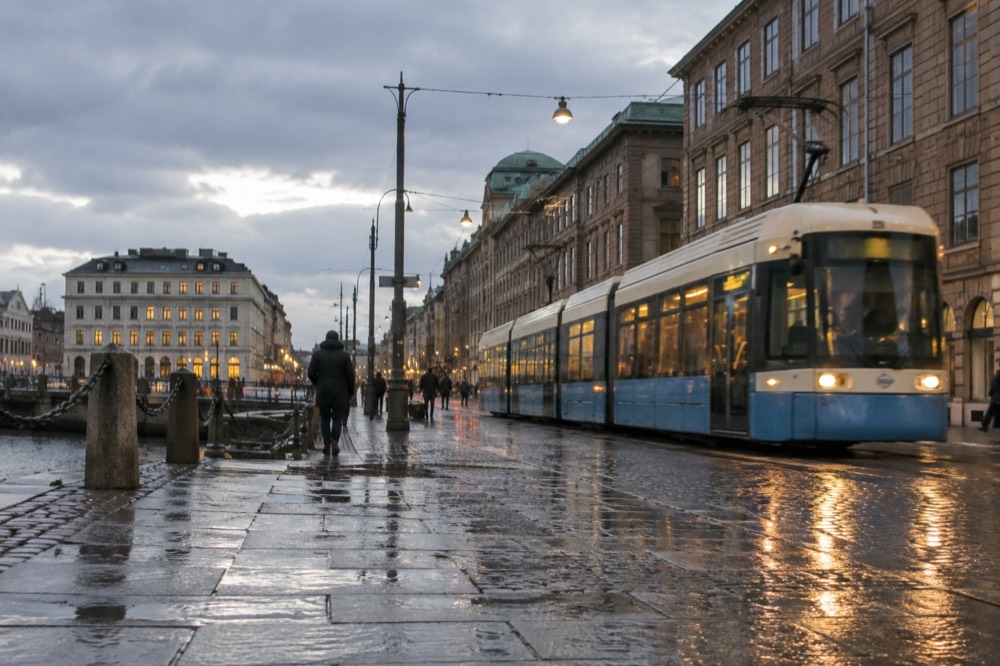
Structure the day backwards from the dinner: a slow morning with fika, a market hall or archipelago ferry in the middle, a food walking tour or harbour cruise if you have room for it, and then the starred meal as the finale, with almost nothing scheduled after it. Gothenburg is compact and tram-served, so a single 125 kr day ticket can carry the whole itinerary from café to island to restaurant door.
A sample shape, assembled from the verified building blocks. Morning: fika in the Haga wooden old quarter, where the café tradition is densest. Midday: Feskekôrka for a counter lunch, or the tram to Saltholmen and a ferry to Brännö or Styrsö if the weather holds. Afternoon: back to the centre, a rest, then dinner. The one day in Gothenburg and two days in Gothenburg itineraries show how a food-first day slots into a longer stay.
The amphibious bus tour is a surprisingly good fit for a dining day. It runs one hour, covers both the streets and the harbour from the water, and it is the highest-reviewed sightseeing product in the roster at 4.7 from 4,326 reviews, from $36 per person. It burns no energy, which is exactly what you want before a long tasting menu.
If you would rather be on the water longer, the guided archipelago cruise runs 2.5 hours from $44 per person, rated 4.4 from 1,488 reviews, and there is a lunch-included version from $68. The shrimp and salmon cruise with live music, from $95, is the one that doubles as a meal itself; do not book it the same day as a starred dinner unless you have a serious appetite.
For anyone pairing the food trip with a wider west Sweden visit, the day trips from Gothenburg guide covers Marstrand and the Bohuslän coast, where the seafood culture continues up the granite islands. And if you are still deciding whether the city justifies the flight, the is Gothenburg worth visiting question has a food-shaped answer.
Common Questions About Michelin-starred Dining in Gothenburg
Does Gothenburg have Michelin-starred restaurants?
Yes. The Michelin Guide reviews restaurants in Gothenburg and its current selection is published on the guide's own site. Because star announcements happen annually and the city's top dining rooms are small, the reliable planning method is to read the live selection and book directly rather than work from any printed list of names.
How far in advance should I book a starred restaurant in Gothenburg?
As soon as your travel dates are fixed, and for weekend evenings, several weeks ahead. The top kitchens here are small, often with a single evening sitting and a set tasting menu, so capacity is genuinely limited. Cancellation terms at set-menu restaurants tend to be strict because an empty seat means unsold courses.
What is the best month for a food trip to Gothenburg?
September is the strongest all-round choice. The sea is warmer than in June, per SMHI's Vinga station data, the tourist peak has passed, and October's rain, the wettest month at 102.9 mm, has not arrived. April is the driest month of the year at 51.3 mm if daylight reliability matters more than the sea.
Is Feskekôrka open?
Yes. The fish church reopened in 2024 as a food hall with five restaurants and two fish counters. Many older guides still describe it as closed for renovation or as a pure fish market; both descriptions are years out of date.
Can you eat well in Gothenburg without a starred booking?
Easily. The city's food reputation rests as much on its market halls, shrimp counters and café tradition as on its fine dining. A trip built around Feskekôrka, Stora Saluhallen, an archipelago ferry and a food walking tour captures most of what the starred kitchens are working with, at a fraction of the cost.
Do you tip at fine-dining restaurants in Gothenburg?
Tipping in Sweden is modest: rounding up the bill is normal, a large percentage is not expected. Payment is card or Swish, cash is effectively unusable, and that applies to restaurants as much as to trams and shops.