Swedish Etiquette and Tipping in Gothenburg: What Visitors Actually Need to Know
Gothenburg runs on a handful of quiet social rules: nobody expects a tip, fika is a scheduled institution, the queue is sacred, and beer above 3.5% ABV is sold in exactly one kind of shop. Here is what the rules are and where they come from.
Short answer
Tipping in Gothenburg is optional and modest: rounding up a restaurant bill or leaving about 5-10% for good service is appreciated but never expected, because Swedish restaurant staff are paid a full wage. Most other etiquette is about restraint, punctuality, fika, and the state alcohol monopoly.
Gothenburg rewards visitors who arrive knowing a few things: that nobody here is waiting for your tip, that the coffee break called fika is closer to a constitutional right than a snack, and that the beer on a supermarket shelf is legally capped at 3.5% ABV. The rules are few, but they are real, and most of them are written into Swedish law or the city's own transport and retail systems rather than into anyone's opinion.
This page covers the etiquette a visitor to Gothenburg, Sweden, actually runs into: tipping in restaurants, taxis and bars; fika; queueing; shoes indoors; punctuality; small talk with strangers; and the alcohol rules that surprise almost everyone. Where a rule has an official source, we cite it. Where it is a social custom, we say so plainly, because a custom and a statute are different things and confusing them is how bad advice spreads.
Do You Tip in Gothenburg Restaurants?
No, tipping in Gothenburg is not expected, and no service charge is added to your bill. Swedish restaurant staff earn a full wage by law, so a tip is a genuine thank-you rather than a wage subsidy. Rounding up the bill, or leaving roughly 5-10% when the service was genuinely good, is appreciated and never demanded. Leaving nothing causes no offence at all.
The background matters for understanding why. Tipping culture in North America exists because tipped staff are paid a low base wage. Sweden has no such two-tier system, so the moral weight that hangs over a tip in, say, the United States simply does not exist here. A card terminal in a Gothenburg restaurant may offer a round-up option or a tip prompt on the screen, but declining it is completely normal and nobody at the table will notice.
The same logic runs through the rest of the service economy. Taxi drivers do not expect a tip; the meter is the price. Hotel porters and housekeeping staff are not working for tips either. Bartenders will not look at the bar counter after you pay. If you want to leave something in any of these settings, rounding up to a convenient number is the Swedish way, and a pile of coins left on a table is more likely to be mistaken for forgotten change than read as gratitude.
One practical note: Gothenburg is overwhelmingly cashless, so "rounding up" happens on the card terminal, not with notes. If a handheld terminal offers preset tip percentages, choosing zero is a routine, unremarkable tap. For more on cards, cash and why you should not plan to pay with notes anywhere, see our guide to money, cards and cash in Gothenburg.
What Is Fika and Why Does It Structure the Gothenburg Day?
Fika is the Swedish coffee break, and in Gothenburg it is a twice-daily institution rather than a casual option: a pause with coffee, something baked, and other people, mid-morning and mid-afternoon. It is not "grabbing a coffee". It is a scheduled social event that workplaces, friends and families protect, and declining an invitation to fika is a bigger social statement than declining a dinner invitation in many other countries.
The word is both the noun and the verb: you can have a fika, and you can fika. What goes on the table is usually coffee plus a cinnamon bun (kanelbulle) or something similar, though tea works too, and the pastry is negotiable. The pause is not. Swedes treat it as a legitimate work activity, and the standard tourist mistake is treating it as a snack stop you can skip.
Etiquette around fika is light. If a workplace or a local invites you, accept. If you are in a group, the person who suggests fika often pays, and rotating the treat is the norm in a recurring group. Nobody watches how you hold your cup. The custom runs deep enough that we have a whole page on how fika works in Gothenburg and where to do it, including the city's best bakery rooms.
Fika also explains a lot of Gothenburg's café geography. Haga's cafés are built for long, slow fika sittings, and the city's museum cafés are treated as destinations in their own right. Several tours lean on the custom directly, and they are a reasonable shortcut if you want the ritual explained while you eat.
A fika-forward walking tour is one of the easier ways to see the custom done properly by people who live inside it, and the trio above all build the pause into the itinerary rather than racing past it.
Why Is Supermarket Beer Weak, and What Is Systembolaget?
Swedish law caps supermarket beer at 3.5% ABV. Anything stronger, plus all wine and spirits, can only be sold by Systembolaget, the state-owned retail monopoly, under Alkohollag (2010:1622). The statute defines beer over 2.25% but not over 3.5% as folköl, sold in ordinary shops, and beer over 3.5% as starköl, which only the monopoly may retail.
This is not a custom, it is chapter and verse. The Swedish alcohol act, Alkohollag (2010:1622), sets the thresholds in 1 kap. 8 §, and 5 kap. 1-2 § reserves retail of spirits, wine and starköl to the wholly state-owned monopoly. The practical consequence for a visitor is that the same beer brand on a supermarket shelf is often a 3.5% reformulation of the beer you know from home, which is why Swedish supermarket beer tastes weaker than its label suggests.
Systembolaget stores close on Sundays, and weekday hours vary by store, so plan a Saturday or an evening purchase rather than assuming a Sunday run will work. There is no social stigma around using the monopoly; Swedes do it weekly. The etiquette point is simpler than the legal one: do not expect a late-Sunday bottle of wine anywhere in Gothenburg, and do not expect any shop at all to sell you strong beer.
Gothenburg's own craft beer scene is excellent and largely lives in bars and breweries, which is where the full-strength versions are poured. Our page on craft beer and bars in Gothenburg covers where the strong stuff actually gets served.
How Do Gothenburg Queues, Punctuality and Personal Space Work?
Gothenburg queueing is strict, silent and self-organised: you take a number ticket where one exists, you line up where one does not, and you never push in, even by accident. Punctuality is treated as a baseline courtesy rather than a virtue; five minutes early is normal for meetings, and calling ahead if you are late matters more than the lateness itself. Swedes keep about an arm's length of personal space and avoid small talk with strangers on trams.
The queue is the closest thing Sweden has to a sacred object. At a bakery counter, a bus stop or a pharmacy, the person who arrived first is served first, and everyone present knows who that was. Number-ticket systems (nummerlapp) are common anywhere a wait is possible, so the first move in an unfamiliar shop is to look for the ticket machine by the door, not to walk to the counter.
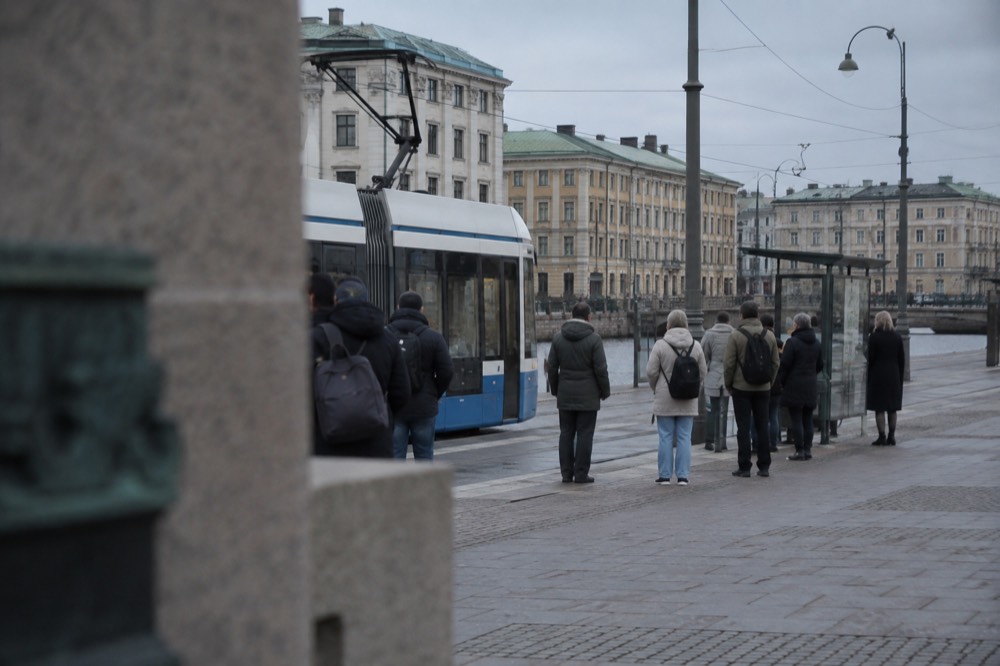
Personal space and silence go together. On the tram, talking loudly on a phone draws real disapproval, and the quiet carriage atmosphere is not a rule anyone posts, it is just how the city travels. Swedes are not unfriendly; they simply do not open with strangers, and they warm up fast once an actual reason to talk exists. Asking a local for directions works fine. Narrating your day to the whole tram car does not.
The tram network itself, 12 lines and 188 km of single track as of Göteborgs Spårvägar's 2022 annual report, is the backbone of all of this, and etiquette on it is covered in detail in getting around Gothenburg: trams, tickets and zones. The fare side is simple enough that it never becomes a social test: a single adult ticket in one zone is 38 kr and a 24-hour Zone A ticket is 125 kr, per Västtrafik's own fare pages, and the same ticket covers the archipelago ferries from Saltholmen, so there is no separate etiquette of buying a boat ticket to learn.
Do You Take Your Shoes Off Indoors in Gothenburg?
Yes, almost always. Taking shoes off when entering a Swedish home is a firm custom, and the cue is simple: if there is a pile of shoes by the door, yours join it. The custom comes from winter, mud and wooden floors, and it applies to dinner parties, family visits and even some workplaces. Only an explicit "keep your shoes on" from your host overrides it.
The practical version: wear socks you are not ashamed of. Shoes-off applies year-round, not just in winter, and it extends to many of the city's smaller guesthouses, some museum activity rooms, and any home you visit, including brief visits. Nobody will say anything if you hesitate at the door, but the pile of shoes is the instruction.
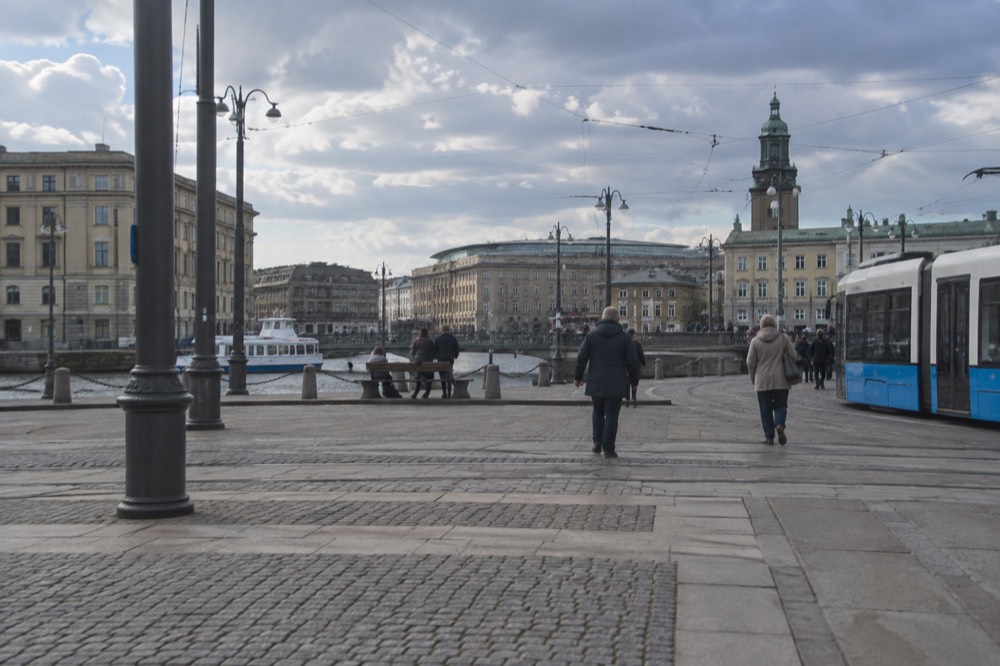
Related indoor customs worth knowing: gifts for a host are modest, flowers or wine are normal, and arriving on time to a dinner invitation means on time, not twenty minutes "fashionably" late. If you are invited to a Gothenburg home, that is a genuinely generous gesture, because Swedes entertain at home far more than they meet out. Say thank you with a follow-up message the next day; that is noticed and appreciated.
What Are the Gothenburg Tipping and Etiquette Rules for Bars, Taxis and Tours?
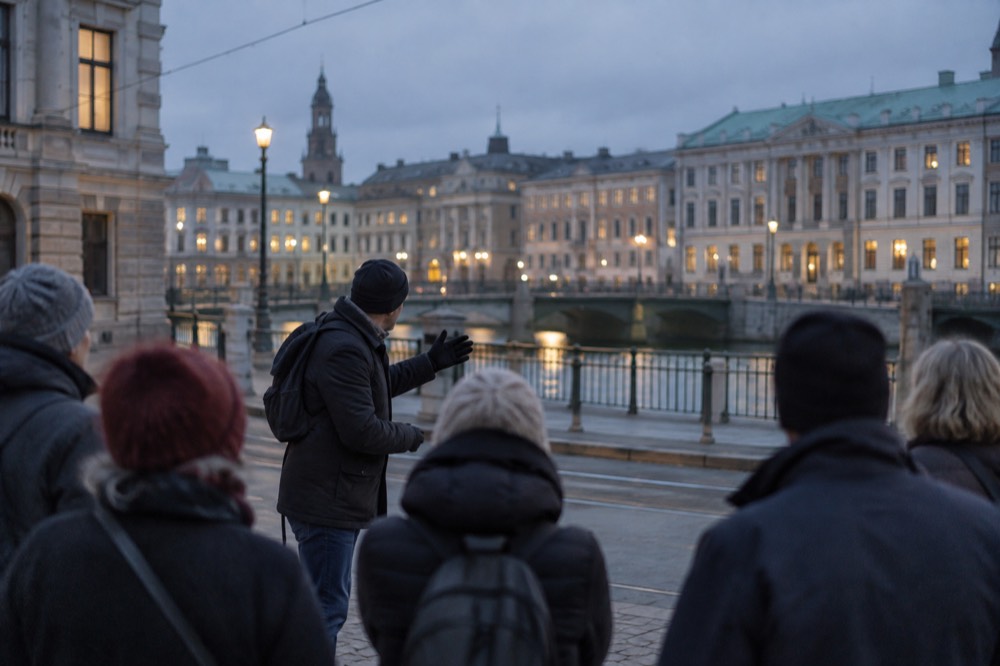
In bars you do not tip per round, and leaving coins on the bar is not read as a tip. Taxis run strictly on the meter with no gratuity expected. For guided tours, a tip is optional and modest: rounding up or a small amount for a guide who was genuinely good is welcome, and free tip-based walking tours are the one format where the tip is the entire payment model.
The free-walking-tour point deserves its own explanation, because it is the one place where the no-tipping norm inverts. Gothenburg has several genuinely free, tip-based walks where the guide is paid only what the group gives at the end. These are real tours, not teasers: the Majorna free walk on GuruWalk runs about an hour and a half and carries a 4.77 rating from 234 reviews, and the hidden-corners walk on GuruWalk runs 2 hours 15 minutes rated 4.88 from 24 reviews. On those, budget a tip as you would a ticket price, in cash if you can.
For paid tours, including everything else on this site's roster, the price is the price. If a guide was exceptional, a small tip or a good written review is the way to say so, and the review honestly matters more, because these are mostly small operators. For the food and drink walks, the same rules as restaurants apply to any tastings included along the way.
A distilled version of the whole picture:
| Situation | Expected tip | What actually happens |
|---|---|---|
| Restaurant, table service | None | Round up or 5-10% if service was good; zero is fine |
| Restaurant, counter or café | None | Nothing; you paid at the till |
| Bar | None | No tipping per round, no coins on the bar |
| Taxi | None | Meter price, paid by card |
| Paid guided tour | None | Small tip or a review if the guide was excellent |
| Free (tip-based) walking tour | The tip is the payment | Budget it like a ticket price |
| Hotel staff | None | No tipping culture for porters or housekeeping |
What Surprises Most Visitors About Gothenburg Manners?
Three things catch people off guard: the silence on public transport, the directness of answers, and the fact that "how are you?" is a real question here rather than a greeting. Swedes answer questions literally and briefly, do not fill pauses with talk, and interpret "hej hej" said twice as goodbye rather than hello. None of this is coldness; it is a low-friction, low-noise social default that visitors usually stop noticing within two days.
Swedish communication is direct in content and sparse in packaging. A Gothenburger asked for a restaurant recommendation will give you one name and a reason, not a list of fifteen with hedging. "Hej" is hello; "hej hej" is goodbye; and the double usage is a genuine trap on day one. English is spoken so widely that the language barrier is close to zero, which our page on English, Swedish and getting by in Gothenburg covers in full.

A quick comparison of the customs that differ most from Britain, the US and Germany:
| Custom | Gothenburg norm | Common visitor mistake |
|---|---|---|
| Tipping | Optional, round up at most | Tipping 20% out of guilt |
| Greeting | Handshake or "hej", no cheek kiss | Overly physical greetings |
| Small talk | Minimal with strangers | Chatting to neighbours on the tram |
| Queueing | Strict, silent, self-organised | Asking "who's last?" is fine; pushing in is not |
| Dinner invitations | Arrive on time, shoes off, modest gift | Arriving late, shoes on, extravagant gift |
| Alcohol | Supermarket beer stops at 3.5%, monopoly above | Expecting Sunday wine sales |
How Does Etiquette Change with the Seasons in Gothenburg?
Winter etiquette is quieter and more indoor, summer etiquette is more public and more relaxed, and the biggest seasonal shift is where fika and social life happen rather than how people behave. In December the city concentrates around the Christmas market at Liseberg and mulled glögg, in summer it moves to the archipelago ferries and harbour rocks, and the underlying rules, punctuality, queueing, modest tipping, never change at all.
The seasonal layer is worth a paragraph because it changes what etiquette you will actually exercise. A December visitor will spend time in Gothenburg's Christmas market and in candlelit cafés, where the shoes-off and punctuality rules do most of their work at private gatherings. A summer visitor will spend time on the car-free southern islands, where the etiquette is mostly about respecting the ferry queue at Saltholmen and not disturbing the stillness that islanders move out there for. The best time to visit Gothenburg depends more on weather than on manners, but the social texture does shift with the light: 6 h 32 m of daylight on 21 December against 18 h 06 m on 21 June changes how much of the city happens outdoors.
If one of those fika-based tours fits your dates, booking ahead is sensible in the July-to-August window, when the city's commercial guest nights push past six million a year and the popular small-group walks fill first.
The seasonal pattern at a glance:
| Season | Where social life happens | Etiquette in play |
|---|---|---|
| Spring (Apr-May) | Café terraces, parks, driest months of the year | Fika invitations, queueing at bakery counters |
| Summer (Jun-Aug) | Archipelago ferries, harbour rocks, outdoor tables | Ferry queues, respecting island quiet, cashless rounds |
| Autumn (Sep-Oct) | Indoor fika, museums, the wettest month arrives | Shoes-off visits, punctual dinner invitations |
| Winter (Nov-Mar) | Christmas market, candlelit homes, glögg | Host gifts, timeliness, Systembolaget planning before Sunday |
Common Questions About Swedish Etiquette and Tipping in Gothenburg
Do you tip in Gothenburg?
No, tipping is not expected. Swedish service staff are paid a full wage, so rounding up a restaurant bill or leaving about 5-10% for genuinely good service is a nice gesture, and nothing at all is completely normal.
Is it rude to tip in Sweden?
It is not rude. A modest tip is accepted and appreciated. What would stand out is a large American-style tip, which can cause mild awkwardness, and tipping per round in a bar, which is simply not done.
Do you tip taxi drivers in Gothenburg?
No. The meter is the price, payment is by card, and no gratuity is expected. Rounding up to a convenient figure is fine but unusual.
Do you tip on free walking tours in Gothenburg?
Yes. Free walking tours are tip-based, meaning the tip is the guide's entire payment, so budget it like a ticket price rather than a bonus.
What is fika in Sweden?
Fika is the Swedish coffee break with something baked, taken mid-morning and mid-afternoon, treated as a scheduled social institution rather than a snack. In Gothenburg it structures the working day.
Why is Swedish supermarket beer so weak?
Swedish law caps supermarket beer at 3.5% ABV. Anything stronger, plus all wine and spirits, is sold only by Systembolaget, the state monopoly, under Alkohollag (2010:1622).
Should you take your shoes off in a Swedish home?
Yes, essentially always. If there is a pile of shoes by the door, yours join it. The custom applies year-round and only an explicit invitation from your host overrides it.
The short version of all of it: Gothenburg is a low-pressure city socially. Tip lightly or not at all, queue properly, be on time, take your shoes off, and say "hej hej" on the way out. For more on the city's daily rhythms, start with Gothenburg Travel Guide and the fika page, and work outward from there.