Gothenburg in Spring: What the City Is Like from March to May
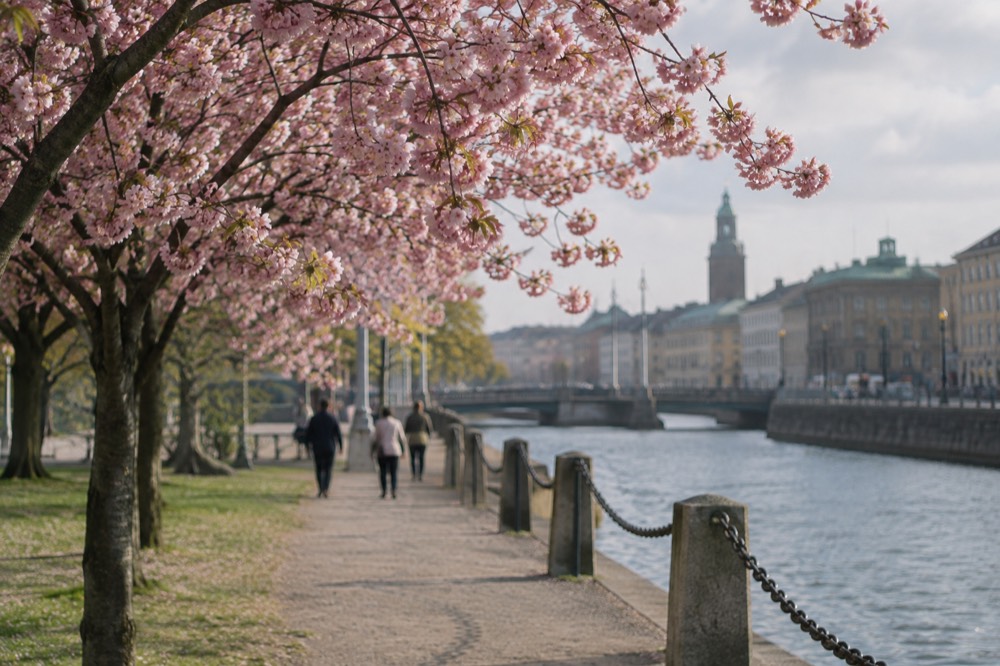
Spring in Gothenburg is the season the city's own weather data argues for: April is the driest month of the year, daylight stretches from seven hours toward eighteen, and the crowds have not arrived yet.
Short answer
Spring runs March through May. April is Gothenburg's driest month at 51.3 mm of rain, sea temperature climbs from 4 C to 11.6 C, and Liseberg opens its summer season in mid-April. Bring layers, a rain jacket for March, and expect long light evenings by May.
Spring is the season Gothenburg's own weather data quietly argues for, and the one most visitors skip. SMHI's 1991-2020 normals for station Göteborg A show that April is the driest month of the year in Gothenburg, at 51.3 mm of rain over just 8.2 wet days, while the wettest month is October at 102.9 mm, after the tourists have gone home. The city's rainy reputation belongs to autumn and winter, not to April and May. Daylight is the other argument: the winter solstice gives Gothenburg 6 hours 32 minutes of light, but by late April the evenings run long, and by 21 June the city gets 18 hours 6 minutes. Spring is when that swing happens, week by week, and you can watch it.
This guide covers what the city is actually like in March, April and May: the real temperatures and sea conditions, what opens when, what to book ahead, and how to plan around the things that catch visitors out. The headline facts come from SMHI, Västtrafik, Liseberg and the venues' own pages, not from the recycled cliches that follow this city around.
What Is the Weather Like in Gothenburg in Spring?
Spring in Gothenburg is a slow climb rather than a switch: March averages 3.0 °C, April 7.7 °C and May 12.4 °C, with rainfall actually falling through the season, from 54.0 mm in March to 51.3 mm in April, the driest month of the entire year. July, at 18.3 °C, is warmer than any spring month, but April and May are drier than July, August, September, October, November or December.
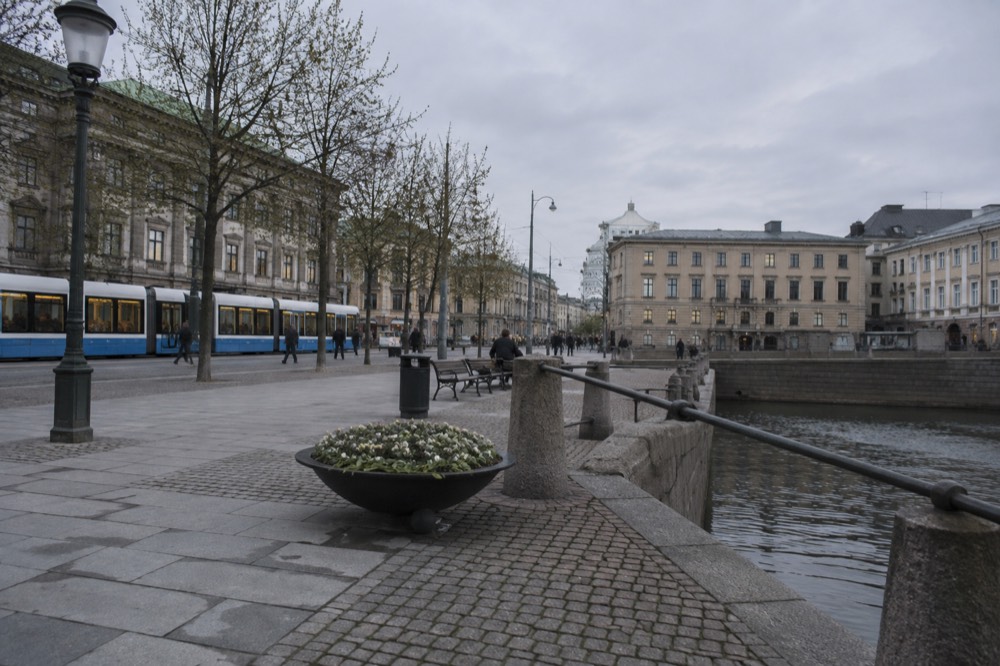
The numbers come from SMHI's 1991-2020 normals for station Göteborg A (71420), the institute's own long-period averages rather than a single year's luck. March is still a winter-adjacent month: mean air temperature 3.0 °C, with 54.0 mm of rain spread over 8.8 days, and a real chance of the last sleet. April is the turnaround. At 7.7 °C mean and 51.3 mm of rain on 8.2 wet days, it is statistically the most reliable month of the year for dry weather in Gothenburg. May pushes to 12.4 °C with 54.3 mm of rain.
| Month | Mean air temp | Rainfall | Days with ≥1 mm rain | Daylight at mid-month |
|---|---|---|---|---|
| March | 3.0 °C | 54.0 mm | 8.8 | about 11 h 50 m |
| April | 7.7 °C | 51.3 mm | 8.2 | about 14 h 10 m |
| May | 12.4 °C | 54.3 mm | 8.8 | about 16 h 20 m |
| June | 15.7 °C | 73.7 mm | 10.0 | about 18 h 00 m |
Two things follow from this table. First, spring is not the wet season here, whatever the city's reputation says. SMHI does not call Gothenburg Sweden's rainiest city, and its own normals show the national maxima sit in the western highlands and the mountains, not in this city. Second, June is wetter than every spring month, so a May visit is not a consolation prize; it is a better bet on paper than early summer.
Pack layers. A March afternoon can reach 10 °C in the sun and drop to freezing after sunset. By May, locals sit outside cafes in Avenyn in the early evening, but the sea breeze off the Kattegat keeps the harbour colder than the streets a kilometre inland.
When Does Gothenburg Spring Actually Start?
By the calendar, spring in Gothenburg is March to May, but the felt season starts later: March still reads as winter, with a mean of 3.0 °C, while the real change comes in April, when the mean jumps to 7.7 °C, rainfall hits its annual minimum of 51.3 mm, and Liseberg opens its summer season on 18 April.
The light is the honest marker. On 21 December Gothenburg gets 6 hours 32 minutes of daylight; by the spring equinox in late March it is over 12 hours, and by mid-May the evenings run past 21:30 with civil twilight stretching later still. The US Naval Observatory's tables for the city show 21 June at 18 hours 6 minutes of daylight, with only about three and a half hours of true night. May is when you start feeling that.
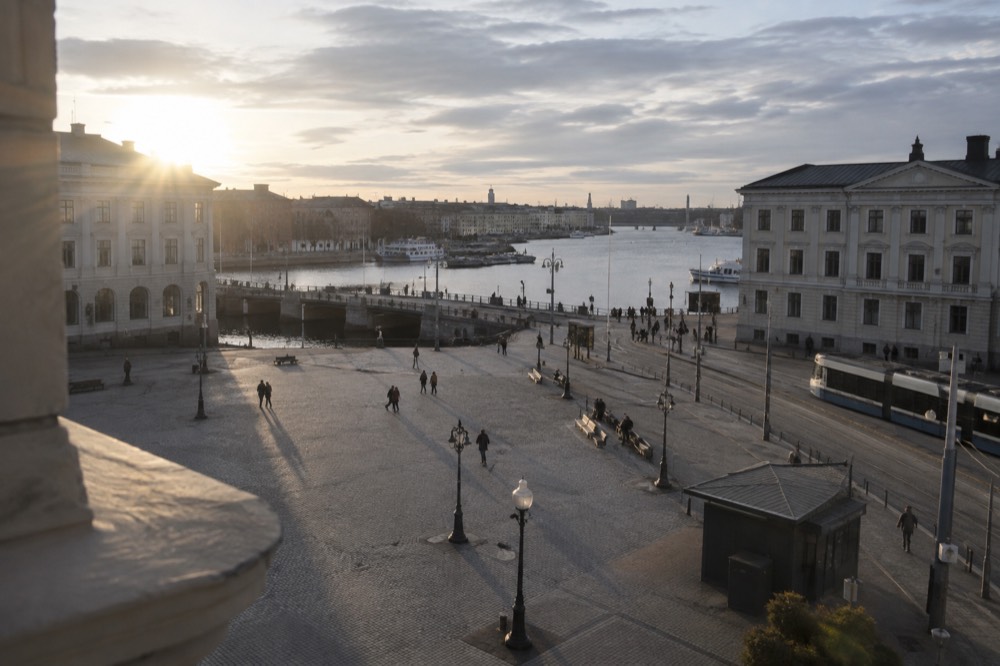
For planning purposes, treat the season in three bands. Early March belongs to winter activities: museums, indoor food halls like Feskekôrka, and the last of the dark-season city. Mid-April through May is the sweet spot: dry by the statistics, green in Trädgårdsföreningen, and still ahead of the summer crowds. Late May can deliver 20 °C afternoons, and the archipelago boats are running on their fuller timetables.
If you are weighing spring against other seasons, the best time to visit Gothenburg depends less on temperature than on what you want open: Liseberg's summer season, the archipelago swimming season, or the Christmas market each pull the answer in a different direction.
What Opens and Closes in Gothenburg in Spring?
The big spring opening is Liseberg, whose summer season runs 18 April to 20 September, with entry from 95 kr that includes zero rides; ride passes start at 310 kr separately. Universeum is open every day of the year 10:00 to 18:00, and World of Volvo is open year-round, while the old Volvo Museum at Arendal closed permanently in December 2023 and no longer exists.
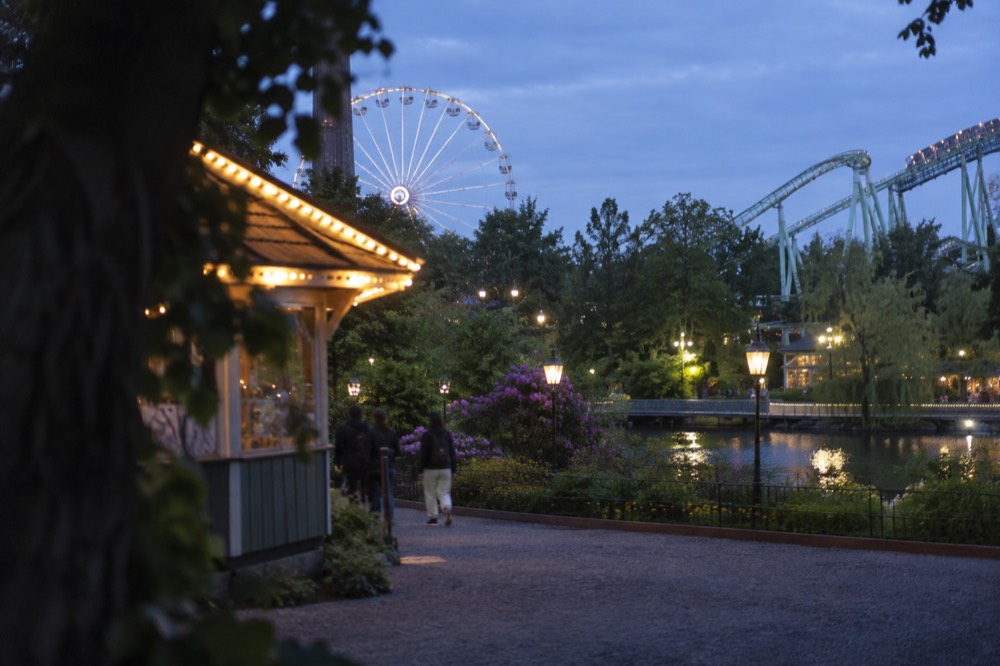
Liseberg's calendar is the single most trip-defining schedule in the city, and the park's own ticket page confirms the 2026 summer season at 18 April to 20 September. The entry and ride split is the detail that catches visitors: a 95 kr entry ticket gets you through the gate and onto nothing, because rides are sold as a separate Åkpass from 310 kr, or combined with entry from 365 kr. Children under 110 cm enter free. Liseberg is not sold on any booking platform; you buy from the park's own site, where online prices are lower than on-site ones.
The Volvo point matters more than it should, because most competing guides still send people to Arendal. The Volvo Museum closed permanently in December 2023, and its successor, World of Volvo at Lyckholms Torg, is the only Volvo attraction in the city now, open Monday to Saturday with an exhibition ticket from 120 SEK online.
One closure is scheduled rather than done: Göteborgs konstmuseum closes in 2028 for a rebuild and reopens in 2032, so spring visitors in the next couple of years can still go, though the museum's own site warns of intermittent blasting near the building.
| What | Spring status | Notes |
|---|---|---|
| Liseberg | Opens 18 April (summer season) | Entry from 95 kr buys no rides; Åkpass from 310 kr |
| Universeum | Open daily, all year, 10:00-18:00 | Dynamically priced, book a time slot; no fixed adult price exists |
| World of Volvo | Open year-round | Mon-Wed 10-17, Thu 10-19, Fri-Sat 10-17, Sun 10-16 |
| Göteborgs konstmuseum | Open until 2028 | 75 kr day ticket, free under 20 |
| Feskekôrka food hall | Open | Reopened 2024; five restaurants plus two fish counters |
| Southern archipelago ferries | Running | Ordinary Västtrafik ticket covers tram and ferry |
Feskekôrka is worth a specific mention because guides written between 2020 and 2023 describe it as closed for renovation. It reopened in 2024 as a food hall with five restaurants and two fish counters, in the year the building turned 150.
Those three options cover the three most common spring itineraries: a one-hour city overview, a [multi-attraction pass](https://gocity.tpk.ro/HQKyKKW4) for a museum-heavy week, and a boat out into the archipelago. All three run through the spring season, though the archipelago cruise is at its best once the fuller summer timetable starts.
Can You Swim in the Gothenburg Archipelago in Spring?
Not comfortably: sea temperature at the Vinga lighthouse station averages 4.1 °C in March, 7.1 °C in April and 11.6 °C in May, still far below the August peak of 18.6 °C, and May's water is colder than September's 16.7 °C, so spring is for walking the islands, not swimming off them.
These are SMHI's own quality-controlled observations from station Vinga, the lighthouse out at the archipelago's edge, and they overturn the usual assumption that water warms with the spring air. The sea runs about six weeks behind the air. Air peaks in July at 18.3 °C; the water peaks a month later, in August, at 18.6 °C. And September water, at 16.7 °C, is warmer than June water at 16.2 °C, which means a September swim is warmer than a June one.

What spring is genuinely good for on the islands is walking. The southern archipelago, Styrsö, Brännö, Vrångö, Donsö, Asperö and Köpstadsö, is car-free and reached by tram to Saltholmen and then ferry, all on an ordinary Västtrafik ticket because the islands sit inside Zone A. A 125 kr 24-hour Zone A ticket covers the tram and every ferry. The paths are quiet before summer, the seabirds are back, and the villages read very differently without July's crowds. The southern archipelago guide covers the islands in detail, and how to get to the archipelago covers the Saltholmen logistics.
If cold water is the point rather than the obstacle, the local habit is sauna and a dip, and cold water swimming and sauna in Gothenburg explains how that scene works. For everyone else, a spring archipelago day is a hiking and fika day, and there are guided options that bundle the walking.
The guided island hike is a full-day commitment, so it suits a trip with at least three nights in the city. If your spring visit is shorter, the ferry-and-walk version under your own steam works well on Brännö or Styrsö, and the guided tour earns its place when you want the route, the fika stop and the interpretation sorted for you.
Is Spring a Good Time to Visit Gothenburg?
Yes, and the case is statistical rather than sentimental: April is the driest month of the year at 51.3 mm of rain on 8.2 wet days, hotel demand is lower than the summer peak, Liseberg is open from mid-April, and the city's light is expanding by several minutes a day, while the main trade-offs are a cold sea, a handful of attractions still on winter hours, and the chance of a raw March day.

The honest comparison is with summer. June, July and August bring warmer air, warmer water and the full festival calendar, but they also bring 73.7 to 92.8 mm of rain per month, more wet days than April, and the peak-season crowds that come with a city that recorded over 6 million commercial guest nights in 2025, its strongest year yet. Spring offers the same museums, the same tram network, the same archipelago boats, and better odds on the weather.
The trade-offs are real. The sea is cold, as the numbers above show. A March visit overlaps with winter Gothenburg conditions more than spring ones. And if your trip is built around swimming, beaches or long outdoor evenings, May is the earliest defensible month, and even then the water is 11.6 °C.
For a first visit, spring works well paired with the one day in Gothenburg or two days in Gothenburg itineraries, since both lean on the city centre and the harbour, which are fully open by April.
The amphibious tour is a good early-trip choice for a related reason: it gives you the city's geography, where the harbour meets the canal ring, in the first hour of your visit, which makes everything after it easier to place on the map.
What Should You Do in Gothenburg in Spring?
The spring shortlist is Liseberg from 18 April, the parks waking up, the archipelago islands on foot, the food halls, and the viewpoints, because the season's long light and low crowds suit exactly the things that are unpleasant in July or shut in January.

The parks are the season's best free argument. Trädgårdsföreningen, the Garden Society of Gothenburg, is at its most photogenic in late April and May, and Slottsskogen's free zoo and lawns fill up on the first warm weekends. The botanical garden is a serious one by any standard, and spring is when its rock garden and bulb displays peak.
After the parks, the standard spring day looks like this:
| Time | Activity | Why it works in spring |
|---|---|---|
| Morning | Fika in Haga or Vasastan | Cafe terraces open as the weather turns; cinnamon buns need no season |
| Midday | Trädgårdsföreningen or the botanical garden | Bulbs and blossom peak late April to May |
| Afternoon | Liseberg (from 18 April) | Shorter queues than July; buy entry and Åkpass separately |
| Late afternoon | Tram to Saltholmen, ferry to Brännö or Styrsö | Zone A ticket covers it all; islands quiet before summer |
| Evening | Dinner in the city's seafood restaurants | Long light; spring shellfish season |
The fika guide covers the coffee-and-bun ritual properly, since it is the one Swedish habit that structures every day here. For rainy hours, which April still supplies 8 of, the museums guide and the rainy day guide have the indoor list.
If you want the city's shape in one hour, the amphibious bus tour is built for spring: it drives the centre, then drives into the harbour.
One practical note on timing: the amphibious bus runs on a fixed schedule from a central stop, so it slots most easily into the start or the end of your day, before the park or after the islands, rather than in the middle of a museum block.
How Do You Get Around Gothenburg in Spring?
The tram is the backbone year-round, and a 24-hour Zone A ticket at 125 kr covers the trams, buses and the southern archipelago ferries, while a single one-zone ticket costs 38 kr; the temporary state subsidy that halves 30-day tickets does not apply to the 24-hour and 72-hour tickets visitors buy.
The tram network runs 12 lines across 188 km of single track, from Mölndal in the south to Angered in the north and out to Saltholmen in the west, the ferry terminal you reach by tram. Göteborgs Spårvägar recorded 126 million journeys in 2025. There is no tapping out: you buy in the Västtrafik To Go app, validate, and ride. The getting around guide has the full fare and zone detail, and Västtrafik's own Zone A ticket page carries the current prices.
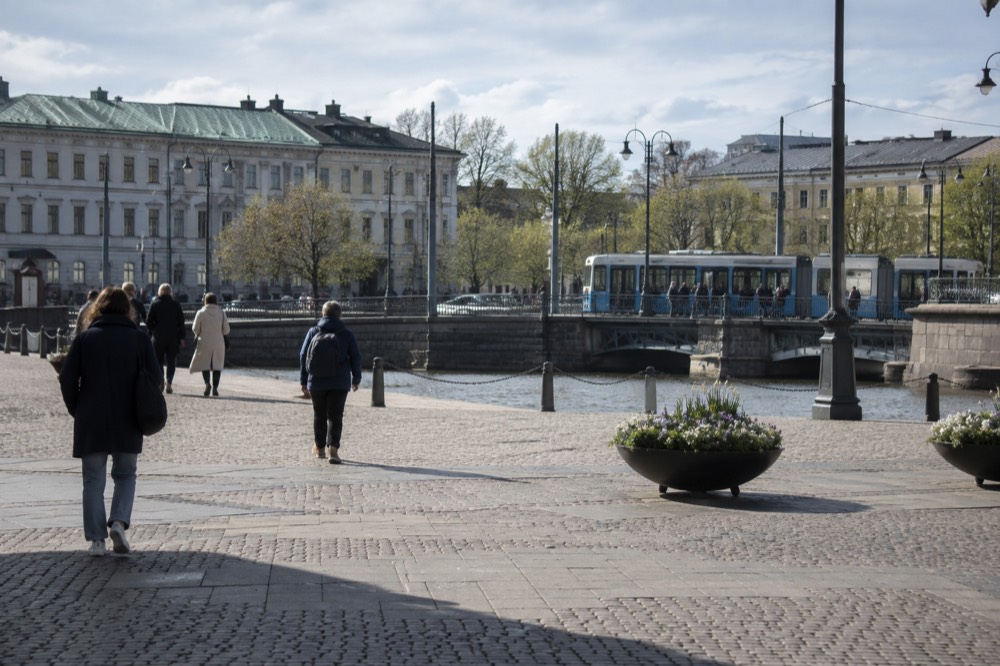
Spring-specific notes are few but useful. The archipelago ferries run year-round but on fuller timetables as the season builds, so check the day's departures at Saltholmen rather than assuming a summer schedule in March. Cycling returns with the dry weather, and the guided city bike tour is one way to cover the centre quickly.
For arrivals, the airport coach, now branded Vy flygbussarna, runs Landvetter to Korsvägen to Göteborg C in 20 minutes, and there is no rail link to Landvetter at all. The airport to city centre guide compares the options.
If several paid attractions are on your list, the pass question is worth ten minutes of arithmetic: the old Göteborg City Card no longer exists, and the Go City product that replaced it does not include public transport.
Whether a pass pays off depends entirely on your pace. Two attractions a day at full price usually beats a pass; four a day, with kids in tow, usually does not. Do the sums against your own list before buying, and remember the pass covers attractions, not transport.
Common Questions About Gothenburg in Spring
Is spring a good time to visit Gothenburg?
Yes. April is the driest month of the year at 51.3 mm of rain, Liseberg opens its summer season on 18 April, and crowds are thinner than in July and August. The trade-off is a cold sea and a chance of raw days in March.
What is the weather like in Gothenburg in spring?
Mean air temperature runs 3.0 °C in March, 7.7 °C in April and 12.4 °C in May, per SMHI's 1991-2020 normals. Rainfall falls through the season to April's annual minimum of 51.3 mm, then ticks back up in May.
Is Gothenburg rainy in April?
April is Gothenburg's driest month of the year: 51.3 mm of rain across 8.2 days with at least 1 mm. October, at 102.9 mm, is the wettest. SMHI's data does not support calling Gothenburg Sweden's rainiest city.
Can you swim in Gothenburg in May?
Only if you like cold water. Sea temperature at the Vinga station averages 11.6 °C in May, well below the August peak of 18.6 °C. September water, at 16.7 °C, is warmer than June water.
Is Liseberg open in spring?
Yes, from 18 April, the start of the 2026 summer season, which runs to 20 September. Entry starts at 95 kr online and includes no rides; a ride pass (Åkpass) starts at 310 kr, or combined entry plus rides from 365 kr.
Do you need a car for the Gothenburg archipelago in spring?
No, and you cannot use one on the southern islands anyway. They are car-free, and an ordinary Västtrafik Zone A ticket covers the tram to Saltholmen and the ferries to Styrsö, Brännö, Vrångö, Donsö, Asperö and Köpstadsö.
Spring rewards the visitor who reads the numbers. April is the driest month this city offers, the light is climbing toward its 18-hour June peak, and the biggest attraction opens its gates in the middle of it. Bring a layer, a rain jacket for March, and a Västtrafik ticket, and the season does the rest. More seasonal planning lives in the best time to visit guide, and the rest of this site, Gothenburg Travel Guide, covers the city month by month.