Winter Day Trips from Gothenburg, Sweden: Where to Go When the Days Are Short
Gothenburg sits on the west coast of Sweden with a train network that reaches castles, locks and fortress islands, and in winter the short daylight is the planning constraint that matters more than the cold.
Short answer
The best winter day trips from Gothenburg, Sweden are Marstrand's fortress island, Trollhattan and the Gota Canal locks, Tjoloholm castle, Lacko on Lake Vanern and the Bohuslan granite coast. All are reachable by train or bus, but with only 6 hours 32 minutes of daylight on 21 December, plan one destination per day and start early.
Gothenburg, Sweden's second city, sits at the mouth of the Göta älv with a mainline railway station at its centre and some of the country's most distinctive coastline an hour or so in every direction. In winter the calculus of a day trip changes completely. The US Naval Observatory's own tables put sunrise at 08:54 and sunset at 15:26 on 21 December, a day length of just 6 hours 32 minutes, against 18 hours 06 minutes on 21 June. That swing of 11 hours 34 minutes is the single biggest planning fact for anyone heading out of the city between November and February, bigger than the temperature, bigger than the rain.
The other fact worth knowing before you choose a destination: SMHI's 1991-2020 normals for station Göteborg A record 912 mm of precipitation across 127 wet days a year, and the wettest month is October at 102.9 mm, not a winter month. February, the month with the coldest sea water on the coast, is one of the drier months in the table at 61.0 mm. Winter here is more about grey light and wind than about downpours. This guide from Gothenburg Travel Guide covers which winter day trips actually work, how to reach them, and how to fit them into a daylight budget that runs out before dinner.
Which Winter Day Trips from Gothenburg Are Easiest Without a Car?
The easiest winter day trips from Gothenburg without a car are Marstrand by bus, Trollhättan by regional train, Alingsås by train in under 30 minutes, and Borås by train, all of which run on ordinary Västtrafik or SJ services from Göteborg Centralstation. Marstrand, Trollhättan, Borås and the Bohuslän coast are genuine day trips; the southern archipelago islands are areas of the city itself and are covered by an ordinary tram and ferry ticket.
Göteborg Centralstation is the anchor for almost all of this. Regional trains leave for the inland towns regularly through the day, and Västtrafik's bus network covers the coastal settlements that the railway never reached. The distinction that matters is the one the city's own transport geography draws: Styrsö, Brännö, Vrångö and Donsö are districts of Gothenburg, reached by tram to Saltholmen and then a Västtrafik ferry on the same ticket, so they are not day trips at all. Marstrand, the Bohuslän coast, Tjolöholm, Gunnebo, Trollhättan, Borås, Varberg and Läckö are the real day trips, and winter changes how each one behaves.
A winter day trip also has a hard clock attached. With usable daylight starting around 09:00 and ending by 15:30 at the solstice, a destination an hour away gives you roughly five hours on the ground. Destinations two hours away give you three. That is still enough for a fortress, a lock flight or a castle, but not for two of them plus lunch. Pick one thing per day and pick the thing you can walk to from the station or bus stop. The fuller transport picture, including the tram and zone system inside the city, is in getting around Gothenburg by tram, and the general day trip menu is in the day trips from Gothenburg guide.
| Destination | How to get there in winter | What it is | Verdict for a short winter day |
|---|---|---|---|
| Marstrand | Bus from Gothenburg, then a short ferry crossing | Fortress island town | Excellent, compact, walkable |
| Trollhättan | Regional train from Göteborg Centralstation | Göta Canal locks and film museum | Very good, indoor options |
| Alingsås | Train, under 30 minutes | Small café town | Easy half day |
| Tjolöholm | Train to Kungsbacka then local bus | Arts and crafts castle by the sea | Good if the house is open |
| Läckö, Lake Vänern | Train to Lidköping, then local connection | Baroque castle on a headland | Long, check winter opening |
| Bohuslän coast (Smögen, Fjällbacka) | Bus or car, 1.5-2 hours | Granite islands and harbours | Scenic but slow in winter |
Is Marstrand Worth a Winter Day Trip from Gothenburg?
Marstrand is worth a winter day trip from Gothenburg because the island's fortress, Carlstens Fästning, the wooden town around its harbour and the ferry crossing itself are all compact enough to fit inside the short daylight, and the island is car-free, so a winter visit is calmer than a summer one. The crossing to the island runs year-round and takes a few minutes.
Marstrand is the classic Gothenburg day trip: a granite island in Kungälvs municipality, an hour or so up the coast, with a 17th-century fortress above the harbour and a wooden town below it. The island is largely car-free, which in winter means near-empty streets and the same grey sea light that made the place a painters' destination in the first place. The ferry runs through the winter and the fortress, whose own visitor information lists its opening calendar, keeps reduced winter hours, so check the dates before committing a day.
The town's winter personality is quiet but not shuttered. Cafés around the harbour stay open, the fortress paths are walkable in most conditions, and the crossing itself, a few minutes of open water, is part of the experience rather than an obstacle. For visitors who would rather not organise the journey themselves, there is a guided option: the Marstrand seafood market sailing trip runs from Gothenburg with the market stop included, priced at $148 per person with no reviews yet on the listing. In December the same operator runs a Marstrand Christmas market sailing trip at $206 per person, also with no reviews yet. Both are listed as five hours.
Both Marstrand sailing products are per-person bookings with a fixed departure, which in winter is a genuine advantage: the operator, not you, carries the risk of a timetable that only works in daylight. The listings state the duration and the inclusions, and the seafood market version is the one that pairs best with a cold day, since the market stop is indoors.
Winter does change one thing on Marstrand: the sea temperature. SMHI's quality-controlled archive from the Vinga lighthouse station, built from quality-controlled hourly observations published in SMHI's open oceanographic archive, puts February as the coldest month for coastal water at a mean of 2.7 °C, with a record low of -1.2 °C, legitimately below zero because brackish Kattegat water does not freeze at 0. Nobody swims here in February, but the same data shows the water in September (16.7 °C) is warmer than in June (16.2 °C), a fact that shapes the shoulder seasons on either side of winter. For the summer version of this trip, see the Marstrand island fortress day trip guide.
What Can You Do in Trollhättan and the Göta Canal Locks in Winter?
Trollhättan makes a strong winter day trip from Gothenburg because its main sights cluster together: the Göta Canal's lock staircase and old lock gates, the Innovatum science centre and film museum, and the river gorge walk are all within reach of the station, and the train from Göteborg Centralstation covers the distance in well under an hour. Indoor options make it one of the few day trips that works even in bad weather.
Trollhättan is the inland counterweight to the coastal trips. The town's identity is the falls and the locks: the Göta Canal's lock flight here was once the bottleneck of Swedish inland shipping, and the surviving old lock gates and the newer channel are walkable year-round. The gorge below the falls has a maintained path, and in winter, with the trees bare, the engineering reads more clearly than it does in summer green.
The indoor side matters in a season when the sky can close in. Trollhättan's film museum and the Innovatum complex occupy the old industrial buildings, and the town is small enough that a late-morning arrival still leaves a full afternoon. If the weather turns, this is the day trip that survives it; the fuller rainy-day playbook inside the city itself is in what to do in Gothenburg on a rainy day. For the complete lock-and-canal story in better weather, the Trollhättan and Göta Canal locks guide covers the summer version.
Which Castle Day Trips from Gothenburg Work in Winter?
Tjolöholm, an arts and crafts castle on the Halland coast, and Gunnebo, the 18th-century house just outside the city, are the two castle day trips from Gothenburg that hold up in winter, because both run house tours on reduced cold-season calendars and both are reachable by train plus a short local bus. Läckö Castle on Lake Vänern is the grandest of the three but is a long winter round trip, and its opening season is shorter than the others.
Castles are the winter day trip category where checking opening dates is not optional. Läckö, the baroque castle on a Vänern headland near Lidköping, runs a defined summer season and a much reduced winter programme, so a February visit may get you the exterior and the landscape but not the state rooms. Tjolöholm, by contrast, keeps a tour calendar through much of the year and is a shorter journey, south through Kungsbacka towards the sea. Gunnebo is the nearest of the three, close enough that it barely counts as a day trip, and its own grounds are open for walks even when the house is not.
| Castle | Direction from Gothenburg | Winter viability | Best winter plan |
|---|---|---|---|
| Gunnebo | South-east, near Mölndal | High, grounds always walkable | Half day, combine with city afternoon |
| Tjolöholm | South, Halland coast | Good, check tour calendar | Full day, café lunch on site |
| Läckö | North-east, Lake Vänern | Limited, seasonal opening | Only with a confirmed opening date |
| Alingsås (no castle, café town) | North-east by train | High, compact centre | Half day, indoor-heavy |
The pattern across all three is the same: the Swedish cold season compresses castle schedules, and the houses that do open often run fewer, earlier tours. Build the day around a confirmed tour time, not around arrival. The wider cost picture for day tripping by train is covered in is Gothenburg expensive, what a trip really costs.
Is the Gothenburg Archipelago a Winter Day Trip?
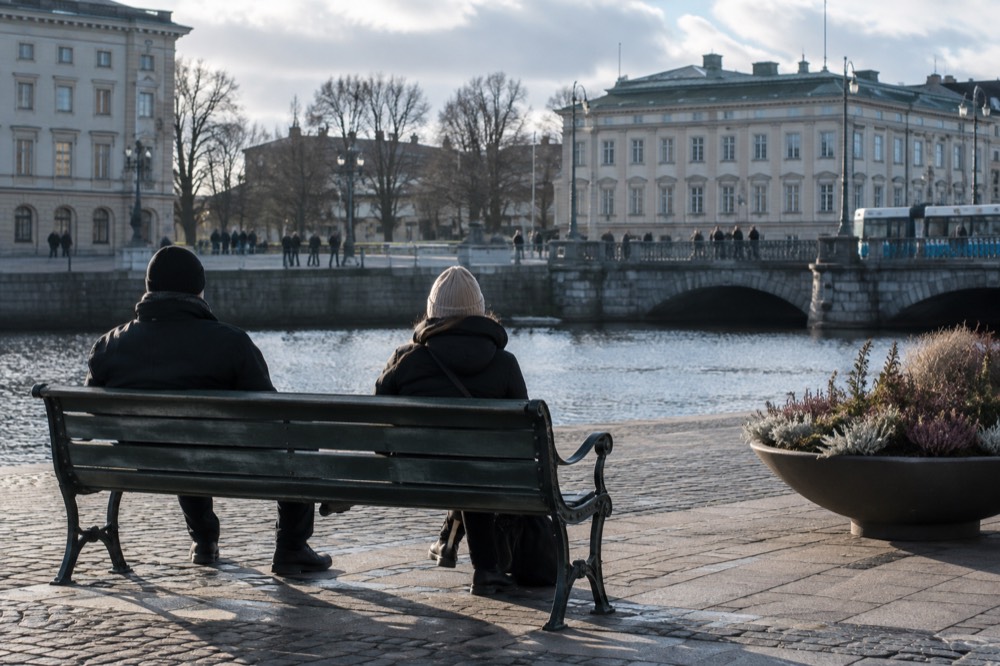
The southern archipelago is not a day trip from Gothenburg, it is part of the city: Styrsö, Brännö, Vrångö, Donsö, Asperö and Köpstadsö are reached by tram to Saltholmen and then a Västtrafik ferry covered by the same Zone A ticket, and the islands are car-free year-round. In winter the boats run on reduced timetables, so the trip works, but it needs a timetable check the night before.
This is the category most guides mislabel. The southern islands are city districts with postal addresses in Göteborg, not excursions, and the fact that a single Västtrafik ticket covers the tram and the ferry is the best-value transport fact in the whole region. In winter the ferries run less often, daylight on the water is short, and the islands' summer café economy largely closes, but the islands themselves, granite, pine, painted cottages and empty paths, are at their most atmospheric. The full index of guides sits on Gothenburg Travel Guide.
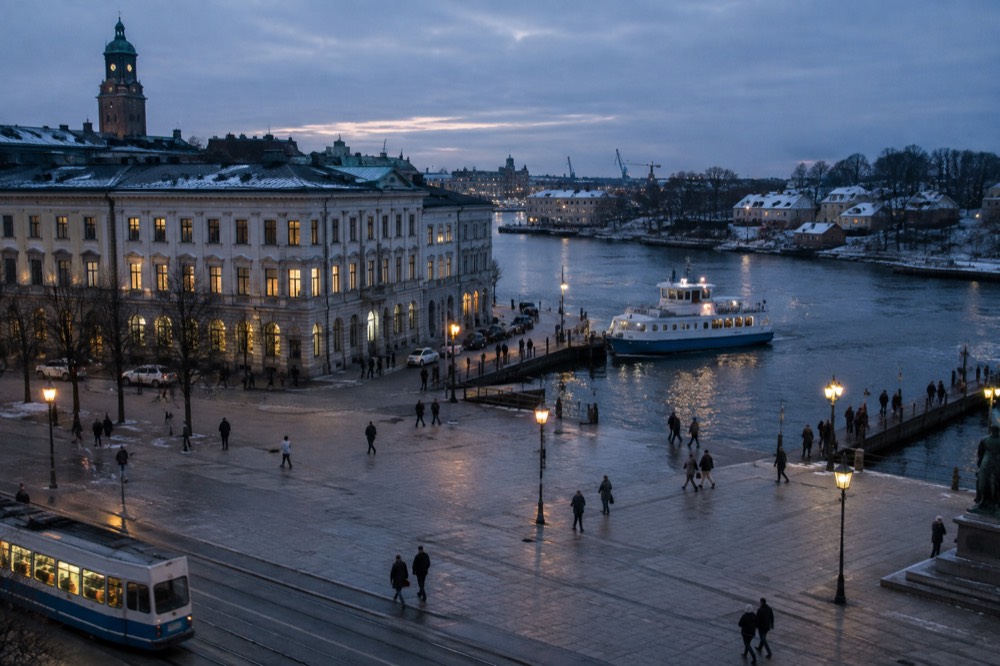
The northern archipelago, Öckerö, Hönö and Björkö, is a separate network with its own ferries, also inside the city's transport zone. In either direction, the winter rule is the same: catch a morning boat, walk, and be back on a mid-afternoon sailing rather than trusting the last one. The full island-by-island breakdown is in the Gothenburg archipelago guide, and the winter-specific version is covered in the archipelago in winter.
For a guided taste of the archipelago without organising ferries yourself, the Archipelago Cruise with Guide runs 2.5 hours from the city, priced from $44 per person and rated 4.4 from 1,488 reviews on the listing. It is a short outing rather than a day trip, which in a six-hour daylight window is not necessarily a drawback.
How Do You Plan a Winter Day Trip Around Daylight and Weather?
Plan a winter day trip from Gothenburg around 6 hours 32 minutes of daylight at the solstice, rising to roughly 8 hours by late January and 11 by late February, and treat October, not winter, as the wet planning constraint: SMHI's normals put October at 102.9 mm against February's 61.0 mm. Leave the city by 09:00, be at your destination by 10:30, and start the return leg by 15:00.
The daylight curve is steep on both sides of the solstice, and that is good news for trip planning: every week you move away from 21 December buys noticeable time. The US Naval Observatory tables for Gothenburg's latitude show civil twilight on 21 December running 08:03 to 16:17, so even the grey usable light lasts barely eight hours. By mid-February the city has gained more than three hours of daylight over the solstice, and coastal day trips start to feel generous again.
| Winter month | Daylight feel | Rain (SMHI normal) | Best day trip strategy |
|---|---|---|---|
| November | Shortening fast, dark by 16:00 | 84.7 mm | Compact trips: Alingsås, Gunnebo |
| December | Solstice, 6 h 32 m on the 21st | 93.0 mm | One sight per day, indoor backup |
| January | Slow but real recovery | 83.0 mm | Train trips with museums |
| February | Gaining hours, coldest sea (2.7 °C) | 61.0 mm | Coastal walks, Marstrand |
The weather table carries a fact that surprises most visitors: the wettest month in Gothenburg is October, not any winter month, and February is among the driest in the SMHI 1991-2020 normals for station Göteborg A. Winter here is cold, grey and often windy, but it is not the rainiest part of the year, and it is certainly not, as the cliché claims, evidence that Gothenburg is Sweden's rainiest city, a claim SMHI's own national climate normals pages do not support. The month-by-month picture is in the best time to visit Gothenburg and daylight and darkness in Gothenburg month by month.
What About the Bohuslän Coast in Winter?
The Bohuslän coast, Smögen, Fjällbacka and the granite islands north of Gothenburg, is a winter day trip for travellers with a car or patience for buses, because the journey takes 1.5 to 2 hours each way and the fishing villages' summer economy is closed. What you get in exchange is empty harbours, bare granite and the strongest light on the coast, with almost no other visitors.
Bohuslän in winter is a different product from Bohuslän in July. The holiday crowds are gone, the boat traffic has stopped, and the villages revert to working harbours. The rock itself, pink and grey granite scraped bare by ice ages, is the reason the coast looks the way it does, and in low winter sun with no leaves on anything, it photographs better than it does in high summer haze. The trade-off is transport: the coast road is the practical way to see more than one village in a day, and the bus network, while real, is slow.
If you go, pick one village and commit to it. Smögen's harbour boardwalk and Fjällbacka's cliff-backed main street both work as single-destination days. The full summer version of the coast, with the island hops that winter makes impractical, is in the Bohuslän coast guide.
Should You Take a Guided Tour Instead of a Self-Planned Winter Day Trip?
A guided tour is a reasonable winter option from Gothenburg when the destination involves a boat or specialised access, because the operator handles the timetable risk that short daylight creates, and the winter roster includes the Marstrand sailing trips, the amphibious bus and the hop-on hop-off bus, all bookable as fixed-time products with cancellation terms on the listing.
Self-planning wins on flexibility, and the train trips, Trollhättan, Alingsås, Borås, need no guide at all. Where a booked product earns its place is on the water, where winter sailing is not something to improvise. The Marstrand seafood market sailing trip at $148 per person and the Christmas market version at $206 per person both run five hours from the city, which fits the daylight window exactly. The Land and Water Amphibious Bus, rated 4.7 from 4,326 reviews and priced from $36 per person, is a city outing rather than a day trip, but it is an indoor-heated one, which counts for something in February. The Hop-On Hop-Off Bus, from $37 per person and rated 3.8 from 251 reviews, covers the city's own sights on the same logic.
One planning note that applies to all of these: the city's own attraction calendar shifts in winter too, and the biggest one is strictly seasonal. Liseberg's published 2026 calendar runs summer 18 April to 20 September, Halloween 2 October to 1 November, and Christmas 14 November to 23 December, with the park closed from 24 December until mid-April, apart from winter weekend openings in the Kaninlandet children's area. A late-January visitor will find the biggest attraction in the city shut, which is one more reason the day trips matter in that season. The season mechanics are in Liseberg rides, tickets and when to go.
Common Questions About Winter Day Trips from Gothenburg
Is Marstrand worth visiting in winter?
Yes. The island is car-free, the ferry runs year-round, and the fortress keeps reduced winter hours. Expect empty streets, open harbour cafés and a short crossing; check the fortress opening calendar before you go.
How many hours of daylight does Gothenburg have in winter?
On 21 December the city gets 6 hours 32 minutes of daylight, sunrise 08:54 to sunset 15:26, per US Naval Observatory tables. By late February the day has stretched back to roughly 11 hours.
Can you visit the Gothenburg archipelago in winter?
Yes, and it is not even a day trip: the southern islands are part of the city, reached by tram to Saltholmen and a Västtrafik ferry on the same Zone A ticket. Winter boats run reduced timetables, so check sailing times the night before.
What is the best winter day trip from Gothenburg by train?
Trollhättan, for the Göta Canal locks, the river gorge and indoor museums clustered near the station, is the strongest train day trip in winter. Alingsås, under 30 minutes away, works as an easy half day.
Is Gothenburg rainy in winter?
Less than its reputation suggests. SMHI's normals put October as the wettest month at 102.9 mm, while February sees 61.0 mm. Winter is grey and cold rather than wet, and SMHI's own data does not support calling Gothenburg Sweden's rainiest city.
Are castles near Gothenburg open in winter?
Some. Tjolöholm and Gunnebo keep reduced cold-season tour calendars, while Läckö Castle on Lake Vänern runs a short season and may be exterior-only in midwinter. Confirm a tour time before committing the day.