Gothenburg at Night: What to Do After Dark in Sweden's Second City
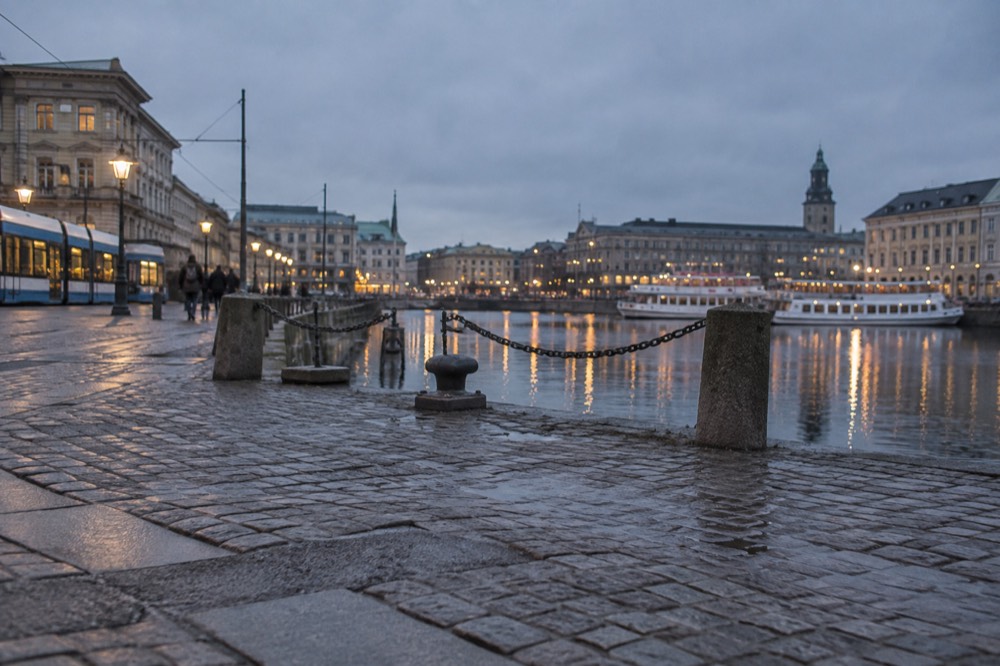
Gothenburg after dark is a waterfront city: harbour lights, a 6 h 32 m December night, an amusement park that runs until late in summer, and an alcohol monopoly that quietly reorganises every Swedish evening.
Short answer
Gothenburg at night means harbour viewpoints like Ramberget, evening archipelago and canal boats in summer, Liseberg open until late in season, and a bar scene on Linnégatan and Avenyn. Shops close early, Systembolaget sells anything above 3.5% ABV and shuts on Sundays, and in midwinter darkness falls before 16:00.
Gothenburg's latitude is 57.7° N, which means the night itself changes shape depending on when you arrive. The US Naval Observatory's tables for the city show 18 hours 6 minutes of daylight on 21 June, against 6 hours 32 minutes on 21 December, a swing of 11 hours 34 minutes between the solstices. In midsummer, civil twilight runs from 02:58 to 23:30 local time, leaving roughly three and a half hours of true darkness. In midwinter the sun sets before 16:00 and the evening is the trip. This guide covers what the city actually offers after dark, season by season, with the Swedish alcohol rules that quietly shape every night out and the viewpoints, boats and bar streets that make the hours after sunset worth planning.
When Does It Actually Get Dark in Gothenburg?
Darkness arrives brutally early in winter and barely arrives at all in summer. On 21 December the sun rises at 08:54 and sets at 15:26, giving 6 hours 32 minutes of daylight, with civil twilight only stretching that grey window from 08:03 to 16:17. On 21 June the sun rises at 04:11 and sets at 22:17, and civil twilight runs from 02:58 to 23:30, so the sky never goes fully dark for more than about three and a half hours.
The US Naval Observatory data behind those numbers matters for planning because it changes what "evening" means. In July you can sit on a dock at 21:30 in full light and watch the sky slowly dim past 22:00. In November, by contrast, streetlights carry the whole city from mid-afternoon onward, and anything you want to see by daylight needs to happen before 15:00. Göteborg & Co reported over 6 million commercial guest nights in 2025, a record year, and international guest nights were up about 15% in the first ten months of the year, so plenty of visitors are meeting these hours for the first time.
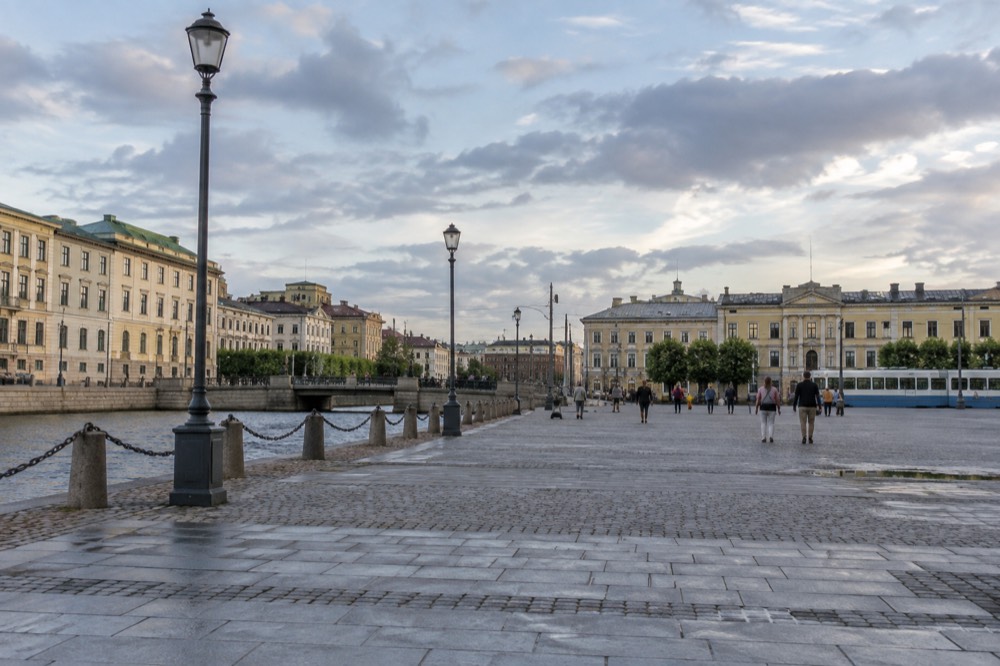
The seasonal logic is simple. Plan outdoor evenings for June and July, when the light lasts. Plan indoor evenings, museum late openings and cosy bar nights for November through January, when darkness is the default. Our page on daylight and darkness in Gothenburg month by month breaks the whole year down if you are still choosing dates.
The rain numbers matter to an evening plan too. SMHI's 1991-2020 normals for station Göteborg A, published at smhi.se, record 912 mm of precipitation a year across 127 days with at least 1 mm. October is the wettest month at 102.9 mm and April the driest at 51.3 mm. What that means after dark: a summer evening plan is usually safe, an October evening plan needs an umbrella and an indoor fallback, and a December evening is as likely to be wet as white. The city's rainy-day indoor options, aquarium halls, museums and food halls, double as its bad-weather night options.
What Are the Best Night-Time Views of Gothenburg?
The best after-dark views are Ramberget on Hisingen, where you look across the whole city skyline and the harbour cranes for free; Masthuggskyrkan's churchyard above Järntorget; and the water-level view from any evening canal or archipelago boat, where the city reads as reflected harbour lights rather than a skyline. All three cost nothing beyond the fare or the walk.
Ramberget is the one locals use, reached by bus or a steep walk through Keillers Park, and at night you get the full spread of the city, the Älvsborg bridge and the river traffic. Masthuggskyrkan sits closer to the centre above the old workers' quarter of Majorna, and its churchyard terrace looks down the hill toward the harbour entrance. Our guide to Masthuggskyrkan and the best city viewpoints covers the walk, the tram stops and what you can see from each spot.
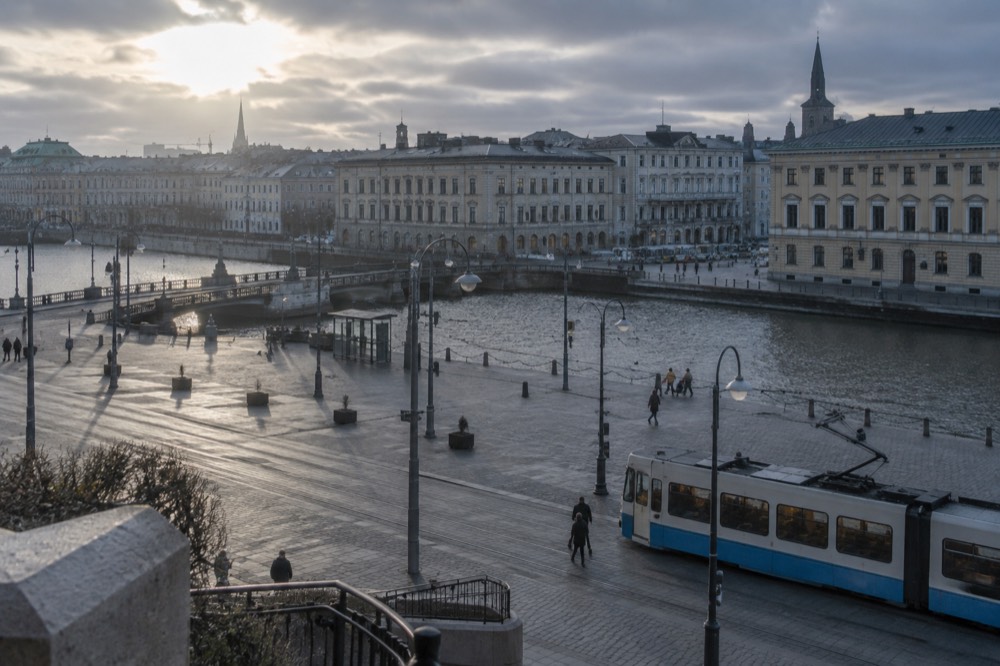
The third view is the one most visitors miss: from the water. Gothenburg was built inside a moat at the mouth of the Göta älv, and the old fortifications are now the canals that ring the centre. An evening boat puts you at water level with the granite and lit bridges on both sides.
If you would rather earn the view, Skansen Kronan on the hill above Haga is another free option, though the walk up is unlit in places, so a headtorch or a phone light is sensible in winter. The fort platform gives you the old town and the copper spire of Göteborgs konstmuseum's neighbourhood, Götaplatsen, in one frame. Note that the konstmuseum itself closes for a rebuild in 2028 and reopens in 2032, per its own site, so the building you are looking at is on a countdown.
The amphibious bus tour deserves a specific mention for evening planners because it is the one sightseeing product that shows you both halves of the night view in a single hour: the street-level city first, then the harbour from the water. The listing shows a 4.7 rating from 4,326 reviews, which makes it the most-reviewed sightseeing tour in the city, and it runs on a schedule that pairs well with a late-afternoon slot before the bars open.
Is Liseberg Better at Night?
Yes, in season, and it is the single best night out in the city while it is open. Liseberg runs summer evenings until late (18 April to 20 September in 2026), sells evening tickets valid from 18:00, and lights the whole park after dark. The catch is the calendar: the park closes roughly 21 September to 1 October, 2 to 13 November, and from 24 December until mid-April, so a winter city break may find it shut.
The pricing structure is the part to understand before you go. Liseberg's own ticket page, liseberg.se, states that entry (Entré) from 95 kr includes zero rides, that a ride pass (Åkpass) alone starts at 310 kr, and that evening entry-plus-rides tickets valid from 18:00 start at 275 kr. Children under 110 cm enter free. The park is not sold on any booking platform; tickets come from liseberg.se directly, and online prices are lower than on-site ones.
Halloween (2 October to 1 November 2026) is the night-time season with the strongest reputation: costumed actors, dark rides and a park built for after-dark scares. Jul på Liseberg, 14 to 23 December 2026, turns the same park into a Christmas-lit market. New for 2026, the Kaninlandet children's area also opens on winter weekends and school holidays, which softens the "closed all winter" problem for families. Our Liseberg rides, tickets and when to go guide carries the full season and price detail.
Where Do People Go Out at Night in Gothenburg?
The main going-out strips are Linnégatan and the Långgatorna streets around Järntorget, which run from pubs to cocktail bars and stay busy latest; Avenyn near Götaplatsen, the bigger, louder, more nightclub-oriented boulevard; and the harbour-side bars of Stenpiren and the riverfront for summer terraces. Each has a different peak hour and a different crowd.
Linnégatan and its side streets are where the city's bar culture actually lives: craft beer, natural wine, small kitchens and a walkable cluster where you can move between places. Avenyn is the showcase boulevard, wider, glitzier and dominated by larger venues, and it fills later and empties later. The craft-beer scene here is genuinely strong, and our craft beer and bars in Gothenburg companion page goes deep on individual bars and breweries.
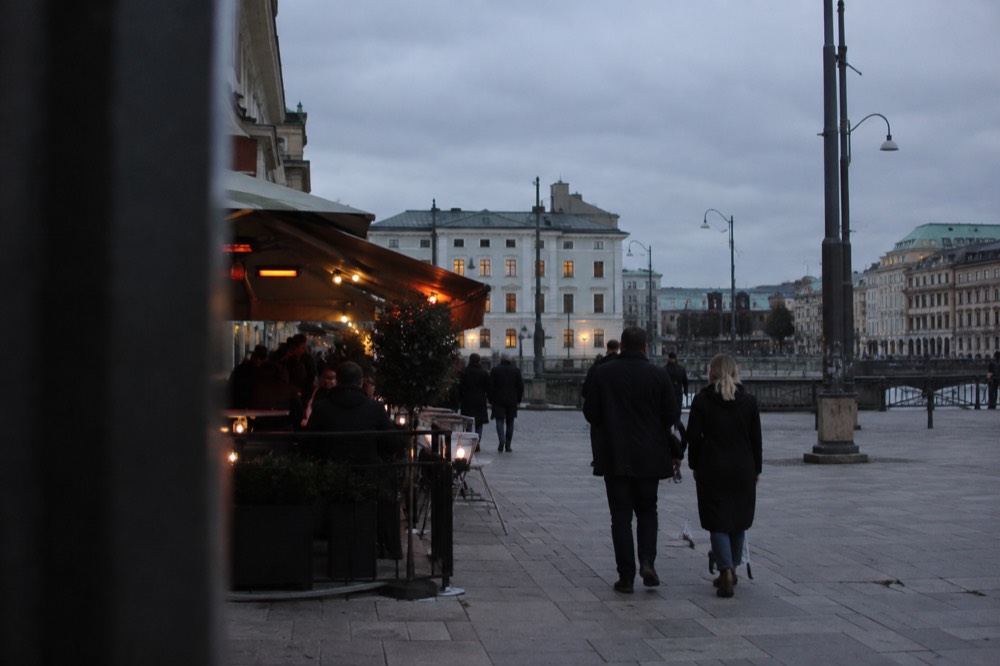
One structural fact shapes every Swedish night out: the alcohol retail monopoly. Under Alkohollag (2010:1622) 1 kap. 8, beer above 3.5% ABV ("starköl"), plus all wine and spirits, may only be sold at retail by Systembolaget, the wholly state-owned monopoly. Supermarkets sell only folköl, beer at or below 3.5%, which is why the supermarket version of a familiar brand often tastes weaker than the label suggests: it is a 3.5% reformulation of the same beer. Bars and restaurants serve normally; the monopoly is retail only. But if your plan was to buy a bottle of wine for a hotel room or a picnic, it has to come from Systembolaget, stores close early, and they do not open on Sundays. Exact hours vary by branch and could not be confirmed against a primary source, so check the official store finder at systembolaget.se for the branch you plan to use.
| Evening plan | Best district | Peak hours | Notes |
|---|---|---|---|
| Pub crawl, craft beer | Linnégatan / Långgatorna | 18:00 to 01:00 | Walkable cluster, many small venues |
| Nightclubs, bigger bars | Avenyn | 22:00 to late | Fills after 22:00, dressier |
| Summer terrace, harbour view | Stenpiren and riverfront | 17:00 to 23:00 | Best May to August |
| Live music | Clubs around Järntorget and Majorna | Gig-dependent | Check venue listings |
| Family evening | Liseberg in season | 18:00 to close | Evening tickets from 18:00 |
What Can You Do at Night in Gothenburg for Free?
The free night-time options are the viewpoints (Ramberget, Masthuggskyrkan, Skansen Kronan), a walk along the lit harbour from Stenpiren toward the opera house, the Christmas lights on Avenyn and in the old town in December, and window-lit Haga in the evening. None of it costs a krona, and in summer the light itself is the attraction.
The harbour walk is the underrated one. From Stenpiren along the river toward Göteborgs operan, you pass the lit façades, the water and the shipyard cranes of the north bank, and in June you can do the whole walk in daylight at 21:00. In December the same walk runs through the Jul lighting, and the Christmas market season is covered in our Gothenburg Christmas market guide. Skansen Kronan's hill above Haga is free to enter and the old fort platform is open air; the climb is short but the path lighting is patchy in winter.
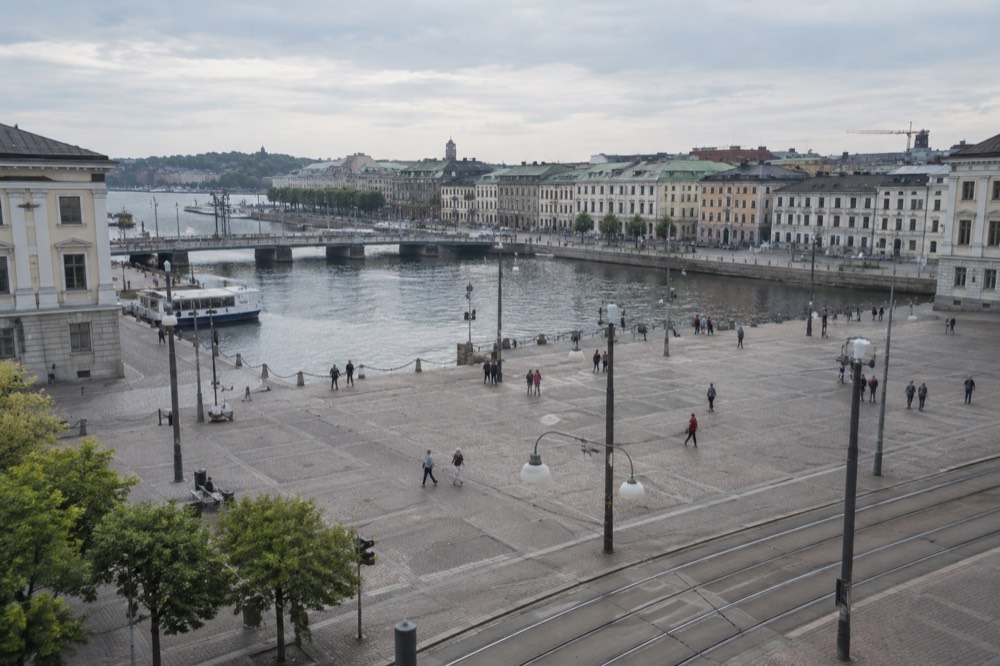
Haga after dark is its own small pleasure: the wooden landshövdingehus houses, candle-lit café windows and the glow of the neighbourhood's bakeries. The district is quiet by 21:00 on weekdays, which makes it an early-evening stroll rather than a night out, but paired with a climb to Skansen Kronan for the view it fills a first evening well. Our Haga, Gothenburg's wooden old quarter page covers the neighbourhood in daylight detail.
For a fuller free list, daylight and dark, see free things to do in Gothenburg. The honest caveat: Gothenburg's genuinely free night-time offer is mostly outdoor and weather-dependent. An autumn evening plan needs an indoor fallback, and the next section gives you one.
Are Gothenburg's Museums and Attractions Open Late?
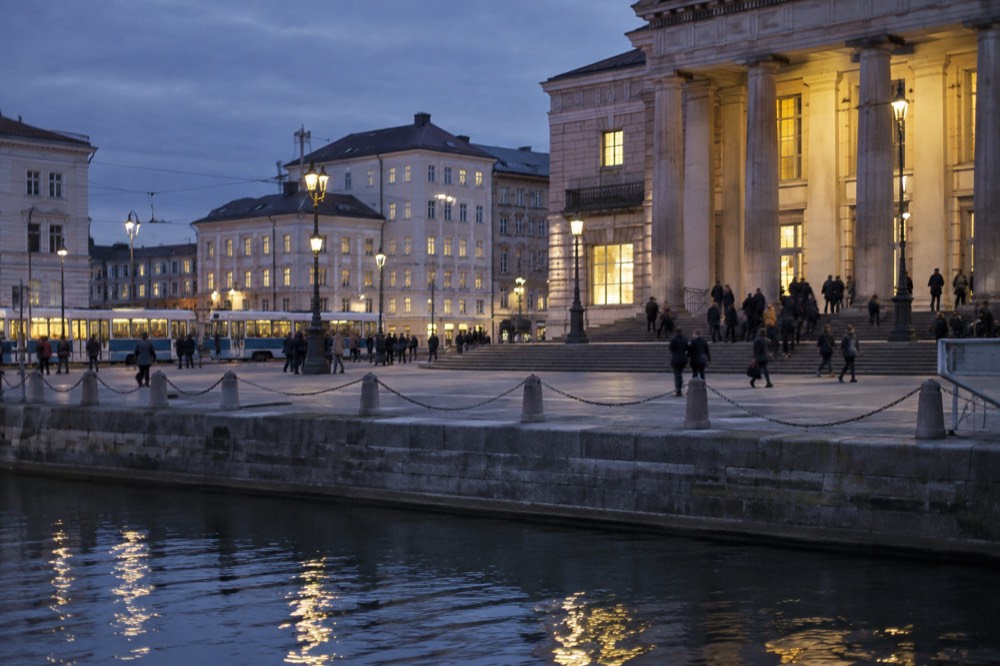
Late openings exist but are limited: Göteborgs konstmuseum stays open until 20:00 on Wednesdays (75 kr, free for under-20s and students, closed Mondays), Universeum is open every day of the year until 18:00 with dynamic pricing, and World of Volvo runs until 19:00 on Thursdays. Most other museums shut at 17:00, so "museum evening" in Gothenburg means Wednesday or Thursday, specifically.
The konstmuseum's own visit page, goteborgskonstmuseum.se, states the Wednesday 11-20 hours, the 75 kr day ticket and the free-under-20 policy, and also warns of intermittent blasting near the building during the current works; the museum closes entirely in 2028 and reopens in 2032. Universeum, the science centre, is open 365 days a year from 10:00 to 18:00, but admission is dynamically priced with a booked time slot and there is no fixed published adult price, so book online and expect to pay 30 kr more on-site. World of Volvo, which replaced the old Volvo Museum at Arendal after that closed permanently in December 2023, runs Thursday evenings to 19:00, per worldofvolvo.com.
| Attraction | Late evening? | Hours | Evening ticket |
|---|---|---|---|
| Göteborgs konstmuseum | Wednesdays to 20:00 | Tue 11-18, Wed 11-20, Thu 11-18, Fri-Sun 11-17, Mon closed | 75 kr day ticket |
| Universeum | No, daily to 18:00 | Every day 10:00-18:00 | Dynamic, book a slot |
| World of Volvo | Thursdays to 19:00 | Mon-Wed, Fri-Sat 10-17, Thu 10-19, Sun 10-16 | From 120 SEK online |
| Liseberg (season) | Yes, evening tickets from 18:00 | Season-dependent | From 275 kr entry plus rides |
Our Gothenburg museums guide carries the full list with hours, and the Universeum science centre page covers the booking system in detail. One more evening-specific note: Feskekôrka, the "fish church" market hall, reopened in 2024 as a food hall with two fish counters and five restaurants, and its evening kitchen hours are the thing to check on the individual restaurants' own listings, since one of them, Lilla Åstol, closes for winter by its own statement. The Feskekôrka guide has the current tenant list.
Is It Safe to Walk Around Gothenburg at Night?
Gothenburg is a low-risk city for night walking by northern European standards: the centre, Linnégatan, Avenyn and the harbour front are busy, lit and policed, and violent crime against visitors is rare. The realistic night-time risks are the ones locals manage too: patchy lighting on park paths and hills, icy pavements from December to February, and weekend rowdiness around Avenyn's club closing time.
The practical advice is unglamorous. Stick to lit streets on the hills: Ramberget's park paths and Skansen Kronan's slope are darker than the city centre. In winter, ice underfoot is a bigger hazard than crime, and shoes with grip matter more than caution about people. Around Avenyn after midnight on weekends, the crowd outside clubs is the loudest part of the city, and a few streets away it is quiet again. Our is Gothenburg safe page expands on areas and common sense, and the getting around by tram page matters at night because trams, not taxis, are how the city actually moves late: the network ran 126 million journeys in 2025 per Göteborgs Spårvägar.
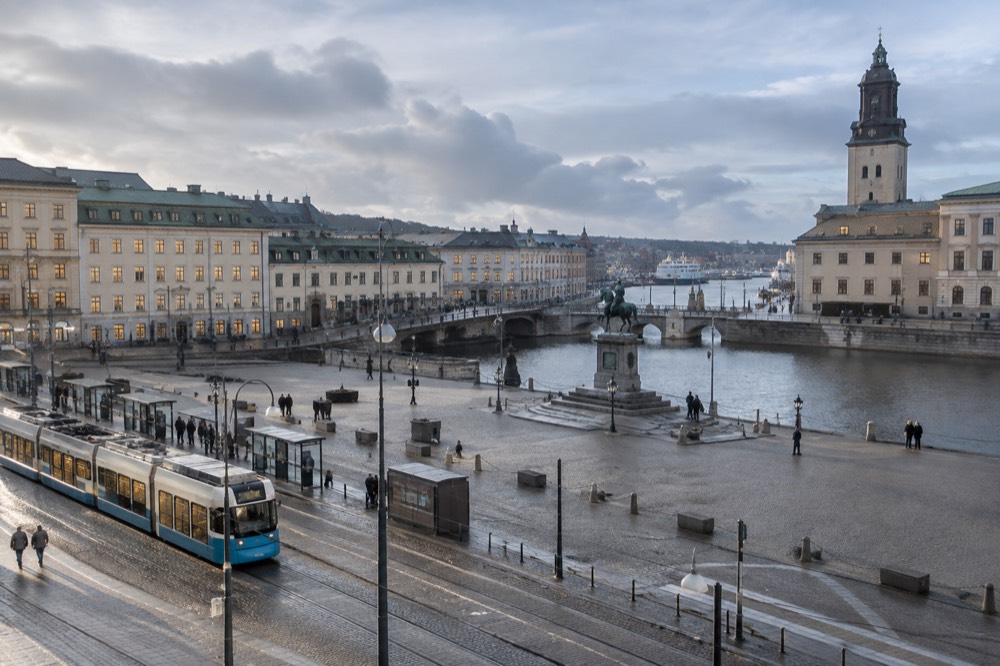
One transport nuance worth knowing before a late night: Västtrafik's headline fare cut in the news applies only to 30-day period tickets, halved by a temporary state subsidy through the end of the year. The 24-hour Zone A ticket a visitor buys is not discounted and still costs 125 kr, per Västtrafik's own fare page. Do not build a night budget around a half-price day ticket that does not exist. A single Zone A fare is 38 kr for an adult, and the trams run late enough that most evening plans end with a ride home rather than a taxi queue.
Can You See the Archipelago at Night?
You can, and in summer it is the best-value evening in the region: the southern archipelago ferries from Saltholmen are part of the ordinary Västtrafik network, the islands sit in Zone A, and a 125 kr 24-hour ticket covers the tram to the boat and the ferry itself. Late evening sailings run in the summer timetable, and on Brännö or Styrsö in June the sunset happens after 22:00.
The islands are areas of Gothenburg, not day trips, which is why an evening out there works at all: you ride the tram to Saltholmen, the western terminus of the network, and the boat is the next leg of the same ticket. Private cars are banned on the southern islands, per a Göteborgs Stad study, so the islands after dark are genuinely quiet: gravel paths, holiday houses and the sea. Västtrafik's own zone map shows the boat lines inside the Zone A network.
Check the sailing times before you commit, because winter timetables are thin and the last boat back is the fact that decides the plan. Our how to get to the Gothenburg archipelago page covers timetables and terminals, and the southern archipelago page covers the islands themselves. If an evening on the water with a guide appeals more than a self-planned ferry hop, the guided options below are the ones worth comparing.
How Should You Plan a Gothenburg Evening, Season by Season?
Plan around the light and the calendar: in June and July, put everything outdoors after 18:00 and expect daylight until 22:00; from late April to September, check whether Liseberg's evening hours fit your dates; in October and November, front-load daylight sightseeing before 15:00 and build the evening around bars, late museums and food halls; and from December to February, treat the evening as the main event, with Christmas lighting, Jul på Liseberg on its 14 to 23 December dates and cosy indoor venues carrying the night.
The table below is the planning version of everything above, matched to what each season's light and weather actually allow.
| Season | Last usable daylight | Best evening plan | Main constraint |
|---|---|---|---|
| June to July | After 22:00 | Archipelago ferry, harbour walk, terraces | Booking for popular terraces |
| Late April to Sept | Around 21:00 | Liseberg evening (18 Apr to 20 Sep 2026) | Park closed outside season |
| August to September | 20:00 to 21:00 | Boat trips, warm sea swims, bar patios | Sea warmest of the year (18.6 C in Aug) |
| October to November | Before 17:00 | Bars, Wednesday museum, food halls | Wettest month (102.9 mm in Oct) |
| December to February | Before 16:00 | Christmas lights, Jul på Liseberg, cosy venues | Ice underfoot, 6 h 32 m daylight |
A final word on pacing. Gothenburg's evenings start earlier than southern Europe's and end earlier too: kitchens often stop serving around 21:00 to 22:00 on weekdays, bars thin out after midnight on weeknights, and the weekend club crowd on Avenyn is the exception rather than the rule. If your night-out instincts are calibrated to Madrid or Berlin, shift everything two hours earlier and you will land in step with the city. And whatever the season, the Gothenburg Travel Guide homepage is the place to start for planning the daylight half of the trip, since the best evenings here are the ones where the daylight half already went well.
Common Questions About Gothenburg at Night
Is Gothenburg safe at night?
Yes, by northern European standards. The centre, Linnégatan, Avenyn and the harbour front are busy and lit, and violent crime against visitors is rare. The realistic risks are patchy lighting on park paths, icy pavements in winter and weekend rowdiness around Avenyn's clubs at closing time.
What time does it get dark in Gothenburg?
It depends enormously on the season. On 21 June the sun sets at 22:17 and civil twilight runs to 23:30. On 21 December the sun sets at 15:26 and the city is dark by late afternoon, with only 6 hours 32 minutes of daylight.
Is Liseberg open in the evening?
Yes, in season. The 2026 summer season runs 18 April to 20 September, and evening tickets valid from 18:00 start at 275 kr for entry plus rides. The park closes between seasons, including roughly 24 December to mid-April, so check the calendar before planning an evening around it.
Can you buy alcohol at night in Gothenburg?
Bars and restaurants serve alcohol normally into the night. Retail is different: anything above 3.5% ABV is sold only by Systembolaget, the state monopoly, which closes early and does not open on Sundays. Supermarkets sell only beer at or below 3.5%.
What is the best night view of Gothenburg?
Ramberget on Hisingen gives the widest free skyline view, including the harbour cranes and the Älvsborg bridge. Masthuggskyrkan's churchyard terrace is closer to the centre, and an evening canal or archipelago boat shows the city from the water.
Do Gothenburg trams run late at night?
The tram network is the backbone of late travel in the city and ran 126 million journeys in 2025. A 24-hour Zone A ticket costs 125 kr and covers trams plus the southern archipelago ferries. Check the last departures for your specific line, since night frequencies are thinner than daytime ones.