Is Gothenburg Safe? Areas and Common Sense for Visitors (Sweden)
Gothenburg is one of Europe's calmer second cities, and the risks a visitor actually faces are practical ones: dark December crossings, cold water, tram tracks and a strict alcohol law, not crime hotspots.
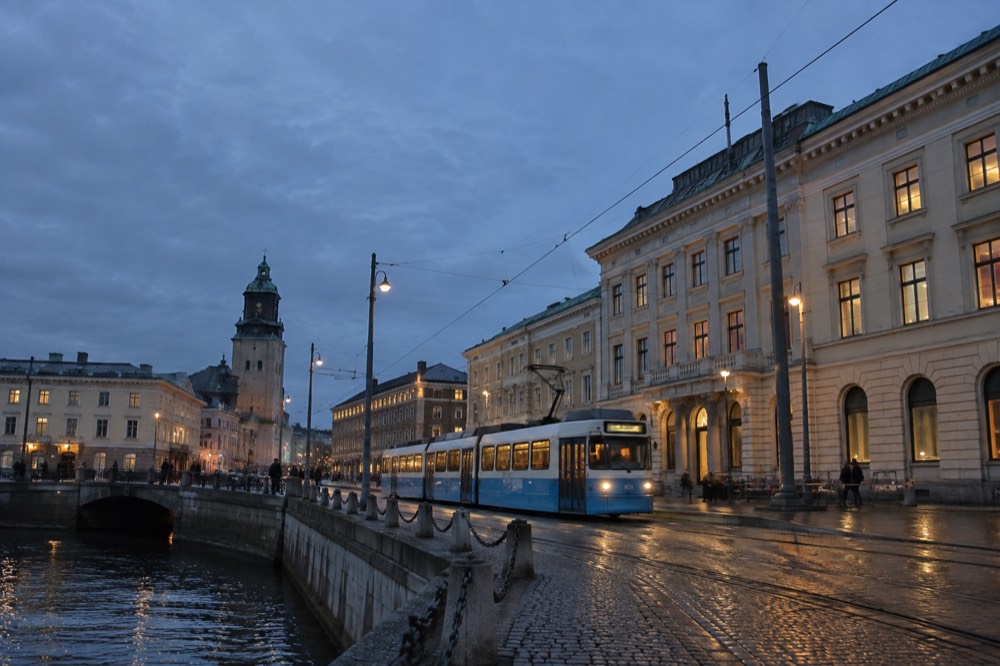
Short answer
Gothenburg is a low-risk city by the standards of European city travel. Violent crime against visitors is rare, the tram network runs late, and the biggest day-to-day hazards are environmental: near-dark December afternoons, cold sea water, icy pavements and a statutory 3.5% alcohol limit in shops.
Gothenburg recorded over six million commercial guest nights in 2025, a record year with the strongest growth in Sweden, according to Göteborg & Co's January 2026 press release. Millions of people walk its granite-and-brick streets, ride its trams and swim off its car-free islands every year, and the city's reputation among visitors is that of a calm, functioning Nordic port rather than a place that demands vigilance. That reputation is broadly fair. What actually catches visitors out here is not crime but environment and law: December afternoons that go dark before four, sea water that stays cold long after the air warms, tram tracks that slice through every crossing, and a national alcohol statute that quietly rewrites a supermarket beer run.
This guide, from the editorial desk at Gothenburg Travel Guide, walks through what safety in Gothenburg really means in practice: the honest answer to the headline question, the neighbourhood picture, the environmental hazards that matter more than any crime statistic, the nights-out rules, and the family and solo-traveller angles. Where a figure matters, it comes from the primary source: Västtrafik's fare pages, SMHI's normals, the Swedish statute book.
Is Gothenburg Safe for Tourists?
Yes, Gothenburg is safe for tourists by any reasonable European standard. It is Sweden's second city, with a population of 613,274 at the end of 2025, and it handles over six million guest nights a year without the violent-crime-against-visitors profile that defines genuinely risky destinations. The hazards that actually injure or inconvenience travellers are environmental and legal, not criminal: winter darkness, cold water, ice, tram traffic and Sweden's alcohol law.
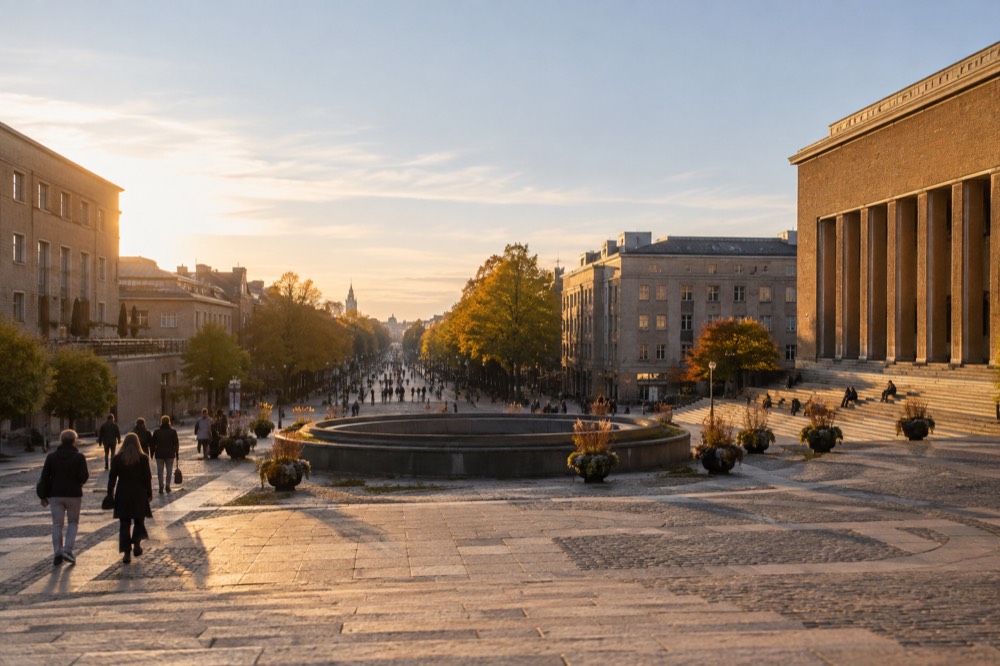
The honest framing matters. No editorial desk can promise any reader that nothing will happen to them anywhere, and a travel site that does is selling comfort rather than information. What can be said, from the city's own published data, is that Gothenburg is a stable, well-policed, heavily transited city where the ordinary machinery of daily life, trams, ferries, museums, parks, works the way it is supposed to. Göteborgs Spårvägar carried 126 million journeys in 2025, and a network that moves that many people without incident being the norm is itself a safety signal.
The practical risks rank roughly like this. First, the physical environment: December daylight lasts 6 hours 32 minutes on the solstice, pavements ice over, and the sea stays cold enough to matter long into spring. Second, traffic: trams are quiet, they run in dedicated lanes down the middle of streets, and they win every collision. Third, alcohol law: strong beer, wine and spirits are sold only through Systembolaget, which changes how a night out works and where it ends. Fourth, and well behind the others, ordinary opportunistic crime: pickpocketing in the busiest visitor zones, the same as any city that receives cruise crowds and festival traffic.
None of that argues for anxiety. It argues for the same habits you would bring to Copenhagen, Oslo or Hamburg, plus a layer of Nordic-specific awareness that most first-time visitors lack. The rest of this page is that layer.
Which Areas of Gothenburg Should You Be Careful In?
No district of Gothenburg is a no-go area for visitors, and the city has nothing comparable to the high-crime zones guidebooks warn about in larger capitals. The areas where extra ordinary caution is justified are the crowded visitor and nightlife zones: Nordstan and the shopping core for pickpocketing, Avenyn and the Linné strip late on weekend nights for drunken disorder, and festival sites like Way Out West for crowd and theft risk. Everywhere else is residential calm.
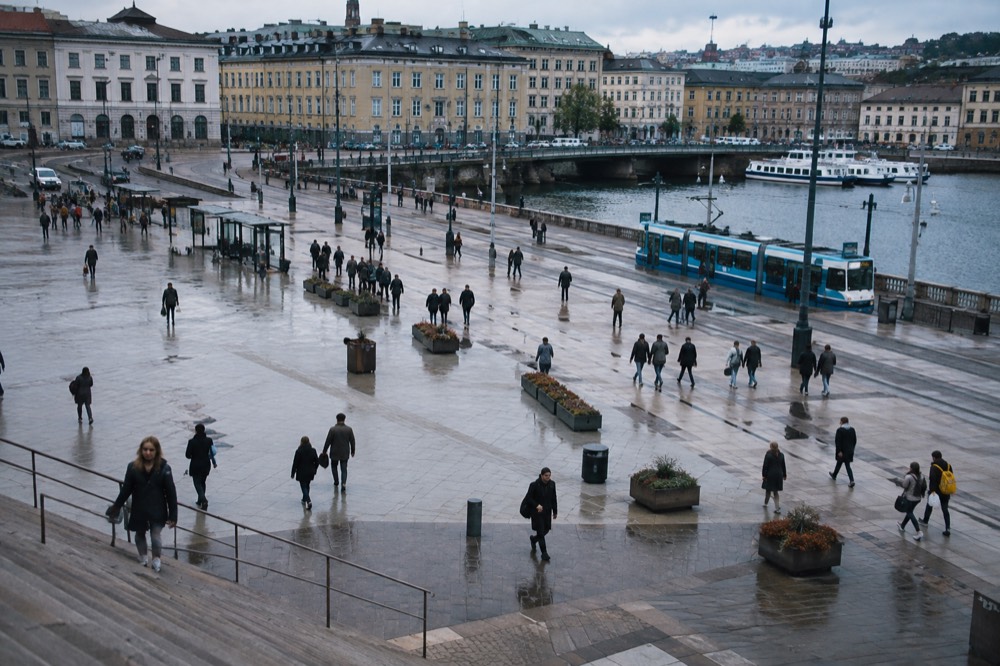
The centre of gravity for visitors is the moated old town, Inom Vallgraven, plus Nordstan, one of Scandinavia's largest shopping centres, sitting directly on top of Göteborg Centralstation. That concentration of crowds, luggage and phones is where opportunistic theft concentrates in any European city, and Gothenburg is no exception. The countermeasure is boring and effective: front pockets, zipped bags, and nothing valuable in a backpack's outer pocket on a crowded tram.
The nightlife geography splits into two zones. Avenyn, the boulevard running up to Götaplatsen, is the big-venue strip, and the Linné and Långgatorna area is the bar-and-pub quarter. Both are busy, policed and generally fine, and both produce the same late-night noise and disorder any drinking district produces after midnight on a Saturday. The common-sense rule is timing: these streets are family territory at 6pm and something rowdier at 1am. Neither is dangerous in the way that word is usually meant, but a solo visitor with no reason to be there at 1am has no reason to be there at 1am.
Away from the centre, districts like Majorna, Vasastan, Haga and Linné are ordinary residential and student neighbourhoods where the main hazard is a bicycle appearing silently behind you on a shared street. The archipelago islands, Styrsö, Brännö, Vrångö, Donsö and the rest, are so quiet that cars are banned outright: Göteborgs Stad's own study states the islands are "fredade från biltrafik". If your mental model of "areas to be careful in" comes from a bigger city, leave it at Landvetter.
For a first-day orientation that costs little and risks nothing, a guided sightseeing option is worth considering before you set out alone. The amphibious land-and-water bus tour is the city's most-reviewed sightseeing product, and a canal-and-archipelago cruise covers the waterfront geography in one loop. If museums and attractions fill your list, the [Go City](https://gocity.tpk.ro/HQKyKKW4) all-inclusive pass bundles more than twenty of them.
Is It Safe to Walk Around Gothenburg at Night?
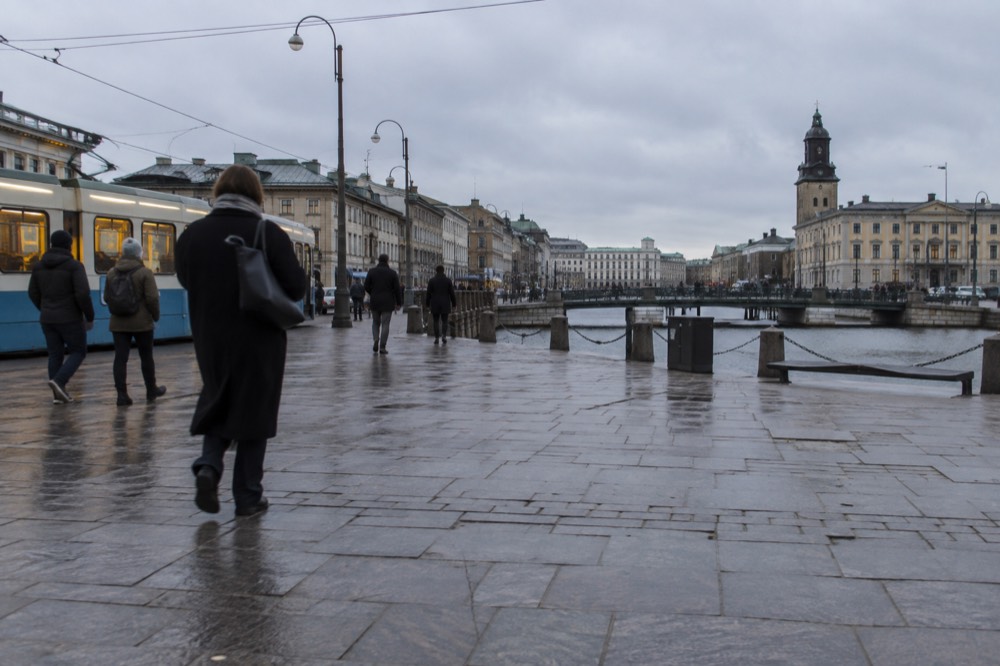
Yes, central Gothenburg is safe to walk in at night, with normal urban caution. The city centre, Haga, Linné and Avenyn remain busy and lit through the evening, trams run a full late-night schedule, and the street population is a mix of diners, students and shift workers rather than empty pavements. The real night-time risks are environmental: dark December crossings, ice, and tram traffic that is easy to miss in the gloom.
The daylight math is the thing to internalise before a winter visit. On 21 December the sun rises at 08:54 and sets at 15:26, giving 6 hours 32 minutes of daylight, and civil twilight only extends the grey light from 08:03 to 16:17. Practically, a December visitor does almost everything outside rush hour in the dark. Gothenburg's streets are well lit, but zebra crossings, kerbs and the tram grooves in the road are harder to read under sodium light than at midday. The Swedish weather agency SMHI publishes the daylight and temperature normals behind every figure in this paragraph, and they are worth checking for your exact dates.
Ice is the second winter factor. Gothenburg's climate is maritime, mean annual air temperature 8.9 C per SMHI's 1991-2020 normals for station Göteborg A, which means winter precipitation often lands as slush or rain rather than clean snow, and then freezes into the kind of transparent ice that takes pedestrians down without warning. Footwear with actual grip matters more here than in colder, drier inland Sweden where snow stays snow.
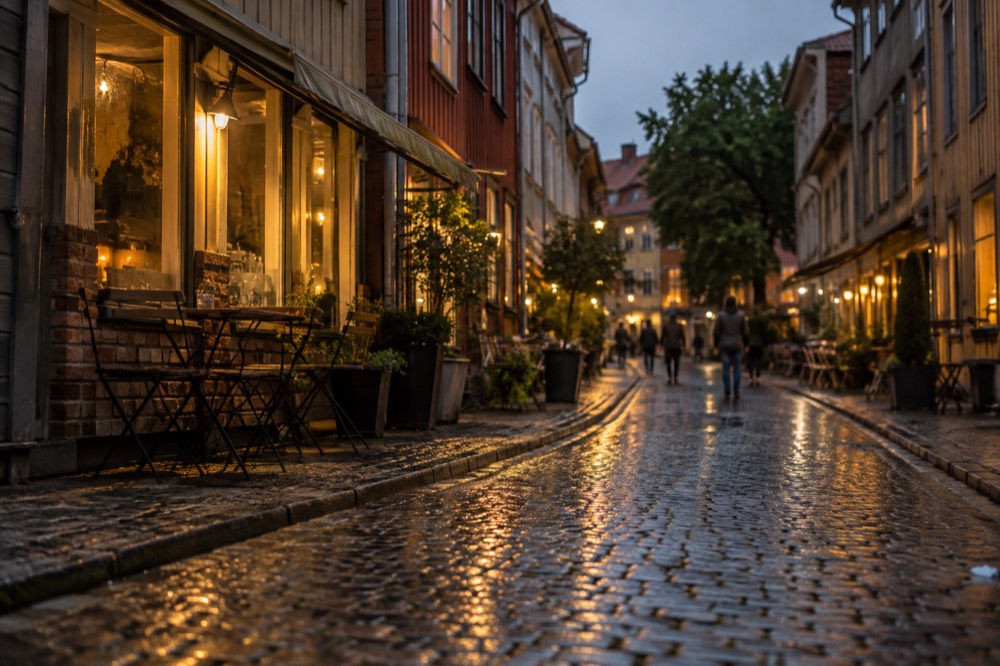
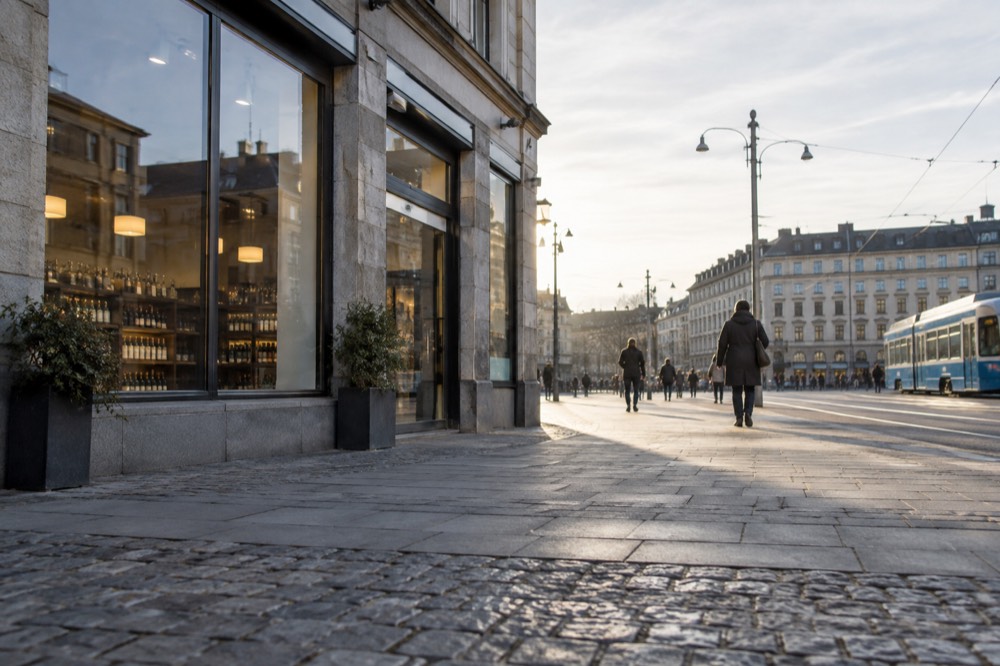
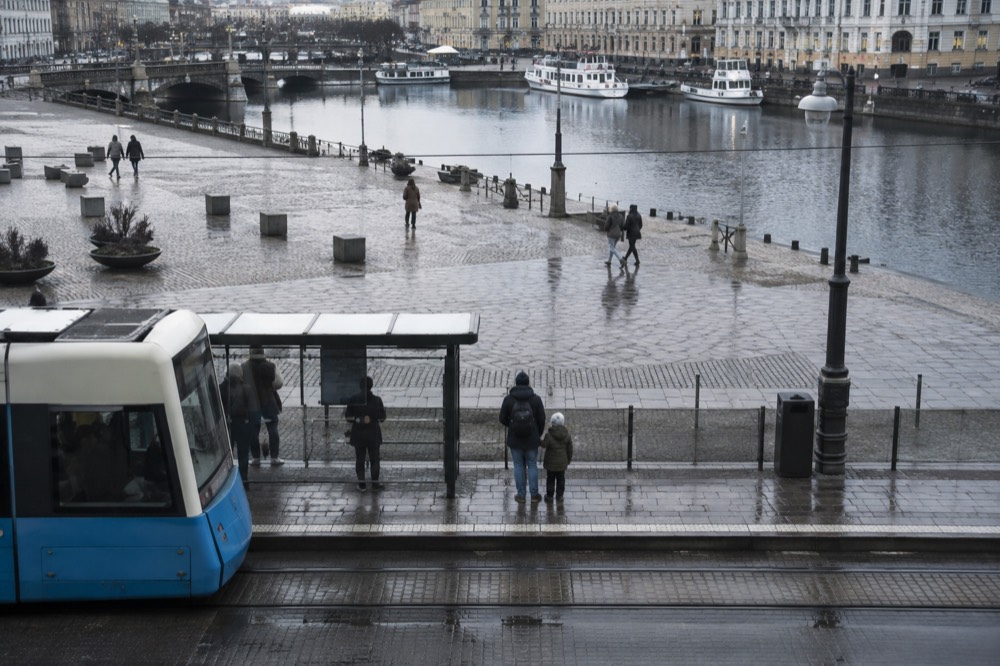
Trams are the third. The network runs twelve lines across 188 km of single track, from Mölndal to Angered and Saltholmen to Kålltorp, per Göteborgs Spårvägar's annual report, and the rails run down the middle of ordinary streets. A tram in the wet and dark is quieter than any bus, and its braking distance on greasy rail steel is long. The habit to build in a day: look for the rails before you cross, every time, the way locals do without thinking. Our page on getting around Gothenburg by tram covers the network, fares and ticketing in detail, including the 38 kr single and the 125 kr 24-hour Zone A ticket.
Is the Water Safe? Swimming, Dips and the Archipelago
Swimming around Gothenburg is safe in the sense that the water is clean and the beaches are ordinary family beaches, but the temperature is the risk that catches visitors. Sea temperature off the Vinga station peaks at 18.6 C in August, not July, and February averages just 2.7 C. Cold water is the one genuinely dangerous thing in this guide: it disables fast, and alcohol and swimming are a bad mix on any shore.
The SMHI data deserves more attention than most swimming guides give it, because it inverts the instinctive calendar. The sea lags the air by about six weeks: air temperature peaks in July at 18.3 C, but the water peaks in August at 18.6 C. September water, at 16.7 C, is warmer than June water at 16.2 C, so the September archipelago swim is the warmer one, which is the opposite of what most visitors book. The record low at Vinga is -1.2 C, legitimately below zero, because brackish Kattegat water freezes below 0 C. All of these figures come from SMHI's station data for Vinga, published in the agency's open datasets.
The practical rules for a safe dip are simple. Enter slowly, know where you will get out before you get in, never swim alone in cold water, and skip the swim entirely after drinking. The car-free southern islands, reached by ordinary Västtrafik ferry from Saltholmen on the same ticket as the tram, have no lifeguard infrastructure to speak of, so the responsibility is yours. Our swimming and beaches guide and the southern archipelago guide cover where the good bathing spots are; the safety point is that Nordic sea swimming is a short, sharp, deliberate activity, not a leisurely float.
For visitors who want the cold-water experience with a warm exit, the sauna-boat and hot-tub tours in our roster, such as the archipelago sauna boat cruise and the Stora Amundön hot tub and sea dip tour, wrap the dip in a heated vessel, which removes most of the risk while keeping the ritual.
Alcohol, Nights Out and the 3.5% Rule
Alcohol in Gothenburg is safe in the sense that it is heavily regulated, and the regulation is the fact visitors most often trip over. By law, beer above 3.5% ABV, all wine and all spirits are sold only by Systembolaget, the state monopoly; supermarkets sell only beer at or below 3.5%. Bars and restaurants serve normally, but nights out end earlier than in southern Europe, and the drunk-and-dark combination is the main night-time risk.
The statute is exact. Alkohollag (2010:1622), 1 kap. 8 § defines beer between 2.25% and 3.5% ABV as "folköl", sold in ordinary supermarkets, and anything above 3.5% as "starköl", reserved to the monopoly. The full text of the Alcohol Act is published by the Swedish Riksdag in the national statute book. The practical consequence is that the supermarket version of a familiar beer brand is often a 3.5% reformulation of the same beer, which surprises visitors who buy a six-pack and wonder why it tastes thin. For the real thing, the Systembolaget store is the only option, and those stores close on Sundays, so a Saturday purchase is the move for a Sunday picnic. The craft beer and bars guide covers the city's brewery scene, and Gothenburg nightlife covers where the evenings actually go.
The safety angle on a Gothenburg night out is mostly logistics. The bar districts are walkable from the centre, trams run late, and the city is not a place where the taxi decision is a safety decision. The one genuine combination to avoid is alcohol plus water: archipelago docks, harbour edges and the Paddan canal are all within stumbling distance of drinking areas, and cold water plus alcohol is the pattern behind most serious waterfront incidents in Nordic cities. If the evening is a drinking evening, the harbour swim waits for the morning.
Is Gothenburg Safe for Families and Solo Travellers?
Yes, families and solo travellers are well served in Gothenburg. The city's core attractions are calm, supervised spaces, the tram system makes navigation simple for children and solo visitors alike, and the archipelago islands are car-free, which removes the biggest family risk in one stroke. For solo travellers the main adjustments are the same as anywhere: keep the phone charged, know the last tram, and treat late-night quiet streets as a Västtrafik question rather than a walking question.
The family case rests on the city's own infrastructure. Universeum, the science centre, is open every day of the year from 10:00 to 18:00, is cashless, and includes all exhibitions and guided tours in admission, with only the Wisdome dome shows as a separate ticket. Liseberg, the amusement park, drew roughly 2.5 million park guests in 2025, runs a family-first operation with height-based ride rules (children under 110 cm enter free), and its calendar is published far in advance: summer 2026 runs 18 April to 20 September, Halloween 2 October to 1 November, Christmas 14 November to 23 December. The safety-relevant fact for families is the closed spring: a February or March arrival finds the park shut, so plan around it using our Liseberg tickets and timing guide and Gothenburg with kids.
One Liseberg detail prevents a common family argument at the gate: entry and rides are sold separately. The 95 kr entry ticket buys zero rides; the combined entry-plus-ride pass starts at 365 kr online. Liseberg is not sold on any booking platform, so buy from the park's own site.
For solo travellers, Gothenburg is close to ideal: compact, legible, English-speaking, and covered by a tram network where a 125 kr 24-hour Zone A ticket covers the trams, the buses and the archipelago ferries alike. The free walking tours are a natural solo entry point, and they are genuinely free: the Majorna walk, the hidden-corners walk and the history-culture-gastronomy walk all run on GuruWalk's tip-based model, with the gurus named on each listing. Note that one of the four Gothenburg walks on GuruWalk is Spanish only, so check the language on the listing before you book if you need English.
Common-Sense Rules That Cover Everything Else
The habits that matter in Gothenburg are few and Nordic: respect the tram rails at every crossing, dress for the actual weather rather than the calendar, keep valuables zipped in the crowded core, buy strong beer before Sunday, and let the sea be cold on its own terms. Add a charged phone and a sense of your last tram home, and you have covered essentially every risk this city presents to a visitor.
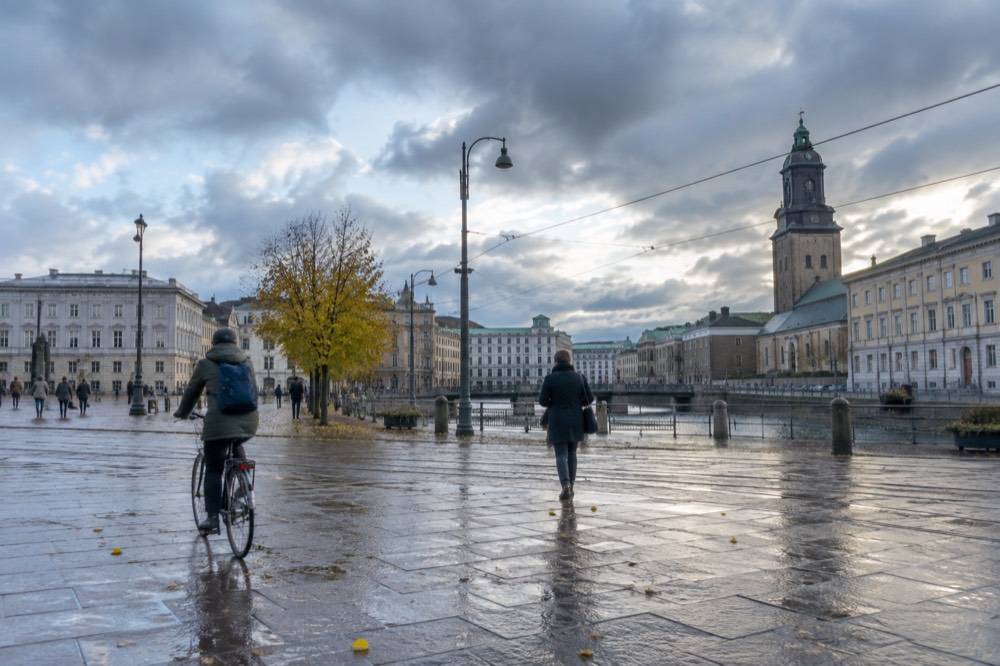
The weather deserves the last word, because it is the one factor that touches every day of a trip. SMHI's 1991-2020 normals for station Göteborg A put annual precipitation at 912 mm across 127 days with at least 1 mm, roughly one day in three. October is the wettest month at 102.9 mm and April the driest at 51.3 mm, which means the shoulder-season myth cuts both ways: spring is the dry window, and autumn rain arrives after the summer crowds leave. And despite the city's drizzly reputation, SMHI does not identify Gothenburg as Sweden's rainiest place; the national maxima sit in the western highlands and the mountains, not the city. A waterproof layer and shoes with wet-weather grip are not paranoia here, they are the local uniform. Our best time to visit guide and what to pack guide turn the climate data into a packing list.
The table below compresses the whole page into a checklist you can screenshot.
| Risk | Real level in Gothenburg | What to actually do |
|---|---|---|
| Pickpocketing | Low, concentrated in Nordstan, Centralstation and crowded trams | Zipped bag, front pockets, nothing loose in outer backpack pockets |
| Night walking | Low in the centre, Haga, Linné and Avenyn | Normal caution; know your last tram |
| Tram traffic | The most likely way a visitor gets hurt | Look for the rails before every crossing, especially in dark or rain |
| Ice in winter | Real, often transparent slush-ice | Shoes with grip; assume wet stone is slippery |
| Cold water | The genuinely dangerous element | Enter slowly, never alone, never after alcohol |
| Alcohol law | Not a danger, a trap for the unprepared | Supermarket beer tops out at 3.5%; Systembolaget closes Sundays |
| Dark afternoons | December sunset 15:26 | Plan sights around the light; carry a phone light |
A second table maps the practical zones, so the neighbourhood question has a concrete answer.
| Area | Character | Ordinary caution level |
|---|---|---|
| Inom Vallgraven and Nordstan | Crowded visitor and shopping core | Standard anti-pickpocket habits |
| Haga and Vasastan | Calm wooden-quarter and stone residential streets | Minimal; watch for bikes |
| Linné and Långgatorna | Pub and bar quarter | Busy evenings, rowdy after midnight on weekends |
| Avenyn and Götaplatsen | Main boulevard, big venues | Same as any nightlife strip after midnight |
| Majorna | Second-hand shops, locals, students | Minimal |
| Southern archipelago islands | Car-free, quiet, no lifeguards | Water sense, ferry timings, weather check |
And a seasonal one, because most of Gothenburg's risk profile is a function of the month you arrive.
| Season | Daylight | Main hazards | Priority packing |
|---|---|---|---|
| Spring (April driest month, 51.3 mm) | Lengthening fast | Cold sea, 7.1 C water in April | Layers, swim gear for saunas |
| Summer | 18 h 06 m on 21 June | Sunburn at 57.7 N, cold-water dips | Sunglasses, windproof layer |
| Autumn (October wettest, 102.9 mm) | Shrinking | Rain, dark evenings, slippery leaves | Waterproof, grip shoes, reflector |
| Winter | 6 h 32 m on 21 December | Ice, dark crossings, 2.7 C sea | Studded or gripped boots, reflective tag |
One closing thought on the headline question. Gothenburg's safety is not an absence of hazards, it is an alignment of them: the risks are visible, seasonal and mostly physical, which makes them the easiest kind to prepare for. Learn the tram rails, respect the water, buy the beer on Saturday, and the city does the rest.
Common Questions About Safety in Gothenburg
Is Gothenburg safe at night?
Yes, central Gothenburg, Haga, Linné and Avenyn are safe to walk at night with normal urban caution. Trams run a late schedule and the streets stay populated. The hazards that matter after dark are physical: ice in winter, dark crossings in December when the sun sets at 15:26, and quiet tram rails.
Are there areas to avoid in Gothenburg?
No district is a no-go area. The places warranting ordinary extra caution are the crowded shopping core around Nordstan and Göteborg Centralstation for pickpocketing, and the Avenyn and Linné nightlife strips after midnight on weekends. The archipelago islands are car-free and among the calmest places in the city.
Is Gothenburg safe for solo female travellers?
Gothenburg ranks among the more comfortable European cities for solo travel: compact, English-speaking, with a legible tram network and a 125 kr 24-hour Zone A ticket covering trams, buses and archipelago ferries. The usual solo habits, a charged phone and knowing your route home, cover the realistic risks.
Is it safe to swim in the Gothenburg archipelago?
The water is clean and swimming is a normal local activity, but it is cold. Sea temperature peaks at 18.6 C in August and averages just 2.7 C in February, per SMHI's Vinga station data. Enter slowly, never swim alone in cold water, and never swim after drinking. September water is warmer than June water.
Is Gothenburg safe for tourists with kids?
Yes. Universeum is open every day of the year, Liseberg runs height-based ride rules and drew about 2.5 million park guests in 2025, and the southern archipelago islands ban private cars outright, removing the biggest family risk. Note that Liseberg closes for much of the spring and that its 95 kr entry ticket includes no rides.
Can you buy beer in Gothenburg supermarkets?
Only beer at or below 3.5% ABV. Under Alkohollag (2010:1622), anything stronger, plus all wine and spirits, is sold only by Systembolaget, the state monopoly, whose stores close on Sundays. Bars and restaurants serve alcohol normally.