Staying Connected in Gothenburg: SIM Cards, eSIMs and WiFi
Gothenburg is one of the most digitally frictionless cities a visitor can land in: trams, museums and even the fish hall assume you pay by card or app, and almost everything worth doing assumes you have data. Here is how to stay online, what it costs, and where the gaps are.

Short answer
Buy an eSIM before you fly or a prepaid SIM at Landvetter Airport or a phone shop in the city, keep roaming in mind if you travel on from Norway or Denmark, and rely on public WiFi mainly as a backup: Gothenburg's trams, museums and ferries all expect a working phone.
Gothenburg runs on phones. The tram system sells its tickets through an app, Universeum is a cashless venue that takes card only, Göteborgs konstmuseum takes card or Swish and nothing else, and the southern archipelago ferries sit inside the same Västtrafik ticket system as the trams. A phone with data is not a convenience here, it is the tool you pay for transport with, book museum time slots with, and find ferry departure screens with.
The good news is that Sweden is one of the easiest countries in Europe to get online in. The practical questions are which option suits your trip length, where the free WiFi actually is, and what the city's cashless habits mean for a phone that stops working. This guide covers all three, plus the roaming edge cases that catch people travelling between Sweden, Norway and Denmark.
Do You Need a SIM Card in Gothenburg at All?
Most short visitors do not need a physical SIM card. If your home mobile plan includes EU roaming at no extra charge, your phone simply works in Sweden the way it does at home, and an eSIM bought before departure covers everyone else. A physical prepaid Swedish SIM mainly pays off for stays longer than a couple of weeks, for people who need a Swedish phone number, or for anyone whose home plan charges roaming fees that add up fast.
The deciding factor is where your home plan comes from. Travellers from inside the EU benefit from the "roam like at home" regulation, which caps what operators can charge for roaming within the European Economic Area; if your plan already includes EU roaming, a Swedish SIM buys you little. Travellers from the United States, the United Kingdom post-Brexit or further afield face a wider range of roaming terms, and for them an [eSIM](https://airalo.tpk.ro/iKligzbd) is usually the cheaper, faster route.
There is also a practical reason beyond price: Västtrafik's app. The transport authority sells single tickets, 24-hour tickets and period tickets through its To Go app, and the app is the cheapest and most common way to pay. A phone without data can still board a tram, but it cannot buy the ticket the inspector will ask to see. If you want the detail on tickets and zones, read getting around Gothenburg by tram, which covers the fare system this page only touches on.

Where Can You Buy a SIM or eSIM in Gothenburg?
The fastest route is an eSIM installed before you fly, bought from any of the international eSIM providers and activated on landing at Landvetter Airport. Physical SIMs are sold at phone shops in Nordstan, the city's main shopping centre next to Göteborg Centralstation, at electronics retailers around the city, and at convenience kiosks, with staff in Swedish shops routinely switching to English. Bring photo ID, because Swedish prepaid SIM registration requires it.
Nordstan is the practical answer for most visitors because of where it sits: directly between the central station and the canal, a few minutes' walk from most central hotels. If you land at Landvetter and take the Vy flygbussarna coach into town, the terminal at Nils Ericson Terminalen drops you a short walk from Nordstan's doors, so a SIM stop fits naturally into the transfer. The airport itself is primarily a domestic and international flight hub with shops aimed at travellers rather than a phone-market, so do not count on a wide SIM selection airside.
Two things to know before you shop. First, ID: Swedish law requires identification when registering a prepaid SIM, so carry a passport. Second, the registration and top-up process runs partly through each operator's own app or website, which is one more reason an eSIM bought at home can be simpler for a short trip. For the transfer itself, the coach journey from Landvetter to the centre takes 20 minutes according to Swedavia's own airport pages, and there is no rail link to the airport at all, a fact worth knowing before you assume you can top up a SIM on a train that does not exist. The full transfer comparison is in Landvetter Airport to the city centre.
Once your phone works, the classic first moves in this city are all water-based sightseeing: the amphibious bus that drives into the harbour, the guided archipelago cruise, and the 50-minute canal cruise. All three sell mobile tickets you will need that fresh data connection to show at the gate.
How Much Does Mobile Data Cost in Gothenburg?
There is no single published price list for prepaid data in Gothenburg that this site can verify, so treat any specific krona figure you read online with caution. What is verifiable: eSIM plans for Sweden are sold in day-count packages rather than by the gigabyte, Swedish prepaid SIMs come with bundled data you top up in the operator's app, and budget by package type rather than a per-GB rate nobody actually pays.
The honest answer about Swedish mobile pricing is that the operators change bundles frequently and publish prices only on their own Swedish-language pages, which makes any figure quoted in a third-party guide a snapshot that may already be stale. This site's rule is to report only what can be verified at source, and on SIM pricing, the verifiable core is structural rather than numerical.
What you can plan around:
| Option | Typical trip length it suits | Where you buy it | What to verify yourself |
|---|---|---|---|
| Home plan with EU roaming | Any, if roaming is included | Before departure, from your own operator | Whether Sweden is inside your roaming zone and any fair-use data cap |
| International eSIM | 3 days to 2 weeks | Online, before or during the trip | Coverage in Sweden specifically, and whether it is data-only or includes calls |
| Swedish prepaid physical SIM | 2 weeks or longer, or if you need a Swedish number | Phone shops in Nordstan, electronics retailers, kiosks | Current bundle contents and top-up method in the operator's app |
| WiFi only | Very short stays, low-data travellers | Free hotspots around the city | Whether your hotel, museum and café WiFi is fast enough for maps and tickets |
One structural fact that does hold: Sweden's mobile market is served by a small number of national networks, and prepaid competition between them keeps short-term bundles reasonable by Nordic standards. The Nordic region as a whole is one of the most connected in the world, and Gothenburg, as Sweden's second city with a record 6 million-plus commercial guest nights in 2025 according to Göteborg & Co, is fully covered by that infrastructure, including out on the car-free southern archipelago islands.

Where Is Free WiFi in Gothenburg?
Free WiFi is reliably available in Gothenburg's hotels, cafés, shopping centres and museums, with Nordstan, the central library and the city's museum cafés being dependable central options. What the city does not have is a dense network of free outdoor municipal hotspots, so plan around indoor WiFi and your own data rather than expecting open-air coverage. Libraries are the strongest free option, since Swedish public libraries offer open networks and long opening hours.
The pattern to understand is that Gothenburg's connectivity is indoor-first. The cafés along Avenyn and the Linnégatan strip, the food halls, the museums and the shopping centres all run guest WiFi, and hotel WiFi in Sweden is generally fast and genuinely unlimited rather than a token gesture. Outdoors, you are on mobile data, which in practice is fine: the city's tram network alone carried 126 million journeys in 2025 according to Göteborgs Spårvägar, and the network that handles that also handles data.
Museums are a good bet for a planning stop. Göteborgs konstmuseum, Universeum and the Museum of World Culture all have visitor WiFi, and museum cafés are where Swedes themselves sit with laptops. Universeum is open every day of the year, 10:00 to 18:00, according to its own visit pages, which makes it one of the few reliable Sunday-morning WiFi stops in the city. If you are museum-hopping anyway, the Gothenburg museums guide lists which venues need booked time slots, a detail that matters when your phone is your ticket.
A practical note on the cashless angle: if your phone dies and you have no Swedish payment app, you are not stuck, because Swedish cards are widely accepted, but a few venues are strict. Universeum states plainly that it is cashless and card only. Göteborgs konstmuseum takes card or Swish only. A working phone is also your backup payment method in a city where some smaller cafés quietly prefer it.

Does Roaming Work Between Gothenburg, Norway and Denmark?
Roaming between Sweden, Norway and Denmark works without interruption for EU-based plans, because all three countries sit inside the European Economic Area's roam-like-at-home zone, so a SIM bought in Gothenburg keeps its terms in Oslo and Copenhagen. Travellers from outside the EU should check each country separately, because non-EU roaming packages are often sold per-country or region, and a plan covering Sweden may not cover a side trip across the Øresund or the Oslo border.
This matters more in Gothenburg than in most Swedish cities because of geography. Oslo is reachable by train for a weekend, Copenhagen is a common add-on, and the Bohuslän coast runs right up to the Norwegian border. A day trip to Marstrand or up the coast stays comfortably inside Sweden, but plenty of visitors string together Gothenburg, Oslo and Copenhagen in one trip, and the roaming question follows them.
The rule of thumb: if your plan is EU-based, the same SIM works across all three countries at domestic terms, subject to your operator's fair-use policy. If your plan is from the United States, the United Kingdom or elsewhere, verify the Nordic region as a whole before assuming country-by-country coverage. eSIM providers usually sell a "Europe" or "Nordic" regional package that smooths this over, which is one of the strongest arguments for an eSIM on a multi-country Scandinavian itinerary.
For the rail legs themselves, the Gothenburg to Stockholm by train guide covers the domestic routes, and the day trips from Gothenburg guide lists which destinations stay inside Sweden. Border-hopping trips beyond those pages need the roaming check above.

Does Mobile Coverage Reach the Gothenburg Archipelago?
Yes, mobile coverage reaches the southern archipelago islands, including the car-free islands of Styrsö, Brännö, Vrångö, Donsö, Asperö and Köpstadsö, because these are ordinary districts of Gothenburg with permanent residents, schools and ferry services, not remote wilderness. The northern archipelago of Öckerö, Hönö and Björkö is likewise inhabited and covered. Treat the islands as parts of the city for connectivity, the same way they are parts of the city for transport tickets.
This is the fact that surprises people. The southern archipelago sits inside Västtrafik's Zone A, so the same 125 kr 24-hour ticket that covers a tram ride covers the ferry from Saltholmen out to the islands, per Västtrafik's own zone materials. An ordinary ticket, in Västtrafik's words, takes you "on the same ticket all the way from the centre out to sea." Permanent island populations mean permanent infrastructure, and that includes mobile masts, so you can check ferry departure boards from a rock on Vrångö as easily as from Avenyn.
The practical implication for your SIM decision: an island day trip is not a reason to buy a bigger data bundle. You will have coverage for maps, tickets and the ferry timetable all day. The thing to plan instead is the ticket itself, and the how to get to the Gothenburg archipelago guide covers the Saltholmen ferry terminal, which is the western terminus of the tram network: you ride a tram to the boat.
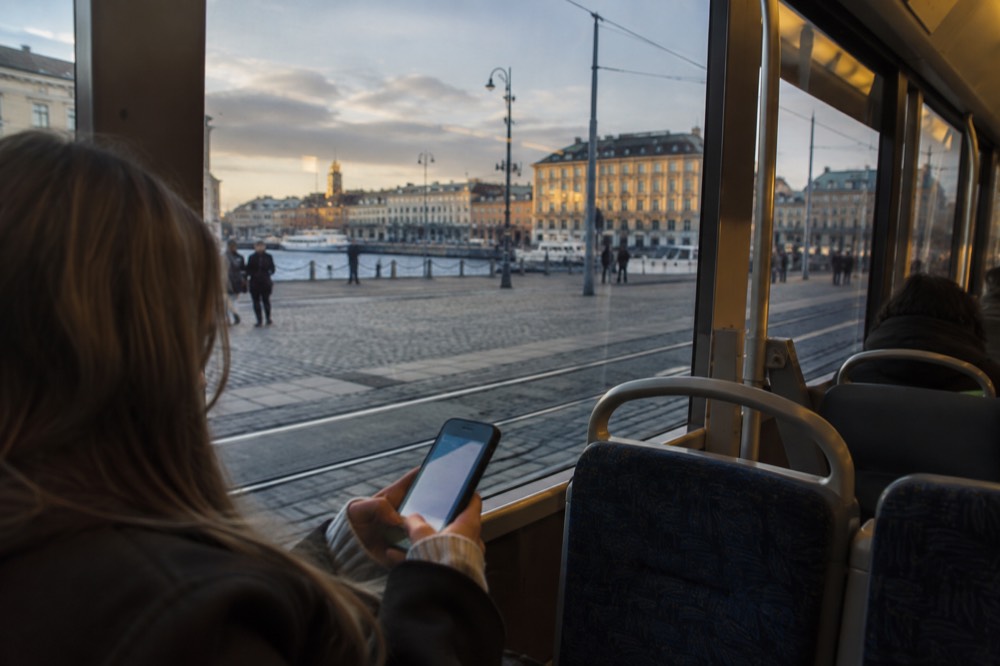
Which Apps Should You Install Before You Arrive in Gothenburg?
Install the Västtrafik To Go app for tram and ferry tickets, your bank's app for card payments, and any museum apps for timed entry before you land, because the first thing most visitors do after landing is buy transport, and the app is where Västtrafik tickets are cheapest and easiest. Add Swish only if you have a Swedish bank account, since the payment app is closed to visitors, and skip taxi apps unless a hotel recommends one, because card payment in taxis is standard.
The Västtrafik app is the one that genuinely matters. Single tickets, 24-hour Zone A tickets and the 30-day period tickets all live in it, and Västtrafik states the app and shop prices are the same for the 24-hour ticket at 125 kr. One caution from this site's verified facts: a temporary state subsidy currently halves 30-day period tickets, Zone A adult from 890 kr to 445 kr, but that cut does not apply to the 24-hour and 72-hour day tickets visitors actually buy. Do not read a headline about half-price transport and assume your day pass is discounted; it is not.
| App category | What to install | Why it matters in Gothenburg |
|---|---|---|
| Transport | Västtrafik To Go | Tram, bus and archipelago ferry tickets in one place; the standard way locals pay |
| Maps | Any offline-capable map app | Tram stops, ferry terminals and the car-free islands are easier with a downloaded map |
| Payment | Your bank or card app | Card is king; some venues are strictly cashless, card only |
| Museum entry | Each venue's own booking flow | Universeum uses dynamically priced timed slots that sell out on busy days |
| Translation | Any Swedish-capable translator | Menus and signs are usually bilingual, but packaging and notices sometimes are not |
One app not to bother with: a taxi-hailing app, unless your hotel suggests one for a specific need. Gothenburg is compact, the tram network of 12 lines and 188 km of single track, as Göteborgs Spårvägar reported for 2022, reaches from Mölndal in the south to Angered in the north and out to Saltholmen in the west, and most visitors never need a car with a driver.
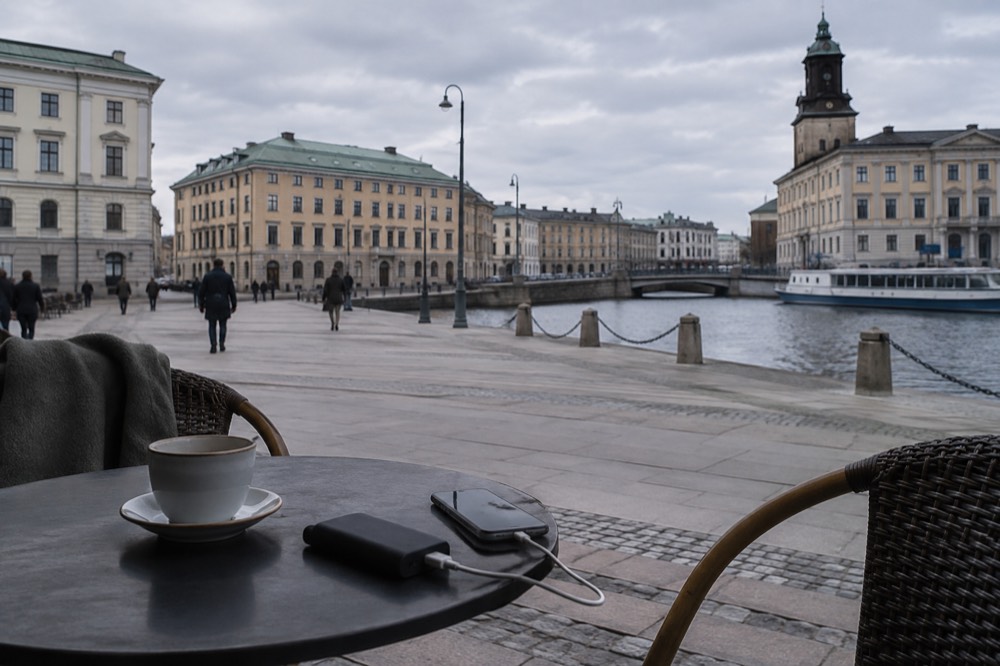
What Happens If Your Phone Breaks or Runs Out of Data in Gothenburg?
If your phone fails in Gothenburg you can still pay, travel and get help, because the city's infrastructure does not assume a smartphone: trams accept payment at ticket machines and shops, cards are accepted almost everywhere cash is not, and the central library and hotel desks provide free WiFi and computers for booking. The genuine pinch points are timed museum slots and app-only ticket purchases, so keep a charged power bank and write down your hotel address on paper.
The failure scenario worth planning for is not total, it is specific. Your card still works. Hotel staff still print booking confirmations. The library still has terminals. What you lose is spontaneity: buying a tram ticket from a machine at a stop is slower than the app, and a museum that sells timed slots online, as Universeum does, is harder to walk into without a phone. Universeum's own pages note free cancellation up to 60 minutes before a booked slot, which is a phone-dependent convenience.
A few offline habits solve most of it. Download an offline map of Gothenburg before you arrive. Screenshot your hotel address in Swedish. Keep your booking confirmations in email, which you can reach from any browser. And carry a power bank, because a day that starts with a tram to Saltholmen, a ferry to Brännö, a swim and a ferry back is a long day for a battery, even with September sea water at 16.7 C warmer than June's 16.2 C, per SMHI's Vinga station data, tempting you to stay out longer than planned.
For the broader planning picture, how many days you need in Gothenburg helps you size your data bundle, and what to pack for Gothenburg covers the seasonal side of the same trip.
With connectivity sorted, these three tours are the ones most worth booking on that fresh connection: the amphibious bus that runs from city streets straight into the harbour, the guided archipelago cruise, and the canal sightseeing cruise through the old moat.

Is Public WiFi Safe to Use in Gothenburg?
Public WiFi in Gothenburg carries the same baseline risks as anywhere in Europe: open networks in cafés, hotels and shopping centres can be intercepted, so avoid entering banking credentials on them, prefer your mobile data for anything sensitive, and treat hotel and museum networks as convenient rather than private. Sweden's general digital security is high and café networks are rarely malicious, but the safe pattern is identical worldwide: known network, no banking, HTTPS everywhere.
The Swedish context actually helps here. Sweden is one of the most digitally mature countries in Europe, and public networks in hotels, libraries and museums are run by organisations with standard security practices, not ad-hoc routers. The risk that matters in practice is not a Gothenburg-specific one, it is the universal one of an open network you cannot verify.
The habits that transfer from home: use your own data for banking and payment apps, let HTTPS do its work for everything else, and if a hotspot asks you to install a profile or an app to connect, decline and use mobile data instead. If you are relying on café WiFi for a video call home, the Linnégatan and Haga café strips have the density of options, and Haga deserves the trip anyway; the Haga old quarter guide pairs the neighbourhood with the fika tradition that will get you seated in those cafés in the first place.
| Situation | Best connection choice | Backup if it fails |
|---|---|---|
| Buying tram tickets on the move | Mobile data with the Västtrafik app | Ticket machine at major stops, or a shop selling Västtrafikkort |
| Booking a Universeum time slot | Mobile data or hotel WiFi | Ask hotel reception to help book |
| Island day trip to Styrsö or Vrångö | Mobile data, coverage is good throughout | Ferry staff and departure boards at Saltholmen |
| Video call home from a café | Café WiFi for the call, mobile data for anything sensitive | Move to another café; the city is dense with them |
| Phone battery dead, mid-afternoon | Power bank | Hotel desk, library terminals, printed confirmations |
Common Questions About Staying Connected in Gothenburg
Is there free WiFi at Landvetter Airport?
Landvetter Airport, Sweden's second-largest airport with 5.4 million passengers in 2025 per Swedavia, provides passenger WiFi in the terminal as standard for an airport of its class. Treat it as a convenience for the first minutes after landing rather than a plan: the fastest way to solid connectivity is an eSIM activated before you fly.
Do I need a Swedish SIM card to use the trams?
No. The Västtrafik To Go app works with any data connection, foreign or Swedish, and tickets can also be bought at machines and shops. A Swedish SIM makes nothing possible that a roaming plan or eSIM cannot do; it only matters for longer stays or if you want a Swedish number.
Does mobile data work on the archipelago ferries and islands?
Yes. The southern archipelago islands, Styrsö, Brännö, Vrångö, Donsö, Asperö and Köpstadsö, are inhabited districts of Gothenburg inside Västtrafik Zone A, with permanent residents and full mobile coverage. The northern islands of Öckerö, Hönö and Björkö are the same.
Can I pay with my phone if I am not Swedish?
Card payment works everywhere, including the strictly cashless venues. Swish, the Swedish payment app, is tied to Swedish bank accounts and is not available to visitors, so do not plan around it. Göteborgs konstmuseum takes card or Swish, and Universeum is card only, so a contactless card covers you in both.
Is WiFi in Gothenburg hotels good enough for work calls?
Swedish hotel WiFi is generally fast and unlimited, and the city's café and library networks provide alternatives if a hotel network is congested. For guaranteed quality on an important call, mobile data on a Nordic network is the more reliable choice, and coverage in the city centre is strong.
Will my EU roaming plan work in Gothenburg?
Yes, if your plan includes EU roaming, Sweden is inside the European Economic Area's roam-like-at-home zone, and the same terms carry into Norway and Denmark if your trip extends there. Check your operator's fair-use data cap before relying on roaming for a whole week of maps and streaming.
The last word on this belongs to the tram app, because it is the single place connectivity and daily life meet in Gothenburg. Get data working on day one, install Västtrafik To Go before you land, and everything else in this Gothenburg Travel Guide follows from there.