The Top 10 Things to Do in Gothenburg, Sweden: A Local-Order Guide
The ten things that actually define a visit to Gothenburg, Sweden: Liseberg, the car-free archipelago, Haga, Feskekôrka, the museums and the canal, with current prices and season dates.
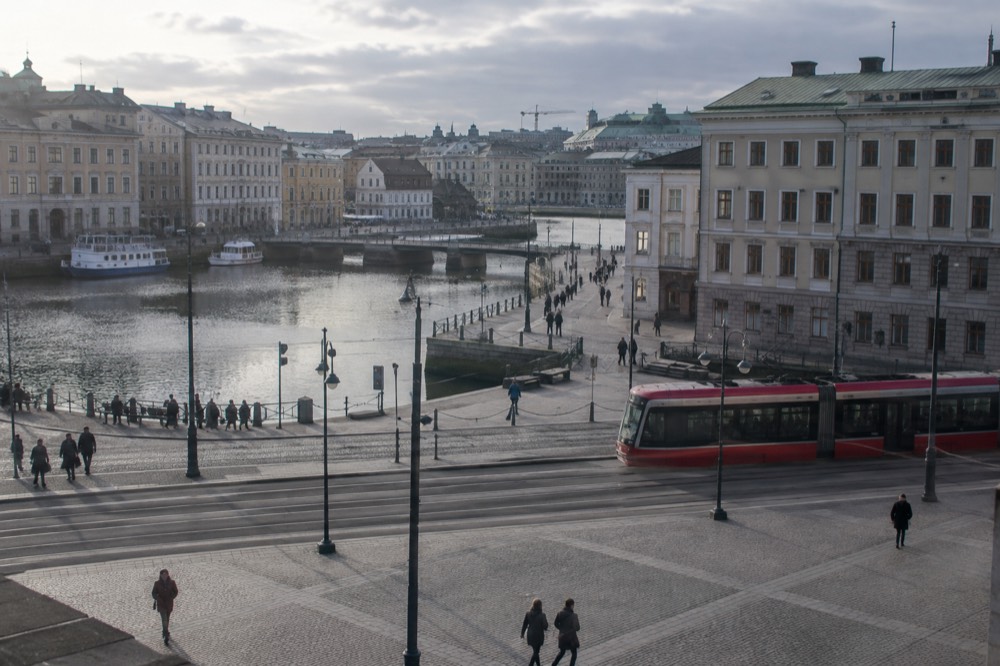
Gothenburg, Sweden's second city, recorded more than 6 million commercial guest nights in 2025, a record year driven by a roughly 15 percent rise in international visitors, according to Göteborg & Co's January 2026 press release. Yet most top-ten lists for the city still send people to a Volvo Museum that closed permanently in December 2023 and describe a fish market as if it were still only fish counters. This guide takes the ten things that actually define the city today, in the rough order a first-time visitor should tackle them, with the current prices and season dates attached. The tram is the backbone of all of it: Göteborgs Spårvägar reports 126 million journeys in 2025 across a network whose 2022 figures ran to 12 lines, 134 stops and 188 km of single track.
What Are the Top 10 Things to Do in Gothenburg?
The top 10 things to do in Gothenburg, Sweden are: ride the trams out to the car-free southern archipelago, spend a day at Liseberg, walk the wooden quarter of Haga, eat at the Feskekôrka food hall, take a Paddan boat through the 17th-century canals, visit World of Volvo, see the Nordic art at Göteborgs konstmuseum, wander Slottsskogen park with its free zoo, explore Universeum's rainforest, and watch the harbour from Masthuggskyrkan's viewpoint.
That is the honest order of importance, not a random shuffle. The archipelago comes first because it is the thing no other Swedish city can copy: Styrsö, Brännö, Vrångö, Donsö, Asperö and Köpstadsö are areas of Gothenburg itself, reached on an ordinary Västtrafik ticket, and private cars are banned on them by city ordinance. Liseberg comes second because it is the single biggest attraction in the city, roughly 2.5 million park guests in 2025 by Liseberg AB's own annual report, and because its irregular season calendar catches out more visitors than any other fact on this page.
The rest of the list balances the maritime core, the museums and the neighbourhoods. Haga and Feskekôrka pair into a single morning. The canal boats and the harbour viewpoints give the city its water-level identity, the thing that separates it from Stockholm's island-hopping or Malmö's flatness. The museums carry the Volvo story, the Nordic art collection and the rainforest dome, each in a different corner of the centre. If you are working out how many days you need, how many days in Gothenburg is enough is the companion question, and the short answer is three for this list, two if you drop the archipelago.
One planning note before the detail: the city is compact. Almost everything on this list sits inside the tram network's Zone A, the same fare zone that covers Göteborg, Mölndal, Partille and Öckerö, so a single 24-hour ticket at 125 kr moves you between nearly all ten entries. Only the archipelago ferries add time, and even they are inside the zone.
Why Liseberg Ranks Second Only to the Archipelago
Liseberg is the biggest attraction in Gothenburg and one of the easiest to get wrong, because it is closed for roughly a third of the year, its 95 kr entry ticket includes zero rides, and it is not sold on any third-party booking platform, so every visit starts with checking the park's own season calendar and buying direct.
For 2026 the park's own pages confirm: summer season 18 April to 20 September, Halloween 2 October to 1 November, and the Jul på Liseberg Christmas market 14 November to 23 December, all published on liseberg.se's ticket page. Between those windows the park is shut, roughly 21 September to 1 October, 2 to 13 November, and from 24 December until mid-April. A visitor arriving in late January finds the biggest attraction in the city closed, apart from the Kaninlandet family area, which new for 2026 also opens winter weekends and school holidays.
The second trap is the ticket structure. Entry at from 95 kr buys zero rides: Liseberg sells entry (Entré) and ride passes (Åkpass) separately, and its own price page is explicit about it. An Entré + Åkpass combination starts at 365 kr online, an Åkpass alone at 310 kr, and children under 110 cm enter free. Evening tickets valid from 18:00 start at 275 kr for the combined evening pass. Online prices are lower than on-site, and prices vary by date, so the park publishes a price calendar rather than a flat rate.
The third trap is assuming there is a shortcut. There is no third-party reseller for Liseberg tickets; you buy from Liseberg directly, online or at the gate. The Oceana water park, destroyed by fire in February 2024 before it ever opened, is planned to open in early 2027, so do not build a 2026 itinerary around it. New for summer 2026 is Stormvåg, a family attraction the park lists in its current ride roster. For a deeper comparison with the Copenhagen alternative, see is Liseberg or Tivoli better.
Is the Gothenburg Archipelago Worth a Whole Day?
Yes, the southern archipelago deserves a full day, because the islands are legally part of Gothenburg, the ferries are ordinary Västtrafik services covered by a normal Zone A ticket, and the islands are car-free by city ordinance, so a 125 kr 24-hour ticket covers tram, ferry and every island in one price.
Västtrafik's own zone material confirms the islands sit in Zone A and the boats carry ordinary line numbers, and Göteborgs Stad's study of the southern archipelago states the islands are "fredade från biltrafik", protected from car traffic, with exceptions only for taxi, transport service and emergency vehicles. You ride the tram to Saltholmen, the western terminus of the whole network, and step onto a ferry. That is the best-value single fact in Gothenburg tourism, and no other Nordic city offers anything like it on an ordinary commuter fare.
What you do out there depends on the island. Styrsö has the village feel and a small harbour café culture, Brännö and Vrångö are the swimmers' islands, Donsö mixes a working fishing harbour with bathing rocks, and Köpstadsö is the smallest and quietest of the lot. Walking paths connect harbours, meadows and swimming spots on every island, and the ferry crossings between them are short. Bring cash-free patience: card is standard everywhere in Sweden.
The sea temperature is worth knowing before you pack a towel: SMHI's quality-controlled observations from the Vinga lighthouse station show the water peaks in August at 18.6 C, not July, and that September water at 16.7 C is actually warmer than June water at 16.2 C, per SMHI's oceanographic archive. February is the coldest month at 2.7 C. A September swim in the archipelago is warmer than a June one, which is the opposite of what most visitors book. If you are weighing it up, is it worth visiting Gothenburg archipelago covers the case for and against.
Which Museums Should You Actually Visit in Gothenburg?
Visit World of Volvo, Göteborgs konstmuseum and Universeum, in that order, and ignore any guide that sends you to the old Volvo Museum at Arendal, which closed permanently in December 2023; World of Volvo at Lyckholms Torg is its successor, with exhibition tickets from 120 SEK online and a factory tour from 175 SEK.
World of Volvo opened in 2024 and is the only Volvo attraction in the city now. Its own site states the hours plainly: Monday to Wednesday 10:00 to 17:00, Thursday to 19:00, Friday and Saturday to 17:00, Sunday to 16:00. A guided exhibition tour runs Tuesdays and Thursdays at 10:30 for an extra 50 SEK, Tuesdays in Swedish, Thursdays in English, and a weekday Torslanda factory tour departs from the building from 175 SEK. The family ticket, two adults and up to three children, runs 640 to 665 SEK.
Göteborgs konstmuseum holds one of the Nordic countries' strongest collections, around 70,000 works and roughly 250,000 visitors a year, with the Hasselblad Center included in the 75 kr day ticket. Children and young people under 20 enter free, as do students with ID. The museum is cashless, card or Swish only, and closed Mondays. One thing to plan around: the museum's own rebuild page states it closes in 2028 and reopens in 2032, and there is intermittent blasting near the building right now, which the museum flags for sensitive visitors. Go before 2028.
Universeum, the science centre, is open every day of the year, 10:00 to 18:00, and admission is dynamically priced with a booked entry time slot: there is no fixed published adult price, and on-site costs the online price plus 30 kr. The venue is cashless, children under 3 enter free with their own ticket, and busy days sell out. All exhibitions and guided tours are included in admission; only the Wisdome dome shows are a separate ticket. Free cancellation runs to 60 minutes before the booked slot.
What Makes Haga and Feskekôrka a Single Morning?
Haga, the wooden old quarter, and Feskekôrka, the fish-church-shaped hall on Rosenlundsgatan, sit within fifteen minutes' walk of each other and make one coherent morning: cobbled streets and café terraces first, then a 2024-reopened food hall holding two fish counters and five restaurants, all before lunch.
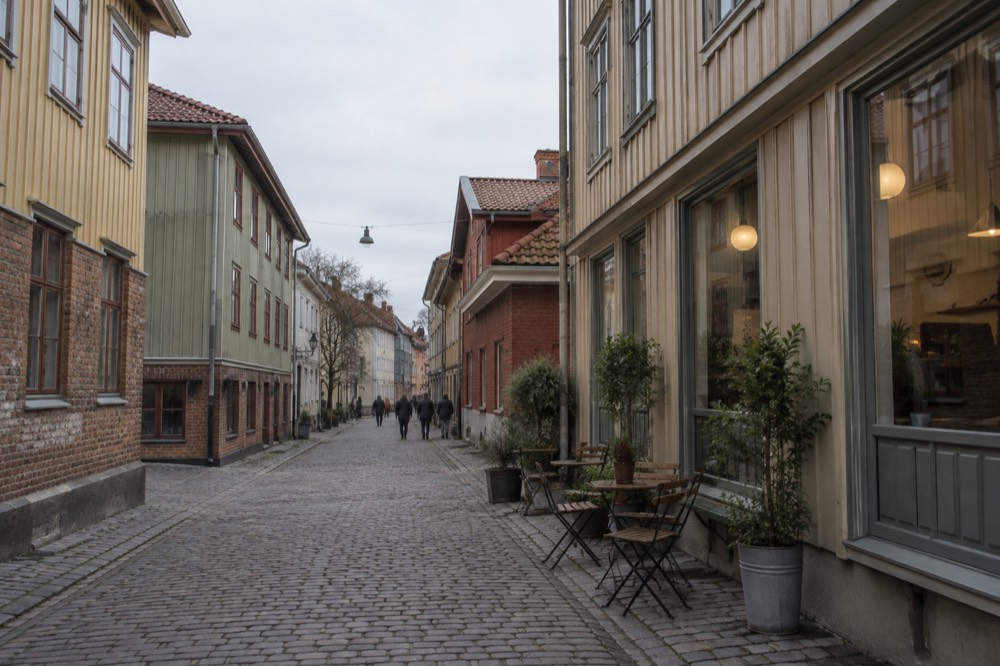
Haga is the city's oldest preserved suburb, all painted wooden landshövdingehus, cobblestones and café terraces. The buildings are the low wooden houses with stone ground floors that are unique to this city, a building type born from a fire regulation that banned timber upper storeys. The main drag, Haga Nygata, runs downhill through the whole quarter and ends near Järntorget, the square where the tram lines and the second-hand shops of the Majorna district take over.
Feskekôrka is the fact most guides get wrong. The building, constructed in 1874, reopened in 2024 after renovation, the same year it turned 150, and it is a food hall now, not the fish-counters-only market of older descriptions. Its own site lists two fish counters, Ebbes Fångst and Flåtens Fiskhandel, and five restaurants: Haldis Kök, Pråmenaden, Victor von G, Lilla Åstol and Ekmans. Lilla Åstol is seasonal and reopens in spring. Anyone planning lunch there should expect a sit-down stop, not a quick photo, and the shellfish is the reason: this is still the best place in the centre to eat shrimp and oysters the way the west coast does them.
What About the Canal, Slottsskogen and the Harbour Views?
The Paddan boats run sightseeing trips through the canals of the 17th-century moat that Dutch engineers laid around the old town, Slottsskogen is a huge free park containing a free zoo, and Masthuggskyrkan's steps give the classic harbour panorama, so these three fill an afternoon and cost almost nothing beyond the boat fare.
The Paddan trip is the classic first-hour orientation: the boats leave from Kungsportsplatsen, drop through the canal that rings the old town inside the former moat, and pass under the low stone bridges that give the ride its reputation for ducking. The amphibious bus tour covers similar ground before driving into the harbour itself, which is why it earns a place in the top ten: it compresses the city's split personality, street and water, into one hour. The operator's listing rates it 4.7 from 4,326 reviews, from $36 per person.
Slottsskogen, the park on the city's southern rise, is free to enter and contains a free zoo with Nordic animals, elk, seals and Gute sheep among them, plus the penguins that are the informal mascot of the whole park. The question is Slottsskogen free gets a simple yes, entry and zoo both. For the classic view over the harbour and the shipyard cranes, Masthuggskyrkan's steps are the local answer, with Ramberget on Hisingen as the drive-up alternative. Both are free, both face the water, and both are at their best in the long June evening light.
How Do You Fit All Ten Into a Trip?
Three days is the honest minimum: day one for the city core of Haga, Feskekôrka, the canal boats and the harbour viewpoint, day two for Liseberg and Universeum beside it at Korsvägen, and day three for the archipelago ferries from Saltholmen, with the two museums slotted into whichever day has weather you would rather spend indoors.
The geography makes the split easy. Haga, Feskekôrka, the Paddan departure point and Masthuggskyrkan all sit in the western half of the centre, walkable from each other in under half an hour. Liseberg, Universeum and the konstmuseum cluster around Korsvägen and Götaplatsen at the eastern end of Avenyn, the city's parade avenue. Saltholmen is a tram ride west. So the three-day plan barely wastes a fare.
Day one: Haga and Feskekôrka in the morning, the canal or amphibious boat early afternoon, Masthuggskyrkan for the view and Avenyn for the evening. Day two: Liseberg, checking the season calendar first, with Universeum beside it as the rain backup. Day three: the archipelago, out on the first ferry from Saltholmen and back by late afternoon. Göteborgs konstmuseum and World of Volvo slot into whichever day suits, both are indoor, both are short tram rides from the centre.
The one planning variable nobody controls is the rain, and the numbers are less dramatic than the reputation. SMHI's 1991-2020 normals for station Göteborg A put the city at 912 mm across 127 wet days a year, with October the wettest month at 102.9 mm and April the driest at 51.3 mm, per SMHI's normals page. SMHI does not call Gothenburg Sweden's rainiest city; the national maxima are in the western highlands and the mountains. It rains about one day in three, not permanently. Pack a shell jacket, and check what is the best time to visit Gothenburg if your dates are flexible.
The Top 10 in One Table
The table below compresses all ten entries into a single planning view, with the location and the one fact most likely to change your plan, and the two scheduling notes that follow it explain how to pair the entries that sit beside each other.
| # | Thing to do | Where | Key fact to know |
|---|---|---|---|
| 1 | Southern archipelago ferry hop | Saltholmen terminal | Ordinary Zone A ticket covers tram and ferry; islands are car-free |
| 2 | Liseberg | Korsvägen | Summer 2026: 18 Apr to 20 Sep; entry from 95 kr buys no rides |
| 3 | Haga old quarter | Haga Nygata | Wooden landshövdingehus, café terraces, free to wander |
| 4 | Feskekôrka food hall | Rosenlundsgatan | Reopened 2024; two fish counters, five restaurants |
| 5 | Paddan canal trip | Kungsportsplatsen | Boats through the 17th-century moat canals |
| 6 | World of Volvo | Lyckholms Torg 1 | The old Volvo Museum at Arendal closed Dec 2023 |
| 7 | Göteborgs konstmuseum | Götaplatsen | 75 kr day ticket; closes 2028, reopens 2032 |
| 8 | Slottsskogen park and free zoo | Linnégatan south end | Free entry, free zoo, Nordic animals |
| 9 | Universeum | Korsvägen | Dynamic pricing, book a time slot; open 365 days |
| 10 | Masthuggskyrkan viewpoint | Masthuggstorget | Harbour panorama, shipyard cranes, free |
Two entries deserve a scheduling note. Liseberg and Universeum sit beside each other at Korsvägen, so a wet afternoon can swap between them without losing travel time. And the archipelago entry is the only one that depends on ferry timetables rather than opening hours, so check the day's departures from Saltholmen the night before.
Common Questions About the Top 10 Things to Do in Gothenburg
What are the top 10 things to do in Gothenburg?
Ride the tram and ferry to the car-free southern archipelago, spend a day at Liseberg, walk Haga, eat at the Feskekôrka food hall, take a Paddan canal boat, visit World of Volvo, see Göteborgs konstmuseum before its 2028 closure, wander Slottsskogen's free zoo, book a time slot at Universeum, and finish with the harbour view from Masthuggskyrkan.
Is the Gothenburg archipelago part of the city?
Yes. The southern islands, including Styrsö, Brännö, Vrångö, Donsö, Asperö and Köpstadsö, are areas of the City of Gothenburg, reached by Västtrafik ferry from Saltholmen on an ordinary Zone A ticket. Private cars are banned on them.
Is Liseberg open all year?
No. For 2026 the park's own calendar runs summer 18 April to 20 September, Halloween 2 October to 1 November, and Christmas 14 November to 23 December. It is closed between those windows, including from 24 December until mid-April, except the Kaninlandet family area on winter weekends.
Does a Liseberg entry ticket include rides?
No. Entry (Entré) starts at 95 kr online and includes no rides. Ride passes (Åkpass) are sold separately from 310 kr, or combined with entry from 365 kr. Children under 110 cm enter free.
Is the old Volvo Museum still open in Gothenburg?
No. The Volvo Museum at Arendal closed permanently in December 2023. World of Volvo, at Lyckholms Torg 1, is its successor, with exhibition tickets from 120 SEK online.
How many days do you need for the top 10 in Gothenburg?
Three days covers all ten comfortably: one for the city core and canals, one for Liseberg and Universeum, one for the archipelago. Two days works if you drop the archipelago and one museum.
For the wider context of what the city is known for, see what is Gothenburg known for, and for the naming question that confuses search results, are Gothenburg and Göteborg the same. This page is part of Gothenburg Travel Guide, an editorial desk covering Gothenburg, Sweden.