Is Slottsskogen Free? Gothenburg's Biggest Park, Explained
Yes, Slottsskogen in Gothenburg is free to enter, and so is its zoo. Here is exactly what costs nothing, what does not, and how to get there on a regular tram ticket.
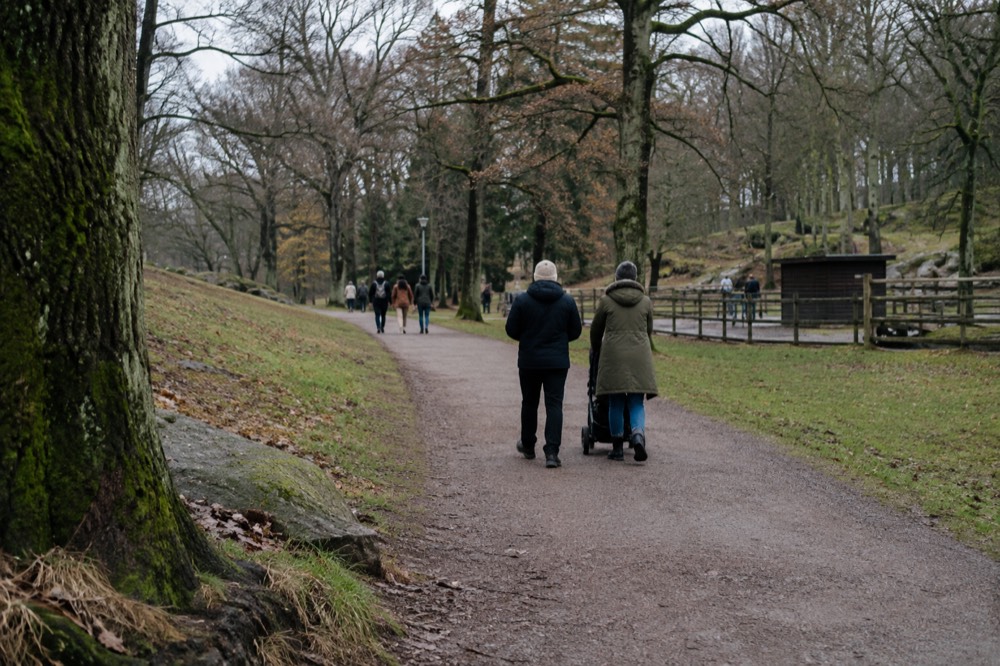
Slottsskogen is the big green lung on the south side of Gothenburg, Sweden: hills, old oak woodland, lawns and free animal enclosures, sitting between the districts of Linné and Majorna. The short answer to the question is simple. Yes, the park is free to enter, and so is its zoo. Gothenburgs Stad, which owns and runs it, charges no admission, and that has been the arrangement since the park opened to the public in the 19th century. The longer answer, which this page covers in detail, involves what "free" actually gets you, which neighbouring attractions are free too, and how the tram fare to reach the park works out.
Is Slottsskogen Free to Enter?
Yes, Slottsskogen is completely free to enter, and so is the zoo inside it. There is no gate, no ticket office and no suggested donation for the park itself. Gothenburgs Stad runs Slottsskogen as a public park, the animal enclosures are part of that public park, and a visitor can walk in, see the moose, seals, penguins and Nordic wildlife, and pay nothing at any point.
That makes Slottsskogen unusual in a Scandinavian city where most headline attractions carry a ticket. Liseberg charges entry from 95 kr and that entry buys zero rides, as its own ticket page states. Universeum prices admission dynamically with a booked time slot. Slottsskogen sits outside all of that: it is a municipal park in the same category as a public square or a street, funded by the city rather than by visitors.
The zoo part deserves emphasis, because it is not a petting corner. The park keeps genuine Nordic animals: moose, reindeer, seals, penguins and a children's zoo with domestic Swedish breeds. The seal feeding times are a small institution in Gothenburg, and they are free to watch like everything else. If you are building a budget trip around the city, this is the single biggest free attraction on the list, and it pairs naturally with the other free entries covered further down this page.
There is a historical logic to the arrangement, too. Slottsskogen began as the grounds attached to a royal hunting estate, and when the city opened it to the public in the 1800s it did so as a people's park, a space explicitly meant for workers who could not afford gardens of their own. The free zoo grew out of that same civic idea. It is worth understanding, because it explains why the park has never introduced an admission charge even as other Swedish attractions have: the free access is not a promotional quirk but the founding purpose of the place.
What Is Free Inside Slottsskogen, and What Is Not?
Everything inside the park boundary is free: the paths, lawns, playgrounds, the animal enclosures, the seal and penguin pools, and the children's zoo. What is not free is the food you buy at the cafes, anything you rent or buy at the activities centre, and the miniature golf and pony rides that operate in summer. The park itself never charges, so the only spending inside is optional.
The distinction matters for families. A visit can genuinely cost nothing beyond the tram fare, and many local families do exactly that: picnic on the lawns, watch the animals, use the enormous playground near the Linné entrance, and leave. The paid items, such as the summer cafe kiosks and the seasonal activities, are concessions rather than admission, and skipping them changes nothing about access.
Here is how the free and paid items break down inside the park:
| Item | Cost | Notes |
|---|---|---|
| Park entry | Free | No gate, no ticket, open around the clock |
| Zoo and animal enclosures | Free | Includes moose, seals, penguins, children's zoo |
| Seal and penguin feeding times | Free to watch | Timetables vary seasonally, check the park's notice boards |
| Playgrounds and lawns | Free | Large adventure playground near the Linné entrance |
| Cafe food and kiosks | Paid | Concessions, optional |
| Summer activities (pony rides, mini golf) | Paid | Seasonal, optional, not required for access |
The pattern to hold onto is that Slottsskogen monetises extras, never access. That is the opposite of Liseberg a few tram stops away, where the entry ticket and the rides are sold separately and the entry alone rides nothing, as Liseberg's own pricing page spells out.
A practical note on layout: the park is big enough that entering from the wrong side adds real walking. The Linnéplatsen end, reached along Linnégatan, puts you closest to the playground and the children's zoo, while the south and western edges near Majorna are quieter, hillier and better for the moose and deer enclosures. Families with small children should start at Linnéplatsen. Anyone wanting a long walk can enter at the Majorna side, cross the whole park, and finish on Linnégatan's cafe strip, which is one of the more pleasant free afternoons the city offers.
If you want the park as part of a wider sightseeing day, there are tours that pass through this part of the city:
The Majorna walk in that list is a free, tip-based GuruWalk tour, run by an independent guru through the GuruWalk platform rather than by this site. GuruWalk is named here precisely because it is not our product. The listing shows a 4.77 rating from 234 reviews over an hour and a half, and it covers Majorna, the district immediately west of Slottsskogen where the park's workers and shipbuilders historically lived.
How Do You Get to Slottsskogen, and Does That Cost Money?
The park itself costs nothing, but getting there does: a single adult tram ticket within one zone is 38 kr, and a 24-hour Zone A ticket is 125 kr according to Västtrafik's fare pages. Slottsskogen is served by trams along Linnégatan on the eastern edge and by buses on the western side, with the Linnéplatsen stop the classic entry point. The fare is the only mandatory cost of the whole visit.
Gothenburg's tram network is the backbone of the city: Göteborgs Spårvägar's own reporting describes 12 lines, 134 stops and 188 kilometres of single track, running from Mölndal in the south to Angered in the north and out to Saltholmen in the west, figures from its 2022 annual report. The network carried 126 million journeys in 2025. Slottsskogen sits on the western side of that network, and the walk from Linnéplatsen up into the park takes only a couple of minutes.
| Västtrafik ticket | Adult price | Good for a Slottsskogen visit? |
|---|---|---|
| Single, 1 zone | 38 kr | Yes, one trip each way |
| Single, 2 zones | 76 kr | Only if starting outside Zone A |
| 24-hour, Zone A | 125 kr | Yes, and covers trams, buses and the archipelago ferries too |
The fares above come straight from Västtrafik's own ticket pages, which is where the current prices should always be checked before travel. One nuance worth knowing: a temporary state subsidy currently halves Västtrafik's 30-day period tickets, cutting a Zone A adult monthly from 890 kr to 445 kr, but it does not apply to the 24-hour and 72-hour day tickets visitors actually buy. The 125 kr day ticket is unchanged. Do not plan around a discount that does not cover your ticket type.
Payment itself is simple but app-first. Västtrafik sells tickets through its To Go app, from ticket machines at larger stops, and at shops displaying the Västtrafik sign. There is no cash handling on the trams themselves, so a visitor arriving without a ticket should buy before boarding, either at a machine or in the app. A period ticket holder in the app may also bring three under-20s along free, which is worth knowing for families, though most short-stay visitors will be on singles or day tickets.
If you would rather see the city from a vehicle than navigate it yourself, the amphibious sightseeing bus is the tour most closely tied to this part of Gothenburg, and it can be a sensible add-on to a Slottsskogen day:
The amphibious tour listing shows a 4.7 rating from 4,326 reviews over about an hour, with the operator's live listing carrying the current price. Cancellation terms are on the listing, and free cancellation windows are typical for this kind of sightseeing product, so check the room before booking.
When Is Slottsskogen Open, and When Is the Best Time to Go?
Slottsskogen is open around the clock, every day of the year, because it is a public park with no gates to close. The animal enclosures keep their own daytime hours and the cafes and paid activities run seasonally, so the practical answer is that access is always free and always available, while the full zoo experience is a daytime, April-to-October proposition.
This is another way Slottsskogen differs from the ticketed attractions. Liseberg, the city's biggest draw, runs an irregular calendar: its own pages list the 2026 summer season from 18 April to 20 September, Halloween from 2 October to 1 November, and the Christmas market from 14 November to 23 December, with the park shut in the gaps and from late December to mid-April. Slottsskogen has no such calendar. A visitor arriving in February finds the park open, the lawns grey and the animals in their winter enclosures, while Liseberg down the road is closed entirely. The rest of the planning pages sit on Gothenburg Travel Guide.
Season-by-season, the climate data suggests how to plan. SMHI's 1991-2020 normals for the Göteborg A station show the driest month is April, at 51.3 mm across only 8.2 wet days, while October is the wettest at 102.9 mm. Daylight swings hard: the US Naval Observatory data for Gothenburg gives 18 hours 6 minutes of daylight on 21 June against 6 hours 32 minutes on 21 December. A summer evening visit, still in daylight at ten at night, is a genuinely different experience from a December afternoon that goes dark before four.
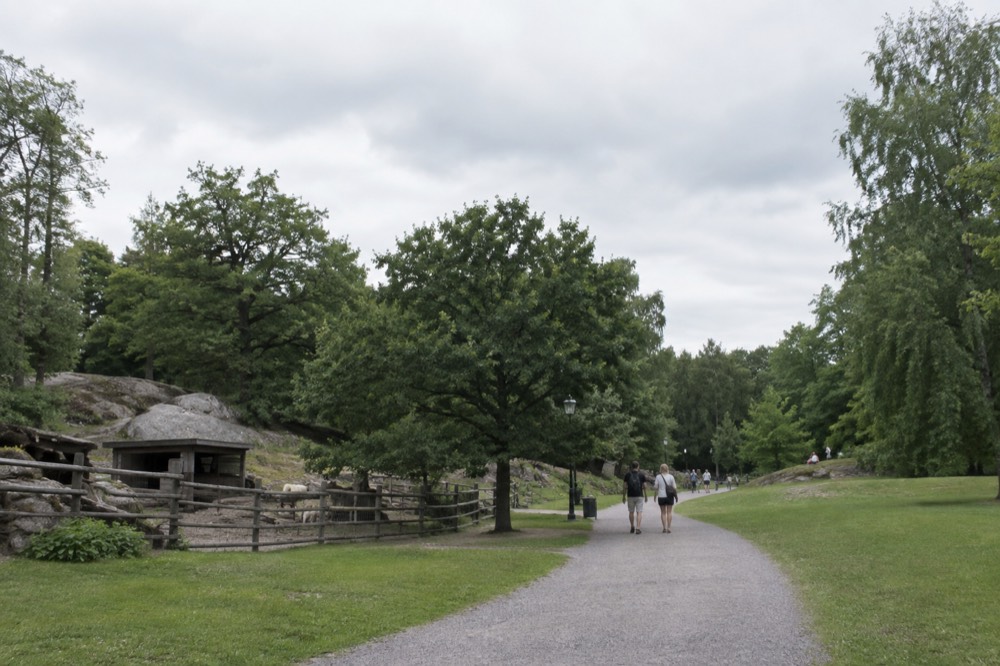
For swimmers, the nearby sea data matters more than the air data. SMHI's quality-controlled observations at Vinga show the water peaks in August at 18.6 C, and that September water, at 16.7 C, is warmer than June water at 16.2 C. Anyone combining a park day with a dip at nearby Saltholmen or the archipelago beaches should book later in the summer than instinct suggests.
What Else in Gothenburg Is Free, and What Is Not?
Slottsskogen is the biggest free attraction, but not the only one: walking the Haga old quarter, the Klippan harbour village and the Göta älv waterfront costs nothing, and the Botanical Garden asks a voluntary entry contribution rather than a fixed ticket. The ticketed headliners are Liseberg, Universeum and Göteborgs konstmuseum, where a day ticket is 75 kr, and the konstmuseum is scheduled to close in 2028 for a rebuild until 2032.
The Botanical Garden point is worth getting right, because guides regularly flatten it into "free" or "paid" and it is neither. The garden asks visitors for a voluntary contribution at the entrance. You can walk in, and you are invited rather than required to pay. Calling it simply free understates the ask; calling it a paid attraction overstates it.
The konstmuseum caveat matters even more. Göteborgs konstmuseum's own rebuild page states the museum closes in 2028 and reopens in 2032, and the museum currently warns of intermittent blasting near the building. Anyone writing or reading about Gothenburg's museum quarter needs that caveat attached, because a straightforward "visit the art museum" recommendation has a built-in expiry date. Until then, a day ticket is 75 kr, children and young people under 20 enter free, and students enter free with ID, per the museum's own visit pages.
| Gothenburg attraction | Cost | The honest description |
|---|---|---|
| Slottsskogen park and zoo | Free | No admission at all, open around the clock |
| Haga, Klippan, Göta älv waterfront | Free | Walking costs nothing, cafes cost money |
| Gothenburg Botanical Garden | Voluntary contribution | Not a fixed ticket, not strictly free |
| Göteborgs konstmuseum | 75 kr day ticket | Closes 2028, reopens 2032, blasting on site now |
| Liseberg | Entry from 95 kr, rides sold separately | Entry ticket buys zero rides |
| Universeum | Dynamically priced time slot | No fixed published adult price |
This mix is why the question "is Slottsskogen free" is worth a whole page rather than a yes. It anchors a budget day that can include a free zoo, a free old quarter and a voluntary-contribution garden, with the paid attractions chosen deliberately rather than defaulted into. For a broader planning frame, our pieces on what Gothenburg is known for and whether Gothenburg is cheap or expensive cover the rest of the budget picture.
One more free-access point that surprises visitors: the southern archipelago ferries. Västtrafik's own material states that an ordinary ticket carries you all the way from the centre out onto the sea, and the islands sit in Zone A. That means the 125 kr day ticket that brings you to Slottsskogen in the morning can carry you out to a car-free island in the afternoon, since the ferries are part of the same network as the trams. Very few cities bundle a free zoo and a sea archipelago into one transit ticket, and it changes what a "budget day" in Gothenburg can look like.
Is Slottsskogen Worth Visiting If You Have Limited Time?
For most visitors, yes: Slottsskogen is worth the tram fare even on a short visit, because it is free, it is central, and it shows a side of Gothenburg the ticketed attractions cannot, namely the city as locals use it. Visitors with only one or two days should weigh it against Liseberg and the archipelago, but families and anyone on a budget should treat it as a priority rather than a filler.
The honest comparison is against the archipelago, Gothenburg's other great free-access destination. The southern islands are reached by tram and ferry from Saltholmen on an ordinary Västtrafik ticket, and the islands sit inside Zone A, so the same 125 kr day ticket that carries you to Slottsskogen carries you out to Styrsö, Brännö or Vrångö and back. The islands are areas of Gothenburg, not day trips. A day ticket can plausibly cover the zoo in the morning and an island swim in the afternoon, which is an itinerary very few cities can offer. Our page on whether the Gothenburg archipelago is worth visiting breaks down that trade-off.
For cruise visitors the calculus differs again, since the dock is on the north side of the river and time is short; our guide to must-see places in Gothenburg, Sweden covers that. But for anyone staying even one night, Slottsskogen's combination of zero cost, genuine animals and easy tram access makes it one of the highest-value hours in the city.
There is also a weather argument. On a wet day, which in Gothenburg is a real planning variable given 127 wet days a year in SMHI's normals, the park's tree cover and the cafe shelters make it more usable than an open waterfront, and the animal enclosures are at their most active in cool, damp conditions. On a bright day the lawns fill with picnics and the view from the park's highest hill, over the rooftops toward the Göta älv and Hisingen, is one of the city's better free panoramas. Few attractions in any city are equally good in rain and sun at zero cost.
If you are pairing the park with a paid experience, these three options each fit a Slottsskogen day:
The archipelago cruise with guide, rated 4.4 from 1,488 reviews at 2.5 hours on the operator's listing, is the natural afternoon complement to a morning in the park. The Majorna GuruWalk, free and tip based with a 4.77 rating from 234 reviews, starts in the district next door and pairs with the park almost geographically, though remember it is an independent guru's tour on the GuruWalk platform, not ours, and the tip is how the guide is paid.
Common Questions About Slottsskogen in Gothenburg
These are the questions visitors ask most often about Slottsskogen, answered from the park's own arrangements, Västtrafik's published fares and the verified facts about what Gothenburg charges for. Each answer reflects the current setup: a free municipal park, a free zoo, and a tram fare that is the only unavoidable cost of the trip.
Is Slottsskogen free?
Yes. Both the park and the zoo inside it are free to enter, with no gate, ticket or suggested donation for the park itself. The only costs inside are optional ones like cafe food and seasonal activities.
Is the zoo in Slottsskogen really free?
Yes. The animal enclosures, including the moose, seals, penguins and the children's zoo, are part of the free public park run by Gothenburgs Stad. The seal feeding times are free to watch.
How much does it cost to get to Slottsskogen?
A single adult tram ticket within one zone is 38 kr, and a 24-hour Zone A ticket is 125 kr per Västtrafik's fare pages. The day ticket also covers buses and the southern archipelago ferries, so it can cover a park visit plus an island trip.
When is Slottsskogen open?
The park is open around the clock year round as a public park. The animal enclosures keep daytime hours and the cafes and paid activities run seasonally, so the full experience is a daytime visit.
Is the Gothenburg Botanical Garden free too?
Not exactly. The Botanical Garden asks a voluntary entry contribution rather than a fixed ticket, so it is neither simply free nor simply paid. Slottsskogen, by contrast, charges nothing at all.
Is Slottsskogen worth visiting on a short trip?
For most visitors yes, especially families and budget travellers. It is free, central and reachable by tram, and it shows everyday Gothenburg. Visitors choosing between it and Liseberg should note Liseberg's entry from 95 kr buys no rides, and the park's own calendar has long closed periods.
Gothenburg Travel Guide keeps this page aligned with the park's own arrangements and Västtrafik's published fares, and our wider coverage of whether Gothenburg is worth visiting for tourists puts Slottsskogen in the context of a full itinerary.