What Is Gothenburg Known for? Sweden's West Coast City Explained
Gothenburg, Sweden is known for its car-free archipelago, Liseberg, trams, canals, seafood and fika. Here is what actually defines the city, with verified facts.
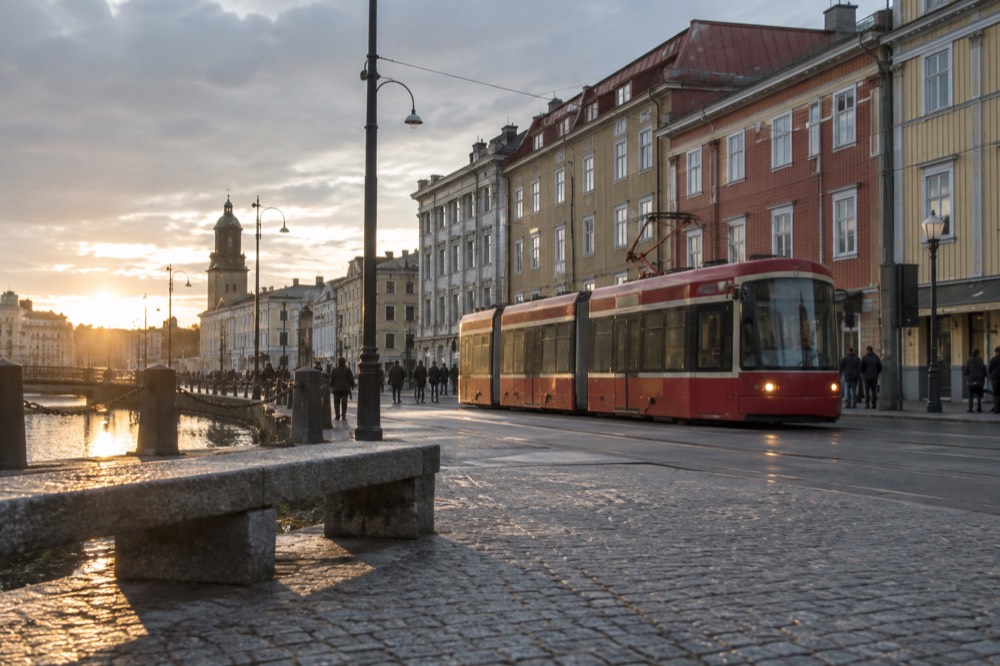
Gothenburg, Sweden's second city, sits where the Göta älv river meets the Kattegat on the west coast, and almost everything it is known for flows from that position. Dutch engineers laid out the old town inside a moat in the seventeenth century, the canals they dug still carry sightseeing boats, and the sea they opened the city to still defines the place. The city's own figures say 613,274 people live in Göteborg and the region logged over six million commercial guest nights in 2025, a record year driven by a roughly 15 percent rise in international visitors. This page runs through what the city is genuinely famous for, and a couple of things it is wrongly famous for, with the numbers behind each claim.
What Is Gothenburg Known For?
Gothenburg is known for its car-free southern archipelago, the Liseberg amusement park, a tram network of 12 lines and 188 km of track, the canal-ringed old town built by Dutch engineers, and a food scene built on seafood and fika. It is also the home of Volvo, though the old Volvo Museum closed in 2023 and was replaced by World of Volvo. Those are the headlines, and each one has a specific, checkable fact behind it.
The archipelago is the one that surprises people most. Styrsö, Brännö, Vrångö, Donsö, Asperö and Köpstadsö are not a boat trip away from Gothenburg, they are areas of Gothenburg, inside the same Västtrafik Zone A as the city centre. You ride a tram to Saltholmen, the western terminus of the network, and step onto a ferry on the same ticket. Göteborgs Stad's own planning study states the islands are "fredade från biltrafik", protected from car traffic, with exceptions only for taxi and emergency services.
Liseberg is the other headline. Liseberg AB's annual report counts about 2.5 million park guests in 2025, and the park's irregular season calendar is itself something the city is known for among anyone who has arrived in February and found the gates shut. The details deserve their own section below.
The tram network is the third pillar, and it is not a tourist attraction dressed up as transport. Göteborgs Spårvägar recorded 126 million journeys in 2025, a number that puts the network close to its pre-pandemic record of 141 million. Very few cities of this size run trams as their primary circulatory system, and the practical effect for a visitor is that you rarely wait more than a few minutes for the next one.
The food and the canals complete the picture. The moat around Inom Vallgraven still carries the Paddan sightseeing boats under low stone bridges, and the seafood culture that grew out of the harbour, from the shrimp sandwich to the oyster beds of Bohuslän, is what the city's restaurant reputation is built on.
Why Is the Gothenburg Archipelago So Unusual?
The southern archipelago is a string of car-free islands, from Asperö in the north to Vrångö in the south, that are administratively part of the city of Gothenburg and are served by ordinary public transport ferries from Saltholmen. A single Zone A ticket covers the tram to the pier and the boat out to sea, and private cars are banned on every island.
Västtrafik's own materials put it plainly: you can ride the same ticket all the way from the centre out onto the sea, and the islands sit in Zone A. That makes the 125 kr 24-hour Zone A ticket one of the best-value transport products in Scandinavia: tram, ferry and every island in one fare. The ferry terminal at Saltholmen is the western terminus of the tram network, so the connection is a simple cross-platform transfer. You can verify the coverage yourself on Västtrafik's Zone A ticket page, which lists Göteborg, Mölndal, Partille and Öckerö as the zone's territory.
The islands themselves are small, granite-and-wood communities. Brännö is flat, cycle-friendly and known for its summer dance evenings. Vrångö is the most southerly, with open heathland and swimming spots. Donsö still works as a fishing and shipping island. Köpstadsö is tiny enough that the ferry is the only practical way on or off. None of them has a car park, because none of them permits cars. Göteborgs Stad's study on the southern archipelago states the ban directly, and it is the reason the islands feel the way they do: quiet paths, wheelbarrows outside houses, and the smell of the sea rather than exhaust.
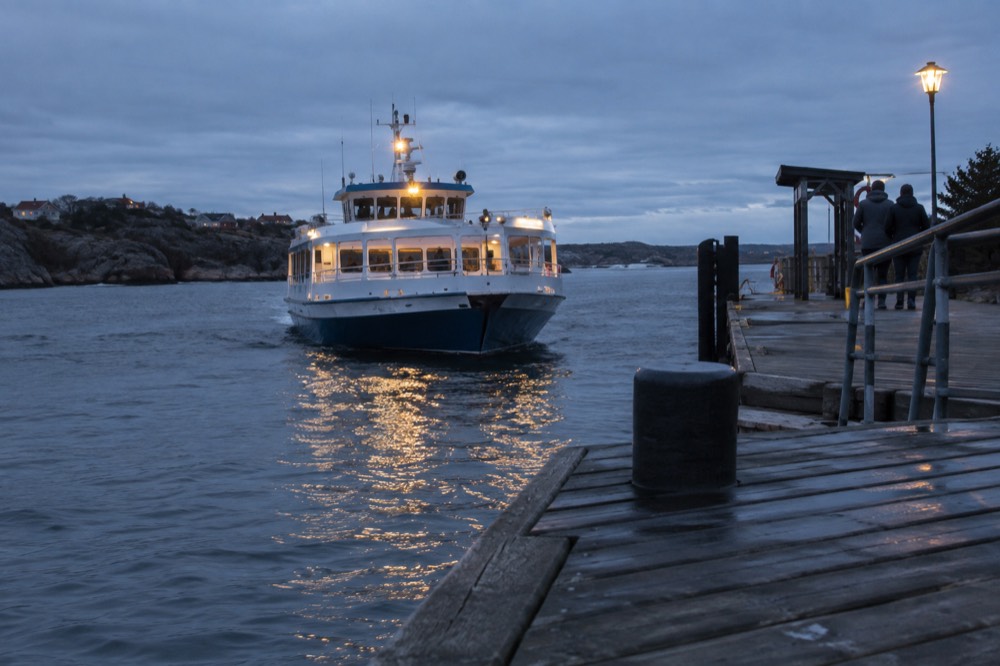
If you are weighing the islands against other options, our piece on whether the Gothenburg archipelago is worth visiting goes island by island, and there is a guided option if you would rather not plan the ferry timetables yourself.
The sea around the islands behaves differently from what visitors expect. SMHI's quality-controlled observations at the Vinga lighthouse station show the water peaks at 18.6 C in August, not July, and that September water (16.7 C) is actually warmer than June water (16.2 C). A September swim in the archipelago is warmer than a June one, which is the opposite of how most people book their trips. February, not January, is the coldest month for the water, at a mean of 2.7 C, with a record low of -1.2 C, legitimately below zero because brackish Kattegat water does not freeze at 0.
What Is Liseberg, and Why Is It Closed Half the Year?
Liseberg is Scandinavia's largest amusement park and Gothenburg's biggest single attraction, with about 2.5 million park guests in 2025, but it runs on an irregular seasonal calendar: in 2026 the summer season runs 18 April to 20 September, Halloween from 2 October to 1 November, and the Christmas market from 14 November to 23 December, with the park shut for the rest of the year.
That calendar is the fact that ruins trips. A visitor arriving in late January or early March finds the biggest attraction in the city closed, and no amount of planning changes it. The dates above come from Liseberg's own site, and they shift each year, so always check the current season page before building an itinerary around it. New for 2026, the Kaninlandet children's area also opens on winter weekends and school holidays, which softens the gap slightly for families but does nothing for the main park.
The other Liseberg fact everyone trips over is the ticket structure. Entry at 95 kr buys zero rides. Liseberg sells entry (Entré) and ride passes (Åkpass) separately, with a combined ticket from 365 kr and a ride pass alone from 310 kr, all online "from" prices. The park is not sold on any booking platform; tickets come from Liseberg directly. New for summer 2026 is Stormvåg, a new family attraction, and the Oceana water park, destroyed by fire before it ever opened in 2024, is planned to open in early 2027.
For a comparison with Copenhagen's Tivoli, see is Liseberg or Tivoli better, and for the fuller breakdown, whether Liseberg is worth visiting.
What About the Trams, Canals and the Harbour?
Gothenburg is known as a tram city: Göteborgs Spårvägar reports 126 million journeys in 2025 across a network of 12 lines, 134 stops and 188 km of single track, running from Mölndal to Angered and from Saltholmen to Kålltorp. The city centre is a Dutch-engineered canal town, and the harbour on the Göta älv is where shipyard cranes still stand along the waterfront.
The tram is not a heritage curiosity, it is the backbone of daily life. Twelve lines thread the whole city, and the 126 million journeys recorded in 2025 put the network close to its pre-pandemic record of 141 million. For a visitor, the practical effect is that you rarely wait more than a few minutes, and the same ticket that boards a tram also boards an archipelago ferry. The line, stop and track figures come from Göteborgs Spårvägar's own annual report, which describes the network running "from Mölndal in the south to Angered in the north, from Saltholmen in the west to Kålltorp in the east and over the bridge to Hisingen".
The canals are the other half of the city's shape. The moat and canal ring around the old town, Inom Vallgraven, is what the Dutch engineers left behind, and it is still water you can actually travel on: the classic Paddan boats run sightseeing trips through the canal and under the low bridges of the old quarter. The harbour side tells the industrial story, with the cranes of the former shipyards along the Göta älv and the Älvsborg bridge overhead. This combination, walkable canal core on one bank and working harbour on the other, is what gives the city its two distinct faces.
The nickname that grew out of all this, "Little London", has its own history, covered in why Gothenburg is called Little London.
What Food Is Gothenburg Known For?
Gothenburg is known for seafood above all: shrimp sandwiches, oysters from Bohuslän and the fish market hall Feskekôrka, which reopened in 2024 as a food hall with two fish counters and five restaurants. Beyond seafood, the city is known for fika, the Swedish coffee-and-cake break, and for a Michelin-recognised restaurant scene that punches well above the city's size.
Feskekôrka, the "fish church", is the most photographed food building in the city, a church-shaped timber hall from 1874. It closed for renovation and reopened in 2024, its 150th anniversary year, no longer as a simple fish market. Its own site now lists two fish counters, Ebbes Fångst and Flåtens Fiskhandel, and five restaurants: Haldis Kök, Pråmenaden, Victor von G, Lilla Åstol and Ekmans. Guides written before 2020 describe only fish counters, and guides written between 2020 and 2023 say "closed for renovation". Both are now wrong.
The shrimp sandwich, räkmacka, is the city's signature dish: piled shellfish on bread, usually with egg and mayonnaise, eaten with a view of the water. The oyster safaris and shellfish culture of the Bohuslän coast to the north are close enough to be a day trip from the city. And fika runs underneath all of it: the coffee-and-cinnamon-bun pause is a national habit, but Gothenburg's café density in districts like Haga and Linné makes it a visible part of city life. Our dedicated page on what food Gothenburg is famous for goes deeper, and what fika means in Sweden explains the ritual itself.
One legal fact shapes the drinking side of the food scene. Under the Swedish alcohol act, anything above 3.5 percent ABV, plus all wine and spirits, is sold only by Systembolaget, the state monopoly. Supermarket beer is the 3.5 percent version, often a reformulation of the same brand. That is why the shelf beer tastes weaker than its label suggests, and why any serious beer itinerary in the city ends up planning around Systembolaget's opening days rather than ordinary shop hours.
What Gothenburg Is Not Known for: Two Myths Worth Killing
Gothenburg is not Sweden's rainiest city, despite the reputation: SMHI's 1991-2020 normals show 912 mm a year over 127 wet days, with the wettest month being October at 102.9 mm, and SMHI's own text places the national rainfall maxima in the western highlands and the mountains, not in Gothenburg. The old Volvo Museum at Arendal is also gone, closed permanently in December 2023 and replaced by World of Volvo.
The rain myth is the most repeated wrong claim about the city. The real numbers tell a more useful story. October, after the tourist season, is the wettest month. April, at 51.3 mm over just 8.2 wet days, is the driest month of the year. It rains on about one day in three, which is wet, but it is not the permanent drizzle of the reputation, and it is not a national record. SMHI's own wording on the 1991-2020 normals describes annual precipitation varying from around 400 to 600 mm in eastern Götaland to over 1,000 mm in the mountains and western highlands. Gothenburg's 912 mm sits inside the wet western band, nothing more.
The Volvo fact matters because every stale guide still sends people to Arendal. World of Volvo, the successor, says it directly: the museum at Arendal closed its doors in December 2023. The replacement experience centre at Lyckholms Torg opened in 2024, sells exhibition tickets from 120 SEK online, and runs factory tours to Torslanda from 175 SEK on weekdays. Volvo the company is still a genuine part of the city's identity; the old museum building is simply not part of it any more.
| What Gothenburg is known for | The verified fact behind it |
|---|---|
| Car-free archipelago | Six southern islands in Zone A, cars banned, reached by tram and ferry on one ticket |
| Liseberg | About 2.5 million park guests in 2025; entry and rides sold separately; seasonal calendar |
| Trams | 126 million journeys in 2025; 12 lines, 134 stops, 188 km of single track |
| Canals and harbour | Dutch-engineered moat, Paddan boat route, shipyard cranes on the Göta älv |
| Seafood and fika | Feskekôrka food hall since 2024; shrimp sandwiches; strong café culture |
| Volvo | Company heritage yes; old museum closed 2023, World of Volvo since 2024 |
How Does Gothenburg Compare with Other Nordic Cities?
Gothenburg is known as the smaller, more relaxed west-coast alternative to Stockholm, with the archipelago, Liseberg and a walkable canal core that the capital cannot match, though it has fewer blockbuster museums and a less grand skyline. Around 57.7 degrees north, it also has the same extreme daylight swing: 6 h 32 m of daylight on 21 December against 18 h 06 m on 21 June.
The daylight numbers are worth knowing before you book anything. In June, civil twilight runs from 02:58 to 23:30, leaving only about three and a half hours of true night. In December, even the grey light lasts barely eight hours. That swing, 11 hours 34 minutes between the solstices, shapes the city's seasons as much as the rain does, and it is why the Christmas market at Liseberg matters so much here: midwinter Gothenburg moves indoors and lights things up.
Against Stockholm, the honest comparison is scale. Gothenburg has the sea closer, the islands cheaper to reach, and a city centre you can walk across in half an hour. Stockholm has the grandeur and the bigger museum roster. Gothenburg's own museum scene is real, from the Museum of Art with its 70,000 works to Universeum's rainforest hall, but it is a west-coast scene rather than a capital one. For a first-time visitor deciding between the two, whether Gothenburg is worth visiting for tourists covers the decision from the visitor's end.
Common Questions About What Gothenburg Is Known For
What is Gothenburg known for?
Gothenburg, Sweden is known for its car-free southern archipelago, the Liseberg amusement park, an extensive tram network, a Dutch-built canal city centre, seafood and fika culture, and as the home city of Volvo.
Is Gothenburg the same city as Göteborg?
Yes. Gothenburg is the English name and Göteborg is the Swedish name for the same city on Sweden's west coast, at the mouth of the Göta älv.
Is Gothenburg Sweden's rainiest city?
No. SMHI's 1991-2020 normals for the Göteborg station show 912 mm of precipitation a year over 127 wet days, with October the wettest month at 102.9 mm. SMHI places Sweden's rainfall maxima in the western highlands and the mountains, not in Gothenburg.
What is Gothenburg's most famous attraction?
Liseberg, the amusement park, which counted about 2.5 million park guests in 2025. It runs on a seasonal calendar, so check the current season dates before visiting; the park is closed for parts of the year including late winter.
Is the Gothenburg archipelago part of the city?
Yes. The southern islands, including Styrsö, Brännö, Vrångö and Donsö, are areas of Gothenburg inside Västtrafik Zone A. An ordinary tram-and-ferry ticket covers the whole trip, and private cars are banned on the islands.
Does the Volvo Museum still exist?
No. The Volvo Museum at Arendal closed permanently in December 2023. Its successor, World of Volvo, opened in 2024 at Lyckholms Torg and sells exhibition tickets from 120 SEK online.
For everything the city offers beyond these headlines, Gothenburg Travel Guide covers the archipelago, the museums and the neighbourhoods in detail.