Why Is Gothenburg Called Little London? The British Story Behind Sweden's Second City
Gothenburg's Little London nickname comes from centuries of British trade, Scottish industrialists and English customs. Here is where the name came from and where you can still see it.
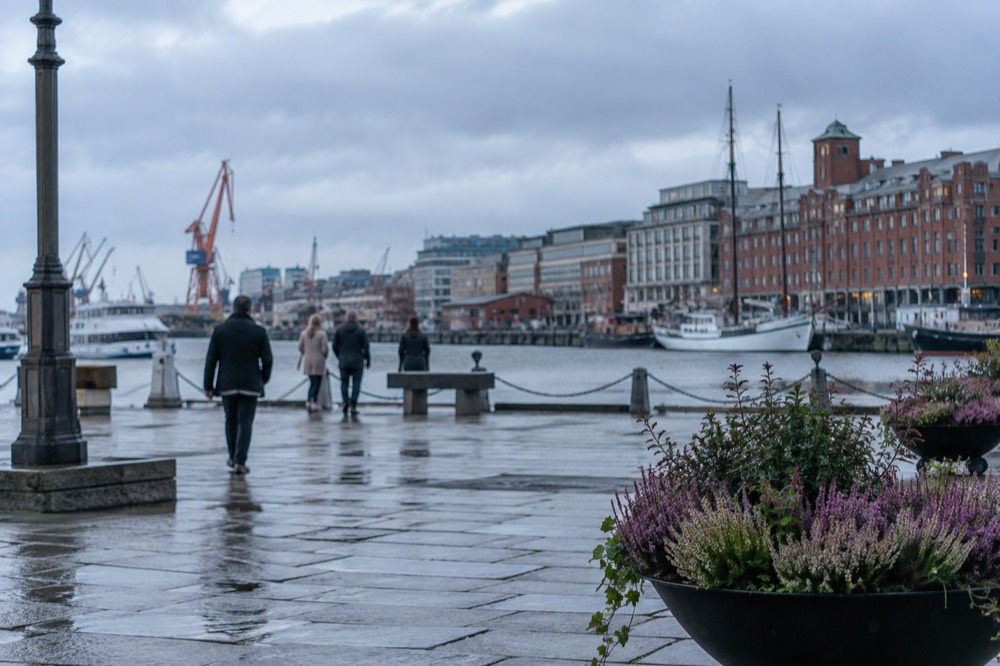
Gothenburg has carried the nickname Little London for well over two hundred years, and unlike most city nicknames it was not invented by a tourism board. It was earned on the waterfront. British ships were calling at the Göta älv long before the city had a single factory, and by the nineteenth century the British community here was large enough, rich enough and confident enough to leave permanent marks on how Gothenburg talked, traded, drank and built. The city still shows those marks, from the pub signs of the Linné district to the layout of the old harbour, and this page walks through where the name came from, who exactly the "Londoners" were, and where you can still see their Gothenburg today.
Why Is Gothenburg Called Little London?
Gothenburg is called Little London because of a long, dense British presence in the city's trading life: British merchants settled here from the eighteenth century onward, Scottish and English industrialists built and ran the city's textile mills through the nineteenth century, and the British community brought with it the pubs, clubs, sports and manners that made the city feel, to Swedes, like a small piece of England planted on the Swedish west coast. The name is old enough that Gothenburgers themselves used it, and it stuck because it described something true about the city rather than something a brochure wanted to be true.
The nickname did not come from one event or one person. It accumulated. Gothenburg was founded as a trading port at the mouth of the Göta älv, and from the start its business life looked west, out across the Kattegat to Scotland and England, rather than east toward Stockholm. Ships, capital and families moved along that route in both directions. Over generations that produced a city with a British commercial class, British social habits and a self-image that acknowledged the debt openly. When Swedes elsewhere wanted to describe Gothenburg's character, the comparison they reached for was London.
It is worth being precise about what the nickname does not mean. It does not mean the city looks like London. Gothenburg's grid of canals, its wooden landshövdingehus houses and its granite and red brick are nothing like the English capital, and the two cities are different in scale by any measure. The comparison was always about temperament and commerce: a port city that traded with Britain, employed Britons, married into British families and picked up British pastimes. That is the Little London the name records.
If you are working through the broader question of what the city is actually known for, our longer piece on what Gothenburg is known for covers the full picture, of which the British connection is only one strand.
Who Were the British Who Gave Gothenburg Its Nickname?
The "Londoners" of the nickname were three overlapping groups: British merchants and shipping agents who settled in Gothenburg during the city's East India trade era, Scottish and English engineers and mill owners who arrived in the nineteenth century to build the textile industry, and the ordinary British sailors, clerks and craftsmen who came with them and stayed. Together they formed one of the largest foreign communities in any Scandinavian city, and their influence ran far beyond their numbers.
The first wave came with trade. Gothenburg's port lived on long-distance commerce, and British ships and British houses were central to it from early in the city's history. Merchant families from Scotland and England established themselves here, married locally, and became part of the city's establishment rather than a colony apart from it. Their names appear across the city's commercial history, and several of Gothenburg's great trading fortunes had British roots.
The second wave was industrial, and it was Scottish above all. When Gothenburg industrialised in the nineteenth century, the technology it needed, especially in textiles, was British technology. Mill owners recruited managers, mechanics and know-how from Scotland and northern England, and those recruits came with their families, their churches and their social life. They settled in particular, built works, and in some cases became major employers whose names are still attached to Gothenburg districts and institutions.
The third group was the least visible and the most numerous: the sailors and dockside workers who passed through or settled, and who gave the harbour districts a recognisably British working culture. Pubs grew up to serve them. That layer of the city's life is where the nickname lived most vividly, because it was the part ordinary Gothenburgers actually encountered on a Friday night.
The cultural inheritance was concrete. The British community brought football, among other sports, to Gothenburg early. It brought the pub as a social institution rather than the Swedish tavern. It brought tea, tweed, club life and a certain commercial directness that the city absorbed and that visitors still sometimes notice as a slight briskness in Gothenburg compared with other Swedish cities. A good companion read on the city's wider character is our page on whether Gothenburg is worth visiting for tourists, which situates this history in the practical question of what the city offers now.
Where Can You Still See Little London in Gothenburg Today?
The most visible survivals of the British era are the pub culture of the Linné and Haga districts, the harbour and warehouse landscape along the Göta älv that British trade built, and the city's long-standing football and rowing traditions, all of which trace directly to the nineteenth-century British community and remain part of ordinary Gothenburg life rather than museum pieces. You do not need to hunt for them. You mostly need to know what you are looking at.
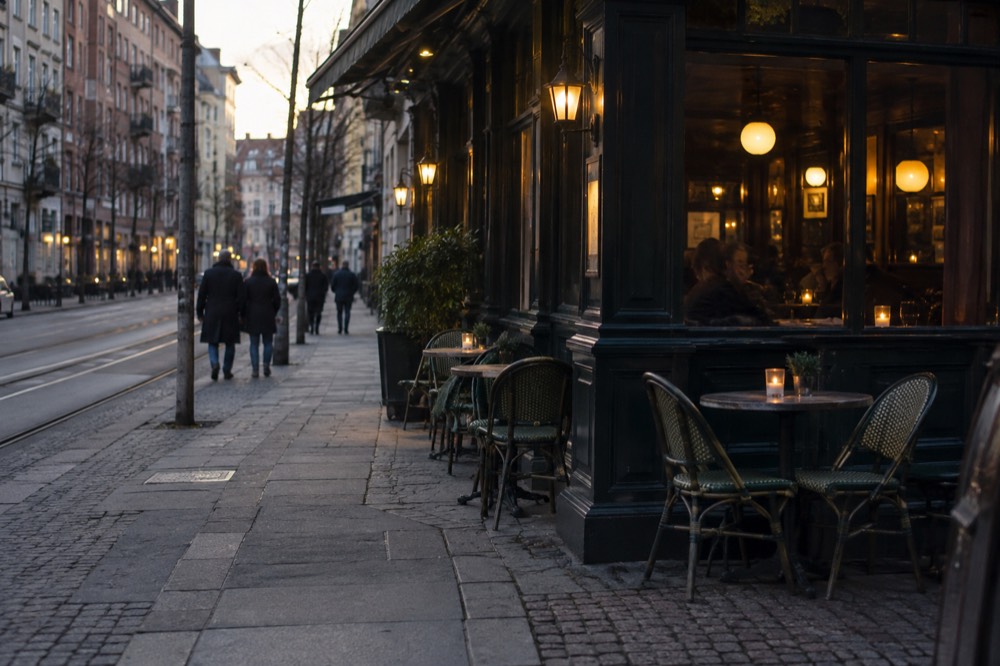
Start with the pubs. The Linné district, along the Långgatorna streets, has one of the densest concentrations of British and Irish style pubs in Scandinavia, and that is not an accident of recent tourism marketing. It is the modern descendant of the sailor-and-clerk drinking culture that grew up around the harbour. The pub names, the layout and the habit of standing at the bar with a pint all carry the fingerprint of the old British community. The Swedish beer you are drinking is another story in itself: because of the Swedish alcohol law, beer above 3.5% ABV can only be sold by Systembolaget, the state monopoly, so pub and supermarket beer is a different thing entirely, and the shelf version of a brand is often a weaker reformulation.
Then look at the harbour itself. The old warehouse quarter along the river, the cranes, and the districts of Majorna and Lindholmen on the Hisingen side were all built by the trade that the British community helped run. Walking the waterfront from Järntorget toward Stigberget, you are walking through the commercial landscape the nickname describes. The views from Masthuggskyrkan over the harbour mouth are the classic vantage point for taking it in.
Finally, sport. Gothenburg's football culture, which produced one of Sweden's most decorated clubs and a famously intense supporter scene, has British roots in its earliest organisation, and rowing and sailing clubs along the waterfront descend from the same community. None of this is signposted as "Little London heritage", which is part of the point: it stopped being foreign influence and became simply Gothenburg.
The fastest way to see both halves of the story, the harbour and the districts behind it, is from the water and the street in a single loop. The amphibious bus tour is built for exactly this: it drives through the city the merchants lived in and then drives into the harbour they traded through, without you changing seats.
The table below maps the nickname's main survivals to where you find them:
| British inheritance | Where to see it in Gothenburg | What it descends from |
|---|---|---|
| Pub culture | The Långgatorna streets in the Linné district | Harbour drinking culture serving British sailors and clerks |
| Warehouse and harbour landscape | The Göta älv waterfront, Majorna, Lindholmen | The shipping trade British merchants helped run |
| Football tradition | The city's stadiums and supporter culture | Sports organised by the British community in the nineteenth century |
| Merchant architecture | Older commercial buildings around the inner harbour | Trading houses with British ownership or partners |
| Maritime clubs | Waterfront rowing and sailing clubs | The social institutions of the British commercial class |
Is Little London Still an Accurate Nickname for Gothenburg?
As a literal description, no: almost nothing about modern Gothenburg resembles London, and the British community that earned the name has long since dissolved into the city. As a description of the city's temperament, the name still fits better than any alternative, because the traits it identified, a westward-looking port culture, a commercial bluntness unusual in Sweden, and a fondness for pubs and football, are still the traits that distinguish Gothenburg from the rest of the country, and a visitor who knows the history will recognise all three within a day of arriving.
The community itself faded the way such communities do. The textile industry declined, the shipping lines changed, and the families anglicised a generation ago became simply Swedish families with old surnames. Nobody in Gothenburg today is British because of the events behind the nickname. What survived is not a population but a disposition, and that is what makes the nickname durable rather than dated.
Visitors notice it, often without being able to name it. The comparison Swedes most often make is with Stockholm: Gothenburg reads as more working-class, more maritime, more direct, and less ceremonious than the capital. That contrast is exactly what the nickname was capturing two centuries ago, when London stood for commerce and the sea against Stockholm's court and bureaucracy. The name survives because the contrast survives.
If you are planning around this, the practical pages matter more than the historical ones. Our guide to what not to miss in Gothenburg covers the essentials, and our breakdown of whether Gothenburg is cheap or expensive answers the budget question that the pub district inevitably raises, since Sweden's alcohol prices are a shock to many first-time visitors.
For seeing the harbour half of the nickname, the boat tours are the direct route: the archipelago cruise and the canal cruise both put you on the water the British trade moved through, and the amphibious bus covers the land side.
What Else Should You Know About Gothenburg's British Connection?
A few details round out the story: the nickname applies only to Gothenburg, Sweden, and has nothing to do with Gothenburg, Nebraska, which is a small American town sharing only the name; the British influence reached its peak in the nineteenth century and its visible survivals are concentrated in a few inner districts; and the best single place to feel the connection today is an evening in the Linné pub district with the harbour a short walk away. Beyond that, the story connects to several practical questions visitors actually ask.
One is names. The city's own name has a double life, Gothenburg in English and Göteborg in Swedish, and the relationship between the two is genuinely confusing to visitors. Our page on whether Gothenburg and Göteborg are the same untangles that, including why you will see both spellings on street signs, tickets and museum entrances in the same city.
Another is how the nickname interacts with the city's other identities. Gothenburg is also a tram city, an archipelago city, and a city of wooden houses and granite, and none of those are British. The Little London label describes one historical layer, not the whole place. A visitor who arrives expecting an English city will be confused. A visitor who arrives knowing the label refers to trade, pubs and temperament will find it explains a great deal about why this Swedish city feels a little unlike anywhere else in Sweden.
There is a seasonal dimension too. The harbour the British merchants worked is still a working harbour, and the archipelago islands beyond it are still part of the city, reached by tram and ferry on an ordinary Västtrafik ticket. Göteborgs Spårvägar reports that the tram network carried 126 million journeys in 2025, and the western terminus of that network is Saltholmen, where the archipelago ferries leave. The trade routes the nickname came from are now pleasure routes, but the geography is unchanged: the city still faces the water first and the rest of Sweden second.
If the historical layer interests you more than the drinking, the museums hold the rest. The city museum in the old East India company building tells the trade story that started everything, and the maritime museums along the harbour explain the shipping world the British merchants worked in. Between them and an evening on the Långgatorna, you have the full arc of the nickname, from the ships that earned it to the pints that keep it alive. Give the museum half a morning and the pub district an evening, and the two centuries in between will make sense in a way no guidebook summary manages.
Common Questions About Gothenburg's Little London Nickname
Why is Gothenburg called Little London?
Because of a long British presence in the city's trading and industrial life. British merchants settled here from the eighteenth century onward, Scottish and English industrialists built the textile mills in the nineteenth century, and the community brought pubs, football and British commercial habits that shaped the city's character. Swedes used the name to describe that influence, and it stuck.
Does Gothenburg look like London?
No. The nickname was never about architecture or scale. Gothenburg is a compact canal-grid port city with granite, red brick and painted wooden houses. The comparison described the city's commercial culture and temperament, not its appearance.
Are there still British people in Gothenburg because of the nickname?
The original British community dissolved into the city generations ago. Its descendants are Swedish families with British-rooted surnames. What survived is cultural rather than demographic: pub culture, football, and a westward-looking port identity.
Where is the best place to see the Little London side of Gothenburg?
The Linné district's pub streets, the Långgatorna, carry the drinking culture, and the harbour front along the Göta älv carries the trade landscape. An evening in the pubs with a walk along the waterfront is the most direct way to feel both halves of the nickname.
Is Gothenburg, Nebraska connected to the Little London nickname?
No. Gothenburg, Nebraska is a small town in the United States that shares only the name. The Little London nickname belongs entirely to Gothenburg, Sweden, and its British trading history.
Do Gothenburgers still use the nickname today?
Yes, though casually rather than formally. It appears in local writing and conversation as shorthand for the city's maritime, commercial, slightly un-Swedish character, and the pub and football culture that earned it are still active parts of city life.
The nickname, in the end, is a compressed history lesson. Gothenburg traded with Britain so heavily and for so long that the British presence became part of the city's own personality, and the personality outlived the presence. Walk from a Linné pub down to the harbour, look at the cranes and the water, and the name stops being a curiosity and starts being obvious. For more on the city this history produced, see Gothenburg Travel Guide for the full set of neighbourhood, transport and attraction pages.