What Food Is Gothenburg Famous for? Sweden's West Coast Table
Gothenburg, Sweden is famous for west-coast seafood, shrimp sandwiches, langoustine and fika. Here is what to order, where to eat it and how the food scene actually works.
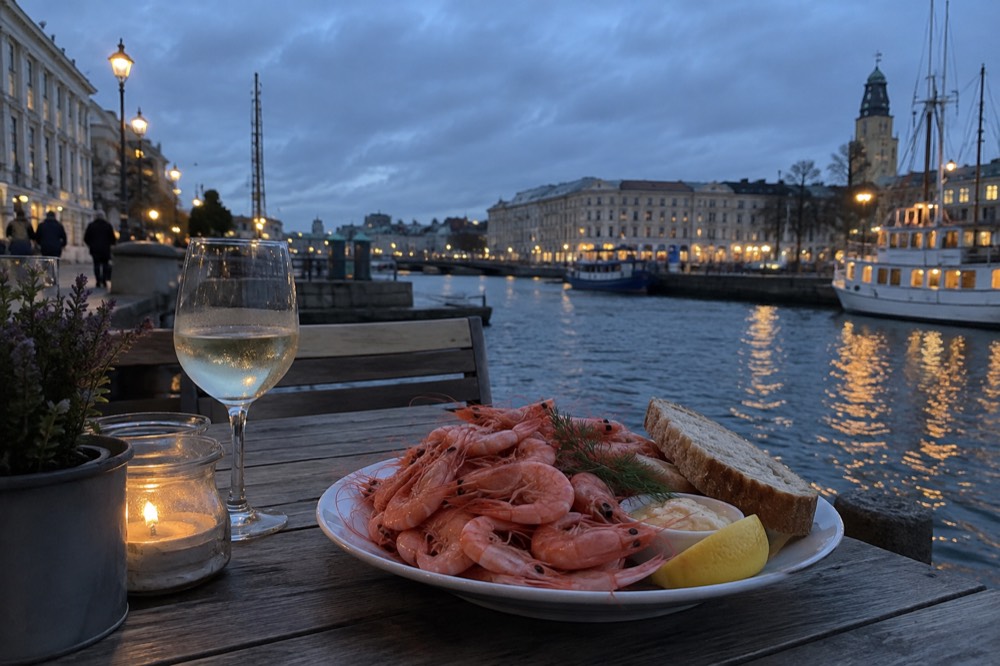
Gothenburg's food reputation rests on one thing above all: the Kattegat. The city sits where the Göta älv meets the sea on Sweden's west coast, and the shrimp, langoustine, salmon and mussels that define its kitchen come off boats that dock within sight of the centre. That geography explains nearly everything on the plate here, from the shrimp sandwich that works as the city's unofficial dish to the oysters harvested further up the Bohuslän coast. Add a serious fika habit, a cluster of Michelin-starred kitchens and two working market halls, and the food scene earns the attention it gets. This page from Gothenburg Travel Guide sets out what the city is actually famous for eating, where to find each thing, and what has changed recently, because a couple of long-repeated food facts about Gothenburg no longer hold.
What Food Is Gothenburg, Sweden, Famous For?
Gothenburg is famous first for west-coast seafood: the cold-water shrimp sandwich (räksmörgås), langoustine, salmon and mussels landed in the Kattegat and served within kilometres of where they were caught. Around that sits a strong fika culture of coffee and cinnamon buns, a Michelin-starred dining scene disproportionate to the city's size, and two working market halls, Feskekôrka and Stora Saluhallen. The shrimp sandwich is the single dish most identified with the city.
The shrimp sandwich deserves its status. The shrimp here are northern cold-water shrimp, smaller and sweeter than warm-water species, peeled by hand and piled on bread with mayonnaise, dill, lemon and sometimes a boiled egg. Göteborgs Stad's tourism material markets the west coast as a seafood destination, and the shrimp sandwich is the dish every café, food hall and harbour kiosk takes a turn at. It is not cheap, because hand-peeling shrimp is slow labour, and the price reflects that. A visitor ordering one for the first time is often surprised by the height of the pile, which is the point: the sandwich is judged by generosity, and a stingy räksmörgås is read as a kitchen cutting corners.
Langoustine is the second signature. The west coast fishery lands them in season, and the better kitchens grill or butter-baste them. Salmon, both wild-caught and smoked, and blue mussels from the archipelago waters round out the core seafood quartet. Oysters are more associated with the Bohuslän coast north of the city, where the cold, salty water grows them well, but they appear on Gothenburg menus constantly, and the oyster safari trips that run out of the villages further north are often booked from the city as a day out.
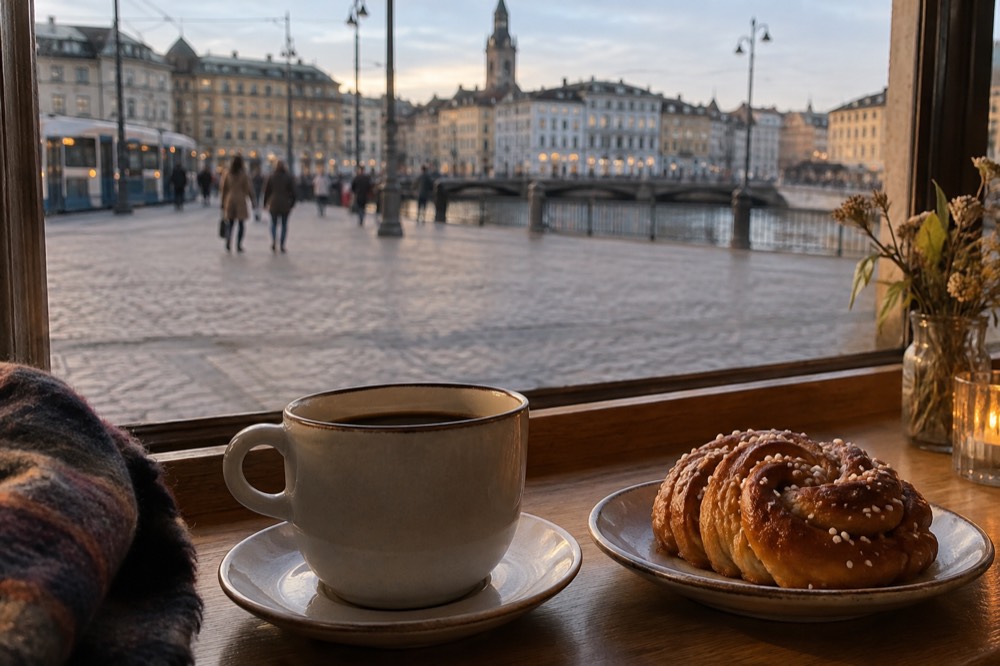
Beyond the sea, the city is famous for fika, the Swedish coffee break with a pastry, usually a cinnamon bun (kanelbulle) or cardamom bun. Fika is a social institution rather than a food, but visitors experience it as food, and Gothenburg's café density makes it unavoidable. The question of what fika means in Sweden has its own answer on this site, and it matters here because half the food a visitor consumes in Gothenburg is arguably fika. Swedes do not treat it as optional; workplaces schedule it, cafés are built around it, and skipping it marks you as much as skipping lunch would.
One thing the city is not famous for, despite the reputation: rain-drenched misery dining. The food scene is bright, seasonal and increasingly international, with a strong second-hand and craft-beer culture behind it. The climate data even supports the terrace-eating season better than the reputation suggests: SMHI's 1991-2020 normals for the Göteborg A station record April as the driest month of the year at 51.3 mm, with October, not a summer month, the wettest at 102.9 mm, per the SMHI normals series. For the broader picture of the city's identity, see what Gothenburg is known for.
Where Does Gothenburg Eat Its Seafood Now?
Feskekôrka is the headline venue, and it changed shape in 2024: the 1874 fish-market hall reopened after renovation as a food hall with five restaurants and two fish counters, not the fish-counter-only building older guides describe. Stora Saluhallen on Kungstorget is the city's other great market hall. Both are walkable from the city centre, and both sell the shrimp, langoustine and salmon the coast is known for.
The building's own history matters to how you should read it. Higab, the municipal property owner, records that Feskekôrka reopened in 2024, the same year the building turned 150, so it was built in 1874. Its name means "fish church", a nod to the building's resemblance to a place of worship, and for most of its life it was a hall of fish counters. It is not that anymore. The current operator's site lists two fish counters, Ebbes Fångst and Flåtens Fiskhandel, and five restaurants: Haldis Kök, Pråmenaden, Victor von G, Lilla Åstol and Ekmans. Lilla Åstol is seasonal and closes over winter, its own copy saying it reopens in spring.
That means any guide telling you to visit "the fish market" for counter-only shopping is describing a building that has not existed since the renovation. It is a lunch destination now as much as a shopping one. Rosenlundsgatan, where it stands, is a short walk from the canal-side Paddan boat terminal, which makes it an easy stop on a walking day. The renovation also matters for what you can eat there: five restaurant kitchens means cooked langoustine, grilled salmon and proper sit-down lunches inside a building that used to sell raw fish and little else.
Stora Saluhallen, on Kungstorget, is the older-fashioned alternative: a 19th-century market hall with butchers, cheese sellers, bakeries and deli counters, and a lunch crowd that fills it on weekdays. Between the two halls and the harbour-side kiosks, the seafood visitor is well covered without a restaurant booking. A sensible split is Stora Saluhallen for cheese, bread and picnic supplies, Feskekôrka for the seafood itself, eaten on the spot.
If you would rather have the seafood served with the archipelago attached, the boat options are the other half of the answer. The guided archipelago cruise runs 2.5 hours from the harbour and carries 1,488 reviews at a 4.4 rating on the operator's live listing, from $44 per person, and there is a lunch-included version at from $68 and a Swedish fika version at from $58. These are the tours that put the "west coast" in west-coast seafood, since the waters you cross are the waters the food comes from. The islands the boats serve, Styrsö, Brännö, Vrångö, Donsö and the rest, are areas of Gothenburg rather than day trips, reached on an ordinary Västtrafik ticket, and several have harbour café terraces where the shrimp sandwich tastes of the water it came from.
Can You Tour Gothenburg's Food Scene Without Booking Tables?
Yes, and it is one of the better ways to eat here. Guided food walks cover the market halls, the fika institutions and the craft-beer strip in two to three hours, and a walking-and-fika tour runs from $93 per person with a 4.4 rating from 71 reviews on the operator's listing. The free walking tours touch food history too, though they are not food tours.
The guided options are worth the money for the same reason a market hall beats a supermarket: context. The West Coast food walking tour, from $144 per person and rated 4.8 from 17 reviews, walks the central food landmarks with tastings. The guided walking and Swedish fika tour, from $93 per person, rated 4.4 from 71 reviews, pairs the city walk with a proper fika stop. A craft-beer walking tour with tastings runs from $112 per person, with no reviews published yet on its listing, and a distillery tour with guided tasting runs from $56 per person, rated 5 from 3 reviews. For groups, a craft distillery tour with a gin-making workshop runs from $206 per person over 2 hours, also with no reviews published yet.
The free walking tours deserve a mention for honesty reasons. Four free walks run in Gothenburg through GuruWalk, and they are tip-based rather than free-as-in-food: three are in English and one is Spanish only, so check the language before you book. They cover history and neighbourhoods rather than tastings, but the Free Walking Tour through Gothenburg's history, culture, gastronomy and architecture, rated 5 from 63 reviews on GuruWalk, leans hardest on the food story. The Majorna free walk, rated 4.77 from 234 reviews on GuruWalk, covers the district where much of the everyday café culture actually lives.
A practical note on drinks: if a food tour or a restaurant evening involves beer above 3.5% ABV, wine or spirits, those come from Systembolaget or a licensed venue, not a supermarket. Swedish law, Alkohollag (2010:1622), reserves everything above 3.5% for the state monopoly, as the statute itself states. The practical consequence for a visitor is that the supermarket beer shelf looks weaker than expected, because the shelf version of a familiar brand is often a 3.5% reformulation. Restaurants and bars are licensed separately, so dining out is unaffected; it is only the take-home retail that runs through the monopoly.
What Should You Actually Order in Gothenburg?
Order the shrimp sandwich first, then langoustine in season, west-coast salmon, smoked or cured, and blue mussels. Add a cinnamon bun at a fika stop, a shrimp-laden "räkfika" if you find one, and a prawn or salmon dish at Feskekôrka or Stora Saluhallen. That list covers the city's food identity almost completely.
Here is the order of operations in table form, with what each thing is and where to get it well:
| Dish | What it is | Where to get it well |
|---|---|---|
| Räksmörgås (shrimp sandwich) | Hand-peeled cold-water shrimp, mayonnaise, dill, lemon, on buttered bread | Feskekôrka restaurants, harbour kiosks, archipelago café terraces |
| Langoustine | Grilled or butter-baked shellfish, west coast fishery | Seafood restaurants; archipelago sail tours with meals |
| West-coast salmon | Smoked, cured or simply cooked, Göta älv and Kattegat catch | Market hall counters, fine dining |
| Blue mussels | Steamed in cream or cider, archipelago waters | Harbour-side restaurants, food halls |
| Kanelbulle | Cinnamon-and-cardamom bun, the fika default | Any serious café; the fika tour includes a stop |
| Cheese and crispbread | Västra Götaland farm cheeses | Stora Saluhallen counters |
Two seasonal notes sharpen that table. First, the shellfish is genuinely seasonal, and the sea temperature data explains part of it: SMHI's quality-controlled observations at Vinga show the water peaking at 18.6 C in August and staying at 16.7 C in September, warmer than June's 16.2 C. Late summer and early autumn are the confident months for cold-water shrimp and for eating them on an island terrace. Second, the fika habit does not pause for weather, so the pastry half of the list works year-round, and the December darkness, 6 hours 32 minutes of daylight at the winter solstice against 18 hours 06 minutes in June, pushes the city's eating indoors into cafés and candlelit restaurants without slowing it down.
Where Do Locals Actually Eat in Gothenburg?
Locals eat across the market halls at lunch, the café strip for fika, and the Linné and Haga quarters in the evening, with the craft-beer bars of Linnégatan and the second-hand-and-coffee culture of Majorna doing much of the daily work. The Michelin-starred kitchens sit on top of that as special-occasion destinations rather than everyday eating.
Haga, the wooden old quarter, is the classic fika-and-cinnamon-bun stop, and it has its own guide on this site. The Linné district, around Linnégatan, carries the bar and restaurant load most evenings. Majorna, west of the centre, is where the second-hand shops and neighbourhood cafés concentrate. None of this requires a car: the tram network, 12 lines and 188 km of single track as of Göteborgs Spårvägar's 2022 annual report, connects all of it, and a single Zone A ticket covers the distance. A 24-hour Zone A ticket at 125 kr even covers the archipelago ferries from Saltholmen, so a lunch of shrimp on Brännö is a tram-and-boat trip away on the same fare.
The Michelin layer is real but small, and it is seafood-led, which is the point: the city's fine kitchens compete on the quality of the raw catch rather than on technique imported from elsewhere. For a visitor deciding between eating well and eating expensively, the market halls deliver most of the same raw material at counter prices. The question of what not to miss in Gothenburg covers the non-food half of the itinerary.
The walking-and-fika tour is the natural pick here because it does the two things at once: it walks the quarters listed above and stops for the pastry half of the food identity. The listing shows 2 hours, from $93 per person, rated 4.4 from 71 reviews.
Is Gothenburg Good for Food Tourists?
Yes, unusually so for a city of 613,274. Gothenburg combines a specific regional cuisine, two working market halls, a fika culture that structures the day, a Michelin-starred fine-dining layer, and boat access to the waters the food comes from. The main limitation is alcohol retail: anything above 3.5% ABV is monopoly-only, and supermarkets stop at folköl.
The city's own numbers back the food-tourism claim indirectly. Göteborg & Co reported over 6 million commercial guest nights in 2025, a record, with international guest nights up roughly 15% in the first ten months of the year. A city does not post those numbers on scenery alone. The food scene is doing measurable work, and the growth was strongest in the international markets, which are precisely the visitors who arrive asking what to eat.
For planning, the practical structure is this: seafood at the market halls and harbour at lunch, fika mid-afternoon, and the Linné or Haga quarters in the evening. If the day allows a boat, the archipelago cruise with lunch, from $68 per person, rated 4.3 from 38 reviews, or the shrimp-and-salmon cruise with live music, from $95 per person, rated 4.7 from 14 reviews, put the food on the water. The sailing options go further: a Swedish archipelago sail tour with a shrimp meal runs from $139 per person for 4.5 hours, with no reviews published yet on its listing, and an evening sailing tour with Swedish fika runs from $46 per person, rated 5 from 5 reviews. For a full-day version, the Brännö and Galterö guided hiking tour with fika, from $103 per person for 8 hours, walks two car-free islands with a fika stop built in, though no reviews are published on its listing yet.
Budget-wise, the honest framing is that Gothenburg is a Swedish-cost city: the shrimp sandwich is labour-priced, the fika is cheap, and the fine dining is Nordic-priced. The full cost question, including meals and beer prices, has its own page on whether Gothenburg is cheap or expensive.
Common Questions About Gothenburg Food
What food is Gothenburg famous for?
West-coast seafood above all: the cold-water shrimp sandwich, langoustine, salmon and blue mussels from the Kattegat, plus the fika pairing of coffee and cinnamon buns. Feskekôrka, reopened as a food hall in 2024, and Stora Saluhallen are the two central places to eat and buy it.
What is a räksmörgås?
The shrimp sandwich that works as Gothenburg's signature dish: hand-peeled cold-water shrimp piled on buttered bread with mayonnaise, dill and lemon. It is expensive because the peeling is done by hand, but it is the one dish that most represents the city.
Is Feskekôrka still a fish market?
Partly. Since its 2024 reopening, the 1874 building operates as a food hall with five restaurants and two fish counters, Ebbes Fångst and Flåtens Fiskhandel. One restaurant, Lilla Åstol, is seasonal and reopens each spring. Guides describing a counter-only fish hall are out of date.
Can you buy beer in Gothenburg supermarkets?
Only beer at or below 3.5% ABV, called folköl. Everything stronger, plus all wine and spirits, is sold only through Systembolaget, the state monopoly, under Swedish alcohol law. Supermarket versions of familiar beer brands are often 3.5% reformulations.
When is the best season for Gothenburg seafood?
Late summer and early autumn. SMHI's Vinga station data shows the sea peaking at 18.6 C in August, with September water, at 16.7 C, warmer than June water at 16.2 C. The shrimp and shellfish season, and the island-terrace eating that goes with it, runs strongest through that window.
Do you need to book food tours in Gothenburg in advance?
It is sensible to book ahead for the guided food and fika walks and for the archipelago cruises with meals, since the popular departures fill in the late-summer season. The free GuruWalk walking tours are tip-based and also take bookings, with three English-language walks and one Spanish-only walk.