Free Things to Do in Sweden: What Costs Nothing in Gothenburg
A practical answer to what is free in Sweden, focused on Gothenburg: the free Slottsskogen zoo, the archipelago islands, free GuruWalk tours, free museum entry for under-20s and the walks that cost nothing.
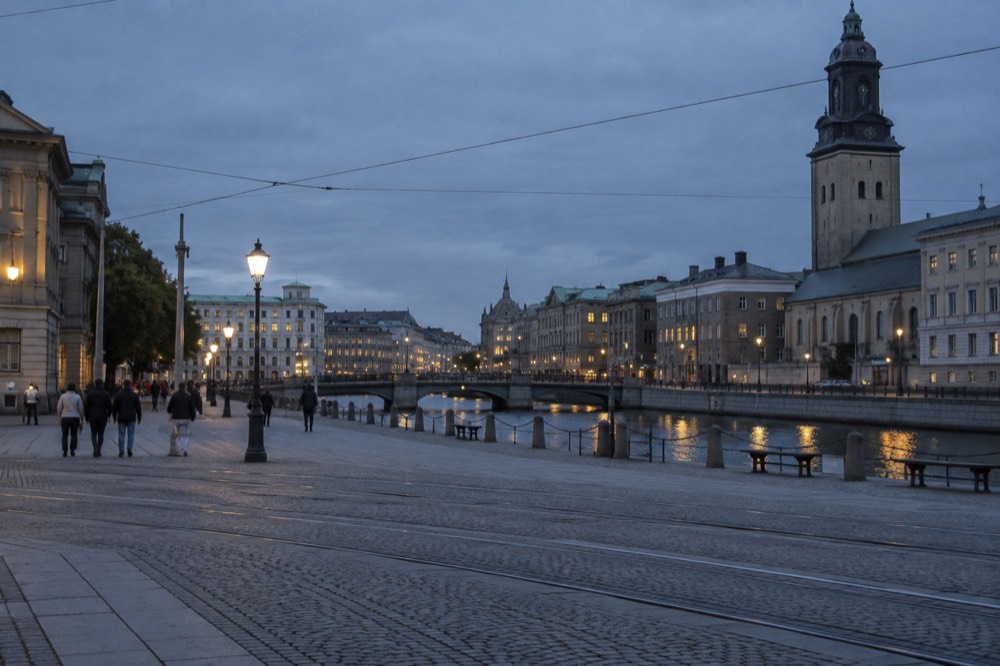
Sweden is not a cheap country, and pretending otherwise helps nobody. But the honest answer to what is free there is surprisingly long, and most of the best of it is concentrated in Gothenburg, the country's second city on the west coast. Göteborgs Stad runs a 188 km tram network that carried 126 million journeys in 2025, and at the western end of one of those tram lines sits a free zoo, a ferry terminal and a string of car-free islands. This page, from the editorial desk at Gothenburg Travel Guide, lists what genuinely costs nothing, what costs almost nothing, and what only looks free.
What Are Some Free Things to Do in Sweden?
The best free things to do in Sweden are in Gothenburg: Slottsskogen park with its free animal enclosures, walking the wooden quarter of Haga and the Göta älv waterfront, the free tip-based walking tours run on GuruWalk, free entry to the Museum of Art for anyone under 20, and the car-free southern archipelago islands, which cost only the ordinary Västtrafik ticket that also covers the tram and the ferry.
That list is the short version. The rest of this page goes through each one, with the caveats that most lists skip: the Botanical Garden asks for a voluntary contribution rather than a fixed ticket, the Museum of Art is closing in 2028 for a four-year rebuild, and the archipelago is free to walk but not free to reach. If you are planning a wider trip around the country, the same pattern holds elsewhere in Sweden: city parks, church interiors, viewpoints and public bathing spots are nearly always free, while museums and attractions rarely are. Stockholm's Gamla Stan costs nothing to wander, Malmö's parks and Ribersborg's kallbadhus boardwalk are free to walk, and the long sandy beaches of the Halland coast charge nothing in summer. What Sweden does not do is the free museum day. Very few institutions offer one, and no confirmed scheme exists at any Gothenburg museum, so this page claims none.
For orientation before the details, what Gothenburg is known for is a good starting point, and the question of whether Gothenburg is worth visiting for tourists covers the paid side of the city.
Is Slottsskogen Park and Its Zoo Really Free in Gothenburg?
Yes, Slottsskogen is free to enter, and the animal enclosures inside it, including the Nordic wildlife park with moose, seals and penguins, are free as well. The park sits at the end of tram lines 1 and 2, it is open year round, and it is the single largest genuinely free attraction in Gothenburg. No ticket, no gate, no suggested donation.
Slottsskogen is the reason the "expensive Sweden" cliché needs an asterisk in this city. Göteborgs Stad runs it as a public park, and the zoo animals, Swedish moose, Gotland ponies, seals and a penguin pool among them, are part of the park rather than a separate paid attraction. In summer the lawns fill with picnics and the free open-air concerts that the city schedules there; in winter it is grey, windy and still free. The park's free zoo and grounds have their own guide on this site if you want the full walk-through, including which enclosures are open in which season and where the seal feeding happens.
Two neighbouring freebies are worth adding to the same afternoon. The first is the walk down to the Botanical Garden, which is where the honesty rule matters: the garden does not charge a fixed entry fee, it asks for a voluntary entry contribution. That is not the same as free, and it is not the same as paid. Go in, pay what you think it is worth, or what you can. The garden's rockery and rhododendron valleys are among the largest in Northern Europe on paper, and the contribution model means nobody is turned away at the gate. The second freebie is the viewpoint at Masthuggskyrkan, a church terrace above the harbour that appears on every local's list of the best city viewpoints and charges nothing for one of the clearest looks at the archipelago ferries working in and out of the river mouth.
A third option rounds out a fully free day: the free things to do in Gothenburg guide on this site collects the smaller items, from the Avenyn stroll to the Vasastan stone streets, that do not justify their own section here but add up when the budget is zero.
Can You Visit the Gothenburg Archipelago on an Ordinary Ticket?
Yes, and this is the best-value fact in the city: the southern archipelago ferries from Saltholmen are part of the ordinary Västtrafik network, the islands sit inside Zone A, and a 125 kr 24-hour Zone A ticket covers the tram to Saltholmen, the ferry out, and every island hop between Asperö, Brännö, Styrsö, Donsö, Vrångö and Köpstadsö. The islands themselves are free to walk, and private cars are banned on them.
Västtrafik's own fare pages state that the same ticket carries you all the way from the centre out to sea, and the islands sit inside Zone A, which covers Göteborg, Partille, Mölndal and Öckerö. The Västtrafik Zone A day-ticket page is the primary source for the 125 kr price. The islands are car-free by municipal decision: Göteborgs Stad's study of the southern archipelago says the islands are protected from car traffic, with only taxi, transport services and emergency vehicles on the roads. So the archipelago is not a day trip and not a tour booking. It is a tram ride and a ferry, on a ticket you would buy anyway, to islands that are districts of Gothenburg itself. The ferry and ticket question has its own page, and the details are in the guide to the southern archipelago.
What you do when you get there is free by nature. Brännö and Vrångö have swimming spots and walking paths that cost nothing. Styrsö has a village and a small harbour café culture. Donsö is the working fishing island, where the quays smell of diesel and herring and the walking is quiet. A full day of island hopping on one 125 kr ticket is, by any measure, the cheapest big day out in Sweden. The only real cost is time: ferries run on a schedule, the last boats back are earlier than visitors expect in the off-season, and the weather turns fast. SMHI's data for the Vinga station shows the sea at 12.8 C even in October, so a swim is possible later in the year than most people plan for, but the wind on an exposed island in autumn is its own argument for a windproof layer.
| Free or nearly free in Gothenburg | What it actually costs | The catch |
|---|---|---|
| Slottsskogen park and zoo | 0 kr | None. Open year round. |
| Botanical Garden | Voluntary contribution | Not a fixed ticket, not strictly free. |
| Haga, Klippan, Göta älv waterfront walks | 0 kr | Weather. October is the wettest month. |
| Southern archipelago islands | 0 kr on the islands | 125 kr for a 24-hour Zone A ticket covers tram and ferry. |
| Free GuruWalk walking tours | 0 kr upfront | Tip based; the guide expects a tip at the end. |
| Göteborgs konstmuseum | 75 kr adult, free under 20 | Closes 2028, reopens 2032; blasting on site now. |
| Universeum | Dynamically priced, never free | Under 3s enter free but need a free ticket. |
If you would rather have the archipelago explained from the water, with a guide doing the talking, the paid options are real and well reviewed, and the trio below is the shortlist this site would point you at first.
Are the Free Walking Tours in Gothenburg Actually Free?
Yes, in the sense that no one charges you to join. Gothenburg has four free, tip-based walking tours listed on GuruWalk, run by independent local guides, and the tip is the entire business model: you pay nothing upfront and tip what the walk was worth at the end. Three of the four run in English and one is Spanish only, so check the language on the listing before you show up.
The honesty requirement here matters more than usual: these walks are not this site's tours. They are run by individual gurus on GuruWalk, and the reason to name the platform is exactly that. The roster currently lists four of them. "Majorna, where Gothenburg comes alive" covers the history, people and culture of the Majorna district and carries a 4.77 rating from 234 reviews over 90 minutes. "Gothenburg on Foot: History, Culture, and Hidden Corners" runs 2 hours 15 minutes, rated 4.88 from 24 reviews. A third walks the city's history, culture, gastronomy and architecture over 2 hours 30 minutes, rated 5 from 63 reviews. The fourth, a free city walking tour rated 4.88 from 112 reviews, runs about 2 hours. Never print a price for any of them. There isn't one.
How much to tip is the question every first-timer asks, and the honest answer is that it is genuinely up to you. A common range for a two-hour walk in a Scandinavian city runs from the equivalent of a coffee to the equivalent of a lunch, scaled by how good the guide was. The guides work for the tip; that is the deal you are signing up for when you join. If a tip-based walk is not your format, the paid alternatives are cheap by Swedish standards: the Haga Old Town walking tour and a private walk with a local are both under 60 dollars, and the question of what to do in Haga is answered in full elsewhere on this site.
Which Gothenburg Museums Can You Get Into for Free?
The Museum of Art, Göteborgs konstmuseum, is free for everyone under 20 and for students with a student ID, and its 75 kr adult day ticket includes the Hasselblad Center. But the museum closes in 2028 and reopens in 2032 for a major rebuild, and it currently warns of intermittent blasting near the building, so treat it as a visit with an expiry date rather than a permanent fixture.
The under-20 rule is generous and applies to all exhibitions. The closure is the fact most guides will not carry until it is too late: the museum's own rebuild page states, under the current timetable, that it closes in 2028 and reopens in 2032, and that blasting is happening at intervals around the site right now, something the museum specifically flags for visitors sensitive to loud noise. The collection, around 70,000 works pulling roughly a quarter of a million visitors a year, is one of the strongest in the Nordic countries, and the free-under-20 policy makes it the obvious rainy-day answer for families with teenagers.
Beyond that one, the honest answer is that Gothenburg's museums are mostly paid, and you should not trust any list that claims a free day at a specific museum without a source. The facts pack this site works from confirms no free-day scheme at any Gothenburg museum, so none is claimed here. What is confirmed: the City Museum and the Museum of World Culture charge admission, Universeum is dynamically priced with no fixed adult rate at all, and children under 3 enter free there but still need their own free ticket. Universeum's own ticketing page states that admission is booked for a time slot and priced dynamically, that the on-site price is the online price plus 30 kr, and that the venue is cashless. For the full landscape, including what is free and what is not, see Gothenburg's museums and the roundup of free museums in Gothenburg.
One more free cultural stop deserves a mention: Feskekôrka, the fish church, the 1874 building on Rosenlundsgatan that reopened in 2024 as a food hall with two fish counters and five restaurants. Walking in and looking costs nothing, and the building itself, shaped like a church with a fish-scale timber roof, is one of the city's most photographed interiors. Eating there is not free, but the Feskekôrka guide explains what has changed since the renovation, which is a lot: older guides describe a fish market, and that is out of date.
What Walks and Views in Gothenburg Cost Nothing at All?
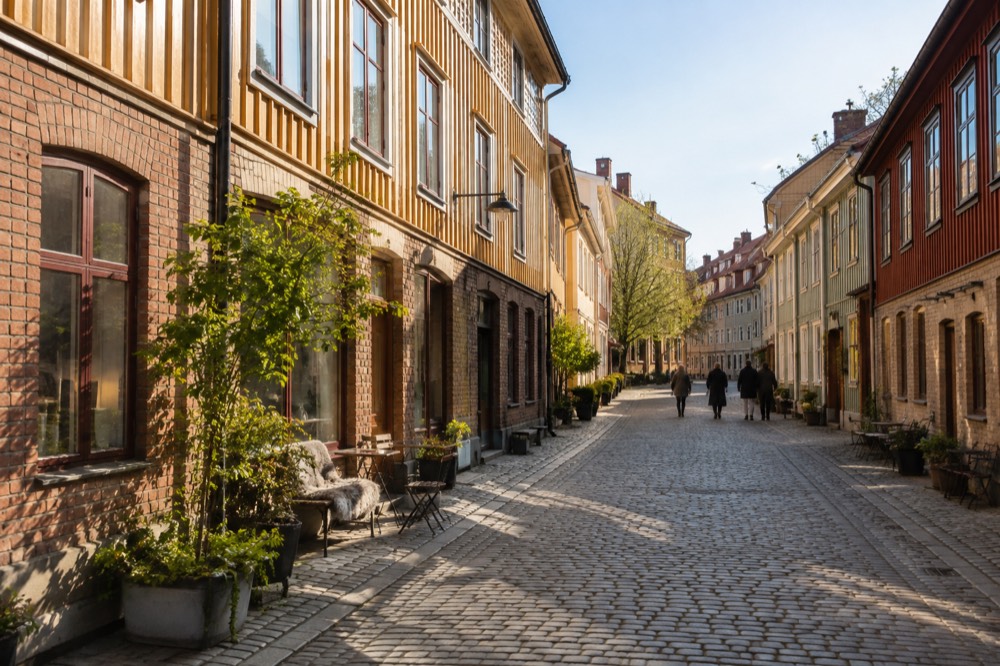
Haga's painted wooden landshövdingehus and cobbled lanes, the old harbour village of Klippan, the entire Göta älv waterfront, and the hilltop forts at Skansen Kronan and Ramberget are all free to walk, all reachable by tram, and between them they cover the oldest, the prettiest and the highest views in Gothenburg without a single ticket.
Start with Haga, the 17th-century wooden quarter that is the city's default free afternoon: one main cobbled street, café culture built around fika, and the climb up to Skansen Kronan, the hilltop fort whose ramparts give you the rooftops and the river in one sweep. The climb takes ten minutes at a stroll and the view takes in the whole old town grid that Dutch engineers laid out inside the moat in the 1600s. Haga has its own guide, and so does the fort and its sibling defences. Across the river on Hisingen, Ramberget is the skyline viewpoint locals actually use, a hill in a park with a panorama over the harbour, the shipyard cranes and the archipelago beyond, free at the top.
The waterfront stitches it all together. The Göta älv walk from Klippan, the old harbour village where the shipyard cranes still stand, past the Maritiman floating museum and the opera house, to the inner moat of the old Dutch-built town, is a couple of hours of free walking that passes most of what the city is known for. None of it needs a booking, and the tram network, 12 lines and 134 stops as of the 2022 network report, means you can bail out at any point. In December the same walk takes on a second life, because the city's Christmas lights and the free-to-wander market atmosphere at Liseberg's Jul season, entry ticket aside, make the dark afternoons worth being out in. Daylight is the constraint: the US Naval Observatory's figures for Gothenburg's latitude put 21 December at 6 hours 32 minutes of daylight against 18 hours 6 minutes on 21 June, so plan the free outdoor walking for the middle of the day in winter and the evening in summer.
| Free walk | Where it goes | How to get there |
|---|---|---|
| Haga and Skansen Kronan | Wooden quarter, then fort ramparts over the city | Tram to Hagakyrkan or Järntorget |
| Klippan to the opera house | Old harbour village, shipyard cranes, riverfront | Tram to Klippan |
| Ramberget, Hisingen | Highest hill in the city, skyline panorama | Tram or bus toward Keillers park |
| Slottsskogen to Botaniska | Free zoo, then the garden's voluntary contribution | Tram 1 or 2 |
| Saltholmen and the islands | Tram terminus, then ferry on the same ticket | Tram to Saltholmen, 125 kr day ticket |
For the paid version of the same geography, the amphibious bus below is the one sightseeing ticket that shows you the streets and then drives into the harbour, and it is the solo pick this page points at when someone wants the guided hour rather than the free walk.
Common Questions About Free Things to Do in Sweden
What are some free things to do in Sweden?
In Gothenburg: Slottsskogen park and its free zoo, the Haga and Klippan walks, the Göta älv waterfront, the Skansen Kronan and Ramberget viewpoints, free entry to the Museum of Art for under-20s, and the car-free southern archipelago islands on an ordinary Västtrafik ticket. Elsewhere in Sweden the pattern repeats: city parks, church interiors and public viewpoints are free, museums almost never are.
Is Slottsskogen zoo really free?
Yes. The park and the animal enclosures are run by the city as a public park with no gate and no ticket, including the moose, seals and penguins. It is open year round.
Is the Gothenburg Botanical Garden free?
It asks for a voluntary entry contribution rather than charging a fixed ticket, so it is neither simply free nor simply paid. Go, and contribute what the visit is worth to you.
Are the free walking tours in Gothenburg genuinely free?
They are free upfront and tip based at the end. Four of them are listed on GuruWalk, run by independent local guides: three run in English and one is Spanish only. Check the language on the listing before joining.
Can you visit the Gothenburg archipelago for free?
The islands cost nothing to walk, but the ferry is not free. It is covered by an ordinary Västtrafik ticket, so a 125 kr 24-hour Zone A ticket includes the tram to Saltholmen, the ferry, and unlimited island hopping within Zone A.
Are Gothenburg museums free on certain days?
No free-day scheme is confirmed at any Gothenburg museum, and this site does not claim one. What is confirmed: the Museum of Art is free for under-20s and students, and it closes in 2028 for a rebuild lasting until 2032.
The paid layer of Gothenburg is worth a little money, and if you are curious whether the whole trip adds up, whether Gothenburg is cheap or expensive closes the loop. But the free list above is not the consolation prize. Slottsskogen, the islands and the Haga climb are the things people come back for, and the only mandatory spend is the tram ticket that connects them.