What to Do in Haga, Gothenburg: Cafés, Cobblestones and the Climb to Skansen Kronan
A practical guide to Haga, Gothenburg's oldest preserved quarter: fika on Haga Nygata, the landshövdingehus streets, Skansen Kronan's viewpoint and how to get there by tram.
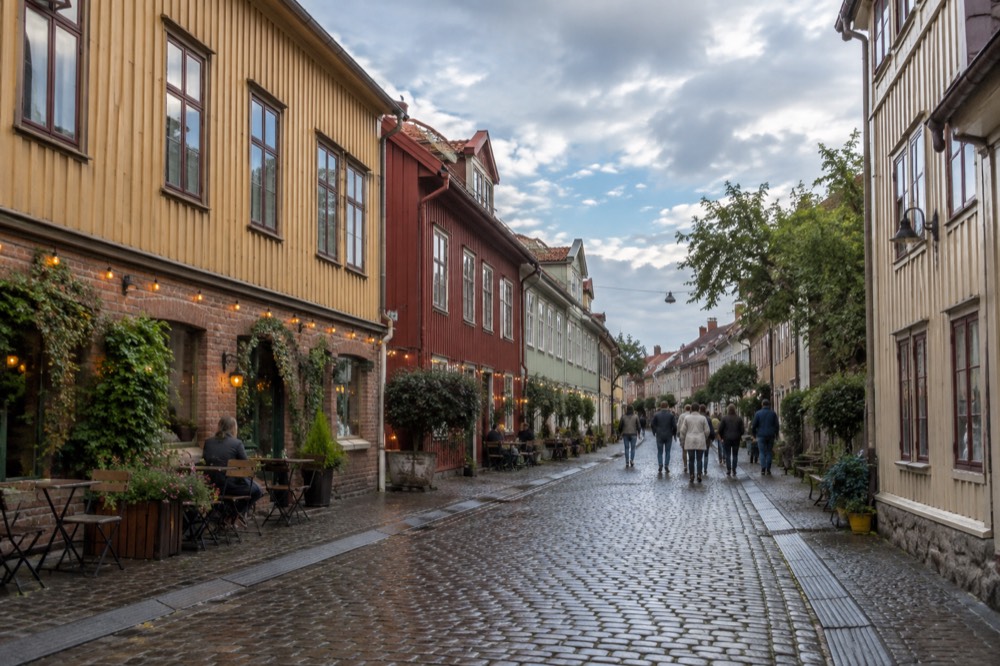
Haga sits immediately north of Gothenburg's old moat, and it is the one district in the city where the 19th century survived intact. This was the first suburb, built outside the city walls for the workers the shipyards and the East India trade needed, and its low wooden houses and painted stone-fronted landshövdingehus were slated for demolition as slums late in the last century. A preservation campaign stopped the bulldozers, and the quarter was renovated instead. The result today is a pedestrian main street, Haga Nygata, running uphill from Järntorget toward a hilltop fort, Skansen Kronan, whose ramparts give the widest free view over the city. Everything worth doing in Haga fits inside a couple of hours of walking, and almost all of it costs nothing until you sit down for coffee.
What to Do in Haga, Gothenburg?
Walk the length of Haga Nygata from Järntorget to the Skansen Kronan steps, stopping for fika at one of the quarter's cafés, browsing the second-hand and design shops on the side streets, and finishing with the climb to the fort's ramparts for the best free view over Gothenburg. The quarter is small enough that a single street carries most of it, and the whole loop, coffee included, takes about two hours at a relaxed pace.
Haga Nygata is the spine. It runs uphill, car-free, lined with the low wooden buildings the area is protected for, and it has become the city's best street for small independent shops rather than chains. The side streets off it, Nygatan, Haga Kyrkogata and the lanes around Haga kyrka, are quieter and give a clearer picture of what the quarter looked like when it was renovated. The church itself, Haga kyrka, is one of the older buildings in the district and worth a look inside if it is open.
The quarter reads as two different places depending on the hour. By late morning the cafés fill and the street belongs to visitors. Early in the day, or in the off-season, it reverts to a quiet residential neighbourhood where people live above the shops, which is exactly what a saved-from-demolition district is supposed to be. There is no ticket, no gate and no opening hours for the quarter itself; it is simply a neighbourhood you walk through, and that shapes how you should plan it. Arrive early, walk slowly, and read the buildings rather than rushing between sights.
For orientation before you go, the overview in what Gothenburg is known for puts Haga in context with the rest of the city's maritime quarter, and the question of whether Gothenburg is worth visiting for tourists covers whether the city deserves the trip at all.
Where Is Haga and How Do You Get There?
Haga sits directly north of the old town and the Göta älv, a five-minute walk from Järntorget, which is served by several tram lines; the stops Järntorget and Hagakyrkan both drop you inside the quarter, and a single adult Västtrafik ticket for one zone costs 38 kr. No bus tour or transfer is needed: the district begins where the moat ends, and everything in it is walkable.
Västtrafik's fare table shows a single one-zone adult ticket at 38 kr, with youth tickets at 29 kr. If you plan to ride the tram out to the archipelago ferries or up to Liseberg on the same day, the 24-hour Zone A ticket at 125 kr covers every tram, bus and ferry in the zone, including the boats from Saltholmen, which is the best-value ticket the region sells. Note that the widely reported halving of Västtrafik prices applies only to 30-day period tickets under a temporary state subsidy; the day tickets visitors buy are not discounted. The fare details are published on Västtrafik's own ticket pages.
| Ticket | Adult | Youth (7-19) | What it covers |
|---|---|---|---|
| Single, 1 zone | 38 kr | 29 kr | One tram or bus ride, including to Järntorget or Hagakyrkan |
| Single, 2 zones | 76 kr | 58 kr | Crosses into the next zone, rarely needed for Haga |
| 24-hour, Zone A | 125 kr | - | Every tram, bus and archipelago ferry in Zone A for a day |
The walk in from Göteborg Centralstation takes about 15 minutes across the bridge at Järntorget, and from the Avenyn side you can cut through Trädgårdsföreningen, the garden society park, to reach the quarter's eastern edge. Coming from the airport, the Vy flygbussarna coach reaches the Nils Ericson Terminal in 20 minutes, and Haga is walkable from there with a suitcase on wheels, though the last stretch is cobbled. There is no rail link to Landvetter Airport, so the coach is the standard arrival route; our answer on how to get from Landvetter Airport to the city centre covers the options.
If you would rather see Haga as part of a guided loop of the city centre, the amphibious bus tour below drives past the quarter's edge before rolling into the harbour. It is a sensible pairing: the tour gives you the city in an hour, and Haga rewards the slow walk you do afterward on your own.
Is Haga Just Cafés, or Is There Real Sightseeing?
Haga's real sightseeing is architectural and free: the preserved wooden houses and landshövdingehus that line Haga Nygata and its side streets, the 19th-century Haga kyrka, and the Skansen Kronan hillfort at the top of the quarter, whose ramparts give an unbroken panorama over the rooftops, the river and the archipelago beyond. The cafés are famous, but they sit inside a district that is itself the exhibit.
The landshövdingehus is the building type to look for: a timber house with a ground floor of stone or brick and wooden storeys above, a form invented for Gothenburg's building rules of the era and found almost nowhere else in this concentration. Haga's stock of them, in ochre, red and green, is the reason the quarter was worth saving. Look up as you walk: the shopfronts are modern, the upper floors are not. The proportions are deliberately low, because the suburb was built for workers, and that human scale is what makes the street photograph so well today. The wider set of guides lives on Gothenburg Travel Guide.
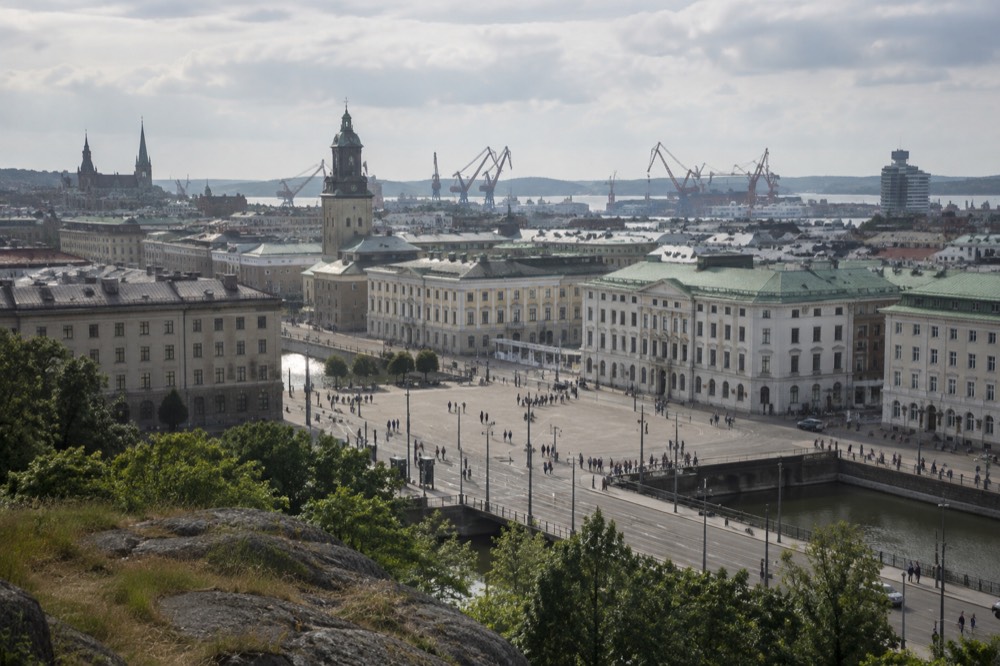
Skansen Kronan is the destination at the top of the hill. The fort was built as one of the city's hilltop defences, and Göteborgs Stad maintains it as an open viewpoint; the ramparts are free to climb and the view takes in the whole city grid, the harbour cranes and, on a clear day, the sea. The climb from the top of Haga Nygata is a few minutes on foot up a stepped path. Go in the late afternoon if you can: the light comes in off the river and the rooftops glow in a way the morning does not manage.
The quarter also has a quieter cultural layer. The lanes around Haga kyrkogata hold small galleries, vintage shops and workshops, and the district's bohemian reputation, the reason it was the centre of the city's counterculture before it was polished for visitors, survives in the second-hand book and record shops that never left. Give the side streets twenty minutes even if the cafés are the main draw.
Where Should You Stop for Fika in Haga?
Fika, the Swedish coffee-and-bun break, is the thing Haga is most famous for, and the quarter's cafés are clustered along Haga Nygata; the most photographed item is the oversized cinnamon bun, the hagabulle, served warm, which several cafés on the street bake to a size roughly that of a plate. Order one with a coffee, sit as long as you like, and treat it as the district's main event rather than a snack.
The cinnamon bun is not a Haga invention, but the giant version served here is the local signature, and the street's best-known café, Café Husaren, is the one that made it famous. Expect a queue in high summer and at weekends. The bun comes dusted with pearl sugar and cardamom, and one is genuinely a meal; a coffee and a hagabulle together is a modest outlay by Gothenburg standards, a city where a restaurant main elsewhere can cost several times that. For the wider cost picture, our answer on whether Gothenburg is cheap or expensive runs the numbers on meals, beer and transport.
If you want to understand what fika actually is in Swedish working culture before you order, read what fika means in Sweden, which explains the practice, and how to pronounce fika in Swedish if you want to order like a local. The short version: it is a seated break, not takeaway, and nobody rushes you out.
Haga's café strip also does proper lunches, and the quarter edges into the Linné district's restaurant streets at its eastern end, so an evening in Haga can continue downhill toward Linnégatan without much planning. For the wider food picture, our answer to what food Gothenburg is famous for covers the seafood and shrimp-sandwich side of the city's table, which pairs naturally with a Haga afternoon.
How Much Time Do You Need in Haga?
Two hours is enough to walk Haga Nygata, take fika, and climb to Skansen Kronan; half a day lets you add the second-hand shops, a proper lunch and a wander down to Järntorget and the Linné streets, which is the comfortable pace. The quarter itself is compact, maybe six blocks end to end, and the only real time cost is the coffee stop and the hill.
Most visitors fold Haga into a wider day. A common pattern is the old town and the canal in the morning, Haga for coffee and the viewpoint at midday, then Avenyn or the archipelago boats in the afternoon. If you are deciding how to budget the whole city, our answer on how many days in Gothenburg is enough breaks the itineraries down.
| Time budget | What it buys you in Haga | Notes |
|---|---|---|
| 1 hour | Haga Nygata end to end, no climb | Enough to see the street and buy a bun to go |
| 2 hours | The street, fika seated, Skansen Kronan ramparts | The standard visit most guides assume |
| Half a day | All of the above plus side streets, vintage shops, lunch | Comfortable pace, pairs with the old town |
| A full day | Haga plus Linnégatan, Trädgårdsföreningen and the museum cluster | Only worth it if the weather holds |
Rain changes the plan less than you would think. The cafés are the point, and the cobblestones dry fast. Gothenburg records 912 mm of rain a year across 127 wet days, roughly one day in three, per SMHI's normals, and contrary to the city's reputation SMHI does not identify it as Sweden's rainiest city; the national maxima are in the western highlands and the mountains. October is the wettest month at 102.9 mm, so an autumn visit benefits from the indoor half of the quarter: the cafés, the shops and the church.
Daylight matters more than rain for the viewpoint. On 21 December the city gets 6 hours 32 minutes of daylight between sunrise and sunset, against 18 hours 06 minutes on 21 June, per the US Naval Observatory's tables for this latitude. In midwinter, do the climb by early afternoon; in June you can sit on the ramparts until ten at night and still see the archipelago.
What Is Within Walking Distance of Haga?
Järntorget, the Linnégatan restaurant strip, Trädgårdsföreningen's garden park, the Göteborg Museum of Art at Götaplatsen and the Avenyn boulevard all sit within a 15-minute walk of Haga's centre, and the tram hub at Järntorget connects the quarter to the harbour, Liseberg and the Saltholmen ferries. Haga is the natural base camp for the whole southern half of the city centre.
The museum cluster is the biggest nearby draw. The Göteborgs konstmuseum on Götaplatsen holds around 70,000 works and is free for visitors under 20, with a day ticket at 75 kr; the museum's own rebuild page states it closes in 2028 and reopens in 2032, so plan around that if your visit is a few years out. Röhsska, the design and craft museum, and the Museum of World Culture are also within reach of the tram. The museum's own visit pages publish the current hours and admission details.
The harbour is downhill. From Järntorget you can walk toward the Stena Line terminal area and the floating ship museum in about 20 minutes, or catch a canal sightseeing boat, which the trio below collects. And the southern archipelago, the car-free islands of Styrsö, Brännö and Vrångö, is one tram ride away: the tram runs to Saltholmen, the western terminus of the network, where the ferries depart on the same Västtrafik ticket. The question of whether the Gothenburg archipelago is worth visiting has our full answer, and whether the ferry is free settles the common confusion about what your ticket covers.
| Nearby | Direction from Haga | Getting there |
|---|---|---|
| Järntorget and the old town | Downhill, south | Walk, or one tram stop |
| Linnégatan restaurants | East, level | Walk down Haga Kyrkogata |
| Trädgårdsföreningen park | East | Walk, level, a few minutes |
| Göteborgs konstmuseum and Avenyn | South-east | Walk or tram to Valand |
| Saltholmen archipelago ferries | West | Tram to the network's western terminus |
Common Questions About What to Do in Haga
What to do in Haga?
Walk car-free Haga Nygata, look at the wooden houses and landshövdingehus, stop for a giant hagabulle cinnamon bun and coffee, browse the small independent shops, and climb to the Skansen Kronan ramparts for the best free view over Gothenburg. The whole loop takes about two hours.
Is Haga worth visiting?
Yes. It is the city's oldest preserved suburb, saved from demolition, and it combines architecture, fika culture and a free hilltop viewpoint in one compact walkable quarter a few minutes from the centre.
How do I get to Haga?
Take any tram to Järntorget or Hagakyrkan; a single one-zone adult ticket costs 38 kr per Västtrafik's fare table. On foot it is about 15 minutes from Göteborg Centralstation across the Järntorget bridge.
What is a hagabulle?
A giant cinnamon bun, served warm with pearl sugar and cardamom, roughly plate-sized. It is the signature pastry of Haga's cafés, most famously at Café Husaren on Haga Nygata.
Can you walk from Haga to Skansen Kronan?
Yes. The fort sits at the top of the hill above the quarter, a few minutes' climb on a stepped path from the upper end of Haga Nygata. The ramparts are free to enter and open as a public viewpoint.
When is the best time to visit Haga?
Spring, especially April, which SMHI's 1991-2020 normals show as Gothenburg's driest month at 51.3 mm of rain. Weekday mornings are quietest; summer weekends bring queues at the famous cafés.
Haga rewards the slow approach. Walk up the street, look at the upper floors rather than the shopfronts, eat the bun, climb the hill, and you will have seen the district the way the preservationists who saved it hoped you would. Pair it with the harbour or the islands in the afternoon and you have the shape of a very good Gothenburg day.