Is the Gothenburg to Stockholm Train Scenic? What the Window Actually Shows
Is the Gothenburg to Stockholm train scenic? An honest, window-by-window answer for the Sweden west-coast-to-capital rail route, plus what to do in Gothenburg before or after the ride.
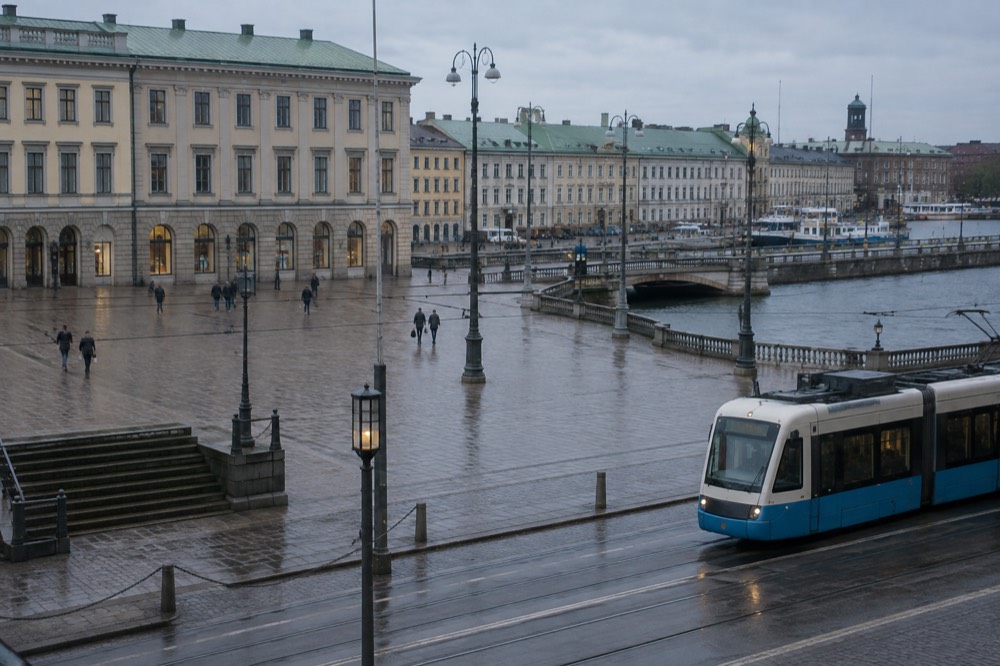
Sweden's two biggest cities sit about 400 kilometres apart on paper, and the train between them is one of the country's busiest rail corridors. What it is not, despite what some travel copy implies, is a scenic railway in the Norwegian-fjord sense. The route runs inland through Västergötland and the flat lake country of central Sweden, and for long stretches the view is pine forest, birch, farmland and the occasional grain silo. That is not a criticism of the train, which is fast, frequent and far more pleasant than a domestic flight. It is just a correction of expectations, because the question people actually type into search engines is a simple one and it deserves a straight answer.
This page answers it section by section, based on what the route geography and the operators' own published information support, and then covers the practical questions that follow: which side to sit on, whether it beats flying, and what to do with the hours before departure. Göteborg Centralstation, where the train starts, is itself worth arriving early for. If you are still deciding whether the city deserves your time at all, start with why Gothenburg is worth visiting and what Gothenburg is known for.
Is the Gothenburg to Stockholm Train Scenic?
The honest answer is: moderately, not spectacularly. The Gothenburg to Stockholm train is a comfortable intercity ride whose window shows rolling farmland, long stretches of pine and birch forest, small towns and a slice of central Sweden's lake country, with no fjords, no mountains and no dramatic coastline anywhere on the standard route. It is a pleasant three-to-five-hour sit, depending on which service you catch, and a far better experience than a domestic flight, but nobody should book it primarily for the view.
Think of it as a landscape you watch rather than photograph. The first stretch out of Gothenburg climbs gently east through inland Västergötland, and the middle of the route crosses the flat, watery heart of Svealand, where the train passes near some of the many lakes that give the region its character. The final approach into Stockholm thickens with suburbs and then the city's own waterways. There are genuinely nice moments, above all in the lake sections, but the rhythm of the trip is forest, field, forest, field.
That is also the fair way to describe most of southern and central Sweden by rail. The country's genuinely spectacular train rides are further north or west, along the Norwegian border and up towards Norrland. If scenic rail is the whole point of a trip, Sweden has better options than its busiest business corridor. If getting between two cities you actually want to visit is the point, this train does that job very well.
What Does the Route from Gothenburg to Stockholm Actually Pass?
The standard route leaves Göteborg Centralstation heading east through inland Västergötland, calling at towns such as Alingsås and Skövde, crosses the flat lake and farmland country of central Sweden around Töreboda and Laxå, and finishes through the Stockholm commuter belt into Stockholm Centralstation. The line is inland the whole way: it never touches the Bohuslän coast, never runs along the Göta älv's mouth, and never comes close to the mountains. Passengers hoping for sea views get none.
The geography explains it. Gothenburg sits on the west coast, Stockholm on the east, and the fastest rail line between them cuts straight across the middle of southern Sweden rather than detouring to either shore. What you get instead is the classic Swedish interior: mixed woodland dominated by pine and birch, cleared farmland in the valleys, red-painted farm buildings, and lakes appearing between the trees at regular intervals. Central Sweden is famously a place where you are never far from water, and the train does give you glimpses of that.
A few practical notes for the window seat. Heading east, the sun will generally be behind you in the morning and in your face in the afternoon, so a morning departure favours the left side and an afternoon one the right, though on a line that curves as much as this one does, the difference is smaller than rail enthusiasts claim. More usefully: the lake sections are the best of it, so if you find yourself ignoring the window for an hour of forest, that is normal, and the view will open up again.
Here is the route in summary form, so you can see at a glance where the scenery sits:
| Section of the route | What the window shows | Scenic verdict |
|---|---|---|
| Gothenburg to Alingsås | Suburbs thinning into inland Västergötland farmland and woods | Gentle, unremarkable |
| Alingsås to Skövde | Rolling farmland, forest blocks, small towns like Skara and Töreboda nearby | Pleasant, quiet |
| Central Sweden lake country | Lakes between pine and birch, flat horizons, occasional farmsteads | The best stretch |
| Approach into Stockholm | Commuter suburbs thickening, then waterways and city infrastructure | Urban, busy |
For anyone connecting onwards in the region rather than heading straight to the capital, Gothenburg's own rail links reach some genuinely attractive country. The is it worth visiting the Gothenburg archipelago question is a rich one, and the west coast city is a better base for coastal scenery than the Stockholm line ever is. The Bohuslän granite coast, reached from Gothenburg, is the scenery the inland train cannot give you.
Is the Train Better Than Flying from Gothenburg to Stockholm?
For most travellers, yes, the train beats the plane on this corridor. It runs city centre to city centre, Göteborg Centralstation to Stockholm Centralstation, with no airport transfers at either end, no security queue and no 90-minute early arrival, and it turns the journey itself into usable time. Flying means Landvetter Airport, which has no rail link, plus a coach transfer of about 20 minutes each way on top of check-in and boarding, so door-to-door the train usually matches or beats the flight.
The airport point deserves emphasis because it is the least understood part of the comparison. Swedavia, the airport operator, publishes that the coach between Landvetter and central Gothenburg takes 20 minutes, and Swedavia's own transport pages list only coach and bus connections: there is no train to Landvetter at all. So a flight from Gothenburg to Stockholm is really a train-or-coach ride to an airport, a flight, and then Arlanda's own transfer into Stockholm. The rail option deletes every one of those steps.
There is also the environmental and comfort case, which on this corridor is not a sacrifice. Swedish rail travel is a normal, mainstream choice for business travellers, and the intercity services on the route are designed for people working en route. The train is where Sweden's transport culture is most visible: quiet carriages, passengers with laptops, coffee from the bistro car. Anyone who wants the deeper background on how the city fits into Swedish travel habits can read what language is spoken in Gothenburg for the practical side of getting by.
One thing the train is not, on this route, is a luxury scenic experience, and it does not need to be. If you want the scenic version of Sweden by rail, the honest advice is to build the scenery into your days in Gothenburg itself rather than the transfer between cities. The archipelago boats from Saltholmen, covered on an ordinary Västtrafik ticket, give more genuine west-coast scenery in 40 minutes than the Stockholm train manages in four hours.
Which Side of the Train Should You Sit on Going East?
There is no consistently superior side on the Gothenburg to Stockholm route: the line curves enough that both sides see the same mixture of forest, farmland and lakes over a full trip. If you must choose, pick a seat on the lake side through the central Sweden sections, and treat the whole question as minor, because the views are intermittent rather than continuous. A window seat on either side beats a middle seat, and the real priority is booking a seat at all on busy departures.
Seat reservation culture on Swedish long-distance trains is worth knowing about. Popular departures, especially Friday and Sunday afternoons and anything around major holidays, fill up, and the quiet-carriage and family-carriage options are real choices that affect the ride more than the window does. The train is a commuting and business tool for Swedes as much as a tourist service, and the busiest departures behave accordingly.
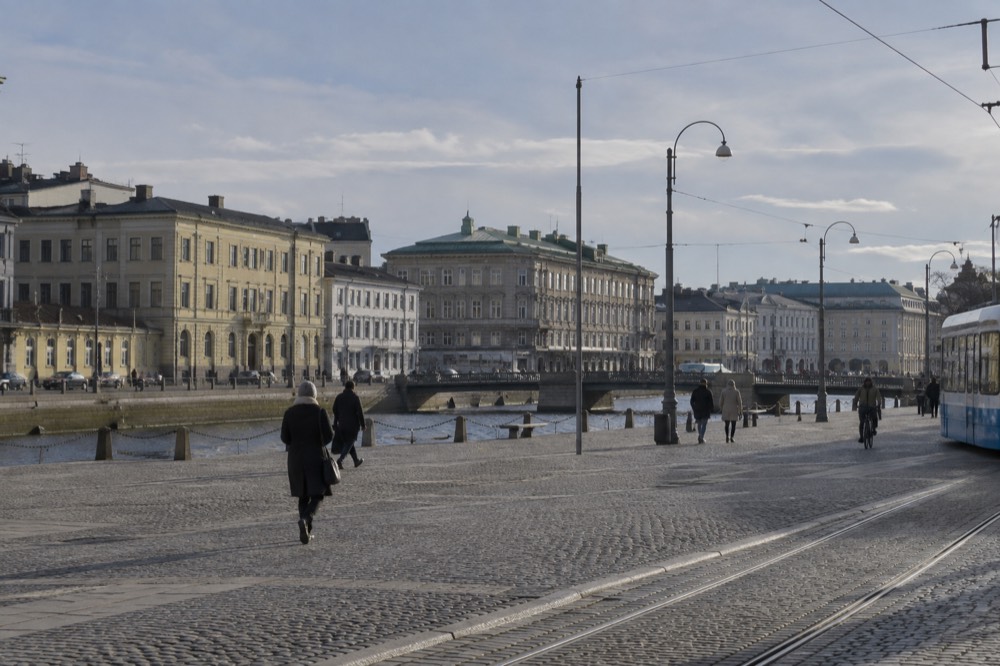
The light matters more than the side. In winter, with barely six and a half hours of daylight around the solstice, the window show is short and the ride is mostly a dark commute, so an evening departure in December is a non-event visually. In June, with over eighteen hours of daylight, even a late train runs in full light most of the way. The seasonal swing is enormous, and it changes what the same ticket buys you. The same logic applies to the whole trip: the time of year you choose shapes the train window as much as the city itself.
How Long Does the Journey Take, and Is It Comfortable?
The Gothenburg to Stockholm journey takes roughly three to five hours depending on which service you take, with the faster trains on the corridor doing the trip at the shorter end of that range. Comfort is the train's real selling point: seats are roomy by airline standards, there is a bistro car, wifi is available, and the ride is smooth enough to work, read or sleep through. Check the operator's own timetable for the exact duration of your specific departure, because times vary by service and by day.
This site does not publish a fixed journey time because the corridor carries a mix of train types and the operators adjust schedules seasonally. What is stable is the character of the ride. You board in the middle of Gothenburg, minutes from the Avenyn hotels and the canal, and you step off in the middle of Stockholm. No transfer, no coach, no airport. For a fuller comparison of the options, including the high-speed question, see is there a high-speed train from Gothenburg to Stockholm.
Comfort also depends on when you travel. The corridor is busy with weekday business traffic, and a mid-morning Tuesday train is a calmer object than a Friday afternoon one. Families get dedicated areas, and the bistro car is the social centre of the train in a very Swedish way: standing passengers, coffee, cinnamon buns. Fika, the Swedish coffee break, travels with you, and if the concept is new, what fika means in Sweden explains why the bistro queue is half the experience.
What Should You Do in Gothenburg Before the Train Leaves?
Give Gothenburg at least a full day before boarding, because the city's own scenery outclasses anything the eastbound window will show you. The strongest half-day combination is a canal or harbour boat, a walk through the Haga wooden quarter, and a trip out to the car-free southern archipelago islands on the same ordinary Västtrafik ticket that covers the tram to Saltholmen, all of which deliver the west-coast views the Stockholm line cannot.
The archipelago point is the best-value fact in the city. Västtrafik's own zone map shows the Saltholmen ferries as part of the network, and the islands sit inside Zone A, so one day ticket covers tram, ferry and islands in a single fare. The islands are areas of Gothenburg, not a separate excursion, which is why locals treat an afternoon on Styrsö or Brännö as an ordinary errand. Göteborgs Stad's own planning documents confirm the southern islands are protected from private car traffic, so the ferry is not just the cheapest way out there, it is effectively the only way.
For the city itself, the classic short list is well covered elsewhere on this site. If your time is genuinely a single evening before an early train, the canal-side food halls and the Feskekôrka fish-church building, reopened in 2024 as a food hall with restaurants as well as fish counters, sit within walking distance of the station and make a fitting last supper. A morning departure still leaves time for a slow breakfast and a walk along the canal before you board.
And if the whole question behind your train ticket is whether the city justifies the trip, the honest answer is yes, and it is a different yes from Stockholm's. The comparison, including which city suits which traveller, is worth settling before you buy any ticket, because the two cities reward different kinds of visitors and different lengths of stay.
Is the Return Train from Stockholm to Gothenburg Any Different?
No, the Stockholm to Gothenburg train uses the same line and shows the same scenery in reverse, so nothing about the scenic verdict changes with direction. The practical differences are the ones you would expect: morning departures from Stockholm run with the sun behind you through the lake country, business traffic is heavier towards Gothenburg on Sunday evenings, and the final stretch into Göteborg Centralstation delivers the best moment of the whole ride, the arrival into the west coast city's own station district.
Direction matters mainly for light and for crowd timing. A morning eastbound train and an evening westbound one see the landscape under completely different conditions, and in midwinter the evening westbound arrival happens in the dark, with the station and the city lights doing the work the countryside cannot. In June the reverse: you can leave Stockholm after dinner and still watch Sweden in full daylight for most of the ride.
The arrival itself is worth a sentence. Göteborg Centralstation sits at the edge of the city centre, with trams outside the door, the canal a short walk away, and the Drottninggatan approach leading straight towards the heart of the city. It is one of the more convenient major-station arrivals in Scandinavia, and the tram network outside it, 12 lines and 188 km of single track as of the 2022 network report, means no arrival needs a taxi.
Common Questions About the Gothenburg to Stockholm Train
Is the Gothenburg to Stockholm train scenic?
Moderately, not spectacularly. The window shows pine and birch forest, farmland, small towns and stretches of central Sweden's lake country, with no coastline, fjords or mountains on the standard inland route. It is a pleasant ride and a better experience than flying, but not a scenic railway in the postcard sense.
How long is the train ride from Gothenburg to Stockholm?
Roughly three to five hours depending on the service. This site does not publish a single fixed duration because the corridor carries a mix of train types and schedules vary, so check the operator's own timetable for your specific departure.
Is the train better than flying between Gothenburg and Stockholm?
For most travellers, yes. It runs centre to centre with no airport transfers, while Landvetter Airport has no rail link at all and Swedavia lists only coach and bus connections. Add check-in and boarding time and the flight's door-to-door advantage largely disappears.
Which side of the train has the best views?
Neither side consistently wins, because the line curves and both sides see the same mix of forest, fields and lakes. Book any window seat, and prioritise reserving a seat at all on busy Friday and Sunday departures.
Does the train pass the coast or any islands?
No. The route runs inland across Västergötland and central Sweden the whole way. For coastal and island scenery, spend time in Gothenburg's own southern archipelago, reached by tram and ferry from Saltholmen on an ordinary Västtrafik ticket.
Is the ride worth doing in winter?
Only for transport, not for views. Daylight around the winter solstice is just 6 hours 32 minutes in Gothenburg, so much of a winter ride happens in darkness. In June, with 18 hours 06 minutes of daylight, the same ticket buys a full-light journey.
The verdict, then: book the train because it is the sane, comfortable, city-centre-to-city-centre way to cross Sweden, and let the scenery be a bonus rather than the reason. Save your scenic expectations for Gothenburg itself, where the archipelago, the canal and the harbour deliver everything the inland window cannot. More on the city's character, including why Gothenburg is called Little London, is elsewhere on this site, courtesy of Gothenburg Travel Guide.