Is Gothenburg in Sweden Worth Visiting? An Honest Answer
Is Gothenburg in Sweden worth visiting? An honest look at Sweden's second city: the archipelago, the trams, the food, the costs, and who should skip it.
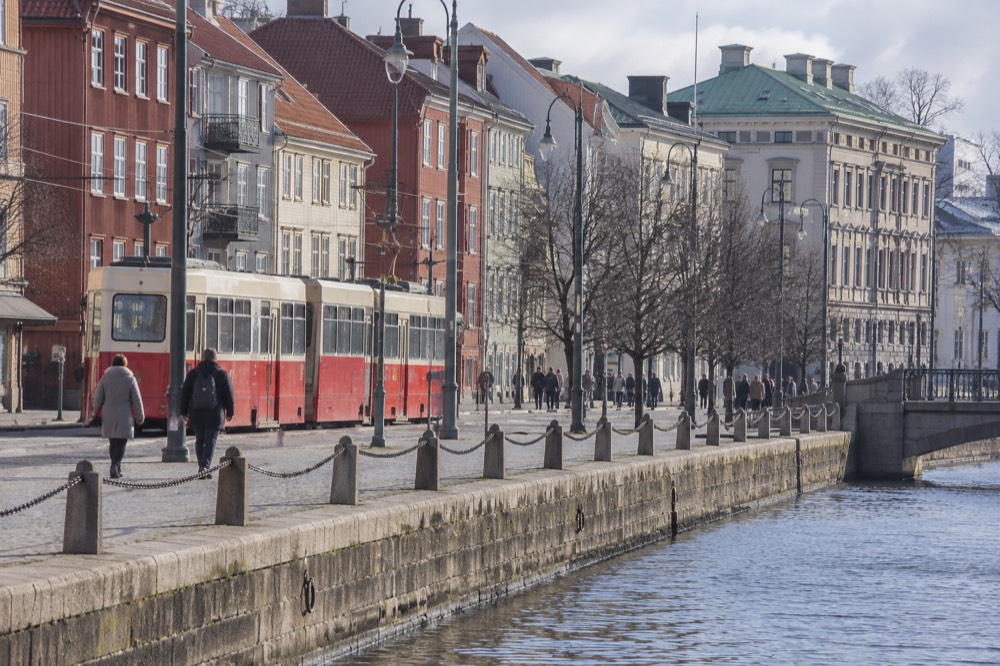
Gothenburg recorded over 6 million commercial guest nights in 2025, a record year with the strongest growth of any Swedish destination, according to Göteborg & Co's own January 2026 figures. That is the measurable version of a question people keep asking in plainer language: is this city actually worth the trip? The city sits at the mouth of the Göta älv where the river meets the Kattegat, Sweden's second-largest city at 613,274 residents, laid out by Dutch engineers inside a moat and still shaped by that plan. It is a working port with a car-free archipelago inside its own transport zone, a tram network that carried 126 million journeys in 2025, and a reputation it does not entirely deserve. This page works through what the city genuinely offers, what it does not, and who should spend their days and money here.
What Does Gothenburg Actually Have That Other Cities Do Not?
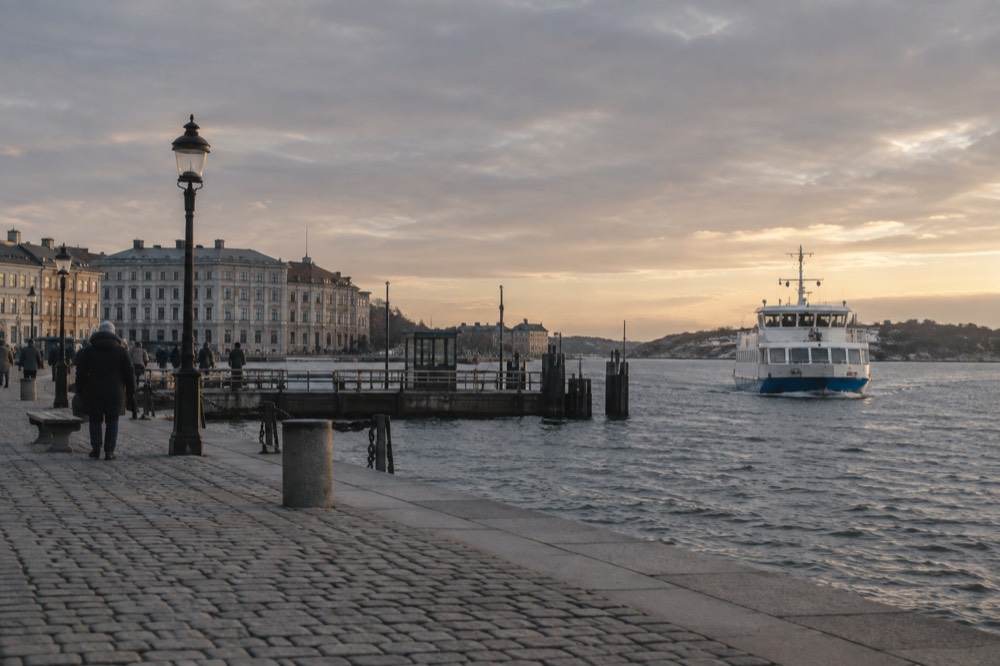
Gothenburg's single most distinctive asset is that a car-free island archipelago, with ferries from Saltholmen to Asperö, Brännö, Styrsö, Donsö, Vrångö and Köpstadsö, sits inside the city's own Västtrafik Zone A, so one ordinary 125 kr 24-hour ticket covers the tram to the quay and the boat out to sea. No other Scandinavian city folds a populated archipelago into its commuter fare system this way, and the islands ban private cars outright, per Göteborgs Stad's own planning documents.
That fact deserves a slow read, because it reframes the whole trip. The southern archipelago is not an excursion you book and pay for separately. It is a district of the city, reached the same way you reach anything else, by tapping a ticket you would have bought anyway. Västtrafik's own zone map shows the ferry lines drawn in as part of the network, and the city's study of the southern skärgård states plainly that the islands are protected from car traffic, with only taxi and emergency vehicles on the roads.
The second thing is the tram network itself. Göteborgs Spårvägar's annual report describes 12 lines, 134 stops and 188 kilometres of single track running from Mölndal in the south to Angered in the north, from Saltholmen in the west to Kålltorp in the east and across the bridge to Hisingen. Those figures are from the 2022 report, but the shape of the network is unchanged, and it means a visitor rarely needs anything but a day ticket and a sense of which line goes where. The 2025 figure of 126 million journeys tells you the trams are not a heritage toy; they are the way the city moves.
The third is harder to photograph but easy to feel after a day: the city reads as Nordic maritime rather than Nordic picturesque. Granite, red brick, painted wooden landshövdingehus, shipyard cranes at Lindholmen, grey sea light. It is not Stockholm's postcard, and the people who love Gothenburg tend to love it for exactly that reason. If you want to understand what the city is known for beyond the postcard clichés, the what is Gothenburg known for page breaks it down further.
If you are weighing it against the capital, there is also a fair comparison to be made, and the Stockholm-versus-Gothenburg question deserves its own honest treatment, which it gets further down this page.
Is Gothenburg Worth Visiting Compared with Stockholm?
Gothenburg is worth visiting as a destination in its own right rather than as a Stockholm substitute. Stockholm has the built grandeur and the museum density, while Gothenburg has the archipelago inside the fare zone, a more compact walkable core, noticeably calmer streets and generally kinder prices on food and drink. Neither city wins outright: a visitor who wants palaces and old-town drama picks Stockholm, and a visitor who wants sea, trams and an unhurried food city picks Gothenburg.
Many people do both by train in one trip, and the roughly three-hour rail link makes that easy. The size difference matters more than the guidebooks admit. Gothenburg's core, from Järntorget through Haga to Avenyn and Götaplatsen, is walkable end to end in under an hour, and the tram fills every gap. Stockholm's spread across fourteen islands means more transit time between the things you came to see. For a short visit, two or three days, Gothenburg's compactness is a real advantage: you spend your time in places rather than between them.
The cultural comparison is where Stockholm pulls ahead on paper. Göteborgs konstmuseum is a serious collection, around 70,000 works drawing roughly 250,000 visitors a year, but the museum's own site states it closes in 2028 and reopens in 2032 for a rebuild, with intermittent blasting near the building already flagged for sensitive visitors. Anyone planning a museum-heavy trip around 2028 or later needs to know that now.
What Gothenburg keeps, Stockholm cannot copy: the western coast. The Kattegat, the Bohuslän granite islands to the north, Marstrand's island fortress within a day trip. The sea is not decoration here, it is the reason the city exists, and the city's Scottish and English trade history, the root of its Little London nickname, explains much of its whole character.
What Are the Downsides of Gothenburg?
The honest downsides are the weather reputation, the winter daylight, the alcohol prices and the fact that the biggest attraction keeps odd hours: Liseberg is closed from late December to mid-April, rain falls on about 127 days a year, and on 21 December the sun is up for just 6 hours 32 minutes against 18 hours 06 minutes in June. None of these are dealbreakers, but a visitor who arrives in February expecting a lively amusement park and long evenings will be disappointed on both counts.
Start with the rain, because the city's reputation is worse than the data. SMHI's 1991-2020 normals for station Göteborg A show 912 mm of precipitation across 127.3 days with at least 1 mm, which is about one day in three, not a permanent drizzle. October is the wettest month at 102.9 mm and April the driest at 51.3 mm, so the rain arrives after the tourists leave and spring is the dry window. And the most repeated claim about the city, that it is Sweden's rainiest, is one SMHI does not make: the institute's own text puts the national maxima in the western highlands and the mountains, not in the city.
The daylight swing is the thing visitors from southern latitudes genuinely underestimate. The US Naval Observatory's figures for the city give 6 hours 32 minutes of daylight on 21 December and 18 hours 06 minutes on 21 June, a swing of over 11 and a half hours. In June, civil twilight runs from 02:58 to 23:30 local time, leaving roughly three and a half hours of true night. In December the grey light barely lasts eight hours. This is not a flaw, it is a latitude, but it should shape when you go, and the best time to visit Gothenburg question deserves its own answer.
Then there is Liseberg's calendar, which catches out a remarkable number of people. The park's own pages list summer 2026 as 18 April to 20 September, Halloween 2 October to 1 November, and the Christmas market 14 November to 23 December, which means the park is shut for the entire first third of the year apart from winter weekend openings in the Kaninlandet children's area. The question of whether Liseberg is worth visiting is asked often enough that the answer has its own page on this site.
The alcohol rules are a smaller but real cost of the Swedish model. Under Alkohollag (2010:1622), beer above 3.5% ABV, all wine and all spirits are sold only through Systembolaget, the state monopoly, so a supermarket beer is a 3.5% reformulation of the brand you thought you were buying. Restaurant and bar prices reflect the same system. The is Gothenburg cheap or expensive question covers the full budget picture.
How Many Days Do You Need in Gothenburg?
Two days is enough to see the core and touch the archipelago, three days is the comfortable answer, and four or five lets you add a Bohuslän or Marstrand day trip without rushing. In two days you can cover Haga, the canal, one museum and one island; in three you can do all of that properly plus Liseberg in season. The city's compactness and the flat fare zone mean the constraint is your energy, not your transport budget.
A 125 kr 24-hour Zone A ticket covers trams and ferries alike, which is why the days stack up so generously. The arithmetic works because the city stacks its sights along a few corridors. Day one: the old town inside the moat, Feskekôrka, the canal and the Haga wooden quarter, all walkable and all on one tram line's worth of detours. Feskekôrka itself, the fish-church-shaped market hall, reopened in 2024 as a food hall with two fish counters and five restaurants, no longer the fish-counter-only building older guides describe. Day two: tram to Saltholmen, ferry to Brännö or Styrsö or Vrångö, an afternoon of granite paths and sea air, back for dinner.
Day three is where the options open. Liseberg in summer season, Universeum with the kids, or a proper day trip: Marstrand's island fortress, the Bohuslän coast at Smögen and Fjällbacka, or the locks at Trollhättan. All of those are covered on this site, and the how many days in Gothenburg is enough question has a fuller itinerary breakdown.
A rough shape of how the days divide up:
| Days | What fits comfortably | What you would skip |
|---|---|---|
| 1 | Old town, Haga, canal cruise, Feskekôrka | Archipelago, museums beyond one |
| 2 | Add one archipelago island and Slottsskogen | Day trips, Liseberg |
| 3 | Add Liseberg in season or Universeum | Bohuslän day trip |
| 4-5 | Add Marstrand or the Bohuslän coast | Nothing much |
The pattern to notice: the first two days are city days and the third is where you choose between the amusement park and the coast. That choice is the real fork in a Gothenburg trip, and it is worth making before you book rather than on the ground.
Is the Gothenburg Archipelago Really Worth the Ferry Ride?
Yes, and it is the part of a Gothenburg trip most likely to outlast the city itself in memory, because the southern islands are car-free, included in the ordinary Zone A fare, and genuinely inhabited year-round rather than staged for visitors.
Vrångö, Brännö and Styrsö have villages, footpaths and swimming spots, and the sea peaks at 18.6 C in August, with September water at 16.7 C actually warmer than June water at 16.2 C, which surprises nearly everyone who books a summer trip and skips an autumn one.
That sea temperature data comes from SMHI's own oceanographic archive at the Vinga lighthouse station, 61,749 quality-controlled hourly observations, and it inverts the usual planning instinct. The air peaks in July at 18.3 C, but the water peaks a month later, so the best swimming month in the archipelago is August, and a September dip is warmer than a June one. February, not January, is the coldest month in the water at 2.7 C, with a record low of -1.2 C, legitimately below zero because brackish Kattegat water does not freeze at 0.
The islands themselves are ordinary places in the best sense. Brännö has a village shop and footpaths across heathland, Styrsö has a small year-round community, Vrångö is the quietest and southernmost of the main served islands. The is it worth visiting Gothenburg archipelago question has a dedicated answer, but the short version is that a day trip is not just possible, it is the default way locals do it.
One planning note that saves real money: because the ferries are Västtrafik lines in Zone A, the 24-hour ticket at 125 kr covers the tram to Saltholmen and every ferry crossing. There is no separate island fare and no booking, you simply board. The ferry is not free, but it is covered by a ticket you likely already hold.
Is Gothenburg Good for Food?
Gothenburg is one of the strongest food cities in the Nordics for its size, built on west-coast seafood, a serious fika culture and a dense cluster of neighbourhood restaurants, and the city's seafood reputation is earned rather than marketed: shrimp sandwiches, oyster safaris on the Bohuslän coast and the reopened Feskekôrka food hall are the visible end of a supply chain that runs through the harbour a tram ride from the centre. A food-focused visitor will not run out of places to eat in three days.
The seafood is the headline. The city sits on the Kattegat with Bohuslän, one of the world's best oyster and shrimp waters, up the coast, and the restaurant scene draws on it directly. The what food is Gothenburg famous for page covers the specifics, from räkmacka, the shrimp sandwich, to the city's take on surströmming avoidance, which is to say, nobody here pushes it on you.
Fika, the coffee-and-cake break, is the other half of the food culture and it is not optional social decoration. It happens twice a day in most workplaces, and the city's cafés are built for it. The what does fika mean in Sweden question has a full answer, but the practical version for a visitor is simple: budget for a pastry stop mid-morning and mid-afternoon, because everyone else will be having one and the cinnamon buns are genuinely good.
The cost is the caveat, and it is a Swedish caveat rather than a Gothenburg one. Restaurant mains and bar beers carry Scandinavian prices, and the alcohol monopoly shapes what you can buy and where. But the gap between Gothenburg and the other Nordic capitals runs in the visitor's favour at the mid-market level: neighbourhood bistros and wine bars here cost noticeably less than their Stockholm equivalents for the same standard, which is part of why the food scene punches above the city's size.
Who Should Skip Gothenburg?
Gothenburg is the wrong choice for a visitor who wants grand imperial architecture, a dense cluster of world-famous museums or guaranteed warm summer weather, and it is a poor choice for anyone arriving between late December and mid-April expecting Liseberg and long days, because the park is shut and daylight bottoms out at 6 hours 32 minutes. It is also a frustrating city for someone who wants to drive everywhere, since the archipelago bans cars and the tram network makes one unnecessary.
If your Nordic trip is built around palaces and picture-postcard old towns, Stockholm or Copenhagen will serve you better. That is not a knock on the city, it is a match question. The visitor who arrives expecting Amsterdam or Prague will find a smaller, greyer, more working-class beauty, and some people never warm to it. The visitor who arrives expecting Stockholm will find a city that is more liveable than spectacular, and the comparison is genuinely close.
The winter question deserves its own honesty. The city in December has a good Christmas market at Liseberg and cosy fika light, but the sea is 5.5 C and the days are short. The answer for Christmas is broadly yes, for the market and the atmosphere, but a February visit is a different proposition and the city's winter temperature numbers are on record elsewhere on this site.
For everyone else, the match is good. Families, thanks to Universeum, open every day of the year, and Liseberg in season. Food travellers. Anyone who likes islands without cars. Anyone on a Copenhagen or Oslo loop, since the city sits on the rail line between them and the train from Gothenburg to Stockholm takes about three hours. For the practical basics, English everywhere, safe streets, easy transport, the city scores well.
The Verdict: Should You Go?
Gothenburg is worth visiting for most travellers who want a real, liveable Nordic city rather than a highlight reel, and the strongest trips are three to four days between May and September, combining the walkable centre, one or two archipelago islands on the ordinary tram-and-ferry ticket, and either Liseberg in season or a Bohuslän day trip. It is not worth flying across Europe for the museums alone, and it is a poor winter city-break choice for anyone who needs long days.
As a second Scandinavian city on a longer trip, it is close to ideal, and Gothenburg Travel Guide exists because the city rewards that kind of unhurried trip more than most. The site's own recommendation, for what a recommendation from a desk that reports rather than visits is worth: build the trip around the sea. The city's best hours are the ones with water in them, whether that is the canal in the centre, the harbour from a boat, or the islands at the end of the ferry line. Everything else, the food, the museums, the neighbourhoods, sits within a tram ride of that spine.
Common Questions About Visiting Gothenburg in Sweden
Is Gothenburg in Sweden worth visiting?
Yes for most travellers. The city offers a car-free archipelago inside its ordinary transport fare zone, a walkable historic core, a strong seafood and fika culture, and noticeably calmer streets than Stockholm. It is weaker on grand architecture and world-famous museums, and winter visits trade long days for cosiness.
Is Gothenburg better than Stockholm?
Neither is better outright. Stockholm has the grandeur, the island old town and the museum density; Gothenburg has the archipelago in the fare zone, a more compact centre, calmer streets and kinder mid-market prices. Many visitors do both, connected by a roughly three-hour train.
How many days do you need in Gothenburg?
Two days covers the centre and one island, three days is comfortable and adds Liseberg in season or a museum day, and four to five lets you add a Bohuslän or Marstrand day trip without rushing.
What is the best time of year to visit Gothenburg?
May through September. The sea is warmest in August at 18.6 C, September water is warmer than June water, and April is statistically the driest month. Avoid late December to mid-April if you want Liseberg and long days, since the park is closed and daylight drops to under seven hours.
Is Gothenburg expensive to visit?
It is a Scandinavian city with Scandinavian prices, but it generally costs less than Stockholm at the mid-market level for food and drink. A 24-hour transport ticket is 125 kr and covers trams and archipelago ferries, which keeps the transport budget unusually low for a city with this much coastline.
Do people in Gothenburg speak English?
Yes, widely and well. English is spoken routinely in cafés, museums, transport and shops, and a visitor can manage the entire city without Swedish, though a few local words, especially fika, are worth knowing.