What Language Is Spoken in Gothenburg, Sweden?
Swedish is the official language of Gothenburg, Sweden, but English is spoken almost everywhere a visitor goes. Here is what to expect on trams, in museums, restaurants and shops.
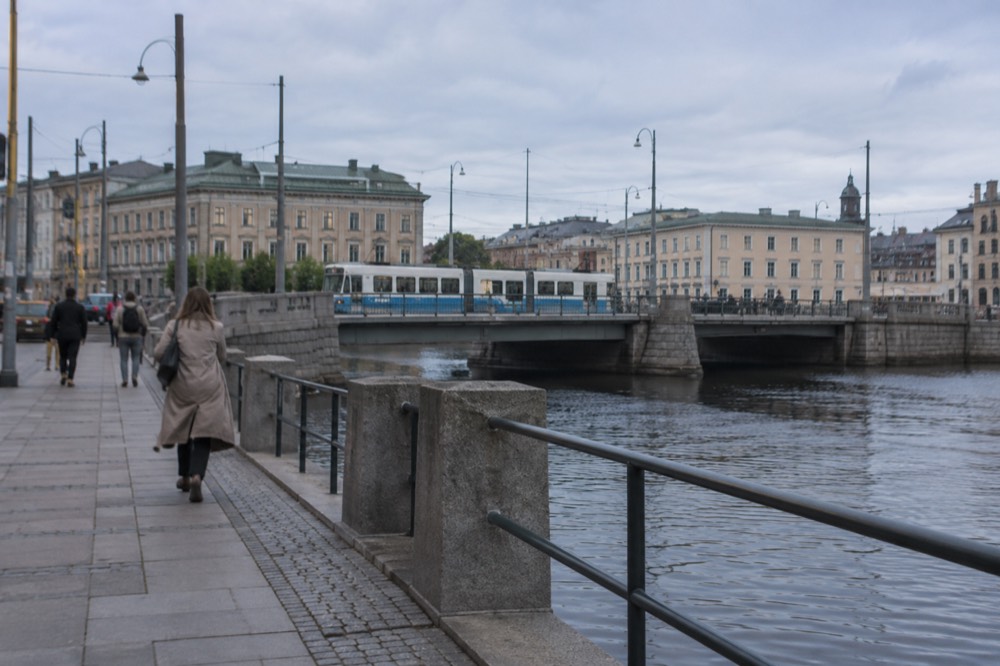
What Language Is Spoken in Gothenburg, Sweden?
The official language of Gothenburg, Sweden, is Swedish. That is the simple answer, and it is the one that matters for signage, official forms and the announcements on the tram. The more useful answer for a visitor is that almost everyone you will actually interact with, from hotel staff to baristas to museum guards, also speaks English, and speaks it well. Sweden consistently ranks among the highest countries in the world for English proficiency as a second language, and Gothenburg, a port city built on trade, is no exception.
Gothenburg, Sweden, should not be confused with Gothenburg, Nebraska, a small American town that shares the name and where the language of daily life is of course English. This page is about the Swedish city at the mouth of the Göta älv, where the language of daily life is Swedish and the language of nearly every tourist interaction is English.
Is Swedish the Official Language of Gothenburg?
Yes, Swedish is the official and overwhelmingly dominant language of Gothenburg, Sweden. It is the language of government, schooling, signage and daily life, and it is the first language of the large majority of the city's 613,274 residents. Swedish is the main language of Sweden in law, and Gothenburg, as Sweden's second city, is entirely a Swedish-language city at street level.
Swedish is a North Germanic language, closely related to Norwegian and Danish, and a distant cousin of English and German. If you read German or Dutch you will recognise scattered vocabulary, and if you read nothing but English you will still decode a surprising amount of printed Swedish: "gata" is street, "station" is station, "museum" is museum. Göteborgs Stad, the municipal authority, publishes everything from planning documents to parking rules in Swedish first, with English translations for the main visitor-facing pages.
The city's own character shapes how the language sounds here. Gothenburg grew as a trading port, and its population historically included large Scottish, German, Dutch and English merchant communities, which is part of why the city is nicknamed Little London. That history is covered in why Gothenburg is called Little London. The local accent, göteborgska, is famously sing-song and faster than Stockholm Swedish, and Swedes from other cities claim they can spot a Gothenburger within a sentence.
One practical note: the city's name itself exists in two forms. Gothenburg is the established English name, Göteborg is the Swedish name, and both refer to exactly the same place, which is explained in are Gothenburg and Göteborg the same?. Signage will say Göteborg; your hotel booking may say Gothenburg; nobody will be confused.
Can You Get by in Gothenburg with Only English?
Yes, comfortably. English is spoken by the large majority of Gothenburgers, taught from early primary school, used in universities and required in much of the city's trade and tech workforce. A visitor with no Swedish at all can buy tickets, order food, ask directions and take guided tours entirely in English. Menus, museum labels and public transport announcements routinely include English translations.
The reason is structural, not just courtesy. English is a compulsory school subject in Sweden from around age seven or earlier, and much of Swedish higher education, including much of what is taught at the University of Gothenburg and Chalmers, runs partly in English. Sweden's export economy means working adults use English daily. Göteborg & Co's own reporting shows international guest nights in the city rose about 15 percent in 2025, with Norway, Denmark, Germany, the UK and the US all growing, and the city's tourism infrastructure is built to receive those visitors in their own languages or in English.
Where English is reliably available:
| Situation | English availability | What to expect |
|---|---|---|
| Hotels and hostels | Universal | Staff switch to English on hearing your first word |
| Restaurants and cafes | Near-universal | Menus often have English versions; ask and they appear |
| Trams and buses (Västtrafik) | Good | Machines and app have English settings; driver announcements are Swedish |
| Museums and attractions | Very good | Liseberg, Universeum and World of Volvo all have English signage and audio |
| Guided tours | Very good | Most commercial tours run in English; check the listing language before booking |
| Supermarkets and shops | Good | Self-checkouts have English menus; staff speak English on request |
| Systembolaget | Good | Staff routinely help in English, and the selection is labelled in English too |
The honest gaps are small. Emergency-line operators handle English but the recorded menus are Swedish. Older residents in the outer suburbs sometimes prefer Swedish, though they almost always manage. And a handful of the city's free walking tours run in other languages: the GuruWalk free tours of Gothenburg include walks in English and at least one in Spanish only, so an English speaker should check the listed language before showing up rather than assuming every free tour is in English.
If you want to hear the city explained in English while you ride rather than read, the commercial sightseeing options are built for exactly that. The amphibious bus, the canal cruise and the archipelago boat all run with English commentary as standard, which makes them useful even if you never learn a word of Swedish.
Do People in Gothenburg Prefer English or Swedish?
Most Gothenburgers will answer in English the moment they detect hesitation in your Swedish, and many switch before you have finished a sentence. This is efficiency, not rudeness: their English is faster than your Swedish. If you want to practise Swedish, say so explicitly, because otherwise the conversation will slide into English within seconds and stay there.
This is the single most common language experience visitors report from Sweden, and it is worth knowing in advance so it does not feel like a rebuff. A Swede who hears "hej, jag vill..." followed by a pause has already decided that English will finish the transaction sooner. Say "kan vi prata svenska, jag övar" (can we speak Swedish, I'm practising) and nearly everyone will play along happily.
The switch also runs the other way. On the archipelago ferries from Saltholmen, in the second-hand shops of Majorna, or at a fika counter, the ambient language is unbroken Swedish, and you will hear it in its natural habitat. The islands are ordinary parts of the city, not day trips, reached on a regular Västtrafik ticket, and they are where the city's language sounds least like a tourist product. The Gothenburg archipelago is worth the crossing for the atmosphere alone, whatever language it comes in.
A few Swedish words earn their keep. Hej (hey) is hello and works for everyone. Tack (tack) is thank you. Ursäkta (oor-seck-ta) is excuse me. Hej då is goodbye. That is genuinely the working minimum, and Swedes do not expect more from a short-stay visitor. If you want to go deeper, the numbers on bus stops and the words on tram doors (öppnar, stänger) start decoding themselves quickly.
What Is the Göteborgska Dialect?
Göteborgska is the western Swedish dialect spoken in Gothenburg, and it is one of the country's most recognisable accents: sing-song, quick, with a characteristic rising intonation and a few local words that puzzle Stockholmers. It is fully standard Swedish in grammar and vocabulary, so a learner's textbook Swedish will be understood in Gothenburg without adjustment.
The accent's signature is its melody. Swedish is a pitch-accent language, and the Gothenburg version stretches and bounces those tones in a way that other Swedes imitate with affection and slight mockery. Local vocabulary includes bock (a term of address, roughly "mate") and hamnbo (harbour dweller), and the dialect carries the city's working harbour history in its sound. Göteborgs Spårvägar, the city's tram company, employs around 1,400 staff across more than 100 roles, and the tram network carried 126 million journeys in 2025, which means the accent you will hear most often in Gothenburg is the one over the tram's public-address system.
Immigrant languages are also part of the city's soundscape. Sweden takes in substantial numbers of new residents annually, and Gothenburg, like all major Swedish cities, has large communities speaking Arabic, Somali, Persian, Polish, Finnish and others. Finnish has a particular historical standing: it is an official minority language in Sweden, as are Sami, Meänkieli, Romani Chib and Yiddish, and municipal services in Gothenburg provide interpretation across these and more. In practice this means the city is used to multilingual daily life, and service staff default to whichever shared language works fastest, which for a visitor is usually English.
Is Swedish Hard for English Speakers?
Swedish is generally considered one of the easier languages for English speakers, classified alongside Norwegian and Danish in the easiest category for English-native learners. Basic tourist Swedish, greetings, numbers, food words, can be functional within days. However, pronunciation, especially the pitch accent and the sounds å, ä and ö, takes longer, and nobody in Gothenburg expects you to attempt it.
The difficulty groupings place Swedish in the same band as Dutch and the Romance languages for English speakers: cognates are everywhere, the grammar has no case system to speak of, and word order is broadly familiar. The hard parts are the tones, which change word meanings in ways English never does, and the vowels. Feskekôrka, the fish-church food hall that reopened in 2024 with five restaurants inside, is a fair pronunciation test: the ô is its own letter, and getting it right marks you as someone who has been paying attention.
You will see å, ä and ö constantly on Gothenburg signage: Saltholmen, Brännö, Vrångö, Öckerö, Långedrag. They are ordinary letters, not accents or decoration, and each is a distinct sound. Reading them correctly is optional for a visitor. Recognising them as letters rather than misprinted a's and o's is the useful part, because it means place names stop looking like typos and start looking like words.
If the language question is part of a broader "is this city for me" calculation, the practical summary is that Gothenburg is one of the least language-challenging cities in Europe for an English-only visitor. The same goes for the rest of the practical picture covered in what Gothenburg is known for, which runs through the harbour, the archipelago and the food the city is famous for.
Will Tram Announcements and Signs Be in English?
On Västtrafik trams and buses, spoken announcements and most printed signage are in Swedish, but the Västtrafik To Go app, ticket machines and the website all have full English interfaces, and every stop is displayed visually so you never need to understand an announcement to know where you are. The system is fully usable by a non-Swedish speaker.
This matters because the tram is the backbone of the city. Twelve lines and 188 kilometres of single track, per Göteborgs Spårvägar's 2022 annual report, run from Mölndal in the south to Angered in the north and out to Saltholmen in the west, the archipelago ferry terminal. A single Zone A adult ticket costs 38 kr, and a 24-hour Zone A ticket costs 125 kr, per Västtrafik's Zone A ticket page, and that same 24-hour ticket covers the archipelago ferries too, because the islands sit inside Zone A. None of this requires Swedish: buy in the app in English, board, and watch the screen.
The app is the recommended route for visitors precisely because it removes the language layer. Ticket machines also offer English menus. The only genuinely Swedish-only elements are the driver's announcements and some older paper notices, and the visual displays carry the information those announcements repeat. Payment is by card or app; there are no cash fares, and nobody taps out, which removes another interaction where language could otherwise slow you down.
Do You Need Any Swedish at All for Restaurants, Museums and Liseberg?
No Swedish is needed at any of Gothenburg's major attractions. Liseberg, Universeum, World of Volvo and Göteborgs konstmuseum all provide English signage, maps and assistance, and restaurant staff across the city switch to English by default with visitors. The only language requirement you will actually encounter is checking which language a guided tour or event runs in before you book.
Liseberg, the amusement park that drew roughly 2.5 million park guests in 2025 per Liseberg AB's annual report, operates with Swedish signage but English-speaking staff and English park maps; its tickets are bought online or at machines with English menus, and entry from 95 kr buys no rides, so the ticket purchase is the one part worth doing carefully. Universeum, the science centre open every day of the year, prices admission dynamically and books by time slot, all through an English-language online flow. World of Volvo, which replaced the Volvo Museum after the Arendal museum closed permanently in December 2023, sells exhibition tickets from 120 SEK online with an English site throughout.
Restaurants follow the same pattern. In the food halls, at Feskekôrka's counters, and along the Linné strip, menus either carry English versions or the staff will talk you through them. The Swedish custom of fika, the coffee-and-cake pause, is explained in what fika means in Sweden, and ordering one requires no Swedish beyond pointing and tack.
One genuinely Swedish-language area is alcohol retail, not because of language but because of law. Beer above 3.5 percent ABV, plus all wine and spirits, is sold only through Systembolaget, the state monopoly, under Alkohollag (2010:1622). The stores' staff serve in English without difficulty; the thing to know is the rule, not the words.
Common Questions About Language in Gothenburg
What language is spoken in Gothenburg?
Swedish. It is the official language of Sweden and the language of daily life, government and signage in Gothenburg. English is very widely spoken as a second language, so visitors rarely need Swedish.
Is English widely spoken in Gothenburg?
Yes. English is taught from early primary school and used throughout Sweden's working life. Hotel staff, restaurant workers, shop staff and museum employees in Gothenburg almost all speak English fluently and will switch to it as soon as they hear a visitor.
Do I need to speak Swedish to visit Gothenburg?
No. A visitor with English only can handle tickets, transport, food, museums and tours without difficulty. A handful of words like hej and tack are appreciated but never expected.
What is the difference between Gothenburg and Göteborg?
None in meaning. Göteborg is the Swedish name of the city, Gothenburg is the established English name. Both refer to the same place on Sweden's west coast.
What dialect do people from Gothenburg speak?
Göteborgska, the western Swedish accent, known for its sing-song intonation and a few local words. It is standard Swedish in grammar and vocabulary, so textbook Swedish works fine in the city.
Are tram and bus announcements in English in Gothenburg?
Spoken announcements are in Swedish, but every tram and bus has visual stop displays, and the Västtrafik app and ticket machines have full English menus, so the system is easy to use without Swedish.
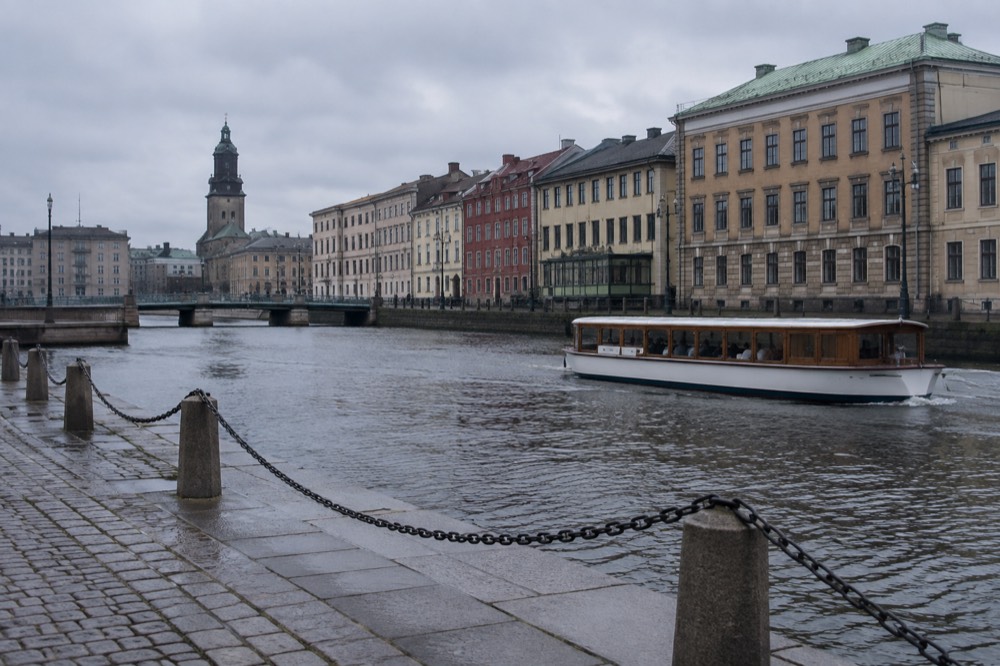
The short version: Gothenburg speaks Swedish, answers in English, and does not require you to know either one beyond a greeting. Learn hej and tack, download the Västtrafik app, check the language on any tour listing before you book, and the language question stops being a question at all. For more on what the city is actually like, Gothenburg Travel Guide runs through the harbour, the islands and the food, and the honest assessment in is Gothenburg in Sweden worth visiting? covers whether the trip earns its place on your list.