Which City Is More Beautiful: Stockholm or Gothenburg, Sweden?
Stockholm or Gothenburg, which Swedish city is more beautiful? An honest comparison of architecture, water, light, islands and atmosphere, with the facts that actually decide it.
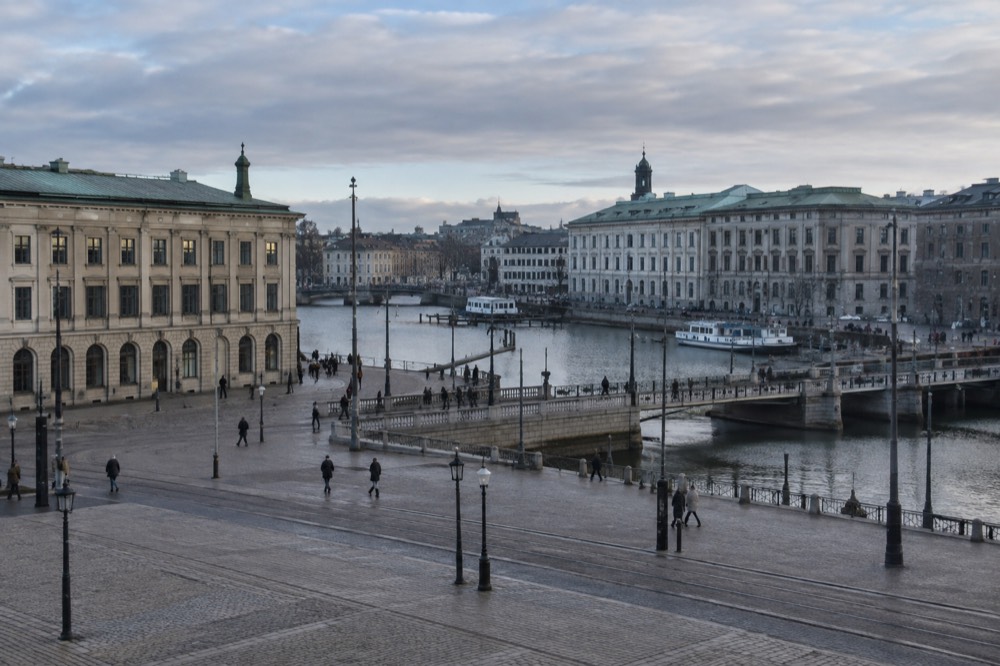
Stockholm is built on fourteen islands where Lake Mälaren meets the Baltic, and its old town, Gamla Stan, is one of the best-preserved historic cores in Northern Europe. Gothenburg sits at the mouth of the Göta älv where the river meets the Kattegat, laid out by Dutch engineers inside a moat, and its skyline is shipyard cranes, granite and painted wooden houses rather than palace facades. Both cities are water cities. Only one of them is a capital, and that single fact shapes almost everything people say about which is more beautiful.
The comparison is worth doing properly because the lazy version, "Stockholm obviously", is not what the geography actually shows. Gothenburg's southern archipelago, the islands of Styrsö, Brännö, Vrångö, Donsö and their neighbours, is car-free and sits inside the city's own Västtrafik Zone A, reached by tram and ferry on an ordinary ticket. That is a kind of beauty Stockholm cannot match at any price, because Stockholm's equivalent archipelago is a separate region with separate fares. The trade runs the other way too: Stockholm has the royal palace, the Vasa Museum and a skyline that has been painted for four centuries. Gothenburg has working harbours, red brick and grey sea light.
Which City Has the More Beautiful Old Town: Stockholm or Gothenburg?
Stockholm wins the old-town comparison clearly. Gamla Stan is a genuine medieval street plan on an island, with the Royal Palace, Storkyrkan and cobbled lanes centuries older than anything standing in Gothenburg, while Gothenburg's oldest surviving quarter, Haga, is a 19th-century wooden-worker's district and the city's 17th-century Dutch core survives mainly as a street grid, not as a streetscape of old buildings. Gothenburg was founded as a fortified trading town and rebuilt repeatedly after fires, so what stands today inside and around the old moat is mostly 18th and 19th century. That is not ugly, but it is not Gamla Stan, and no honest comparison pretends otherwise.
What Gothenburg does have, and what most first-time visitors underestimate, is a coherent single style across whole districts. The landshövdingehus, the city's signature building type, puts one storey of stone under two storeys of wood, and it lines street after street in Majorna, Linné and Masthugget. Stockholm has nothing equivalent. Its beauty is monumental and concentrated, Gothenburg's is textured and spread out, and the question of which you prefer is genuinely a matter of taste rather than a ranking. A visitor who loves painted wooden facades, second-hand shop windows and granite outcrops between the houses will find Gothenburg's western districts more photogenic than a palace square.
The honest framing is this: Stockholm photographs better from a distance, Gothenburg rewards walking slowly. Gamla Stan at 11am in July is one of the most crowded streetscapes in Scandinavia, while Haga's wooden lanes and the hilltop view from Skansen Kronan stay comparatively calm even in peak season. If "beautiful" includes "beautiful to stand in", the gap narrows a lot. The Haga old town walking tour covers the wooden quarter in about ninety minutes, which is roughly the time Gamla Stan takes just to walk through at summer pace. Anyone wanting the fuller case for the western city can start with what Gothenburg is known for, which is mostly a list of exactly these textures.
Which City Has Better Water and Islands?
Gothenburg wins the water comparison on one specific, verifiable point: its southern archipelago is part of the city itself, car-free, and covered by the same Zone A ticket as the trams, so a 125 kr 24-hour ticket covers the tram to Saltholmen, the ferry, and every island, while Stockholm's archipelago is a separate destination with separate operators and fares. Västtrafik's own network map shows the archipelago boats carrying ordinary line numbers out of Saltholmen, and Göteborgs Stad's own study states the islands are "fredade från biltrafik", protected from car traffic. Stockholm's inner-city water is more grand, but its swimmable islands are further away.
Stockholm's water beauty is urban and framed: the Riddarfjärden panorama, the boats passing Gamla Stan, the light on Strömmen. It is beautiful the way a painting is beautiful. Gothenburg's water beauty is wilder and starts where the city ends. The southern islands have granite slabs, painted ferry sheds, sheep on Vrångö and a horizon of open Kattegat. The sea itself behaves differently too, and the SMHI data from the Vinga station shows the water around Gothenburg peaks at 18.6 C in August, not July, and that September water at 16.7 C is warmer than June water at 16.2 C. Stockholm's archipelago water warms later and stays colder through the season.
| Month | Mean sea temp off Gothenburg (Vinga) | What it means for a visit |
|---|---|---|
| February | 2.7 C | Coldest month of the year in the water |
| June | 16.2 C | Colder than September, despite the light |
| July | 18.3 C | Air is warm, water still climbing |
| August | 18.6 C | The actual peak, six weeks behind the air |
| September | 16.7 C | Warmer than June, and the islands are quiet |
That table is the kind of fact that quietly decides a beauty contest. A visitor who books June for the midnight light gets the grey-green sea of early summer; a visitor who books September gets warmer water, empty ferry decks and the same low coastal light. The sea runs about six weeks behind the air, and SMHI's own oceanographic archive from the Vinga lighthouse station is the source for every figure above.
For a visitor deciding between the cities, the practical difference matters as much as the aesthetic one. In Gothenburg the archipelago is a tram ride: the Saltholmen ferry terminal is the western terminus of the tram network, so the boat is effectively an extension of the city's own transport. In Stockholm the archipelago is a day trip you plan, with separate companies and separate pricing. The question of whether the Gothenburg archipelago is worth visiting is, for most people who like coastal landscape, yes without much hesitation, and the islands are the single strongest card Gothenburg holds in this comparison.
Which City Has More Beautiful Light and Sky?
Gothenburg has the better sky, and this is measurable rather than a matter of taste: both cities sit far north with the same brutal winter daylight, but Gothenburg's coastal position on the Kattegat gives it open western horizons, sea light and the cloud-and-sun breaks that painters have chased for 150 years, while Stockholm's light is filtered through a more sheltered inland basin. The US Naval Observatory data for Gothenburg shows 6 hours 32 minutes of daylight on 21 December against 18 hours 06 minutes on 21 June, a swing of over eleven and a half hours. Stockholm's swing is similar in scale. What differs is what the light lands on.
The famous "Gothenburg light" is a real thing in Swedish painting and photography: low sun under cloud banks, granite going pink, and the grey-green Kattegat throwing colour back onto painted wood. Stockholm in high summer has its own famous effect, the near-white nights, but its winter light is famously flat. Gothenburg's October is wetter, 102.9 mm on the SMHI 1991-2020 normals against April's 51.3 mm, and the wet days are exactly when the light breaks through in the way the postcards of the Bohuslän granite coastline are built on. A photographer choosing between the cities for landscape work will usually choose west.
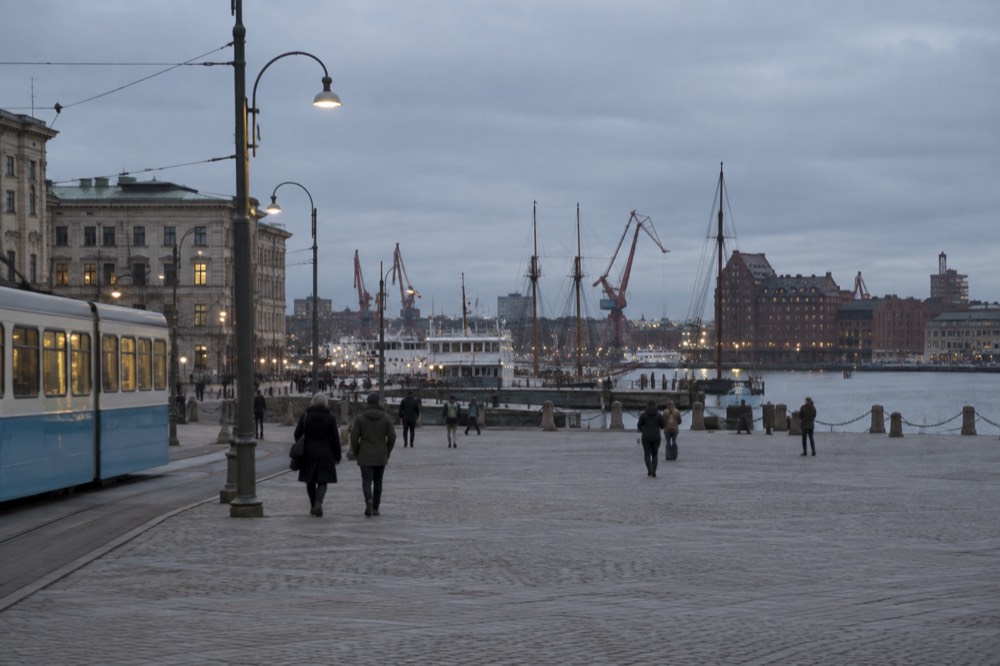
Neither city is the rainy caricature Sweden's reputation suggests, and Gothenburg in particular has been badly served by a myth. SMHI's own data shows 912 mm of precipitation a year across about 127 wet days, roughly one day in three, and SMHI does not identify Gothenburg as Sweden's rainiest city; the national maxima are in the western highlands and the mountains, as SMHI's own description of the 1991-2020 normals states. Anyone weighing the two cities on weather should start with the best time to visit Gothenburg rather than the folklore.
Which City Is More Beautiful for Architecture and Grand Set Pieces?
Stockholm wins the set-piece comparison. It has the Royal Palace, the buildings of Gamla Stan, City Hall's tower over Riddarfjärden, the Vasa Museum and Djurgården's parkland, a concentration of monumental architecture Gothenburg simply does not possess, while Gothenburg's strongest set pieces, Götaplatsen with the art museum, the Avenyn boulevard and the stone core around the cathedral, are handsome but provincial in scale. This is the comparison where Stockholm's status as a centuries-old capital is simply decisive. No amount of Gothenburg charm turns Vasastan's stone streets into City Hall.
But Gothenburg's architectural interest is different in kind, not just smaller in degree. The city mixes 17th-century Dutch planning, the landshövdingehus wooden style, red brick industrial architecture from its shipyard century, and contemporary waterfront building on Hisingen. Its art museum, Göteborgs konstmuseum at Götaplatsen, holds around 70,000 works and draws about a quarter of a million visitors a year, and it is due to close in 2028 for a rebuild before reopening in 2032, a fact worth knowing before planning a trip around it. Stockholm has more grand rooms. Gothenburg has more textures.
There is also an honesty point that matters for a beauty comparison: Gothenburg's most famous industrial attraction changed. The old Volvo Museum at Arendal closed permanently in December 2023, and its successor, World of Volvo, opened in 2024 as a modern experience centre rather than a heritage building. Guides that still send visitors to Arendal are sending them to a closed building. World of Volvo's own site states the succession plainly, and its exhibition tickets start from 120 SEK online with hours running to 19:00 on Thursdays.
The amphibious bus tour is worth flagging here because it makes the architectural argument physically. The vehicle drives through the stone core and the harbor districts, then drives into the water and becomes a boat, which is the fastest way to see why Gothenburg's beauty is a waterfront beauty rather than a squares-and-palaces beauty. Stockholm's equivalent set-piece views are seen from ferries and bridges, but the city never quite blends the two perspectives into one ride.
Which City Is More Beautiful in Winter?
Gothenburg is the milder and, for many visitors, the more liveable winter city: its coastal position keeps temperatures hovering near freezing rather than well below it, its tram network runs 12 lines across 188 km of track so the city stays walkable and connected, and its Christmas market at Liseberg runs 14 to 23 December as a lit, enclosed park, while Stockholm's winter is colder, darker in feel, and its beauty depends more on snow arriving on time. Neither city is a reliable snow destination anymore. Gothenburg's February mean air temperature on the SMHI normals is 0.7 C, cold but maritime.
Winter beauty in Gothenburg is a low-sun, sea-and-granite thing, with frost on the painted ferry sheds and sauna culture built for exactly this weather. Stockholm's winter beauty, when the snow comes, is the postcard: gas lamps, palace walls, white streets. The gamble is that the snow does not always come. A visitor in January may find Stockholm grey and Gothenburg storm-lit, and either city in deep winter demands the right clothes and the right expectations.
The Liseberg calendar is the practical winter tiebreaker for families. The park's summer season runs 18 April to 20 September, Halloween runs 2 October to 1 November, and the Christmas market runs 14 November to 23 December, which means the biggest lit attraction in either city is open through the darkest weeks in Gothenburg. Entry starts at 95 kr and buys zero rides, a detail the ticketing guide explains, so the Christmas lights are the cheapest version of the park.
So Which City Should a Visitor Actually Choose?
Choose Stockholm if the goal is monumental, concentrated beauty: palace, old town, grand museums and a skyline that has defined Sweden's image abroad. Choose Gothenburg if the goal is coastal, everyday beauty: wooden neighbourhoods, working harbours, car-free islands inside the tram zone and a light that changes hourly. A visitor with three or more days can honestly do both, since the train between them takes about three hours, and the two cities reward each other by contrast. The verdict "Stockholm is more beautiful" is defensible. The verdict "Gothenburg is more beautiful" is defensible too. The indefensible position is that the comparison is one-sided.
| Question | Stockholm | Gothenburg |
|---|---|---|
| Grand historic set pieces | Royal Palace, Gamla Stan, City Hall | Götaplatsen, Avenyn, cathedral core |
| Wooden neighbourhood charm | Limited | Haga, Majorna, landshövdingehus districts |
| Islands inside the city ticket | No, archipelago is separate | Yes, Zone A covers tram plus ferry |
| Cars on the swimming islands | Varies by island | Banned on the southern archipelago |
| Sea temperature peak | Later, colder basin | August at 18.6 C, per SMHI's Vinga data |
| Winter feel | Colder, snow-dependent | Maritime, near freezing, lit Liseberg |
| Best for | First-timers, grand architecture | Slow walkers, coast and landscape lovers |
The practical tiebreakers are usually about the trip, not the skyline. Gothenburg is smaller, 613,274 people in the city at the end of 2025 against Stockholm's far larger capital region, so it compresses better into a weekend; the question of how many days in Gothenburg is enough has a shorter answer than its Stockholm equivalent. It is also generally cheaper on the ground, which the is Gothenburg cheap or expensive breakdown covers in detail. Stockholm offers more in absolute quantity. Gothenburg offers a higher ratio of beauty per hour of walking, and the argument over which of those counts as "more beautiful" is the argument Swedes have been having for a century.
For a first-time visitor to Sweden the usual advice holds: see Stockholm first, because it is the image of the country the world carries, then come west and find out what the image leaves out. Anyone still weighing the decision can read whether Gothenburg is worth visiting for tourists and the case for what not to miss in Gothenburg before booking. This Gothenburg Travel Guide site exists, in part, because the western city is chronically undersold by comparison pieces written by people who only saw the capital.
Common Questions About Stockholm Versus Gothenburg
Which city is more beautiful, Stockholm or Gothenburg?
Stockholm is more beautiful in the monumental, postcard sense: Gamla Stan, the Royal Palace and City Hall are set pieces Gothenburg cannot match. Gothenburg is more beautiful in the coastal, textural sense: wooden quarters, granite and a car-free archipelago inside its own tram zone. Most visitors who love landscape and sea light prefer Gothenburg; most who love grand historic architecture prefer Stockholm.
Is Gothenburg worth visiting if I have already seen Stockholm?
Yes. The two cities look and feel different: Gothenburg is a Dutch-planned harbour city with wooden landshövdingehus districts and an archipelago covered by an ordinary tram-and-ferry ticket, while Stockholm is a capital built on islands with monumental architecture. The train between them takes about three hours.
Is Gothenburg cheaper than Stockholm?
Generally yes on the ground, though neither city is cheap by European standards. Gothenburg's smaller size keeps walking and tram costs low, and a 125 kr 24-hour Zone A ticket covers trams plus the southern archipelago ferries. Detailed cost comparisons are in the is Gothenburg expensive breakdown.
Which city is better in winter, Stockholm or Gothenburg?
Gothenburg is milder, sitting near freezing rather than well below it, and its Liseberg Christmas market runs 14 to 23 December. Stockholm's winter is colder and its beauty depends on snow arriving. Neither city guarantees snow anymore, so plan for grey coastal light in Gothenburg or a cold, clear gamble in Stockholm.
Can you visit both Stockholm and Gothenburg on one trip?
Yes, comfortably. High-speed trains connect the two in about three hours, and Gothenburg compresses well into two or three days while Stockholm rewards four or more. Many visitors fly into one city and out of the other, using the train in between.
Does Gothenburg have an old town like Stockholm's Gamla Stan?
Not of the same age or grandeur. Gothenburg's 17th-century Dutch core survives as a street plan, and its most atmospheric historic quarter is Haga, a 19th-century wooden-worker's district, plus the stone core around the cathedral inside the old moat. Gamla Stan remains the stronger old town.