What to Do in Gothenburg from a Cruise Ship: A Port Day Plan
A practical plan for a Gothenburg, Sweden port day: how to get from the ship to the centre, what fits in a day, tram and ferry tickets, and which tours are worth booking.
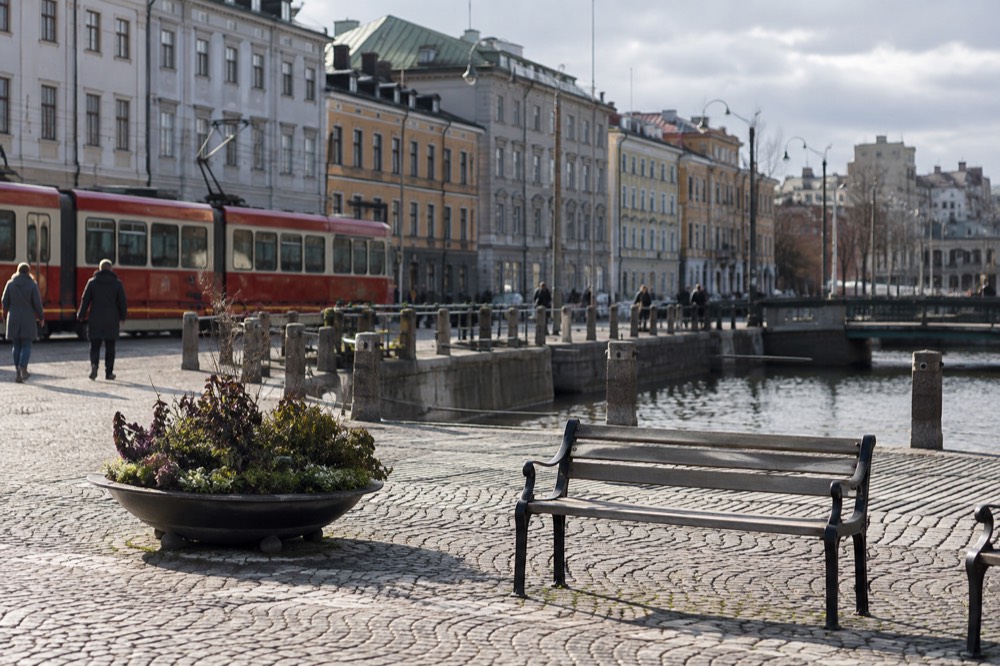
Gothenburg, Sweden sits at the mouth of the Göta älv, where the river opens into the Kattegat, and that geography is exactly why cruise ships call here at all. The city is built on trade and shipbuilding, the harbour is the working heart of it, and unlike many European cruise ports the interesting parts of town are not an hour's coach ride away. A tram ride or a short walk gets you from the water to the old moat, the wooden quarter of Haga, and the canal boats that putter under the bridges.
The catch is that a port day is short, usually six to nine hours of usable time, and Gothenburg rewards a plan. This guide lays out what actually fits: how to get off the ship and into the centre, what a day ticket costs, which sights you can walk between, and which boat and walking tours are worth booking ahead. The southern archipelago, a chain of car-free islands that are officially areas of Gothenburg rather than day trips, is also on the table, because a single Västtrafik ticket covers the ferry.
Where Do Cruise Ships Dock in Gothenburg, Sweden?
Cruise ships call at the Port of Gothenburg, Sweden's largest container and ferry port, which sits on the Göta älv within the city itself rather than at a distant out-of-town terminal. The port publishes no public cruise-call schedule, so the only reliable way to confirm where your specific ship berths is your cruise line's own port information, which typically names the Arendal or central harbour berths used for cruise calls.
The Port of Gothenburg is a working harbour first. Stena Line ferries run to Denmark and Germany from the same river system, container cranes work the quays, and the cruise berths sit among all of it. That industrial setting surprises passengers expecting a purpose-built cruise terminal, but it has an upside: the river location means ships tie up inside the municipal boundary, and the city's tram network, which Göteborgs Spårvägar describes as twelve lines across 188 kilometres of single track, connects the harbour districts to the centre. The port's own information for cruise passengers is published at the Port of Gothenburg's cruise pages.
One thing this site will not do is publish a cruise-call calendar. The Port of Gothenburg's own cruise pages publish no schedule, and inventing one would be worse than leaving the gap. If you are trying to work out whether a particular ship calls on a particular date, ask the cruise line.
Because the berths are industrial, most cruise lines lay on a shuttle or the ship's own excursion coaches into the centre. Once you are at any stop served by trams or buses, an ordinary Västtrafik ticket takes over, and the rest of this plan assumes you are standing somewhere in the city with a working phone and a few hours.
Can You Get Into Gothenburg City Centre Without a Booked Tour?
Yes, and it is easier than at most Northern European cruise ports: Gothenburg's trams and buses run on a flat-zone fare system, an adult single ticket in Zone A costs 38 kr, and a 24-hour Zone A ticket costs 125 kr, which also covers the archipelago ferries from Saltholmen. Västtrafik sells tickets in its app or at machines, and you must buy before boarding because there is no cash payment on the tram itself.
The fare structure is the part worth understanding before you step off the ship. Västtrafik, the regional transport authority, divides its network into zones A, B and C, and Zone A covers Gothenburg itself plus Mölndal, Partille and Öckerö. A single adult ticket for one zone is 38 kr according to Västtrafik's fare page, and the 24-hour Zone A ticket is 125 kr whether you buy it in the app or at a shop. For a port day that includes a tram ride in, a boat, and a tram back out, the 125 kr ticket is almost certainly the right buy.
There is a temporary fare cut in the news right now that does not apply to you. A state subsidy has halved every 30-day period ticket through the end of the year, dropping a Zone A adult monthly from 890 kr to 445 kr, but the 24-hour and 72-hour tickets visitors buy are not discounted. If you read that transport in Gothenburg is half price, that claim is about monthly tickets.
You do not tap out. Tickets are bought in advance, validated when you first board, and then simply shown or checked. Trams run frequently through the centre, and the network's western terminus is Saltholmen, the archipelago ferry jetty, which matters later in this plan. For a fuller rundown of lines, zones and payment, see getting around Gothenburg elsewhere on this site.
What Are the Best Things to Do in Gothenburg on a Cruise Day?
The realistic short list is the canal and harbour by boat, the wooden quarter of Haga on foot, Feskekôrka the fish-church food hall, and either Liseberg or the archipelago depending on the season, all of which sit inside Zone A and can be stitched together with one 125 kr day ticket plus whatever entry fees or tour prices apply.
Start with the water, because Gothenburg reads best from it. The Paddan canal boats run the old moat route under low bridges, and the harbour sightseeing boats give you the shipyard cranes and the river mouth. If your port day is short, a canal cruise plus a walk is the safest combination: the boat does the orientation, the walk does the detail.
Then go to Haga. The neighbourhood is the city's oldest surviving wooden-quarter district, one storey of brick under two of painted wood, the building style called landshövdingehus that exists almost nowhere else. Haga is walkable from the centre, full of second-hand shops and coffee houses, and its most famous café sells a cinnamon bun the size of a small plate. The hill above it, Skansen Kronan, gives one of the best free views over the rooftops to the river. For what the district is known for in more depth, see what to do in Haga.
Feskekôrka, the fish market hall shaped like a church on Rosenlundsgatan, is the third stop most itineraries manage. It matters that you know what it is now: the building reopened in 2024 after renovation, and it is a food hall rather than a pure fish market, with two fish counters and five restaurants inside. Older guides describe it as fish counters only, or say it is closed for renovation. Both descriptions are out of date. Eat here rather than photographing it, and see what Gothenburg food is famous for for the wider picture.
Beyond those three, your day branches. Liseberg, the amusement park, is enormous fun and a short hop from the centre, but it has an irregular calendar: in 2026 the summer season runs 18 April to 20 September, Halloween 2 October to 1 November, and the Christmas market 14 to 23 December, with the park shut for large stretches including from 24 December to mid-April. Check the dates against your sailing on Liseberg's own opening-times pages before you plan on it, and note that the 95 kr entry ticket includes no rides. Universeum, the science centre, is open every day of the year from 10:00 to 18:00, but its admission is dynamically priced with a booked time slot, so there is no fixed price to quote here.
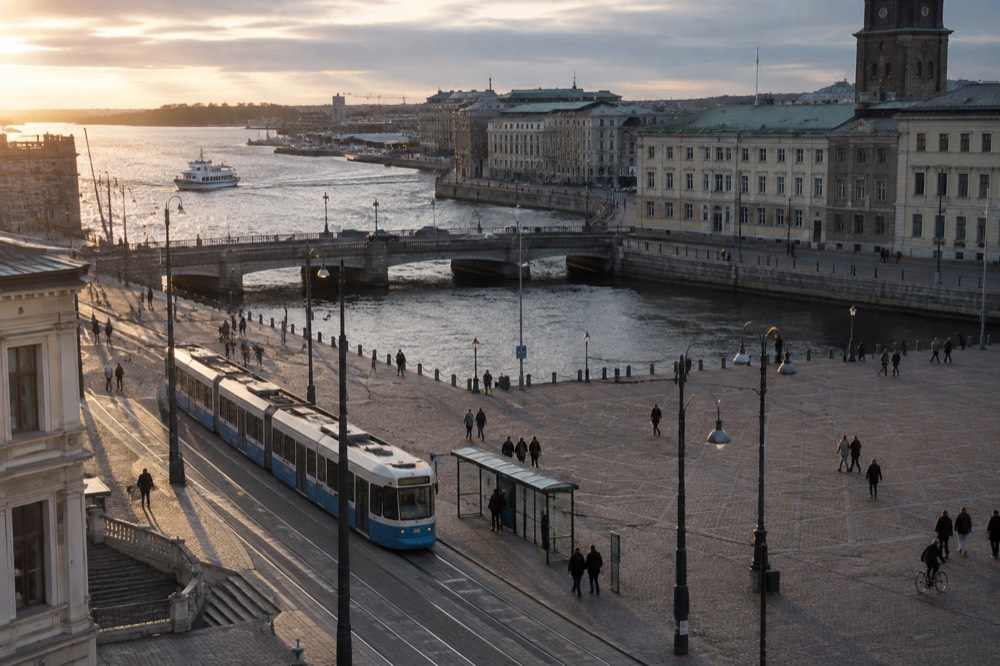
Can You Visit the Gothenburg Archipelago from a Cruise Ship?
Yes, if you have at least six hours ashore: the southern islands of Styrsö, Brännö, Donsö, Vrångö, Asperö and Köpstadsö are reached by Västtrafik ferry from Saltholmen, the ferries are covered by the same Zone A ticket as the trams, and the islands are car-free, so the crossing plus an hour or two of walking is a genuine half-day trip inside the city boundary.
This is the fact that surprises most cruise passengers. The southern archipelago is not an excursion to a distant coast. The islands are administrative areas of Gothenburg, the ferry terminal at Saltholmen is the western terminus of the tram network, and Västtrafik's own materials state that one ticket carries you from the centre all the way out onto the sea. The practical arithmetic: tram to Saltholmen, ferry to an island, walk, ferry back, tram back, all on the 125 kr 24-hour ticket.
The islands themselves are granite, meadow and small hamlets. Brännö and Vrångö are the classic walking choices; Styrsö has the largest settlement. Göteborgs Stad's own archipelago study confirms the islands are protected from private car traffic, with only taxis and emergency vehicles on the roads, so what you get on foot is the whole island.
The time risk is real, though. Ferries run on fixed timetables with gaps of an hour or more on some crossings, so a missed return boat can eat your margin. If your ship sails at five and you are standing on Vrångö at three, you have a problem. If you want the archipelago without timetable anxiety, a guided archipelago cruise is the safer structure: the boat comes back when it said it would.
The guided archipelago cruise runs about 2.5 hours, is rated 4.4 from 1,488 reviews, and starts from $44 per person, which makes it one of the cheaper structured tours in the city. It is the tour this site recommends most often for port days precisely because it is short enough to fit and popular enough to run often. For a longer read on whether the islands suit you, see whether the Gothenburg archipelago is worth visiting.
What Does a Gothenburg Port Day Cost?
A self-guided port day costs very little beyond your ticket: 38 kr for a single tram ride, 125 kr for the 24-hour Zone A ticket that adds the archipelago ferries, and then entry fees only where you choose them, since Haga, the viewpoints, Slottsskogen park with its free zoo, and the archipelago islands themselves all cost nothing to enter.
The table below pulls together the realistic costs from the verified figures on this site. Prices for tours come from the live listings, which change, so treat them as from-prices.
| Item | Cost | Basis |
|---|---|---|
| Single tram ticket, Zone A adult | 38 kr | Västtrafik fare page |
| 24-hour Zone A ticket | 125 kr | covers trams, buses and archipelago ferries |
| Liseberg park entry | from 95 kr | entry only, no rides included |
| Liseberg entry plus unlimited rides | from 365 kr | online from-price |
| Göteborgs konstmuseum day ticket | 75 kr | free under 20 |
| World of Volvo exhibition ticket | from 120 kr | online from-price |
| Guided archipelago cruise | from $44 | per person, 2.5 hours |
| Canal sightseeing cruise | from $28 | per person, 50 minutes |
| Haga, Skansen Kronan, Slottsskogen, islands | 0 kr | free to enter |
Two cautions on that table. First, Göteborgs konstmuseum has a scheduled closure: the museum's own rebuild page states it closes in 2028 and reopens in 2032, so a visit before then is worth more than a generic guide suggests. Second, the old Volvo Museum at Arendal closed permanently in December 2023; the attraction that exists now is World of Volvo, a different venue at Lyckholms Torg. Any shore-excursion brochure still listing the old museum is out of date, and what Gothenburg is known for covers which of these sights actually define the city.
What Should You Skip on a Short Gothenburg Port Day?
Skip anything that needs a full day: Marstrand, the Bohuslän coast, Lake Vänern and Läckö Castle are genuine day trips requiring hours of travel each way, and a cruise stop of six to nine hours cannot absorb them, so the honest advice is to stay inside Zone A and treat the out-of-town sights as reasons to come back.
This is where port-day plans usually go wrong. Search results for Gothenburg day trips are full of Marstrand and the granite fishing villages of Bohuslän, and they are wonderful, but the sailing from the port to Marstrand alone is a serious chunk of a short day. The same goes for the private lake-and-castle trips on the tour platforms, some of which run ten hours. Unless your ship is in port exceptionally late, these are not port-day options.
Inside the city, the other honest cut is the museum sprint. Gothenburg has a cluster of good museums, the art museum, the city museum, the maritime museum, the design museum, but a port day is not the day to attempt four of them. Pick one at most. The art museum is the strongest single choice for a short visit, and its 75 kr day ticket with free entry under 20 makes it an easy add-on to a Haga walk since it sits at Götaplatsen at the top of the main avenue.
If the weather turns, and it does, the rain plan matters more here than in most cruise ports. Gothenburg sees 912 mm of precipitation across roughly 127 days a year, with October the wettest month at 102.9 mm and April the driest at 51.3 mm, according to SMHI's 1991-2020 normals for the Göteborg A station. What that reputation gets wrong is the idea of permanent drizzle: it rains about one day in three, not every day, and SMHI's own national data does not identify Gothenburg as Sweden's rainiest city at all. A wet port day bends toward Universeum, the art museum, Feskekôrka and a long fika rather than the viewpoints. The rainy day guide on this site covers the timing questions in more detail.
For the evening-sailing case, one more option opens up. If your ship does not leave until late, the food-and-drink tours earn their place: a shrimp and salmon cruise with live music runs about three hours from $95 per person and is rated 4.7 from 14 reviews, and the craft beer walking tours cover the Linné district's bars. These are the tours that only make sense with spare hours, and a late sailing is exactly that.
Common Questions About What to Do in Gothenburg from a Cruise Ship
What to do in Gothenburg from a cruise ship?
Take a tram into the centre, do a canal cruise for orientation, walk Haga and climb to Skansen Kronan, eat at Feskekôrka, and if time allows use the 125 kr day ticket to ferry out to the car-free archipelago islands. Book a guided archipelago cruise if you want the islands without ferry-timetable risk.
How far is the cruise port from Gothenburg city centre?
Cruise ships berth at the Port of Gothenburg inside the city on the Göta älv, and the centre is reached by shuttle, tram or a short taxi ride rather than a long transfer. Confirm your specific berth with the cruise line, since the port publishes no cruise-call schedule.
Can you walk from the cruise port in Gothenburg?
It depends on the berth, and the port is a working harbour rather than a stroll-friendly terminal district. Most passengers use the ship's shuttle or a tram stop near the gate. Once in the centre, Gothenburg is compact and walkable between Haga, the moat and Avenyn.
Is the Gothenburg archipelago worth a cruise shore day?
Yes, if you have six or more hours ashore. The ferries from Saltholmen are covered by an ordinary Zone A ticket, the islands are car-free, and the crossing itself is part of the experience. With less time, a 2.5-hour guided archipelago cruise is the safer option.
Do you need Swedish krona in Gothenburg?
Very little. Trams take no cash, museums are increasingly cashless, and the konstmuseum states it accepts card or Swish only. A contactless card or a phone handles essentially everything a port day involves.
Is Liseberg open on a cruise day?
Check the season calendar first. In 2026 Liseberg runs 18 April to 20 September for summer, 2 October to 1 November for Halloween, and 14 to 23 December for the Christmas market, and it is closed for the rest of the year. Entry from 95 kr includes no rides.
A port day in Gothenburg, Sweden is a low-stress one by cruise standards. The transport is a flat 125 kr day ticket, the headline sights sit within a walk or a tram hop of each other, and the one genuinely unique thing the city offers, a car-free archipelago inside the municipal fare zone, is reachable without booking anything at all. Plan around the season calendar, skip the distant day trips, and keep an eye on the clock at Saltholmen. Gothenburg Travel Guide covers the rest of the city in depth if the port day leaves you wanting more.