What Clothes to Take to Sweden in September: A Gothenburg Packing List
What clothes to take to Sweden in September, with Gothenburg's real temperature, rainfall and sea data from SMHI, plus a layering system that works for the west coast.
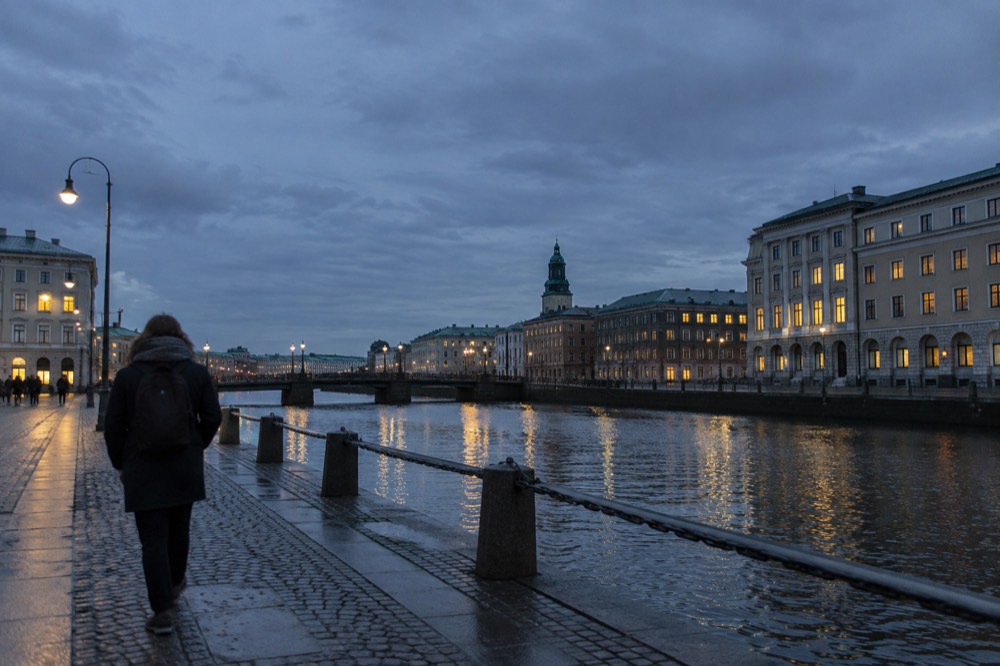
September is the month Sweden's west coast keeps to itself. The crowds have gone, the air sits at a mild 14.0 C monthly mean in Gothenburg, and the sea, which has been absorbing heat all summer, is actually warmer than it was in June. SMHI's oceanographic archive from the Vinga lighthouse station puts September's mean sea temperature at 16.7 C against June's 16.2 C. What that means for a suitcase is the subject of this page: a packing list built on measured numbers, not folklore.
The site behind this list, Gothenburg Travel Guide, reports the city as it is, and the city in September is dry-ish by local standards, breezy off the Kattegat, and light until well past eight in the evening. This page covers the numbers first, then the clothing, then the footwear and the things people forget. Every figure quoted here comes from a primary source: the Swedish meteorological institute's own normals and oceanographic archive, the transport authority's fare pages, and the city's own venue sites. Where something could not be confirmed, it says so.
What Is the Weather Actually Like in Gothenburg in September?
Gothenburg's September mean air temperature is 14.0 C, with 80.0 mm of rain across roughly 10.8 wet days, and the sea at 16.7 C, which is warmer than June's 16.2 C. Daylight still runs long, and the month is the last of the genuinely mild ones before October's 102.9 mm arrives.
Those figures come from SMHI's 1991-2020 normals for station Göteborg A (71420) and from the Vinga sea-temperature archive, and they describe a month of two halves. Early September often feels like a late summer: daytime highs can reach the high teens, the water is at its annual second-best, and the granite of the archipelago is warm to sit on. By the last week, the light has shortened noticeably and the first properly autumnal fronts roll in off the North Sea. The transition is gradual rather than a switch, which is exactly why a fixed single-outfit packing plan fails and a layering system works.
The rain deserves precision, because Gothenburg's rain reputation is inflated. It rains on about 127 days a year here, roughly one day in three, and September's 80.0 mm is mid-table for the year, well below October's 102.9 mm. SMHI does not call Gothenburg Sweden's rainiest city, and its national maps put the real maxima in the western highlands and the mountains. What September rain looks like in practice is showers, sometimes persistent ones, rarely an all-day soaker. A front will sit on the city for a few hours, move through, and leave the streets drying by mid-afternoon. The practical consequence for packing is that you need to stay dry for hours, not days, and your clothing needs to recover overnight in a hotel room, which is another argument for merino and synthetic fabrics over heavy cotton.
The sea temperature is the fact that changes a packing list most. A 16.7 C sea in September means swimming off Brännö or Saltholmen is realistic, if bracing, and it means a towel and a swimsuit belong in the case even if the air feels autumnal. February, by contrast, bottoms out at 2.7 C, so this is emphatically a warm-water month by Swedish standards. The archive behind these numbers is large and quality-controlled: 61,749 hourly observations from the Vinga station, covering 2019 to 2026, with earlier data excluded because SMHI states it was not quality-controlled. That is a solid enough basis to plan a swim around.
Daylight in September is generous but visibly on the wane. The summer solstice gives Gothenburg 18 hours 6 minutes of daylight, and the winter solstice just 6 hours 32 minutes, an 11-and-a-half-hour swing across the year. September sits on the downward slope: early in the month the evenings still stretch past eight, while by the 30th dusk arrives noticeably earlier. For packing purposes this means your outer layer should have some light colour or reflectivity if you plan evening walks, because the dark hours return quickly.
For context on how the month sits in the year, see the best time to visit Gothenburg, and for what the city offers a first-timer, what Gothenburg is known for covers the ground.
What Clothes Should You Actually Pack for Sweden in September?
Pack a three-layer system: a merino or synthetic base layer for mornings and evenings around 8-10 C, a warm mid layer such as a fleece or light wool sweater for the 14 C afternoons, and a genuinely waterproof, hooded rain shell for the roughly one-in-three wet days. Add long trousers, closed waterproof-capable shoes, a scarf or light hat, and one swimsuit, because the September sea is warmer than the June one.
The layering logic is driven by the swing between morning and afternoon. A 14.0 C monthly mean conceals days that start near single digits and peak in the high teens. Three thin layers you can shed beat one thick coat, because you will be shedding them by lunchtime and putting them back on by six. Merino wool base layers are the standard recommendation here not as fashion but as function: they stay warm when damp, and damp is a live possibility. A cotton t-shirt that gets wet in a shower stays cold and clammy for the rest of the day, while a merino one keeps most of its insulation and dries on your back.
The rain shell is the one item not to compromise on. A shower-resistant fashion jacket will not survive a September front coming in off the Kattegat, and the difference between a good day and a miserable one on the archipelago ferries is usually the hood. Look for taped seams and a storm flap over the zip; those two details are what separate a rain jacket from a jacket that is merely rain-coloured. Umbrellas, for the record, are a losing proposition: the wind off the harbour inverts them, and locals mostly do not bother carrying one.
Trousers over shorts, almost always. Long, comfortable walking trousers work for city days and island days alike, and jeans are fine but slow to dry if the rain gets serious. Quick-dry hiking trousers or chinos recover overnight, which matters if you are packing light for a week. One pair of shorts is worth packing only if you swim, and if you swim, pack the quick-drying kind, because nothing dries fast in 14 C air.
Socks are the quiet hero of a Swedish September. Wool or wool-blend socks, several pairs, because wet feet on a cold stone quay is the single most reliable way to ruin a day trip. The same reasoning applies to shoes: something with grip and at least water resistance, since cobbles in the old town and granite slabs on the islands are slick when wet. A spare pair of socks in the daypack costs nothing and has rescued more September afternoons than any other single item.
For the evenings out, Gothenburg restaurants and bars are casually dressed, and nobody will look twice at a fleece over a shirt. The one genuinely cold scenario in September is standing still outdoors after dark, near the water, at the end of the month. That is what the hat and scarf in the list are for, not for daytime wear.
If you want a sense of how the weather behaves across the whole year before committing to September, is Gothenburg worth visiting for tourists weighs the seasons, and is Gothenburg in Sweden worth visiting asks the broader question with the same west-coast data in mind.
Do You Need a Winter Coat or Just Layers for Sweden in September?
No winter coat is needed for Gothenburg in September. The month's mean of 14.0 C, with nights rarely approaching freezing, puts it firmly in layering territory: a rain shell over a fleece handles the coldest September morning, and a down coat would be dead weight on every afternoon. Save the heavy coat for December, when daylight shrinks to 6 hours 32 minutes on the 21st.
The temptation to pack for "Scandinavia" as a single cold block is understandable but wrong. September in Gothenburg is closer to a mild English or Dutch autumn than to Lapland. The monthly mean air temperature of 14.0 C is the third-warmest month of the year locally, behind July's 18.3 C and August's 17.7 C. Frost is not part of the September picture at sea level on the west coast. The sea, at 16.7 C, also buffers the nights: water that warm releases heat slowly, which is why coastal September nights are milder than inland ones at the same latitude.
What catches people out is not cold but wind chill. The city sits at the mouth of the Göta älv, open to the Kattegat, and a 15 C afternoon on the water at Saltholmen or on a ferry deck can feel like half that. This is why the packing list leans on a windproof outer layer rather than insulation: the shell you bring for rain should also cut the wind. A fleece that is perfect on Avenyn will feel thin within minutes of leaving Saltholmen's sheltered harbour, so the shell goes in the daypack even on mornings that look clear.
The one exception is the far north of the country. If your September trip includes Swedish Lapland, the rules change entirely, and genuinely cold-weather gear belongs in the case. But for Gothenburg, Stockholm and the south, layers plus a shell are correct. This page is written from Gothenburg's data, and Gothenburg is the reference point for the whole west coast, from the Bohuslän granite islands in the north down through Marstrand and the Halland coast.
A related packing question is weight rather than warmth: Sweden is not a cheap country, and buying a jacket you already own at home is an expensive way to learn the weather. Is Gothenburg cheap or expensive covers the cost side of a trip, and it is worth reading before deciding to pack light and shop on arrival.
What Shoes Work Best for Gothenburg and the Archipelago in September?
Waterproof walking shoes or trail sneakers with real grip are the best September footwear for Gothenburg, because the month mixes roughly 10.8 wet days with cobblestones in the old town, granite quays on the islands and tram steps that are slick when damp. Sandals have no role except on the beach, and leather-soled dress shoes will suffer.
The surface types are the reason. Inom Vallgraven, the old core laid out inside the moat by Dutch engineers in the seventeenth century, is cobblestone and worn stone paving. The southern archipelago islands, reached by tram and ferry on an ordinary Västtrafik ticket, are granite bedrock, wooden jetties and gravel paths. Neither surface forgives a smooth sole in the rain, and the ferries' boarding ramps are metal. Add the tram steps, which are metal-edged and polished by a century of boots, and the case for grip writes itself.
A mid-cut shoe keeps gravel and puddle splash out. Waterproofing matters more than warmth: a damp September day at 12 C with wet socks is worse than a dry one at 8 C with dry socks. If you own waterproof hiking shoes, bring them; if not, a decent pair of sneakers plus wool socks and a willingness to step around puddles will carry you through. What does not work is anything with a flat leather sole, anything suede, and anything you would be sad to see salt-stained or soaked.
One pair per day-type is enough: the walking shoes, plus something light for evenings. Locals wear everything from sneakers to rubber boots, so nothing you bring will look out of place. The islands are car-free, which means walking is the transport, which means the shoes carry the whole trip. A visitor who plans a day on Styrsö or Vrångö will easily cover ten kilometres on foot between ferry stops, viewpoints and lunch, and every one of those kilometres is on surfaces that are wet more often than not.
What Should You Wear on the Water: Ferries, Boats and Swimming?
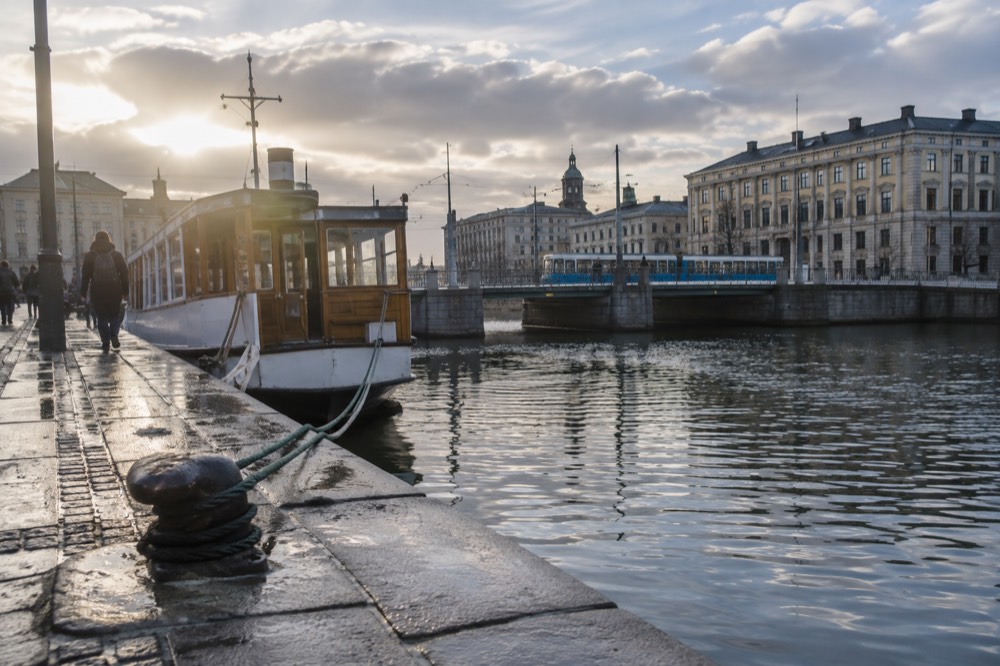
For Gothenburg's ferries and boat tours in September, wear your full layering stack plus the rain shell and a warm hat, because wind on open water drops the felt temperature sharply even on a 14 C day, and for swimming, bring a proper swimsuit and towel, since the sea averages 16.7 C, warmer than June, though a quick exit and a warm layer afterwards are the norm.
The sea data deserves its own paragraph because it inverts the usual assumption. SMHI's quality-controlled hourly archive from Vinga, 61,749 observations, shows the sea peaking in August at 18.6 C and holding 16.7 C through September, against 16.2 C in June. A September dip is warmer than the one a June visitor takes. Swimmers should know that 16.7 C is still cold water by holiday standards: fine for a few minutes, then a towel and a fleece. The record September high in the archive is 19.5 C, so on a warm, calm day after a fine week the water can feel genuinely pleasant, but the mean is the number to plan around, not the record.
On deck, the rule is simple: whatever you would wear ashore, add one layer and a hat. The archipelago ferries from Saltholmen are ordinary Västtrafik boats, not cruise ships, and the open-air seats are the ones with the view. Cold hands and ears end more archipelago afternoons than rain does. Thin gloves earn their small corner of the suitcase for exactly this reason: they weigh nothing and they turn a windy ferry crossing from an endurance event into a sightseeing trip.
The same logic applies to sightseeing boats in the city. The canal and harbour cruises run in most weather, and the covered cabins exist, but the best photographs come from outside. If you are deciding whether the on-water sightseeing is worth it at all, is it worth visiting the Gothenburg archipelago and is the ferry in Gothenburg free cover the practical side, including the ticket rules that make the islands such an easy add-on to a city wardrobe-and-all day trip.
What Does a Complete September Packing List for Gothenburg Look Like?
For a week in Gothenburg in September, pack: 2-3 base layers, one fleece and one light wool sweater, one waterproof hooded shell, 3-4 long trousers, one swimsuit and towel, wool socks for every day plus spares, waterproof walking shoes, a warm hat and a light scarf, gloves for early mornings only, a compact umbrella you accept losing, and a small daypack with a dry bag or plastic liner for boat days.
The list below turns the numbers into items. Quantities assume a week and access to laundry or a hotel sink, which is the realistic case for a city trip. If you are staying longer, add base layers and socks before adding anything else, because those are the items that gate a comfortable day.
| Item | Quantity | Why, based on the data |
|---|---|---|
| Merino or synthetic base layer | 2-3 | Mornings near single digits against a 14.0 C monthly mean |
| Fleece or light wool sweater | 2 | The core of the mid layer for afternoons and evenings |
| Waterproof hooded shell | 1 | About 10.8 wet days in the month, plus harbour wind |
| Long trousers | 3-4 | Standard September wear; shorts only for swimming |
| Swimsuit and quick-dry towel | 1 each | Sea at 16.7 C, warmer than June |
| Wool socks | 5-7 pairs | Wet granite quays and cobblestones |
| Waterproof walking shoes | 1 pair | Grip on wet stone and ferry ramps |
| Warm hat and light scarf | 1 each | Wind chill on open water |
| Thin gloves | 1 pair | Early-morning and ferry-deck days only |
| Compact umbrella | 1 | Accept that the harbour wind may take it |
| Daypack with dry liner | 1 | Keeps layers dry on boat and rain days |
A note on the umbrella: bring it, but treat it as a city-street tool. On the islands and the waterfront, the hood does the work. And a reflective strip or light-coloured outer layer earns its place because September evenings shorten quickly and Swedish drivers are used to lit cyclists and pedestrians, not invisible ones.
Two final practical notes. First, the same daypack with the dry liner doubles as your boat bag and your rain-day bag, so it is doing more work per gram than anything else in the case. Second, pack so that the shell, the hat and the gloves live in that daypack permanently, not in the suitcase, because the weather that needs them tends to arrive while you are already out, not while you are still at the hotel.
Common Questions About What Clothes to Take to Sweden in September
What Clothes to Take to Sweden in September?
Layers: base layers, a fleece or sweater, and a waterproof hooded shell, with long trousers, wool socks, waterproof walking shoes, a hat and a swimsuit. Gothenburg's September mean is 14.0 C with about 10.8 wet days, and the sea is 16.7 C, so the month needs flexibility rather than a heavy coat.
Do I Need a Winter Coat for Sweden in September?
No. A rain shell over a fleece handles the coldest September morning on the west coast. Winter coats become relevant much later in the year, when daylight drops to 6 hours 32 minutes in late December.
Is September Rainy in Gothenburg?
Moderately. SMHI's normals show 80.0 mm across about 10.8 wet days, less than October's 102.9 mm, and the city's rainy reputation outruns the data. A real rain jacket is still the one item you cannot skip.
Can You Swim in Gothenburg in September?
Yes, and the water is warmer than in June. The Vinga station's archive shows a September sea mean of 16.7 C against June's 16.2 C, peaking at 18.6 C in August. Bring the swimsuit and a warm layer for after.
What Shoes Should I Bring to Sweden in September?
Waterproof walking shoes with grip. Wet cobblestones in the old town, granite on the car-free archipelago islands and metal ferry ramps all punish smooth soles.
Should I Pack Shorts for Sweden in September?
One pair, mainly for swimming and the occasional warm early-September afternoon. Long trousers are the default for the month.
For what the month itself offers beyond the wardrobe, how many days in Gothenburg is enough helps size the trip, and what is a must-see in Gothenburg fills the days you have packed for.