Is Gothenburg Good for Foodies? What Sweden's West Coast Food City Really Offers
Gothenburg's food scene runs on Kattegat seafood, market halls, fika culture and a young restaurant scene. Here is what a foodie actually finds in Gothenburg, Sweden.
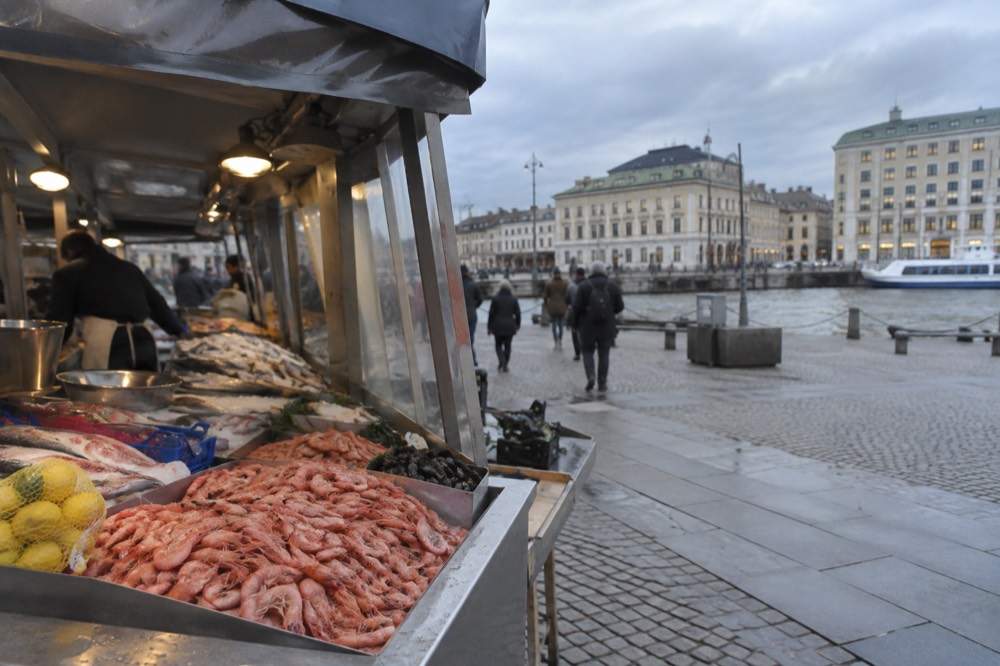
Gothenburg, Sweden's second city, sits at the mouth of the Göta älv where the river meets the Kattegat, and the geography shows up on every plate. The city's population reached 613,274 at the end of 2025, and Göteborg & Co reported a record year with over 6 million commercial guest nights, driven largely by international visitors. A city that size, on a coast this rich, with a university district this young, has a food scene worth taking seriously. The question is what kind of food city it is, and the short answer is: a seafood-and-market-hall city with a strong fika culture and a growing restaurant scene, not a capital of experimental fine dining.
Is Gothenburg a Good Food City?
Yes, Gothenburg is a genuinely good food city, and its strength is specific rather than general: west-coast Kattegat seafood sold close to where it lands, two working market halls, a fika tradition that fills cafes every afternoon, and a young restaurant scene that grew up around the university and the harbour districts. It is not Stockholm, and it does not try to be. The food identity here is maritime and unpretentious.
What separates Gothenburg from most cities of its size is how short the distance is between the water and the table. The southern archipelago, the car-free islands of Styrsö, Brännö, Vrångö and Donsö, is inside the city's own transport zone, and the fishing villages on those islands still land shrimp and langoustine that reach city counters the same week. SMHI's oceanographic archive from the Vinga lighthouse station shows the sea peaking at 18.6 C in August, which is when the shellfish season and the swimming season overlap. That is an unusual combination for a city of this size: a major urban food market sitting inside a working coastal fishery.
The city's restaurant culture also benefits from being a student city. Districts like Vasastan and Majorna have dense clusters of small, independent places, and the second-hand quarter in Majorna has brought cafes with it. The scene is broader than the old town, which matters if you want to eat where locals eat rather than where tourists walk. Vasastan's stone streets and student cafes have their own rhythm, and the Linné and Långgatorna strip is where the evening bar-and-kitchen culture concentrates.
There is also a structural reason the food holds up: Sweden's alcohol monopoly, covered below, pushes restaurant economics toward food rather than drink margins. A Gothenburg kitchen lives or dies on what is on the plate, because the wine list cannot carry the business the way it can elsewhere in Europe. The result is a city where the mid-tier cooking is better than the price point suggests it should be.
What Food Is Gothenburg Famous For?
Gothenburg is famous for its west-coast seafood, above all the shrimp sandwich, plus langoustine, salmon, mussels and the Bohuslän oyster beds to the north, and for fika, the Swedish coffee-and-cake break that the city treats as a daily institution rather than a tourist performance. The two together, seafood from the Kattegat and a serious cafe culture, are the core of the local food identity.
The shrimp sandwich, räkmacka, is the dish to judge a Gothenburg cafe by. The classic version is a thick slice of bread, butter, a mountain of hand-peeled shrimp, and a wedge of lemon, and the quality varies enormously because hand-peeled shrimp cost real money and shortcuts are visible on the plate. The dish belongs to the west coast generally, but Gothenburg is where it is most concentrated, and the harbour cafes serve it with a view of the shipyard cranes that built the city's wealth.
Beyond shrimp, the local vocabulary is langoustine, fished in the Skagerrak and treated here as a luxury ingredient, cold-smoked and gravlax-style salmon, mussels from the Bohuslän coast, and oysters. The oyster beds north of the city are among the few in Europe where the native European oyster still grows wild, and the oyster safaris on the Bohuslän coast are a food experience in themselves. The granite islands around Smögen and Fjällbacka are where the shellfish culture is strongest, and the seafood, shrimp sandwiches and oyster safaris guide covers how to reach them.
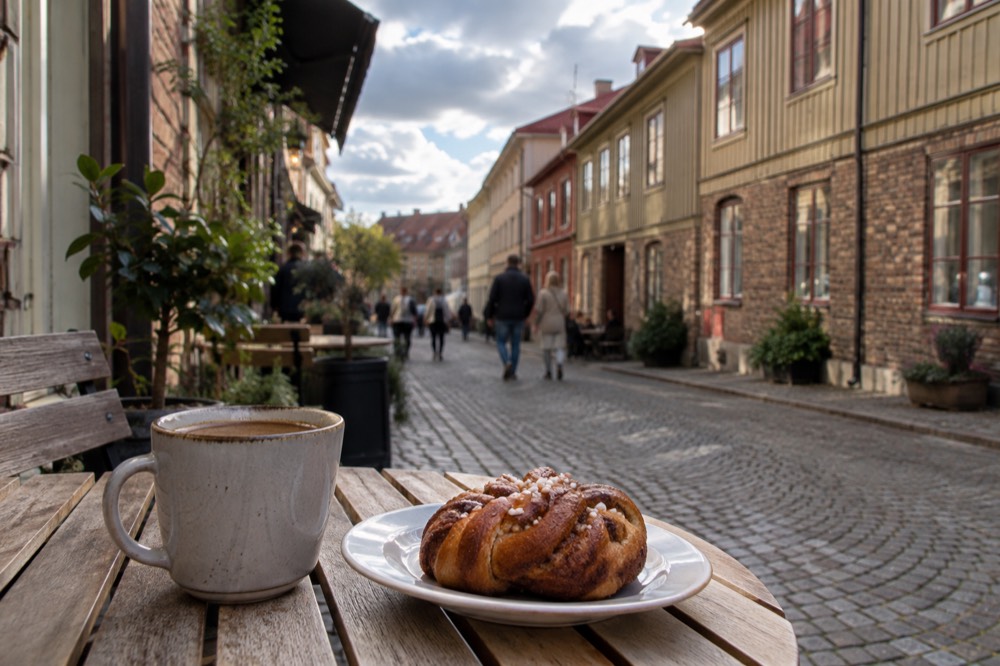
Fika deserves equal billing. It is a coffee break with pastry, usually a cinnamon bun or a cardamom bun, taken mid-morning or mid-afternoon, and it is close to a workplace right in Sweden. Gothenburg's Haga district is the famous place to do it, in painted wooden buildings from the city's 19th-century expansion, and the giant cinnamon buns sold there are a fixture of every visitor's photo roll. The custom itself, what it means and how it works, is worth understanding before you order, because the rhythm of the Swedish day is built around it.
Here is how the main pieces of the local food identity sort themselves out:
| Food experience | What it is | Where to find it |
|---|---|---|
| Räkmacka (shrimp sandwich) | Hand-peeled shrimp on buttered bread, the city's signature dish | Harbour cafes, Feskekôrka, archipelago island cafes |
| Langoustine | Skagerrak shellfish, the local luxury ingredient | Seafood restaurants, market hall counters |
| Fika | Coffee with a cinnamon or cardamom bun, taken daily | Haga, Vasastan, Linné district cafes |
| Bohuslän oysters | Native European oysters grown wild north of the city | Oyster safaris on the coast, day trip from Gothenburg |
| Market hall lunch | Hot and cold plates from hall kitchens | Feskekôrka and Stora Saluhallen |
One honest caveat about eating out in Gothenburg: alcohol. Under Alkohollag (2010:1622) 1 kap. 8, beer above 3.5% ABV, all wine and all spirits are sold only by Systembolaget, the state monopoly, as the statute itself states. Supermarkets sell folköl, beer at 3.5% and below, and the shelf version of a familiar brand is often a weaker reformulation. A restaurant meal with wine is therefore noticeably dearer than the food alone, which shapes how locals eat out: many restaurant meals are about the food, and the drinking happens at home before or after.
Where Do Foodies Eat in Gothenburg?
The two market halls anchor the scene: Feskekôrka, the 1874 "fish church" building on Rosenlundsgatan, reopened in 2024 as a food hall with five restaurants alongside two fish counters, and Stora Saluhallen on Kungstorget is the older, bigger general market. Around them sit the seafood restaurants of the harbour, the cafes of Haga and Vasastan, and the young kitchen scene in Majorna and on the Lindholmen side of the river.
Feskekôrka is the single most misunderstood food address in the city, because most guides describe a building that no longer exists in that form. It closed for renovation, and Higab, the municipal property owner, confirms it reopened in 2024, the same year the building turned 150. It is no longer only fish counters. Its own site now lists the fish counters Ebbes Fångst and Flåtens Fiskhandel plus five restaurants: Haldis Kök, Pråmenaden, Victor von G, Ekmans, and Lilla Åstol, which is seasonal and reopens each spring. Anyone arriving with a 2019 guidebook expecting only a raw-fish counter will find a full food hall instead, and that is a genuine improvement for a visitor: you can now eat a proper seafood meal inside the building rather than carrying a bag of fish home to cook.
Stora Saluhallen on Kungstorget is the other hall, a general food market rather than a seafood specialist, and between the two you can assemble a picnic that beats most restaurant lunches. The saluhallen and Gothenburg's food halls guide covers both in detail, including what each counter specialises in and what to buy for a picnic in Trädgårdsföreningen, the garden society park next to the canal.
The restaurant layer above the markets is where the city has changed most in the last decade. There is a Michelin-starred tier, covered in the Michelin-starred dining in Gothenburg guide, but the more interesting everyday eating is the mid-tier: small kitchens doing west-coast ingredients without ceremony. The best restaurants in Gothenburg guide sorts the city by budget and neighbourhood, and the vegan and vegetarian scene, which is stronger than most visitors expect, has its own page at vegan and vegetarian Gothenburg.
Can You Take a Food Tour in Gothenburg?
Yes, and they are a good use of a first day. The verified roster includes a Swedish West Coast food walking tour rated 4.8 from 17 reviews, a guided walking and fika tour rated 4.4 from 71 reviews, a craft beer walk with tastings, and a distillery tour with guided tasting rated 5 from 3 reviews. GuruWalk also runs a free walking tour covering Gothenburg's history, culture and gastronomy, rated 5 from 63 reviews.
The food walks cluster around the old town and the harbour, and the fika tour is the one that doubles as a culture lesson: it explains the coffee break as an institution while you take one. The West Coast food walk runs three hours and is the deepest of the group, moving between market counters, harbour kitchens and neighbourhood stops. The beer and spirits options exist partly because of the Systembolaget quirk above: Gothenburg has a small craft distilling scene, and a tasting room is one of the few places to try local spirits by the glass without buying a whole bottle from the monopoly. The rest of the planning pages sit on Gothenburg Travel Guide.
The shrimp and salmon cruise is the most Gothenburg-specific of the group: it puts the west coast's two signature ingredients on a boat inside the harbour, with live music, rated 4.7 from 14 reviews. For a different angle on the water, the amphibious sightseeing bus, rated 4.7 from 4,326 reviews, drives straight into it, and it is a useful first-day orientation before you commit to a neighbourhood for dinner.
Is Eating Out in Gothenburg Expensive?
Eating out in Gothenburg is mid-to-high by European standards: cheaper than Oslo and Copenhagen, dearer than Berlin or most of central Europe, and the cost is driven by labour and alcohol rather than ingredients. A market-hall lunch or cafe fika is genuinely affordable, mid-range restaurant dinners are where the money goes, and wine is the single biggest multiplier on any bill.
The cheap end is strong. Market halls, shrimp sandwiches, hot dogs from the street carts, and fika, where a coffee and a bun costs a few dollars, mean you can eat well all day without touching a proper restaurant. The expensive end is real but not Oslo-real. The middle is where Gothenburg does best, a high standard of casual cooking at prices that feel Nordic but not punitive, and the student districts keep the floor honest in a way that single-industry towns cannot.
The Gothenburg on a budget guide has the full cheap-eats playbook, from the free Slottsskogen park and its zoo to the market-hall lunch strategy. The general cost question, hotels and transport included, is answered on the is Gothenburg expensive page of this site's answers section.
When Is the Best Time to Visit Gothenburg for Food?
For seafood and eating outdoors, late August through September is the sweet spot: SMHI's Vinga station data shows the sea peaking at 18.6 C in August and still 16.7 C in September, warmer than June's 16.2, and the shellfish season is in full swing with thinner crowds than July. October is the wettest month at 102.9 mm of rain, so book indoor tables, and April, the driest month at 51.3 mm, is the best cafe-and-market-hall month of spring.
The counterintuitive fact here is the September water temperature, which comes from 61,749 quality-controlled hourly observations in SMHI's oceanographic archive at the Vinga lighthouse. Visitors book June for the light and get 16.2 C water; September swimmers get 16.7 C. For a food trip this matters less for swimming than for the shellfish calendar, but it tells you when the coast is at its best, and the archipelago restaurants are part of the food scene. The islands are areas of Gothenburg, reached by tram and ferry on an ordinary ticket, not a day trip, so an archipelago lunch is a same-city errand.
Christmas is its own food season. The Jul market at Liseberg runs 14 November to 23 December in 2026, and the glögg and pepparkakor circuit is a food experience of its kind, worth planning around if mulled wine and gingerbread are your definition of a food trip. The [Gothenburg Christmas market](/guides/gothenburg-christmas-market/) guide covers it, along with where the other markets cluster.
Here is how the year sorts itself for a food-focused visit:
| Period | Food reason to go | Watch out for |
|---|---|---|
| April | Driest month of the year, best cafe and market-hall weather | Sea still cold at 7.1 C |
| June | Light until 22:17, outdoor eating at its peak | Sea only 16.2 C, peak crowds |
| August | Sea at its annual peak, 18.6 C, peak shellfish season | Busiest month for tourism |
| September | Sea still 16.7 C, thinner crowds, archipelago lunches | Days shortening fast |
| October | Mushroom and game season, indoor dining | Wettest month, 102.9 mm |
| November-December | Christmas market food, glögg, Liseberg Jul from 14 November | Sea down to 5.5 C, short days |
Common Questions About Gothenburg for Foodies
Is Gothenburg good for foodies?
Yes. The city's food identity is west-coast Kattegat seafood, two working market halls including the reopened Feskekôrka food hall, a daily fika culture, and a young restaurant scene. It is a seafood and cafe city rather than a fine-dining capital, and it is at its best in late summer and early autumn.
What food is Gothenburg famous for?
Hand-peeled shrimp sandwiches, langoustine, cold-smoked salmon, mussels and Bohuslän oysters, plus fika, the coffee-and-cinnamon-bun break that is a daily institution in Swedish workplaces and cafes.
What is Feskekôrka?
A 1874 market building shaped like a church, nicknamed the "fish church", on Rosenlundsgatan. It reopened in 2024 as a food hall with five restaurants and two fish counters, so it is no longer only a raw-fish market. Older guides that describe it as fish counters only, or as closed for renovation, are out of date.
Why is beer in Gothenburg supermarkets weak?
Swedish law, Alkohollag (2010:1622) 1 kap. 8, restricts supermarket beer to 3.5% ABV and below, a category called folköl. Anything stronger, plus all wine and spirits, is sold only through Systembolaget, the state monopoly, so the supermarket version of a brand is often a weaker reformulation.
Is Gothenburg good for vegetarians and vegans?
Yes, stronger than most visitors expect. The student districts support a dense vegan and vegetarian cafe scene, and the site's vegan and vegetarian guide covers it neighbourhood by neighbourhood.
Are there food tours in Gothenburg?
Yes. The verified roster includes a West Coast food walking tour, a walking and fika tour, a craft beer walk with tastings, a distillery tour with tasting, and a shrimp and salmon cruise with live music. GuruWalk also runs a free walking tour that covers the city's gastronomy alongside its history and architecture.
Gothenburg rewards a foodie who arrives with the right expectations: eat the seafood, take the fika seriously, use the market halls for cheap lunches, and treat wine as the expensive extra it legally has to be. That is the city on a plate, and it is a good one.