How Do You Pronounce Göteborg in Swedish? A Gothenburg, Sweden Sound Guide
The Swedish name of Gothenburg is Göteborg, and it sounds nothing like the English version. Here is how the name is actually said, letter by letter, plus why the two names exist at all.
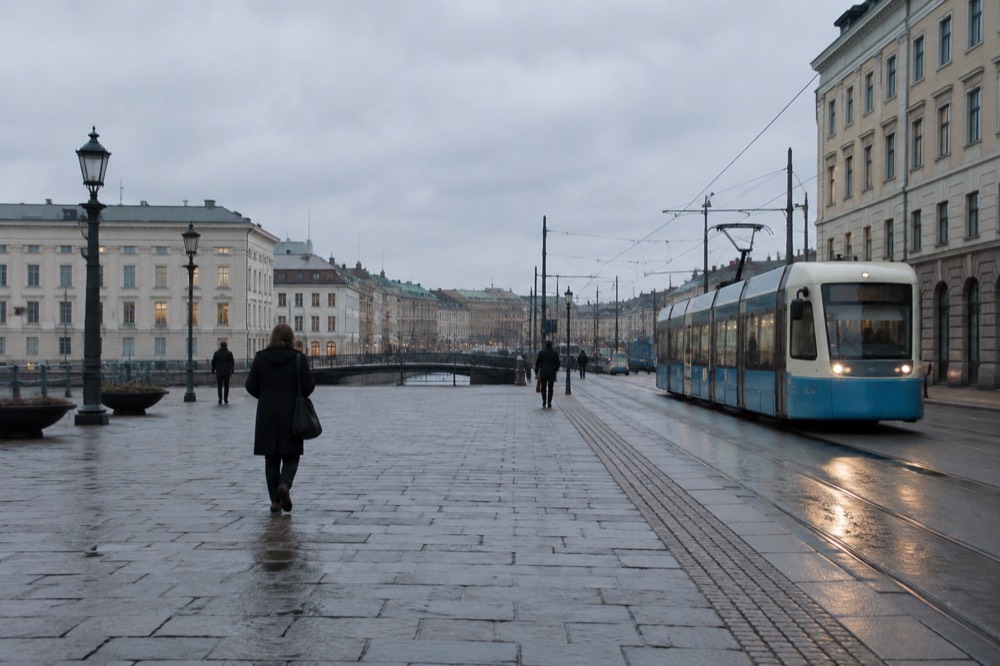
Göteborg is the city's real name, the one on the tram stops, the road signs and the official city website, and almost no English speaker says it correctly on a first attempt. The opening letter is the trap. In Swedish, a G in front of a front vowel such as E, I, Y, Ä or Ö softens into a Y sound, so Göteborg begins the way "yodel" begins, not the way "go" begins. The ending trips people too: the final RG in borg is pronounced with a soft, y-like glide, so the word closes on something closer to "bor-y" than "borg". The result is that the whole name, Göteborg, sounds roughly like YUR-teh-BOR-y, with the stress sitting heavily on the first syllable and the middle syllable said quickly and lightly.
That approximation is only a starting point, because two of the sounds in the name do not exist in standard English. The vowel in the first syllable, written Ö, is the same rounded front vowel a Swedish speaker uses in "för" and in "kött", and the closest an English mouth gets to it is the "i" in the British pronunciation of "bird" or "girl", said with the lips pushed forward. The rest of this page breaks the name into its three syllables, explains why English speakers ended up with a completely different word, Gothenburg, and covers the other local names that catch visitors out, from Feskekôrka to Långedrag. If you have already read about whether Gothenburg and Göteborg are the same place, this is the next question in the chain: not what the city is called, but how to say it. The short answer is that the two names are not two pronunciations of one word at all, they are two different words, and each one is fully correct inside its own language.
How Do You Pronounce Göteborg in Swedish?
In Swedish the name is pronounced roughly as YUR-teh-BOR-y, phonetically [ˈjœtɛbɔrj], with the stress on the first syllable. The initial G sounds like an English Y, the middle syllable is a light "teh", and the final RG softens into a y-like glide rather than a hard G. No syllable of the Swedish name rhymes with "burg" or begins with the "go" of "got".
Break it into three syllables and each one becomes manageable. The first, Gö, starts with that softened G, the same sound that opens "Göteborg" also opens "göra" and "Göta älv", the river the city sits on. The vowel is the Swedish Ö, which does not exist in English. To produce it, say the "ir" of "bird" while rounding your lips as if about to say "oo". Swedish has three extra letters, Å, Ä and Ö, and Ö is the one that appears in the city's own name, so it is worth practising before a trip. The second syllable, te, is straightforward: a short "teh", said quickly, never "tee". The third, borg, is where English habits interfere most. In Swedish, a G at the end of a syllable after an R is not the hard G of "gone". It is a softer, fricative sound, close to the "y" in "yes" but buzzier, so borg lands somewhere between "bor-y" and "bor-yh". Put together, with the weight on syllable one and the other two said briskly, you get the Swedish name. A Swede will understand a rough attempt far more readily than a confident "GO-ten-burg", which simply reads as a different word.
The spelling carries information the pronunciation does not. Göteborg is written as one word in Swedish, with a capital G and no space, and the compound is transparent to a Swedish speaker: göt from the Göta älv, the river, and borg meaning castle or fortified place. The city's official bodies keep the Swedish spelling in all their own materials. Göteborgs Stad is the municipal authority, Göteborg Centralstation is the main railway station, and Göteborgs konstmuseum is the art museum. The weather station that SMHI, the Swedish meteorological institute, operates in the city centre is registered as station 71420 "Göteborg A" at 57.7 degrees north, according to SMHI's own station page. English-language media in Sweden, including The Local Sweden, use Göteborg in Swedish contexts and Gothenburg in English ones, and both are correct in their place.
One habit worth unlearning early is the instinct to read Swedish as if it were German. A German speaker looking at Göteborg would say a hard G at the front and a hard G at the back, because that is how German handles those letters, and English speakers who learned a little German often import the same assumption. Swedish and German are related languages but their G rules diverged, and Swedish is the softer of the two in exactly this position. The same applies to the letter J, which in Swedish is always the Y sound of "yes", never the "j" of "jump". So "Jönköping", if it ever comes up on a train platform, starts with a "y", and the "Göteborg" on your ticket starts the same way. Once the pattern clicks it generalises across the whole country, which is a better return on effort than memorising one city's name in isolation.
Why Does Gothenburg Become Gothenburg in English?
Gothenburg is the established English exonym, a name English speakers built centuries ago from the same Germanic roots, and it is not a mispronunciation of Göteborg but a separate word with its own history. In English it is said GOTH-en-berg, with the TH pronounced as in "both", the stress on the first syllable, and the final syllable rhyming with "berg" in "iceberg".
The two names answer to two different audiences, and the city itself uses both deliberately. Göteborgs Stad's English-language visitor information brands the destination as Gothenburg, while every Swedish-language sign, timetable and address keeps Göteborg. The English form is older than most people assume and follows a pattern English applied to other German trading cities, where "-burg" endings were kept and adapted to English sound rules. The "th" in the middle of Gothenburg is an English insertion, not a Swedish survival: there is no TH sound anywhere in the Swedish name. English speakers who try to "correct" Gothenburg by saying "Go-ten-borg" with a hard G end up with a hybrid that matches neither language, which is the one genuinely wrong option. Say Gothenburg fully in English, or Göteborg fully in Swedish, and you will be understood either way.
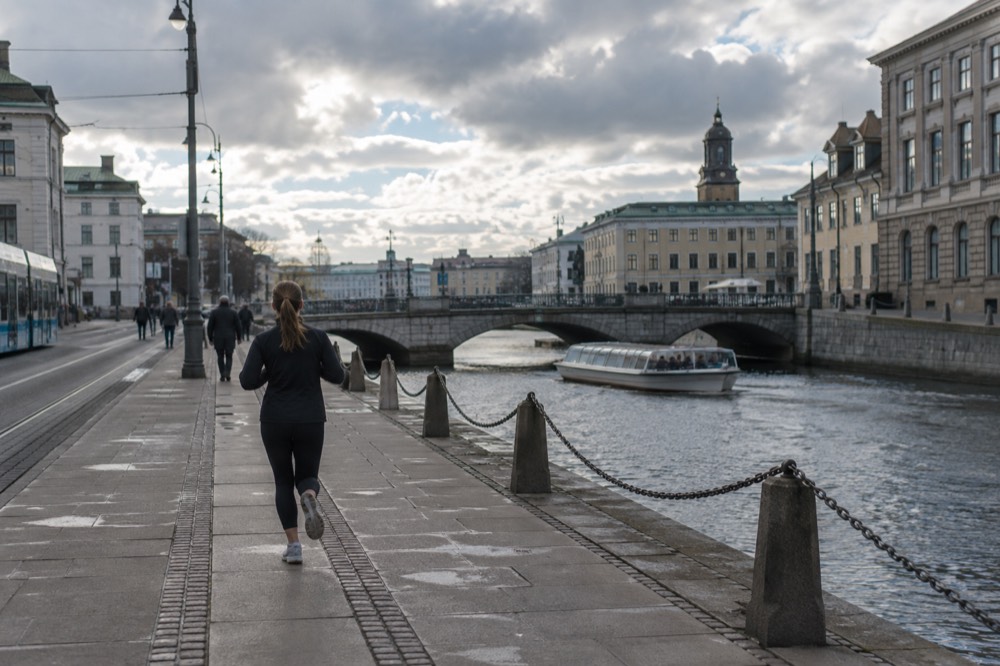
A useful parallel is the city's nickname, Little London, which is itself an imported name layered on top of two existing ones. The story behind that nickname, and the English and Scottish merchants who earned it, is covered in why Gothenburg is called Little London. The same merchants are part of why the English name stuck so firmly: the city traded with Britain from its earliest decades, and British maps carried their own version of the name long before modern tourism standardised anything. Today the practical rule for a visitor is simple. In English conversation, Gothenburg is correct and expected. On a Swedish sign, a ticket machine or a bus destination display, expect Göteborg, and know that the two words point at the same place.
There is a third name that occasionally surfaces and is worth being able to recognise even if you never need to say it. Older English texts sometimes call the city Gothland or use Latin forms such as "Gothoburgum", relics of the era when learned writing defaulted to Latin. You will not hear these spoken, and you should not use them, but they explain why the English name looks the way it does: English was adapting the same "Göt" root through its own sound system centuries before anyone worried about matching the Swedish pronunciation. The name on your boarding pass, your hotel booking and every English-language guidebook is Gothenburg, and that is the form to use when speaking English. The name on the platform screen when you arrive is Göteborg, and now you know how to read it.
What Do the Swedish Letters in Göteborg Actually Sound Like?
Three Swedish spelling rules explain the whole name: a G softens to a Y sound before front vowels like E, I, Y, Ä and Ö, the letter Ö is a rounded front vowel with no exact English equivalent, and a final G after R is a soft glide rather than a hard stop. Together these rules also unlock Göta älv, Göteborgs Stad and most other local names beginning with G.
The soft G rule is the single most valuable one for a visitor, because it recurs across Swedish place names. The same rule that turns Gö into "yur" also affects the island of Öckerö in the northern archipelago and the district of Gårda, and it is why "Göteborg" and "göra" share their opening sound. The Ö vowel deserves its own practice. English has no rounded front vowel, so every approximation is a compromise: the "u" in "burn" said with rounded lips is the usual coaching trick, and it is close enough to be understood. The same letter appears in "smörgåsbord" and in "Fika" companion words like "fika och ö", so a visitor who masters it once gets a whole set of Swedish words for free. The final RG glide is the subtlest piece. Swedish does not end borg with the crisp G of English "berg". The tongue does not make full contact, and the sound that escapes is closer to a buzzed Y. The wider set of guides lives on Gothenburg Travel Guide.
| Swedish element | In Göteborg | English approximation | Where else you will meet it |
|---|---|---|---|
| G before E, I, Y, Ä, Ö | soft, "y" sound | the "y" of "yes" | Gårda, Göta älv, Öckerö |
| Ö | rounded front vowel | "i" in British "bird", lips rounded | smörgåsbord, Långedrag |
| final -rg | soft glide, no hard G | "bor-y", buzzed ending | Marstrandborg names, fästning |
| stress | first syllable | like "STOCKholm" | almost all Swedish place names |
The stress pattern matters more than any individual sound. Swedish compounds carry their weight on the first syllable, so Göteborg is YUR-teh-bor-y, not yur-teh-BOR-y. English speakers instinctively shift stress to the second syllable because English place names like "Edinburgh" do it, and that shift is what makes an attempt sound foreign even when every individual sound is right. Practise the name as three beats with the first one heaviest and the other two light and quick, and it snaps into place. A good drill is to say the name three times in a row, slowly the first time, at conversation speed the third, keeping the first syllable loud and the rest quiet. Most people who fail do so because they speed the whole word up evenly, which flattens the stress and turns it back into the wrong word. For the wider picture on the language, including how much English you can expect to get by with, see what language is spoken in Gothenburg.
How Do Locals in Gothenburg Say the Name?
Locals say Göteborg with the full Swedish pronunciation, YUR-teh-BOR-y, in Swedish conversation, and most switch without friction to a relaxed English "Gothenburg" when speaking English with a visitor. A local will not expect a tourist to produce a perfect Ö vowel, but the soft opening Y sound is the one detail that signals you know the name is Swedish rather than German-looking.
The sociolinguistic reality is forgiving. Gothenburg is a port city with a long trading history, and its residents are used to hearing their city's name in English, German, Dutch and more. Göteborgs Stad counted over 6 million commercial guest nights in 2025, a record year, with international guest nights up around 15 percent in the first ten months of the year according to the city's tourism body, so an imperfect pronunciation is something every hotel desk and tram driver hears daily. What tends to earn a warm reaction is not fluency but the choice of name: a visitor who reads Göteborg off a sign and says "go-ten-borg" with a hard G has visibly not registered that the word is Swedish, while one who opens with a soft "yur" has. The middle ground most visitors land on, "yer-teh-bor-y" with a slightly off Ö, is completely fine and instantly understood.
There is also a local register worth knowing about. In fast, casual western Swedish speech the middle syllable compresses and the name can come out close to two and a half syllables, "YUR-te-bor-y" run together, which is harder to copy than the careful three-syllable version. Do not chase that. A clear, deliberate YUR-teh-BOR-y is the standard broadcast pronunciation, the one used by Swedish radio announcers and by the recorded announcements on the trams themselves, and it is the correct target for a learner. The city's western Swedish dialect has its own reputation in the rest of Sweden for its drawn vowels and its blunter melodic contour, and you will hear that colouring in how locals say the name, but none of it changes the underlying sounds. For a taste of how the name sits inside the city's everyday soundscape, the amphibious bus tour drives past the signs and then splashes into the harbour while a guide narrates, and the tour's listing shows a 4.7 rating from 4,326 reviews at the time of writing.
Which Other Gothenburg Names Do Visitors Mispronounce?
The names that catch visitors most are Feskekôrka, the fish-church food hall, said roughly FES-keh-hor-ka with a soft k-sound like "sh" in the middle; Långedrag, the coastal tram terminus, said LONG-eh-drahg with a long first vowel; and Vrångö, the southern archipelago island, said VRONG-uh, with the ö landing as a plain "uh" for most English speakers.
Each of these follows the same three rules that govern Göteborg, which is why learning the city's name first pays off elsewhere. Feskekôrka is the nickname of the 1874 market hall on Rosenlundsgatan, literally "fish church" because of its pointed Gothic shape, and it reopened in 2024 as a food hall with two fish counters and five restaurants, according to its own site and the municipal property owner Higab. The O with a circumflex, ô, is simply a long O in Swedish, so the word is FES-keh-HOR-ka, with the k in the middle softening to a sound between "sh" and "hy". Långedrag, at the western end of the coastal tram line before Saltholmen, has an Å, which is just a long "aw" or "oh" sound: LONG-eh-drahg. Vrångö, the southernmost of the car-free islands served by Västtrafik ferries from Saltholmen, keeps a hard V and a short "o": VRONG-uh. The islands Asperö, Brännö, Styrsö, Donsö and Köpstadsö all end in the same ö, an unstressed "uh", and the same ending appears in the northern archipelago's Öckerö.
| Local name | What it is | Rough English pronunciation |
|---|---|---|
| Göteborg | the city itself | YUR-teh-BOR-y |
| Feskekôrka | the fish-church food hall, Rosenlundsgatan | FES-keh-HOR-ka |
| Långedrag | coastal district and tram stop | LONG-eh-drahg |
| Vrångö | car-free southern archipelago island | VRONG-uh |
| Göta älv | the river through the city | YUR-ta elv |
| Haga | the wooden old quarter | HAH-gah |
The river deserves a special note because it is half of the city's name. Göta älv, said YUR-ta ELV, is the waterway that reaches the sea at the city's mouth, and the Gö in Göteborg is the same Gö with the same soft G. A visitor who can say the river can say the city, and vice versa. The same logic runs through the whole regional map: Alingsås, the knitting town reachable by train, keeps its soft G in the middle, and Trollhättan, the canal-lock town, is straightforward with a short "troll" and a "HET-tan". The ä in Trollhättan is the same letter as the ä in "Älvsborg", the fortress name that echoes through the city's bridge and its history, and it sounds like the "e" in English "pen" said slightly further forward in the mouth. None of these need perfecting before a trip, but recognising the pattern means a train departure board stops being intimidating and starts being readable. If the archipelago names are pulling you seaward, the islands and the ferry system are covered in detail in is it worth visiting the Gothenburg archipelago, and the whole pronunciation question sits inside the bigger one of what Gothenburg is known for.
Common Questions About Pronouncing Göteborg in Swedish
How do you pronounce Göteborg in Swedish?
Göteborg is pronounced roughly YUR-teh-BOR-y, with the stress on the first syllable. The initial G sounds like an English Y, the Ö is a rounded vowel with no exact English equivalent, and the final RG is a soft glide rather than a hard G.
Is Göteborg the same as Gothenburg?
Yes. Göteborg is the Swedish name and Gothenburg is the established English name for the same city. Swedish signs, timetables and addresses use Göteborg, while English-language materials use Gothenburg.
How do you pronounce Gothenburg in English?
In English the name is said GOTH-en-berg, with the TH as in "both", the stress on the first syllable, and the final syllable rhyming with "berg" in "iceberg". There is no TH sound in the Swedish original.
Why is there no hard G at the start of Göteborg?
In Swedish, a G in front of a front vowel such as E, I, Y, Ä or Ö softens to a Y sound. The same rule applies to Göta älv, the river that gives the city half its name.
How do you pronounce the Ö in Göteborg?
Ö is a rounded front vowel that does not exist in English. The closest approximation is the "i" in the British pronunciation of "bird", said with the lips rounded as if about to say "oo".
Will locals understand me if I say Gothenburg?
Yes. Gothenburg is the standard English name and residents of a city that recorded over 6 million guest nights in 2025 hear it constantly. A soft opening Y sound in Göteborg signals you know the name is Swedish, but a plain English Gothenburg is completely correct in English conversation.