Are the Trams Free in Gothenburg? What You Actually Pay in Sweden's Second City
No, Gothenburg's trams are not free. Here is what a tram ticket really costs in Gothenburg, Sweden, which tickets cover the archipelago ferries, and which price cut does not apply to visitors.
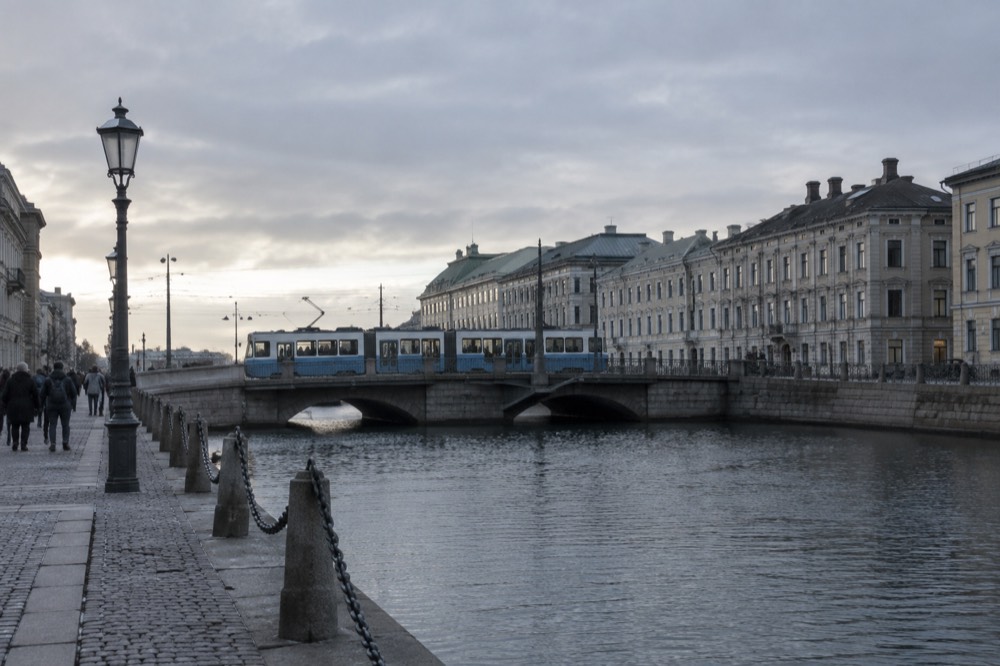
Gothenburg, Sweden runs one of the few tram networks in northern Europe that still functions as the backbone of an entire city. Göteborgs Spårvägar, the municipal operator, recorded 126 million journeys in 2025, and its own annual report describes twelve lines running across 188 kilometres of single track from Mölndal in the south to Angered in the north, Saltholmen in the west to Kålltorp in the east. With that kind of presence, the question every visitor asks is a fair one: are the trams free?
The short answer is no, and this page sets out exactly what you pay, which ticket does the most for the money, and the one price cut currently in the news that does not apply to the tickets visitors actually buy. It also covers the single best-value fact about Gothenburg transport: the same ordinary ticket that carries you on a tram also carries you on the ferry out to the car-free southern archipelago, which is covered in depth on the Gothenburg archipelago worth-visiting question.
Are the Trams in Gothenburg Free?
No, the trams in Gothenburg are not free. Every tram ride requires a Västtrafik ticket, and the cheapest option is a single Zone A ticket at 38 kr for an adult, or 29 kr for a youth aged 7 to 19. A 24-hour Zone A ticket costs 125 kr, and there is no free-ride scheme, no tourist tram exemption and no fare-free zone anywhere in the city.
Västtrafik, the regional transport authority, runs the whole system on a zone basis. Gothenburg, together with Partille, Mölndal and Öckerö, sits inside Zone A, which is the only zone a typical visitor needs. The fare table published on Västtrafik's own single-ticket page shows the single adult ticket at 38 kr for one zone, 76 kr for two zones and 114 kr for three, with youth fares at 29, 58 and 87 kr respectively.
What often causes the confusion is how you pay. There are no ticket barriers and nobody taps out. You buy a ticket in the Västtrafik To Go app, at a ticket machine, or at a service point, and inspectors do random checks on board. Riding without a valid ticket risks a penalty fare, so the absence of a gate at the platform does not mean the absence of a fare. Visitors who assume the honour system means free travel discover this the expensive way.
The network itself is a reason people half-expect it to be free. Twelve lines, 134 stops and 188 kilometres of single track, as Göteborgs Spårvägar's annual report puts it, is a dense mesh for a city of this size, and trams arrive at central stops every few minutes for most of the day. Density can look like generosity. It is not: the 2025 figure of 126 million journeys is a commercial count of paid rides, up from a pandemic low of 93 million but still below the 2019 record of 141 million.
It is also worth being clear about which Gothenburg this is. This page is about Gothenburg, Sweden, the city of 613,274 people at the mouth of the Göta älv, not the much smaller town of Gothenburg, Nebraska in the United States that shares the name. Swedish transport facts do not transfer, and neither do American ones.
How Much Do Gothenburg Tram Tickets Cost?
A single adult tram ticket in Gothenburg costs 38 kr in Zone A, and a 24-hour Zone A ticket that covers unlimited tram, bus and ferry travel costs 125 kr, the same price whether you buy it in the app or at a shop. Youth tickets are 29 kr single. Västtrafik also sells a 72-hour Zone A ticket, but its price is not published on the customer-facing page, so check the app before assuming a figure.
The table below is the fare structure a visitor actually encounters, drawn from Västtrafik's own ticket pages.
| Ticket (Zone A) | Adult | Youth (7-19) | Notes |
|---|---|---|---|
| Single, 1 zone | 38 kr | 29 kr | Transfers included within validity |
| Single, 2 zones | 76 kr | 58 kr | Only if you leave Zone A |
| Single, 3 zones | 114 kr | 87 kr | Regional travel |
| 24-hour | 125 kr | not published as a separate youth day fare on the page read | Unlimited travel in Zone A for 24 hours |
| 72-hour | price not confirmed on Västtrafik's customer page | not published | Exists, but verify in the app |
One thing to be careful with: there is a temporary state subsidy in the news that halves the price of every ordinary 30-day period ticket through the end of the year. Zone A adult 30-day tickets dropped from 890 kr to 445 kr, and the youth version from 670 kr to 335 kr. That sounds like a huge discount, and it is, but it applies only to monthly period tickets. The 24-hour and 72-hour tickets a visitor buys are not discounted. A 24-hour ticket still costs 125 kr. Do not plan a short trip around a price cut that was never aimed at you.
For most visitors the arithmetic is simple. If you will make four or more tram journeys in a day, the 24-hour ticket at 125 kr beats four separate singles at 38 kr each. If you are in the city for two or three days and plan to move around, the 72-hour ticket exists, but because Västtrafik does not publish its price on the page a visitor can read, the honest advice is to open the app and look before budgeting.
The payment mechanics matter as much as the prices. The app is the easiest method and works with foreign cards. Machines at larger stops take cards. You do not tap on or tap off; the ticket is simply valid from the moment of purchase, and you show it if an inspector asks. More detail on the whole system, including the zone map and the ferry connection, is in the site's transport guide, and the question of how many days in Gothenburg is enough depends heavily on how much of the network you intend to use.
Does One Gothenburg Tram Ticket Cover the Archipelago Ferries?
Yes. One ordinary Västtrafik ticket covers the tram to Saltholmen and the archipelago ferries out to the car-free islands, because the southern archipelago is inside Zone A and the boats carry ordinary Västtrafik line numbers. A 125 kr 24-hour Zone A ticket therefore buys a tram ride, a ferry crossing and a full day on islands such as Styrsö, Brännö, Vrångö, Donsö, Asperö and Köpstadsö.
This is the single best-value fact in Gothenburg transport, and it is why the answer to "are the trams free?" matters less than people expect. The trams are not free, but the ticket you buy for one behaves like a pass for the entire southern half of the city's territory, sea included. Västtrafik's own zone and boat network map shows the boats from Saltholmen as part of the Zone A network, and the islands they serve are formally areas of Gothenburg, not day trips.
Two practical warnings come with the fact. First, the islands are protected from private car traffic, as a Göteborgs Stad study states plainly: taxi, färdtjänst and emergency services use the roads, but nothing else. Arrive by tram to the Saltholmen terminus, because parking there is the known pain point. Second, the ferry is not the same thing as the question of whether the ferry in Gothenburg is free, which is worth reading separately, because some people confuse the Västtrafik archipelago boats with private sightseeing vessels in the harbour, which charge their own fares.
The ferry detail also changes how you read the ticket prices above. In most coastal cities the boat is the expensive leg, sold separately at a premium. Here the boat is the cheapest leg, because it is priced as ordinary Zone A public transport. A day built around the islands is therefore not a splurge day but the same 125 kr as a day spent hopping between city-centre stops, which is a genuinely unusual arrangement and one of the strongest arguments for buying the day ticket rather than singles.
Is Any Public Transport in Gothenburg Free?
No form of public transport in Gothenburg is free for ordinary visitors. Trams, buses and ferries all require a Västtrafik ticket. What is free in the city is on foot: walking Haga, Klippan and the Göta älv waterfront costs nothing, Slottsskogen park and its zoo are free to enter, and the Botanical Garden asks a voluntary entry contribution rather than a fixed ticket, which is a different thing from either free or paid.
The distinction is worth making because "free Gothenburg" lists sometimes blur the categories. Slottsskogen is genuinely free, animals included. The Botanical Garden's voluntary contribution means you can enter without paying, but the garden itself asks for support, so describing it flatly as free is not accurate either. Neither of those has anything to do with the trams. Everything else covered here is indexed on Gothenburg Travel Guide.
If you want a free guided experience, there is one honest option: the free, tip-based walking tours. These run on the GuruWalk platform, and naming the platform matters here, because these walks are not this site's products. One of the four free walks in the city, the Majorna district walk, covers the very quarter where the tram yards sit and where workers have commuted by tram for a century, and it is led by a local guru who runs it on tips only. It is free to join and you pay what you think it was worth at the end. Of the four free walks in Gothenburg, three are in English and one is Spanish only, so check the language on the listing before you turn up.
The Majorna walk pairs naturally with a tram day, because the district is a tram district. It is also the part of the city where the second-hand quarter and the harbour culture overlap, the theme the site covers in its Majorna guide. A sensible morning looks like this: ride the tram into Majorna, join the free walk, and let the guru explain the shipyard-era housing and the painted wooden landshövdingehus that the tram windows slide past. The walk runs about an hour and a half, which leaves the whole afternoon for the islands on the same day ticket.
That combination, a free guided walk plus a 125 kr day ticket that reaches the sea, is about as close to free Gothenburg as the city honestly offers. The trams themselves stay firmly priced, and the fare inspectors stay firmly employed.
What Is the Cheapest Way to Get Around Gothenburg?
For a single day of sightseeing, the 125 kr 24-hour Zone A ticket is the cheapest complete option, because it covers trams, buses and the archipelago ferries together. For one or two short journeys, single tickets at 38 kr each cost less. Walking is free and the inner city is compact, but the distances to Saltholmen, Liseberg and Hisingen make a ticket the realistic choice for most visitors.
Gothenburg is a walkable city between its main central sights, and the question of whether Gothenburg is a walkable city has a broadly positive answer inside the moat and along Avenyn. But the places people most want to reach sit at the edges of the network. Liseberg, the amusement park that drew roughly 2.5 million park guests in 2025, is a tram stop. Saltholmen, the ferry terminal, is the western terminus of the tram network, as Göteborgs Spårvägar's own description of the network confirms. You ride a tram to the boat, on the same ticket.
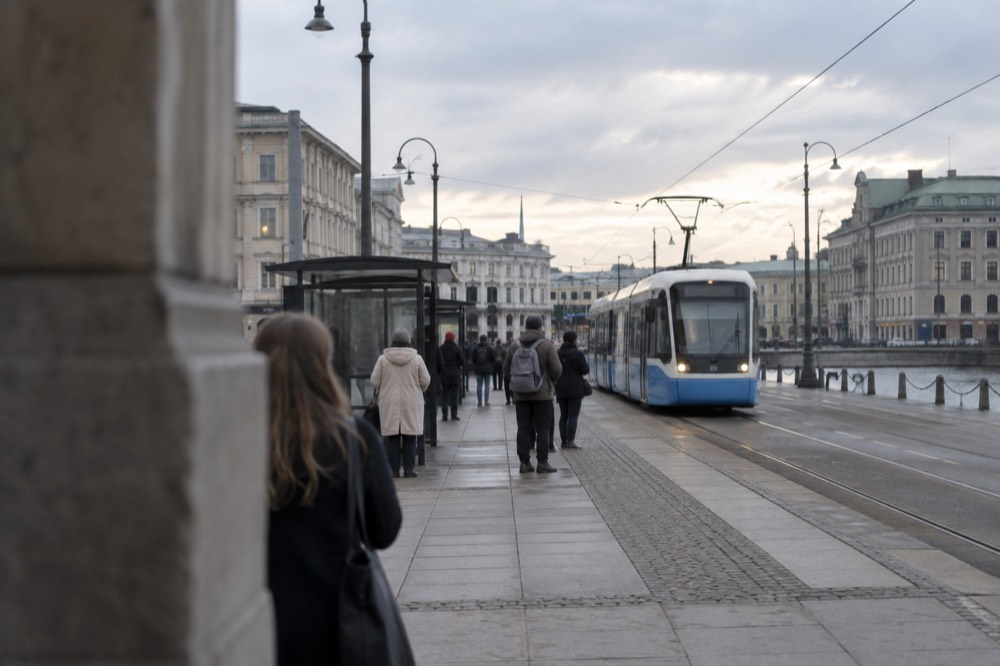
A worked example shows why the 24-hour ticket usually wins. A visitor who takes a tram to Liseberg, another back to the centre, a tram out to Saltholmen and the ferry to Brännö has made four journeys. Four separate singles at 38 kr each cost more than the 125 kr day ticket, and the ferry legs are included rather than paid for separately, which is where most coastal cities would quietly add a charge.
The one thing not to do is budget around the monthly-ticket subsidy. The halving of 30-day tickets is real, is temporary, and is aimed at residents and commuters. A visitor staying three days cannot buy a 30-day ticket at 445 kr and come out ahead against a 125 kr day ticket, and the subsidy does not touch the day tickets at all. Reporting "transport is half price in Gothenburg" would be wrong in both directions.
One more cost note for the evening: the trams run late, and the day ticket covers night service too, so a dinner in the Linné district followed by a tram back to a hotel outside the centre does not add a second fare. Taxis in Sweden are expensive by most visitors' standards, and the tram exists precisely so that nobody needs one inside the city.
Are the Trams in Gothenburg Free for Tourists?
No, tourists pay exactly the same fares as locals on Gothenburg's trams. There is no tourist fare, no visitor exemption and no tourist surcharge: a single Zone A ticket is 38 kr and a 24-hour ticket is 125 kr for everyone. Tourist products such as sightseeing buses and amphibious tours are separate commercial services with their own prices, not part of the Västtrafik network.
The confusion sometimes comes from the old Göteborg City Card, which did once bundle public transport into a visitor pass. That card no longer exists under that name; the official tourism organisation sells no city card, and the [Go City](https://gocity.tpk.ro/HQKyKKW4) product that replaced it is an attractions pass whose transport inclusion has never been confirmed against a primary source. Anyone telling you a sightseeing pass includes the trams is repeating a claim about a card that was retired.
The commercial sightseeing alternatives sit outside the fare system entirely. The amphibious bus tour, which drives into the river as part of the route, and the guided archipelago cruises are private products with their own listings, and their prices are on those listings. They are not tram substitutes, but they do solve different problems: the amphibious tour compresses the city and harbour into an hour, and the guided cruise reaches the archipelago water with commentary that the ordinary Västtrafik ferry does not provide.
For a fuller picture of what the city offers beyond the tram windows, the site's overview of what Gothenburg is known for covers the shipyard cranes, the food scene and the archipelago that the network serves.
Common Questions About Trams in Gothenburg
Are the trams free in Gothenburg?
No. Every tram ride in Gothenburg requires a Västtrafik ticket. A single adult Zone A ticket costs 38 kr and a 24-hour ticket costs 125 kr. There are no barriers at the stops, but inspectors check tickets on board and riding without one carries a penalty fare.
Do you need to tap out on Gothenburg trams?
No. There is no tap-out on Gothenburg trams and no barriers. You buy a ticket in the Västtrafik To Go app, at a machine or at a service point before boarding, and it is valid from the moment of purchase. Inspectors carry out random checks on board.
Does the tram ticket include the archipelago ferry?
Yes. The southern archipelago is inside Zone A, and the ferries from Saltholmen carry ordinary Västtrafik line numbers. A 125 kr 24-hour Zone A ticket covers the tram to Saltholmen and the boats to islands such as Styrsö, Brännö, Vrångö and Donsö.
Is transport in Gothenburg half price right now?
Only monthly tickets. A temporary state subsidy halves every 30-day period ticket through the end of the year, cutting a Zone A adult monthly from 890 kr to 445 kr. The 24-hour and 72-hour tickets visitors buy are not discounted, and the 24-hour ticket still costs 125 kr.
Are Gothenburg trams free for children?
Not free, but children pay the youth fare rather than nothing. Västtrafik's fare table lists youth singles at 29 kr in Zone A against the adult 38 kr. Separately, an adult holding a 30-day period ticket bought in the app may bring three under-20s along free, which is a period-ticket benefit, not a day-ticket one.
What is the cheapest way to ride the trams in Gothenburg?
If you plan four or more journeys in a day, the 125 kr 24-hour Zone A ticket beats singles at 38 kr each. For one or two short trips, singles cost less. For longer stays, check the 72-hour ticket price in the app, since Västtrafik does not publish it on its customer-facing page.