Why Is the Sunset So Late in Sweden? The Gothenburg Answer
Sweden's late sunsets come from latitude. In Gothenburg at 57.7 degrees north the sun sets at 22:17 in June and it never gets fully dark. Here is the astronomy, the month-by-month numbers and what it means for your trip.
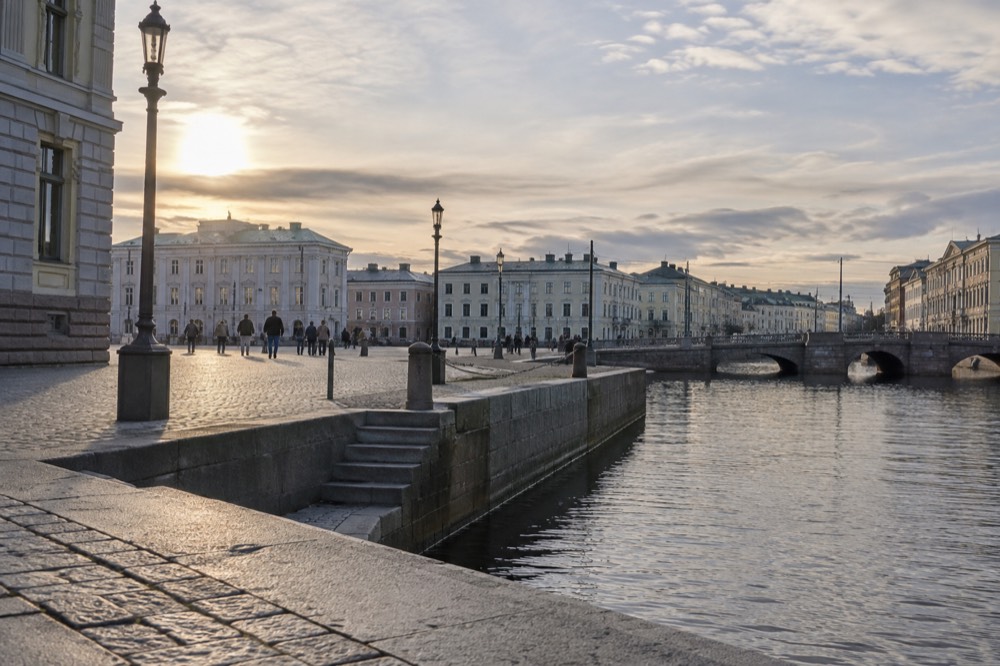
Gothenburg sits at 57.7 degrees north, the same latitude as northern Scotland and southern Alaska, and that single number explains almost everything about the city's light. At the June solstice the sun rises at 04:11 and does not set until 22:17 local time, according to US Naval Observatory calculations for the city's coordinates. That is 18 hours and 6 minutes of daylight in a single stretch, and even after sunset the sky refuses to go properly dark. Visitors from southern Europe or North America routinely find it disorienting: dinner at 20:00 in full daylight, a walk at 23:00 in a bright blue twilight, curtains that do nothing.
This page explains the mechanics, gives the real numbers for Gothenburg rather than the vague "midnight sun" claims that get attached to all of Sweden, and covers what the light does in each season. The short version is that latitude plus the tilt of the Earth's axis produces a swing of 11 hours 34 minutes between the longest and shortest days of the year, and the city's position on that curve is what makes June evenings endless and December afternoons feel like late evening by 15:00.
Why Does Sweden Have Such Late Sunsets in Summer?
Sweden has late summer sunsets because of latitude and the tilt of the Earth's axis. The country stretches a long way north, and at Swedish latitudes the summer sun takes a long, shallow path across the sky instead of dropping steeply below the horizon. The further north you go, the shallower the path, the later the sunset, and the longer twilight lingers after the sun is technically gone.
The Earth's axis is tilted relative to its orbit around the sun. Around 21 June, the Northern Hemisphere leans toward the sun. At the equator this barely matters, the day stays about 12 hours year round. At 57.7 degrees north, where Gothenburg is, the tilt means the sun spends an enormous fraction of the day above the horizon and, critically, sets at a shallow angle.
That angle is the part people overlook. Near the equator the sun plunges almost straight down at sunset and darkness arrives within about half an hour. At Gothenburg's latitude the sun slides down obliquely, skimming the horizon. It takes a long time to get from "touching the horizon" to "actually gone", and even longer to get from "gone" to "dark". Civil twilight on 21 June in Gothenburg runs from 02:58 to 23:30 local summer time, which leaves roughly three and a half hours of true night. For practical purposes, a mid-June evening in Gothenburg never gets darker than a dim blue.
Sweden's shape makes the effect stronger the further north you travel. Gothenburg, in the south-west, has 18 hours 06 minutes of daylight at the solstice. Stockholm, further north and east, gets a few minutes more. Above the Arctic Circle, the sun does not set at all in midsummer, which is the genuine midnight sun. That is the fact that gets stretched to cover the whole country in casual conversation, and it is worth being precise about: Gothenburg does not get midnight sun, it gets a sunset so late and a twilight so long that the difference hardly registers.
How Late Does the Sun Actually Set in Gothenburg?
On 21 June 2026 the sun rises in Gothenburg at 04:11 and sets at 22:17 local time, giving 18 hours and 6 minutes of daylight, according to US Naval Observatory data for the city's coordinates. Civil twilight extends until 23:30, so the sky stays usable for outdoor plans well past 11pm. At the other extreme, 21 December gives 6 hours 32 minutes of daylight, with sunrise at 08:54 and sunset at 15:26.
The two solstices frame the whole year, and the numbers are stark enough to plan around:
| Date | Sunrise | Sunset | Daylight | Civil twilight |
|---|---|---|---|---|
| 21 June 2026 (CEST) | 04:11 | 22:17 | 18 h 06 m | 02:58 to 23:30 |
| 21 December 2026 (CET) | 08:54 | 15:26 | 6 h 32 m | 08:03 to 16:17 |
The month-by-month reality is what trip planning actually runs on. June and July are the months of the endless evening. May and August are close behind, with sunsets that still land after 21:00 for most of the period. April and September sit in a middle band where the evenings are pleasant but the light quits at a recognisable hour. October through February is the dark half of the year, and November is often felt as the gloomiest month because the sun sets before 16:30 and cloud cover swallows much of what little light there is.
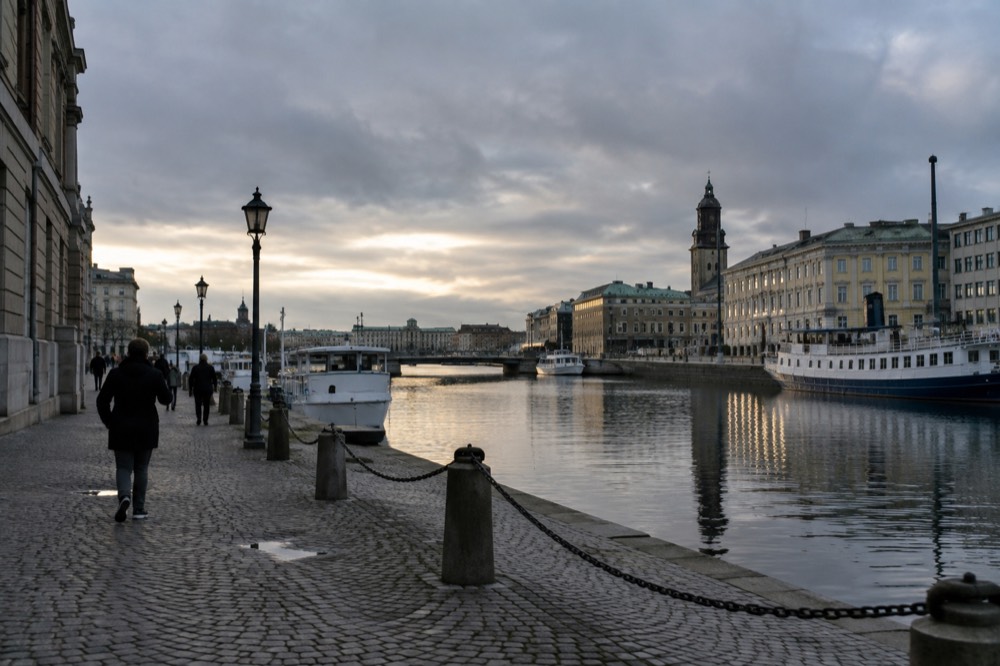
A few concrete anchors help calibrate expectations. In late June, the sky at 23:00 is still bright enough to read a map by. In late July, real darkness finally returns for a couple of hours, but sunset still falls around 21:40. By late August sunset is near 20:15, and by the equinox in late September it is around 19:15. The compression is startling: the city loses roughly seven minutes of daylight per day in September, which is why two visits three weeks apart in autumn can feel like different cities.
The long evenings change what a day in Gothenburg can hold. A canal or harbour cruise that leaves at 18:00 is still in full daylight for its whole run. The amphibious bus sightseeing tour, which the listing describes as a one-hour land and water trip rated 4.7 from 4,326 reviews, works as an evening activity in a way that would be absurd in a city where the sun sets at 18:00. The southern archipelago ferries run on ordinary Västtrafik tickets, and an evening ferry to Styrsö or Brännö in June is made by the light: the sea, the granite and the wooden houses stay lit until late.
Does Gothenburg Get the Midnight Sun?
No, Gothenburg does not get the midnight sun. The sun always sets here, even at the solstice, because the city lies at 57.7 degrees north, well below the Arctic Circle where the true midnight sun begins. What Gothenburg gets instead is a sunset at 22:17 followed by civil twilight until 23:30, leaving only about three and a half hours of true night in late June.
The distinction matters because "midnight sun" gets applied to all of Sweden in travel copy, and it sends people north with the wrong expectations of the south. The genuine phenomenon, where the sun never drops below the horizon at all, belongs to Swedish Lapland. Abisko, Kiruna and the coast of Norrbotten have weeks of it. Gothenburg shares the latitude band with cities like Aberdeen and the southern tip of Alaska, and in that band the sun sets, just very late and very slowly.
What Gothenburg does have is "white nights" in the colloquial sense. The three and a half hours of true night in late June never reach full darkness, because the sun passes only a short distance below the horizon and civil twilight at both ends eats into the night itself. Locals describe June nights as a dim blue glow rather than darkness. Sleep-sensitive visitors are the group most affected: a hotel room with poor blackout curtains plus a body clock reading "still daytime" at 23:00 is a known recipe for a rough first night. An eye mask is standard advice in every Gothenburg summer packing list, and it is not a joke.
The reverse question deserves equal attention. In late December the city gets 6 hours 32 minutes of daylight, and civil twilight runs 08:03 to 16:17, so even the grey light barely lasts eight hours. The sun rises at 08:54 and sets at 15:26. That is the trade the latitude makes: the same tilt that gives you 18-hour days in June takes the light away in December. The winter guide on this site, gothenburg-in-winter, covers what the city does with the dark months, which is more than most visitors expect.
Why Are Swedish Winter Days So Short?
Swedish winter days are short because the same axial tilt that keeps the sun up for 18 hours in June puts it below the horizon for most of the 24 hours in December. At Gothenburg's latitude the 21 December day lasts 6 hours 32 minutes, with the sun above the horizon only from 08:54 to 15:26, and the swing between the June and December solstices is 11 hours 34 minutes.
That swing is the single most dramatic number on this page. A city on the equator has essentially zero seasonal daylight swing. Gothenburg has more than eleven and a half hours of it. The practical consequence is that the character of the city changes almost entirely by season, and travellers who visit in both June and December regularly report that they feel like different cities, not because of weather but because of light. Everything else covered here is indexed on Gothenburg Travel Guide.
The psychology of it is well documented among people who move here. Short December days mean the sun rises after most people are at work or school and sets before they leave. Lunch breaks become the only daylight exposure, and the winter café culture of Gothenburg, the fika tradition described in what does fika mean in Sweden, functions partly as a light-and-warmth ritual against the dark. The city's Christmas market at Liseberg, running 14 to 23 December in 2026 per the park's own calendar, is effectively an evening event: by 15:30 it is fully dark and the lights carry the atmosphere.
The darkness also reshapes sightseeing logistics. A boat tour or an open-top bus tour in December is a different product than the same tour in June, because you will spend part of it in the dark. The canal cruise and the archipelago boats still run in the cooler months, but the photographic payoff of a June evening cruise, the low golden light on the water, simply does not exist in December. If long golden evenings are the goal, the season is the decision, and the page on what is the best time to visit Gothenburg breaks the trade-offs down month by month.
When Is the Best Month for Long Evenings in Gothenburg?
June is the month for the longest evenings, with sunset at 22:17 at the solstice and twilight past 23:00, but July and August deliver nearly as much usable evening light with warmer sea and air. September evenings still run long by most visitors' standards, while April offers the driest weather of the year with rapidly lengthening days, gaining roughly six minutes of daylight per day.
The trade between light and weather is the real decision. June maximises daylight but the sea is only beginning to warm. SMHI's quality-controlled observations from the Vinga lighthouse station show the water peaks in August at 18.6 C, not July, and that September's water at 16.7 C is actually warmer than June's at 16.2 C. So a visitor whose long-evening plan involves swimming off an archipelago island gets the best combination in August: sunset still around 20:15 to 21:00, and the warmest sea of the year.
For pure evening length without the swimming, the last week of May through the first week of July is the peak. This is also when the city's outdoor life is at full volume, the terraces along the Långgatorna strip stay out late, and the archipelago ferries carry evening picnickers. The one caveat is accommodation pricing and crowds: the long-light window is the high season, and the cost question is covered in detail in is Gothenburg cheap or expensive.
April is the sleeper option for anyone who wants lengthening days without high-season prices. SMHI's 1991-2020 normals for the Göteborg A station show April as the driest month of the year, 51.3 mm against October's 102.9 mm, on the fewest wet days of any month, per the institute's published normals for the 1991-2020 period. The light is growing by roughly six minutes per day, and the evenings are pleasant without the midnight-twilight confusion. The city also avoids the "rainiest city" label that gets attached to it: SMHI's own national summary places the precipitation maxima in the western highlands and the mountains, not in Gothenburg, whose 912 mm a year sits inside the normal western Götaland band.
How Do You Sleep and Function When It Never Gets Dark?
Most visitors adjust within two or three nights by using blackout curtains or an eye mask, keeping a consistent bedtime, and getting bright morning light, since the body clock resets on light exposure rather than on clock time. Locals in Gothenburg routinely sleep through 18-hour daylight in summer using proper curtains, and hotels in the city are built for it, with heavier window treatments than southern-European visitors expect.
The science is straightforward. The circadian clock takes its cue from light hitting the eye, particularly in the morning and evening. In late June, Gothenburg delivers bright light at 22:00 and dim blue light at 02:00, which is a confusing signal for a body calibrated to a 19:00 sunset. The fix is to control the light at the edges: block it at night, seek it in the morning. A morning walk in the 04:00-to-08:00 window sounds absurd until you are awake anyway, jet-lagged, and the light is spectacular.
The evening schedule shift is the other adaptation. Swedes lean into it rather than fighting it. Dinner moves later, terraces fill at times that would be closing time further south, and the evening walk or swim is a genuine institution. An evening in the archipelago in June, taking the tram to Saltholmen and a ferry on the same Västtrafik ticket, is the classic version: you leave the city after dinner and still have hours of light on the water. The page on is it worth visiting Gothenburg archipelago covers the islands themselves.
For travellers who need to be functional early, the reverse trick applies: in the June window, the earliest light of the day, around 04:00, is a quiet, uncrowded, photogenic hour in a city that otherwise fills up. Photographers who chase the long golden light that high latitudes produce, the low sun angle that flatters stone and water, will find the golden hours stretch for a very long time on either side of the day. The best photo spots guide on this site lists where the low light lands best.
The winter version of the same advice runs in the opposite direction. In December the problem is not too much light but too little, and the standard local countermeasures are vitamin D, lunchtime daylight walks, and leaning into the cosiness rather than resenting the dark. The December guide, gothenburg-in-december, covers the city's light festivals, the Christmas market calendar and what remains open in the short days.
Common Questions About Late Sunsets in Sweden
Why is the sunset so late in Sweden?
Sweden's latitude means the summer sun crosses the sky on a long, shallow path and sets at a low angle. At Gothenburg's 57.7 degrees north the 21 June sunset falls at 22:17 local time, with twilight continuing until 23:30. The further north in Sweden, the later the sunset, until above the Arctic Circle the sun does not set at all in midsummer.
Does it ever get fully dark in Gothenburg in summer?
Barely. On and around 21 June, civil twilight runs from 02:58 to 23:30 local summer time, leaving only about three and a half hours of true night, and even that never reaches full darkness. By mid-July, real darkness returns for a few hours each night.
What time does the sun set in Gothenburg in June?
At the 21 June solstice the sun sets at 22:17 local time, having risen at 04:11, according to US Naval Observatory data for the city's coordinates. That is 18 hours 06 minutes of daylight. Around the equinox in late September, sunset falls near 19:15.
Does Gothenburg have the midnight sun?
No. The true midnight sun, where the sun never sets, only occurs above the Arctic Circle, in Swedish Lapland. Gothenburg at 57.7 degrees north always has a sunset, but in late June it comes at 22:17 and the following night stays a dim blue rather than dark.
How short is the shortest day in Gothenburg?
The 21 December day lasts 6 hours 32 minutes, with sunrise at 08:54 and sunset at 15:26. Civil twilight runs 08:03 to 16:17, so the grey light lasts about eight hours. The swing from the longest to the shortest day is 11 hours 34 minutes.
When does the sea warm up for those long evenings?
Later than the light. SMHI's quality-controlled observations at the Vinga station show the sea peaks at 18.6 C in August, not July, and that September water at 16.7 C is warmer than June water at 16.2 C. August combines the warmest sea with sunsets still around 20:15 to 21:00.
The latitude is fixed and the tilt is fixed, so none of this is going to change. What changes is what you do with it: June for the endless blue evenings, August for the warm sea under a still-late sun, December for candlelight against a 15:26 sunset. Gothenburg Travel Guide exists to help you pick. For the wider picture of what the city offers, start with what is Gothenburg known for.