Where Can You Go by Train from Gothenburg, Sweden?
The train destinations you can reach from Gothenburg Centralstation in Sweden, from Stockholm and Oslo to the Bohuslän coast and the archipelago, plus the airport connection that is not a train at all.
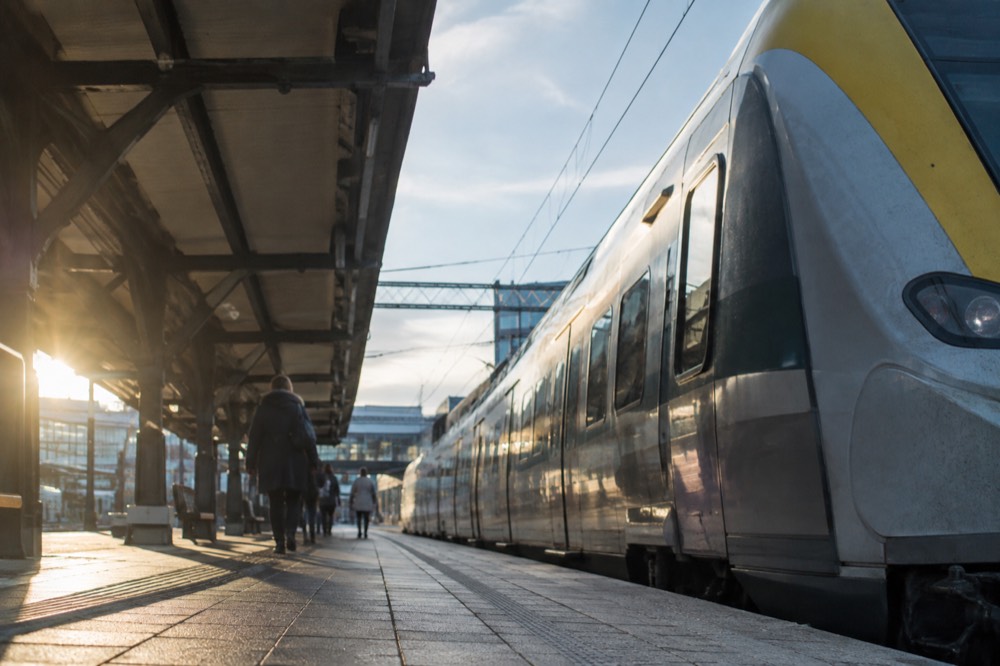
Gothenburg Centralstation, the 19th-century brick terminus at the edge of the city moat, is the western anchor of the Swedish mainline network. Trains pull out of it eastbound toward Stockholm, northbound toward Oslo and the Norwegian hills, and southbound along the Halland coast toward Malmö and, across the Öresund bridge, Copenhagen. Closer in, the commuter lines thread through Alingsås, Trollhättan and Borås, which means some of the best day trips from Gothenburg need nothing more than a platform ticket and a free afternoon. And one thing the network conspicuously does not do: there is no rail link at all to Landvetter Airport, a gap that catches out almost every first-time visitor.
This page, from the editorial desk at Gothenburg Travel Guide, lays out the train map as it actually stands: the long-distance lines, the day-trip towns, the cross-border routes, and the two Gothenburg destinations people wrongly assume have a train, the archipelago and the airport.
Where Can You Go by Train from Gothenburg?
From Gothenburg Centralstation you can travel by direct train to Stockholm, Oslo, Copenhagen via Malmö, and a long list of Swedish towns including Alingsås, Trollhättan, Borås, Varberg, Falköping, Skövde and Kungsbacka, most of them reachable in a single morning. The station is the end of the line for the western mainline, so every westbound journey in the region starts here, and the commuter network alone puts a dozen towns within easy reach of the city centre.
The geography is simple once you see it. Gothenburg sits at the mouth of the Göta älv, at the point where Sweden's western rail corridor meets the sea. East of the city the mainline climbs inland through Västra Götaland toward the capital. North of it, the Norway/Vänern line follows the river and the lake country toward the Norwegian border. South of it, the west-coast line runs down the Halland shore to Malmö and the Öresund crossing. Practically every direction except due west, which is open sea, has a rail option.
That is why Gothenburg works so well as a base. You can sleep in the city, spend the morning in a granite fishing village or a canal town, and be back for dinner. The day-trip question is really a question about this timetable, and the answer is unusually generous for a city of this size, one of the reasons the is Gothenburg in Sweden worth visiting debate tends to resolve in the city's favour.
The station itself is compact by capital-city standards, with the Nils Ericson Terminalen for long-distance coaches attached to the same building. That attachment matters more than it sounds, because it means a coach arrival and a train departure share a roof, which is exactly what you want when the airport has no rail link and your onward journey is a train. One thing worth knowing before you plan anything: the Västlänken rail tunnel, under construction beneath the city since the late 2010s, opens its first section at Centralen in December 2026, with the full three-station tunnel, Centralen, Haga and Korsvägen, expected around 2030. Until then, Centralen is the only rail hub in the centre, and construction works are a visible feature of the streets around it.
Which Swedish Cities Can You Reach by Train from Gothenburg?
The headline domestic destinations from Gothenburg are Stockholm on the eastbound mainline, Malmö on the southbound coast line, and the regional towns of Alingsås, Trollhättan, Borås, Varberg and Kungsbacka, all served by frequent regional or commuter trains. Stockholm is the big one, a high-speed corridor with several departures a day, while the smaller towns are day-trip distance, close enough that commuting is normal.
Stockholm first, because it is the route most visitors ask about. The Gothenburg to Stockholm train is one of Sweden's two great mainline journeys, running east across the lake country of Västergötland. There is a dedicated high-speed service on the corridor, and the question of whether it is worth taking over the 50-minute flight comes up often; the scenery answer and the speed answer are covered in detail on our high-speed train from Gothenburg to Stockholm page. The practical summary is that the train deposits you in the centre of both cities, which the flights do not.
The regional network is where Gothenburg quietly excels. Alingsås, a small town of café culture and old industrial heritage, sits on the eastbound commuter line and is close enough that people commute daily. Trollhättan, with its locks and its film museum, lies north on the Norway/Vänern line. Borås, the textile city covered in street art murals, is reached on a branch line east. Varberg, a classic Halland seaside town with a fortress, is south on the coast line, and Kungsbacka is the first stop over the Halland county border, a short commuter hop.
| Destination | Direction from Gothenburg | What it is known for | Day-trip friendly? |
|---|---|---|---|
| Stockholm | East, mainline | The capital, Gamla Stan, museums | Overnight is better, but a day return exists |
| Alingsås | East, commuter line | Cafés, old mill town | Yes, easily |
| Trollhättan | North | Göta Canal locks, innovation centre | Yes |
| Borås | East, branch line | Street art, textile museum | Yes |
| Varberg | South, coast line | Fortress, Halland beaches | Yes |
| Malmö / Copenhagen | South, coast line | Öresund crossing to Denmark | Overnight recommended |
Two of these deserve a special mention. Trollhättan's locks are the reason the Göta älv is navigable at all, and the town's lock area is a short walk from the station. Varberg gives you the flat, sandy Halland coast, which is a different Sweden from the granite islands north of Gothenburg, and it is all reachable with an ordinary regional ticket bought on the day.
A note on how these towns differ from the archipelago. The islands south of the city are part of Gothenburg itself, reached on a city ticket. The rail towns are not: they are separate municipalities with their own centres, and that is precisely their appeal. You leave a city famous for its harbour and arrive somewhere with a completely different character, whether that is a canal-side lock staircase in Trollhättan or a mural-covered square in Borås, and you do it without a car, a reservation, or much planning at all.
Can You Take a Train from Gothenburg to Oslo or Copenhagen?
Yes to both. Oslo is reached on the Norway/Vänern line, a cross-border regional route that runs north through the lake district and over the Norwegian border, while Copenhagen is reached by travelling south to Malmö and crossing the Öresund bridge, with a change at Malmö or, on some departures, a through service. Both are proper international train journeys, and neither requires a flight.
The Oslo route is the more scenic of the two by common description, running through the Vänern lake country and the border forests before dropping toward the Oslofjord. It is a cross-border regional train rather than a high-speed service, so it is a journey you take for the ride as much as the arrival. The Copenhagen route is the reverse: fast, flat and coastal, down through Halland to Malmö, where the line dives onto the Öresund bridge and surfaces in Denmark. From Malmö central you can also branch east toward the Swedish south coast.
Book international legs in advance. Cross-border trains in Scandinavia use demand-based pricing, and the walk-up fare on the Oslo route in particular can sting. Swedish domestic regional trains, by contrast, are generally the same price whenever you buy, which is why the day-trip towns above are so forgiving for spontaneous plans. If you are wondering whether advance booking is needed for Swedish trains generally, the rule of thumb is: long-distance and international, yes; regional, no.
There is a seasonal wrinkle worth flagging. Around major Swedish holidays, Midsummer especially, long-distance trains fill up weeks ahead, and the Stockholm corridor in particular can sell out entirely on peak Friday and Sunday afternoons. The regional network barely notices, because capacity is frequent and demand is spread across commuters. If your itinerary is fixed around a holiday weekend, book the long legs early and leave the regional days loose.
Can You Reach the Gothenburg Archipelago by Train?
No, there is no train to the archipelago, but you do not need one. The southern islands, Styrsö, Brännö, Vrångö, Donsö, Asperö and Köpstadsö, are reached by tram to Saltholmen and then a Västtrafik ferry, all on one ordinary ticket, because the islands are part of the city and sit inside Zone A of the fare system.
This is the fact that makes the archipelago the best-value day out in Gothenburg. Västtrafik's own materials state that you can ride the same ticket from the centre all the way out onto the sea, and the islands are served by ferries that carry Västtrafik line numbers and appear on the operator's own zone map and fare pages. A 24-hour Zone A ticket costs 125 kr, and it covers the tram to Saltholmen, the ferry from the pier, and every island hop in between. The is the ferry in Gothenburg free question gets a no, but the bundled answer is better than free: it is included in the same ticket you would buy for a tram ride to the shop.
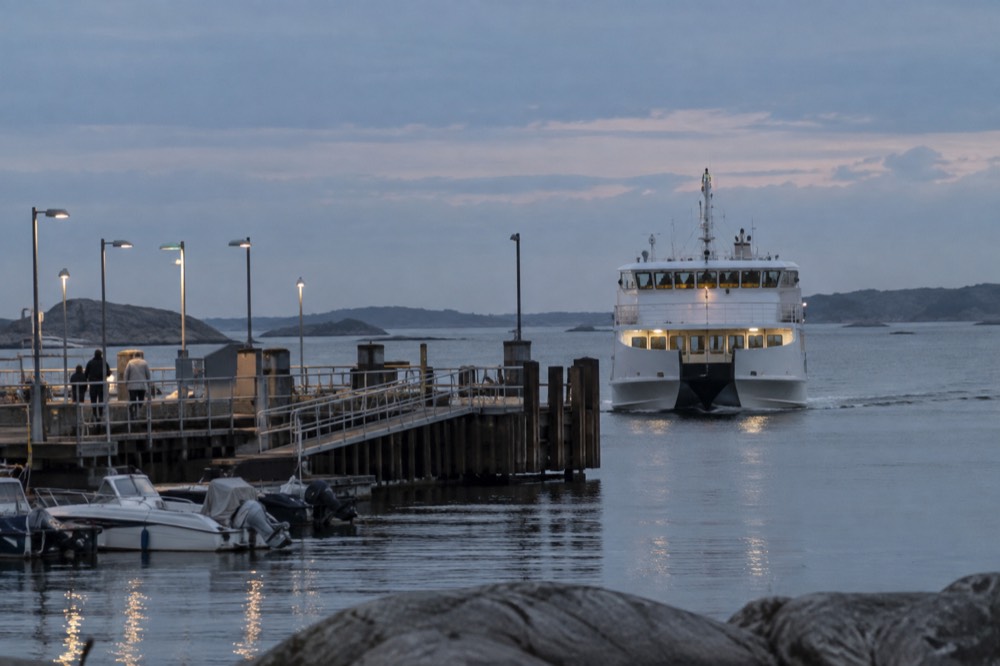
The islands are car-free, protected from private car traffic by city ordinance, with exceptions only for taxi, transport services and emergency vehicles. So the ferry is not just the cheapest way there, it is the only way for almost everyone. Our is it worth visiting the Gothenburg archipelago page covers which island suits which kind of day, from the swimming beaches of Vrångö to the village lanes of Donsö.
One fare nuance that matters to visitors. Västtrafik's 30-day period tickets are currently halved by a temporary state subsidy, Zone A adult tickets dropping from 890 kr to 445 kr, but that discount does not apply to the 24-hour and 72-hour tickets visitors actually buy. The 24-hour Zone A ticket remains 125 kr. Do not plan around the headline discount unless you are staying a month.
The northern islands, Öckerö, Hönö and Björkö, are a different story again. They sit in the northern archipelago, reached by bus over the Hisingen bridges rather than by tram and ferry, but they are still inside Zone A, so the same day ticket logic applies. The distinction that trips people up is not the fare, it is the direction: south means tram to Saltholmen then boat, north means bus from the city centre. Neither direction involves a train.
Is There a Train from Gothenburg to Landvetter Airport?
No. Göteborg Landvetter Airport, Sweden's second-largest airport with 5,435,850 passengers in 2025, has no rail link of any kind, and Swedavia's own transport pages list only road options. The connection is the Vy flygbussarna airport coach, which runs Landvetter to Korsvägen to Göteborg Centralstation in about 20 minutes, alongside Västtrafik bus 612 and a long-distance coach route.
This is the single most common planning error for Gothenburg. Visitors assume a city of this size, with a mainline station and a major airport, must have a train between them. It does not, and there is no rail project on the books to change that. The airport opened in October 1977, replacing Torslanda, and it has been coach-and-bus territory ever since. Swedavia's own bus page for the airport lists the coach and bus routes and nothing else.
The coach is not a hardship. Vy flygbussarna runs the route to the Nils Ericson Terminalen, which is attached to Centralstation, so the transfer from a train journey to a flight is a walk of a couple of hundred metres. FlixBus also serves the airport from the same terminal, running the Landvetter to Korsvägen to Kungsportsplatsen to Göteborg C route and a daily Landvetter to Stockholm Arlanda coach, and Västtrafik bus 612 connects the airport with Landvetter town in about 14 minutes. Our are there two airports in Gothenburg coverage compares the options in detail, including the second-airport question, since Säve, the old Torslanda site, still confuses searches.
For the rest of the region, the rule is: train for towns, tram and ferry for islands, coach for the airport. If you are staying in the city itself for a few days, the sightseeing options cluster around the harbour and the canal, and a pass covering multiple attractions can make sense there; the [Go City](https://gocity.tpk.ro/HQKyKKW4) All-Inclusive Pass, for instance, bundles more than 20 Gothenburg attractions into 1 to 5-day durations, though unlike the old municipal city card it is an attraction product, not a transport product.
What Is Changing at Göteborg Centralstation?
The Västlänken rail tunnel, under construction beneath central Gothenburg, opens its first section, the underground tracks at Centralen, in December 2026, with the full tunnel and its three new stations, Centralen, Haga and Korsvägen, expected around 2030. Until then, all long-distance and regional trains use the existing surface station, and central-city streets carry visible construction.
For a visitor, this means two things. First, everything currently arrives and departs from the one historic station at the top of Drottningtorget, so navigation is simple even while the works are loud. Second, the areas around Haga and Korsvägen are being dug up on and off, which occasionally affects walking routes and tram stops near the worksites. It does not affect any of the train destinations listed above; the mainlines themselves are running as normal.
After 2030 the picture changes. Västlänken will put through-trains underground and add two new central stations, which will shorten cross-city journeys and connect the station network to Liseberg and Korsvägen directly by rail. Until then, the tram remains the connector between Centralstation and everything south of the moat, which is one more reason the is Gothenburg worth visiting for tourists answer leans so heavily on the tram being good. It is, and it reaches almost everything a visitor wants.
Common Questions About Train Travel from Gothenburg
Where can you go by train from Gothenburg?
From Gothenburg Centralstation you can reach Stockholm, Oslo and Copenhagen by long-distance or cross-border train, plus Alingsås, Trollhättan, Borås, Varberg, Kungsbacka and other regional towns on frequent services. The station is the western terminus of the Swedish mainline network.
Is there a high-speed train from Gothenburg to Stockholm?
Yes, the Gothenburg to Stockholm corridor has a high-speed service with several departures a day. It is covered in detail on our high-speed train page, including how it compares with flying.
Can you take a train from Gothenburg to Oslo?
Yes. The Norway/Vänern line runs north through the lake district and across the Norwegian border to Oslo. It is a cross-border regional journey rather than a high-speed one, and advance booking is recommended.
Can you take a train from Gothenburg to Copenhagen?
Yes, by travelling south along the coast line to Malmö and crossing the Öresund bridge, either changing at Malmö or using a through service where one is running.
Is there a train from Gothenburg to Landvetter Airport?
No. Landvetter Airport has no rail link. The connection is the Vy flygbussarna airport coach, which takes about 20 minutes to Göteborg Centralstation, along with Västtrafik bus 612 and long-distance coach routes.
Can you get to the Gothenburg archipelago by train?
No, but you do not need one. The southern islands are reached by tram to Saltholmen and then a Västtrafik ferry, all covered by one ordinary Zone A ticket, since the islands are part of the city of Gothenburg.