What Is Special About Gothenburg, Sweden? The Facts That Make It Different
Gothenburg, Sweden is a port city where trams meet car-free islands, the sea is warmer in September than June, and the biggest attraction closes for a quarter of the year. Here is what actually makes it different.
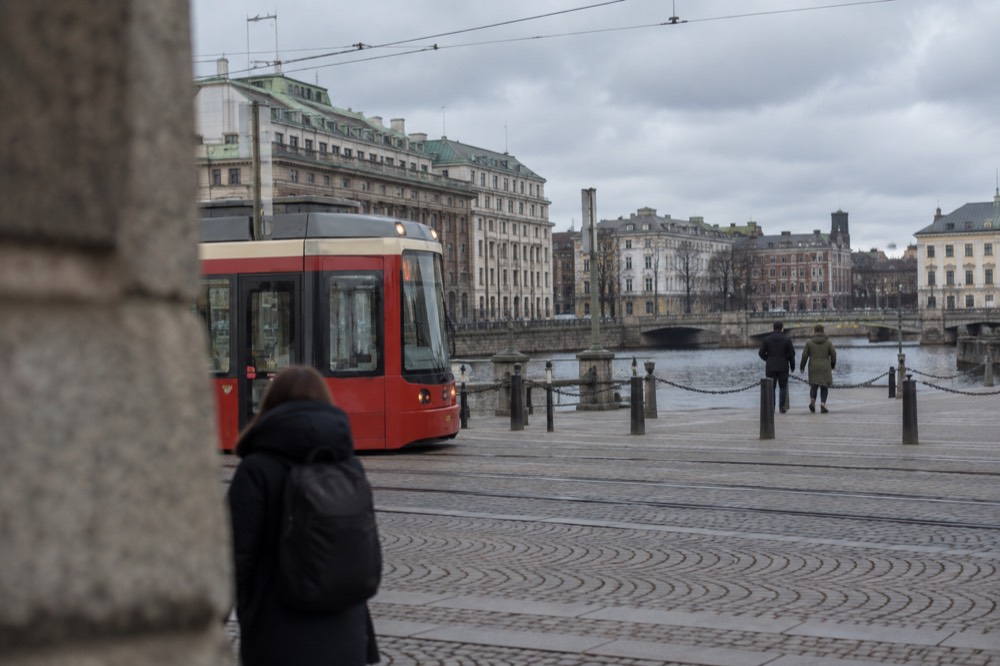
Gothenburg, Sweden's second city, sits at the mouth of the Göta älv where the river meets the Kattegat, and 613,274 people lived there at the end of 2025 according to Göteborgs Stad's own population report. Dutch engineers laid out the old town inside a moat in the seventeenth century, shipyards built the twentieth-century version of the city, and the modern place is a compact grid of granite, red brick and painted wooden houses threaded by 188 kilometres of tram track. In 2025 the region recorded over six million commercial guest nights, a record, with international guests up roughly 15 percent in the first ten months of the year. The city is busy, and it is busy for reasons that are genuinely specific to it. This page sets out what those reasons are, using figures from the city, the transport authority, SMHI and the venues themselves.
What Makes Gothenburg, Sweden Different from Other Swedish Cities?
Gothenburg's defining difference is that its car-free southern archipelago sits inside the city's own public transport zone, so one ordinary tram-and-ferry ticket carries you from the central station to islands in the open sea, a combination no other Scandinavian city offers. The second is maritime scale: a working harbour at the river mouth, 188 kilometres of tram track, and a food culture built on shrimp, oysters and the fish hall Feskekôrka, which reopened in 2024 as a food hall with five restaurants.
Stockholm has its islands, but you buy separate boat tours there. Copenhagen is flat and bike-shaped. Gothenburg's geography is the unusual thing: the city was built to guard a river mouth, and the islands off its coast, Styrsö, Brännö, Vrångö, Donsö, Asperö and Köpstadsö, are formally areas of the city of Göteborg, not separate municipalities. Göteborgs Stad's own planning study states it plainly: "Öarna inom Södra skärgården är fredade från biltrafik", the islands of the southern archipelago are protected from car traffic, with exceptions only for taxi, transport services and emergency vehicles. There is no other city in Sweden where a car-free island with a swimming beach is a tram and a ferry ride from the central station on one ticket.
The city's nickname, "Little London", comes from its trading history with Britain, and it is one of the few Swedish clichés that is actually documented rather than invented. If you want the full story of that name, our page on why Gothenburg is called Little London covers it.
The scale is also part of the answer. Göteborgs Spårvägar, the municipal tram operator, reports 126 million journeys in 2025 across 12 lines, 134 stops and 188 kilometres of single track, running from Mölndal in the south to Angered in the north, from Saltholmen in the west to Kålltorp in the east, and across the bridge to Hisingen. The tram is not a heritage curiosity here. It is the backbone of the city, and the western terminus at Saltholmen is the ferry terminal for the archipelago, so the boat network is physically bolted onto the tram network.
Is the Gothenburg Archipelago Really Part of the City?
Yes, and this is the single most special thing about Gothenburg. The southern archipelago islands are districts of the city of Göteborg, they sit inside Västtrafik Zone A, and Västtrafik's own materials confirm that an ordinary ticket covers the whole journey: "Du kan åka på samma biljett hela vägen från centrum ut på havet", you can ride the same ticket all the way from the centre out onto the sea. A 24-hour Zone A ticket costs 125 kr and covers trams and ferries alike.
That 125 kr figure deserves emphasis because it is the best-value single fact in the city. The 24-hour Zone A day ticket, priced on Västtrafik's own Zone A ticket page, covers the tram from the centre to Saltholmen and every ferry from Saltholmen to the islands, plus the return. Six islands, no cars, swimming beaches, and a full day of transport for the price of a single restaurant starter. Västtrafik's zone map shows the boat lines carrying ordinary Västtrafik line numbers, which is the practical proof that they are part of the network rather than a tourist service.
The islands themselves are small and distinct. Brännö has no cars and a village shop. Vrångö is the most southerly, with sandy shallows on its west side. Styrsö is the largest of the southern group and has a small hostel and café. Donsö still has a working fishing fleet alongside the summer visitors. All of them are reachable on the same ticket, and all of them are administratively Gothenburg, which is why this site treats them as part of the city rather than as a day trip. Marstrand, the Bohuslän coast and Lake Vänern are day trips; Brännö is a tram ride.
For visitors weighing whether the islands justify the journey, our page on whether the Gothenburg archipelago is worth visiting goes into the detail, and if you are curious about the naming question that confuses search engines, whether Gothenburg and Göteborg are the same settles it.
If you would rather see the archipelago from the water with a guide, the cruises below run from the city centre out through the island chain.
Is Gothenburg Really Sweden's Rainiest City?
No, and the claim is the most repeated falsehood about Gothenburg. SMHI's 1991-2020 normals put the city at 912 mm of precipitation a year across 127 days with at least 1 mm, which is wet, but SMHI's own text on the period says the national maxima are in the western highlands and the mountains. Gothenburg sits in the wet western band, not at the top of it, and SMHI never names it Sweden's rainiest city.
The real rainfall story is more interesting than the myth. The wettest month is October, at 102.9 mm, after the tourist season has ended. The driest month is April, at 51.3 mm across only 8.2 wet days, meaning spring, not summer, is the dry window. It rains on about one day in three across the year. The mean annual air temperature is 8.9 C, peaking at 18.3 C in July. These figures come from SMHI's normals spreadsheets for station Göteborg A (71420), the institute's own long-run dataset, not from a tourism board.
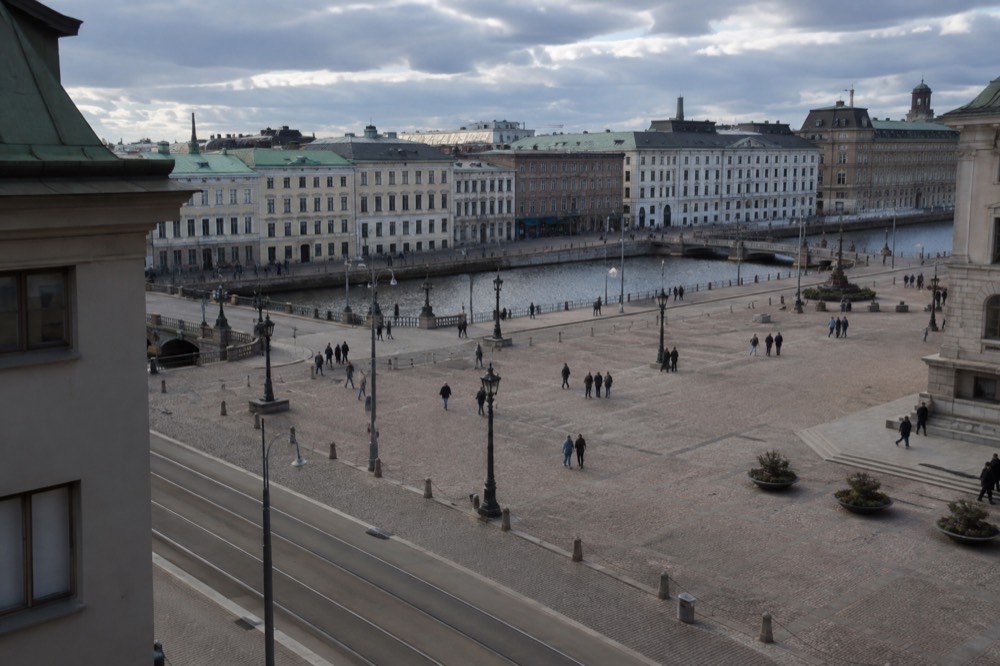
The seasonal shape matters for planning. October rain and February cold, the month with the coldest sea and a mean air temperature of 0.7 C, bracket the year. April is the quiet, dry month. If your dates are flexible, our page on the best time to visit Gothenburg works through the trade-offs month by month.
Why Does the Sea Temperature Peak in August, Not July?
Because the Kattegat runs about six weeks behind the air. SMHI's quality-controlled hourly observations at the Vinga lighthouse station, 61,749 of them, show the sea peaking at 18.6 C in August while the air peaks in July at 18.3 C. The consequence visitors miss is that September water, at 16.7 C, is warmer than June water, at 16.2 C, so an early-autumn swim in the archipelago is warmer than an early-summer one.
This is a genuinely counterintuitive fact and it is not folklore. It is computed from SMHI's own oceanographic archive, station 35144 Vinga, the lighthouse out at the archipelago's edge. The monthly means run from 2.7 C in February, the coldest month, not January, up through 16.2 C in June, 18.3 C in July and the 18.6 C August peak. The record low at Vinga is -1.2 C in February, legitimately below zero, because brackish Kattegat water does not freeze at exactly 0 C. The wider set of guides lives on Gothenburg Travel Guide.
| Month | Mean sea temp at Vinga, C | What it means for swimmers |
|---|---|---|
| January | 3.9 | Cold-water swimming only, with a sauna |
| February | 2.7 | Coldest month of the year in the water |
| March | 4.1 | Still winter sea, thin crowds |
| April | 7.1 | Bracing; dry air month on land |
| May | 11.6 | First comfortable dips for the hardy |
| June | 16.2 | Feels like summer on land, sea still catching up |
| July | 18.3 | Warm, but not the peak |
| August | 18.6 | The annual peak, the best swimming month |
| September | 16.7 | Warmer than June, and the islands are quieter |
| October | 12.8 | Last of the swimmable water for most people |
| November | 9.3 | Cold again, storm season begins |
| December | 5.5 | Winter sea, shortest days |
For swimmers the practical reading is simple. If you want the warmest water, book late August or early September, not the midsummer weeks everyone else books. The air is still pleasant in September, the sea is at or near its annual peak, and the islands are quieter. June feels like summer on land but the water has not caught up.
One way to see both faces of the city, the harbour and the islands, without spending a full day on logistics, is the canal and harbour sightseeing circuit. The operator's live listing states the cancellation terms before you pay, and the boat leaves from the centre.
What Is Liseberg and Why Does Its Calendar Matter So Much?
Liseberg is Scandinavia's largest amusement park and the biggest attraction in Gothenburg, but its special feature is an irregular calendar: in 2026 it runs summer season from 18 April to 20 September, Halloween from 2 October to 1 November, and the Christmas market from 14 November to 23 December, and it is closed for the rest of the year, so a visitor arriving in late January or early March finds the city's headline attraction shut.
The closure windows are the part that ruins trips. Between roughly 21 September and 1 October the park is dark, apart from the Kaninlandet children's area. It closes again from 2 to 13 November, and from 24 December it stays shut until mid-April. New for 2026, Kaninlandet also opens on winter weekends and school holidays, which softens the winter gap for families with small children, but the main park is still a seasonal business. Liseberg's own annual report counts 3.0 million destination guests in 2025, around 2.5 million of them in the park itself, all of them inside those seasonal windows.
The pricing structure is the second trap. Entry and rides are sold separately. An Entré ticket starts at 95 kr online and, in Liseberg's own words, "Entrébiljett ingår ej" for the ride pass: the 95 kr ticket gets you through the gate and onto nothing. The combined Entré + Åkpass starts at 365 kr online, and an Åkpass ride pass alone starts at 310 kr. Children under 110 cm enter free. Liseberg also sells nothing on any third-party booking platform; tickets come from liseberg.se's own ticket page, and online prices are lower than on-site ones. Our page on whether Liseberg is worth visiting covers the decision in detail.
What Happened to the Volvo Museum?
The Volvo Museum at Arendal closed permanently in December 2023, and its successor, World of Volvo, opened in 2024 at Lyckholms Torg on Hisingen with exhibition tickets from 120 SEK online and hours running to 19:00 on Thursdays. World of Volvo's own site states the closure directly: "After Volvo Museum in Arendal, Gothenburg, Sweden, closed its doors in December 2023, we are now taking over."
This is the single biggest stale fact in circulation about the city. Guides written before 2024 send readers to Gustaf Larsons Väg in Arendal, where there is now a closed building. The replacement is a different kind of thing: an experience centre rather than a traditional museum, with exhibition tickets from 120 SEK online, a family ticket at 640 to 665 SEK, and a Volvo Cars Torslanda factory tour from 175 SEK departing every weekday. Its hours are 10:00 to 17:00 Monday to Wednesday and Friday to Saturday, 10:00 to 19:00 Thursday, and 10:00 to 16:00 Sunday.
The pattern repeats elsewhere in the city, which is why checking dates matters in Gothenburg more than in most destinations. Feskekôrka, the fish-church market hall built in 1874, reopened in 2024 as a food hall with two fish counters and five restaurants rather than the fish counters alone. Göteborgs konstmuseum is open now, with a day ticket at 75 kr and free entry for under-20s and students, but its own rebuild page states the schedule: "Enligt nuvarande tidplan stänger konstmuseet 2028 och återöppnar 2032." The museum closes in 2028 and reopens in 2032, and it currently warns of intermittent blasting near the building. The old Göteborg City Card no longer exists either; the Go City passes that replaced it are a different product, and the old card's transport inclusion does not carry over.
Is a Day in Gothenburg Enough to See What Is Special?
No, and the shape of the city explains why. The compact centre, the moat-era old town, Haga's wooden houses and the canal can be walked in a day, but the special parts, the car-free islands on a 125 kr ticket, Liseberg in season, and the food halls, each need half a day of their own, so two days is the practical floor and three is comfortable.
The arithmetic is honest. A first-time visitor can cover the central grid, Avenyn, Götaplatsen and the harbour in one long day. Add the archipelago, which is a tram, a ferry and several hours of island time, and you need a second day. Add Liseberg in summer or the Christmas market in winter and the second day fills up. Our pages on how many days in Gothenburg is enough and what is a must-see in Gothenburg break the itinerary options down.
For a single-day visitor who wants the city's character in one go, the sightseeing options below are the efficient route: the amphibious bus covers the centre and the harbour in an hour, the canal cruise covers the moat from the water, and the archipelago cruise gets you out among the islands.
Common Questions About Gothenburg, Sweden
These are the questions visitors ask most about what makes Gothenburg special, answered from primary sources: the city says the archipelago islands are car-free districts in Zone A, SMHI's data shows an August sea peak and an October rain peak, Liseberg's own calendar shows a park that closes for a quarter of the year, and the old Volvo Museum shut permanently in December 2023, replaced by World of Volvo. Each answer below cites the underlying rule or figure rather than repeating the guidebook version.
Is Gothenburg, Sweden the same place as Göteborg?
Yes. Gothenburg is the English name and Göteborg is the Swedish name for the same city. Göteborg should be used where it is the real name of an institution, such as Göteborgs konstmuseum or Göteborg Centralstation, and Gothenburg in English prose. The city's own population reporting for the end of 2025 counts 613,274 residents.
Can you swim in the Gothenburg archipelago?
Yes, and later in the year than most people expect. SMHI's observations at Vinga show the sea at 18.6 C in August and 16.7 C in September, warmer than June's 16.2 C. The islands have swimming beaches and rocky shorelines, and they are reached on an ordinary Västtrafik ticket from Saltholmen.
Do you need a car in Gothenburg?
No. The tram network runs 12 lines over 188 kilometres of single track, the archipelago ferries are part of the same ticket system, and the southern islands ban private cars outright, per Göteborgs Stad's own study. A 24-hour Zone A ticket at 125 kr covers trams and ferries together.
Is Gothenburg rainy all year?
It rains on about 127 days a year, roughly one day in three, totalling 912 mm. But the pattern is seasonal: October is the wettest month at 102.9 mm and April the driest at 51.3 mm. SMHI does not support the claim that Gothenburg is Sweden's rainiest city.
Is Liseberg open in winter?
Mostly not. In 2026 the summer season runs 18 April to 20 September, Halloween 2 October to 1 November, and the Christmas market 14 November to 23 December. Outside those windows the park is closed, though the Kaninlandet children's area now opens on winter weekends and school holidays in 2026.
What food is Gothenburg special for?
Seafood above all: shrimp sandwiches, oysters from the Bohuslän coast, and the reopened Feskekôrka food hall, which since 2024 has held two fish counters and five restaurants. Our page on what food Gothenburg is famous for covers the full list.