Is Gothenburg an Expensive City? What a Trip Really Costs
Is Gothenburg an expensive city? An honest cost breakdown of trams, museums, Liseberg, food and drink in Sweden's second city, with the prices that actually matter.

Sweden carries a reputation for emptying wallets, and Gothenburg, Sweden's second city, sits right in the middle of that reputation. The honest answer is that the city is expensive by European standards but noticeably cheaper than Stockholm, and several of its best things cost almost nothing. The tram-and-ferry network, the car-free archipelago and the free zoo in Slottsskogen are among the best-value experiences on the west coast, while the things that genuinely cost money, theme parks and restaurant dinners, cost about what you would expect in northern Europe. This page breaks down what a trip really costs, using the published price tables of the transport authority, the venues themselves and the city's own statistics.
Is Gothenburg an Expensive City Compared to the Rest of Sweden?
Yes, Gothenburg is expensive by European standards, but it is the gentler half of Sweden. Prices for transport, museums and food run somewhat below Stockholm levels, and the city's biggest attractions include genuinely free options: Slottsskogen's zoo, the archipelago ferries on an ordinary tram ticket and the harbour viewpoints all cost little or nothing. Sweden's second city rewards planning, and the difference between a careless budget and a planned one is large.
The city's own numbers frame the scale. Göteborgs Stad counted 613,274 residents at the end of 2025, and the region passed one million people, which makes it a real northern European city with real northern European prices, not a village with a surcharge. Göteborg & Co reported more than six million commercial guest nights in 2025, a record, with international guest nights up roughly 15% in the first ten months of the year. People are coming in record numbers and, judging by the growth in every priority market from Norway to the United States, they are not being scared off by the price level.
Where the money actually goes matters more than the headline. Accommodation and alcohol are the two line items that make Sweden feel expensive. A restaurant beer is priced the way it is because of the national alcohol statute, not because Gothenburg is greedy: Alkohollag (2010:1622) restricts anything above 3.5% ABV to the state monopoly, Systembolaget, and the tax on top of that is what a visitor feels at the bar. The answer to is Gothenburg cheap or expensive depends almost entirely on how many of those two line items appear in your day.
The rest of the price structure is friendlier than the stereotype. Public transport is zoned and cheap at the visitor end. Museums cluster between free and 75 kr. The archipelago, which in most coastal cities would be a paid boat tour, is inside the city's own transit zone. If you want the broader picture of what the city offers at all, what Gothenburg is known for covers the ground, but the short version for a budget is that the expensive parts are optional and the cheap parts are the reason to come.
How Much Does Transport Cost in Gothenburg?
A single adult tram ticket in Zone A costs 38 kr, and a 24-hour ticket covering the whole zone, including the southern archipelago ferries from Saltholmen, costs 125 kr. Youth tickets run 29 kr single. A temporary state subsidy has halved every 30-day ticket through the end of the year, but it does not touch the 24-hour and 72-hour tickets visitors actually buy, so the day price stays 125 kr.
Västtrafik's fare table, published on the operator's own ticket pages, is the thing to read before arriving. The zone system is simple: Zone A covers Göteborg, Partille, Mölndal and Öckerö, which includes the islands. A single ticket for one zone is 38 kr adult and 29 kr for youth aged 7 to 19. Two zones cost 76 kr, three zones 114 kr. The 24-hour Zone A ticket is 125 kr whether you buy it in the app or at a shop, and it is the single best purchase in the city, because the same ticket carries a tram to Saltholmen and then a ferry to Brännö, Styrsö, Donsö, Vrångö, Asperö or Köpstadsö.
The archipelago inclusion is the fact most visitors miss, and it changes the budget arithmetic completely. Västtrafik's own network map shows the island boats as ordinary lines, and the islands sit inside Zone A. A day of swimming and coastal walking on car-free islands, reached by tram and ferry, costs the same 125 kr as a day of riding trams around the centre. The question is the ferry in Gothenburg free gets into the detail, but the planning version is this: it is not free, it is included, which is better.
One warning about the subsidy, because it is being reported carelessly. Västtrafik publishes that a temporary state support halves every ordinary 30-day period ticket, adult and youth, valid for travel through the end of the year. That is real, and if you are staying a month it matters. But the 24-hour and 72-hour day tickets that almost every visitor buys are not discounted, and writing "transport in Gothenburg is half price" as a general claim would be wrong. The day ticket is 125 kr, full stop.
There is no airport rail link to budget for. Swedavia's own pages for Landvetter list only coaches and buses, and the airport coach, now branded Vy flygbussarna, takes 20 minutes to the Nils Ericson Terminalen at Göteborg Centralstation. The cost of the city's transport, once you are inside it, is the least of a Gothenburg budget.
How Much Do Gothenburg Attractions Cost?
The big attractions cluster between 75 kr and about 365 kr: Göteborgs konstmuseum charges a 75 kr day ticket, World of Volvo sells exhibition entry from 120 SEK online, Liseberg's gate price starts at 95 kr with rides sold separately from 310 kr, and Universeum prices dynamically with no fixed adult figure. Several major sights, including Slottsskogen's zoo and the archipelago islands themselves, cost nothing beyond a tram ticket.
The museum tier is genuinely affordable. Göteborgs konstmuseum, holding around 70,000 works and drawing roughly a quarter of a million visitors a year, charges 75 kr for a day ticket, free for anyone under 20 and free for students with ID. World of Volvo, which took over from the permanently closed Volvo Museum at Arendal, sells exhibition tickets from 120 SEK online, with a family ticket at 640 to 665 SEK and a weekday senior deal at 250 SEK. Universeum is the exception to quote-friendly pricing: the science centre prices admission dynamically against booked time slots, publishes no fixed adult price, and adds 30 kr if you buy on site instead of online, so the honest advice is simply to book a slot ahead.
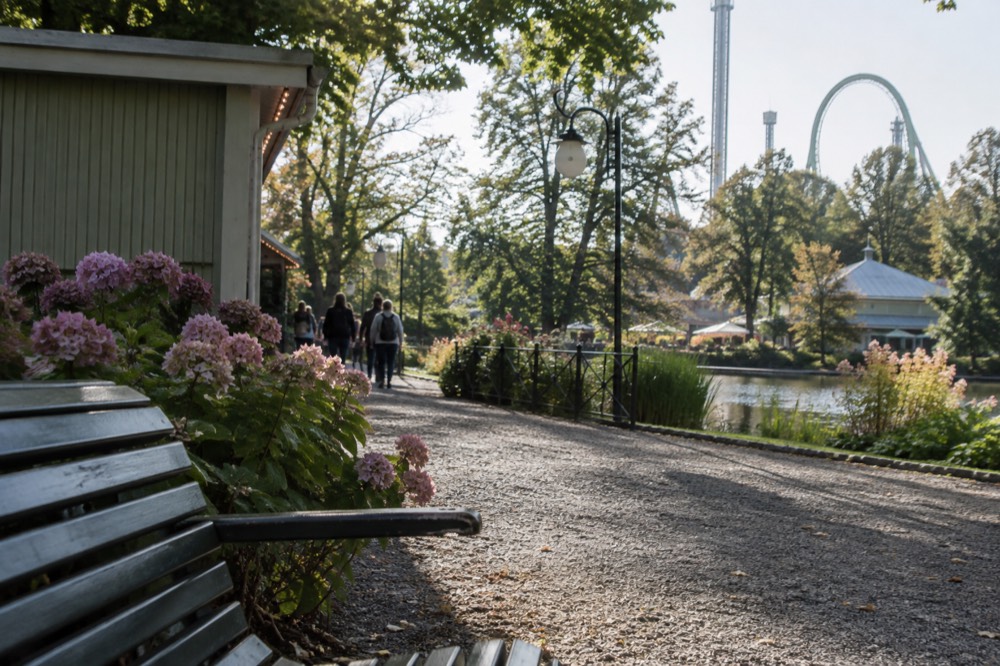
Liseberg deserves its own arithmetic, because the entry-and-rides split catches people out. The 95 kr online entry ticket includes no rides at all; an Åkpass ride pass starts at 310 kr and does not include entry; the combined ticket starts at 365 kr. The park is also not open year-round: the 2026 summer season runs 18 April to 20 September, Halloween 2 October to 1 November, and the Christmas market 14 November to 23 December, with the park shut in between. If is Liseberg worth visiting is your question, the cost answer is that a full day of rides lands around the combined ticket price, and an evening visit from 18:00 is cheaper still, with evening combined tickets from 275 kr.
The free tier is unusually strong, and it is where Gothenburg quietly beats most Scandinavian cities. Slottsskogen holds a free zoo with Nordic animals. The harbour viewpoints at Masthuggskyrkan and the hilltop at Ramberget cost nothing. The wooden quarter of Haga is free to walk, and the archipelago islands, once the 125 kr day ticket is in hand, charge nothing to explore. Feskekôrka, the fish-church building from 1874 that reopened in 2024 as a food hall with two fish counters and five restaurants, is free to enter and browse even if the shrimp sandwiches inside are not.
The pass question comes up here. The old municipal Göteborg City Card no longer exists, and the current product is a [Go City](https://gocity.tpk.ro/HQKyKKW4) pass sold in Essentials and All-Inclusive versions; unlike the old card, it does not include public transport, so do not budget for it as a transit solution. Whether a pass pays off depends on how many paid attractions you stack into a short window. For one visitor doing the amphibious bus, a canal cruise and two museums in two days it can work; for a visitor whose days are trams, islands and parks, it will not.
What Does Food and Drink Cost in Gothenburg?
Restaurant food is the expensive line: a casual dinner runs into the range typical for Sweden, and beer above 3.5% ABV is sold only through the state monopoly, which pushes bar prices up. The counterweights are strong: supermarket folköl at 3.5% or below is cheap and legal everywhere, lunch specials are a fixed Swedish institution, and the fika break, a coffee and a bun, remains one of the least expensive pleasures in the city.
The alcohol statute explains most of the sticker shock at the bar. Alkohollag (2010:1622), chapter 1, section 8, defines beer above 2.25% but not above 3.5% as folköl, sold in ordinary supermarkets, and anything above 3.5% as starköl, which chapter 5 restricts to the wholly state-owned retail monopoly. Every strong beer, wine and spirit in the city goes through Systembolaget or a licensed venue, and the tax structure on top is what the visitor pays. This is national law, not a Gothenburg quirk, and no amount of neighbourhood hunting changes it.
Food is more negotiable than drink. The west coast's seafood identity, which the question of what food Gothenburg is famous for covers in depth, means the mid-range restaurant tier is built around shrimp sandwiches, oysters and herring, priced like mid-range restaurants anywhere in Scandinavia and above the levels of continental Europe. The lunch specials, the dagens lunch, are the budget's best friend: a fixed hot plate at a fixed weekday price is the standard arrangement across the city. Fika, the coffee-and-bun institution, is cheap enough to be a daily habit, which is exactly how locals treat it.
The practical budget ranges below are planning figures for what a day of eating typically costs, drawn from the city's price structure rather than any single venue's promise. Check the room or the menu board before you sit, because Gothenburg spans a wide range.
| Line item | Typical cost in Gothenburg | Notes |
|---|---|---|
| Tram single, Zone A | 38 kr | Youth 29 kr |
| 24-hour Zone A ticket | 125 kr | Covers trams and archipelago ferries |
| Liseberg entry only | from 95 kr online | Includes no rides |
| Liseberg entry plus rides | from 365 kr online | Evening version from 275 kr |
| Göteborgs konstmuseum | 75 kr | Free under 20 |
| World of Volvo | from 120 SEK online | Family ticket 640-665 SEK |
| Universeum | dynamic, no fixed price | Book a time slot; on-site adds 30 kr |
| Supermarket folköl | supermarket shelf price | 3.5% ABV ceiling in ordinary shops |
| Strong beer, wine, spirits | Systembolaget only | Above 3.5% ABV, by statute |
Where Does the Rest of the Money Go: Hotels and Day Trips?
Accommodation is the largest single line in a Gothenburg budget, and it is priced like a major Scandinavian city, though the record visitor year of 2025 has pushed supply up rather than prices down. Day trips are the second quiet cost: Marstrand, the Bohuslän coast and Läckö sit outside Zone A, so each one adds separate fares, and the archipelago, which sits inside the city's own zone, is the day trip that costs almost nothing extra.
The guest-night record matters for hotel planning. More than six million commercial guest nights in 2025, up from about 5.6 million in 2024, means the central hotel stock is busy in the shoulder seasons too, not only in July. The standard advice follows from the geography: the tram network, 12 lines and 188 km of single track as of the 2022 network report, means a hotel a few tram stops out of the centre is not a compromise, it is a discount. The neighbourhoods along the western lines toward Saltholmen and Majorna put you on the right side of the city for both the islands and the centre.
Day trips split cleanly by zone. Everything inside Zone A, which means the entire southern archipelago plus the northern islands of Öckerö municipality, rides on the same ticket structure as the city centre. Marstrand, the Bohuslän coast, Tjolöholm, Gunnebo, Trollhättan and Läckö are outside the zone and outside the city, so each carries its own fare and its own entry costs. The budget distinction is worth repeating because guides blur it: the islands are areas of Gothenburg, not excursions, and treating them as a paid tour when a 125 kr day ticket covers them is the most common overspend in the city.
The paid day-trip tier is not compulsory. If the question is is it worth visiting the Gothenburg archipelago, the cost column of that answer is essentially one transit ticket, which is why the islands appear on nearly every local's list and why the paid boat tours around the harbour, pleasant as they are, are selling something the transit network also provides in plainer form.
Can You Visit Gothenburg Cheaply Without Missing the Point?
Yes, and cheaply is arguably the intended way to see the city: a 125 kr day ticket covers the trams and the car-free islands, Slottsskogen's zoo is free, the museums cluster at 75 kr or below, and the fika culture keeps food costs civilised. The genuinely expensive items, long theme-park days, restaurant dinners and bar drinks, are optional extras rather than the core experience, and a visitor who skips them loses little of what the city is actually about.
The cheapest full day in Gothenburg is hard to beat anywhere in Scandinavia. Ride the tram to Saltholmen on the 125 kr ticket, take the ferry to Brännö or Vrångö, walk the car-free paths, swim if the season allows, and ride home. The sea off the archipelago peaks at 18.6 C in August and September's water, at 16.7 C, is actually warmer than June's 16.2 C, so the cheap island day is also at its best outside the peak hotel season. Add Slottsskogen's free zoo and a fika stop and the day has cost one transit ticket plus a coffee.
The paid layer is worth paying for selectively rather than wholesale. The amphibious bus sightseeing tour, which drives through the centre and then into the harbour, is the efficient paid overview of the city, and the canal cruise covers the moat-era waterways the trams cannot reach. A pass can make sense for a dense two-day museum-and-attractions itinerary, but it does not cover transport, so it should never be bought as a transit replacement. The Gothenburg Travel Guide homepage collects the full range of paid and free options if you want to weigh the two against each other.
The honest summary is that Gothenburg is an expensive city in the way all of Sweden is expensive, and a moderate city in the ways it controls. Transit is cheap and extraordinary in reach. Museums are modest. The islands are included in the ticket. The costs that bite, hotel rooms and bar drinks, are the costs you can plan around with a tram-side hotel, a supermarket folköl and a dagens lunch. Visitors who arrive expecting Stockholm prices generally find the city kinder than advertised; visitors who arrive expecting southern European prices will find the same wall every Nordic city puts up, and the archipelago on a day ticket waiting on the other side of it.
Common Questions About Gothenburg Costs
Is Gothenburg an expensive city?
By European standards, yes; by Swedish standards, moderately. Gothenburg runs below Stockholm on most measures, its public transport is cheap for what it covers, and its biggest experiences, the archipelago islands and Slottsskogen's zoo, cost little or nothing. The expensive line items are hotels and alcohol, both driven by national conditions rather than local pricing.
How much is a day ticket in Gothenburg?
A 24-hour Zone A adult ticket costs 125 kr, the same in the app as at a shop, and it covers trams, buses and the southern archipelago ferries from Saltholmen. A single Zone A tram ticket is 38 kr. The temporary state subsidy that halves 30-day tickets does not apply to these day tickets.
Does a Liseberg ticket include the rides?
No. The entry ticket, from 95 kr online, gets you through the gate and onto nothing. Ride passes start at 310 kr and are sold separately, and the combined entry-plus-rides ticket starts at 365 kr. The park is also closed for parts of the year, so check the season calendar before budgeting for it.
Why is beer so expensive in Gothenburg?
Swedish law restricts everything above 3.5% ABV to the state monopoly, Systembolaget, and the alcohol tax on top is what a bar passes on. Beer at or below 3.5%, called folköl, is sold in ordinary supermarkets at normal shelf prices, which is the budget route.
Is the Gothenburg archipelago expensive to visit?
No. The southern islands are inside Västtrafik Zone A, so the same 125 kr day ticket that covers the trams also covers the ferries from Saltholmen to Brännö, Styrsö, Donsö, Vrångö and the other islands. The islands are car-free areas of the city, not a paid excursion.
Do I need a city pass in Gothenburg?
Usually not. The old Göteborg City Card no longer exists, and the current Go City pass does not include public transport. A pass only pays off if you are stacking several paid attractions into a short stay; if your days are built on trams, islands and free parks, the 125 kr day ticket does more for less.