Is English Widely Spoken in Gothenburg, Sweden?
Is English widely spoken in Gothenburg, Sweden? A practical answer for visitors, covering museums, trams, tours, restaurants and the few moments Swedish actually matters.
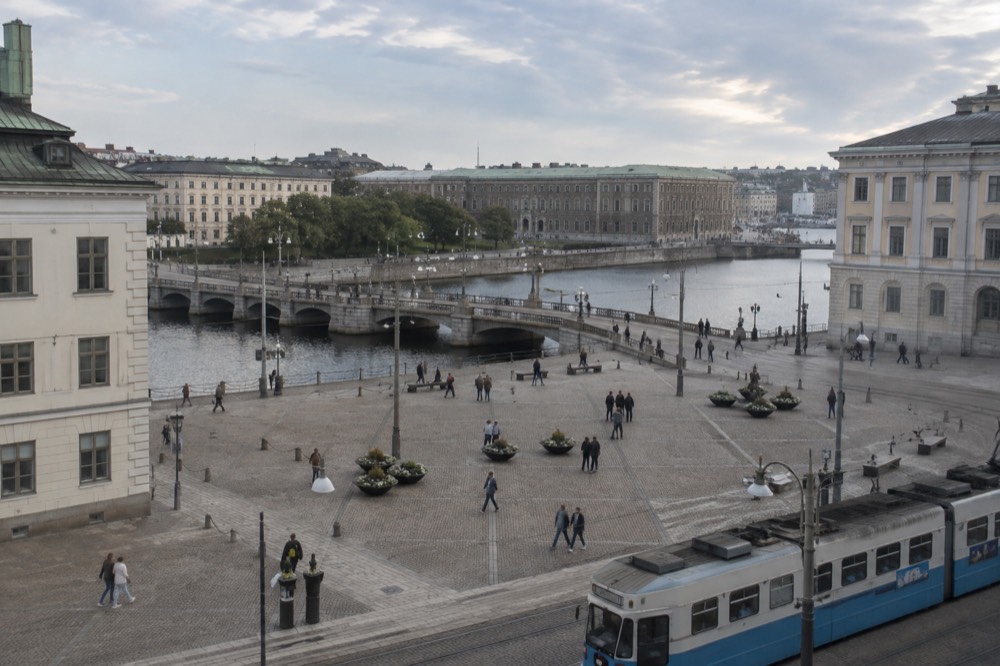
Gothenburg's tourism desk reported a record year in 2025: over 6 million commercial guest nights in the city and region, with international guest nights up roughly 15 percent in the first ten months and every priority market, including the United Kingdom and the United States, growing at once. A city that size, pulling visitors from English-speaking countries at that rate, does not do it in Swedish. The practical answer for a visitor is that English carries you through nearly every part of a Gothenburg trip, from the tram app to the museum ticket desk to the dinner reservation, and the exceptions are fewer and smaller than in most of Europe.
That said, "widely spoken" deserves a real breakdown rather than a shrug. Some corners of the city run on English by default, some switch to it the moment you open your mouth, and a handful of situations still reward a word or two of Swedish. This page walks through each of them, using what the city's own institutions publish rather than folklore. It also covers where the language question actually changes a booking decision, because on a short trip it mostly does not, and that is worth knowing before you plan around a problem you will not have. For the deeper background on the language itself, see what language is spoken in Gothenburg.
Is English Widely Spoken in Gothenburg?
Yes, English is very widely spoken in Gothenburg, to the point that an English-only visitor can book, travel, eat, museum-hop and handle problems without a word of Swedish. The city's own venues publish English visitor pages, its transport authority sells tickets through an English-language app, and its 2025 record of over 6 million guest nights was built substantially on English-speaking markets. You will hear English behind counters, on tours and on the trams every day.
The scale of it becomes obvious within an hour of arriving. Göteborg Landvetter Airport, which handled 5,435,850 passengers in 2025, runs its entire public-facing operation bilingually, and Swedavia's English pages cover the airport coaches, the bus routes and the fact that there is no rail link. The coach itself, Vy flygbussarna, reaches Nils Ericson Terminalen in 20 minutes, and everything from buying the ticket to reading the destination display works in English. Nobody at the terminal will blink at an English question.
The reason is structural, not just hospitality-industry training. Sweden teaches English as a compulsory school subject from an early grade, and Gothenburg is a university city with a large international student population, a Volvo-anchored engineering sector and a port that has always traded outward. The Göteborg region's own reporting shows international guests driving the record 2025 figures, with Norwegian, Danish, German, British and American visitors all up significantly. A service economy built on that mix staffs itself in English as a matter of course, and the staff are usually comfortable in it.
Comfortable is the operative word. The English you encounter in Gothenburg is not the hesitant, phrasebook English of some destinations. It is quick, idiomatic and often near-native, especially among anyone under about fifty. Older Gothenburgers in neighbourhood shops may be more at ease in German or may reach for slower, simpler English, but reaching for it is still the default. The Göteborgs Stad website itself, the municipal government's own domain, publishes English versions of its pages, which tells you where the city thinks its audience is.
Where in Gothenburg Will You Need English Most?
You will lean on English most in exactly the places a visitor spends the day: transport, ticket desks, restaurants and hotels, and in all of them Gothenburg meets you there. Västtrafik, the regional transport authority, publishes English fare pages and runs an English-language ticket app, and the city's museums, attractions and hotel front desks operate in English as standard. The short version is that you will need English everywhere, and everywhere it will be enough.
Start with transport, because it is the thing every visitor touches first. Västtrafik's zone system, single tickets and day tickets are all documented in English on its own site, and the To Go app runs in English. A single Zone A ticket costs 38 kr for an adult and a 24-hour Zone A ticket costs 125 kr, prices published on the English fare pages. The same ordinary ticket covers the archipelago ferries from Saltholmen, and the islands sit inside Zone A, so the one English-language purchase you make on arrival covers trams and boats alike.
Restaurants and cafés follow the same pattern. Menus in central Gothenburg very often carry English translations printed directly on them, and where they do not, staff switch without prompting. Feskekôrka, the 1874 fish-church-turned-food-hall that reopened in 2024 with two fish counters and five restaurants, serves a mixed local and visitor crowd, and its own site presents the concept in English alongside Swedish. At the city's more tourist-facing institutions, such as Liseberg, the English-language site is not an afterthought: it carries the full season calendar, the ticket prices and the easy-to-miss detail that a 95 kr entry ticket includes no rides.
There is a second tier worth knowing about: the places where English is present but not total. Neighbourhood spots in Majorna, Vasastan or out on the car-free southern archipelago islands are likelier to be Swedish-first, with English on request rather than by default. The islands, Asperö, Brännö, Styrsö, Donsö, Vrångö and Köpstadsö, are residential communities, not theme parks, and a village shop or ferry-shed kiosk there operates in the language of its residents until you speak. This is not an obstacle. It is one of the reasons why Gothenburg is worth visiting for tourists who want a real city rather than a staged one.
The one genuinely Swedish-only corner of daily life is retail alcohol. Anything above 3.5% ABV is sold only through Systembolaget, the state monopoly, under Alkohollag (2010:1622), and the store experience is conducted in Swedish first. Staff will help in English when asked, and the product range is labelled clearly enough that browsing works regardless, but this is the one errand where you may briefly feel the language border. Everything else in a visitor's week, from pharmacy to taxi to hotel breakfast, runs in English without friction.
Do Gothenburg Tours and Attractions Run in English?
Yes, essentially all of them. The city's paid sightseeing products, from canal boats to archipelago cruises to the amphibious bus, are guided in English, and the major museums publish English visitor information and English audio guides. World of Volvo runs a guided exhibition tour in English every Thursday at 10:30 for an added 50 SEK, which is a useful template: English is the assumed second language at every attraction in the city.
The pattern holds across the board. Universeum, the science centre open every day of the year from 10:00 to 18:00, sells its dynamically priced, time-slotted tickets through English pages and states plainly that all exhibitions and guided tours are included in admission. Göteborgs konstmuseum, which charges 75 kr for a day ticket and admits everyone under 20 free, publishes English visit information, and its own site carries the important forward-looking notice that the museum closes in 2028 and reopens in 2032. A visitor reading about the museum in English gets the same facts a local does.
Paid tours are even more English-forward, because the customer base is international. The listings for Gothenburg's sightseeing products state their guiding languages, and English appears on all of the mainstream ones. The amphibious land-and-water bus, the canal cruise through the moat, the guided archipelago cruise and the food walks are all built for a mixed-language audience, and free walking tours through GuruWalk run in English for three of the four Gothenburg walks, with one Spanish-only walk that an English speaker should not book expecting English. Checking the listing's language line before booking is the whole task; there is no guessing.
A practical note on the free walks, since they are the cheapest way to test the city's English. GuruWalk's Gothenburg offering includes a Majorna history walk, a general city walk covering history, culture and hidden corners, and a gastronomy-and-architecture walk, all tip-based and all guided in English, with ratings in the 4.7 to 5 range across a few hundred reviews. The Spanish-only walk is a real product for a real audience, but it is not yours if English is your language. The distinction is stated on the listing, and honouring it is part of why the operator gets named here at all.
Museums with a language edge worth flagging: the guided Torslanda Volvo factory tour departs from World of Volvo on weekdays, and the exhibition tour there alternates, Swedish on Tuesdays and English on Thursdays, both at 10:30. If a factory or exhibition tour is the centrepiece of your Volvo day, Thursday is the English day, and the tour listing states the surcharge plainly. Small planning details like that are where the English question actually has a right answer.
Does Gothenburg Signage and Public Transport Work in English?
Mostly yes, with Swedish first and English either beside it or one question away. Tram stops announce in Swedish but the Västtrafik app, its maps and its fare pages are fully English, museum wayfinding is typically bilingual, and street signage is Swedish-only but readable without translation. The system is designed so that a non-Swedish speaker never gets stuck, only occasionally slowed.
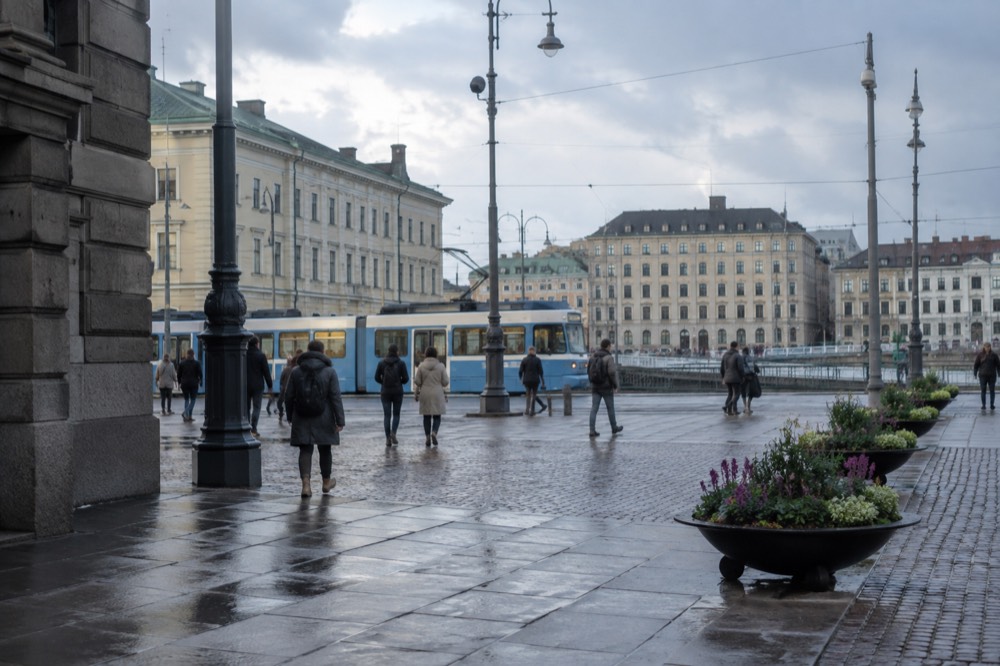
The tram network, 12 lines and 188 km of single track as of Göteborgs Spårvägar's 2022 annual report, carrying 126 million journeys in 2025, is the backbone of the city. Onboard announcements are in Swedish. The stop names, though, are displayed visually on every modern tram, and the Västtrafik app's journey planner runs in English with the same stop names you see on the screens, so matching "Saltholmen" or "Kungsportsplatsen" between app and display is trivial. You tap on with a card or the app, you ride, you get off; the language of the announcement is decoration for an English speaker with the app open. Everything else covered here is indexed on Gothenburg Travel Guide.
| Situation | What you encounter | How far English carries you |
|---|---|---|
| Trams and buses | Swedish announcements, visual stop displays | Full, with the English Västtrafik app |
| Archipelago ferries | Ordinary Zone A ticket, Swedish-first signage | Full, ticket and app in English |
| Museum ticket desks | Bilingual signage, English visit pages | Full, English standard at the desk |
| Restaurants and cafés | English menus common, staff switch instantly | Full |
| Systembolaget | Swedish-first retail, state monopoly | Works with patience, staff assist in English |
| Neighbourhood shops, islands | Swedish-first, residential customers | Works on request, slower and simpler |
| Emergency and medical | 112, English-language support | Full |
Wayfinding at the attractions is similarly forgiving. Universeum's halls, Liseberg's park, the museums and the hotel district all carry bilingual or English signage, and the tourism organisation's own English site is thorough, covering everything from what Gothenburg is known for to seasonal opening calendars. Street-level signage, road names and shopfronts remain Swedish, as they should, and none of it requires translation to find your way around. A street name is an address, not a sentence.
One honest caveat: the temporary state subsidy that currently halves Västtrafik's 30-day period tickets, dropping a Zone A adult monthly from 890 kr to 445 kr, does not apply to the 24-hour and 72-hour tickets visitors actually buy. The English fare pages make the distinction, but the headline discount travels faster than the fine print. If you read that "transport in Gothenburg is half price," know that your 125 kr day ticket is not, and the English-language source that says so is Västtrafik's own ticket page.
When Does Speaking Swedish in Gothenburg Help?
Swedish helps in a small set of moments: greeting a shopkeeper, reading a menu that has no translation, understanding a tram announcement before the display updates, and, above all, signalling courtesy. Gothenburgers switch to English so fast that a visitor's Swedish is usually appreciated rather than needed, and a few words, hej, tack, ursäkta, buy goodwill out of all proportion to their difficulty.
The sociolinguistic reality is that Swedes often switch to English the instant they detect a hesitation, sometimes before you have finished attempting Swedish. This is helpful and slightly deflating in equal measure. Push through it where it matters, in a neighbourhood bakery or a Majorna second-hand shop, because the switch is efficiency, not correction. On the car-free islands of the southern archipelago, where the pace is slower, a hej at the door of a village café lands warmly, and the ferry shed, the island shops and the summer kiosks are the last places in the city where you might genuinely be the first English speaker of the day.
Pronunciation is its own small pleasure, and the city's food culture hands you the vocabulary. Fika, the coffee-and-bun institution, is the word every visitor learns first, and how to pronounce fika in Swedish is a two-minute lesson that pays off at every café counter in town. Feskekôrka, with its circumflexed ô, is the other one worth getting right before you ask for directions, since the fish church is both a landmark and a tongue-trip. Göteborg itself, the Swedish name of the city, is roughly "YUR-tuh-bory" to an English ear, and locals accept "Gothenburg" without a flicker, because that is its English name and always has been.
Should you study Swedish before the trip? For a city break, no. The return on a weekend of Duolingo is a handful of pleasantries in a city that was going to speak English to you anyway. For a longer stay, a month in the region, a working trip or a move, the calculus changes, and Swedish becomes both practical and a sign of seriousness. The visitor's honest hierarchy is: English for everything operational, Swedish for everything human. Greet in Swedish, conduct in English, thank in Swedish, and you have the entire etiquette in one line.
Is English Widely Spoken in Gothenburg Compared with Other Nordic Cities?
Yes, and Gothenburg sits comfortably within the Nordic region's shared reality, where English proficiency is high everywhere and the differences between cities are marginal. Stockholm, Copenhagen and Oslo behave much the same, and Gothenburg's edge, if it has one, is that its tourism infrastructure is newer and built explicitly for the international growth the city has just recorded. Treat the whole region as English-friendly and choose your city on other grounds.
What distinguishes Gothenburg is not the language but the friction around it. The city's attractions are compact, its tram-and-ferry network is one ticket, and its visitor-facing institutions, from Swedavia's airport pages to Universeum's booking flow, were rebuilt for an international audience in the same years that international arrivals climbed. The record 2025 guest-night figures were not a lucky accident; they were the result of a city deliberately making itself bookable in English, and the comparison with Stockholm usually comes down to scale and atmosphere rather than anything a phrasebook could fix.
The comparison that matters for some travellers is with smaller Swedish towns, where English is still widely spoken but tourism infrastructure is thinner. Gothenburg offers the full stack: English-guided tours, English museum pages, English transport apps and a service sector that deals in English daily. A day trip from the city, to Marstrand, Alingsås or the Bohuslän coast, drops you into smaller-town Sweden, and even there English holds, with a little more patience on both sides. The language never becomes the reason to stay in the city.
Common Questions About English in Gothenburg
Is English widely spoken in Gothenburg?
Yes, very widely. Gothenburg's attractions, transport system, restaurants and hotels all operate comfortably in English, and the city's record 2025 tourism year was built substantially on English-speaking markets. An English-only visitor can manage every practical part of the trip without Swedish.
Can you visit Gothenburg without speaking any Swedish?
Completely. Västtrafik's app and fare pages are in English, the museums publish English visitor information, tour listings state their guiding languages, and staff switch to English by default. The only Swedish-first errand is Systembolaget, the state alcohol monopoly, and even there staff assist in English when asked.
Are Gothenburg tours guided in English?
Yes. The mainstream paid tours, including the amphibious bus, the canal cruise and the guided archipelago cruise, are guided in English, and three of the four GuruWalk free walking tours run in English. One free walk is Spanish-only, so check the language line on the listing before booking.
Do Gothenburg trams and transport announce stops in English?
Announcements are in Swedish, but every modern tram displays stop names visually, and the Västtrafik journey planner and ticket app run in English with the same stop names. An English speaker with the app open has no trouble finding the way, including on the archipelago ferries, which are covered by the same ordinary Zone A ticket.
Should I learn any Swedish before visiting Gothenburg?
A few words, not a course. Hej, tack and ursäkta cover greetings, thanks and apologies, and fika covers the coffee break you will inevitably take. Gothenburgers switch to English quickly and cheerfully, so your Swedish is a courtesy rather than a necessity. For a longer stay, the calculus changes and Swedish becomes worth the effort.
Is English in Gothenburg as good as in Stockholm or Copenhagen?
The differences across the Nordic capitals and big cities are marginal; English is strong everywhere. Gothenburg's visitor infrastructure, including its English-language transport, museum and booking systems, was built for the international growth the city recorded in 2025, so the practical experience is at least as smooth as anywhere in the region.
The short version of this whole page: book the trip, download the Västtrafik app, learn hej and tack on the plane, and spend your preparation time on which island to visit rather than on a language course. Gothenburg, Sweden, will meet you in English, and it will do it without making you feel like a guest who arrived unprepared.