How Many Hours of Darkness in Sweden in Winter? Gothenburg's Real Numbers
Gothenburg gets 6 hours 32 minutes of daylight on 21 December, but true darkness is a different number. The verified solstice figures, the twilight that softens them, and what the light does to a winter visit.
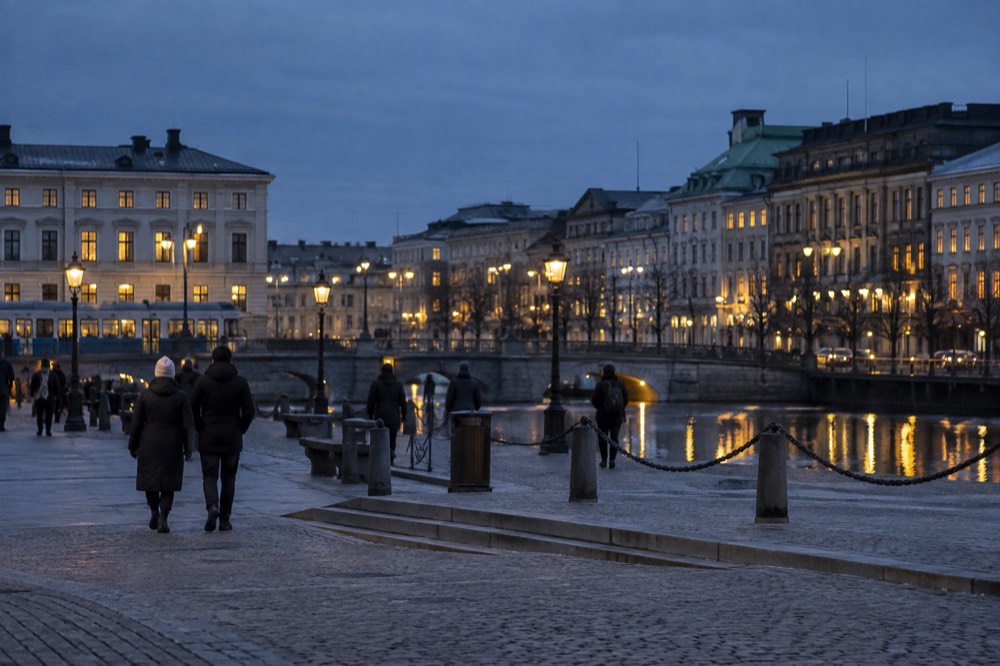
Gothenburg sits at 57.7 degrees north, far enough south in Sweden that the winter never becomes the polar night of the far north, but far enough north that December compresses the day to almost nothing. The US Naval Observatory's tables for the city give a day length of 6 hours 32 minutes on 21 December, sunrise 08:54, sunset 15:26, against 18 hours 06 minutes on 21 June. That is a swing of 11 hours 34 minutes between the solstices, and it is the single biggest factor in planning any Swedish winter trip. This page at Gothenburg Travel Guide sets out what the darkness actually is, hour by hour, and what it does to a visit.
How Many Hours of Darkness in Sweden in Winter?
On the winter solstice, 21 December, Gothenburg gets 6 hours 32 minutes of daylight, which means roughly 17 and a half hours without the sun above the horizon. The sun rises at 08:54 and sets at 15:26 local time. Counting civil twilight, when the sky still carries usable grey light, the bright part of the day stretches to only about eight hours, from 08:03 to 16:17.
Those are the numbers for Gothenburg, Sweden's second city, and they hold for most of the populated southern half of the country. Sweden is a long country: the drive from Gothenburg to the far north covers about the same latitude range as the drive from Copenhagen to the Arctic Circle. The darkness question therefore has no single Swedish answer. Kiruna, above the Arctic Circle, gets no sunrise at all in late December, while Malmö in the far south gets a somewhat longer day. Gothenburg's 6 hours 32 minutes sits in the middle of that range and represents where the overwhelming majority of visitors actually go.
The darkness is not uniform through winter either. The solstice is the floor. By late January the city has already gained back a meaningful chunk of daylight, and by late February the days are lengthening at their fastest rate of the year, gaining minutes daily in a change you can notice from one week to the next. The practical difference between a mid-November afternoon and a mid-February one is bigger than the calendar suggests, because November is still losing light while February is gaining it fast.
It also matters what kind of light you get. A Gothenburg December day is not a bright, crisp, snow-reflected six and a half hours. The sun stays low all day, the sky is often overcast, and the light that does arrive is long and grey. On the other hand, the city is built for it: painted wooden houses, granite quays and lantern-lit streets were designed in an era when everyone lived with these hours, and the modern city keeps street lighting and window candles doing the work the sun cannot.
Is the "Six Months of Darkness in Sweden" Claim True?
No, Sweden does not have six months of darkness, and the claim fails even for the far north. Only the area above the Arctic Circle gets any true polar night at all, and even there it lasts about a month, not six. In Gothenburg the sun rises every single day of the year. Even the shortest day gives more than six hours of daylight, and the sky never goes near the weeks of midday twilight that Kiruna experiences.
The myth seems to survive because people conflate three different things: the polar night, which affects a small fraction of Swedish territory, the long twilight of northern winter, and the simple short-day winter of the south. Gothenburg has only the third. Its December problem is not a sun that fails to rise, it is a sun that rises at 08:54, stays low in the southern sky all day, and is gone by mid-afternoon.
The flip side deserves equal billing. In June the same latitude gives Gothenburg 18 hours 06 minutes of daylight, and civil twilight runs from 02:58 to 23:30 local summer time, leaving only about three and a half hours of true night. The same geometry that takes the light away in December gives it back with interest in summer, which is one reason the question what is the best time to visit Gothenburg has a more interesting answer than most cities.
Worth knowing too: the darkness and the rain are different problems on different calendars. SMHI's 1991-2020 normals for station Göteborg A put annual precipitation at 912 mm across 127 wet days, with the wettest month at October, 102.9 mm, and the driest at April, 51.3 mm. The heavy rain is an autumn phenomenon, before the darkest weeks arrive. And whatever the cliches say, Gothenburg is not Sweden's rainiest city: SMHI's own data places the national precipitation maxima in the western highlands and the mountains, not here. December is dark, but it is not the wettest month, and it is not the rain-soaked caricature either.
How Does Gothenburg's Daylight Change Through the Year?
Daylight in Gothenburg swings from 6 hours 32 minutes at the December solstice to 18 hours 06 minutes at the June solstice, an 11 hour 34 minute range. The city gains daylight fastest in late winter and spring, and the practical difference between November and February is enormous: February afternoons are bright well past five, while November afternoons are dark by four.
The table below collects the verified numbers for the two extremes and the twilight that surrounds them. The figures come from the US Naval Observatory's rise-set tables for Gothenburg's coordinates, 57.7 N, 12.0 E, as published for 2026.
| Measure | 21 December (winter solstice) | 21 June (summer solstice) |
|---|---|---|
| Sunrise | 08:54 | 04:11 |
| Sunset | 15:26 | 22:17 |
| Day length | 6 h 32 m | 18 h 06 m |
| Civil twilight, start | 08:03 | 02:58 |
| Civil twilight, end | 16:17 | 23:30 |
| True night (between twilights) | roughly 16 hours | roughly 3.5 hours |
Two patterns matter for planning. First, the gains are back-loaded: December and early January crawl, then the pace picks up sharply through February and March, which is why late winter feels so much better than the raw day length suggests. Second, the loss in autumn is the mirror image, which is why late October and November feel like the darkest time of the year psychologically even though December has the shortest days. In November the light is leaving at a rate you can measure week to week, and the city's mood follows it.
The swing of 11 hours 34 minutes between the solstices is the headline. It means a visitor who comes twice, once in each extreme, experiences two almost unrecognisable cities: one where the sky is bright at half past ten at night, and one where it is fully dark by four in the afternoon. Neither is the "real" Gothenburg. Both are.
How Dark Is a Gothenburg December Day, Really?
A Gothenburg December day gives about six and a half hours between sunrise and sunset, but the sun never climbs high, so the light is long, low and grey rather than bright. With civil twilight included, the usable light runs roughly 08:03 to 16:17, about eight hours. Practical sightseeing daylight is a window of four to five hours in the middle of the day, roughly 10:00 to 15:00.
That window is the planning fact. Museums, attractions and boat tours all have to fit inside it, and anything outdoors that depends on a view, such as the Skansen Kronan hilltop or the archipelago ferries, is better booked for late morning than early afternoon, because the light starts failing well before the official sunset. The low sun also means long shadows and a particular quality of light that photographers rate among the city's best assets, when the sky is clear enough to show it.
The rain question and the darkness question are connected, and the connection runs against the city's reputation. SMHI's 1991-2020 normals for station Göteborg A put annual precipitation at 912 mm across 127 wet days, with the wettest month at October, 102.9 mm, and the driest at April, 51.3 mm, according to SMHI's published normals. The heavy rain arrives in autumn, before the darkest weeks, not during them. And whatever the cliches say, Gothenburg is not Sweden's rainiest city; SMHI's own data places the national precipitation maxima in the western highlands and the mountains, not here.
What Is Twilight, and Why Does It Soften the Darkness?
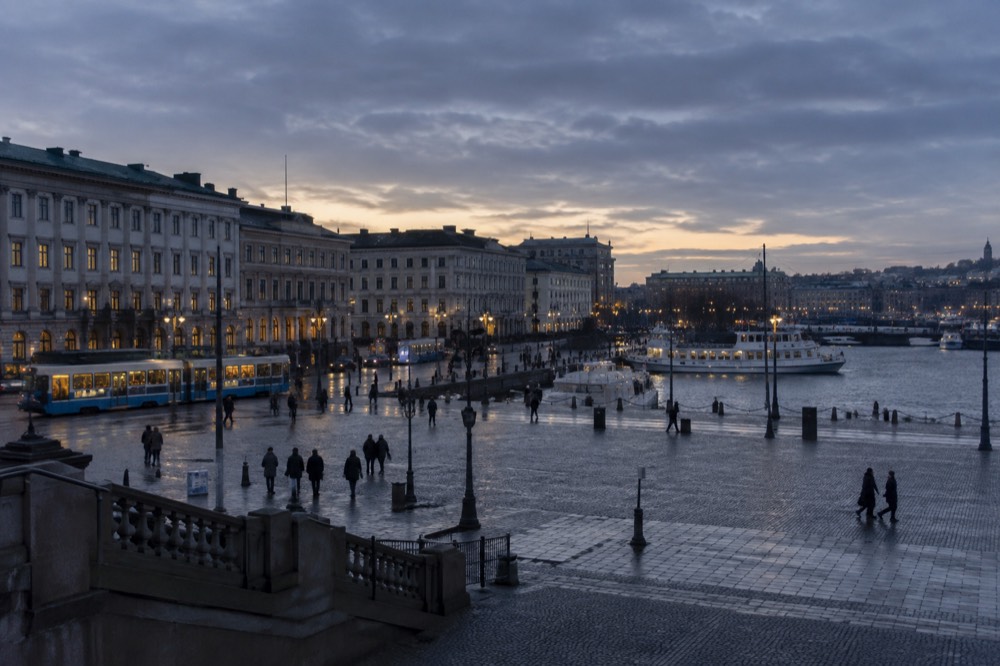
Twilight is the period when the sun is below the horizon but still lights the sky, and in Gothenburg it adds roughly an hour and a half of usable light to both ends of the shortest day. Civil twilight, the brightest phase, runs 08:03 to 16:17 on 21 December. So while the sun is up for 6 hours 32 minutes, the day feels closer to eight hours long, and total blackness is closer to sixteen hours than to seventeen and a half.
Sweden's latitude makes twilight do more work than it does further south. At 57.7 degrees north the sun crosses the horizon at a shallow angle, so it spends longer in the twilight band on the way up and on the way down. In December that shallow crossing is a small mercy. In June it is the reason the sky never goes properly dark: civil twilight on 21 June runs from 02:58 to 23:30 local time, and the three and a half hours between are not night in any southern-European sense.
For a winter visitor the practical takeaway is that the darkness is not a wall. It is a slow dimming that starts in late October, bottoms out in the three weeks around the solstice, and reverses visibly by mid-January. Locals plan around it: fika happens in bright cafes at two in the afternoon, dinner starts early, and the city's lantern-lit restaurants and candlelit windows are a deliberate answer to the season rather than an accident of style. The question is Gothenburg in Sweden worth visiting gets a qualified yes in winter, and the light is the qualification.
Does the Winter Darkness Change What You Can Do in Gothenburg?
Yes, mainly by compressing the outdoor part of the day into a 10:00 to 15:00 window from November through January. Trams, museums, restaurants and shops run normal hours, and Liseberg's Christmas season runs into the dark on purpose, but archipelago ferry timetables thin out and viewpoint visits need midday timing. The darkness removes almost nothing from the city's indoor life.
The city's winter infrastructure is built for this. Gothenburg's tram network, 12 lines and 188 km of single track as of Göteborgs Spårvägar's 2022 annual report, runs the same service whether the sun is up or not, and the 24-hour Zone A ticket at 125 kr covers both trams and the southern archipelago ferries. Indoor attractions carry the dark hours: Universeum is open every day of the year 10:00 to 18:00, Göteborgs konstmuseum holds evening hours on Wednesdays until 20:00, and the food halls, including the reopened Feskekôrka with its five restaurants, run well past sunset.
The one genuine casualty is the long outdoor day trip. Nordens Ark, the wildlife park on the fjord north of the city, is a full-day outing in summer but a shorter, sharper one in December, and its entry ticket is listed from $29 per person with a 4.5 rating from 10 reviews. The same logic applies to Marstrand and the Bohuslän coast: they are spectacular in low winter light, but you get four good hours, not nine. If you are weighing the season against the alternatives, is Gothenburg worth visiting for tourists covers the year-round case.
How Should You Structure a Winter Day Around the Light?
Work with the light, not against it: put anything outdoors or view-dependent between 10:00 and 14:00, move indoors by mid-afternoon, and let the evening belong to restaurants, museums with late hours and the Christmas lights. Trying to fit a summer-style nine-hour sightseeing day into a December visit is the single most common planning mistake in Swedish winter travel.
A workable December shape looks like this. Start late, because the city does: mornings before nine are dark, and nothing outdoors rewards them. Use the 10:00 to 14:00 window for the things the light makes better, the archipelago ferry if the timetable allows it, a viewpoint such as Masthuggskyrkan's steps, or simply walking the old quarter while the low sun does its work on the wooden houses. From 14:00 the light begins to fail, so shift indoors: Universeum's rainforest hall, the konstmuseum on a Wednesday evening, or the Feskekôrka food hall for an early dinner. After 16:00 the city belongs to lamps and candles, and that is not a consolation prize, it is the part of the day Gothenburg does best.
The Christmas season is the exception that proves the structure works. Liseberg's Jul på Liseberg runs 14 to 23 December 2026, and its entire appeal is built on darkness: millions of lights, lit rides and a market that starts in the afternoon and peaks after sunset. The park's entry ticket starts at 95 kr and buys no rides, with the combined entry and ride pass from 365 kr, and the park is closed from 24 December until the spring season, so the Christmas window is narrow and worth timing a trip around. The darkness, in other words, is not just something the city tolerates, it is something one of its biggest attractions actively sells.
One last planning note: the sea is warmer than you think even as the light disappears. SMHI's quality-controlled observations at the Vinga lighthouse station show September water at 16.7 C, warmer than June at 16.2 C, and the sea peaks in August at 18.6 C, not July. The dark season and the cold season are not the same season, and a September visitor gets long golden evenings with water still warm enough for the archipelago beaches. The question is it worth visiting the Gothenburg archipelago has a different answer in September than in January, and the daylight numbers explain why.
Common Questions About Winter Darkness in Sweden
How many hours of darkness in Sweden in winter?
In Gothenburg, the darkest point is 21 December with 6 hours 32 minutes of daylight, so about 17 and a half hours without the sun. Counting civil twilight, true darkness is closer to 16 hours. Further north the days are shorter, and above the Arctic Circle the sun does not rise at all around the solstice.
Does Sweden have six months of darkness?
No. Even Kiruna, Sweden's northernmost city, has a polar night of roughly a month, not six. Gothenburg and the rest of southern Sweden, where most visitors go, get a sunrise every day of the year.
What is the shortest day in Sweden?
Around 21 December. In Gothenburg it runs 6 hours 32 minutes, sunrise 08:54 and sunset 15:26. The exact length varies with latitude, shorter in the north, longer in the south.
How cold and dark is Gothenburg in December?
Daylight is about six and a half hours, with usable light from roughly 08:00 to 16:00. SMHI's normals put the December mean air temperature at 2.1 C for the city. It is dark early but the city is fully operational, with trams, museums and the Liseberg Christmas market running into the evening.
When does Gothenburg stop being so dark?
Visibly by mid-January, and dramatically by late February, when the days are lengthening at their fastest rate of the year. The gains are slow through December and early January, then accelerate sharply.
Why is the sunset so late in Sweden in summer?
Latitude. At 57.7 degrees north the summer sun crosses the sky at a shallow angle and sets very late: 22:17 on 21 June in Gothenburg, with civil twilight until 23:30 and only about three and a half hours of true night.
The darkness in a Swedish winter is real, measurable and shorter than the myth, at least in Gothenburg. Six and a half hours of December daylight is a constraint you plan around, not a reason to stay home, and the same latitude pays it all back in June. For more on what the city is actually like, see what Gothenburg is known for.