How Do You Pronounce Gothenburg? The Swedish and English Ways
How to pronounce Gothenburg in English and Swedish, why Swedes say Göteborg, and what the name means, for Gothenburg, Sweden.
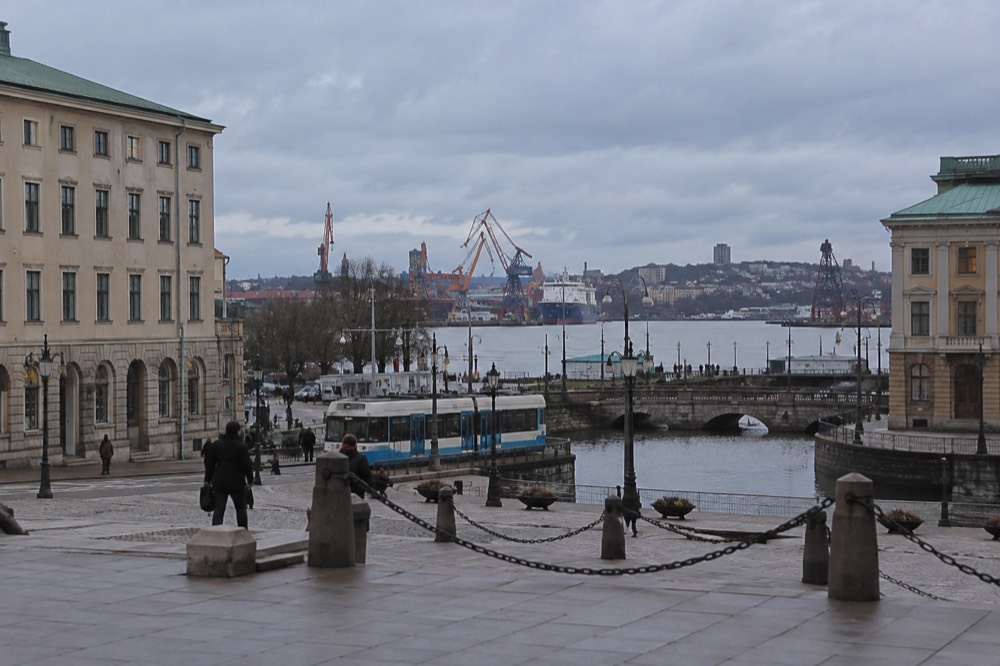
English speakers almost always say "GOTH-en-burg", with the stress on the first syllable and a hard "th" as in "gather". Swedes almost never do. In Swedish the city is Göteborg, pronounced roughly "YUR-teh-bor-y", with a soft g that sounds like an English y. Both names refer to the same place on the west coast of Sweden, and both are official: Göteborg is what the city calls itself on every sign, timetable and municipal document, and Gothenburg is the established English exonym, the name English has used for the city for centuries. The confusion is not a mistake anyone is making. It is two languages carrying two versions of one name, and this page sets out exactly how to say each one, why the split exists, and which one to use where.
How Do You Pronounce Gothenburg in English?
In English the city is pronounced GOTH-en-burg, with the stress on the first syllable: GOTH as in "gather", a short unstressed "en", and "burg" rhyming with "lug". The hard th sound is correct in English, and the final g is pronounced like the g in "gap". Many visitors wrongly soften it to "Go-then-burg" or say "Go-then-BOR-g", but the standard English pronunciation keeps the stress at the front.
The hard "th" is the detail English speakers second-guess most. It is not the silent th of "Thames" and it is not the soft th of "think". It is the voiced th of "this" and "gather", and dictionaries of English place names treat it as settled. The stress pattern matters just as much: English words ending in "-burg" almost always carry the stress on the first syllable, as in Hamburg, Edinburgh (locally) and Pittsburgh, and Gothenburg follows the same instinct.
The common mispronunciations are worth naming because they are everywhere in travel forums. "Goh-THEN-burg", with the stress moved to the middle, is the most frequent, and it makes a Swede wince because it lands closer to how a non-Swede mangles Göteborg. "Go-then-ham" style errors are rarer. If you say GOTH-en-burg with confidence, no Swedish listener will correct you, because they know exactly which name you are using and they hear it from English speakers constantly.
One thing the English name does not need is the umlaut. Writing "Göthenburg" is a hybrid that exists in neither language, and it appears occasionally on tourist tat and in careless copy. The English name is Gothenburg, plain. The Swedish name is Göteborg, with its own letters. There is no third spelling that is somehow more authentic.
How Do You Pronounce Göteborg in Swedish?
Göteborg in Swedish is pronounced roughly YUR-teh-bor-y: the G is soft like an English y, the ö sounds like the "u" in "fur", the stress falls on the first syllable, and the final g is a y-sound at the end of "borg". A close English approximation is "YUR-tuh-bor-ee", but the real Swedish audio has a softer, rounder flow than any spelling can capture.
The soft g is the single biggest surprise for English speakers. In Swedish, g before e, i, y, ä and ö is pronounced like an English y, the same rule that makes Göteborg sound like it starts with "Yur" and makes "göra" (to do) sound like "yur-a". The ö is the next hurdle: it is the same vowel as the "i" in "bird" said without the r-colouring, or the "u" in "fur" in most British accents. English has this vowel, it just never writes it with two letters.
The final syllable, "borg", does not end in a hard g. Swedish borg, meaning castle or fortified place, ends with the same soft sound heard at the end of "smörgås" in "smörgåsbord": a y-glide, so "bor-y". Put together and spoken at natural speed, the whole word comes out as two light beats, "YUR-teh-bor-y", with the stress sitting on YUR and everything after it de-stressed. Swedes say it quickly. It is not the four heavy syllables an English reader might expect from the spelling.
If you want to hear it rather than read it, Göteborgs Stad, the municipal authority, publishes Swedish-language material in which the name is spoken, and Swedish radio is the cleanest reference: Swedish speakers say the city's name the same way in every broadcast, and the pattern is consistent. For the relationship between the two names more broadly, our page on whether Gothenburg and Göteborg are the same covers the history of both words in one place.
Here is the whole comparison in one place, syllable by syllable:
| Name | Language | Rough pronunciation | Stress | Key sound to watch |
|---|---|---|---|---|
| Gothenburg | English | GOTH-en-burg | First syllable | Hard th as in "gather" |
| Göteborg | Swedish | YUR-teh-bor-y | First syllable | Soft g, like an English y |
| Göteborg C | Swedish (rail) | YUR-teh-bor-y "say" | First syllable | "C" is spoken as "say", for Centralstation |
| Göteborgs Stad | Swedish (municipal) | YUR-teh-bors "stahd" | First syllable | Final "d" sounds like a soft t |
The last two rows matter more than they look. "Göteborg C" is what appears on railway departure boards for the central station, and the abbreviation is spoken as the letter "say", not "see". "Göteborgs Stad" is the city government, and its name turns up on parking signs, municipal buildings and official letters. Recognising the spoken forms of both is what turns a blur of Swedish into a navigable city.
Why Does Gothenburg Have Two Names?
Gothenburg and Göteborg exist because the city's early settlers used a German-style name form that English adopted as Gothenburg, while Swedish evolved its own form Göteborg from the same root. Both names come from the Göta älv, the river the city sits at the mouth of, and the "burg" or "borg" element means fortified town. English kept the older Germanic shape; Swedish kept its own.
The city sits on marshy ground at the mouth of the Göta älv where the river meets the Kattegat, and Dutch engineers laid out the old town inside a moat. The settlement's position on the Göta river is baked into its name: Göteborg is literally "the Göta fortress town" or "stronghold on the Göta älv". The English form Gothenburg reflects the way English scribes of the period rendered continental "-burg" names, and it stuck as the established exonym. English rarely adopts foreign city names wholesale; it adapts them, as it did with Copenhagen for København and Munich for München.
The two-name situation is therefore not a recent branding choice or a spelling reform. It is a fork that goes back to the city's earliest decades, when the young settlement had a large population of German and Dutch merchants alongside the Swedes, and both name forms circulated in the town's documents and trade correspondence. English took its version from that German-influenced milieu. Swedish standardised on Göteborg. Neither name is a translation of the other in the modern sense; they are siblings, not parent and child.
That history also explains why the English name resists correction. Institutions do not get to rename a city in a foreign language by decree, and no Swedish authority has ever tried. Göteborgs Stad uses Göteborg in Swedish and accepts Gothenburg in English, and the official tourism organisation publishes under both, with English content using the English name and Swedish content using the Swedish one. The fork is stable, old and mutually understood, which is rarer than it sounds: plenty of European cities fight over their names, and this one does not.
A related puzzle is the city's nickname. Many visitors arrive having heard Gothenburg called "Little London", and wonder what that has to do with pronunciation. The answer is separate from the name itself: it is a 19th-century nickname tied to trade and shipbuilding, and our page on why Gothenburg is called Little London traces it properly.
Which Name Should You Use in Gothenburg, Sweden?
Use Göteborg when speaking Swedish, reading a timetable, following a road sign or addressing a local in their own language, and use Gothenburg when speaking English, because every Swede understands the English name and uses it when replying in English. Both are correct; the error is mixing them into hybrids like "Göthenburg" or pronouncing the English name with Swedish sounds. Signs, tickets and official websites use Göteborg exclusively.
The practical rule is simple: match the language of the sentence you are speaking. An English sentence containing "Gothenburg" is perfectly normal in Sweden, and no local expects an English speaker to switch to Göteborg mid-sentence. A Swedish sentence containing "Gothenburg" would sound odd in the way an English sentence containing "München" instead of Munich sounds odd: not wrong, just incongruous. The full index of guides sits on Gothenburg Travel Guide.
Where the distinction genuinely matters is on infrastructure. Tram destination screens, Västtrafik tickets and railway announcements use Göteborg and its abbreviations, and Göteborg Centralstation is the name on the main railway station. An English speaker scanning for "Gothenburg Central" will find the station anyway, because the English signage in the building is decent, but knowing that "Göteborg C" on a departure board means the same place removes a small travel anxiety. For the language situation in the city more widely, including how widely English is spoken, see what language is spoken in Gothenburg.
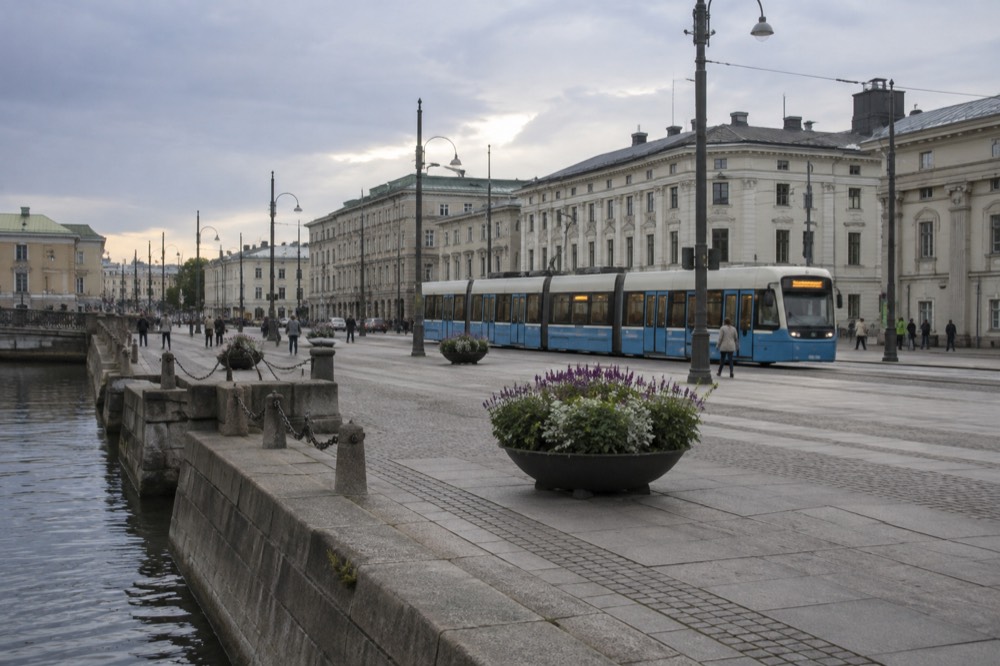
There is also a third name that trips people up: Gothenburg, Nebraska. That is a real and much smaller town in the United States that shares the spelling of the English name and quietly poisons search results for the Swedish city. If you are searching for pronunciation guides, ferry timetables or archipelago advice and the answer mentions Nebraska, you have drifted into the wrong Gothenburg. The city this site covers is in Sweden, on the Göta älv, and every page here keeps that disambiguation in mind.
Does the Pronunciation Change Anything Practical for a Visitor?
No, not in daily life: every Gothenburger understands the English pronunciation, English-language signage is widespread, and staff at attractions, hotels and transport hubs reply in English by default. The only places the Swedish name matters practically are Swedish-language timetables, station names and official municipal websites, where Göteborg appears without an English variant, and knowing the YUR-teh-bor-y pronunciation helps you match announcements to what you read.
Consider the situations a visitor actually faces. At a hotel reception, the English name works. On a tram, the announcements are in Swedish, so hearing "Göteborg" spoken at speed is the moment the pronunciation guide above earns its keep: once you know the word starts with a soft y-sound, the announcement becomes recognisable rather than a blur. At attractions, English is standard, and the major museums and science centres publish English visit information alongside the Swedish.
The pronunciation also connects to a wider set of Swedish words a visitor hears and half-recognises. Fika, the coffee-and-bun institution, is another word where the spelling misleads English readers, and it comes up constantly in Gothenburg cafés. Our pages on what fika means in Sweden and how to pronounce fika in Swedish handle that one in the same syllable-by-syllable way.
What Do Locals Say When You Say It Wrong?
Gothenburgers correct nothing and understand everything: say Gothenburg with an English accent and you get an English reply, because English proficiency in Sweden is near-universal and the city's tourism industry runs on it. The Swedish name earns a nod of appreciation at most, not a correction. The only genuinely wrong move is insisting Göteborg is the "real" name English speakers must use, which no local expects.
Swedes are used to hearing their city's name in every accent Europe produces. The city recorded over 6 million commercial guest nights in 2025, a record year with international guest nights up about 15% year on year, according to Göteborg & Co's January 2026 press release. A large share of those visitors arrive speaking English, and the service industry is built for it. Attempting Göteborg is charming; botching it is completely fine. Swedes do not grade visitors on pronunciation, and the attempt usually earns a warmer welcome than perfect English does, precisely because it is unnecessary.
The reverse situation is the one with a real etiquette edge: correcting a Swede who says "Gothenburg" in an English sentence. Some Swedes use the English name when speaking English, exactly as an English speaker uses "Munich" for München. That is correct English usage, not an error. The rule runs one way. In Swedish, say Göteborg. In English, either name is legitimate, and Gothenburg is the traditional choice.
There is one more layer worth knowing. The city's own institutions are inconsistent in a revealing way: the tourism brand writes for an international audience, the transport authority Västtrafik writes almost entirely in Swedish, and the airport's owner Swedavia uses both depending on the page. A visitor who understands that the name switches by audience, not by correctness, has understood the whole thing. Nobody in Gothenburg is confused by either name, and nobody is waiting to catch you out with the other one.
For the broader question of whether this city repays the effort of visiting at all, our page on whether Gothenburg is worth visiting for tourists is the honest overview, and what Gothenburg is known for lists what the name actually attaches to: the archipelago, the trams, the shipyard cranes and the seafood.
Common Questions About Pronouncing Gothenburg
How do you pronounce Gothenburg?
In English, GOTH-en-burg: stress on the first syllable, a hard th as in "gather", and "burg" rhyming with "lug". In Swedish the city is called Göteborg, pronounced roughly YUR-teh-bor-y, with a soft g that sounds like an English y.
Is it Gothenburg or Göteborg?
Both are correct. Göteborg is the Swedish name the city itself uses on signs, timetables and official documents; Gothenburg is the established English name. Use the one that matches the language you are speaking, and avoid hybrids like "Göthenburg", which exist in neither language.
Why is the g in Göteborg soft?
In Swedish, g before the vowels e, i, y, ä and ö is pronounced like an English y. Since ö is one of those vowels, Göteborg starts with a "Yur" sound. The same rule applies to the final g in "borg", which ends as a y-glide: "bor-y".
Do locals mind if I say Gothenburg?
No. English proficiency in Sweden is near-universal and the tourism industry expects the English name. Saying Göteborg is a pleasant extra, not a requirement, and no local will correct an English speaker for using Gothenburg in an English sentence.
What does the name Gothenburg mean?
Both names come from the Göta älv, the river the city was founded beside, combined with "burg" or "borg", meaning fortified town. Göteborg is literally the stronghold on the Göta river, and the English name is an older English rendering of the same root.
Is Gothenburg, Nebraska the same place?
No. Gothenburg, Nebraska is a small town in the United States that shares the English name and frequently pollutes search results for the Swedish city. This site covers only Gothenburg, Sweden, on the west coast at the mouth of the Göta älv.
The name is the first thing every visitor gets wrong, and the last thing anyone worries about once they arrive. Say GOTH-en-burg at home and try YUR-teh-bor-y once on the tram, and you have covered everything this page knows.