Can I Take a Day Trip to the Gothenburg Archipelago? What to Know Before You Ferry Out
Yes, and it is easier than most visitors expect: the southern Gothenburg archipelago islands sit inside the city's own transit zone, so one Västtrafik ticket covers the tram and the ferry. Here is how the day works.
Can I Take a Day Trip to the Gothenburg Archipelago?
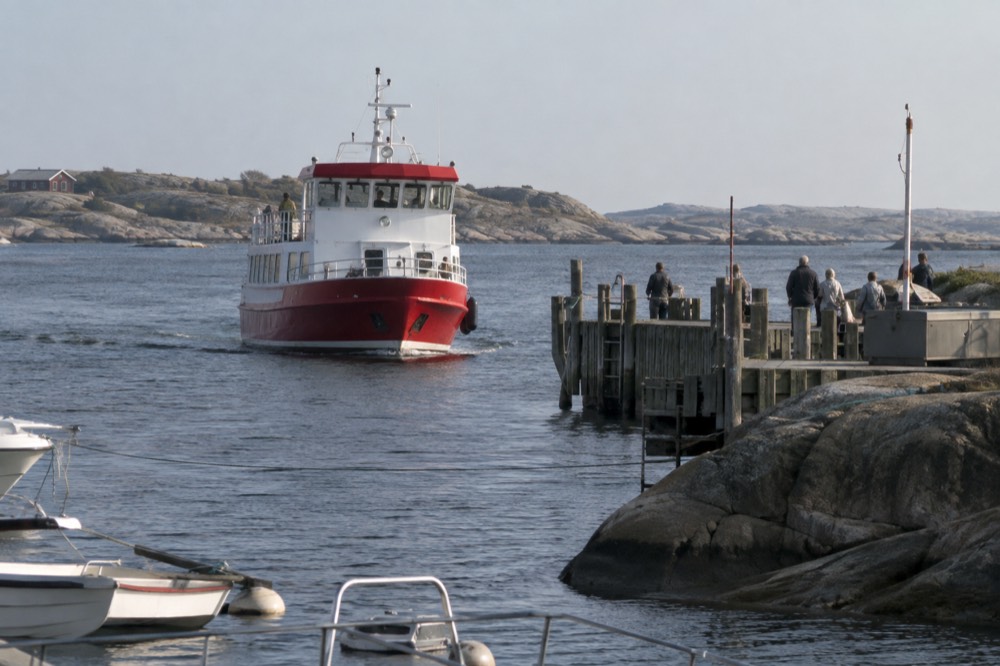
Yes, you can do the Gothenburg archipelago in a day, and the logistics are simpler than almost anywhere else in Scandinavia: the southern islands of Styrsö, Brännö, Vrångö, Donsö, Asperö and Köpstadsö are administrative areas of the city itself, car-free, and covered by the ordinary Västtrafik ticket you would use on a tram. Västtrafik's own zone material states you can travel "på samma biljett hela vägen från centrum ut på havet", on the same ticket all the way from the centre out onto the sea. You ride a tram to the Saltholmen terminus, walk to the jetty, and board a ferry that is numbered like a bus line. No tour booking, no car, no separate ferry fare.
That is the twist worth understanding before you plan: technically these islands are not a day trip from Gothenburg, they are Gothenburg. The city's municipal boundary runs out across the water, and Göteborgs Stad's own planning documents describe the southern archipelago as protected from car traffic, with only taxi, färdtjänst and emergency vehicles on the island roads. A visitor who treats the islands as a distant excursion tends to over-plan. A visitor who treats them as a neighbourhood reachable by tram tends to have the better day.
The question of whether the archipelago justifies a day of a short trip is really a question about what kind of traveller you are. The islands offer granite, sea light, wooden cottages and silence, not rides, restaurants queues or shopping. Visitors who arrive expecting a polished resort archipelago like Stockholm's more touristed islands sometimes leave underwhelmed. Visitors who arrive expecting a working coastal community with swimming rocks and a ferry timetable tend to rate it among the best days of their Sweden trip. Setting expectations correctly is half the planning.
Can I Take a Day Trip to the Gothenburg Archipelago in One Day?
Yes, a single day is genuinely enough for the southern archipelago, because the islands sit inside Västtrafik Zone A and the ferries run several times an hour in summer from Saltholmen, reachable by tram from the city centre in under 40 minutes. A 125 kr 24-hour Zone A ticket covers the tram, the ferry and every island in the chain, and the boats keep running into the evening, so you can swim, eat and still be back in the city the same night.
The arithmetic is what makes it work. A single adult Zone A ticket costs 38 kr, and a 24-hour Zone A ticket costs 125 kr, prices published on Västtrafik's own Zone A ticket page. Zone A covers Göteborg, Mölndal, Partille and Öckerö, and the southern archipelago boats are part of the same network, appearing on Västtrafik's own tram, bus and boat map. So the entire day, door to island and back, costs the same as a day of riding trams around town. For comparison, that is less than the price of a single guided cruise ticket, and it buys unlimited hops between islands for 24 hours.
Timing matters more than money. Saltholmen is the western terminus of the tram network, so you never need a car, and parking there is the one known pain point for drivers, which is another reason to arrive by tram. Ferries from Saltholmen serve six islands: Asperö, Brännö, Styrsö, Donsö, Vrångö and Köpstadsö. In the summer timetable several departures run each hour; in winter the frequency drops sharply, and some island calls thin out to a handful of sailings a day. Västtrafik's timetable pages are the source to check before you commit to a specific island on a specific date.
One honest caveat on fares: Västtrafik is currently running a temporary state subsidy that halves 30-day period tickets, Zone A adult dropping from 890 kr to 445 kr, but that discount does not apply to the 24-hour and 72-hour tickets visitors actually buy. Your day ticket is still 125 kr. Do not let a headline about half-price transport change your budgeting. The subsidy is time-limited by its own wording, valid for travel through the end of the year, so it is not a permanent feature of the fare structure either.
If you would rather see the archipelago from the water with someone else handling the logistics, a guided cruise is the alternative to the DIY ferry day, and it pairs well with the islands: many visitors do a cruise on one day and a self-guided island hop the next. The cruise also solves the winter problem neatly, since a heated boat with a guide runs regardless of whether the island kiosks are open.
Which Gothenburg Archipelago Islands Can You Reach in a Day?
The six southern islands served from Saltholmen, Styrsö, Brännö, Vrångö, Donsö, Asperö and Köpstadsö, are all realistic for a day trip on an ordinary ticket, and most visitors combine two or three rather than trying all six. Styrsö is the largest with a small village feel, Brännö has the flattest walking trails, and Vrångö is the most swimsuit-friendly, with sandy patches and some of the warmest late-summer water on the whole Swedish west coast.
The islands differ more than their proximity suggests. Styrsö has a tiny shop, café culture and paths that thread between painted wooden cottages; it also has a small vehicle ferry connection in its own right, which gives it a slightly more lived-in feel than the smallest islands. Brännö is low, open and grassy, with walking tracks that suit a slow loop of an hour or two, and its flatness makes it the easiest island for visitors who want walking without climbing. Vrångö sits furthest out and feels it: the sea on two sides, swimming spots, and a summer kiosk culture. Donsö and Köpstadsö are quieter, more working-island in character, with fewer services and more bare granite, and they reward visitors who specifically want the empty version of the archipelago rather than the postcard one.
Because the ferries are ordinary Västtrafik lines, you can hop: Saltholmen to Styrsö, Styrsö to Brännö, and back, all inside the same ticket and the same zone. The connections are timed, but the timetables change seasonally, so check the specific line numbers for your travel date on Västtrafik's site rather than relying on a guide's remembered schedule. Some island pairs connect directly; others route back through Saltholmen, which adds time and changes which combinations are realistic in one day.
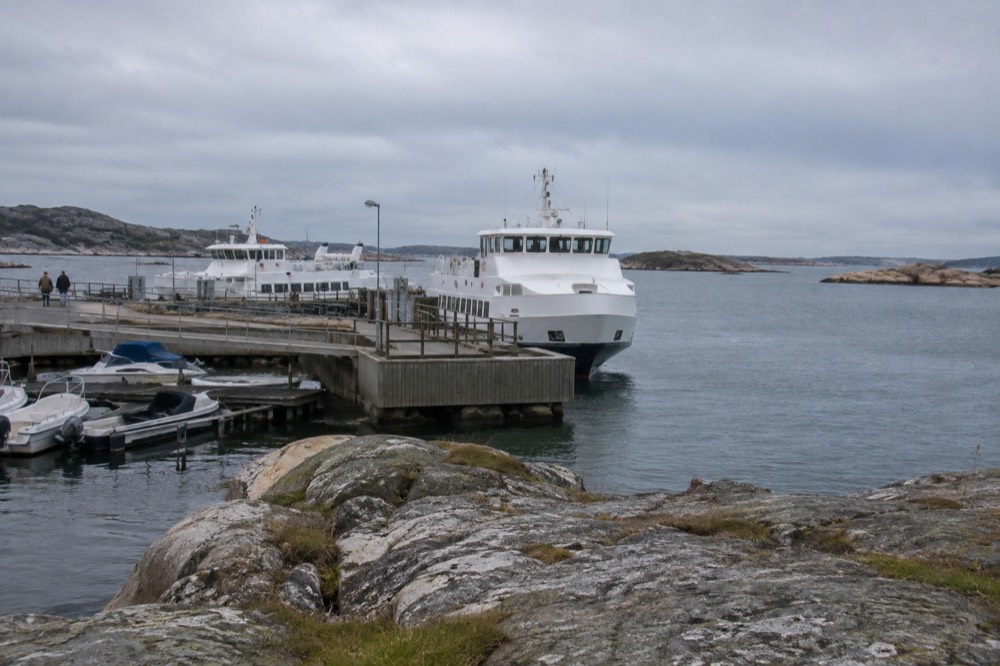
The northern archipelago, Öckerö, Hönö and Björkö, is a different proposition: also inside Zone A, but reached by larger road-bridge-linked islands with bus connections rather than the Saltholmen ferries. It is equally doable in a day, but it is a separate plan, and the southern chain is the one most first-time visitors mean when they say "the archipelago". The northern islands suit a visitor with a bicycle or a car, since the road network there is real; the southern islands suit a visitor on foot, since the roads barely exist.
What Does the Weather and Water Do to Your Archipelago Day?
The sea around Gothenburg peaks at 18.6 C in August, not July, and September water at 16.7 C is actually warmer than June water at 16.2 C, according to SMHI's quality-controlled observations at the Vinga lighthouse station, so a September swimming day in the archipelago beats a June one, and February, not January, is the coldest month at 2.7 C.
This is the single most counterintuitive planning fact about the islands, and it comes from a big dataset: 61,749 quality-controlled hourly observations from SMHI's station 35144 at Vinga, the archipelago lighthouse itself. The water runs roughly six weeks behind the air. Air temperature peaks in July at 18.3 C on the 1991-2020 normals, but the sea keeps absorbing heat and tops out a month later. If swimming is the point of your day trip, book late July through early September, not midsummer. The record high in the dataset, 23.6 C in July, shows the water can occasionally approach genuinely warm, but the monthly means are the honest guide.
Rain is the other variable, and the data kills the cliché. Gothenburg receives 912 mm of precipitation across 127 days a year on the SMHI 1991-2020 normals for station Göteborg A, which is wet, but SMHI does not call the city Sweden's rainiest, and the national maxima sit in the western highlands and the mountains, as SMHI's own normals page explains. The month that matters for a day trip planner: October is the wettest month at 102.9 mm, and April is the driest at 51.3 mm across only 8.2 wet days. Spring, not high summer, is the statistically safest window for a ferry day, but summer is the warmest one.
Wind deserves a mention too, because it is the factor the statistics underplay. An open ferry crossing and a granite swimming rock are two very different experiences in a light breeze and in a stiff Kattegat wind, and the same 16 C water feels entirely different depending on it. The islands have almost no shelter from the west, which is part of their appeal and all of their exposure. Pack a windproof layer even on a forecast that looks kind.
Daylight swings matter too. On 21 June the sun is up 18 hours 6 minutes in Gothenburg, with civil twilight leaving only about three and a half hours of true night, so a midsummer island day is enormously long. On 21 December daylight shrinks to 6 hours 32 minutes, and the archipelago in winter is a short, grey, atmospheric affair: ferries still run, cafés mostly do not. A winter day trip is possible and has its own following, but pack for it and do not expect to swim.
How Do You Actually Plan the Day, Hour by Hour?
A realistic archipelago day starts with a tram from the city centre to Saltholmen in the morning, a first ferry to Styrsö or Brännö around mid-morning, a walk and a swim or a fika stop, a second island after lunch, and a return ferry in late afternoon or early evening, all on one 125 kr day ticket, with the whole outing costing about six to eight hours door to door.
Here is how the pieces fit together:
| Step | What you do | What it costs | Watch out for |
|---|---|---|---|
| Tram to Saltholmen | Ride the tram west to the network's western terminus | Included in Zone A ticket | Allow 30-40 min from the centre |
| Ferry from Saltholmen | Board the island boat at the jetty | Same ticket | Check seasonal timetable first |
| Island time | Walk, swim, eat, repeat on a second island | Food is island-priced | Bring cash-free cards; some kiosks close off-season |
| Return ferry | Sail back and tram home | Same ticket | Last sailings run earlier in winter |
Food planning deserves a sentence of honesty. The islands are small communities, not resort strips. Some have summer-only kiosks and café openings, and the shoulder-season visitor can find everything shut outside a Sunday service crowd. The safe pattern is to eat a proper meal in the city before or after, and treat island food as a bonus, or to check what is open on each island's own listings before you sail. If food is the point of the day rather than a side effect, a guided cruise with a meal included removes the gamble entirely: the roster includes archipelago cruise options with lunch or Swedish fika built in, alongside the guided archipelago cruise that this site covers in detail.
For readers weighing the archipelago against the city's headline attractions, the islands are a different animal from Liseberg or Universeum, and the comparison is worth a look at is Liseberg worth visiting before you allocate a full day. If your time in the city is short, the question of how many days you need at all, covered in how many days in Gothenburg is enough, usually resolves in favour of one full archipelago day plus two city days.
Between the cruise options above and the self-guided ferry day, the decision usually comes down to how much of your day you want to spend on logistics. A cruise hands you a fixed 2.5-hour window with commentary; the ferry day hands you a blank timetable and six islands. Some visitors split the difference by booking the cruise for the morning and using the afternoon for a single island hop on their own ticket, which is tight but workable in summer when sailings are frequent.
Is a Guided Tour Better Than Doing the Islands Yourself?
Doing it yourself is cheaper and more flexible, since the ferry day costs one 125 kr transit ticket against a guided cruise from $44 per person, but a guided tour buys you commentary, a fixed schedule and no timetable research, and for a single-day visitor with no margin for error, the guided option is often the better use of a limited day.
The self-guided day has real advantages beyond price. You set the pace, you can swim when the sun appears rather than when the boat anchors, and you can linger on whichever island wins you over. The guided cruise has different strengths: the roster's guided archipelago cruise runs 2.5 hours, is rated 4.4 from 1,488 reviews, and leaves the navigation, the commentary and the timing to the operator. For visitors whose Swedish is nonexistent and whose day is one of only two or three in the city, that trade is reasonable.
There is also a middle path: a guided cruise on the first day to learn the geography, then a self-guided ferry day on the second once you know which island suited you. Several of the sailing options in the roster, including a four-hour sail with a local skipper rated 5 from 9 reviews, go further out than the public ferries and suit visitors who want the water itself rather than the islands. Evening sailing options with Swedish fika exist too, which turn the archipelago into a sunset plan rather than a daytime one.
For a broader first-timer's framing of what the city offers beyond the water, see what is Gothenburg known for, and for the honest verdict on the city as a whole, is Gothenburg worth visiting for tourists. This site, Gothenburg Travel Guide, covers the islands in depth elsewhere too, including whether the ferry in Gothenburg is free and whether the archipelago is worth visiting as its own question.
Common Questions About a Day Trip to the Gothenburg Archipelago
Can I take a day trip to the Gothenburg archipelago?
Yes. The southern islands sit inside Västtrafik Zone A, so a 125 kr 24-hour ticket covers the tram to Saltholmen and the ferries to all six islands, with summer sailings several times an hour. It is one of the easiest archipelago day trips in Scandinavia.
Is the Gothenburg archipelago actually part of the city?
Yes. Styrsö, Brännö, Vrångö, Donsö, Asperö and Köpstadsö are areas of Göteborg, not separate destinations, and they are car-free per Göteborgs Stad's own planning documents. Marstrand and the Bohuslän coast, by contrast, are genuine day trips.
Do I need to book the archipelago ferry in advance?
No. The ferries are ordinary Västtrafik lines and you board with a normal ticket or pass, the same as a tram. Capacity can fill on peak summer weekends, but there is no reservation system for regular sailings.
When is the water warm enough to swim in the Gothenburg archipelago?
Per SMHI's Vinga station data, the sea peaks at 18.6 C in August, and September at 16.7 C is warmer than June at 16.2 C. Late July through early September is the real swimming window; February is the coldest month at 2.7 C.
Can you do the archipelago in winter?
Yes, but it is a different trip: ferries run less often, most island kiosks and cafés shut for the season, and daylight on the shortest day is 6 hours 32 minutes. Dress for wind and check the winter timetable before you sail.
Is one day enough for the Gothenburg archipelago?
For two or three southern islands, yes. Trying all six in a day is possible on paper but rushed; most visitors pick Styrsö plus Brännö, or a single island with a long swim and lunch, and save the rest for a second visit.