Does Sweden Have Good Seafood? What Gothenburg and the West Coast Actually Serve
Does Sweden have good seafood? The short answer is yes, and Gothenburg on the Kattegat coast is where to eat it. What to order, where to buy it, and what the harbours really land.
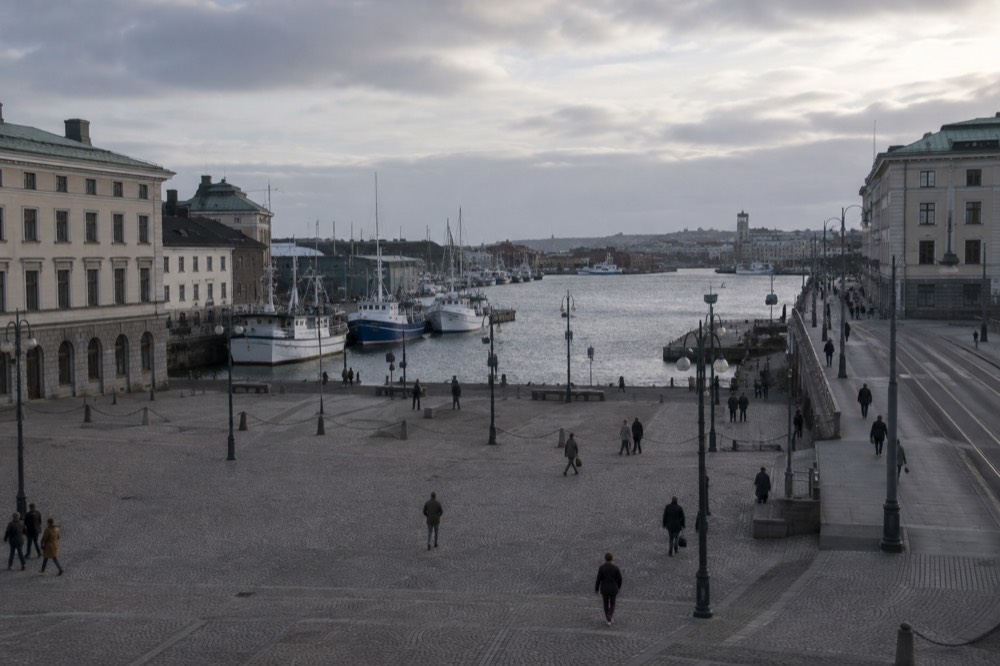
Sweden's west coast is one of the colder, cleaner stretches of water in Europe, and the country's seafood reputation is built almost entirely on it. The Kattegat, the shallow sea between Sweden and Denmark, produces shrimp, langoustine, mussels, oysters, salmon and cod in quantities that surprise visitors expecting meatballs and nothing else. Gothenburg sits at the mouth of the Göta älv where the river meets that sea, which makes it the natural place to test the question. The city's own food halls, its archipelago harbours and its restaurant scene all run on what the boats bring in that morning.
Does Sweden Have Good Seafood?
Yes, and the best of it is west-coast seafood eaten in and around Gothenburg. The Kattegat supplies shrimp, langoustine, mussels, oysters, salmon and cod, the Bohuslän coast north of the city is famous for its shellfish, and the city's own fish market hall, Feskekôrka, reopened in 2024 as a food hall with five restaurants plus two traditional fish counters.
The honest version of the answer has a geographic catch. Sweden is a long country, and the seafood culture concentrates on the west coast, in Skåne in the far south, and along parts of the Norrland coast. Inland, in the forests and lakes districts, the food tradition tilts toward game, pork and freshwater fish. Nobody goes to rural Småland for langoustine. But a visitor who bases themselves in Gothenburg, or drives the Bohuslän coast to the north, is eating from one of the most productive shellfish waters in Scandinavia.
The reason is partly the water itself. The Kattegat and Skagerrak are cold, well-mixed and, by the standards of heavily fished European seas, relatively clean. Cold water grows shellfish slowly, and slow growth concentrates flavour. The west coast's shrimp boats, its oyster beds and its langoustine creels all work within a day's sail of Gothenburg's harbour, which is why the city's fish restaurants can print a landing date rather than a country of origin.
The Swedish relationship to this food is also seasonal in a way visitors sometimes miss. Crayfish parties in August, the shrimp sandwich as an everyday lunch, herring at every midsummer table, and a Christmas spread where fish carries half the table. Seafood in Sweden is not a restaurant niche, it is calendar furniture. Herring in particular is the historical spine of the whole cuisine: salted, pickled, fried, fermented, rolled into mustard sauce or baked with cream. It fed the west coast long before tourism did, and it still anchors the smörgåsbord in a way no other fish does.
What Seafood Is Gothenburg Famous For?
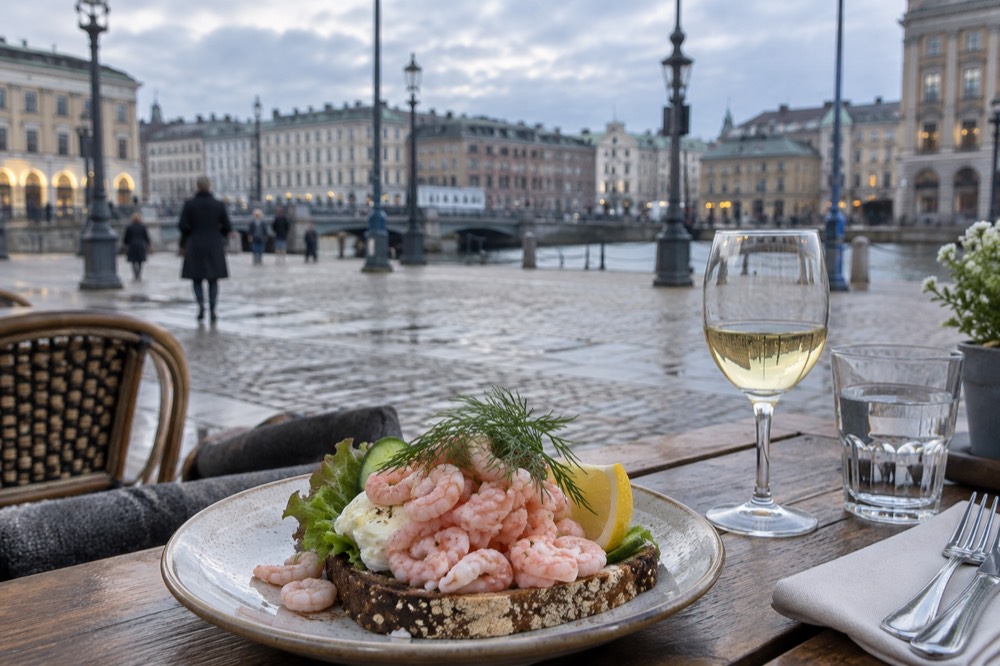
The signature is the shrimp: cold-water Kattegat shrimp, peeled by hand and piled on buttered bread as the räkmacka, the west coast's defining dish. Around it sit langoustine, mussels, oysters, salmon and cod, plus the west-coast fish soup that appears on nearly every serious menu in the city.
The räkmacka deserves the top slot because it is the one dish the region treats as an institution rather than a menu item. The classic version is a thick slice of bread, butter, a mound of peeled shrimp, sometimes a boiled egg, sometimes mayonnaise, always lemon. Göteborgs Stad's tourism marketing pushes it hard, and the harbour restaurants around the city sell it at prices that reflect the hand-peeling labour inside the pile. The shrimp are small, sweet and pinker than the warm-water shrimp imported into most of Europe, and the difference is the whole argument for eating them here rather than anywhere else.
Langoustine, called havskräfta or simply kräfta on menus, is the premium shellfish of the Bohuslän coast. The listing menus in Gothenburg's fish restaurants routinely name the landing port. Mussels are farmed in the clean fjord mouths further north. Oysters grow wild along Bohuslän's granite shores, and the town of Grebbestad, a long day trip up the coast, is the centre of the Swedish oyster industry, with oyster safaris run from its harbours in season.
Salmon is more complicated. Wild Baltic and Atlantic salmon are protected and regulated, but the Göta älv, the river Gothenburg sits on, is one of the waters where salmon and sea trout run, and the city's salmon tradition is real. Smoked salmon, cured salmon and the Christmas gravlax all belong to the Swedish table. Cod, haddock and plaice come back and forth with quota fortunes, and herring remains the historical backbone, salted, pickled, fried and fermented.
A practical way to see the range is to walk it. The city's two market halls, Feskekôrka and Stora Saluhallen on Kungstorget, cover the buying side. The harbourfront and the archipelago islands cover the eating side. And the boat tours out of the city centre cover the seeing side, which matters because the seafood story here is inseparable from the islands it comes from.
Where Do You Actually Buy and Eat It in Gothenburg?
The two answers are Feskekôrka, the fish-church-shaped market hall on Rosenlundsgatan that reopened in 2024 as a food hall with five restaurants and two fish counters, and Stora Saluhallen on Kungstorget, the older general market hall. For eating rather than buying, the harbour restaurants and the archipelago islands take over.
Feskekôrka is the one every guide mentions, and most of them describe it wrongly. The building, a stone hall from 1874 shaped like a church and nicknamed the Fish Church, was long known as a place of fish counters. It closed for renovation, and it reopened in 2024, the same year the building turned 150, as a food hall. Higab, the municipal property owner, publishes the reopening on its own site. The current tenant list, on feskekorka.se, runs to five restaurants, Haldis Kök, Pråmenaden, Victor von G, Lilla Åstol and Ekmans, plus two fish counters, Ebbes Fångst and Flåtens Fiskhandel. Lilla Åstol is seasonal and closes for winter, its own copy says it reopens in spring. A visitor arriving in February finds four restaurants, not five, and no guide written before 2020 will have told them any of this.
Stora Saluhallen on Kungstorget is the other hall, older and broader, selling cheese, bread, meat and deli goods alongside fish. It is the one locals use for a full shop. Between the two halls, a visitor can assemble a picnic of smoked salmon, shrimp, bread and cheese without entering a restaurant at all. More of these guides are collected on Gothenburg Travel Guide.
For restaurant eating, the city's seafood scene divides into three layers. The harbour restaurants around the opera house and Stenpiret sell the view with the räkmacka. The inner-city places, several of them long-established fish institutions, sell the fish soup and the langoustine. And the archipelago islands, Styrsö, Brännö, Donsö and Vrångö among them, sell the simplest version of all: shrimp bought at a harbour kiosk and eaten on a rock, because the islands are car-free and the boats land there.
The amphibious bus tour is a fit for this itinerary for a concrete reason: it drives the city streets and then drives into the harbour itself, so the fish-hall-to-harbour geography of the food story is visible in one loop. The listing carries 4,326 reviews at a 4.7 rating, and the operator's live listing has current times and prices. It is also the one tour that explains why the seafood city looks the way it does, since the harbour it splashes into is the same harbour the shrimp fleet uses.
Is the Seafood in Sweden Expensive?
Yes, restaurant seafood in Sweden is expensive by European standards, a räkmacka at a harbour restaurant is a 200-plus kr item and a langoustine main runs well past that, but the raw ingredients from the market halls cost far less, and the shrimp sandwich at a simple harbour kiosk remains one of the better value meals in the country.
The cost structure is the same as the rest of Swedish dining, which the site covers in detail elsewhere on is Gothenburg cheap or expensive. Labour is expensive, alcohol is taxed heavily, and hand-peeling shrimp is labour by definition. What softens the bill is the self-service layer: buying cooked shrimp, smoked fish and bread from a fish counter and eating it outside costs a fraction of the table version, and it is arguably the more Swedish way to do it.
One alcohol rule shapes the whole evening. Under Alkohollag (2010:1622), beer above 3.5% ABV, all wine and all spirits are sold only through Systembolaget, the state monopoly. A restaurant serves them, but at monopoly-plus-service prices. Supermarket beer stops at 3.5%, and the shelf version of a familiar brand is often a weaker reformulation. A wine pairing with the langoustine is a decision with a tax number attached.
| Dish or product | Where to get it cheaply | Where it gets expensive | Notes |
|---|---|---|---|
| Räkmacka (shrimp sandwich) | Archipelago harbour kiosks, Brännö and Donsö | Harbour restaurants in the city centre | Hand-peeled shrimp is the cost driver |
| Cold-water shrimp, by weight | Feskekôrka fish counters | Any restaurant platter | Buying at the counter and eating outside is the local move |
| Langoustine | Not cheap anywhere | Bohuslän coast restaurants, day-trip territory | The premium shellfish of the west coast |
| West-coast fish soup | Lunch service in the city | Dinner service at the same places | Often the best value restaurant fish dish |
| Oysters | Grebbestad oyster safaris, in season | City restaurant by-the-piece pricing | Wild, mostly, not farmed |
| Smoked and cured salmon | Stora Saluhallen and Feskekôrka | Hotel breakfast buffets | Counter prices are reasonable for the quality |
When Is the Best Time of Year for Seafood in Gothenburg?
Late summer through autumn is the strongest window: August brings the crayfish season and warm sea water, September water at 16.7 degrees is actually warmer than June water at 16.2 degrees, and the autumn shrimp and langoustine landings feed the restaurants before the winter herring and Christmas fish traditions take over.
The sea-temperature fact is the one worth planning around, and it comes from SMHI's own published normals and oceanographic archive, measured at the Vinga lighthouse station in the archipelago. The water peaks in August at 18.6 degrees, not July, and September stays warmer than June. That matters for two reasons. The swimming-and-shrimp-on-a-rock version of the archipelago day works better in September than most visitors assume, and the shellfish season runs with the warm water. February is the coldest month in the water at 2.7 degrees, with a recorded low of minus 1.2, because brackish Kattegat water freezes below zero.
The calendar, in food terms, runs like this. Spring brings the first new-season herring. Midsummer is the herring and salmon table. August is crayfish month, the kräftskiva party tradition, plus the best sea temperatures. September and October are the shellfish months, though October is also the wettest month of the year at 102.9 mm of rain, so the harbour-kiosk plan needs a backup. November and December shift to the Christmas spread: gravlax, pickled herring, lutefisk in the traditional households. The seasonal detail sits inside the broader what is the best time to visit Gothenburg question.
The crayfish tradition deserves a word of its own, because visitors confuse it with the sea crayfish of warmer countries. The Swedish kräftskiva is built on freshwater signal crayfish, not the marine langoustine, and it is a party format as much as a dish: paper hats, schnapps songs, bread and Västerbotten cheese pie. It is the one August week when the whole country eats one fish course on repeat, and Gothenburg's restaurants join in with set menus. It is not seafood from the Kattegat, but it is the most Swedish crustacean ritual there is, and it lands squarely in the best sea-temperature window of the year.
What About the Archipelago, Where the Boats Land?
The southern archipelago islands, Styrsö, Brännö, Donsö, Vrångö, Asperö and Köpstadsö, are areas of Gothenburg itself, reached by tram to Saltholmen and then by ferry on an ordinary Västtrafik ticket, and the harbours there are where the shrimp story becomes a boat-and-kiosk day rather than a restaurant reservation.
This is the part of the seafood answer that most visitors get wrong twice. First, they treat the islands as a day trip, when they are city districts with car-free roads and Västtrafik ferries. Second, they book a restaurant when the island version of the meal is a paper cone of shrimp from the harbour kiosk, eaten on the rocks. Göteborgs Stad's own archipelago study states that the southern islands are protected from car traffic, with only taxi and emergency vehicles on the roads. Västtrafik's zone pages show the ferry lines from Saltholmen inside Zone A, so a 24-hour Zone A ticket at 125 kr covers the tram to the coast, the ferry out and every island in between, which is the best-value single ticket fact on this site.
The guided archipelago cruise is the alternative for a visitor who wants the islands explained rather than explored, and the canal cruise covers the city-side water. For the full island logistics, the site's coverage of is it worth visiting the Gothenburg archipelago and is the ferry in Gothenburg free goes deeper.
Does Sweden Have Good Seafood Compared to Norway or Denmark?
On shellfish, the Swedish west coast is the equal of either neighbour: Bohuslän langoustine and oysters stand with anything from Norway, and the Kattegat shrimp are the same stock the Danish coast fishes. Where Sweden differs is the eating culture, which is less restaurant-formal and more market-hall and harbour-kiosk, and Gothenburg is the best single base for all of it.
The comparison is fair because all three countries fish the same waters. The Skagerrak and Kattegat do not respect borders, and the shrimp, langoustine and cod stocks are shared. Norway's advantage is its Atlantic coast and its longer fjord system, which produces more cold-water fish at scale. Denmark's advantage is its restaurant tradition and its own strong shrimp and herring culture on the other side of the same sea. Sweden's advantage is the Bohuslän coast, a granite archipelago of small harbours that keeps a working-boat food culture alive within commuting distance of a major city.
There is also a structural difference in how the three countries sell their fish. Norway exports most of its premium catch and keeps a strong home tradition of simple boiled and grilled fish. Denmark built its reputation on the restaurant side of the plate. Sweden sits between the two, with a strong home-cooking tradition of cured, pickled and fermented fish, and a market-hall culture that assumes the customer can cook. That is why the best-value seafood meal in Gothenburg is bought at a counter, not ordered at a table.
For a visitor, the practical verdict is simple. The seafood is good enough to build a trip around, the west coast around Gothenburg is the place to do it, and the city's own halls and harbours make it possible without a car. The broader case for the city as a base is laid out in is Gothenburg worth visiting for tourists, and the food question beyond fish is covered in what food is Gothenburg famous for.
Common Questions About Seafood in Sweden and Gothenburg
Does Sweden have good seafood?
Yes. The west coast, and Gothenburg in particular, sits on productive Kattegat waters that supply shrimp, langoustine, mussels, oysters, salmon and cod, and the city's market halls and archipelago harbours make it the best base in the country for eating it.
What is the most famous seafood dish in Gothenburg?
The räkmacka, a shrimp sandwich built on hand-peeled cold-water Kattegat shrimp, buttered bread and lemon. It is sold everywhere from harbour restaurants to island kiosks, and the price difference between those two is the price of the table, not the shrimp.
Is Feskekôrka open?
Yes. It reopened in 2024 as a food hall with five restaurants and two fish counters. One of the restaurants, Lilla Åstol, is seasonal and reopens in spring, so the winter count is four.
Where can you eat seafood on a budget in Gothenburg?
Buy cooked shrimp, smoked fish and bread from the counters at Feskekôrka or Stora Saluhallen and eat it outside, or take the tram and ferry to the southern archipelago islands and buy from the harbour kiosks there. The restaurant version of the same food costs roughly double.
When is shrimp season on the Swedish west coast?
Kattegat shrimp are landed through much of the year, but the late summer and autumn months, August through October, are the peak for both landings and eating weather, with the warmest sea water arriving in August at 18.6 degrees.
Can you get oysters near Gothenburg?
The Swedish oyster heartland is further north on the Bohuslän coast around Grebbestad, reachable as a long day trip, where wild oysters are harvested from the granite shores and oyster safaris run in season. Gothenburg restaurants serve the same oysters at city prices.